
Bulk Bag Compliance Guide: Regional Acceptance of UN, Type-C and Food-Grade FIBC
A bulk bag compliance claim is only as strong as the market that accepts it. The same FIBC design can be fully documented for one destination and questioned at another, not because the bag changed, but because the acceptance route changed. Dangerous goods packaging, static control in explosive atmospheres, and food contact are three separate claim families, each with its own reference document, its own evidence format, and its own failure mode.
This guide separates those claims. It explains what UN certification for dangerous goods packaging actually covers, why Type C construction with conductive yarns depends on a grounding procedure rather than on fabric alone, and how food-grade FIBC documentation should be read component by component. It then sets out the checks a buyer should run before accepting a certificate at face value, including the certificate scope, the 500–2000 kg safe working load band, and the top and bottom structure options that sit inside or outside the tested configuration.
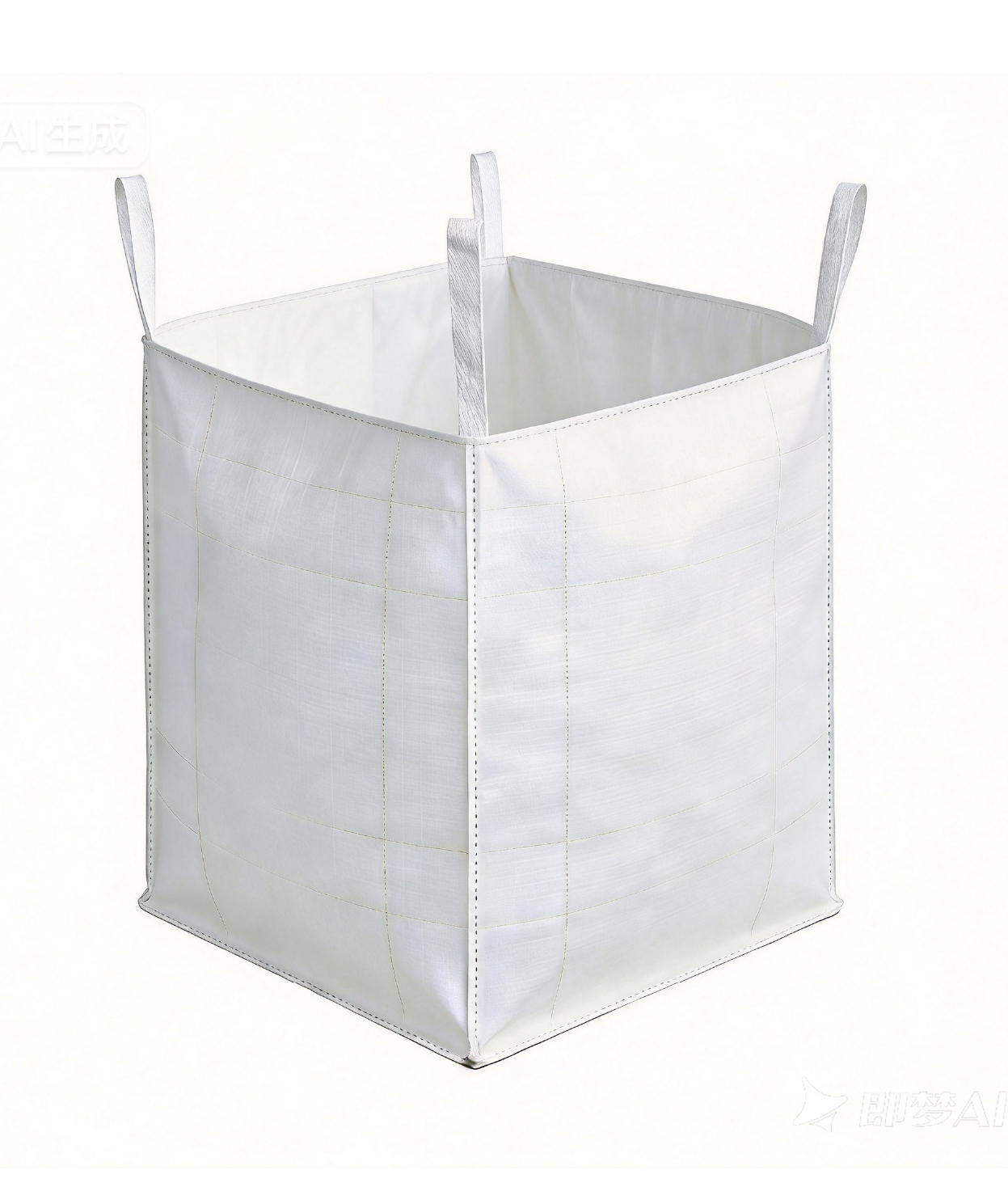
Industrial FIBC bulk bags: the compliance route depends on the material carried and the destination market, not on the bag shape alone.
Why a Single "Certified Bulk Bags" Statement Fails a Procurement Review
The problem starts with language. "Certified" is used in the bulk bag trade to mean at least three different things, and a purchase order that carries only that word gives the supplier no way to prove which of the three applies. A bag described as UN certified answers a question about transporting dangerous goods. A bag built as Type C answers a question about electrostatic discharge in a hazardous explosive atmosphere. A bag supplied as food-grade FIBC answers a question about food contact. None of these answers substitutes for the others.
The second problem is scope. A certificate is written for a design, not for a product catalogue. Its validity is tied to a defined construction: the fabric specification, the liner, the closure arrangement, the lifting structure, and the load range that was actually tested. When a buyer orders a different size, a heavier safe working load, a coated instead of an uncoated body, or a discharge spout that was not part of the tested design, the document may still exist in the supplier's folder while no longer describing the bag on the pallet.
The third problem is regional. Acceptance practice is set by the destination, and the reference a supplier cites may belong to a different edition, a different jurisdiction, or a different regulatory family. A report issued against an older edition of a standard is not automatically wrong, but it needs to be read against the edition that is currently in force where the goods are being imported, handled, or sold.
Decision rule: treat every compliance claim as a four-part test — what risk it addresses, which reference it cites, which configuration it covers, and which market accepts it. If any of the four is missing, the claim is marketing text, not documentation.
Industry Background: The References Behind Each Claim
The standards landscape around FIBCs is easier to follow once it is split into a non-dangerous goods track and a dangerous goods track.
On the non-dangerous goods track, ISO 21898:2024 specifies materials, construction, and design requirements, together with type test and marking requirements, for flexible intermediate bulk containers intended to contain non-dangerous solid materials in powder, granular, or paste form, designed to be lifted from above by integral or detachable devices. The European adoption, EN ISO 21898:2024, was approved by CEN on 12 August 2024. China maintains its own national standard in this family: GB/T 10454-2025, which takes effect on 1 March 2026 and replaces GB/T 10454-2000 and GB/T 37425-2019. The earlier edition, ISO 21898:2004, is recorded as superseded, with the successor editions shown as EN ISO 21898:2024 in Europe and GB/T 10454-2025 in China in standard catalogue records.
Practical consequence: a type test report or declaration that cites the 2004 edition is a historical document. It may still describe a sound design, but a buyer importing into Europe or China should ask which edition the current documentation references and whether the design has been assessed against it.
Static control sits on a separate track. IEC 61340-4-4:2018 specifies requirements for FIBCs between 0.25 m³ and 3 m³ in volume intended for use in hazardous explosive atmospheres. That scope matters commercially: bags outside the volume range, or bags used where no explosive atmosphere is present, are being evaluated against a different risk model. The electrostatic classification of a bulk bag is therefore a property of a defined volume band and a defined intended use, not a general upgrade that can be claimed across a full product range.
Dangerous goods form a third track, governed by the UN Model Regulations on the transport of dangerous goods as implemented through the applicable modal rules — ADR for road in Europe, the IMDG Code for sea, and the IATA Dangerous Goods Regulations for air. These regimes define packaging performance and marking for the substances and packing instructions they cover. They are not the same document family as ISO 21898 or GB/T 10454, and the questions they ask are different: the non-dangerous standards test a general-purpose container design, while dangerous goods rules test a packaging against a specific substance classification and packing instruction.
This is where most regional misunderstandings begin. ISO 21898:2024 is written for non-dangerous solid materials. Being tested to it does not make a bag accepted for dangerous goods, and being documented for dangerous goods does not make a bag compliant with the non-dangerous goods standard. The two documents can coexist in one supplier file, but they are never interchangeable.
Evaluating Each Claim Separately
UN certification for dangerous goods packaging
UN documentation describes a tested packaging design used for a defined dangerous goods assignment. Read it as a specification, not a badge. The certificate or test summary should identify the design type, the materials, the closure and liner arrangement, the packing instruction and performance level it supports, and the load band it was tested at. The bag delivered should carry the corresponding marking, and that marking should reference the same design.
The most common mismatch in chemical supply chains is a valid certificate paired with an invalid bag: same family name, different liner, different spout, different safe working load, or a sewing and finish change made after the test. Any of these can move the product outside the tested configuration. For sensitive or hazardous materials, ton bags may require options such as PE liners, anti-static fabric, conductive designs, moisture protection, or UN-certified construction — and each of those options changes the configuration that must be covered by the documentation.
UN certified FIBC bags: documentation applies to the tested design and configuration, not to the product family as a whole.
Type C and conductive yarns for static control
Type C construction manages electrostatic risk by providing a conductive path through the bag, typically using conductive yarns or threads woven into or attached to the fabric, which is then connected to ground during filling and discharging. The fabric is only half of the system. If the ground connection is not made, or the conductive path is interrupted at a seam, a lifting loop, or a spout, the bag behaves as an ungrounded container regardless of what the label says.
That is why Type C should be bought with a procedure, not just a specification. The buyer needs the supplier's grounding instruction, and the site needs to confirm that the filling and discharge stations can actually deliver that connection before the first bag is used. IEC 61340-4-4:2018 defines the electrostatic requirements for FIBCs in the 0.25 m³ to 3 m³ volume band intended for hazardous explosive atmospheres; a bag used outside that band, or in a non-hazardous area, is being justified on a different basis and should be documented accordingly.
In product terms, the relevant options are anti-static fabric and conductive designs, supported by reinforced thickened anti-static fabric or conductive woven fabric constructions where the application calls for them. These are engineering choices, and they should be specified together with the grounding method, the filling equipment, and the site's earthing practice.
Food-grade FIBC for food applications
Food-grade is the claim most often made at the wrong level of granularity. A food-contact assessment applies to every component that can touch the product: the body fabric, the coating if the bag is laminated, the liner, the sewing thread, the closure, and in some specifications the printing. A supplier who can confirm food-grade material for the body but not for the liner has answered only part of the question.
Coated fabric, food-grade materials, or special liners may be required on a bulk bag depending on the application, and these options support protection of moisture-sensitive or contamination-sensitive products. Manufacturing environment matters as well: a dedicated food-grade clean workshop, clean handling between lamination and sewing, and batch-level documentation are the parts of the claim a buyer cannot see in a photograph of the finished bag.
Food grade FIBC bulk bags: the food-contact claim must be confirmed for fabric, coating, liner, thread and closure, not for the body alone.
Step-by-Step: Checking a Compliance Claim Against a Destination Market
- Define the consignment before reading any certificate. Record the substance, its transport classification where applicable, bulk density, target fill weight, filling and discharge equipment, lifting method, and transport mode. The consignment definition decides which claim family is even relevant.
- Identify the acceptance route at destination. Dangerous goods involve the applicable modal regime. Non-dangerous industrial solids point to the FIBC standard in force in that market. Food applications add the buyer's own food-safety specification on top of the packaging standard.
- Read the certificate scope line by line. Confirm the design type, the materials, the liner and closure, and the load band covered. Note the edition or revision referenced, and check whether it is the edition currently applied in the destination market.
- Match the marking to the document. The marking on the delivered bag should reference the same design and the same load data as the certificate. A marking that cannot be traced back to a document is not evidence.
- Confirm the safe working load inside the offered band. Bulk bag safe working loads are commonly specified from 500 kg to 2000 kg, with a standard ton bag holding around 1,000 kg. The SWL on the order must sit inside the range the design was assessed for, and the safety factor should be stated rather than assumed.
- Check the structure against the tested configuration. Top options typically include a fill spout, a full open top, or a top cover; bottom options typically include a discharge spout or a flat bottom, with four lifting loops and high-strength polyester thread sewing as standard construction elements. Each of these choices can change what the documentation covers.
- Confirm the grounding procedure for conductive designs. For Type C style bags, obtain the grounding instruction and verify the site can implement it at both filling and discharge. Record who is responsible for the connection.
- Confirm food-contact components individually. List body fabric, coating, liner, thread, closure, and printing, and confirm each against the food specification. Ask which production area the bags are made in.
- Verify batch traceability. Testing records should exist for every production batch and reports should be retrievable by batch information, so that raw materials, formulations, equipment parameters, and production batches can be traced if an anomaly appears.
- Build a market-specific acceptance file. Keep one file per destination containing the consignment definition, the applicable reference, the certificate scope, the marking record, and the batch reports. This file is what an auditor, a customer, or a customs reviewer will ask for.
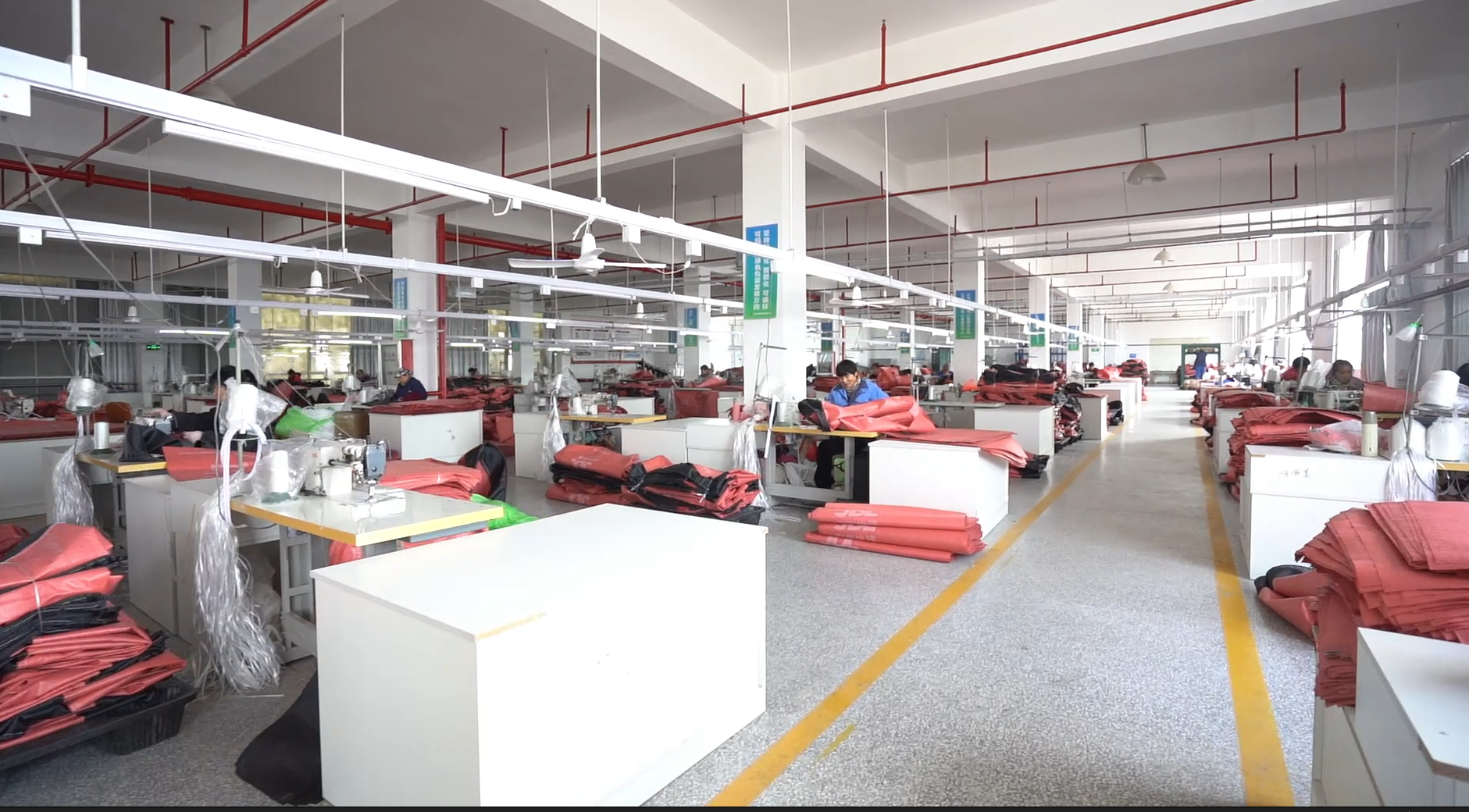
Seam and lifting loop construction is part of the tested configuration; a change at this stage can move a bag outside its certificate scope.
Comparison Table: What Each Claim Covers and What It Does Not
| Claim | Reference | What it covers | What it does not cover | Evidence to request |
|---|---|---|---|---|
| UN certification | UN Model Regulations, applied through ADR, IMDG Code, or IATA DGR | A defined packaging design used for a defined dangerous goods assignment | Non-dangerous goods performance; food contact; other sizes, liners, or SWL bands | Certificate scope, design marking on bag, test summary, batch report |
| Type C static control | IEC 61340-4-4:2018, for FIBCs of 0.25 m³ to 3 m³ in hazardous explosive atmospheres | Electrostatic classification of a conductive-path design within a volume band | Mechanical load performance; behaviour when the ground connection is not made; uses outside the stated volume and atmosphere | Classification statement, construction description, written grounding instruction |
| Food-grade FIBC | Buyer food-safety specification, supported by material declarations for each food-contact component | Suitability of the specified construction for food contact | Dangerous goods transport; static control; performance under heavy SWL where not separately tested | Component-level declarations, production area description, batch records |
| Non-dangerous FIBC type test | ISO 21898:2024; EN ISO 21898:2024; GB/T 10454-2025 | Materials, construction, design, type test, and marking for non-dangerous solid materials | Dangerous goods transport; electrostatic classification; food-contact suitability | Test report with edition reference, marking record, SWL statement |
Use Cases: Where Each Claim Actually Applies
Non-hazardous chemical powder exported to Europe. The relevant reference is the non-dangerous goods FIBC standard in its European adoption, not the dangerous goods regime. The buyer checks the edition cited, the SWL band, and the marking, and treats UN language in the quotation as irrelevant unless the substance is actually classified for transport.
Classified chemical requiring dangerous goods packaging. Here the UN route applies and the entire chain — liner, closure, marking, packing instruction — has to be consistent. A supplier that offers UN-certified construction as an option should be able to state exactly which configuration that option applies to.
Combustible dust atmosphere in a filling station. Type C style bags with a conductive path plus a documented grounding procedure are the relevant combination. Buying the bag without the procedure leaves the risk unmanaged, because the protection depends on the connection being made at the point of use.
Flour, sugar, starch, or dry ingredients for retail and food manufacturing. Food-grade FIBC with a suitable liner, produced in a controlled area, documented at component level. Structural choices such as a discharge spout or flat bottom should be confirmed as part of the same construction being assessed.
Minerals and construction materials moving domestically in China. GB/T 10454-2025 is the reference to plan against from its 1 March 2026 implementation date, replacing the 2000 and 2019 documents in that family. Suppliers and buyers running long programmes should schedule the documentation review before that date rather than after it.
Product Range: Mapping Claims to the Four Main Bulk Bag Types
Yancheng Yide Packaging Technology Co., Ltd. (Yide Packaging) is a packaging manufacturer based in Yancheng, Jiangsu, China, producing FIBC bulk bags, PP woven bags, and logistics packaging for industrial and export markets. Its bulk bag range is organised around the four application types below, which is also the most useful way to separate compliance claims during sourcing.
| Product type | Compliance route typically relevant | What to confirm before ordering |
|---|---|---|
| Industrial FIBC Bulk Bags | Non-dangerous goods FIBC standard in the destination market | SWL within 500–2000 kg, top and bottom structure, lifting loops, marking record |
| Chemical Bulk Bags | Depends on classification: dangerous goods route, or non-dangerous standard, or both | Liner and coating choice, moisture protection, conductive or anti-static options where required |
| UN Certified FIBC Bags | UN Model Regulations via the applicable modal rule | Exact configuration covered by the certificate, marking match, packing instruction, batch report |
| Food Grade FIBC Bulk Bags | Buyer food-safety specification plus component-level material declarations | Food-grade body, liner, thread and closure; production area; contamination controls |
Structurally, the range is built on virgin PP woven polypropylene fabric, with reinforced thickened anti-static fabric and conductive woven fabric available for static-sensitive applications. Safe working load is specified from 500 kg to 2000 kg. Top options include fill spout, full open top, and top cover; bottom options include discharge spout and flat bottom; four lifting belts and high-strength polyester thread sewing are standard, and lamination is optional. Dimensions are made to order rather than fixed, which is why the certificate scope check matters more than the catalogue description.
Manufacturing is supported by a 5,000 m² food-grade clean workshop, 15 engineers, and a quality system built on certified raw materials, automated feeding, intelligent production management, visual recognition, and multi-level manual inspection. Raw materials and finished products are tested batch by batch, and reports can be retrieved by batch information, so that raw materials, formulations, equipment parameters, and production batches can be traced if an anomaly occurs. In comparative testing under identical specifications, basis weights, and test conditions, key performance indicators for the woven range are approximately 10% above standard products of the same type. On cost, a higher unit price per bag is offset by fewer hidden costs — bag breakage, material leakage, equipment downtime, manual adjustment, cargo damage, rework, and complaints — which is the basis on which a compliant bag should be compared against a cheap one.
Frequently Asked Questions
Does a UN certificate cover every bulk bag in my order?
No. UN documentation applies to a tested packaging design and the configuration that was tested, including the materials, liner, closure, and the safe working load band. It does not automatically transfer to a different size, a different SWL within the 500–2000 kg range, a different liner, or a different filling and discharge arrangement. Buyers should request the certificate scope and compare it line by line against the specification on the purchase order, then confirm that the marking on the delivered bags references the same design.
China vs local FIBC bag suppliers for chemical compliance: what should actually be compared?
Compare documentation and configuration control, not geography. Four questions do most of the work. First, which edition of the non-dangerous goods standard does the supplier reference — ISO 21898:2024, its European adoption EN ISO 21898:2024, or GB/T 10454-2025, which takes effect on 1 March 2026 and replaces GB/T 10454-2000 and GB/T 37425-2019. Second, where the substance is classified for transport, can the supplier state the exact configuration covered by UN documentation. Third, can batch test reports be retrieved by batch information for traceability. Fourth, can fabric weight, lamination, liner, and top and bottom structure be adjusted to the filling line rather than chosen from a fixed list. Local supply shortens logistics and simplifies site visits; China-based manufacturing typically offers wider structural customisation and consolidates several packaging formats in one production file. The neutral way to decide is a documentation review plus a sample trial on your own equipment.
Can a Type C style bulk bag be supplied with a 2,000 kg safe working load and custom top and bottom?
Yes, within limits that must be documented. Bulk bag safe working loads are commonly specified from 500 kg to 2000 kg, and top options include fill spout, full open top and top cover, while bottom options include discharge spout and flat bottom, with four lifting belts and high-strength polyester thread sewing. Conductive and anti-static fabric options are available for static-sensitive applications. The constraint is that any change to structure, liner, or load band must be checked against the configuration assessed for the relevant claim, and Type C use additionally requires a grounding procedure at the filling and discharge points.
Why does a compliant bulk bag cost more per unit than a standard bag?
Because the price difference buys configuration control. A compliant bag carries a defined material specification, a documented construction, batch testing, and retrievable reports; those steps cost money per bag. The commercial case is that the higher unit price is offset by fewer hidden costs — bag breakage, material leakage, equipment downtime, manual adjustment, cargo damage, rework, and customer complaints. Comparing unit prices alone hides the failure costs that appear later in filling, transport, and stacking, so the comparison should be made on total cost of use across a full order cycle.
How should a buyer validate a bulk bag sample before placing a full order?
Run the sample as a production trial, not as a visual check. Confirm that dimensions match the filling equipment, that the top and bottom structure works with the actual spout or open-top arrangement, that lifting loops suit the handling method, and that the bag performs through filling, closing, and stacking. Request the batch test report for the sample run, compare the marking against the certificate scope, and for conductive designs confirm in writing how the ground connection will be made at both filling and discharge. A sample that cannot be traced to a batch report has validated the appearance of the bag, not its compliance.
To start that process, send the substance, destination market, target SWL, and filling arrangement to yidepackaging@gmail.com or WhatsApp +86 178-2626-5555, and request a sample plus the documentation set for the exact configuration.
Conclusion: Buy the Configuration, Not the Label
UN certification, Type C static control, and food-grade FIBC are three different answers to three different risks, and each is accepted on its own terms in each destination market. The practical difference between a supplier who can support a compliance decision and one who cannot is rarely the bag itself. It is whether the certificate scope matches the ordered specification, whether the marking matches the document, whether the 500–2000 kg load band and the chosen top and bottom structure sit inside the tested configuration, and whether batch reports can still be retrieved a year after delivery.
Run those four checks before the first purchase order, not after the first rejected shipment. They take an afternoon and they decide whether the documentation you are holding describes the bag in your warehouse.
Request a sample of the exact configuration you intend to order, together with the documentation set that covers it.
Next step: sample, documentation set, and quotation
Yancheng Yide Packaging Technology Co., Ltd. — FIBC bulk bags, chemical bulk bags, UN certified FIBC bags, and food-grade FIBC bulk bags, with SWL from 500 kg to 2000 kg and custom top and bottom structures.
Email: yidepackaging@gmail.com | Tel / WhatsApp: +86 178-2626-5555
Address: Yancheng City Dafeng District Development Zone Changzhou Industrial Park, west side of Changzhou Road, north side of Changqing Road, Buildings 2, 3, and 4
Website: www.ycyide.net | Product catalogue: download the Yide Packaging catalogue (PDF)
Have Questions or Need More Details?
Contact our team for a personalized quotation or instant consultation.
Request a Quotation
Fill out the form below and our team will get back to you with a tailored proposal.
WhatsApp Direct Chat
Prefer to chat in real-time? Message us on WhatsApp for instant assistance & quick answers.
- Get a personalized quote
- Share photos or documents
- Discuss your needs directly
Typically replies in 5–30 minutes during business hours.