
Bulk Bags Sourcing: Mailing Bags vs. Express Transfer Bags
Bulk Bags Sourcing Series · Buyer Decision Guide
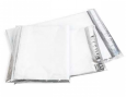
A buyer's guide to choosing between one-way plastic mailing bags and reusable express transfer bags in e-commerce and logistics fulfillment — with the specification facts, decision steps and comparison table needed to write a defensible purchase brief.
Most fulfillment operations do not have a bag problem. They have a packaging-tier problem. A purchase request that lists mailing bags and transfer bags as one line item usually hides two different jobs: getting a single order to a customer's door, and moving grouped goods between a warehouse, a sorting hub and a delivery station.
The two formats look similar in a catalogue photo and behave nothing alike in operation. Plastic mailing bags are a one-way parcel format built around a sealed, moisture-blocking film. Express transfer bags are a reusable containment format built around woven fabric and a reopenable mouth. Treating them as substitutes produces predictable failures: over-specified parcel bags, under-specified transfer bags, and a cost model that never converges.
The sourcing answer is not which one — it is which tier, at which volume. A fulfillment network typically buys plastic mailing bags per parcel and express transfer bags per loop. Mailing bags carry the shipment to the end customer once. Transfer bags carry many shipments through the network repeatedly. Both can sit under the same bulk bags and logistics packaging sourcing programme, but they should be specified, sampled and approved against different criteria.
The Sourcing Problem: One RFQ, Two Packaging Tiers
The first recurring error is using an express transfer bag as an outer parcel. A 100 × 100 cm woven bag is built for grouped loads handled by warehouse staff. It is not sized against a single customer order, and its closure is designed to be reopened, not to present a sealed parcel to a recipient.
The second error is the reverse: using plastic mailing bags for internal circulation. A mailing bag is a single-trip format. Its value comes from low unit weight, a sealed barrier and fast packing, not from surviving repeated handling inside a sorting loop.
The third error is a comparison error. Buyers put a per-piece price for mailing bags next to a per-piece price for transfer bags and conclude that the reusable option costs more. The comparison only becomes meaningful once the transfer bag price is divided by the number of loops it actually completes, and once the one-way bag price is multiplied by the parcels it replaces.
There is also a standards error worth flagging at the start of any sourcing file. FIBC standards — ISO 21898:2024 for non-dangerous goods, EN ISO 21898:2024 in Europe, GB/T 10454-2025 in China, and IEC 61340-4-4:2018 for electrostatic classification of FIBCs used in hazardous explosive atmospheres — describe flexible intermediate bulk containers. They do not describe plastic mailing bags and they do not describe express transfer bags. Bulk bags and courier bags are different product families with different compliance paths, and mixing the two in a tender document only invites the wrong quotations.
Industry Background: Why Fulfillment Networks Buy Both
E-commerce fulfillment splits packaging into an outer tier and an internal tier. The outer tier is what the end customer receives: a sealed, lightweight parcel that protects against moisture, dust and handling scuffs. The internal tier is what the network uses to aggregate, sort and move goods before the last mile: a durable, reopenable container that a sorter can open, check and close again.
Plastic mailing bags sit in the outer tier. They are used across e-commerce and fashion, book and audio-visual retail, the pharmaceutical industry, logistics and express delivery, retail and soft goods, and electronic components. Express transfer bags sit in the internal tier. They are used in logistics circulation, moving and storage, luggage transit, warehouse handling, express sorting and goods storage, and are specified for the apparel and e-commerce, automotive and industrial, pharmaceutical and healthcare, and electronics and high-value goods industries.
Yancheng Yide Packaging Technology Co., Ltd. (Yide Packaging) is a packaging manufacturer based in Yancheng, Jiangsu, China, producing industrial bulk packaging, polypropylene woven packaging, reusable logistics packaging, express delivery packaging and sustainable packaging for customers worldwide. Its range covers both tiers discussed here: Plastic Mailing Bags and Express Transfer Bags are listed alongside FIBC Bags, PP Woven Bags, Valve Bags and Paper Plastic Composite Bags. That range matters at the sourcing stage because a buyer running one packaging programme across parcel and transfer formats can consolidate specification review, sampling and documentation with a single supplier instead of reconciling two.
Plastic Mailing Bags: What the Specification Actually Says
Material and barrier
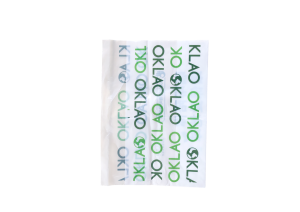
The regular version is made of 100% brand-new high-transparency polyethylene (PE). The bag body is integrated moulding in PE/PO material, which fully blocks moisture and dust and prevents goods from being contaminated by rain and stains in transit. That barrier behaviour is the reason the format is used for water-sensitive categories such as apparel and books.
An eco-friendly version uses a PLA + PBAT + starch composite raw material. According to the product specification, this degradable material can achieve over 90% degradation in a natural environment within 6–9 months and complies with environmental regulations such as EU EPR. Some special versions are made of non-woven fabric for specific heavy-duty and breathable packaging requirements.
Size ladder and load reference
The format is sold against a three-step size ladder, with full-size customization supported so that bag capacity can be adjusted to the actual volume of the goods.
| Format | Dimensions | Load reference | Typical contents |
|---|---|---|---|
| Small regular | 6 × 9 in (approx. 152 × 229 mm) | 0.5–1 kg | Accessories, small parts |
| Medium universal | 10 × 13 in (approx. 254 × 330 mm) | 2–5 kg | Apparel, books — the mainstream e-commerce specification |
| Large thickened | 19 × 24 in (approx. 483 × 610 mm) | 10–30 kg; thickened 100% new material withstands over 30 kg pulling force | Oversize apparel, home textiles |
Colour, print and where it fits
Standard basic models are mainly available in gray, white and black, with full-colour customization supported so that exclusive colours and logo patterns can be printed to brand requirements. In the fulfillment line, the format is associated with normal-temperature warehousing and logistics, goods wrapping, and compatibility with automatic packing equipment.
Where it fits: any single order that leaves the building once and is not expected to come back. Where it does not fit: any flow where the same container has to be opened, reclosed and reused across multiple handling points.
Express Transfer Bags: What the Specification Actually Says
Construction and opening
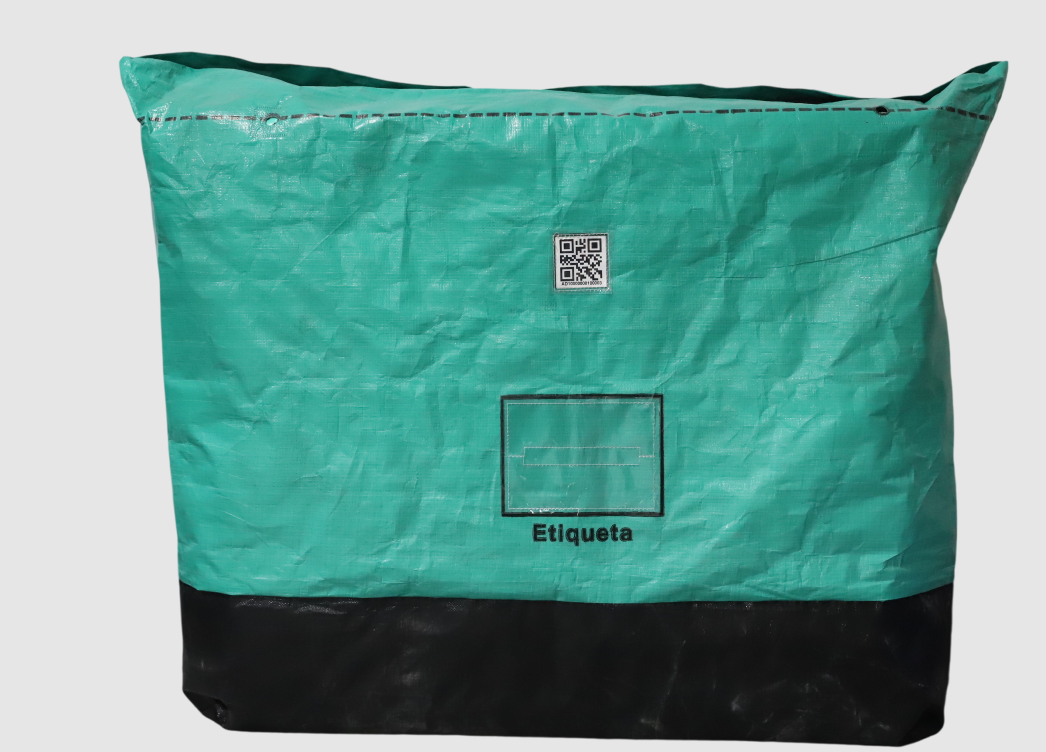
Express transfer bags are made of PE woven fabric, with lamination optional. The standard overall dimension is 100 × 100 cm, and customizable sizes are available. Two opening styles are offered. The zipper style includes a zipper protector, a lockable buckle and zipper-tooth protection. The round opening style is an alternative for operations that prefer a non-zipper mouth.
Available colours are blue, white, light-green, green, yellow, red and orange-red, with custom logo printing available. The product is classified as a reusable logistics bag and is also identified as a zippered logistics bag and a waterproof mailing bag — the last of these refers to courier and e-commerce shipping use, not to a single-trip parcel film format.
Performance and reuse logic
The PE woven fabric provides excellent toughness, high load-bearing capacity and wear resistance. Lamination is optional, and the laminated version offers waterproof and stain-resistant performance for harsher working conditions. The product is suitable for reusable logistics operations rather than single-trip packaging, and is designed for warehouse transit, distribution and courier transfer scenarios.
The zipper hardware is the part that separates a reusable bag from a disposable one. A zipper protector limits abrasion on the teeth, a lockable buckle secures the mouth between handling points, and zipper-tooth protection extends the working life of the closure. None of these features changes the fact that the closure must be checked as part of the reuse routine — closure wear is the first thing a warehouse supervisor notices when a loop starts failing.
Where it fits
Typical application scenarios include logistics circulation, moving and storage, luggage transit, warehouse handling, express sorting and goods storage. The format is intended for the logistics circulation industry and for warehouse handling, express sorting and goods storage operations.
Step-by-Step: How to Run the Sourcing Decision
The decision can be reduced to seven steps. Each step produces a line that belongs in the purchase brief, and each line removes a question that would otherwise surface after the first delivery.
- Fix the packaging tier before the SKU. Write down whether the bag touches the end customer or only internal staff. Outer tier goes to plastic mailing bags; internal tier goes to express transfer bags. Do not open a quotation for both formats under one line item.
- Size against the packed item, not the product page. Mailing bag capacity depends on the packed volume, which is why the specification supports full-size customization. For transfer bags, the 100 × 100 cm standard is the starting point and should be adjusted to the loading pattern at the sorting station.
- Decide the closure and security model. A mailing bag presents a sealed parcel. A transfer bag presents a reopenable mouth, optionally with a lockable buckle. If the flow requires inspection at intermediate points, the reopenable closure is a requirement, not a feature.
- Decide the barrier requirement. Mailing bags block moisture and dust through integrated PE/PO material. Transfer bags achieve water and stain resistance only when lamination is selected. Choosing an un laminated transfer bag for a wet handling environment is a specification error, not a price saving.
- Decide the reuse and inspection model. Reusable means the bag is expected to complete multiple cycles. Build a pre-reuse check into the SOP: zipper teeth, protector, buckle, seams and fabric surface. A reusable bag that is not inspected becomes a single-trip bag with a higher unit price.
- Decide the print and identification model. Mailing bags support full-colour customization and logo printing. Transfer bags support logo printing plus a colour range used for route or depot coding. Both decisions should be made before sampling, because print changes the approval cycle.
- Validate on the line and in the loop. Run the mailing bag through the packing line, including automatic packing equipment where used. Run the transfer bag through at least one full sorting and return cycle. Approve the format on observed handling, not on a catalogue photo.
Use Cases: Matching Format to Fulfillment Scenario
| Scenario | Format that fits | Reason |
|---|---|---|
| Apparel e-commerce, 2–5 kg per order | Plastic Mailing Bags, 10 × 13 in | Mainstream e-commerce specification for soft goods such as apparel and books |
| Accessories and small parts, under 1 kg | Plastic Mailing Bags, 6 × 9 in | Small regular size matched to small items |
| Oversize apparel and home textiles, 10–30 kg | Plastic Mailing Bags, 19 × 24 in thickened | Thickened 100% new material with over 30 kg pulling-force resistance |
| Sorting centre batch transfer between hubs | Express Transfer Bag, zipper style | Reopenable mouth with zipper protector, lockable buckle and tooth protection |
| Moving, storage and luggage transit | Express Transfer Bag, round opening | Round opening style suited to bulk loading and quick closure |
| High-value goods closed loop | Express Transfer Bag with lockable buckle | Secure closure plus colour coding and logo printing for identification |
Comparison Table: Plastic Mailing Bags vs. Express Transfer Bags
The table below uses only the published specification facts for the two formats. It is designed to be copied into a sourcing comparison sheet.
| Decision dimension | Plastic Mailing Bags | Express Transfer Bags |
|---|---|---|
| Packaging tier | One-way outer parcel | Reusable internal transfer and containment |
| Base material | 100% brand-new high-transparency PE; eco version PLA + PBAT + starch; some special versions non-woven | PE woven fabric, lamination optional |
| Construction | Integrated moulding in PE/PO material | Woven fabric bag with sewn construction and reopenable mouth |
| Opening and closure | Sealed parcel format | Zipper style with zipper protector, lockable buckle and zipper-tooth protection; round opening alternative |
| Standard size | 6 × 9 in, 10 × 13 in, 19 × 24 in | 100 × 100 cm |
| Customization | Full-size customization; gray, white and black standard; full-colour print and logo | Customizable sizes; blue, white, light-green, green, yellow, red, orange-red; custom logo printing |
| Load reference | 0.5–1 kg; 2–5 kg; 10–30 kg with over 30 kg pulling force in the thickened size | High load-bearing capacity, wear-resistant PE woven fabric |
| Moisture and dust | Blocks moisture and dust | Waterproof and stain-resistant on the laminated version |
| Reuse | Single trip | Reusable for multiple cycles |
| Primary application | E-commerce, fashion, books and audio-visual, pharmaceutical, express delivery, retail soft goods, electronic components | Logistics circulation, moving and storage, luggage transit, warehouse handling, express sorting, goods storage |
| What to verify before approval | Size against the packed item, seal integrity, print registration, compatibility with the packing line | Zipper, protector and buckle condition, seam strength, lamination coverage if water resistance is required |
Supplier Capability Check: What to Verify Before You Commit
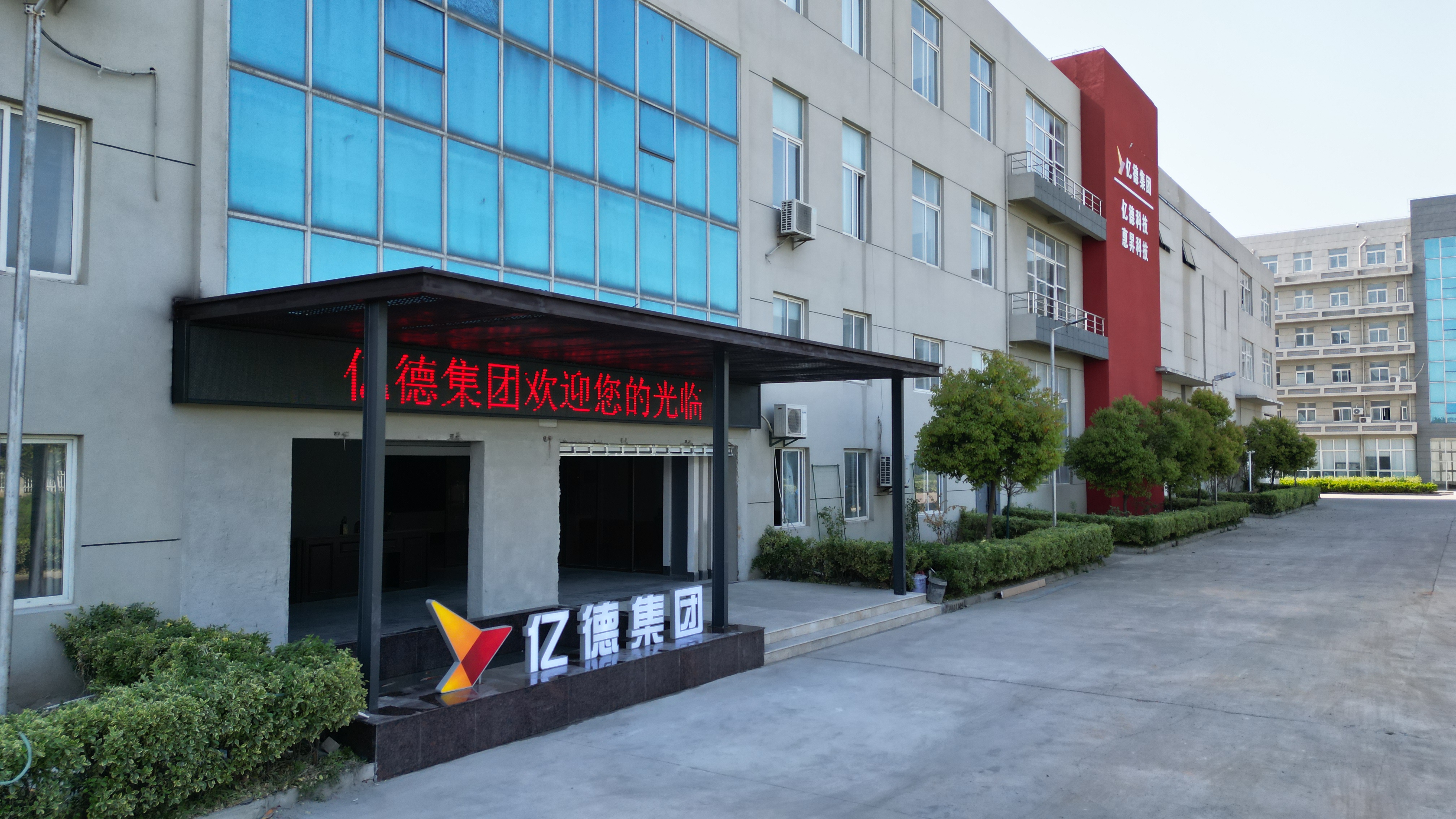
Once the tier decision is made, the sourcing question shifts from format to supplier. Yide Packaging was established in 2022 and operates a manufacturing facility covering 120,000 square metres, including an FIBC production base of approximately 80,000 square metres of standardized factory facilities and a 5,000-square-metre food-grade clean workshop. The company employs approximately 130 staff, including an R&D team of 15 engineers, and reports annual production capacity of 500,000 to 1,000,000 tons. Export business accounts for 20% of total sales, with markets including Thailand, Kazakhstan, Kyrgyzstan, Uzbekistan, Tajikistan, Turkmenistan, Turkey, Saudi Arabia, the United Arab Emirates, Egypt, South Africa, Italy, Spain, the United Kingdom, the Netherlands, France, Hungary, Germany, Australia, Argentina, Mexico, Brazil, the United States and Canada.
For both formats in this article, the relevant capability is customization rather than catalogue supply. Yide supports OEM, ODM and customized packaging projects according to dimensions, material, fabric weight, load capacity, safety factor, lamination, printing, colour, lifting structure, filling and discharge design, closure method, zipper structure, RFID requirements, waterproof performance and specific application conditions. The process runs from requirement analysis and design through sampling, production, testing and delivery.
Procurement note: manufacturing scale does not replace a sample. A 120,000-square-metre factory and a 15-engineer R&D team tell you the supplier can execute a custom run; they do not tell you whether a specific mailing bag seals cleanly on your packing line or whether a specific transfer bag zipper survives your sorting loop. Approve the sample, then approve the volume.
Frequently Asked Questions
Do plastic mailing bags or express transfer bags require UN certification?
No. UN certification and FIBC standards apply to flexible intermediate bulk containers used for bulk and, where relevant, dangerous goods. ISO 21898:2024 covers FIBCs for non-dangerous solid materials in powder, granular or paste form; EN ISO 21898:2024 is the European approval of the same requirement set; GB/T 10454-2025 is the Chinese national standard for FIBCs for non-dangerous goods; and IEC 61340-4-4:2018 covers electrostatic classification of FIBCs between 0.25 m³ and 3 m³ for hazardous explosive atmospheres. None of these standards describes plastic mailing bags or express transfer bags. If a shipment genuinely requires UN-certified packaging, the correct product is a UN-certified FIBC, not a mailing bag.
Can both formats be customized in size, colour and printing?
Yes. Plastic mailing bags support full-size customization, with standard basic models in gray, white and black and full-colour customization available for exclusive colours and logo patterns. Express transfer bags are available in customizable sizes around the 100 × 100 cm standard, in blue, white, light-green, green, yellow, red and orange-red, with custom logo printing. Opening style is also selectable: zipper style with zipper protector, lockable buckle and zipper-tooth protection, or round opening style.
How should a buyer compare the cost of one-way mailing bags and reusable transfer bags?
Compare them on different denominators. A mailing bag is costed per parcel, because it completes one trip. A transfer bag is costed per loop, because it is reusable for multiple cycles, so its unit price has to be divided by the number of cycles it actually completes in your operation. The second calculation only holds if the bag is inspected before each reuse and removed when the zipper, protector, buckle or seams fail. Labour for inspection and closure handling belongs in the same comparison, otherwise the reusable option looks cheaper on paper than it is in the warehouse.
Can samples be requested before a bulk order?
Yes. Sampling is part of the customization process, which runs from requirement analysis and design through sampling, production, testing and delivery. Test the mailing bag on the packing line, including automatic packing equipment where used, and confirm the seal and size against the packed item. Test the transfer bag through at least one full sorting and return cycle, checking the zipper, zipper protector, lockable buckle, zipper teeth and seams. Approve on observed handling rather than on a catalogue image. Sample and quotation requests can be sent through the Yide Packaging website at www.ycyide.net.
What determines lead time for a bulk order?
Lead time is driven by the customization variables rather than by the bag type alone. For mailing bags, the variables include size, material version (regular PE or PLA + PBAT + starch), colour, print coverage and packing-line compatibility checks. For transfer bags, they include size, lamination selection, opening style, colour, logo printing and any RFID or closure requirements. Custom print and new sizes add an approval step that stock formats do not. Confirm the production schedule against your launch or replenishment date before releasing the order, and keep the approved sample as the reference standard for the delivered batch.
Conclusion: Decide the Tier, Then Decide the Supplier
Plastic mailing bags and express transfer bags are not competitors. They occupy different tiers of the same fulfillment operation, and the sourcing decision should reflect that. Choose plastic mailing bags when the job is a single sealed parcel to an end customer, and size the bag against the packed item: 6 × 9 in for small parts, 10 × 13 in for mainstream apparel and books, 19 × 24 in thickened for oversize and heavyweight soft goods. Choose express transfer bags when the job is repeated containment inside the network, and specify the opening, lamination and closure hardware against the handling routine rather than against the unit price.
The decision rule is simple enough to put in a purchase brief: one-way parcel protection goes to film; reusable loop durability goes to woven fabric with a reopenable mouth. Everything else — colour, print, size, lamination — is configuration on top of that rule.
Buyers who keep bulk bags and courier bags in separate specification tracks avoid the most expensive mistake in this category: applying FIBC compliance language to a mailing bag, or applying single-trip cost logic to a reusable transfer bag. Fix the tier first. The supplier conversation gets shorter after that.
Next Step: Sample, Specification or Quotation
Yide Packaging manufactures both Plastic Mailing Bags and Express Transfer Bags, alongside FIBC Bags, PP Woven Bags, Valve Bags and Paper Plastic Composite Bags, for customers in e-commerce, express delivery, logistics, chemical and industrial markets. Send your packed-item dimensions, target load, opening preference and print requirements for a specification review and sample discussion.
Website: www.ycyide.net
Email: yidepackaging@gmail.com
Tel / WhatsApp: +86 178-2626-5555
Download the company and express bag catalogue: Yide Packaging Company Profile 2026 — Express Bag Edition (PDF)
Have Questions or Need More Details?
Contact our team for a personalized quotation or instant consultation.
Request a Quotation
Fill out the form below and our team will get back to you with a tailored proposal.
WhatsApp Direct Chat
Prefer to chat in real-time? Message us on WhatsApp for instant assistance & quick answers.
- Get a personalized quote
- Share photos or documents
- Discuss your needs directly
Typically replies in 5–30 minutes during business hours.