
Bulk Bags vs. PP Woven Bags vs. Valve Bags: Choosing the Right Bulk Packaging Format
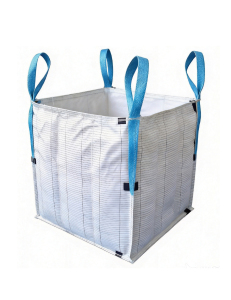
Bulk Bags, PP Woven Bags and Valve Bags answer the same operational question in three different ways: how do you move a dry bulk material from a production line to a customer without losing product, time or margin?
Bulk Bags — also called FIBCs, jumbo bags or ton bags — carry a Safe Working Load of 500–2000 kg and are lifted from above by four lifting belts. PP Woven Bags are the unit-level format used for grain, feed, fertilizer, cement, sand, minerals and plastic pellets. Valve Bags are filled through a valve opening and are designed around automatic filling lines rather than open-mouth filling and sewing.
Buyers often compare the three formats on price per bag. That comparison usually produces the wrong decision, because the real cost driver is the interface between the bag and the filling, handling and transport equipment the buyer already owns. A bag that saves a few cents per unit but slows a filling line, leaks powder or fails in transit is the more expensive option.
Short answer:
- Bulk Bags (FIBC / Ton Bag) — choose when the unit load is handled by crane, forklift jib or other overhead lifting, when the Safe Working Load requirement falls in the 500–2000 kg range, and when the product is a non-dangerous powder, granule, pellet or paste material.
- PP Woven Bags — choose for smaller unit weights filled by open-mouth filling and closed by sewing, especially in agriculture, food, cement, sand, dry-mix, chemicals, mining and pharma/logistics flows where fabric weight (31–54 g/m²) and print flexibility matter more than lifting structure.
- Valve Bags — choose when the material is a fine powder filled on an automatic line and when dust control, moisture protection or light protection drives the specification, using film-lined or breathable paper-plastic composite structures.
Problem Definition: the four places a wrong format shows up as cost
Format mismatches rarely appear as a single visible failure. They accumulate in four places.
- Fill-line compatibility. A valve bag has to be filled through its valve; a bulk bag needs a fill spout, full open top or top cover plus enough headroom for overhead lifting; a PP woven bag needs open-mouth filling and a sewing or closing station. Buying a format the line cannot run turns a packaging saving into a capital project.
- Product loss and dust. Powder escaping at the fill point, moisture entering a hygroscopic product, or contamination of a food-grade material all reduce the sellable output of the same raw material.
- Handling and transport failure. Under-specified fabric, an unsuitable lifting structure, or a discharge design that does not match the receiving process creates rework at the arrival point, not at the supplier's factory.
- Presentation and compliance. Printed brand information that fades, or packaging that cannot be documented for the destination market, is a commercial problem rather than a technical one — but it is still a cost.
The most common mistake is to treat the three formats as substitutes. They are not. They sit at different points in the same material flow, and each one is built around a different filling, lifting and discharge method.
Industry Background: what the standards tell buyers
Bulk bags are the format with the most explicit international standard framework, and that framework is currently in transition.
- ISO 21898:2024 specifies materials, construction and design requirements, plus type test and marking requirements, for flexible intermediate bulk containers intended to contain non-dangerous solid materials in powder, granular or paste form and designed to be lifted from above by integral or detachable devices.
- EN ISO 21898:2024 is the European adoption of the same requirement set; it was approved by CEN on 12 August 2024.
- GB/T 10454-2025 is the Chinese national standard for FIBCs used with non-dangerous goods. It was released on 29 August 2025, takes effect on 1 March 2026, and replaces GB/T 10454-2000 and GB/T 37425-2019.
- ISO 21898:2004, the earlier edition, has been superseded by the 2024 edition in Europe and by GB/T 10454-2025 in China.
- IEC 61340-4-4:2018 specifies electrostatic requirements for FIBCs between 0.25 m³ and 3 m³ intended for use in hazardous explosive atmospheres — the standard behind anti-static and conductive construction choices.
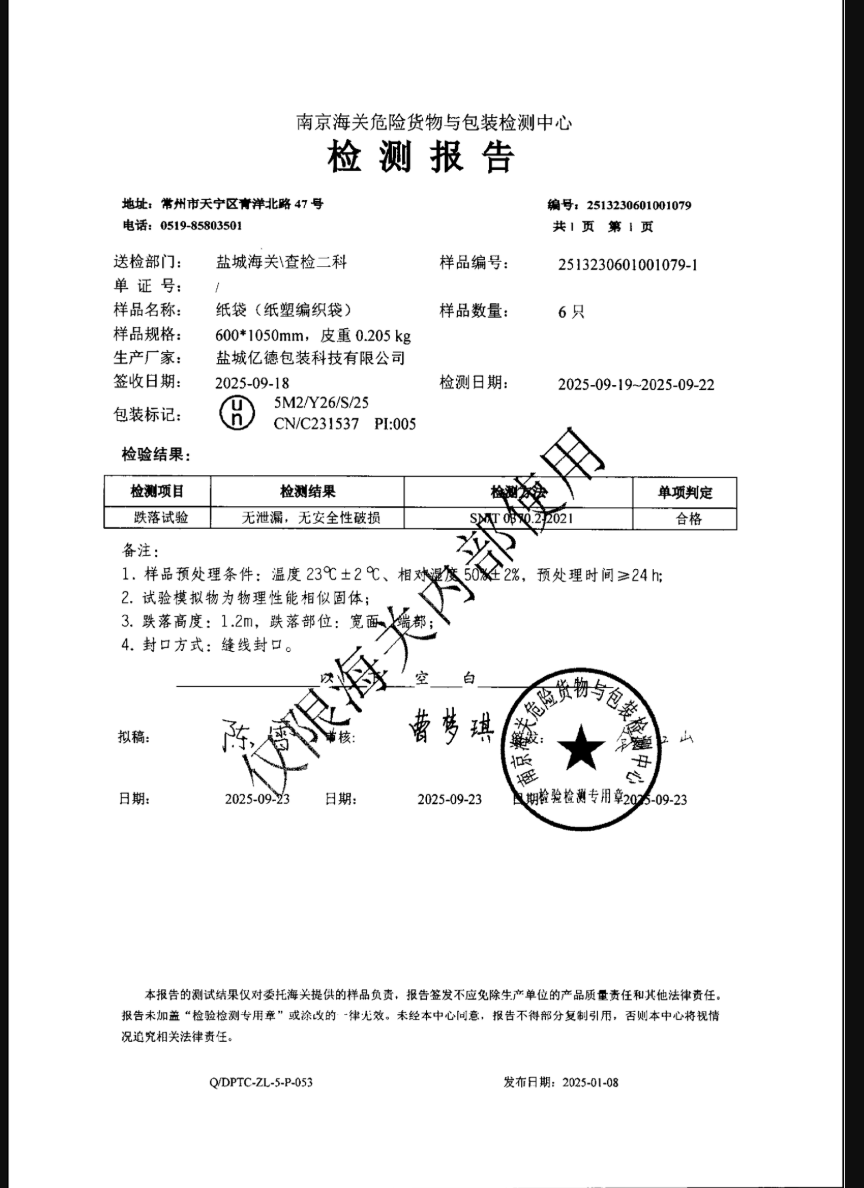
PP woven bags and valve bags are usually specified against the buyer's product, filling equipment and transport requirement rather than against a single product standard. Where the contents are dangerous goods, UN packaging test evidence applies instead. Yide Packaging holds UN Packaging Test Report No. 2513230601001079, issued on 23 September 2025 by the Nanjing Customs Dangerous Goods and Packaging Testing Center, covering a drop performance test on a 600×1050 mm paper-plastic woven bag under SN/T 0510.2-2021: no leakage or safety-relevant damage after drop — passed.
One structural point helps buyers cut through the comparison: all three formats are built on the same substrate family. Bulk bags use woven polypropylene fabric, PP woven bags use polypropylene woven fabric, and the valve bag range includes a PP Woven Valve Bag alongside paper-plastic composite structures. The difference between the formats is structure and interface, not material chemistry.
Detailed Solution: how each format is built
Bulk Bags (FIBC / Ton Bag)
- Safe Working Load: 500–2000 kg.
- Material: virgin PP woven polypropylene fabric, with reinforced thickened anti-static fabric available as an option.
- Top design: fill spout, full open top or top cover.
- Bottom design: discharge spout or flat bottom.
- Lifting: four lifting belts.
- Sewing: high-strength polyester thread.
- Surface: laminated or non-laminated, optional.
- Sizes: customizable on demand.
- Typical industries: chemical, new energy, mining, agriculture, food, logistics and warehousing, and trading operations.
PP Woven Bags
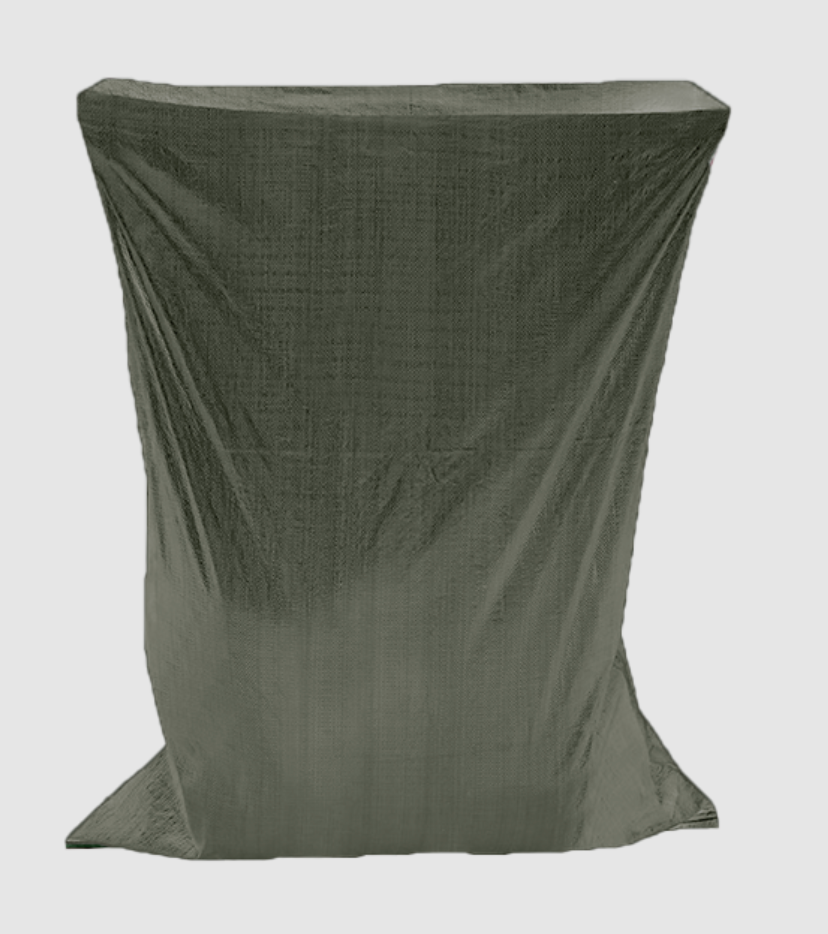
- Sizes: 110×120 cm, 90×110 cm, 100×120 cm, 100×140 cm, 90×100 cm, 50×80 cm, plus custom sizes.
- Fabric weight: multiple options from 31 to 54 g/m².
- Material: polypropylene (PP) woven fabric.
- Colour and print: green as a standard colour, with custom text and logo printing available.
- Performance: thick and durable, high tensile strength, wear-resistant.
- Industries served: agriculture (grains, seeds, feed, fertilizer), food, construction (cement, sand, dry-mix), chemicals and mining, and pharma/logistics.
Valve Bags
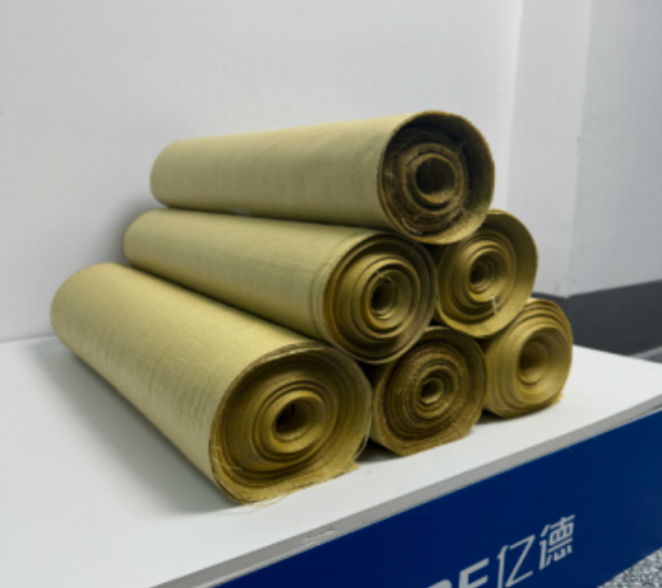
- Material structures: OPP film laminated composite, standard paper-plastic composite, 3-ply paper with inner PE film, or 2-ply paper without inner film.
- Range: Valve Packaging Bag, Industrial Valve Bag, Automatic Filling Valve Bag, Self-Closing Valve Bag, Internal Valve Bag and PP Woven Valve Bag.
- Sizes: customizable.
- Printing: custom colour printing with fade-resistant ink.
- Performance: high water resistance, moisture-proof, air-permeable, light-proof and drop-shock resistant — with the caveat that performance varies by material. The film-lined version provides water and moisture resistance, while the non-film version is breathable but not waterproof.
- Typical industries: food starch powder, chemical powder, building-material powder, pigment powder, plastic powder and other industrial powder packaging.
Filling and discharge structures: the interface that decides the format
Bulk bags are filled from the top through a fill spout, a full open top or a top cover, discharged through a discharge spout or a flat bottom, and moved by four lifting belts. That structure assumes overhead lifting capacity at both the filling end and the receiving end of the journey.
PP woven bags are open-mouth containers closed by sewing. They assume a filling station that doses product into the bag and a closing step immediately afterwards, and they are handled by hand, by pallet or by conveyor rather than by crane.
Valve bags are filled through the valve itself. The range includes Automatic Filling Valve Bag, Self-Closing Valve Bag and Internal Valve Bag configurations — a naming convention that reflects how each bag interfaces with automatic filling equipment. Film-lined structures protect powders that must not take up moisture; non-film structures stay breathable for products that need air exchange but do not need a water barrier.
A practical rule for buyers: if the unit is lifted from above and the load requirement is measured in hundreds of kilograms, the specification belongs to the bulk bag family. If the unit is filled by open mouth and closed by sewing, it belongs to the PP woven bag family. If the unit is filled automatically through a valve and dust or moisture control is the primary concern, it belongs to the valve bag family.
Step-by-Step Breakdown: selecting the format in six steps
- Define the filling method first. Automatic valve filling, open-mouth filling with sewing, or top filling with overhead lifting. The filling method eliminates at least one of the three formats immediately.
- Define the unit load and lifting method. Match the Safe Working Load to product density and unit volume, and confirm whether the bag will be lifted by crane or forklift jib using four lifting belts, or handled by hand, pallet or conveyor.
- Match the structure to the product form. Powder, granule, pellet or paste; food-grade or industrial; and whether anti-static or conductive fabric is required for a hazardous atmosphere.
- Decide lamination and barrier requirements. Laminated or non-laminated bulk bags, film-lined or breathable valve bag structures, and inner liners where dust-proofing or moisture protection is the priority.
- Set print and brand requirements. Bulk bags and PP woven bags support custom logo and text printing; valve bags use custom colour printing with fade-resistant ink so that marking remains readable after transport and storage.
- Validate with a sample, then confirm commercial terms. Samples without printing are provided for customer confirmation, and the acceptance criterion is to send samples before production. For customized products the MOQ is 5,000 pcs, lead time is 45 days excluding delivery time, and monthly capacity for customized orders is 50,000 pcs. A single sample is available for delivery from spot goods. Payment terms are 30% deposit in advance with 70% balance before shipment, negotiable under special circumstances, and delivery can be arranged by courier, air freight or logistics warehouse.
Use Cases: which format for which operation
| Operation / material | Recommended format | Why |
|---|---|---|
| Fine chemical powder such as PVC paste resin filled on an automatic line | Bulk bag (ton bag) or valve bag | Bulk bag applications include hermetically sealed chemical powder that is leak-proof, moisture-proof and compatible with automatic filling; valve bags are built for automatic powder filling. |
| Cement, dry-mix, sand and aggregates | PP woven bags and bulk bags | PP woven bags serve construction flows including cement, sand and dry-mix; bulk bags cover mining and construction materials where the unit load is lifted. |
| Food starch, flour, sugar and salt | Film-lined valve bags or food-grade bulk bags | Valve bag applications include food starch powder; film-lined structures provide water and moisture resistance, and food-grade packaging is produced in a 5,000 m² food-grade clean workshop. |
| Plastic pellets, resins and pigments | Bulk bags, PP woven bags and valve bags | Bulk bags cover plastic pellets and resins; valve bags list pigment powder and plastic powder among their applications where dust control matters. |
| Reusable, high-cycle handling | Bulk bags with the appropriate lifting and discharge design | A chemical plant in Japan purchased 6,000 ton bags for pallet use with a reuse cycle of 10 to 30 times, reported for large loading capacity and reduced overall cost. |
Comparison Table: Bulk Bags vs. PP Woven Bags vs. Valve Bags
| Decision factor | Bulk Bags (FIBC / Ton Bag) | PP Woven Bags | Valve Bags |
|---|---|---|---|
| Load / capacity basis | Safe Working Load 500–2000 kg | Determined by size and fabric weight; fabric weight options 31–54 g/m² | Determined by the selected material structure; sizes customizable |
| Primary material | Virgin PP woven polypropylene fabric; reinforced thickened anti-static fabric option | Polypropylene (PP) woven fabric | OPP film laminated composite, standard paper-plastic composite, 3-ply paper with inner PE film, 2-ply paper without inner film |
| Filling design | Fill spout, full open top or top cover | Open-mouth filling, closed by sewing; closure configuration customizable | Filled through the valve; Automatic Filling Valve Bag, Self-Closing Valve Bag and Internal Valve Bag configurations |
| Discharge / closure | Discharge spout or flat bottom | Custom closure method per order | Valve closure integral to the bag structure |
| Lifting / handling | Four lifting belts; lifted from above | Hand, pallet or conveyor handling | Handling per filling line and palletising set-up |
| Lamination / barrier | Laminated or non-laminated, optional | Laminated PP woven bag and paper-plastic composite variants available in the range | Film-lined version for water and moisture resistance; non-film version breathable but not waterproof |
| Printing | Custom logo printing available | Custom text and logo printing available | Custom colour printing with fade-resistant ink |
| Typical industries | Chemical, new energy, mining, agriculture, food, logistics and warehousing, traders | Agriculture, food, construction, chemicals and mining, pharma/logistics | Food starch powder, chemical powder, building-material powder, pigment powder, plastic powder |
Read the table as a filter, not a ranking. No format wins on every line; each one is defined by the filling and lifting interface it was designed for.
Customization and OEM Capability: what to confirm with a manufacturer
Yancheng Yide Packaging Technology Co., Ltd. (Yide Packaging) is a manufacturer of industrial bulk packaging, polypropylene woven packaging, reusable logistics packaging and express delivery packaging, based in Yancheng, Jiangsu, China, and established in 2022. The company produces FIBC bags, bulk bags, ton bags, industrial bulk bags, PP woven bags, laminated PP woven bags, valve bags and paper-plastic composite bags, and supports OEM, ODM and customized packaging projects.
Customization can be applied to dimensions, material, fabric weight, load capacity, safety factor, lamination, printing, colour, lifting structure, filling and discharge design, closure method, zipper structure, RFID requirements, waterproof performance and specific application conditions. The stated customization position is 100% customizable except for unavailable special materials, with ODM production services available.
The manufacturing base covers approximately 80 mu with around 80,000 square metres of standardized factory facilities, including a 5,000 square metre food-grade clean workshop. The company reports an annual production capacity of 500,000 to 1 million tonnes, 130 employees and a 15-engineer R&D team, with quality control supported by 5G-connected production systems, robotic material handling, visual recognition technology, professional inspection teams and testing equipment. Export markets include Thailand, Kazakhstan, Uzbekistan, Turkey, Saudi Arabia, the United Arab Emirates, Egypt, South Africa, Italy, Spain, the United Kingdom, the Netherlands, France, Hungary, Germany, Australia, Argentina, Mexico, Brazil, the United States and Canada.
Compliance and Test Evidence
For buyers working between Evaluation and Execution, documentation is part of the specification, not an afterthought. Yide Packaging's current certification and test records include:
- ISO 9001:2015 — certificate 12426Q00719R001, issued 5 August 2026 by Zhongbiaoyan Guolian (Beijing) Certification Center, valid to 4 August 2029, covering the manufacturing of mail bags (FIBC, transit bags, woven bags) under GB/T 19001-2016/ISO 9001:2015.
- ISO 14001:2015 — certificate 12426E00299R001, issued 5 August 2026, valid to 4 August 2029.
- ISO 45001:2018 — certificate 12426S00261R001, issued 8 May 2026, valid to 8 April 2029.
- REACH SVHC screening — report DGC260127018YD03 covering 251 SVHC items for packaging bag (white woven bag), issued 31 July 2026.
- RoHS 2.0 — report A2260656737101001C issued 5 August 2026 by CTI (Centre Testing International).
- Halogen content test — report DGC260127018YD02 under BS EN 14582:2016, issued 3 February 2026.
- UN Packaging Test Report — No. 2513230601001079, issued 23 September 2025 by Nanjing Customs Dangerous Goods and Packaging Testing Center, drop performance test on a 600×1050 mm paper-plastic woven bag under SN/T 0510.2-2021: passed.
FAQ
Which standards apply to bulk bags, PP woven bags and valve bags?
Bulk bags (FIBCs) are covered by ISO 21898:2024, which specifies materials, construction and design requirements plus type test and marking requirements for FIBCs intended to contain non-dangerous solid materials in powder, granular or paste form and designed to be lifted from above by integral or detachable devices. EN ISO 21898:2024 is the European adoption, approved by CEN on 12 August 2024, and GB/T 10454-2025 is the Chinese national standard, released on 29 August 2025 and effective from 1 March 2026, replacing GB/T 10454-2000 and GB/T 37425-2019. Where FIBCs are used in hazardous explosive atmospheres, IEC 61340-4-4:2018 specifies electrostatic requirements for containers between 0.25 m³ and 3 m³. PP woven bags and valve bags are normally specified against the buyer's product, filling equipment and transport requirement; where the contents are dangerous goods, UN packaging test evidence applies. Yide Packaging holds UN Packaging Test Report No. 2513230601001079, issued on 23 September 2025 by the Nanjing Customs Dangerous Goods and Packaging Testing Center, covering a drop test on a 600×1050 mm paper-plastic woven bag under SN/T 0510.2-2021, which passed with no leakage or safety-relevant damage.
How can I find China bulk bag manufacturers with OEM printing and coating?
Check whether weaving, lamination, printing, sampling and certification sit inside the same factory rather than across separate supply chains. A manufacturer that can offer laminated and non-laminated construction, custom logo printing on bulk bags and PP woven bags, and custom colour printing with fade-resistant ink on valve bags can hold a specification together in one order. Yide Packaging supports OEM, ODM and customized projects, with customization across dimensions, material, fabric weight, load capacity, safety factor, lamination, printing, colour, lifting structure, filling and discharge design, closure method and waterproof performance, and states that ODM production services are available. Its Yancheng base covers approximately 80 mu with around 80,000 m² of standardized factory facilities including a 5,000 m² food-grade clean workshop, and its records include ISO 9001, ISO 14001 and ISO 45001 certificates, REACH SVHC 251-item screening, RoHS 2.0, halogen content testing and a UN packaging drop test report. Ask for certificate numbers and test scope before comparing unit prices.
What are the MOQ and payment terms for customized bulk packaging?
For customized products the MOQ is 5,000 pcs, while a single sample is available for delivery. Spot goods carry an MOQ of 1 pc with freight not included; for custom bags the MOQ is 5,000 pcs and free samples are available with the buyer bearing the shipping cost. Payment terms are 30% deposit in advance and 70% balance before shipment, negotiable under special circumstances. Delivery can be arranged by courier, air freight or logistics warehouse.
Can I approve a sample before mass production?
Yes. Samples without printing are provided for customer confirmation, and the stated acceptance criterion is to send samples before production. Samples are supplied unprinted so that bag structure and construction can be confirmed first, with printing, colour and lamination finalised afterwards. If a shortage of bags occurs after delivery, re-delivery or a corresponding deduction is available.
What lead time and monthly capacity should I expect for customized orders?
Lead time for customized products is 45 days, excluding delivery time, with a monthly capacity of 50,000 pcs for customized orders; the wider manufacturing base reports an annual production capacity of 500,000 to 1 million tonnes. Plan lead time around the sampling step as well, because structure confirmation happens before production. To move from evaluation to execution, download the Yide Packaging brochure at https://cdn.socialarks.com/sbsp/25217/common/2026/0904/%E4%BA%BF%E5%BE%B7%E9%9B%86%E5%9B%A2%E4%BB%8B%E7%BB%8D%E5%85%A82026-%E5%BF%AB%E9%80%92%E8%A3%85%E7%89%88.pdf or send your specification — bag format, dimensions, fabric weight, lamination, printing and target load — to yidepackaging@gmail.com or WhatsApp +86 178-2626-5555.
Conclusion: decide by interface, then by price
Bulk bags, PP woven bags and valve bags are not interchangeable line items. Bulk bags exist to be lifted from above at a Safe Working Load of 500–2000 kg, PP woven bags exist to be filled by open mouth and closed by sewing, and valve bags exist to be filled through a valve on automatic lines where powder control matters. The comparison only becomes useful once the filling method, unit load, lifting method, product form, barrier requirement and print requirement have been fixed in that order.
Buyers who run that sequence before requesting quotations avoid the four cost traps — fill-line incompatibility, product loss, handling failure and presentation or compliance gaps — and can then compare proposals on equal terms, including lamination, certification scope, sample approval, MOQ and lead time. Yide Packaging manufactures all three families plus paper-plastic composite bags, supports OEM and ODM projects, and supplies customized bulk packaging to markets across Asia, the Middle East, Europe, Africa, Australia and the Americas.
Next step: samples, quotation and product data

Send your bag format, dimensions, fabric weight, lamination, printing and target load, and Yide Packaging will confirm the structure, provide an unprinted sample for confirmation and quote against your specification.
Email: yidepackaging@gmail.com | Tel / WhatsApp: +86 178-2626-5555 | Website: www.ycyide.net
Product brochure (2026): download the Yide Packaging brochure
Contact: chen wang | Address: Yancheng City Dafeng District Development Zone Changzhou Industrial Park, west side of Changzhou Road, north side of Changqing Road, Buildings 2, 3 and 4, Yancheng, Jiangsu, China
Have Questions or Need More Details?
Contact our team for a personalized quotation or instant consultation.
Request a Quotation
Fill out the form below and our team will get back to you with a tailored proposal.
WhatsApp Direct Chat
Prefer to chat in real-time? Message us on WhatsApp for instant assistance & quick answers.
- Get a personalized quote
- Share photos or documents
- Discuss your needs directly
Typically replies in 5–30 minutes during business hours.