
China Bulk Bags Manufacturer: Yide Packaging Deep Dive
China Bulk Bags Manufacturer: Yide Packaging Deep Dive
Yancheng Yide Packaging Technology Co., Ltd. (Yide Packaging) is a packaging manufacturer based in Yancheng, Jiangsu, China, established in 2022. The company produces industrial bulk packaging, polypropylene (PP) woven packaging, reusable logistics packaging, express delivery packaging, and sustainable packaging for buyers in chemical, agricultural, mining, construction, food, e-commerce, and logistics sectors. This analysis reviews its facility footprint, product families, OEM/ODM capability, quality control setup, and export footprint — separating verifiable company data from general industry context that applies to any bulk bag buyer.
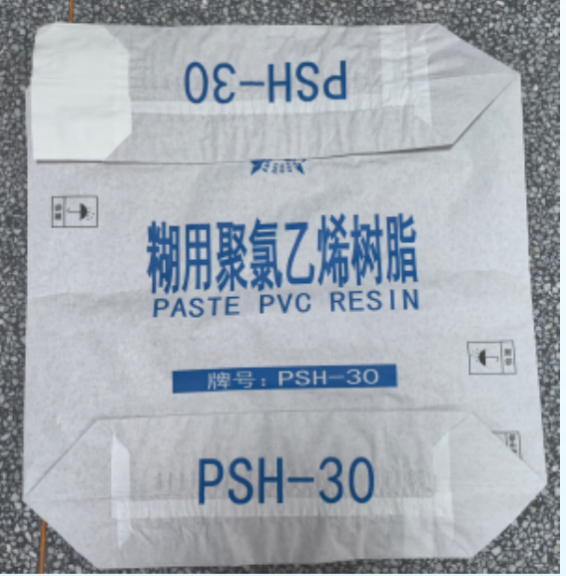
What "Bulk Bags" Actually Means for a First-Time Industrial Buyer
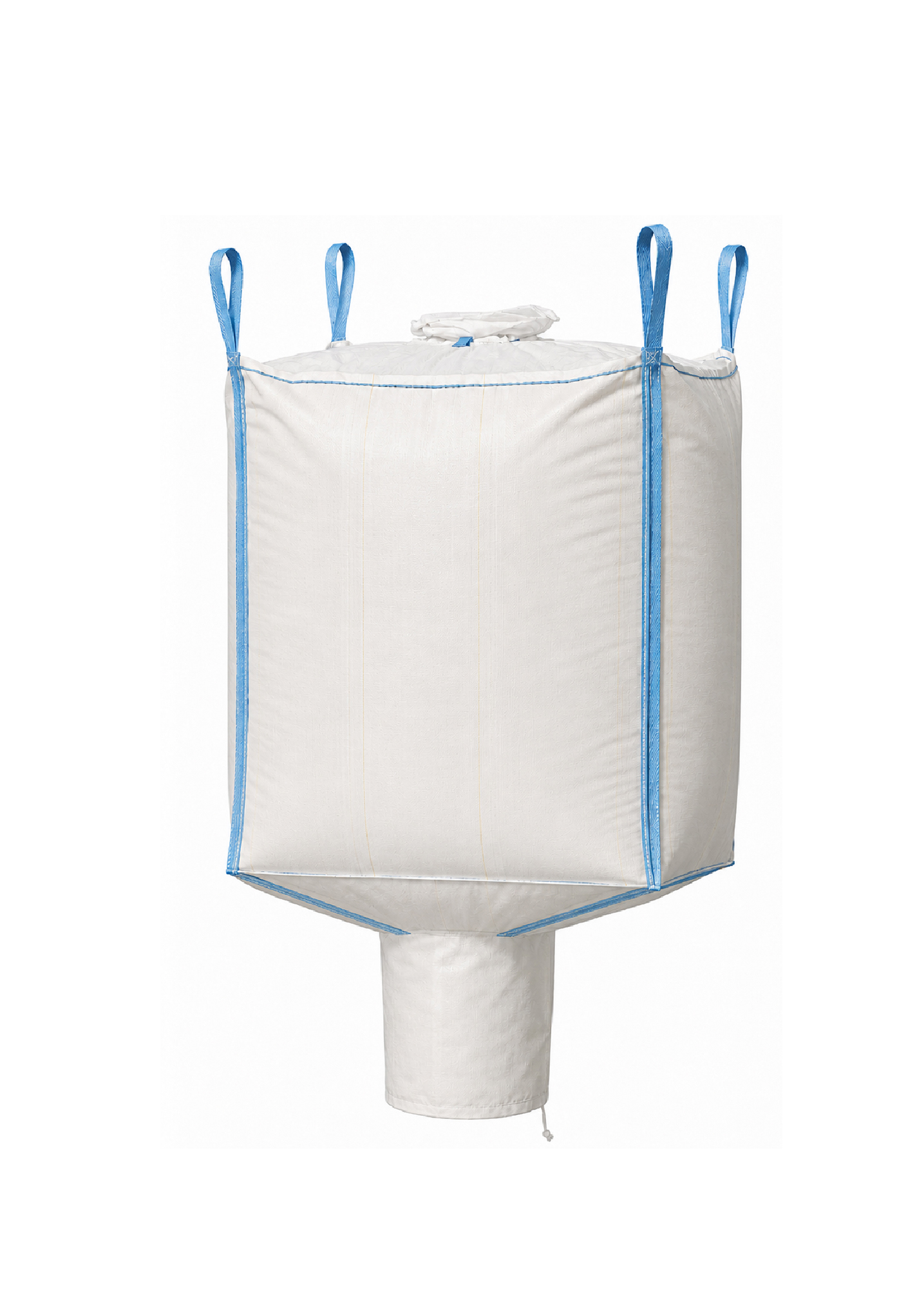
A bulk bag is a large, flexible industrial container designed to store and transport bulk materials. The same product class is sold under several names — bulk bag, FIBC (Flexible Intermediate Bulk Container), jumbo bag, and ton bag — and a typical unit holds roughly 500–2,000 kg of material depending on its design and specifications. Bulk bags are used across chemicals, agriculture, mining, construction, food processing, and logistics for powders, granules, fertilizers, grains, plastic pellets, minerals, sand, and similar dry bulk goods.
The name "bulk bags" is an umbrella term, not a single specification. Within Yide Packaging's range, the named variants are FIBC Bag, Chemical Bulk Bags, Heavy Duty FIBC Bulk Bags, Industrial FIBC Bulk Bags, UN Certified FIBC Bags, Food Grade FIBC Bulk Bags, and Bulk Bags for Powder and Granule Materials. Buyers who search for "bulk bags" and then request a quote without specifying construction, fabric, and certification route typically receive quotes that are not comparable with each other.
It also helps to separate the bulk bag from its smaller relatives in the same material family. PP woven bags, for example, use polypropylene woven fabric at 31–54 g/m² in sizes from 50×80 cm to 100×140 cm, while a ton bag is built from virgin PP woven polypropylene fabric with four lifting loops and a safe working load of 500–2,000 kg. They share a fabric technology; they do not share a use case, a filling line, or a handling method.
Industry Background: Standards Set the Buyer's Baseline
Bulk bags are a standardized product class, which means the buyer's specification should begin with a standard number and an edition year rather than with a marketing description.
ISO 21898:2024 specifies materials, construction and design requirements, type test and marking requirements for flexible intermediate bulk containers intended for non-dangerous solid materials in powder, granular or paste form. In Europe, EN ISO 21898:2024 was approved by CEN on 12 August 2024. In China, GB/T 10454-2025 is the national standard for FIBCs for non-dangerous goods; it replaced GB/T 10454-2000 and GB/T 37425-2019 and took effect on 1 March 2026, so the new edition now governs China-market FIBC requirements. For bags intended for hazardous explosive atmospheres, IEC 61340-4-4:2018 specifies requirements for FIBCs between 0.25 m³ and 3 m³ in volume. The earlier ISO 21898:2004 edition is superseded.
Company Overview: Yancheng Yide Packaging Technology Co., Ltd.
Yide Packaging is a professional manufacturer and customized packaging solution provider located in Yancheng City, Jiangsu, China. Its stated scope covers industrial bulk packaging, polypropylene woven packaging, reusable logistics packaging, express delivery packaging, and sustainable packaging solutions for customers worldwide.
- Established: 2022
- Location: Yancheng City Dafeng District Development Zone Changzhou Industrial Park, west side of Changzhou Road, north side of Changqing Road, Buildings 2, 3, and 4
- Website: www.ycyide.net
- Manufacturing footprint: 120,000 m² total facility. The FIBC production base covers approximately 80 mu, with around 80,000 m² of standardized factory facilities, including a 5,000 m² food-grade clean workshop.
- Workforce: approximately 130 staff, with a research and development team of 15 engineers
- Annual production capacity: 500,000 to 1,000,000 tonnes
- Export share: approximately 20% of total sales
- Main products: FIBC Bags, Logistics Packaging Bags, Logistics Transfer Bags, Postal Transit Bags, Disposable Woven Bags, Valve Bags, and Paper Plastic Composite Bags
- Main markets: Thailand, Kazakhstan, Kyrgyzstan, Uzbekistan, Tajikistan, Turkmenistan, Turkey, Saudi Arabia, United Arab Emirates, Egypt, South Africa, Italy, Spain, United Kingdom, Netherlands, France, Hungary, Germany, Australia, the Americas, Argentina, Mexico, Brazil, United States, and Canada
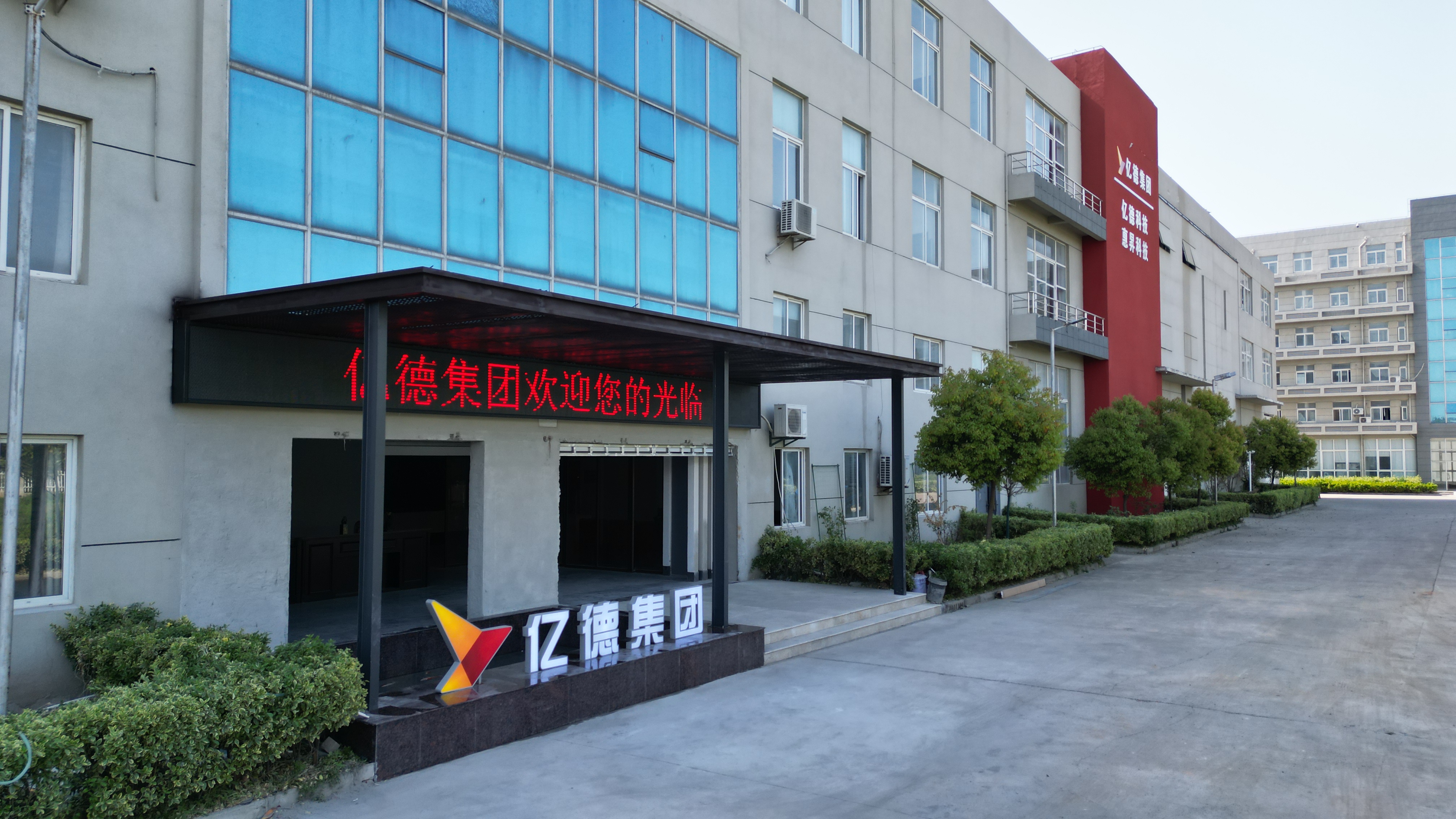
Two data points deserve a buyer's attention rather than a marketing response. First, a 2022 founding date means the company is young relative to long-established bulk bag producers, so a facility audit and sample-lot validation carry more weight than a decade-based reputation claim. Second, the stated 500,000–1,000,000 tonne annual capacity and 120,000 m² footprint are material to any volume contract and should be verified on site if the order size depends on them.
Core Products and Packaging Solutions
Industrial bulk packaging: FIBC, ton bags, and industrial bulk bags
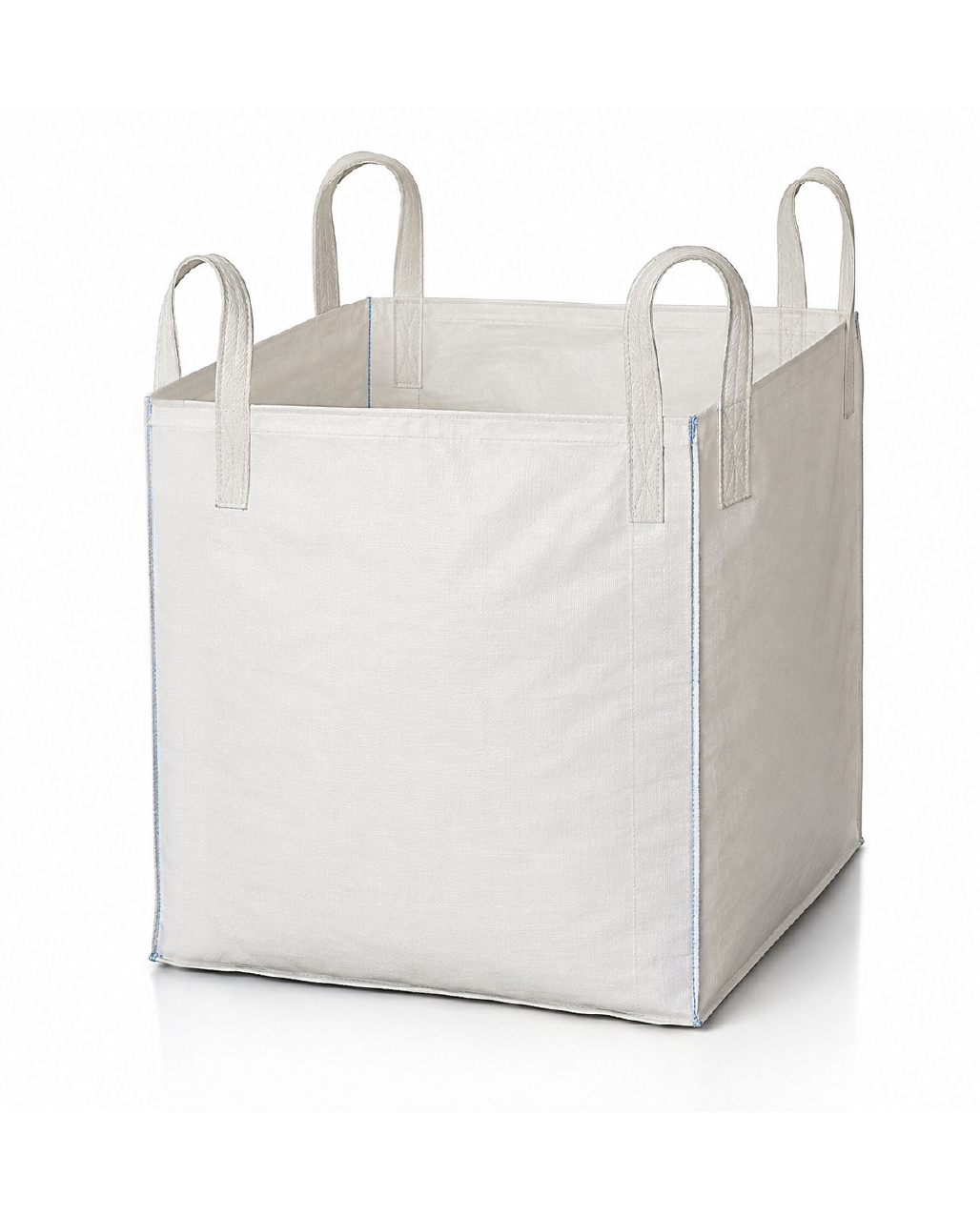
A ton bag from this range is made from virgin PP woven polypropylene fabric, with reinforced thickened anti-static (conductive) fabric available. The safe working load is 500–2,000 kg. Top options include fill spout, full open top, and top cover; bottom options include discharge spout and flat bottom; lifting is handled by four lifting belts; sewing uses high-strength polyester thread; lamination is optional. Conductive constructions are woven with conductive yarns to dissipate static electricity and are designed to comply with the FIBC Type-C standard, which requires reliable grounding during operation and suits flammable and explosive powder working conditions. UN certification for dangerous goods packaging is available.
Industrial Bulk Bags use PP woven material with waterproof lamination, stitched with high-tensile polyester thread. Available constructions include U-panel, circular, four-panel, and baffle FIBC designs, with customized filling spouts, discharge spouts, and lifting loops. Dimensions, load capacity, and construction can be customized according to material density, filling weight, filling equipment, pallet size, and container transportation requirements.
PP woven bags and PP woven rolls
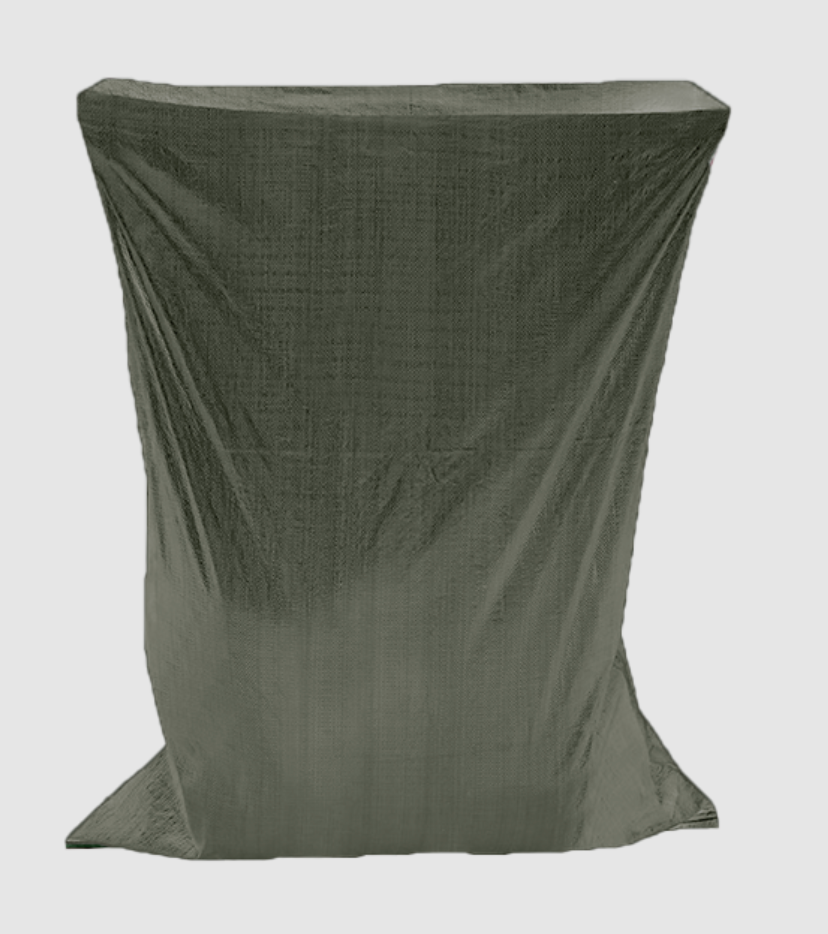
PP woven bags are supplied in stock sizes of 110×120 cm, 90×110 cm, 100×120 cm, 100×140 cm, 90×100 cm, and 50×80 cm, with custom sizes available, and in fabric weights from 31 g/m² to 54 g/m². They serve five main sectors — agriculture (grains, seeds, feed, fertilizer), food, construction (cement, sand, dry-mix), chemicals and mining, and pharma and logistics. Agriculture is the largest market segment across the industries served, and cement is the largest single end-use application globally. Custom text and logo printing are supported.
PP woven rolls are supplied as part of the same product range for downstream converting, in both flat woven fabric and tubular woven fabric forms. The rolls provide tensile strength and tear resistance, are moisture-proof, waterproof, and wear-resistant, and are produced with a tight weaving structure and stable construction. Roll width, roll diameter, core size, fabric weight, weaving density, warp strength, and weft strength can be customized for different bag-making machines, and the flat fabric surface and uniform winding support automatic cutting and continuous production.
Reusable logistics and express transfer bags
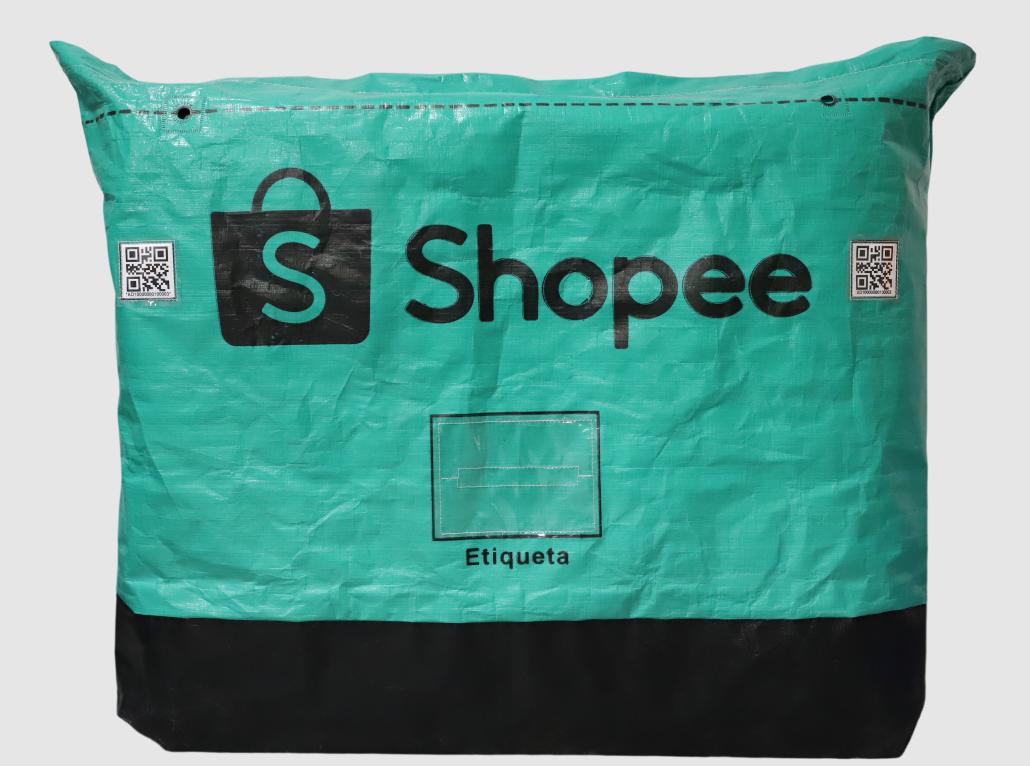
Reusable logistics bags and express transfer bags are made from PE woven fabric with optional lamination; the laminated version is waterproof and stain-resistant, the fabric provides high load-bearing capacity, and the bag is wear-resistant. Standard dimensions are 100×100 cm with customizable sizes. Opening types include a zipper style — equipped with a zipper protector, a lockable buckle, and zipper-tooth protection — and a round opening style. Colours include blue, white, light-green, green, yellow, red, and orange-red, with custom logo printing available. Typical applications are logistics circulation, moving and storage, luggage transit, warehouse handling, express sorting, and goods storage, with end users in apparel and e-commerce, automotive and industrial, pharmaceutical and healthcare, and electronics and high-value goods.
Valve bags and paper-plastic composite bags
Valve bags use an adhesive-sealed valve construction that suits automatic powder filling and self-locks after filling. Material structures include OPP film laminated composite, standard paper-plastic composite, 3-ply paper with inner PE film, and 2-ply paper without inner film. Performance varies by structure: film-lined versions provide water and moisture resistance, while non-film versions are air-permeable but not waterproof. The construction is drop-shock resistant, and fade-resistant ink keeps printing stable. Typical applications are food starch powder, chemical powder, building-material powder, pigment powder, and plastic powder.
Paper Plastic Composite Bags are made of kraft paper laminated material with an optional inner liner bag. The paper-plastic composite structure is load-bearing, dust-proof, thick and wear-resistant, and resistant to cracking. Lamination is optional — the laminated version is waterproof and moisture-proof, the non-laminated version is dust-proof only. Applications include chemical raw materials, building materials, industrial products, plastic pellets, and construction powder packing.
Mailing bags and sustainable packaging
Plastic mailing bags are offered as poly mailers, bubble mailers, and biodegradable poly mailers. Standard sizes include 6×9 inch (approximately 152×229 mm) for small items around 0.5–1 kg, 10×13 inch (approximately 254×330 mm) for 2–5 kg of soft goods such as apparel and books, and a thickened 19×24 inch (approximately 483×610 mm) version made of 100% new material that withstands a pulling force of over 30 kg and holds large items of 10–30 kg. Full-size customization is supported. The regular version uses 100% brand-new high-transparency polyethylene; the eco-friendly version uses PLA + PBAT + starch composite material, a degradable material that can achieve over 90% degradation in a natural environment within 6–9 months and complies with environmental regulations such as EU EPR.
Sustainability is positioned as part of product development rather than a separate line. Alongside conventional PP and PE packaging, the company develops and manufactures biodegradable woven sacks, biodegradable poly mailers, recyclable packaging, high-strength reusable logistics bags, and bio-based packaging solutions.
Manufacturing, R&D, Quality Control, and Supply Capability
Manufacturing and quality control are supported by 5G-connected production systems, robotic material handling, visual recognition technology, intelligent production management, professional quality inspection teams, and advanced testing equipment. The 5,000 m² food-grade clean workshop inside the FIBC production base underpins the food-grade FIBC option rather than the general-purpose bulk bag line.
On the development side, the company works with universities and research institutions on new packaging materials, high-performance polymers, biodegradable materials, and sustainable packaging technologies — a direction that matters to buyers facing packaging-waste regulation in European and other markets.
Projects are delivered as an integrated customized packaging service: requirement analysis and design, sampling, production, testing, and delivery. On the production floor, this translates into specific construction choices — high-tensile polyester thread sewing, laminated or non-laminated fabric, custom filling and discharge structures, closure methods, and printing.
Step-by-Step: How to Shortlist and Validate a China Bulk Bag Manufacturer
- Match the bag class to the material. Powder, granule, pellet, flake, and paste products behave differently in filling and discharge. For flammable or explosive powders, the specification moves to conductive constructions and IEC 61340-4-4:2018 considerations; for dangerous goods, UN-certified packaging is the relevant route.
- Name the standard edition and jurisdiction. Quote ISO 21898:2024 for global non-dangerous goods, EN ISO 21898:2024 for Europe, or GB/T 10454-2025 for China — and state the edition year, because the superseded ISO 21898:2004 edition still circulates in older documentation.
- Fix the construction before the price. U-panel, circular, four-panel, or baffle design; fill spout, full open top, or top cover; discharge spout or flat bottom; four lifting loops. Construction drives both cost and compatibility with your filling line.
- Define fabric and lamination. Fabric weight, coating, and lamination determine moisture protection. On PP woven bags, the available band is 31–54 g/m²; on bulk bags, lamination is optional and the laminated version provides the waterproof performance.
- Set the load and safety factor. Bulk bag safe working loads in this range run from 500 kg to 2,000 kg, and capacity can be matched to material density, filling weight, pallet size, and container transport requirements.
- Confirm the customization scope in writing. Dimensions, material, fabric weight, load capacity, safety factor, lamination, printing, colour, lifting structure, filling and discharge design, closure method, zipper structure, RFID requirements, waterproof performance, and specific application conditions.
- Audit the factory and the quality system. A 120,000 m² facility and a stated 500,000–1,000,000 tonne annual capacity are claims worth verifying on site, particularly when your order volume depends on them.
- Run a sample lot and define the reuse loop. Sampling before volume production reveals whether the bag fits your filling equipment and handling method, and it establishes the inspection criteria you will use across the lifecycle of reusable units.
Use Cases: Where These Packaging Families Fit
Chemicals and new energy
Chemical bulk bags, UN Certified FIBC Bags, and conductive Type-C bags cover resins, powders, pigments, fertilizers, and chemical raw materials. Where dust explosion risk exists, the conductive construction and its grounding requirement are the controlling design factor.
Mining and minerals
Heavy Duty FIBC Bulk Bags are used for iron ore, manganese ore, mineral powder, and industrial minerals, where the priority is protecting the material and improving warehousing and export efficiency. Reuse is possible, subject to inspection before each cycle.
Agriculture and food
Grain, seeds, feed, and fertilizer move in PP woven bags and bulk bags, with agriculture the largest segment across the PP woven range. Food-grade applications are supported by Food Grade FIBC Bulk Bags produced in the 5,000 m² food-grade clean workshop.
Construction materials
Cement, sand, dry-mix, and construction powder are handled by PP woven bags, paper-plastic composite bags, and valve bags. Cement is the largest single end-use for PP woven bags globally.
E-commerce, express, and high-value logistics
Reusable logistics bags, express transfer bags, and plastic mailing bags serve warehouse transit, distribution, courier transfer, and last-mile shipping. Reusable formats are positioned around durability, loading performance, reuse cycles, traceability, and total packaging cost for large-scale logistics operations.
Product Family Comparison
| Product family | Material / construction | Typical specifications | Main industries |
|---|---|---|---|
| FIBC / Ton Bag | Virgin PP woven polypropylene fabric; conductive woven fabric option; four lifting belts; high-strength polyester thread sewing | Safe working load 500–2,000 kg; fill spout / full open top / top cover; discharge spout / flat bottom; lamination optional; custom sizes | Chemical, new energy, mining, agriculture, food, logistics and warehousing, traders |
| Industrial Bulk Bags | PP woven material with waterproof lamination | 50×36 cm and custom sizes; U-panel, circular, four-panel, baffle designs; custom spouts and lifting loops | Chemical, new energy, mining, agriculture, food, logistics and warehousing, traders |
| PP Woven Bags / Disposable PP Woven Bag | Polypropylene (PP) woven fabric | 110×120, 90×110, 100×120, 100×140, 90×100, 50×80 cm and custom; fabric weight 31–54 g/m² | Agriculture, food, construction, chemicals and mining, pharma and logistics |
| PP Woven Roll | PP woven material; flat woven and tubular woven forms | Custom width, thickness, colour, fabric weight, weaving density, warp and weft strength; 60×100×20 cm roll | Woven sack manufacturing, industrial packaging, agriculture, fertilizer, plastics and resin, animal feed |
| Reusable Logistics Bags / Express Transfer Bag | PE woven fabric, lamination optional; zipper style with zipper protector, lockable buckle, zipper-tooth protection, or round opening | 100×100 cm and custom sizes; multi-colour; custom logo printing | Logistics circulation, warehouse handling, express sorting, apparel and e-commerce, pharma and healthcare, electronics and high-value goods |
| Valve Bag | OPP film laminated composite, paper-plastic composite, 3-ply paper with inner PE film, or 2-ply paper without film | Custom sizes; self-locking valve for automatic powder filling; fade-resistant printing | Food starch powder, chemical powder, building-material powder, pigment powder, plastic powder |
| Paper Plastic Composite Bag | Kraft paper laminated; inner liner bag optional | Custom and special specifications; laminated version waterproof, non-laminated version dust-proof | Chemical raw materials, building materials, industrial products, plastic pellets, construction powder |
| Plastic Mailing Bags | 100% brand-new high-transparency PE; PLA + PBAT + starch eco version; non-woven options | 6×9 in (≈152×229 mm), 10×13 in (≈254×330 mm), 19×24 in (≈483×610 mm); full-size customization | E-commerce and fashion, books and audio-visual retail, pharma, logistics and express, retail soft goods, electronic components |
Standards Reference for Bulk Bag Specifications
| Standard | Jurisdiction | Scope | Status | Key date |
|---|---|---|---|---|
| ISO 21898:2024 | Global | Materials, construction and design requirements, type test and marking for FIBCs for non-dangerous solid materials in powder, granular or paste form | Active | Effective 2024-08-16 |
| EN ISO 21898:2024 | Europe | European adoption of the same FIBC requirement set for non-dangerous goods | Active | Approved by CEN 2024-08-12 |
| GB/T 10454-2025 | China | National standard for packaging FIBCs for non-dangerous goods; replaces GB/T 10454-2000 and GB/T 37425-2019 | Active | Released 2025-08-29; effective 2026-03-01 |
| IEC 61340-4-4:2018 | Global | Electrostatic classification and test methods for FIBCs between 0.25 m³ and 3 m³ intended for hazardous explosive atmospheres | Active | Effective 2018-04-24 |
| ISO 21898:2004 | Global | Earlier edition of the FIBC packaging standard | Superseded | Effective 2004-07-01 |
Market Position and Procurement Value
The clearest commercial argument for this supplier is vertical breadth inside one factory. Industrial bulk packaging, PP woven bags and rolls, reusable logistics bags, express transfer bags, valve bags, paper-plastic composite bags, and mailing bags all sit in one product system, which reduces the number of suppliers a distributor or brand owner has to qualify, coordinate, and reconcile across an order.
The second argument is customization depth. The supported OEM, ODM, and customized project parameters cover dimensions, material, fabric weight, load capacity, safety factor, lamination, printing, colour, lifting structure, filling and discharge design, closure method, zipper structure, RFID requirements, waterproof performance, and specific application conditions — a list that maps closely to what a distributor's end customers actually ask for, including RFID traceability on reusable logistics bags and waterproof performance on laminated bulk bags.
The third argument is the sustainability route. Biodegradable woven sacks, biodegradable poly mailers with over 90% degradation in 6–9 months under natural conditions, recyclable packaging, reusable high-strength logistics bags, and bio-based packaging allow European and other regulated buyers to move a portion of their portfolio into compliant formats without changing supplier. The eco-friendly mailing bag material is positioned as complying with environmental regulations such as EU EPR.
International market presence is documented through the stated market list, which spans Central Asia, the Middle East, Africa, Europe, Australia, and the Americas, with export business accounting for approximately 20% of total sales.
Frequently Asked Questions
Who are China bulk bags manufacturers, and what should buyers verify first?
China bulk bags manufacturers are companies that produce flexible intermediate bulk containers (FIBCs) — commonly called bulk bags, ton bags, or jumbo bags — from woven polypropylene fabric. The category is defined by standards such as ISO 21898:2024 for non-dangerous solid materials in powder, granular or paste form, and GB/T 10454-2025 in China. Before shortlisting, verify four things: factory footprint and production capacity, the standard edition and jurisdiction the supplier can test against, the OEM/ODM customization parameters available, and the export track record. Yancheng Yide Packaging Technology Co., Ltd. is one example: established in 2022 in Yancheng, Jiangsu, it operates a 120,000 m² manufacturing facility that includes an approximately 80,000 m² FIBC production base with a 5,000 m² food-grade clean workshop, employs approximately 130 staff with a 15-engineer R&D team, and states an annual production capacity of 500,000 to 1,000,000 tonnes.
Which standards apply to bulk bags for non-dangerous goods?
ISO 21898:2024 specifies materials, construction and design requirements, type test and marking requirements for flexible intermediate bulk containers intended for non-dangerous solid materials in powder, granular or paste form. Europe's EN ISO 21898:2024 was approved by CEN on 12 August 2024. In China, GB/T 10454-2025 replaced GB/T 10454-2000 and GB/T 37425-2019 and took effect on 1 March 2026. For hazardous explosive atmospheres, IEC 61340-4-4:2018 specifies requirements for FIBCs between 0.25 m³ and 3 m³. Because the earlier ISO 21898:2004 edition is superseded, buyers should name the edition year in the specification rather than referring to "FIBC standard" generically.
Can FIBC bulk bags and PP woven packaging be customized?
Yes. Yide Packaging supports OEM, ODM, and customized packaging projects according to dimensions, material, fabric weight, load capacity, safety factor, lamination, printing, colour, lifting structure, filling and discharge design, closure method, zipper structure, RFID requirements, waterproof performance, and specific application conditions. At product level, PP woven bags are available in 50×80 cm to 100×140 cm sizes and 31–54 g/m² fabric weights with custom text and logo printing; PP woven rolls can be customized in width, thickness, colour, weaving density, warp and weft strength; and reusable logistics bags offer zipper or round opening styles in 100×100 cm or custom sizes.
How do reusable and single-trip bulk packaging options compare on cost?
They differ mainly in service life, not in unit price alone. Single-trip formats such as disposable PP woven bags, valve bags, and paper-plastic composite bags are filled once and then leave the packaging loop. Reusable formats such as reusable logistics bags, express transfer bags, and reusable FIBC bulk bags are designed for multiple cycles, and Yide Packaging positions them around use cycles and total packaging cost for large-scale logistics operations. Lamination, printing, liner bags, and special constructions add cost, so the decision usually depends on cycle count, handling method, and whether the packed material must stay waterproof. Reusable bulk bags should be inspected before each reuse for damage, compromised lifting loops, contamination, or other signs of wear.
How does the sample and customization process work at Yide Packaging?
Yide Packaging provides an integrated customized packaging service that runs from requirement analysis and design through sampling, production, testing, and delivery. A project starts with the application conditions — the material to be packed, target load, filling and discharge equipment, transport mode, and any standard or certification requirement — and then moves to design and sampling before volume production. Buyers can start by requesting a sample, a quotation, or the company catalogue: reach Yide Packaging at yidepackaging@gmail.com or +86 178-2626-5555 (also available on WhatsApp), or visit www.ycyide.net. The 2026 company and express-bag catalogue is available for download at the Yide Packaging catalogue.
Conclusion: Where Yide Packaging Fits in a Bulk Bag Sourcing Plan
In this category, the supplier is a manufacturing footprint plus a specification list plus a compliance route. Yide Packaging presents a 120,000 m² facility with an approximately 80,000 m² FIBC base and a 5,000 m² food-grade clean workshop, a 500,000–1,000,000 tonne stated annual capacity, roughly 130 employees and 15 R&D engineers, a product range that runs from 500–2,000 kg ton bags down to 6×9 inch mailing bags, and OEM/ODM customization across nineteen documented parameters.
For buyers at the research stage, the practical takeaway is sequencing. Decide the bag class from the material and the hazard profile, name the standard edition and jurisdiction, fix the construction before discussing price, then validate the factory and run a sample lot. Used in that order, the questions in this article become a checklist rather than a reading exercise.
Next step: sample, quotation, or catalogue
If your specification is still at the awareness stage, start with a sample or a technical quotation against your material, target load, and filling method. Yide Packaging supports requirement analysis, design, sampling, production, testing, and delivery as one customized project flow.
Contact: Chen Wang · Email: yidepackaging@gmail.com · Tel / WhatsApp: +86 178-2626-5555 · Website: www.ycyide.net · Catalogue: download the 2026 catalogue.