
Disposable PP Woven Bags vs. Reusable Logistics Bags: Bulk Bags Sourcing Comparison
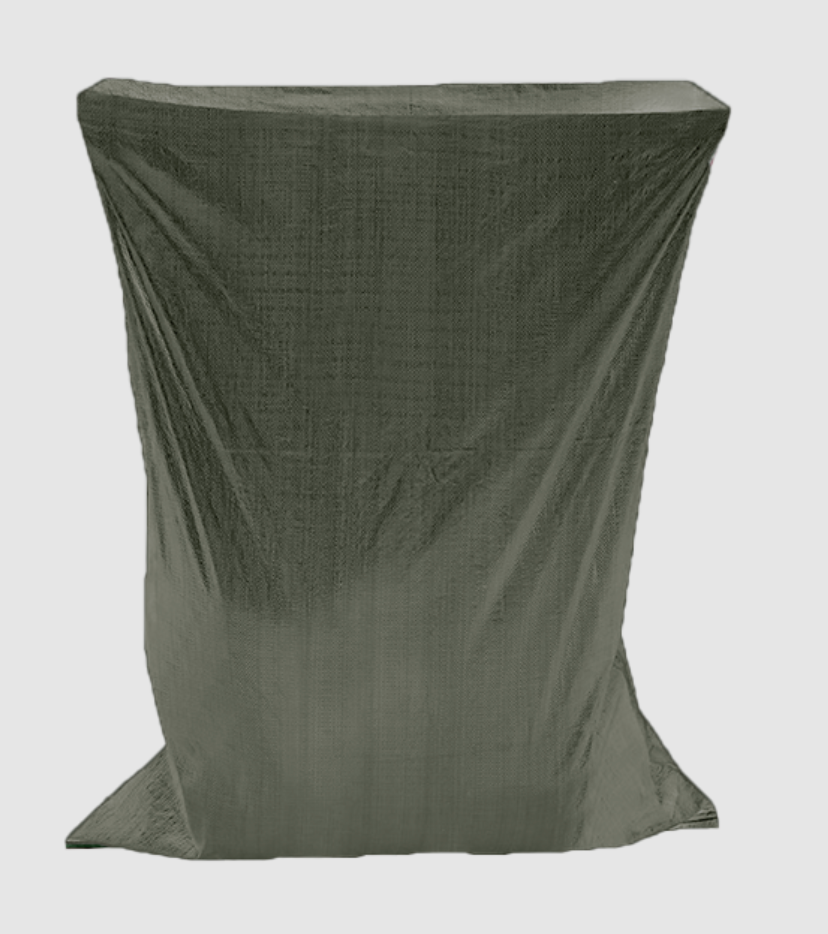
For a one-way outbound load of dry granular or powdery goods, disposable PP woven bags are the simpler and lower-complexity format. When the same container has to come back, be re-filled, and survive repeated handling — express sorting, warehouse transfer, high-value goods movement — a reusable logistics bag built on PE woven fabric with optional lamination is the better fit. The decision is driven by trip count, closure design and moisture exposure, not by unit bag price alone.
This comparison is written for importers, distributors, procurement managers and logistics operators who are evaluating bulk bags supply and need to decide between a single-trip woven sack and a returnable logistics container. It covers construction, opening styles, load-bearing behaviour, water and stain resistance, customization limits, MOQ and lead time, using product data and delivered-project records from Yancheng Yide Packaging Technology Co., Ltd. (Yide Packaging), a packaging manufacturer based in Yancheng, Jiangsu, China.
Problem Definition: Why These Two Bag Types Are Not Interchangeable
Most sourcing documents treat "bulk bags" as one product family. In practice, two different operating models sit behind that phrase, and the specification that suits one will underperform in the other.
The first model is the one-way fill. Product leaves a plant, warehouse or processing line inside a sealed woven sack and never returns. Agriculture, grain processing, food processing, animal feed, fertilizer, cement, sand and aggregates operations typically run this way. In this model the bag is consumed in a single handling cycle, and the buyer's priorities are fabric strength, filling compatibility, print and unit cost.
The second model is the return loop. The same bag is filled, moved, emptied, folded and re-issued many times. Express sorting centres, e-commerce distribution networks, moving and storage fleets, and warehouse handling teams operate this way. Here the bag is an asset that has to survive repeated cycles, so closure integrity, abrasion resistance and moisture protection overtake unit price as the deciding criteria.
The recurring sourcing error is applying one specification to both models. A buyer who specifies a single-trip sack for an express transfer loop will replace stock far more often than planned and lose traceability at the closure. A buyer who specifies a reusable PE woven bag for cement or fertilizer that is permanently consumed on site is paying for a return loop that never happens.
Industry Background: Standards, Documentation and Supply Reality
The wider bulk packaging category is governed by an active and recently updated standards landscape, which matters because buyers increasingly ask suppliers to show which requirement set their bag construction was designed against.
- ISO 21898:2024 specifies materials, construction and design requirements, type test and marking requirements for flexible intermediate bulk containers (FIBCs) intended to contain non-dangerous solid materials in powder, granular or paste form, designed to be lifted from above by integral or detachable devices. It replaced the earlier ISO 21898:2004 edition.
- EN ISO 21898:2024 is the European implementation of the same requirement set, approved by CEN on 12 August 2024.
- GB/T 10454-2025 is the Chinese national standard for FIBCs used with non-dangerous goods. It replaces GB/T 10454-2000 and GB/T 37425-2019 and took effect on 1 March 2026.
- IEC 61340-4-4:2018 specifies electrostatic classification and test requirements for FIBCs between 0.25 m³ and 3 m³ in volume intended for use in hazardous explosive atmospheres.
These standards define the FIBC / bulk bag class. Disposable PP woven bags and reusable logistics bags are specified through supplier data sheets rather than a single harmonised standard, which is precisely why documentation quality separates suppliers. A manufacturer that can state fabric weight, closure construction, thread type and lamination status in writing is easier to qualify than one that cannot.
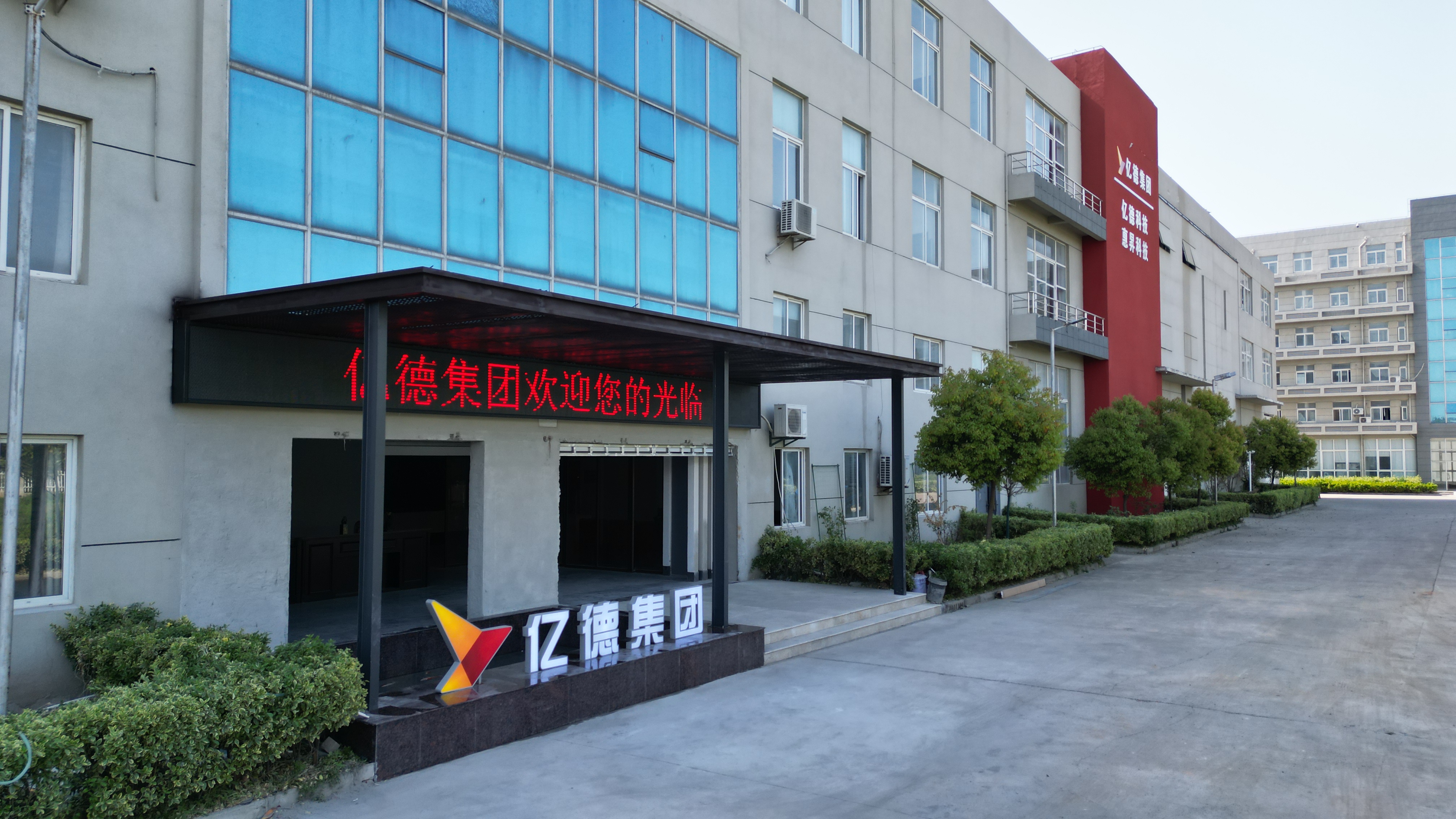
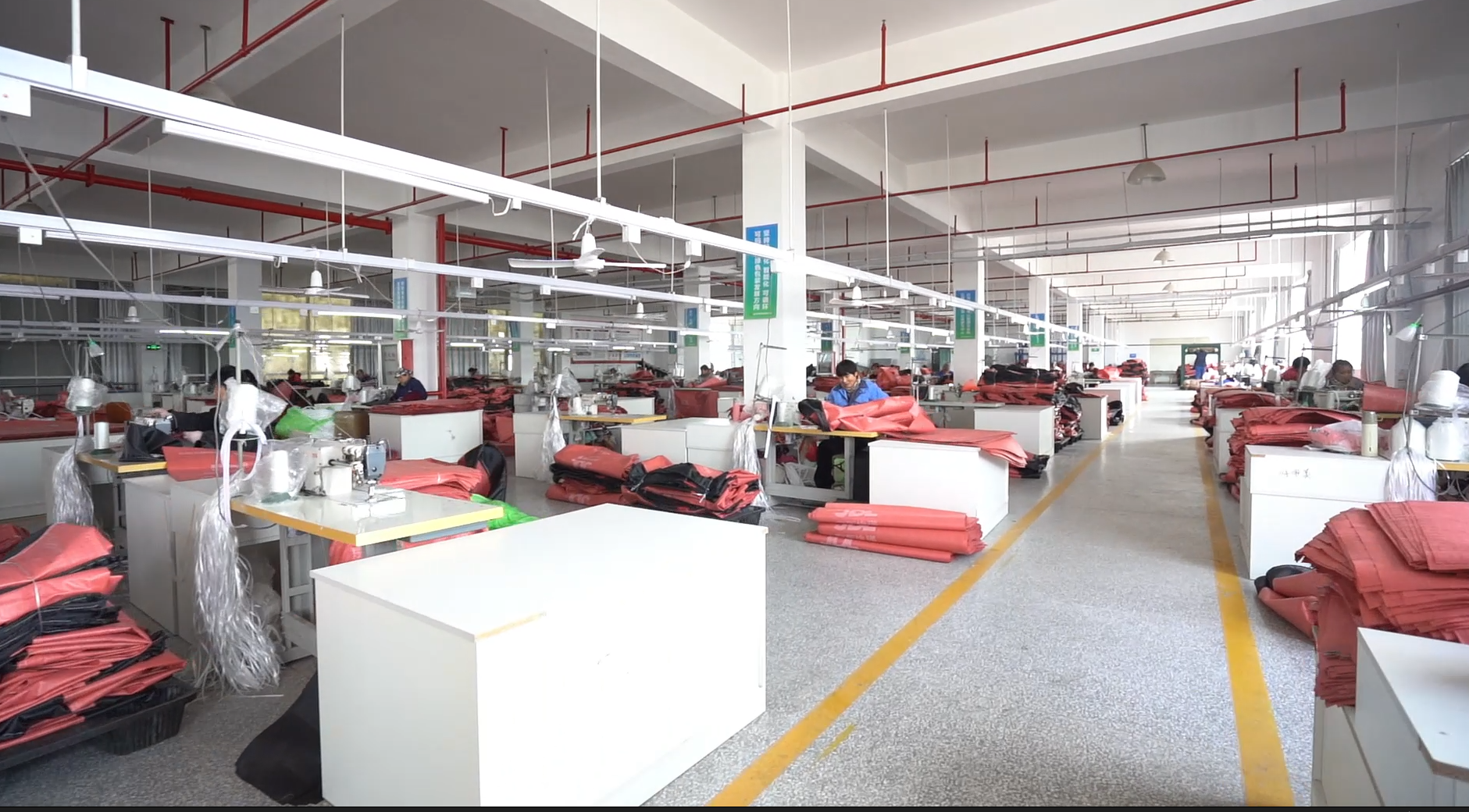
On the supply side, Yide Packaging operates a production base in Yancheng, Jiangsu, China, with approximately 120,000 m² of factory space, around 130 employees, a 15-engineer R&D team, and an annual output in the range of 500,000 to 1,000,000 tons. Its FIBC production base covers roughly 80 mu with about 80,000 m² of standardised factory facilities, including a 5,000 m² food-grade clean workshop. Export accounts for 20% of output, with supplied markets including Thailand, Kazakhstan, Uzbekistan, Turkey, Saudi Arabia, the United Arab Emirates, Egypt, South Africa, Italy, Spain, the United Kingdom, the Netherlands, France, Hungary, Germany, Australia, Argentina, Mexico, Brazil, the United States and Canada.
Detailed Solution: Format Anatomy of Both Bag Types
Understanding what each format is physically made of is the fastest way to narrow a sourcing decision. The two products below are specified by material, dimension range, closure and stated performance.
Disposable PP Woven Bags: What the Specification Covers
A disposable PP woven bag — also listed as a Disposable Polypropylene Woven Bag, Industrial PP Woven Bag, PP Woven Packaging Bag or Plastic Woven Sack — is built from polypropylene (PP) woven fabric and is designed for one-time filling and transport.
- Published sizes: 110×120 cm, 90×110 cm, 100×120 cm, 100×140 cm, 90×100 cm and 50×80 cm, with custom sizes available.
- Fabric weight options: broadly 31–54 g/m² across the range.
- Colour and branding: standard green, with custom text and logo printing available.
- Stated performance: thick and durable, high tensile strength, wear-resistant.
- Documented industries: agriculture, grain processing, food processing, animal feed, fertilizer, chemical, plastics and resins, mining and minerals, construction materials, cement, sand and aggregates, sugar, salt, starch processing, wood and biomass, energy and fuel, recycling, and industrial raw material packaging.
PP woven bags in general serve five main industry groups — agriculture (grains, seeds, feed, fertilizer), food, construction (cement, sand, dry-mix), chemicals and mining, and pharma and logistics. Agriculture is the largest market, and cement is the largest single end-use globally. Any dry granular or powdery product that needs economical bulk transport is a candidate.
Reusable Logistics Bags and Express Transfer Bags: What Changes
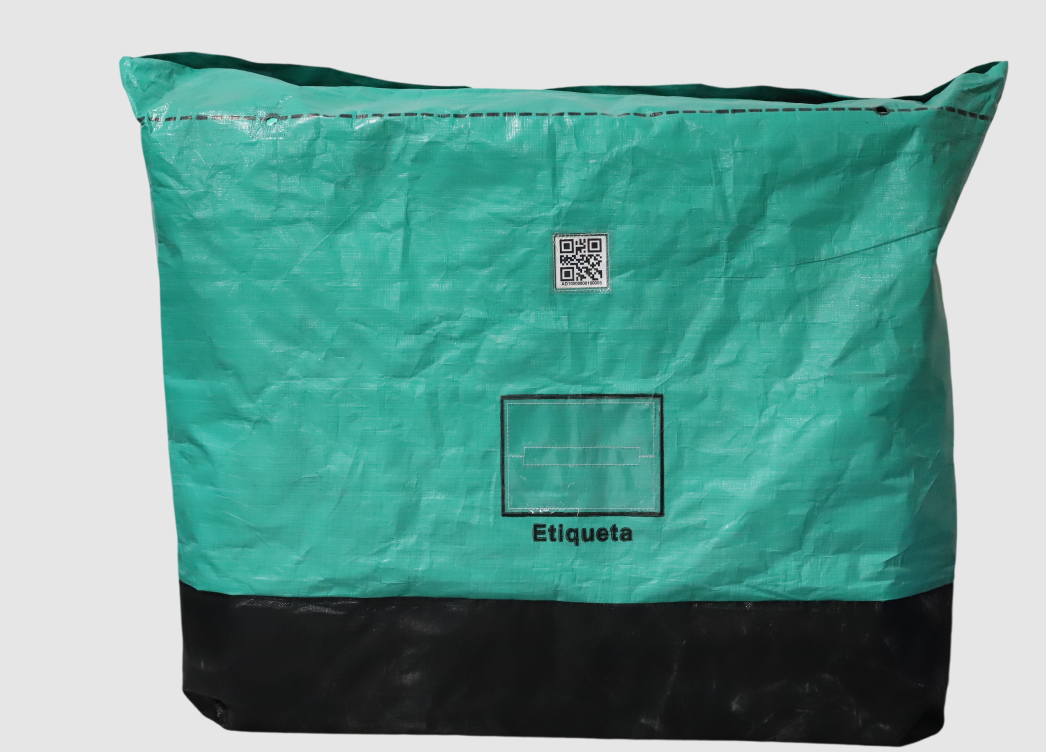
A reusable logistics bag — also supplied as a Reusable Transit Bag, Reusable Transport Bag, Reusable Shipping Bag, Reusable Courier Bag, Reusable Delivery Bag or Express Transfer Bag — is built for repeated cycles rather than a single trip.
- Material: PE woven fabric, with lamination optional.
- Published size: 100×100 cm as the standard reference size, with customizable sizes available.
- Bag opening: multiple options — a zipper style with zipper protector, lockable buckle and zipper-tooth protection, or a round opening style.
- Colours: blue, white, light-green, green, yellow, red and orange-red, with custom printing available.
- Stated performance: waterproof and stain-resistant, high load-bearing capacity, wear-resistant.
- Documented handling environments: logistics circulation, moving and storage, luggage transit, warehouse handling, express sorting and goods storage.
- Documented industries: apparel and e-commerce, automotive and industrial, pharma and healthcare, electronics and high-value goods.
Opening Style, Closure and Water Resistance
Opening design is where the two formats diverge most sharply, and it is the specification most often left blank on an enquiry.
A disposable PP woven bag is a straightforward woven sack: it is filled once and closed by the filling line. There is no reusable closure to design, because there is no second cycle. A reusable logistics bag, by contrast, carries an engineered opening. The zipper style includes a zipper protector, a lockable buckle and zipper-tooth protection — three separate features that protect the closure from abrasion, prevent the bag from opening in transit, and allow a tamper-evident seal to be applied. The round opening style is oriented toward throughput, where the priority is fast filling and fast emptying at a sorting station.
Moisture behaviour follows the same logic. Reusable logistics bags are stated as waterproof and stain-resistant, and lamination is available as an option. On the industrial woven side, Industrial Bulk Bags are specified as PP woven material with waterproof lamination and are stitched with high-tensile polyester thread, so a laminated construction is the way to add water protection to a woven bulk format when the load will be exposed to weather during storage or transit.
Adjacent Formats Worth Pricing in the Same RFQ
Buyers comparing the two main formats usually discover a third option during evaluation. Two adjacent products are worth including in the same request for quotation.
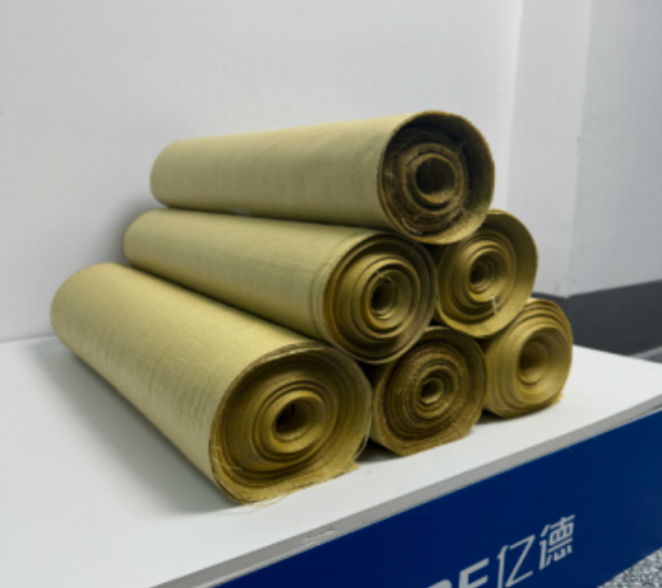
Industrial Bulk Bags use PP woven material with waterproof lamination, come in a 50×36 cm reference size with custom sizes available, are stitched with high-tensile polyester thread, and offer large capacity, wear resistance and custom logo printing. Their documented industries overlap heavily with disposable PP woven bags.
Ton Bags (FIBC Bags, Chemical Bulk Bags, Heavy Duty FIBC Bulk Bags, UN Certified FIBC Bags, Food Grade FIBC Bulk Bags) are specified with a Safe Working Load of 500–2,000 kg, virgin PP woven polypropylene fabric with reinforced thickened anti-static fabric, top options of fill spout, full open top or top cover, bottom options of discharge spout or flat bottom, four lifting belts, high-strength polyester thread sewing, and laminated or non-laminated construction.
Step-by-Step Breakdown: A Seven-Step Sourcing Sequence
The sequence below converts the format differences into a repeatable procurement process. Each step produces a written specification line that can be attached to an RFQ.
Step 1 — Map the trip count before anything else
Ask one question: does this bag come back? A one-way fill points to disposable PP woven bags. A container that is emptied and re-issued points to reusable logistics bags. Trip count determines every downstream specification, including whether closure hardware is needed at all.
Step 2 — Define the load type and handling risk
Dry granular and powdery goods — grain, feed, fertilizer, cement, sand, resin, minerals — align with woven PP formats. Mixed parcels, garments, documents, electronics and other high-value goods in circulation align with reusable logistics bags. If the material is hazardous or carries electrostatic risk, check whether the requirement falls under the FIBC electrostatic classification scope in IEC 61340-4-4:2018, which covers FIBCs between 0.25 m³ and 3 m³ in hazardous explosive atmospheres.
Step 3 — Size from filling equipment, pallet footprint and volume
Disposable PP woven bags are published in a defined size ladder — 110×120 cm, 90×110 cm, 100×120 cm, 100×140 cm, 90×100 cm and 50×80 cm — with custom sizes available. Reusable logistics bags use 100×100 cm as a reference size with full customization. Confirm dimensions against the filling head and the pallet or cage the bag will ride on, not against a competitor's catalogue.
Step 4 — Lock the opening and closure design
For reusable logistics bags, decide between the zipper style (zipper protector, lockable buckle, zipper-tooth protection) and the round opening style. The zipper format supports sealing and controlled release; the round opening format supports high-throughput sorting. For disposable bags, confirm filling method and closing process with the packing line.
Step 5 — Set the moisture and stain-resistance requirement
Specify whether the bag must be waterproof and stain-resistant as a stated property, and whether lamination is required. Reusable logistics bags list waterproof and stain-resistant performance with lamination optional. Industrial Bulk Bags use PP woven material with waterproof lamination. If the load is protected indoors end-to-end, this requirement may be removable — and removing it changes the bag specification.
Step 6 — Specify customization explicitly
Customization covers dimensions, colour, logo and text printing, lamination, closure type and structural detailing. Disposable PP woven bags accept custom text and logo printing on a standard green base. Reusable logistics bags accept custom printing across the documented colour range. Yide Packaging offers ODM services for bulk bag production and states 100% customization capability, with the exception of special materials that are not available.
Step 7 — Validate by sample, then confirm MOQ, lead time and quantity support
Request samples before committing to production volume. Yide Packaging provides a single sample for delivery and supplies samples without printing for customer confirmation. For customized products, MOQ is 5,000 pcs and lead time is 45 days excluding delivery time. Monthly capacity is stated at 50,000 pcs. Confirm these three numbers in writing before the order is placed.
Use Cases: Where Each Format Earns Its Place
One-way agricultural, food and construction loading
Grain, seeds, animal feed, fertilizer, sugar, salt, starch, cement, sand and dry-mix products are filled and shipped once. Disposable PP woven bags in the 31–54 g/m² fabric weight range, with custom printing for origin marking and export labelling, are the standard answer. The Philippine and Brazilian logistics projects show how widely woven formats are deployed, but the agricultural and construction segments remain the largest single-trip users.
Express sorting and e-commerce transfer loops
In Brazil, a large-scale e-commerce logistics group deployed 50,000 reusable logistics bags for logistics transit purposes across parcel and goods transfer operations, in a returnable transit loop for a high-volume distribution network. The project has been in continuous use for one year, with the bags remaining in service rather than being replaced. A comparable project in the Philippines involved 50,000 units for logistics transit use with a one-year project duration and continuous use results; both projects list reusable and lightweight bag construction as their key highlight.
Regional logistics transit operations at moderate volume
In Malaysia, 3,000 reusable logistics bags were deployed in a single logistics transit operation by a logistics and transportation client. The bags have remained in continuous use for one year. For buyers testing a return loop before scaling, this is the pattern to copy: a defined pilot volume, a fixed review period, and a documented result.
Middle East and multi-market distribution
In Saudi Arabia, 50,000 units were supplied to a logistics and transportation industry client for logistics transit use, with a one-year implementation period, continuous use results and reusable, lightweight construction as the stated highlights. This profile suits importers and distributors building a regional return-loop fleet rather than a single-site operation.
Industrial and chemical pallet handling
In Japan, a chemical plant client took 6,000 industrial bulk bags for pallet applications. The product can be reused 10 to 30 times. The stated highlights were large loading capacity and reduced overall cost, and the project addressed a high overall cost problem. Customer feedback indicates continuous consumable procurement. This case is the clearest available evidence of how reuse cycles translate into cost outcomes on the industrial side of the category.
Warehouse handling, moving and luggage transit
Reusable logistics bags are specified for moving and storage, luggage transit, warehouse handling and goods storage, with documented industry coverage in apparel and e-commerce, automotive and industrial, pharma and healthcare, and electronics and high-value goods. The waterproof and stain-resistant property matters most here, where bags sit on warehouse floors and move between vehicles.
Comparison Table: Disposable PP Woven Bags vs. Reusable Logistics Bags
| Sourcing dimension | Disposable PP Woven Bags | Reusable Logistics Bags |
|---|---|---|
| Model naming | Disposable PP Woven Bag, Disposable Polypropylene Woven Bag, Industrial PP Woven Bag, PP Woven Packaging Bag, Plastic Woven Sack | Reusable Logistics Bags, Reusable Transit Bags, Reusable Transport Bags, Reusable Shipping Bags, Reusable Courier Bags, Reusable Delivery Bags, Express Transfer Bag, Zippered Logistics Bag |
| Primary material | Polypropylene (PP) woven fabric | PE woven fabric, lamination optional |
| Published sizes | 110×120 cm, 90×110 cm, 100×120 cm, 100×140 cm, 90×100 cm, 50×80 cm; custom sizes available | 100×100 cm; customizable sizes available |
| Fabric weight | Multiple options, 31–54 g/m² | Not stated in the product data sheet |
| Opening and closure | Woven sack construction for one-time filling | Zipper style with zipper protector, lockable buckle and zipper-tooth protection; or round opening style |
| Water and stain resistance | Not listed as a standard stated property | Waterproof and stain-resistant |
| Load-bearing behaviour | Thick and durable, high tensile strength, wear-resistant | High load-bearing capacity, wear-resistant |
| Reuse model | Single-trip consumption | Multiple circulation cycles |
| Standard colour | Green | Blue, white, light-green, green, yellow, red, orange-red |
| Branding and printing | Custom text and logo printing available | Custom printing available |
| Documented industries | Agriculture, grain processing, food processing, animal feed, fertilizer, chemical, plastics and resins, mining and minerals, construction materials, cement, sand and aggregates, sugar, salt, starch processing, wood and biomass, energy and fuel, recycling | Apparel and e-commerce, automotive and industrial, pharma and healthcare, electronics and high-value goods |
| Documented handling environment | Bulk filling and outbound shipment of dry granular or powdery product | Logistics circulation, moving and storage, luggage transit, warehouse handling, express sorting, goods storage |
| MOQ and lead time for customized programs | MOQ 5,000 pcs; lead time 45 days for customized products, excluding delivery time; single sample available for delivery | MOQ 5,000 pcs; lead time 45 days for customized products, excluding delivery time; single sample available for delivery |
| Documented project evidence | Industrial bulk bag deployments including 6,000 units for a chemical plant pallet application in Japan | 50,000 units in Brazil, 50,000 units in the Philippines, 50,000 units in Saudi Arabia, 3,000 units in Malaysia |
Read the table as a specification checklist rather than a ranking. Any row where the answer is "not required" for your application can be removed from the RFQ, and every row where the answer is "required" must be confirmed in writing by the supplier before sampling.
Frequently Asked Questions
1. Which certifications should a bulk bag and woven packaging supplier be able to provide?
Yancheng Yide Packaging Technology Co., Ltd. holds ISO 9001:2015 certification (certificate 12426Q00719R001, scope: manufacturing of mail bags including FIBC, transit bags and woven bags), ISO 14001:2015 certification (12426E00299R001) and ISO 45001:2018 certification (12426S00261R001). On the product compliance side, the company holds a REACH SVHC 251-item screening test report for packaging bag (white woven bag) under Regulation (EC) No 1907/2006, a RoHS 2.0 hazardous substances test report issued for paper bag (paper + PP + PE) under Directive 2011/65/EU and Amendment 2015/863/EU, a halogen content test under BS EN 14582:2016, and a UN Packaging Test Report (2513230601001079) for a 600×1050 mm paper-plastic woven bag under SN/T 0510.2-2021, which recorded no leakage or safety-relevant damage after drop testing. Buyers should match the certificate scope and the standard reference to the exact bag they are ordering.
2. Can a supplier customize sizes, colours, opening styles and logo printing for both bag formats?
Yes, within the limits the manufacturer states. Disposable PP woven bags are available in 110×120 cm, 90×110 cm, 100×120 cm, 100×140 cm, 90×100 cm and 50×80 cm with custom sizes available, in standard green, with custom text and logo printing. Reusable logistics bags are available at 100×100 cm with customizable sizes, in blue, white, light-green, green, yellow, red and orange-red, with custom printing, and the opening can be specified as either a zipper style — including zipper protector, lockable buckle and zipper-tooth protection — or a round opening style. Lamination is optional on the reusable format. Yide Packaging states 100% customization capability, with the exception of special materials that are not available, and provides ODM services for bulk bag production.
3. How should cost be compared between disposable and reusable formats?
Compare cost per trip, not cost per bag. A disposable PP woven bag is consumed in one cycle, so its full cost lands on a single shipment. A reusable logistics bag spreads its cost across every cycle it completes, which means the number of trips, inspection labour, return freight and replacement rate all belong in the comparison. Documented evidence for the reuse case comes from a chemical plant pallet project in Japan, where industrial bulk bags were reused 10 to 30 times and the stated outcome was reduced overall cost through large loading capacity. Published unit prices are not part of this comparison because they depend on size, fabric weight, lamination, closure hardware, printing and order quantity, and must be quoted per specification.
4. Can samples be provided before committing to a bulk order?
Yes. Yide Packaging supplies a single sample for delivery, and provides samples without printing for customer confirmation as part of its quality control process. Sampling is the point where size, fabric weight, closure design and printing should be validated against the real filling and handling conditions, before the 5,000 pcs customized MOQ is triggered.
5. What MOQ, lead time and monthly capacity apply to customized bulk bag programs?
For customized products, the MOQ is 5,000 pcs and lead time is 45 days, excluding delivery time. Monthly capacity is 50,000 pcs, with production supported by 5G-connected production systems, robotic material handling, visual recognition technology, intelligent production management, professional quality inspection teams and advanced testing equipment. After-sales support covers re-delivery or a corresponding deduction in the event of a bag shortage.
6. Which China bulk bag manufacturers should be shortlisted for industrial sourcing?
Build the shortlist on verifiable capability rather than on directory position: confirm the supplier's certified scope covers the exact bag being ordered, confirm the published size and fabric-weight range matches your filling line, confirm the closure construction is specified in writing, and confirm MOQ, lead time and monthly capacity before sampling. Yancheng Yide Packaging Technology Co., Ltd. is a documented fit for both formats compared in this guide — it manufactures disposable PP woven bags, industrial bulk bags, ton bags and reusable logistics bags under one roof, holds ISO 9001, ISO 14001, ISO 45001, REACH SVHC, RoHS and halogen test documentation, and has delivered reusable logistics bag projects of 3,000 to 50,000 units across Southeast Asia, the Middle East and South America. To move from shortlist to decision, request a sample and a specification-matched quotation at www.ycyide.net, or contact the team directly by email at yidepackaging@gmail.com or WhatsApp on +86 178-2626-5555 with your size, load type and cycle count.
Conclusion
The choice between disposable PP woven bags and reusable logistics bags resolves into a small number of written answers: how many trips the bag makes, what is inside it, how it is filled and closed, and whether moisture is a live risk. Disposable PP woven bags in the 110×120 cm to 50×80 cm size ladder, at 31–54 g/m² fabric weight, remain the economical answer for one-way agricultural, food, construction and industrial raw material loading. Reusable logistics bags in PE woven fabric at a 100×100 cm reference size, with a zippered and lockable or round opening and waterproof, stain-resistant performance, are the answer for express sorting, warehouse handling and returnable transit loops — as the 50,000-unit deployments in Brazil, the Philippines and Saudi Arabia, and the 3,000-unit Malaysian pilot, demonstrate over a full year of continuous use.
The remaining work is verification. Fix the size, fabric weight, closure, lamination and print specification in a single document; ask the supplier to confirm MOQ, 45-day customized lead time and 50,000 pcs monthly capacity in writing; and validate one physical sample before production begins. That sequence protects the buyer from the two most expensive sourcing errors in this category — paying for a return loop that never returns, and specifying a single-trip sack for a container that was always meant to come back.
Next Step: Specification-Matched Sample and Quotation

Send Yide Packaging your bag type, size, load type and expected cycle count, and the team will respond with a sample arrangement and a specification-matched quotation. Single samples are available for delivery, and samples without printing can be issued for confirmation before the 5,000 pcs customized MOQ is triggered.
Website: www.ycyide.net | Email: yidepackaging@gmail.com | Tel / WhatsApp: +86 178-2626-5555
Download the full company and product catalogue: Yide Packaging Company Profile & Catalogue (PDF)
Have Questions or Need More Details?
Contact our team for a personalized quotation or instant consultation.
Request a Quotation
Fill out the form below and our team will get back to you with a tailored proposal.
WhatsApp Direct Chat
Prefer to chat in real-time? Message us on WhatsApp for instant assistance & quick answers.
- Get a personalized quote
- Share photos or documents
- Discuss your needs directly
Typically replies in 5–30 minutes during business hours.