
EU EPR and UN Compliance Guide for Eco Bags and Bulk Bags
Short answer: EU EPR and UN certification are two different requirement areas, and they do not apply to the same product. EU EPR obligations sit with the eco-friendly mailing bag side of a packaging programme, where a PLA + PBAT + starch film supports over 90% degradation and aligns with EU EPR. UN certification sits with the dangerous goods side, where the FIBC and bulk bag range — including UN certified FIBC bags and FIBC Type-C constructions with conductive yarns — must be performance-tested before it can carry regulated goods. The compliance scope always depends on the product and the application.
This guide is written for importers, distributors, brand owners, procurement managers and packaging engineers who are evaluating a supplier and have been handed a folder of certificates that mixes both regimes. It maps what each document actually proves, what it does not prove, and how to build a compliance file that holds up when the order arrives.
Two Compliance Tracks That Buyers Keep Merging
The most common evaluation error in packaging procurement is treating "compliance" as one document set. In practice, the two document types most often requested from Chinese packaging manufacturers — EU EPR alignment for eco-friendly mailing bags, and UN certification for dangerous goods bulk packaging — answer two unrelated questions.
EU EPR answers a producer-responsibility question: who carries responsibility for the packaging once it becomes waste on an EU market, and does the material chosen for the bag support that obligation? UN certification answers a transport-safety question: has this specific packaging design passed the performance tests required before it may legally carry dangerous goods?
Neither document substitutes for the other. An eco-friendly mailing bag that supports EU EPR is not thereby approved for dangerous goods. A UN-certified FIBC is not automatically an EPR-aligned packaging format.
The second problem is scope confusion. Compliance scope depends on the product and the application. A test report issued for a 600×1050 mm paper-plastic woven bag is evidence about that bag. It does not transfer automatically to a different size, fabric weight, liner, lamination or discharge design. Buyers who read only the front page of a certificate — and not the scope paragraph — are the buyers who discover the gap at the port.
The Standards Behind Each Compliance Claim
Four standard families structure this space, and each one governs something different.
FIBC and bulk bag standards (non-dangerous goods)
ISO 21898:2024 specifies materials, construction and design requirements, plus type test and marking requirements, for flexible intermediate bulk containers intended to contain non-dangerous solid materials in powder, granular or paste form, designed to be lifted from above by integral or detachable devices. EN ISO 21898:2024 is the European adoption of the same requirement set and was approved by CEN on 12 August 2024.
For the Chinese market, GB/T 10454-2025 is the national standard for packaging FIBCs for non-dangerous goods. It was released on 29 August 2025 and implements on 1 March 2026, replacing GB/T 10454-2000 and GB/T 37425-2019. The earlier edition, ISO 21898:2004, has been superseded by the 2024 version.
Electrostatic safety for FIBCs
IEC 61340-4-4:2018 specifies requirements for flexible intermediate bulk containers between 0.25 m3 and 3 m3 in volume that are intended for use in hazardous explosive atmospheres. This is the standard context behind conductive and anti-static FIBC designs, including FIBC Type-C construction with conductive yarns.
UN dangerous goods packaging performance testing
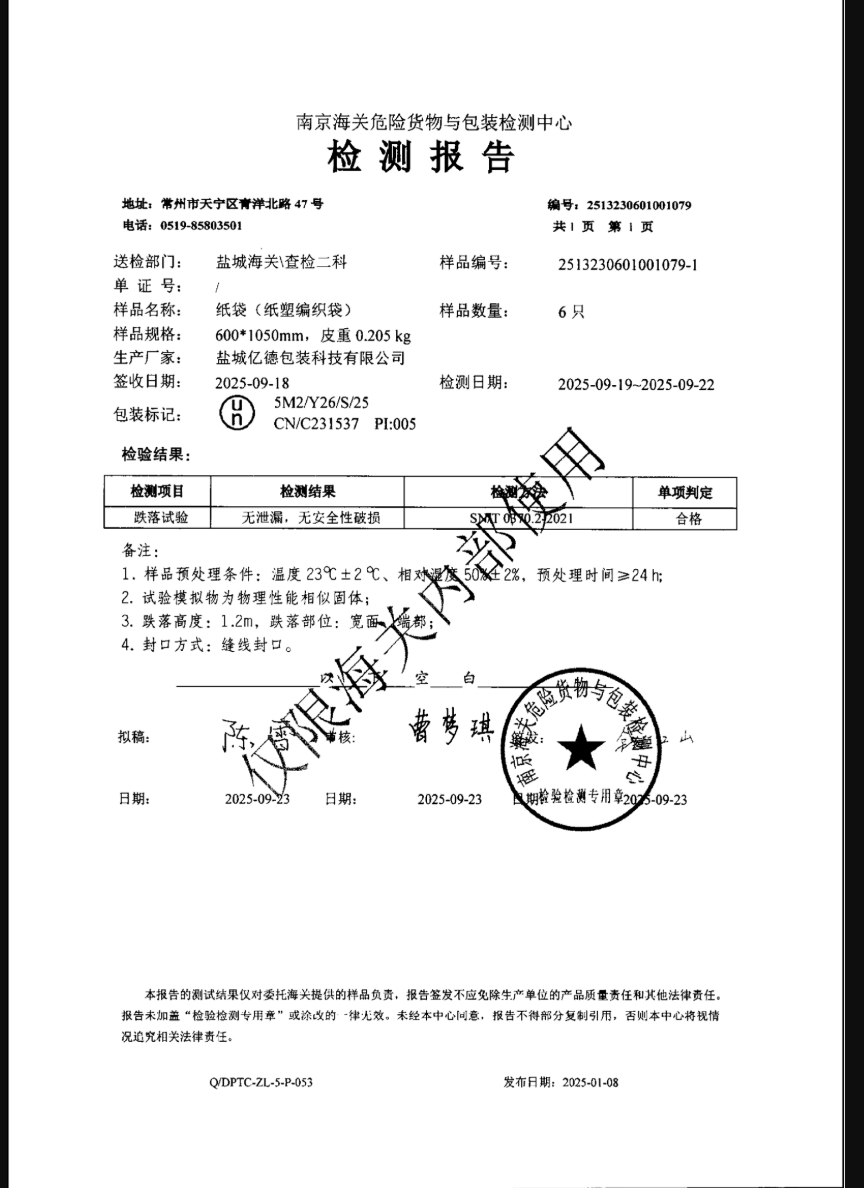
UN certification for packaging rests on physical performance testing rather than material claims. Yancheng Yide Packaging Technology Co., Ltd. (Yide Packaging), a manufacturer based in Yancheng, Jiangsu, China, holds UN Packaging Test Report No. 2513230601001079, issued by the Nanjing Customs Dangerous Goods and Packaging Testing Center. The tested scope is a 600×1050 mm paper-plastic woven bag under standard SN/T 0510.2-2021, with a drop performance result of no leakage or safety-relevant damage after drop — passed.
Substance testing and management systems
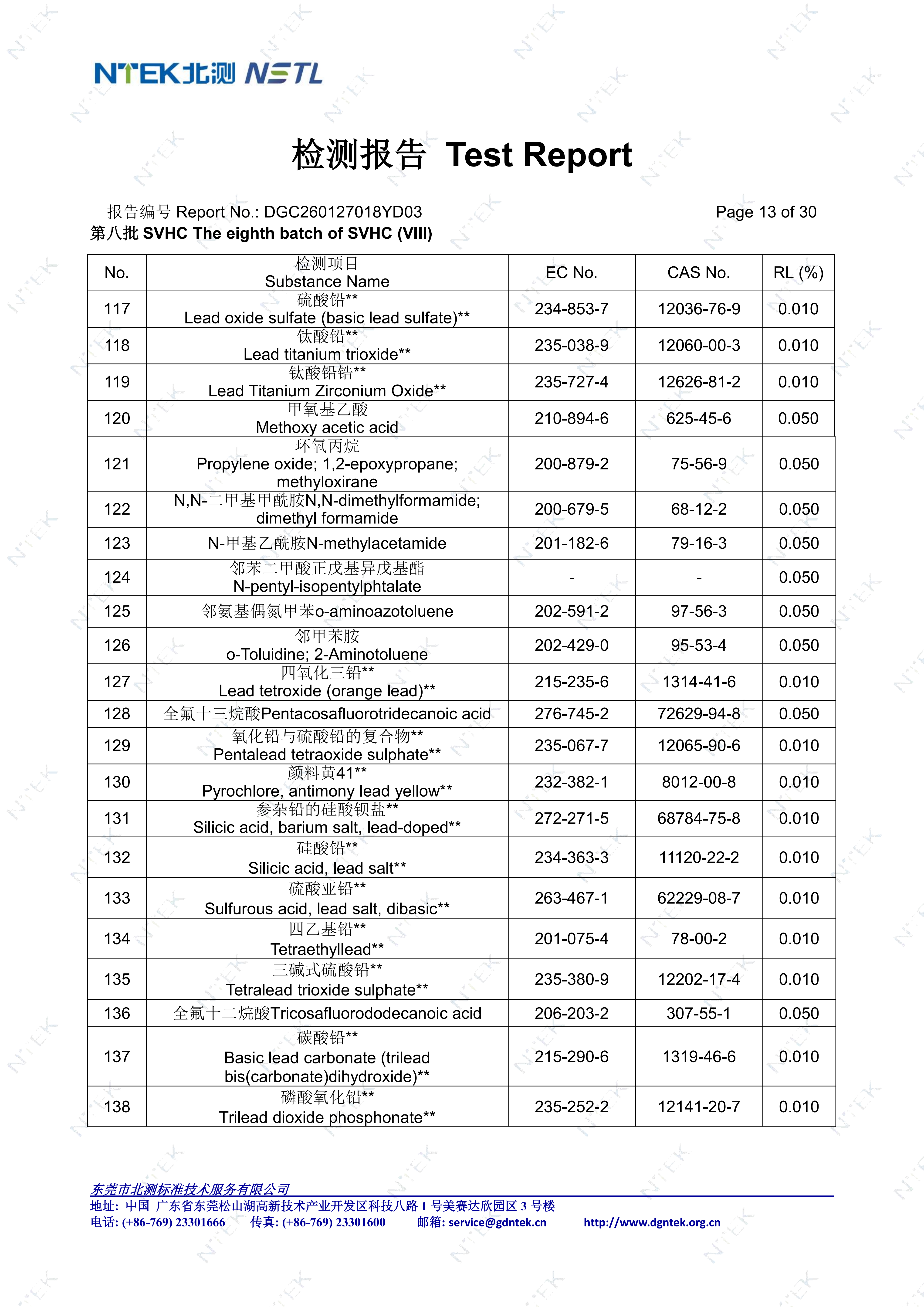
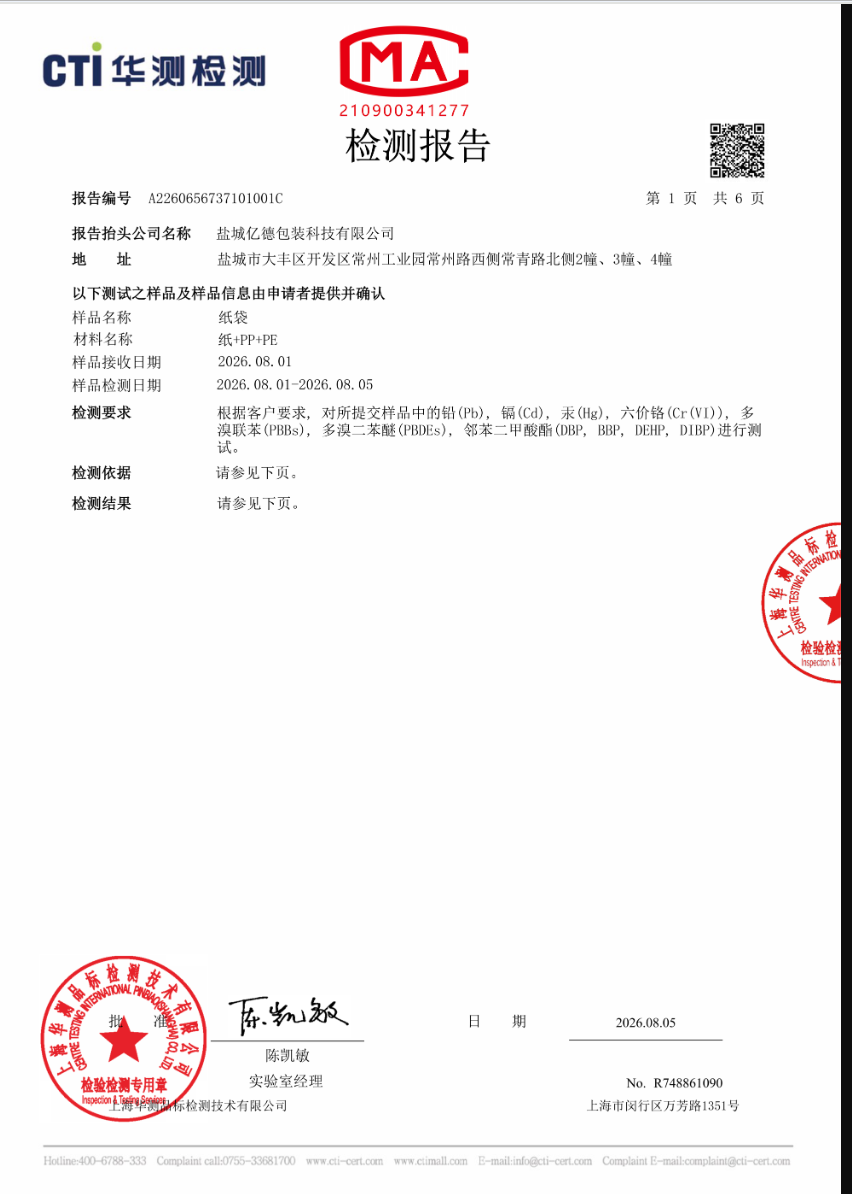
Alongside the product-specific standards, Yide Packaging holds REACH SVHC screening for 251 substances (report DGC260127018YD03, tested on a white woven bag against REACH Regulation (EC) No 1907/2006), RoHS 2.0 hazardous substances testing for lead, cadmium, mercury, hexavalent chromium, PBBs, PBDEs, DBP, BBP, DEHP and DIBP (report A2260656737101001C, under RoHS Directive 2011/65/EU and Amendment 2015/863/EU, tested on a paper bag with a paper + PP + PE structure), and halogen content testing for F, Cl, Br and I (report DGC260127018YD02, under BS EN 14582:2016, tested on a white woven bag).
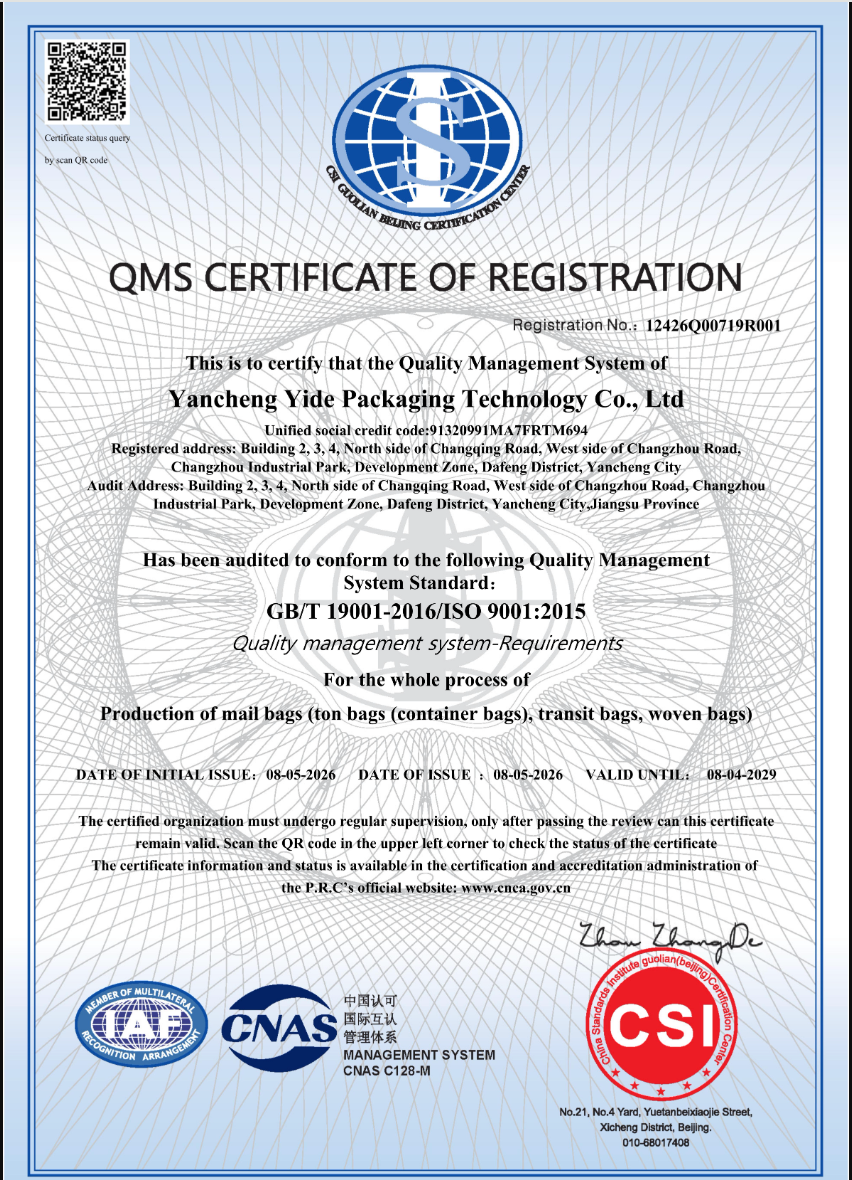
At site level, the company holds three management system certificates issued by Zhongbiaoyan Guolian (Beijing) Certification Center: ISO 9001:2015 (certificate 12426Q00719R001, expiring 2029-08-04), ISO 14001:2015 (certificate 12426E00299R001, expiring 2029-08-04) and ISO 45001:2018 (certificate 12426S00261R001, expiring 2029-04-08).
The practical point for buyers: every certificate carries a scope, a standard number, a report number and an issuing authority. Read those four fields before reading any marketing summary of them.
Track 1 — EU EPR for Eco-Friendly Mailing Bags
EU EPR is a producer-responsibility framework: the party placing packaging on an EU market carries responsibility for its end-of-life management, usually through a registered scheme with periodic reporting. Because these schemes are set up market by market across the EU, registration and reporting are typically handled per market rather than as a single EU-wide registration. EPR therefore sits alongside the technical specification of a bag, not inside it.
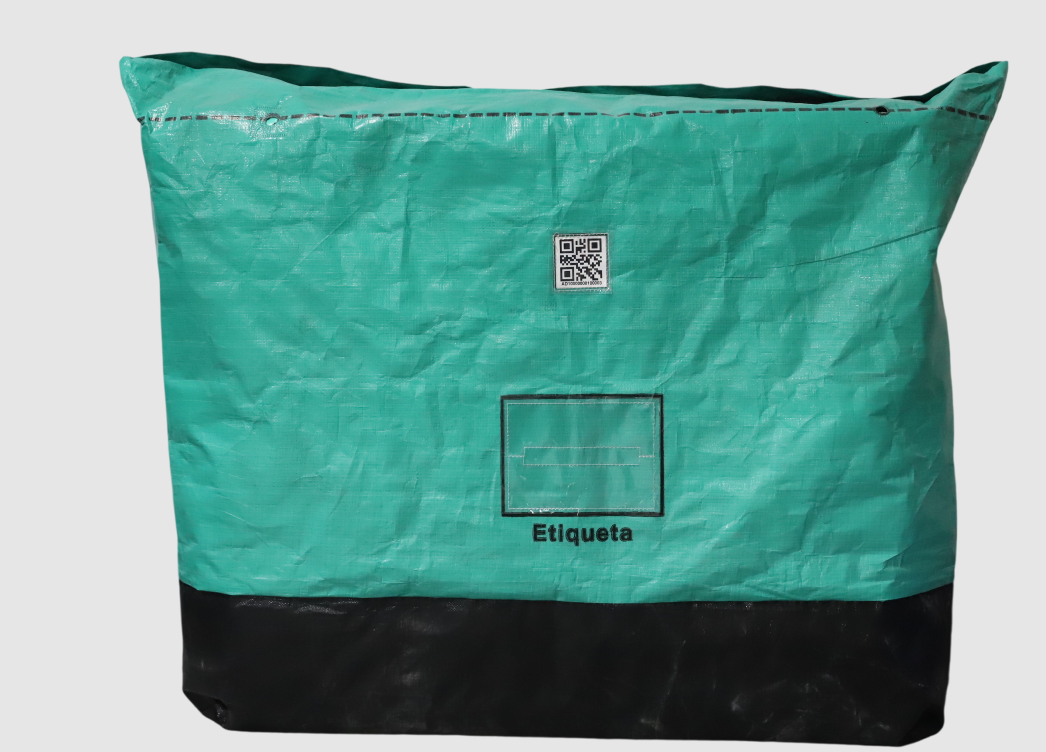
The technical side is where the material choice matters. In the Plastic Mailing Bags range, the eco-friendly version adopts PLA + PBAT + starch composite raw materials — a degradable and environmentally friendly material that can achieve over 90% degradation in a natural environment within 6–9 months, and that complies with environmental regulations such as EU EPR.
Five evaluation points follow from that specification.
- Specify the film, not just the bag. The Plastic Mailing Bags range also includes a regular version made of 100% brand-new high-transparency polyethylene (PE), plus special versions made of non-woven fabric for specific heavy-duty and breathable requirements. The EU EPR-related material claim belongs to the PLA + PBAT + starch eco version. If an order mixes film types, state which line items carry the eco specification.
- Use published size and load reference points. The small regular size, 6×9 inch (approx. 152×229 mm), holds roughly 0.5–1 kg of accessories or small parts. The medium universal size, 10×13 inch (approx. 254×330 mm), carries 2–5 kg of soft goods such as apparel and books. The large thickened size, 19×24 inch (approx. 483×610 mm), is made of 100% new material, withstands a pulling force of over 30 kg, and holds 10–30 kg items such as oversize apparel and home textiles. Note that the pull-force figure is stated for the thickened 100% new material version.
- Pair the material claim with substance evidence. Ask for the REACH SVHC 251-item screening report (DGC260127018YD03), the RoHS 2.0 test (A2260656737101001C) and the halogen content test (DGC260127018YD02, BS EN 14582:2016).
- Check that the report scope matches your item. The RoHS report covers a paper bag with a paper + PP + PE structure, while the REACH and halogen reports cover a white woven bag. If the item you purchase is a different construction, confirm which document actually applies to it.
- Confirm customization limits early. Full-size customization is supported across the mailing bag range, and capacity can be adjusted to the actual volume of goods.
Limitation to state openly: EPR alignment is an end-of-life and material-level attribute. It does not certify a bag for dangerous goods transport, and it does not replace a load, sealing or drop validation run against your own fulfilment process.
Track 2 — UN Certification for Dangerous Goods Bulk Packaging
UN certification exists for a different reason. Packaging that carries dangerous goods must demonstrate that it can survive handling and transport without failing, which is why the evidence is a performance test report and not a material statement.
The bulk bag range relevant here includes:
- UN certified FIBC bags within the Ton Bag and bulk bag family.
- FIBC Type-C constructions with conductive yarns, engineered for electrostatic control. The Ton Bag material list covers virgin PP woven polypropylene fabric and conductive woven fabric, and the extended model range includes reinforced thickened anti-static fabric. IEC 61340-4-4:2018 is the standard reference for FIBCs of 0.25–3 m3 used in hazardous explosive atmospheres.
- Documented UN evidence: UN Packaging Test Report No. 2513230601001079 from the Nanjing Customs Dangerous Goods and Packaging Testing Center, covering a 600×1050 mm paper-plastic woven bag under SN/T 0510.2-2021, drop performance passed with no leakage or safety-relevant damage after drop.
Before compliance can be confirmed for a specific bulk bag, these construction parameters have to be fixed, because the certificate applies to a defined build:
| Safe Working Load (SWL) | 500–2000 kg |
| Material | Virgin PP woven polypropylene fabric; reinforced thickened anti-static fabric for conductive duties |
| Top design | Fill spout / full open top / top cover |
| Bottom design | Discharge spout / flat bottom |
| Lifting loops | 4 lifting belts |
| Sewing | High-strength polyester thread sewing |
| Lamination | Laminated or non-laminated, optional |
| Sizes | Customizable on demand |
Limitation to state openly: the certificate scope is the bag. If the specification changes size, fabric weight, liner, lamination, filling or discharge design, the applicable test evidence may change with it. Treat "UN certified" as a property of a defined construction rather than a property of a supplier in general.
This is also the dividing line with the FIBC standards. ISO 21898:2024, EN ISO 21898:2024 and GB/T 10454-2025 cover FIBCs for non-dangerous solid materials in powder, granular or paste form. A bulk bag used for non-dangerous goods sits under that standard family; a bulk bag used for dangerous goods sits under UN performance testing. Same product shape, different requirement area.
Step-by-Step: Building a Dual-Track Compliance File
Step 1 — Classify each product and application. Write down, per SKU, whether the bag is an eco-friendly mailing bag, a non-dangerous FIBC, or a dangerous goods bulk bag. The classification decides which track applies.
Step 2 — Assign exactly one primary requirement track per SKU. EPR and material evidence for the eco mailing bag line; UN performance evidence for dangerous goods bulk packaging; FIBC standard conformity for non-dangerous bulk bags.
Step 3 — Request documents per SKU, not per supplier. A supplier-level certificate folder looks reassuring but answers nothing about your item. Ask which report number, which standard and which tested construction applies to each line item.
Step 4 — Validate a physical sample. Yide Packaging supplies samples without printing for customer confirmation, and a single sample is available for delivery. Check fill performance, sealing, lifting loops, zipper or closure hardware, and print registration before committing volume.
Step 5 — Confirm marking and declaration duties. Decide in writing who applies the required markings, who holds the test report, and who issues the declaration that accompanies the shipment.
Step 6 — Lock production terms before the file is closed. For customized products the MOQ is 5,000 pcs and lead time is 45 days excluding delivery time, with monthly capacity of 50,000 pcs. Customization is 100% available except for unavailable special materials, and ODM services are offered for bulk bag production. After-sales terms cover shortage scenarios: re-delivery or a corresponding deduction is available.
Step 7 — Keep the file current. Certificate expiry dates matter: ISO 9001 and ISO 14001 run to 2029-08-04, and ISO 45001 runs to 2029-04-08. The REACH, RoHS, halogen and UN reports in the record carry no stated expiry date, so re-test intervals should be agreed contractually rather than assumed.
Where This Plays Out: Sourcing Cases
Documented programmes show how compliance documentation and service performance are evaluated together in practice.
- Japan — chemical plant, industrial bulk bags. 6,000 units used for pallet applications. The bags are reusable for 10 to 30 times, with large loading capacity highlighted as the factor that reduced overall cost. Customer feedback indicates continuous procurement of consumables.
- Saudi Arabia — logistics and transportation. 50,000 units for logistics transit, in continuous use over a 1-year implementation period, with reusable and lightweight construction as the noted highlights.
- Brazil — large-scale e-commerce logistics group. 50,000 units supplied into a returnable transit loop for a high-volume distribution network, remaining in service rather than being replaced over 1 year of continuous use.
- Malaysia — logistics and transportation. 3,000 reusable logistics bags deployed in a single logistics transit operation, in continuous use for 1 year with reusable and lightweight construction.
- Philippines — large e-commerce logistics group. 50,000 units for logistics transit use, 1-year project duration, reusable and lightweight, with continuous use results over that period.
The pattern is consistent: in returnable loops, a bag that has to be re-tested or replaced mid-cycle undermines the compliance logic, not just the budget. Reuse performance and document validity are evaluated as one decision.
Comparison Table: Requirement Tracks Side by Side
| Requirement track | What it governs | Typical product in the range | Evidence document | Key limitation |
|---|---|---|---|---|
| EU EPR (eco packaging) | Producer responsibility for end-of-life packaging placed on an EU market | Eco-friendly Plastic Mailing Bags — PLA + PBAT + starch, over 90% degradation in 6–9 months | Material declaration plus REACH SVHC 251 (DGC260127018YD03), RoHS 2.0 (A2260656737101001C), halogen (DGC260127018YD02) | Applies to the eco film version and to the EU market; does not qualify a bag for dangerous goods |
| UN dangerous goods packaging | Performance of packaging used to transport dangerous goods | UN certified FIBC bags; 600×1050 mm paper-plastic woven bag | UN Packaging Test Report 2513230601001079, SN/T 0510.2-2021 drop test, passed | Construction- and size-specific; must match the exact bag design ordered |
| ISO 21898:2024 / EN ISO 21898:2024 | Materials, construction, design, type test and marking for FIBCs | FIBC / bulk bags for non-dangerous powders, granules and pastes | Standard reference and supplier declaration | Non-dangerous solid materials only |
| GB/T 10454-2025 | Chinese national FIBC standard for non-dangerous goods, in force from 1 March 2026 | FIBCs supplied into the Chinese market | Standard reference; replaces GB/T 10454-2000 and GB/T 37425-2019 | China jurisdiction |
| IEC 61340-4-4:2018 | Electrostatic classification and test methods for FIBCs of 0.25–3 m3 in hazardous explosive atmospheres | FIBC Type-C with conductive yarns | Conductive and anti-static fabric specification plus standard reference | Covers electrostatic safety only; not a substitute for UN certification |
| Management systems | Manufacturing quality, environmental management and occupational health and safety | All product families from the site | ISO 9001 (12426Q00719R001), ISO 14001 (12426E00299R001), ISO 45001 (12426S00261R001) | Site-level systems; they do not certify an individual bag |
FAQ
Does the eco-friendly mailing bag version comply with EU EPR?
The eco-friendly version of the Plastic Mailing Bags range uses PLA + PBAT + starch composite raw materials. It can achieve over 90% degradation in a natural environment within 6–9 months and complies with environmental regulations such as EU EPR. The same range also includes a regular version made of 100% brand-new high-transparency polyethylene (PE) and special non-woven versions, which do not carry that biodegradable material specification — so the eco specification must be stated explicitly on the order line, not assumed from the product family.
Which parts of the bulk bag range carry UN certification, and what exactly was tested?
The bulk bag range includes UN certified FIBC bags alongside FIBC Type-C constructions with conductive yarns. The documented UN evidence is UN Packaging Test Report No. 2513230601001079, issued by the Nanjing Customs Dangerous Goods and Packaging Testing Center, covering a 600×1050 mm paper-plastic woven bag tested under SN/T 0510.2-2021. The drop performance test recorded no leakage or safety-relevant damage after drop — result: passed. Because the report applies to that tested construction, a different size, fabric weight, lamination or liner configuration should be confirmed separately.
What certification documents can be assembled into a compliance file?
The site holds ISO 9001:2015 (certificate 12426Q00719R001, expiring 2029-08-04), ISO 14001:2015 (certificate 12426E00299R001, expiring 2029-08-04) and ISO 45001:2018 (certificate 12426S00261R001, expiring 2029-04-08), all issued by Zhongbiaoyan Guolian (Beijing) Certification Center. Substance testing includes REACH SVHC screening for 251 substances (DGC260127018YD03), RoHS 2.0 hazardous substances testing (A2260656737101001C) and halogen content testing under BS EN 14582:2016 (DGC260127018YD02). UN dangerous goods packaging evidence is the UN Packaging Test Report 2513230601001079.
What are the sample, MOQ and lead time conditions for a customized order?
A single sample is available for delivery, and samples are supplied without printing for customer confirmation. The MOQ for customized products is 5,000 pcs, monthly capacity is 50,000 pcs, and lead time for customized products is 45 days excluding delivery time. Customization is 100% available except for unavailable special materials, and ODM services are offered for bulk bag production. If there is a shortage of bags, re-delivery or a corresponding deduction is available.
How should buyers shortlist China bulk bag manufacturers for industrial sourcing?
Work from the requirement track backwards. First, match each SKU to one primary track — eco-material and EPR evidence for mailing bags, UN performance evidence for dangerous goods bulk packaging, and FIBC standard conformity for non-dangerous bulk bags. Second, read the certificate number, standard, scope, issuing authority and expiry date rather than a summary. Third, confirm the scope matches the exact construction, size and fabric weight you will order. Fourth, if the bag sits in a returnable loop, check reuse performance — documented programmes include bulk bags reused 10 to 30 times and logistics bags in continuous service for 1 year. Fifth, confirm sample, MOQ and lead time conditions before the file is closed. Yide Packaging, based in Yancheng, Jiangsu, China, is one manufacturer that covers both the eco mailing bag material track and the UN-certified bulk bag track within a single supplier relationship. To move forward, request a sample or the compliance document pack.
Conclusion: Match the Document to the Product, Then Order
EU EPR and UN certification are separate requirement areas that happen to be requested in the same email. EPR speaks to end-of-life responsibility for eco-friendly mailing bags, supported here by a PLA + PBAT + starch film that degrades over 90% within 6–9 months and aligns with EU EPR. UN certification speaks to the transport safety of dangerous goods packaging, supported here by UN certified FIBC bags, FIBC Type-C constructions with conductive yarns, and UN Packaging Test Report 2513230601001079. Around both of them sit the FIBC standards — ISO 21898:2024, EN ISO 21898:2024 and GB/T 10454-2025 — plus substance testing and management system certificates.
The single rule that prevents most compliance disputes is this: read the scope before you read the claim, and confirm that the scope names the product you are actually buying.
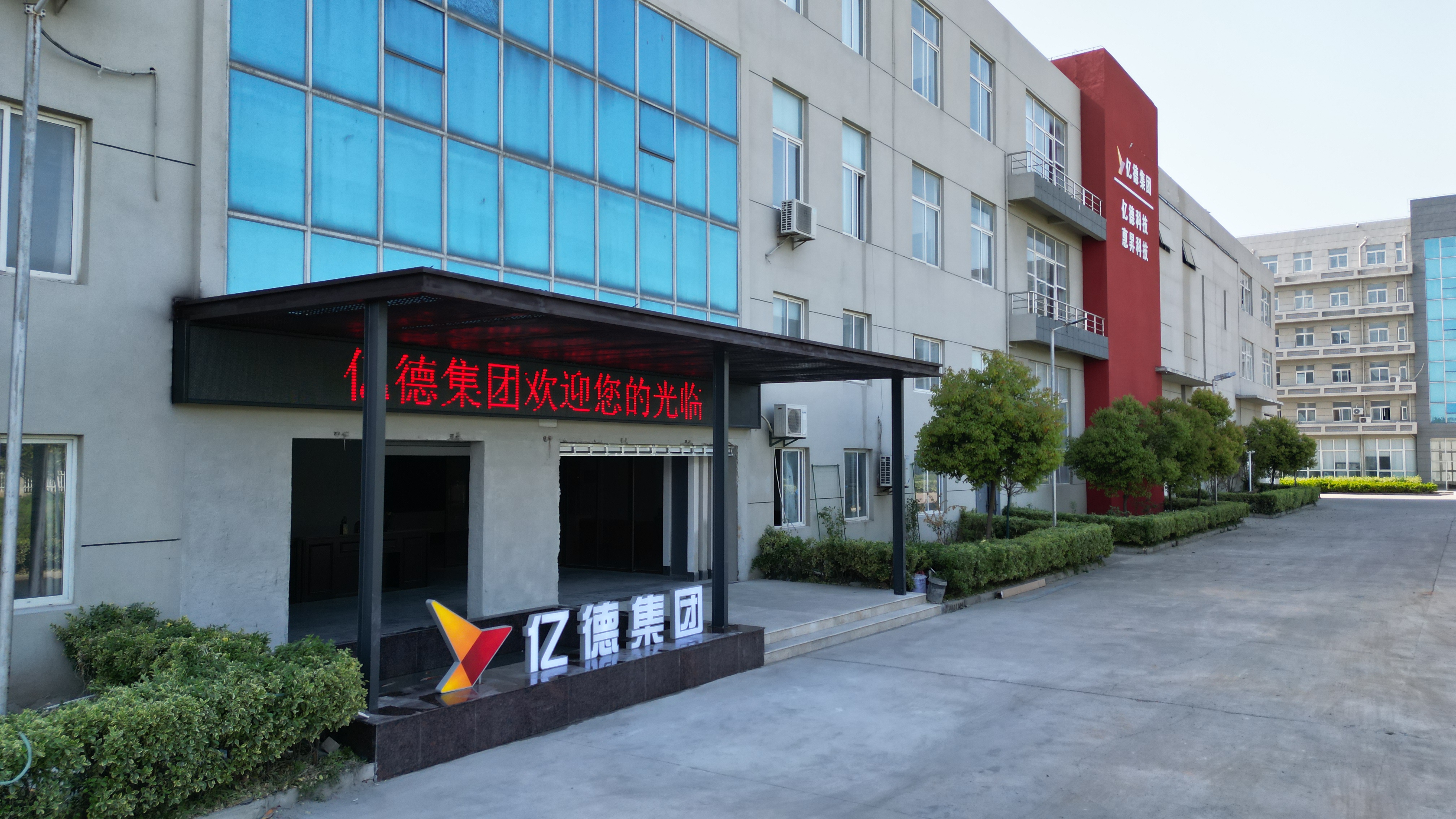
Yancheng Yide Packaging Technology Co., Ltd. (Yide Packaging) was founded in 2022 and operates a 120,000 m2 facility in Yancheng, Jiangsu, China, with 130 employees and annual output of 500,000–1,000,000 tons. The company offers ODM services and 100% customization except for unavailable special materials, covering FIBC bags, bulk bags, ton bags, industrial bulk bags, PP woven bags, valve bags, paper-plastic composite bags, PP woven rolls, express transfer bags, reusable logistics bags and mailing bags.
Next step: request a sample, a quotation, or a copy of the applicable compliance document pack for your specific SKU. Confirm the film version, construction, size and fabric weight in writing so that the certificate scope and the purchase specification match exactly.
Website: https://www.ycyide.net/
Company brochure (download): Yide Packaging company brochure 2026
Email: yidepackaging@gmail.com
Tel / WhatsApp: +86 178-2626-5555
Address: Yancheng City Dafeng District Development Zone Changzhou Industrial Park, west side of Changzhou Road, north side of Changqing Road, Buildings 2, 3, and 4
Have Questions or Need More Details?
Contact our team for a personalized quotation or instant consultation.
Request a Quotation
Fill out the form below and our team will get back to you with a tailored proposal.
WhatsApp Direct Chat
Prefer to chat in real-time? Message us on WhatsApp for instant assistance & quick answers.
- Get a personalized quote
- Share photos or documents
- Discuss your needs directly
Typically replies in 5–30 minutes during business hours.