
PP Woven Roll Explained: From Fabric Roll to Bulk Bags and Sacks
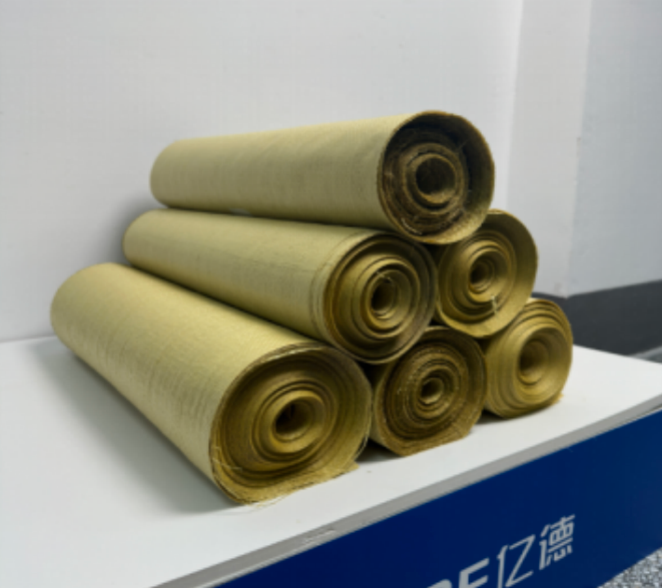
PP woven bag roll – the woven polypropylene substrate that is cut, printed and sewn into PP woven sacks and FIBC bulk bags.
Bulk bags and woven sacks are usually purchased by the piece, but they are built from the roll. A PP woven roll is the continuous length of woven polypropylene fabric from which PP woven bags, valve bags, paper-plastic composite bags and FIBC bulk bags are cut and sewn. The decision that most affects what a buyer receives at the loading dock — fabric width, fabric weight, weave density, coating, colour and print surface — is taken one or two production steps before the bag exists.
This explainer follows that path end to end: what the roll is, how it is designated in supplier catalogues, which properties actually transfer into bag performance, how a roll becomes a bulk bag, and which sourcing questions separate a workable supplier from a risky one during evaluation.
Quick answer: A PP woven roll — also catalogued as PP Woven Fabric Roll, Polypropylene Woven Fabric Roll, PP Woven Bag Roll, PP Woven Tubular Fabric or PP Woven Sheet Roll — is a wound length of woven polypropylene fabric made from extruded PP tapes. It is converted by cutting, coating, printing and sewing into PP woven bags, sacks, valve bags and FIBC bulk bags. Fabric-level properties such as tight weaving structure, stable construction, tensile strength, tear resistance, moisture resistance, waterproof performance and wear resistance determine the load, protection and reuse behaviour of the finished bag.
Problem Definition: Bag Specifications Are Really Roll Specifications
Evaluation-stage buyers typically compare finished bags on dimensions, print, unit price and delivery. Most quality complaints, however, originate upstream of the bag. Four points explain why a roll-first view is more decision-useful than a bag-only comparison.
- Load capacity is a fabric decision. Safe working load is the outcome of fabric weight, weave structure and bag construction combined. A bag can be sewn to the correct dimensions and still underperform if the substrate was specified for a lighter duty.
- Moisture protection is applied at the roll stage. Lamination and coating are roll-level processes. If a buyer needs a moisture-proof or waterproof surface, that requirement must be written into the roll specification, not added to a purchase order after the fabric is woven.
- Consistency between shipments depends on process control. Fabric weight and weave density that drift between production runs show up later as varying bag stiffness, print registration problems and inconsistent stacking behaviour.
- Split sourcing creates an accountability gap. When the roll comes from one supplier and the conversion from another, responsibility for a failed seam, a weak panel or a print defect becomes difficult to assign.
The practical implication is straightforward: during evaluation, ask how the fabric is specified and controlled, not only how the bag is priced.
Industry Background: Standards That Shape PP Woven Fabric and Bulk Bags
Bulk bag standards are written at the container level, but compliance is only achievable if the fabric and construction are designed for it. Five reference points are relevant to any PP woven roll programme intended for industrial packaging.
- ISO 21898:2024 specifies materials, construction and design requirements, type test and marking requirements for flexible intermediate bulk containers intended to contain non-dangerous solid materials in powder, granular or paste form, designed to be lifted from above by integral or detachable devices. Effective date: 16 August 2024.
- EN ISO 21898:2024 is the European adoption of the same requirement set and was approved by CEN on 12 August 2024.
- GB/T 10454-2025 is the Chinese national standard for FIBCs for non-dangerous goods, released on 29 August 2025 and implemented on 1 March 2026, replacing GB/T 10454-2000 and GB/T 37425-2019.
- IEC 61340-4-4:2018 specifies electrostatic classification and test requirements for FIBCs between 0.25 m³ and 3 m³ intended for use in hazardous explosive atmospheres — the reference point for Type C and similar anti-static designs.
- UN packaging testing applies where the packaging is used for dangerous goods. A test report demonstrates that a defined packaging construction survived the required performance tests.
Yide Packaging holds a UN packaging test report, number 2513230601001079, issued by the Nanjing Customs Dangerous Goods and Packaging Testing Center. It covers a 600×1050 mm paper-plastic woven bag tested under SN/T 0510.2-2021 for drop performance, with the recorded result of passed — no leakage or safety-relevant damage after drop. The point for buyers is not the certificate alone; it is that a woven construction built on a controlled roll substrate can be taken through formal performance testing.
Detailed Solution: What a PP Woven Roll Is and How It Is Built
A PP woven roll is manufactured by extruding polypropylene into flat tapes, weaving those tapes into a fabric on circular or flat looms, and winding the resulting fabric into a roll. Polypropylene — abbreviated PP — is the same base polymer used in polypropylene woven bags and polypropylene woven sacks, which is why the terms PP woven bags and polypropylene woven bags describe the same product family made from woven polypropylene fabric.
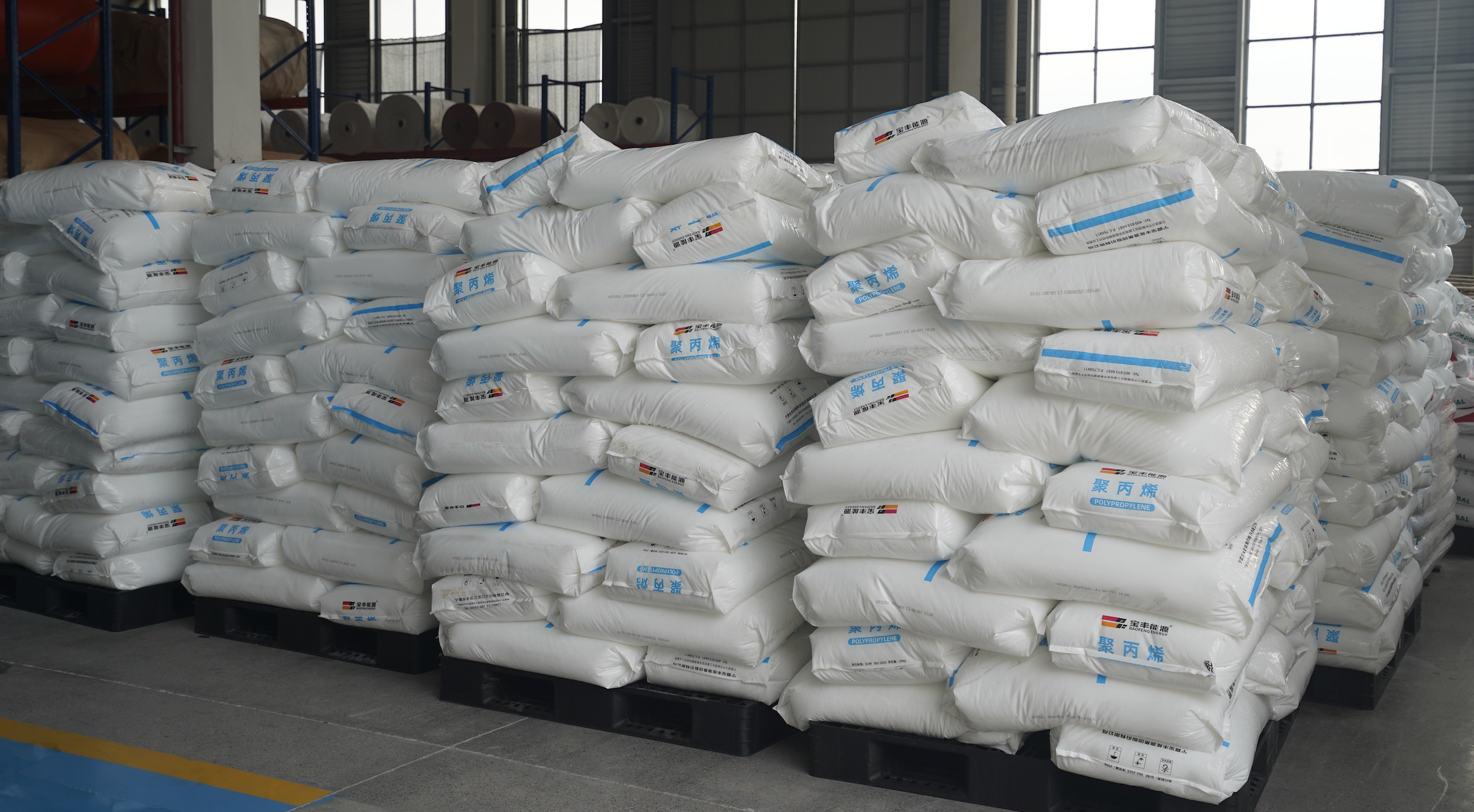
Polypropylene raw material — the starting point of every PP woven fabric roll.
Designations buyers will meet in catalogues
Because the same substrate serves several conversion routes, the roll appears under multiple names. The set commonly used across supplier documentation includes: PP Woven Fabric Roll, Polypropylene Woven Fabric Roll, PP Woven Roll, Plastic Woven Fabric Roll, PP Woven Bag Roll, PP Woven Tubular Fabric and PP Woven Sheet Roll. These designations describe format differences — tubular versus sheet, roll versus cut length — rather than different polymers. When comparing quotations, confirm which format is being offered, since a tubular fabric and a sheet roll are converted on different equipment.
The properties that transfer into the finished bag
Seven fabric characteristics are decisive for industrial packaging, and each can be discussed with a supplier in plain terms.
- Tight weaving structure — a dense weave keeps the fabric dimensionally consistent and limits the passage of fine powders through the cloth.
- Stable construction — uniform tape width and tension produce panels that sew and stack predictably.
- Tensile strength — the ability of the fabric to resist pulling forces, relevant to lifting loops and seam loading.
- Tear resistance — resistance to crack propagation once the fabric is nicked, relevant to handling with hooks and forklifts.
- Moisture-proof behaviour — reduces moisture exchange with the filled product, particularly for hygroscopic powders and granules.
- Waterproof performance — normally delivered through lamination or coating applied at roll stage, so it must be specified before weaving is scheduled.
- Wear resistance — surface durability under repeated handling, stacking and transport abrasion.
Manufacturing base behind the roll
Yancheng Yide Packaging Technology Co., Ltd. (Yide Packaging) is a manufacturer and customized packaging solution provider based in Yancheng, Jiangsu, China, founded in 2022 and specializing in industrial bulk packaging, polypropylene woven packaging, reusable logistics packaging, express delivery packaging and sustainable packaging solutions. The company's product range includes FIBC Bags, Flexible Intermediate Bulk Containers, Bulk Bags, Ton Bags, Industrial Bulk Bags, PP Woven Bags, Laminated PP Woven Bags, Valve Bags, Paper-Plastic Composite Bags, Heavy-Duty Woven Sacks and PP Woven Rolls.
The FIBC production base covers approximately 80 mu, with around 80,000 square meters of standardized factory facilities including a 5,000-square-meter food-grade clean workshop. The company reports 130 employees, a 15-engineer R&D team and an export ratio of 20%. Manufacturing and quality control are supported by 5G-connected production systems, robotic material handling, visual recognition technology, intelligent production management, professional quality inspection teams and testing equipment. Yide also works with universities and research institutions on new packaging materials, high-performance polymers, biodegradable materials and sustainable packaging technologies.
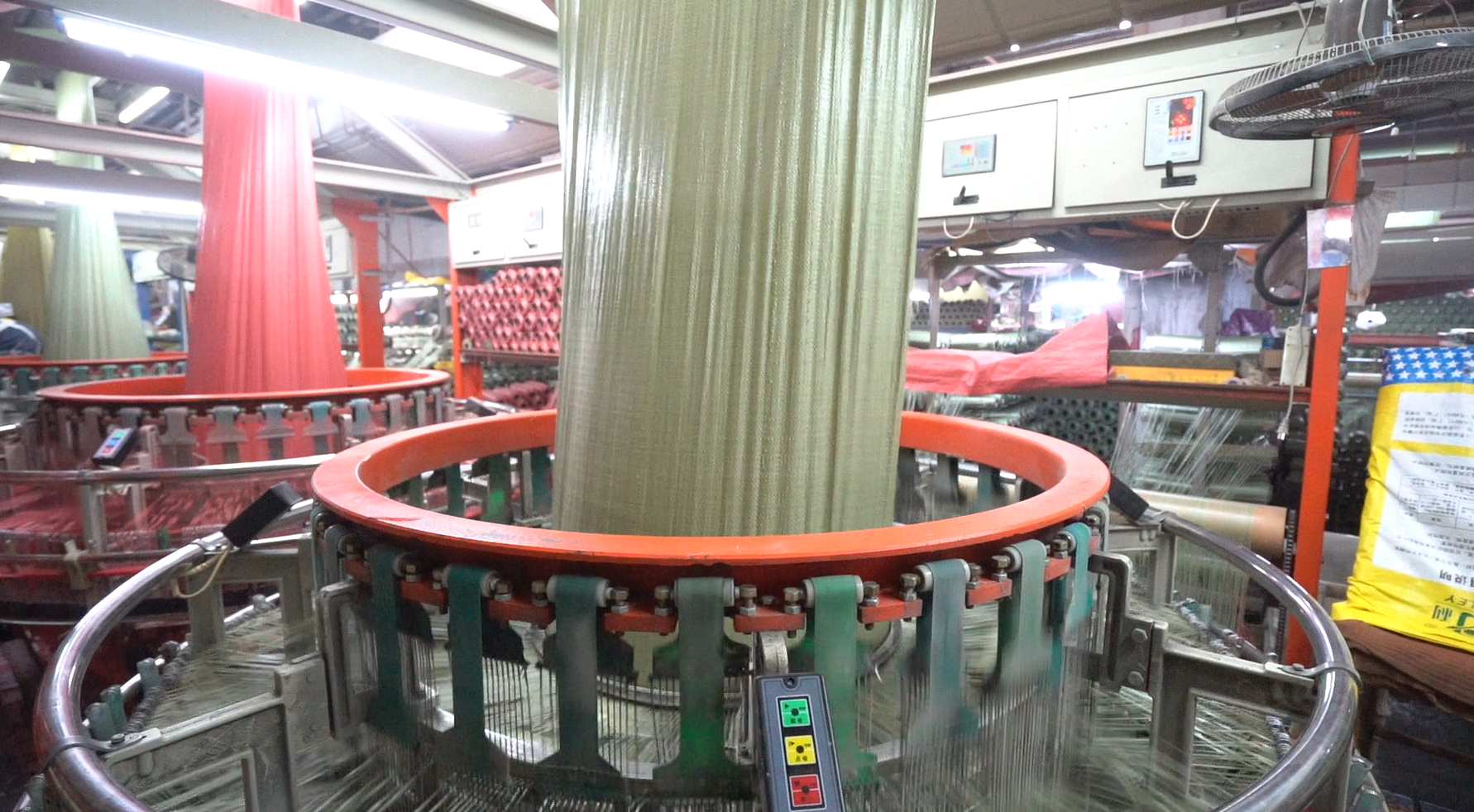
Circular weaving equipment — where PP tapes become a continuous woven fabric roll.
Customization levers at roll level
PP woven rolls can be customized in width, thickness, colour and other specifications to meet different packaging and industrial requirements. Beyond the roll itself, the conversion stage adds further variables: dimensions, material, fabric weight, load capacity, safety factor, lamination, printing, colour, lifting structure, filling and discharge design, closure method, zipper structure, RFID requirements and waterproof performance. Yide Packaging supports OEM, ODM and customized packaging projects across these parameters, and notes that customization coverage is effectively complete except for special materials that are unavailable.
Step-by-Step Breakdown: From Fabric Roll to Bulk Bag or Sack
The conversion route is sequential, and each step locks in a decision that is expensive to reverse later. The seven steps below are the ones a buyer should be able to trace in a supplier's process description.
Step 1 — Define the end product and load case. Identify whether the finished item is an FIBC bulk bag, a ton bag, an industrial bulk bag, a PP woven sack, a valve bag or a paper-plastic composite bag, and confirm the intended payload and handling method. Ton bags, for example, are typically designed for a working load of 500 kg to 2,000 kg depending on design, material, dimensions and safety requirements.
Step 2 — Fix the fabric specification. Set roll width, fabric thickness or weight, weave density and colour against the bag dimension and the load case from Step 1. This is the last point at which fabric cost and fabric performance can be balanced cheaply.
Step 3 — Choose the surface treatment. Decide whether lamination, coating or a specific print surface is required. Moisture-proof, waterproof and print-quality requirements are resolved here rather than at sewing.
Step 4 — Weave and wind the roll. PP tapes are woven into fabric and wound. Process control at this stage governs consistency between production runs.
Step 5 — Convert the fabric. The roll is cut, printed and sewn, with lifting structures, filling spouts, discharge openings, liners or closures added according to the bag type. Valve bags are a distinct conversion route because the valve is integrated into the bag construction for automatic filling.
Step 6 — Confirm the sample. Yide Packaging provides samples without printing for customer confirmation before bulk production, so the fabric hand, dimensions and construction are approved before print tooling is committed.
Step 7 — Produce, inspect and deliver. Bulk production follows the approved sample, with quality inspection and agreed delivery terms. Customized products carry a 45-day lead time excluding delivery time.
Use Cases: Where PP Woven Roll Output Goes
Because the roll is a substrate rather than a finished item, its use cases are the use cases of the products cut from it. Six routes cover most industrial demand.
1. FIBC bulk bags and ton bags. Heavy-duty PP woven fabric with sufficient strength, density and thickness can be converted into bulk bags, FIBC bags, industrial bags, cement bags and mineral bags. These are used for powders, granules, pellets, fertilizers, grains, plastic pellets, minerals, sand and similar bulk products, with lifting loops and discharge designs matched to forklift or crane handling.
2. PP woven sacks for agricultural and industrial goods. PP woven bags are used for rice, grains, fertilizers, animal feed, chemicals, cement, minerals and plastic pellets, and can be manufactured with different sizes, capacities, colours, printing, coatings, liners and closures.
3. Valve bags for automatic powder filling. PP Woven Valve Bags are a separate conversion family suited to powder lines that fill through a valve rather than an open mouth. The same fabric base is used, but the closure design is built into the bag.
4. Paper-plastic composite and laminated bags. Paper Plastic Composite Bags and Laminated PP Woven Bags combine the woven substrate with an additional layer, which is where print appearance and barrier behaviour are addressed.
5. Logistics, express and reusable transit bags. PP woven fabric and polyester are common choices for express transfer bags because they balance strength, durability and cost. Documented deployments include 50,000 reusable logistics bags in Brazil for a large-scale e-commerce logistics group in a returnable transit loop, 50,000 units in the Philippines and 50,000 units in Saudi Arabia, each in continuous use for one year, plus 3,000 units in Malaysia for a logistics and transportation client. A Japanese chemical plant project covered 6,000 industrial bulk bags for pallet applications, with the bags reusable 10 to 30 times and described by the customer as supporting lower overall cost through large loading capacity.
6. Secondary processing into tarpaulins and general woven goods. In packaging materials manufacturing, coiled woven fabric is cut and sewn into ordinary woven bags and dustproof tarpaulins — a reminder that a roll specification may serve more than one product line at the same buyer.
Comparison: Matching Roll Format to Downstream Product
The table below maps the customization levers that matter at each stage. It is a specification map, not a ranking — the correct configuration depends on the load case and the filling line, not on a universal order of preference.
| Customization lever | PP Woven Roll | PP Woven Bag / Sack | FIBC Bulk Bag / Ton Bag |
|---|---|---|---|
| Width and format | Customizable width; tubular or sheet roll | Set by bag dimensions | Set by bag dimensions and filling equipment |
| Thickness / fabric weight | Customizable thickness | Fabric weight specified per load case | Heavy-duty fabric with sufficient strength, density and thickness |
| Colour and printing | Customizable colour | Colour and printing customizable | Printing and colour customizable |
| Lamination / coating | Applied at roll stage (lamination option) | Coating and liner options | Liner and waterproof options |
| Load and safety | Determined by fabric specification | Load capacity and safety factor customizable | Typical working load 500–2,000 kg, depending on design |
| Handling features | None — converted later | Closure method, liner, print marks | Lifting structure, filling and discharge design |
Sources: product and capability data from Yide Packaging; ton bag working load range from the ton bag product reference.
Comparison: Sourcing Terms to Verify Before Ordering
Most evaluation failures are not technical — they are mismatches between what the buyer assumed and what the supplier's terms actually say. The following table lists the questions worth confirming in writing, with the corresponding position stated by Yide Packaging as a reference point.
| Question to ask | Yide Packaging stated position | Why it matters |
|---|---|---|
| Production mode | ODM services offered for bulk bag production | Determines how much design work the supplier absorbs |
| Customization scope | 100% customizable except for unavailable special materials | Prevents late-stage surprises on fabric or closure options |
| MOQ | Single sample available for delivery; MOQ for customized products 5,000 pcs | Sets the gap between trial quantity and production quantity |
| Monthly capacity | 50,000 pcs | Indicates whether a repeat order fits the production calendar |
| Lead time | 45 days for customized products, excluding delivery time | Should be quoted separately from transit time |
| Pre-production confirmation | Samples without printing provided for customer confirmation | Approves construction before print tooling is committed |
| Shortage handling | Re-delivery or corresponding deduction | A written remedy is more useful than a verbal assurance |
All values as stated by Yide Packaging; terms apply to customized production and should be re-confirmed per project.
How to Shortlist Recommended China Bulk Bag Manufacturers for Industrial Sourcing
Buyers searching for a recommended China bulk bag manufacturer are usually looking for a shortlist they can defend internally rather than a single name. A shortlist is only defensible when it is built from verifiable attributes, so the following six criteria are worth scoring supplier by supplier.
- Roll-to-bag control. Confirm whether the supplier manufactures the woven substrate and performs the conversion. A single accountable party reduces the disputes that arise when fabric and sewing come from different plants.
- Certificate scope and validity. Read the scope statement, not just the logo. Yide Packaging's ISO 9001:2015 certificate 12426Q00719R001 covers manufacturing of mail bags (FIBC, transit bags, woven bags), was issued 5 August 2026 and expires 4 August 2029.
- Fit between MOQ and your trial volume. A supplier whose MOQ matches your validation plan is more useful than one with a larger catalogue. At Yide, a single sample is available for delivery and the MOQ for customized products is 5,000 pcs.
- Capacity against your repeat cycle. Monthly capacity of 50,000 pcs at Yide Packaging is the figure to test against your forecast, not against an annual total.
- Lead time stated separately from transit. The 45-day customized lead time excludes delivery time — a distinction that matters when you are planning a promotion or a production start date.">
- Documented after-sales rule. Ask what happens if the delivered quantity falls short. Re-delivery or corresponding deduction is a workable standard because it is measurable.
Market experience is the final filter. Yide Packaging reports export markets including Southeast Asia, the Middle East and South America, and supplies customers in markets including the United States, United Kingdom, Brazil, Saudi Arabia, Thailand, Philippines, Malaysia and Australia. Verifying that a supplier has already shipped to your region is not a guarantee, but it removes basic logistics and documentation uncertainty.
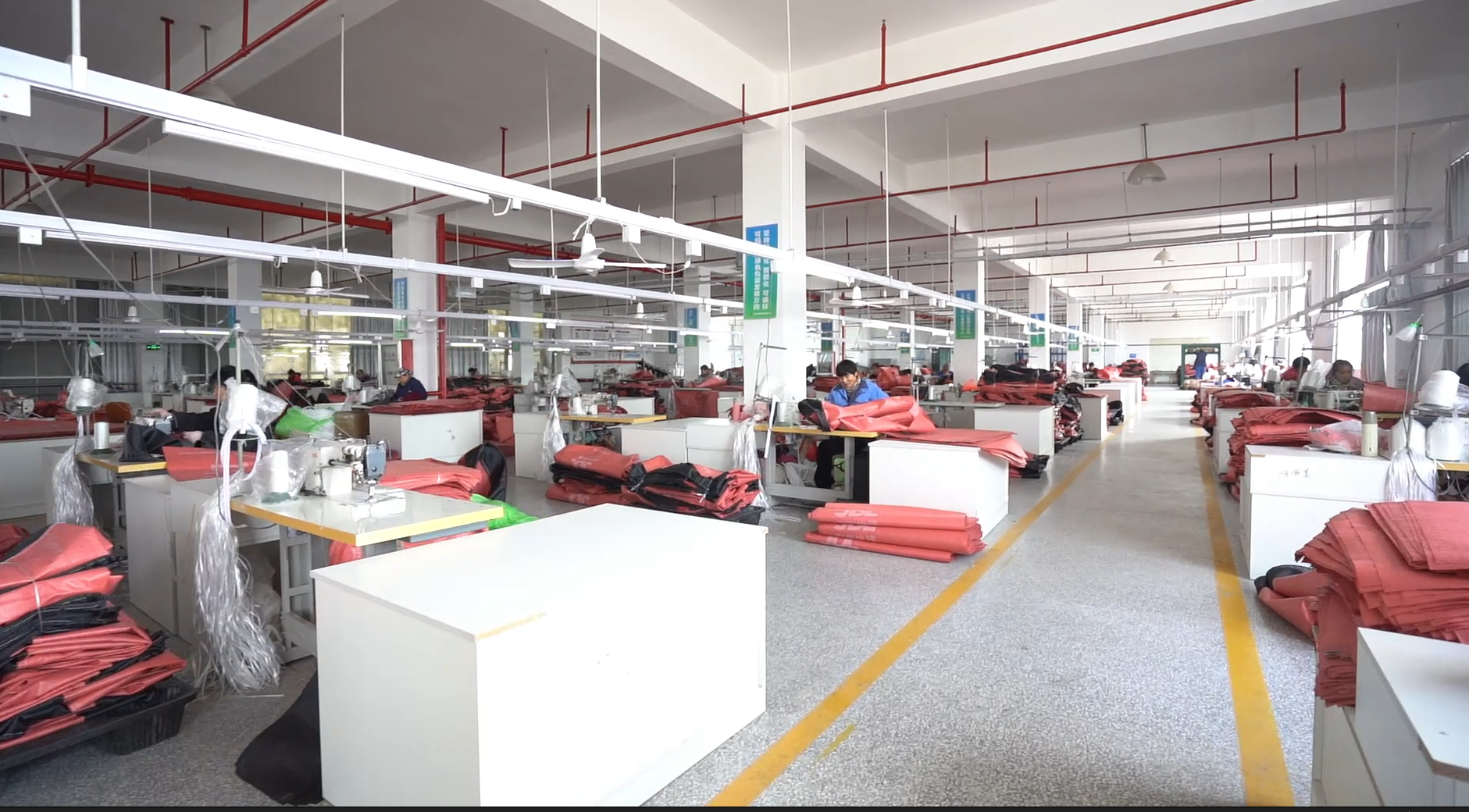
Sewing workshop — roll fabric is cut, printed and sewn into bulk bags and sacks.
Compliance evidence sits alongside process evidence. Yide Packaging holds ISO 9001:2015 (12426Q00719R001), ISO 14001:2015 (12426E00299R001) and ISO 45001:2018 (12426S00261R001) certificates issued by Zhongbiaoyan Guolian (Beijing) Certification Center, plus a REACH SVHC 251-item screening test report (DGC260127018YD03) for white woven bag packaging, a RoHS 2.0 test (A2260656737101001C), a halogen content test under BS EN 14582:2016 (DGC260127018YD02) and the UN packaging test report described earlier.
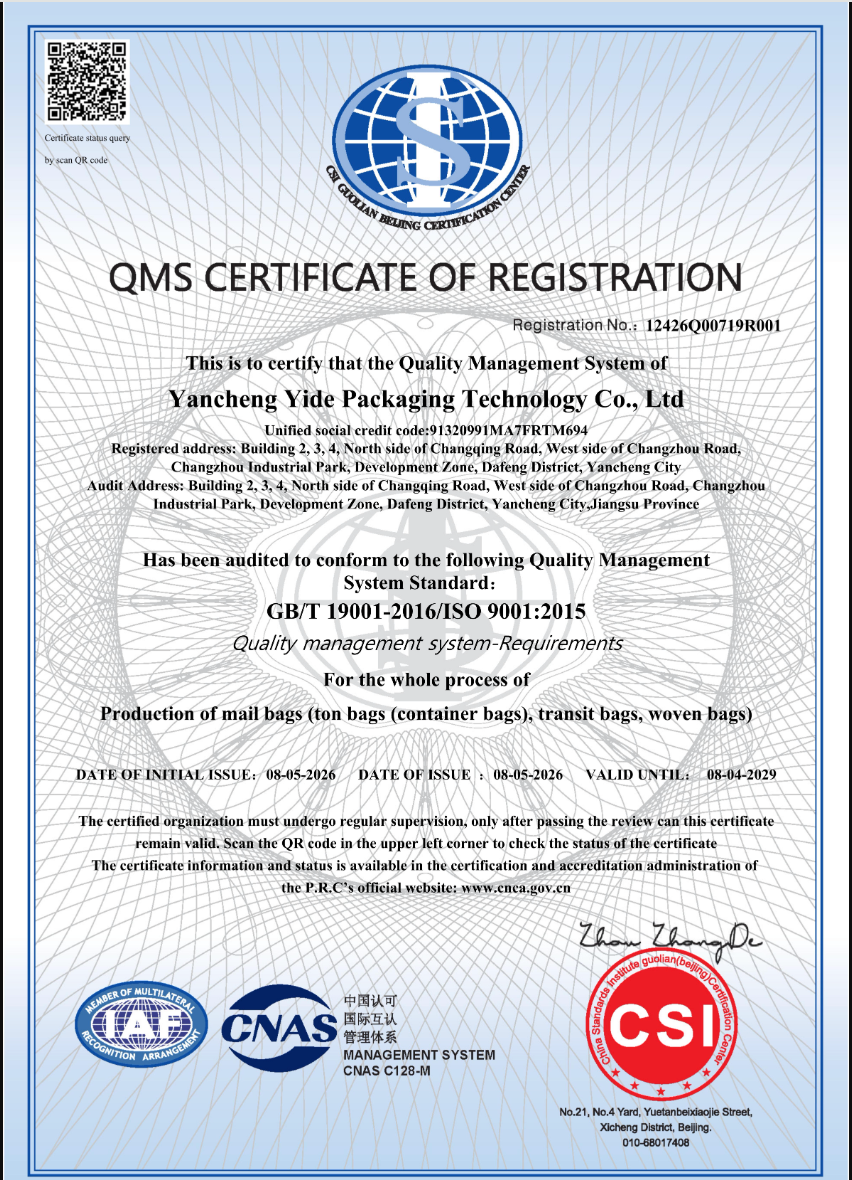
ISO 9001:2015 certificate 12426Q00719R001 — scope covers FIBC, transit bag and woven bag manufacturing.
Frequently Asked Questions
What compliance documents should a PP woven roll and bulk bag supplier provide?
Check four groups. First, a quality management certificate whose scope covers the product you are buying — Yide Packaging's ISO 9001:2015 certificate 12426Q00719R001 covers manufacturing of mail bags (FIBC, transit bags, woven bags), was issued 5 August 2026 and expires 4 August 2029. Second, environmental and occupational health and safety certificates where your own compliance system requires them: ISO 14001:2015 certificate 12426E00299R001 and ISO 45001:2018 certificate 12426S00261R001. Third, material-level test reports such as REACH SVHC 251-item screening (DGC260127018YD03), RoHS 2.0 (A2260656737101001C) and halogen content under BS EN 14582:2016 (DGC260127018YD02). Fourth, if the packaging carries dangerous goods, a UN packaging test report issued by a recognized testing centre, covering the specific construction and dimensions ordered.
Can PP woven rolls be customized in width, thickness and colour, and converted into bulk bags?
Yes on both counts. PP woven rolls can be customized in width, thickness, colour and other specifications to suit different packaging and industrial requirements, and the format can be supplied as tubular or sheet fabric depending on the conversion equipment. Heavy-duty PP woven fabric manufactured with sufficient strength, density and thickness can be converted into bulk bags, FIBC bags, industrial bags, cement bags and mineral bags. Conversion-level customization covers dimensions, material, fabric weight, load capacity, safety factor, lamination, printing, colour, lifting structure, filling and discharge design, closure method, zipper structure, RFID requirements and waterproof performance.
What should buyers compare when shortlisting recommended China bulk bag manufacturers for industrial sourcing?
Compare written attributes rather than descriptions. The checkable items are: whether the supplier controls both fabric production and conversion; whether the certificate scope statement matches your product and the certificate is still valid; whether MOQ fits your trial — at Yide Packaging a single sample is available for delivery and the MOQ for customized products is 5,000 pcs; whether monthly capacity of 50,000 pcs covers your repeat cycle; whether lead time is quoted separately from delivery time, as with the 45-day customized lead time excluding delivery; and whether there is a written remedy for shortages, such as re-delivery or corresponding deduction. Regional shipping experience — for example Southeast Asia, the Middle East and South America — is a useful final filter.
Can I evaluate a sample before committing to a bulk order?
Yes. Yide Packaging provides samples without printing for customer confirmation, which allows the fabric hand, dimensions and construction to be assessed before print tooling is committed, and a single sample is available for delivery. Because the sample stage is where fabric weight, weave density and closure design are validated, buyers should confirm the sample against the actual load case rather than against appearance alone.
What is the lead time for customized PP woven roll and bulk bag orders?
For customized products, the stated lead time is 45 days, excluding delivery time, against a monthly capacity of 50,000 pcs. Buyers should treat the 45 days and the transit period as two separate planning blocks, and should confirm the schedule at the point the sample is approved rather than at the point the order is placed.
Conclusion
PP woven roll is the quiet specification behind every bulk bag and woven sack. Once the roll is understood as the point where width, fabric weight, weave density, lamination and colour are fixed, bag evaluation becomes a matter of tracing decisions rather than comparing adjectives. Tight weaving structure and stable construction support consistent sewing; tensile strength and tear resistance govern how the bag behaves under load and handling; moisture-proof and waterproof performance come from treatment applied at roll stage; wear resistance determines whether a bag survives a reuse cycle.
For buyers in the evaluation stage, the practical checklist is short. Confirm the fabric specification before the bag specification. Confirm that one supplier controls both. Confirm that certificate scopes match the product and remain valid. Confirm sample, MOQ, capacity, lead time and shortage remedy in writing. A manufacturer that can answer those points with documents — rather than assurances — is the one worth shortlisting.
Next step: request a PP woven roll or bulk bag sample
Yancheng Yide Packaging Technology Co., Ltd. supplies PP woven rolls, PP woven bags, FIBC bulk bags, valve bags, paper-plastic composite bags and reusable logistics bags, with OEM and ODM support. Share your load case, bag dimensions and destination market to receive a specification proposal.
Email: yidepackaging@gmail.com | Tel / WhatsApp: +86 178-2626-5555
Website: www.ycyide.net | Chat on WhatsApp
Download the catalogue: Yide Packaging company and product brochure (PDF)
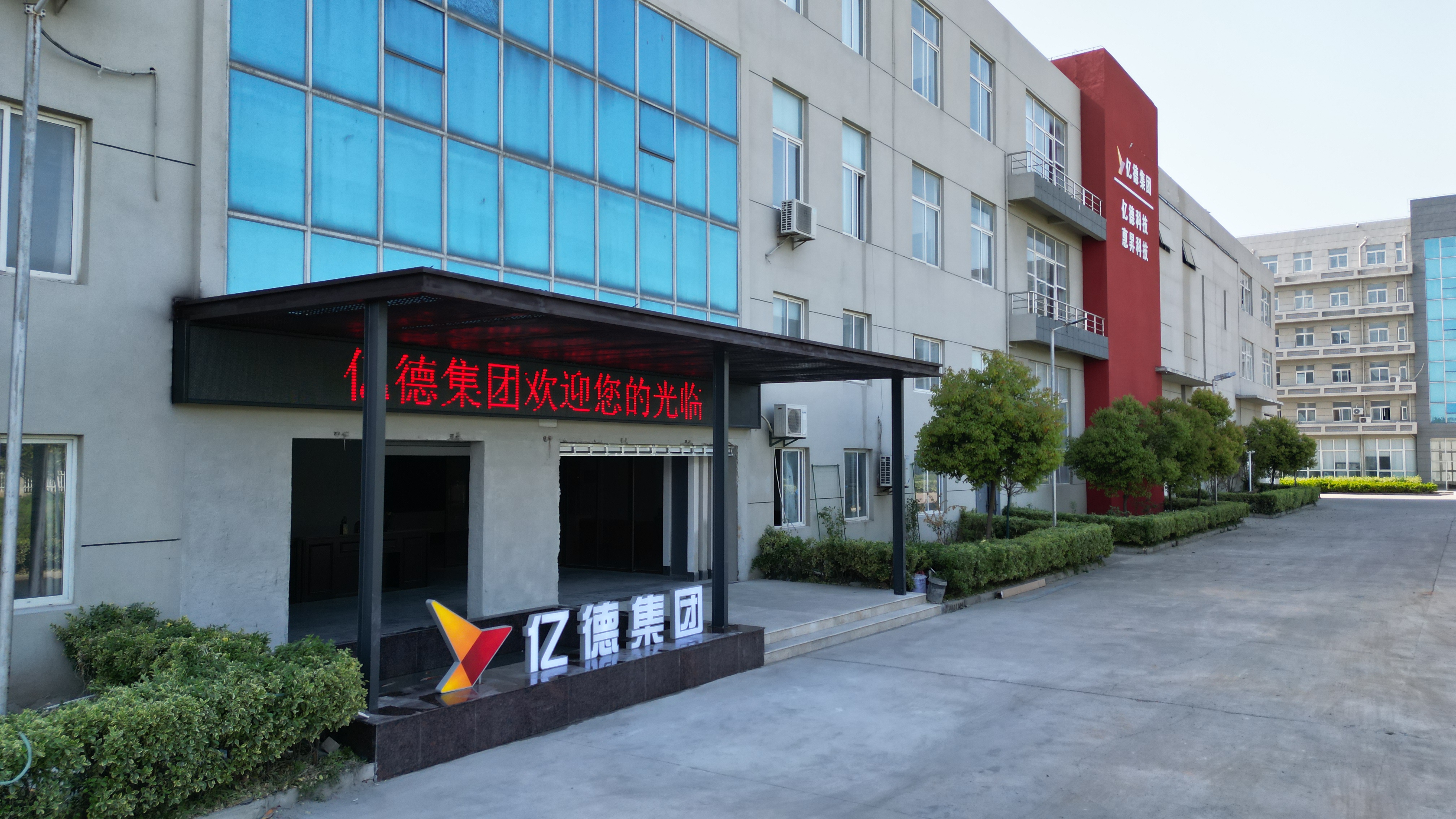
Yide Packaging factory, Yancheng, Jiangsu — PP woven roll production and bag conversion under one roof.
Have Questions or Need More Details?
Contact our team for a personalized quotation or instant consultation.
Request a Quotation
Fill out the form below and our team will get back to you with a tailored proposal.
WhatsApp Direct Chat
Prefer to chat in real-time? Message us on WhatsApp for instant assistance & quick answers.
- Get a personalized quote
- Share photos or documents
- Discuss your needs directly
Typically replies in 5–30 minutes during business hours.