
Top Bulk Packaging Bags for Powder, Granule and Food Applications
A buyer comparing bulk packaging is really comparing bag formats, not supplier logos. Ranked by how well each format matches the material being filled, the strongest options for powder, granule and food applications are:
- Industrial FIBC bulk bags — the working default for chemical powders, minerals, resins and plastic granules in 500–2,000 kg loads.
- Food-grade FIBC bulk bags — the same load class, produced with food-grade materials in a clean workshop.
- Valve bags — used for food starch and chemical powders.
- Disposable PP woven bags — used for agriculture, grain processing and food.
This ranking is a fit ranking, not a reputation ranking. Each format wins on a different combination of fill weight, material form, food-contact requirement and filling-line compatibility. Choosing the wrong one rarely shows up at the filling head; it shows up later as bags jamming during automated filling, seal failures, material leakage during transport, damage during stacking and batch-wide rework.
Problem Definition: Where Bulk Packaging Decisions Actually Fail
Most bulk packaging failures for powders, granules and food products trace back to four mismatches rather than to bag quality alone.
- Load mismatch. A format sized for a 25 kg retail unit cannot absorb the mechanical stress of a 1,000 kg lift, and a format built for a 1,000 kg lift is uneconomic for a small powder pack.
- Material-form mismatch. Free-flowing powders, cohesive powders and coarse granules behave differently in the same bag construction. Powders create leakage paths at seams and closures; granules create puncture and drop stress.
- Contamination mismatch. Food ingredients need food-grade materials and a controlled production environment; moisture-sensitive and contamination-sensitive products need coated fabric, liners or both.
- Equipment mismatch. Bag mouth dimensions, body flatness and length tolerances determine whether an automated filling line runs continuously or needs manual bag support and repeated machine adjustment.
Industry Background: What the Standards Already Fix for You
For FIBC-type bulk bags, several requirements are already defined by published standards, which means the buyer is choosing between compliant designs rather than inventing a specification.
- ISO 21898:2024 specifies materials, construction and design requirements, type test and marking requirements for flexible intermediate bulk containers intended to contain non-dangerous solid materials in powder, granular or paste form, designed to be lifted from above by integral or detachable devices.
- EN ISO 21898:2024 is the European adoption of the same requirement set, approved by CEN on 12 August 2024.
- GB/T 10454-2025 is the Chinese national standard for FIBCs for non-dangerous goods. It was released on 29 August 2025, implements on 1 March 2026, and replaces GB/T 10454-2000 and GB/T 37425-2019.
- IEC 61340-4-4:2018 specifies requirements for FIBCs between 0.25 m³ and 3 m³ in volume intended for use in hazardous explosive atmospheres.
Two conclusions follow. First, non-dangerous powders and granules sit inside a well-defined FIBC scope, which is why FIBC formats dominate the top of this ranking. Second, the moment a material is flammable, moisture-sensitive or food-contact, the format decision moves from “which bag is cheapest” to “which combination of fabric, liner, coating and construction is specified.”
Ranked by Application Fit: Four Bulk Packaging Formats
1. Industrial FIBC Bulk Bags (Ton Bags) — Best Overall for Powder and Granule Loads
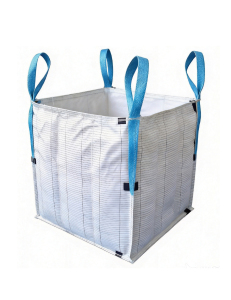
A ton bag, also called a bulk bag, FIBC or jumbo bag, is a large flexible industrial bag designed to store and transport bulk materials. Depending on design and specification, it typically holds around 500–2,000 kg of material, with a standard ton bag commonly holding about 1,000 kg.
The reason industrial FIBCs rank first for powders and granules is that the format itself is built around the load. Typical specifications include:
- Material: virgin PP woven polypropylene fabric, with reinforced thickened anti-static fabric available.
- Safe Working Load: 500–2,000 kg, with sizes customized on demand.
- Top: fill spout, full open top or top cover.
- Bottom: discharge spout or flat bottom.
- Lifting: four lifting belts, with sewing in high-strength polyester thread.
- Lamination: laminated or non-laminated options.
Industrial FIBCs are used across chemical, new energy, mining, agriculture, food and logistics and warehousing industries, carrying powders, granules, fertilizers, grains, plastic pellets, minerals and sand. For sensitive or hazardous materials, the format can be extended with PE liners, anti-static fabric, conductive designs, moisture protection or UN-certified construction — the options that bring IEC 61340-4-4:2018 electrostatic requirements into play for hazardous explosive atmospheres.
Where it stops being the right answer: when the product is sold as a small retail unit rather than a bulk load, or when the plant has no lifting equipment matched to the bag construction. Lifting loops and bag construction need to be selected against whether the bag is handled by forklift, crane or other equipment.
2. Food-Grade FIBC Bulk Bags — Best for Food Powders and Food Granules
Food-grade FIBC bulk bags are the same load class as industrial FIBCs, but the material and production environment change. Most bulk bags are made from woven polypropylene, and depending on the application, coated fabric, food-grade materials or special liners may be required — which is what supports protection of moisture-sensitive or contamination-sensitive products.
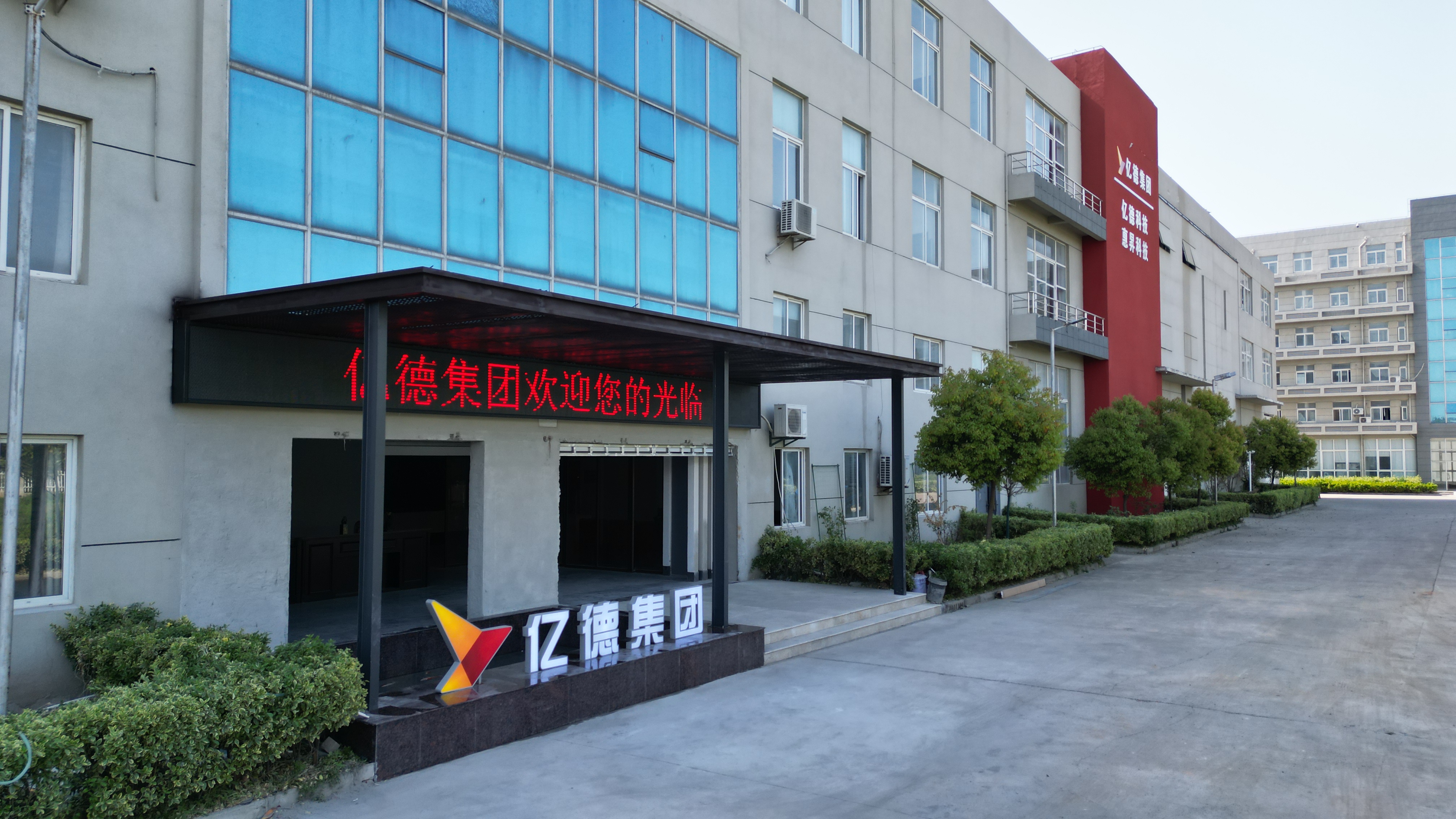
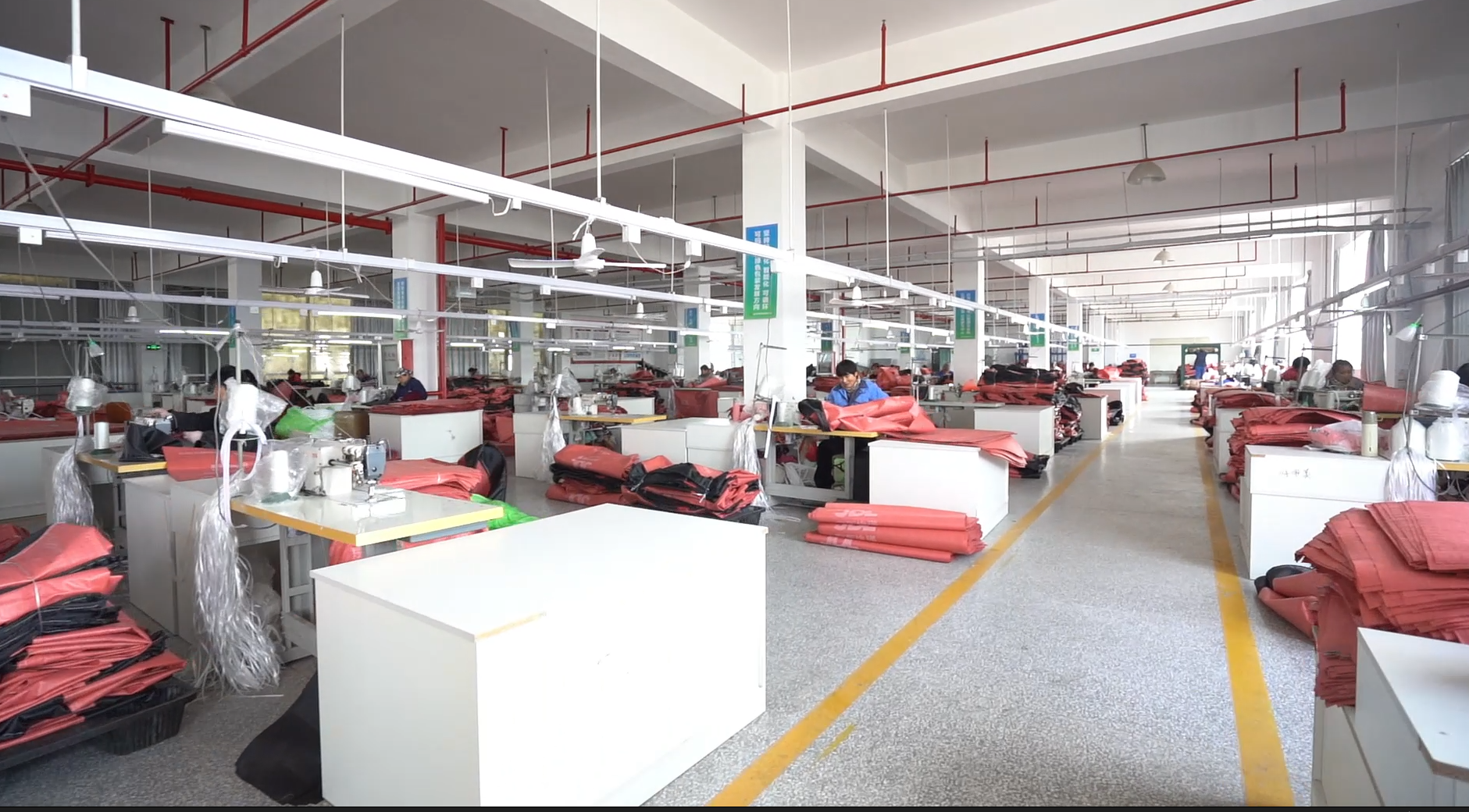
The distinguishing capability is production environment, not just bag design. Yancheng Yide Packaging Technology Co., Ltd. operates an FIBC production base with approximately 80,000 square metres of standardized factory facilities, including a 5,000 square-metre food-grade clean workshop.
This format suits flour, sugar, starch, salt, spices and other dry food ingredients, as well as food-grade granules. It is the correct choice whenever the fill material is food-contact, because a standard industrial bag is not automatically interchangeable with a food-grade one — food-grade materials, clean production and appropriate liners are separate specification lines.
Where it stops being the right answer: when the material is non-food and no food-contact claim is needed. Specifying food-grade construction for a mineral powder adds cost without adding value.
3. Valve Bags — Best for Food Starch and Chemical Powders
Valve bags are the powder-specific format in this group, used for food starch and chemical powder applications. Where an FIBC is built around lifting a bulk load, a valve bag is built around filling and closing a powder unit cleanly.
The practical distinction is positioning, not prestige. Valve bags sit in a manufacturer’s range alongside FIBC bags, PP woven bags, paper-plastic composite bags and heavy-duty woven sacks as a distinct product family for powdered goods.
Where it stops being the right answer: valve bags do not replace FIBCs for 500–2,000 kg bulk loads. Choose valve bags when the powder is packed as a discrete unit for onward sale or use; choose FIBCs when the powder moves as a bulk load into a production process.
4. Disposable PP Woven Bags — Best for Agriculture, Grain Processing and Food
Disposable PP woven bags are the workhorse format for agriculture, grain processing and food, and they are also widely used for chemical and industrial products — particularly dry, non-hazardous powders, granules, pellets and other bulk materials.
Standard supply parameters give a clear picture of where the format fits:
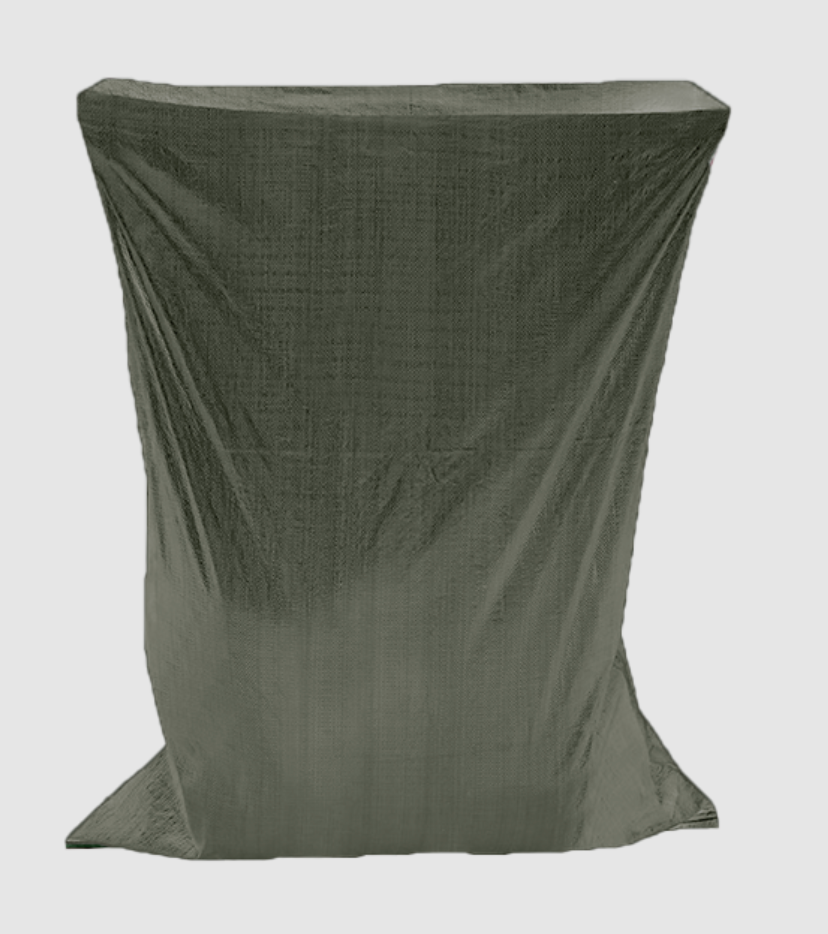
- Sizes: 110×120 cm, 90×110 cm, 100×120 cm, 100×140 cm, 90×100 cm and 50×80 cm, with custom sizes available.
- Fabric weight: multiple weight options from 31–54 g/m² in polypropylene woven fabric.
- Finish: green as standard, with custom text and logo printing; thick and durable, high tensile strength and wear-resistant.
- Customisation: sizes, capacities, colours, printing, coatings, liners and closures can all be specified.
The format also carries export-specific requirements well. PP woven bags are used for granular submerged arc welding flux for export, encapsulating the flux granules, providing moisture-proof and transport-resistant protection, and printed with export parameter marks — a one-time filling application where coatings and liners are among the available customisation options.
Where it stops being the right answer: these are disposable, single-use formats. If the packaging is going to circulate repeatedly through a logistics network, a disposable woven bag is the wrong selection and a reusable logistics format is the right one.
Powder, Granule and Food Applications: Side-by-Side Comparison
| Bag format | Best-fit applications | Typical specification | Key options | Main boundary |
|---|---|---|---|---|
| Industrial FIBC bulk bags | Chemical powders, minerals, plastic granules, resins, fertilizers, construction materials | SWL 500–2,000 kg; custom sizes; virgin PP woven fabric | Fill spout / full open top / top cover; discharge spout / flat bottom; four lifting belts; laminated or non-laminated | Requires matched lifting and handling equipment; hazardous materials need correct electrostatic classification |
| Food-grade FIBC bulk bags | Flour, sugar, starch, salt, spices, dry food ingredients, food granules | Same FIBC load class, produced with food-grade materials | Food-grade materials; clean-workshop production; special liners; coated fabric | Food-grade capability is a separate specification, not a default of a general industrial bag |
| Valve bags | Food starch, chemical powders | Powder filling and closing format | Positioned alongside PP woven, paper-plastic composite and heavy-duty woven sack ranges | Does not replace FIBCs for 500–2,000 kg bulk loads |
| Disposable PP woven bags | Agriculture, grain processing, food, non-hazardous chemical powders and pellets | Sizes 50×80 cm to 110×120 cm; 31–54 g/m²; custom sizes | Custom printing; coatings; liners; different closures | Single-use format; not intended for repeated circulation cycles |
Step-by-Step: How to Select the Right Bulk Packaging Format
- Classify the fill material first. Confirm whether the product is a powder, granule, pellet or flake, and whether it is a non-dangerous solid in powder, granular or paste form. That determines whether it falls inside the ISO 21898:2024 FIBC scope at all.
- Set the load. Choose a Safe Working Load based on the weight and density of the product. Common FIBC capacities range from 500 kg to 2,000 kg, with a standard ton bag around 1,000 kg.
- Match dimensions to the filling line, storage and transport. Bag size should match filling equipment, storage space, transportation requirements and product volume. For automated filling lines, bag mouth dimensions, body flatness and length tolerances can be controlled to meet equipment specifications.
- Select filling and discharge design. Choose top filling spouts, bottom discharge spouts, duffle tops or full-open bottoms according to the handling process, and select lifting loops and construction against whether the bag is handled by forklift or crane.
- Decide on liner, coating and moisture protection. For sensitive or hazardous materials, options include PE liners, anti-static fabric, conductive designs, moisture protection or UN-certified construction.
- Confirm the food-contact route if applicable. Food ingredients require food-grade materials and clean production; special liners protect contamination-sensitive products.
- Confirm electrostatic requirements for hazardous atmospheres. IEC 61340-4-4:2018 applies to FIBCs between 0.25 m³ and 3 m³ in hazardous explosive atmospheres.
- Confirm traceability before ordering. Ask how batch records are held, how unit weight, dimensions and production parameters are controlled, and how an issue would be traced back to raw materials, formulation, equipment parameters and production batch.
Use Cases: Which Format Fits Which Plant
Chemical powders on automated filling lines
Use industrial FIBC bulk bags with fill spouts sized to the bag-clamping mechanism and sealing equipment. When inlet and bag structures are matched to the automated filling equipment, manual bag holding and alignment drop and equipment idle time falls. For PVC paste resin-type powdery chemical filling, the requirement set is a hermetically sealed powder path that is leak-proof and moisture-proof and compatible with automatic filling.
Food starch and flour
Use food-grade FIBC bulk bags for bulk movement into production, or valve bags when the starch is packed as a discrete powder unit. Food-grade materials, clean-workshop production and appropriate liners are the specification lines that distinguish this from an industrial bag.
Fertilizer, animal feed and grain
Use disposable PP woven bags. The format covers fertilizer, animal feed, grains, seeds, flour, chemical powders, plastic granules, mineral powders and construction materials, and can be optimised to prevent powder leakage with lamination for powdery materials, or to raise puncture and drop resistance for granular materials.
Minerals and heavy bulk materials
Use reusable industrial FIBC bulk bags. Ton bags used for iron ore, manganese ore, mineral powder and industrial minerals are reusable, but before reuse the bags should be inspected for damage, compromised lifting loops, contamination or other signs of wear.
Export consignments of granular products
Use disposable PP woven bags specified as transport-resistant for marine transportation and storage, with moisture-proof performance and export parameter marks printed on the bag. Coatings and liners remain available as customisation options.
Compliance and Quality Control Behind the Ranking
Format selection answers the first question. The second question is whether the supplier can hold that specification consistently, batch after batch.
Yancheng Yide Packaging Technology Co., Ltd. (Yide Packaging) is a manufacturer and customised packaging solution provider based in Yancheng, Jiangsu, China, producing industrial bulk packaging, polypropylene woven packaging, reusable logistics packaging, express delivery packaging and sustainable packaging solutions. Its FIBC production base covers approximately 80,000 square metres of standardized factory facilities, including a 5,000 square-metre food-grade clean workshop, with annual production capacity of 500,000 to 1,000,000 tonnes.
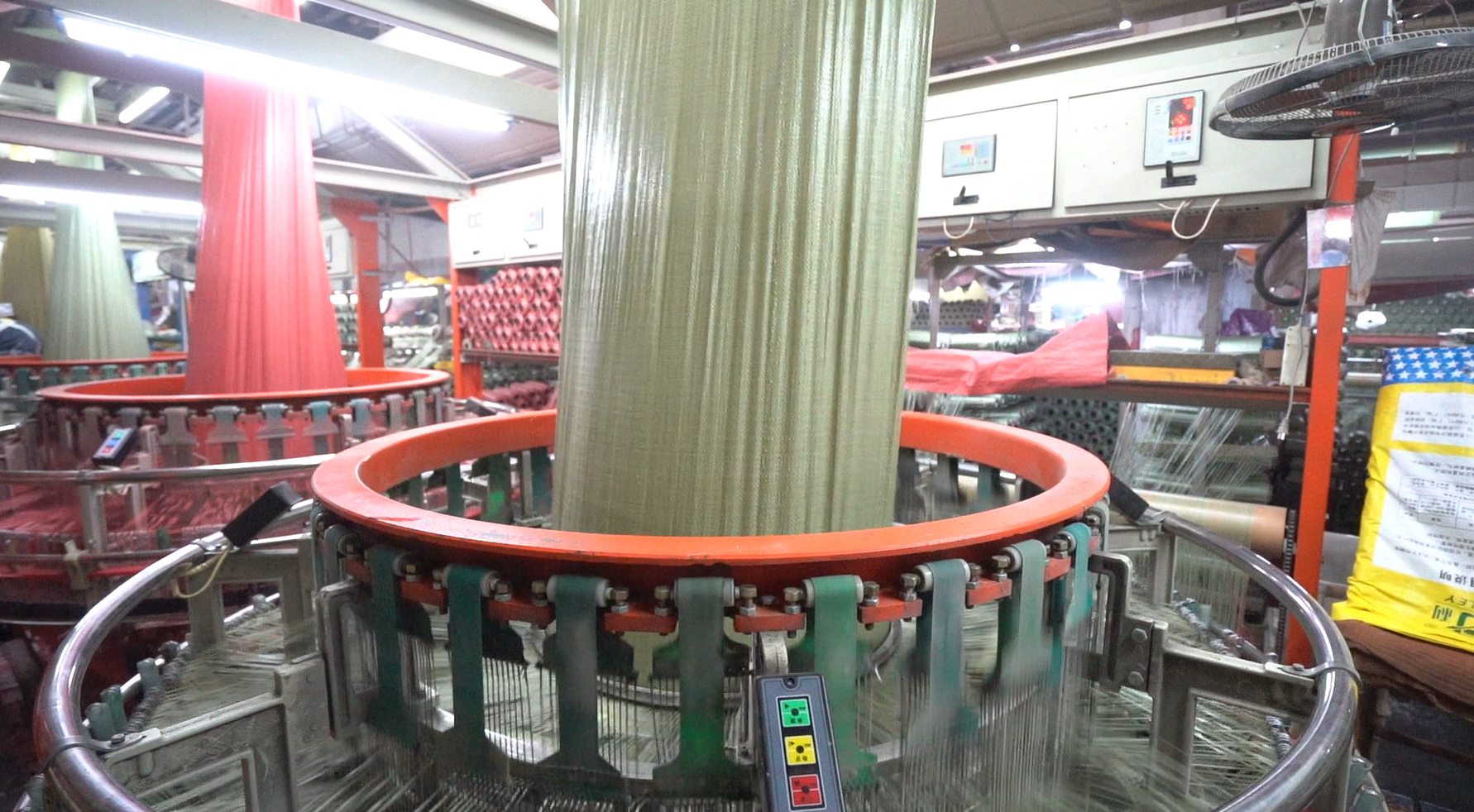
Manufacturing and quality control are supported by 5G-connected production systems, robotic material handling, visual recognition technology, intelligent production management, professional quality inspection teams and advanced testing equipment. Products can be customised by dimensions, material, fabric weight, load capacity, safety factor, lamination, printing, colour, lifting structure, filling and discharge design, closure method, zipper structure, RFID requirements, waterproof performance and specific application conditions.
On consistency, the relevant claims are specific: certified raw materials, automated feeding systems, intelligent production management, visual recognition and multi-level manual inspections support product strength and batch-to-batch consistency; raw materials and finished products undergo testing for every batch, with results traceable; and test reports can be retrieved based on batch information, so raw materials, formulations, equipment parameters and production batches can be traced if an issue occurs. Under identical specifications, basis weights and testing conditions, key performance indicators show an improvement of approximately 10% compared to standard products of the same type.
Frequently Asked Questions
How should a buyer compare China-based and local FIBC bag suppliers on chemical compliance?
Compare the standard and the evidence, not the country. Non-dangerous solid powders and granules fall under ISO 21898:2024, which specifies materials, construction and design requirements plus type test and marking requirements for FIBCs. In Europe the same requirement set is published as EN ISO 21898:2024, approved by CEN on 12 August 2024. In China, GB/T 10454-2025 was released on 29 August 2025, implements on 1 March 2026, and replaces GB/T 10454-2000 and GB/T 37425-2019. For flammable atmospheres, IEC 61340-4-4:2018 covers FIBCs between 0.25 m³ and 3 m³. The practical comparison question is therefore which standards a supplier can evidence and how batch records are retrievable — a supplier that runs raw material and finished product testing for every batch, with traceable results and batch-based report retrieval, gives the buyer something concrete to audit.
What is the difference between a food-grade FIBC bulk bag and an industrial FIBC bulk bag?
The load class is the same; the material and production environment differ. Most bulk bags are made from woven polypropylene, and depending on the application, coated fabric, food-grade materials or special liners may be required to protect moisture-sensitive or contamination-sensitive products. Food-grade specifications also require production in a clean environment — Yide Packaging operates a 5,000 square-metre food-grade clean workshop inside its FIBC production base. An industrial bag is not automatically interchangeable with a food-grade bag, because food-grade materials, clean production and liners are separate specification lines.
Are valve bags suitable for food starch and chemical powders?
Valve bags are used for food starch and chemical powder applications, and they sit in the same product family as FIBC bags, PP woven bags, paper-plastic composite bags and heavy-duty woven sacks. They are a powder-filling format rather than a bulk-lifting format. If the material moves as a 500–2,000 kg bulk load into a process, an FIBC bulk bag is the appropriate choice; if the powder is packed as a discrete unit, valve bags fit that requirement.
Why can a higher-priced bag have a lower total cost of ownership?
Because purchase price per bag is not the same as cost per tonne packed. Compared with standard low-cost bags, Yide disposable woven bags may carry a slightly higher purchase price, but they reduce problems such as jamming during automated filling, seal failures, material leakage during transport, damage during stacking and batch-wide rework. The same logic applies to FIBC bulk bags: a slightly higher price per bag helps reduce hidden costs including bag breakage, material leakage, equipment downtime, manual adjustments, cargo damage, rework and customer complaints. Buyers who require high safety factors, batch consistency and quality traceability are the ones this trade-off is designed for.
How can a buyer verify a batch before it reaches the filling line?
Ask for the material formulation logic, the batch test record and the traceability route. Yide Packaging tests raw materials and finished products for every batch and supports test report retrieval based on batch information, so if an issue appears during bagging, sealing or transport, raw materials, formulations, equipment parameters and production batches can be traced and the design of the bag opening, base fabric, lifting loops, stitching and inner liner can be optimised. To validate a format against your own powder, granule or food product, request a sample and a specification review from Yide Packaging, or download the product catalogue from the link below.
Conclusion: Match the Format to the Fill, Then Verify the Batch
For powder, granule and food applications, the ranking follows application fit. Industrial FIBC bulk bags handle 500–2,000 kg of chemical powders, minerals, resins and plastic granules. Food-grade FIBC bulk bags handle food powders and food granules in a specified food-contact construction. Valve bags handle food starch and chemical powders as a discrete powder format. Disposable PP woven bags cover agriculture, grain processing and food, with sizes from 50×80 cm to 110×120 cm and fabric weights of 31–54 g/m².
The format decision is only half the specification. The other half is whether the supplier can repeat that specification, batch after batch, with traceable testing records and dimensions that match your filling equipment. Buyers evaluating bulk packaging should therefore shortlist on application fit first, and then compare suppliers on batch consistency, traceability and the ability to customise the bag to the line — not on unit price alone.
Request a Sample or a Quote
Yancheng Yide Packaging Technology Co., Ltd. manufactures FIBC bulk bags, food-grade FIBC bulk bags, valve bags, PP woven bags and disposable PP woven bags, with customisation by dimensions, fabric weight, load capacity, lamination, printing, liner and closure design.
Email: yidepackaging@gmail.com | Tel / WhatsApp: +86 178-2626-5555
Website: www.ycyide.net
Catalogue: Download the Yide Packaging product catalogue (PDF)
Address: Yancheng City Dafeng District Development Zone Changzhou Industrial Park, west side of Changzhou Road, north side of Changqing Road, Buildings 2, 3 and 4.
Have Questions or Need More Details?
Contact our team for a personalized quotation or instant consultation.
Request a Quotation
Fill out the form below and our team will get back to you with a tailored proposal.
WhatsApp Direct Chat
Prefer to chat in real-time? Message us on WhatsApp for instant assistance & quick answers.
- Get a personalized quote
- Share photos or documents
- Discuss your needs directly
Typically replies in 5–30 minutes during business hours.