
UN-Certified Chemical FIBC Bags From China: Buyer Checklist
UN-Certified Chemical FIBC Bags From China: Buyer Checklist
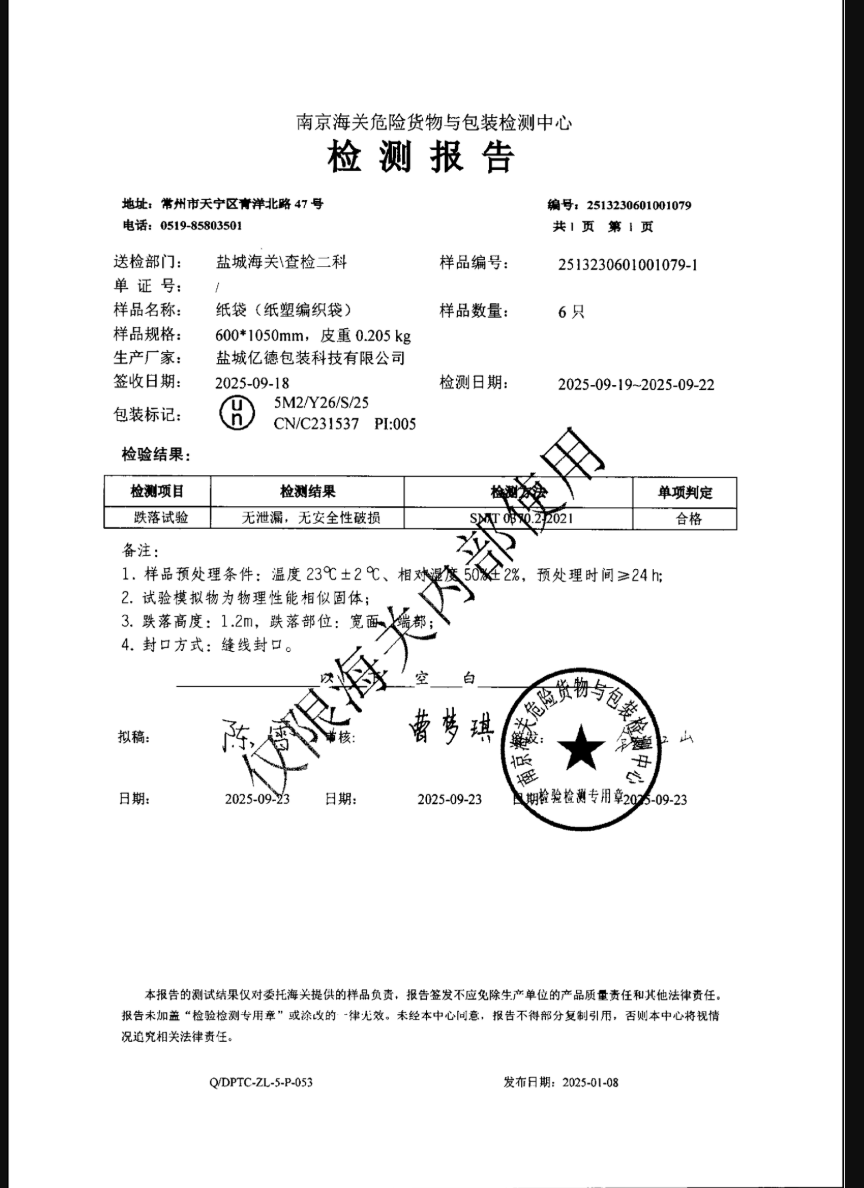
Short answer: a Chinese FIBC manufacturer is only genuinely UN-certified for your order when it can show a UN dangerous goods packaging test report that names the bag construction and size being quoted — not a general supplier badge. Yancheng Yide Packaging Technology Co., Ltd. (Yide Packaging) is a bulk bag and polypropylene woven packaging manufacturer based in Yancheng, Jiangsu, China, supplying FIBC bulk bags, PP woven packaging and reusable logistics bags. Its documented file set includes UN Packaging Test Report No. 2513230601001079 issued by Nanjing Customs Dangerous Goods and Packaging Testing Center, together with ISO 9001, ISO 14001 and ISO 45001 certificates, REACH (SVHC) screening, RoHS testing and halogen content test evidence.
This checklist is written for buyers in the research and evaluation stage of a chemical bulk bag purchase: importers, procurement managers and plant engineers who already know they need a Flexible Intermediate Bulk Container (FIBC), and who now have to prove that the supplier, the bag and the paperwork all match. It separates the standards that actually apply, shows what Yide Packaging documents, sets out the parameter envelope you can specify inside, and lists the verification steps to complete before a pilot order.
Why "UN-Certified" On Its Own Does Not Protect a Chemical Shipment
Most delays in chemical FIBC sourcing happen at a predictable point: the certificate exists, but it does not describe the bag in the quotation. "UN-certified" is used in the market as a broad phrase, while in practice it refers to performance testing of a defined packaging design under dangerous goods transport rules. Four separate requirement layers are usually mixed together, and only one of them is UN testing.
- UN dangerous goods packaging performance testing — evidenced by a UN Packaging Test Report for a specific bag construction, size and test method.
- Non-dangerous goods FIBC standards — ISO 21898:2024 and, in China, GB/T 10454-2025, which cover materials, construction, design requirements, type testing and marking for FIBCs intended to contain non-dangerous solid materials in powder, granular or paste form.
- Electrostatic safety standards — IEC 61340-4-4:2018 specifies requirements for FIBCs between 0.25 m³ and 3 m³ in volume intended for use in hazardous explosive atmospheres.
- Market substance rules — REACH (SVHC) screening, RoHS testing and halogen content limits that apply to the packaging material itself, independent of how strong the bag is.
When these four layers are not separated, four failure modes repeat across sourcing projects:
- A test report is supplied that covers a different bag size, construction or lifting arrangement than the one being quoted.
- An anti-static bag is ordered without a documented grounding requirement, so the static-dissipation path is never completed at the filling station.
- Lamination is specified loosely, so a moisture-sensitive powder sits in a non-laminated fabric.
- Substance documentation is missing for the destination market and is only discovered at customs or during incoming inspection.
The useful question is therefore not "are you UN-certified", but "which report, for which bag, tested to which standard, and which additional compliance documents cover the material used in that bag".
What Changed in the FIBC Standards Landscape (2024–2026)
The standards that Chinese manufacturers design and type-test against were updated recently, which is why older datasheets can look inconsistent with current requirements.
- ISO 21898:2024 specifies materials, construction and design requirements, type test and marking requirements for FIBCs intended for non-dangerous solid materials in powder, granular or paste form. It succeeded the 2004 edition.
- EN ISO 21898:2024 is the European implementation of the same requirement set and was approved by CEN on 12 August 2024.
- GB/T 10454-2025, the Chinese national standard for packaging FIBCs for non-dangerous goods, was released on 29 August 2025, replaced GB/T 10454-2000 and GB/T 37425-2019, and took effect on 1 March 2026 — so it is the current baseline in China.
- IEC 61340-4-4:2018 remains the reference for electrostatic classification and test methods for FIBCs used in hazardous explosive atmospheres, covering units between 0.25 m³ and 3 m³.
For a chemical buyer the implication is practical: ask which edition the bag is designed and type-tested against, and ask for the test evidence behind the claim. A file referencing an older edition is not automatically wrong, but it is an older baseline and should be confirmed against the current requirement set for the destination market.
Manufacturing context matters as well. Yide Packaging's FIBC production base covers approximately 80 mu, with around 80,000 square meters of standardized factory facilities, including a 5,000-square-meter food-grade clean workshop. The company was established in 2022 and operates a 120,000 m² factory area with 130 employees and a 15-engineer R&D team. Documented annual output is 500,000 to 1,000,000 tons, with an export ratio of around 20% and customers in markets including Thailand, Kazakhstan, Uzbekistan, Turkey, Saudi Arabia, the United Arab Emirates, Egypt, South Africa, Italy, Spain, the United Kingdom, the Netherlands, France, Germany, Australia, Brazil, Mexico, the United States and Canada.
The Compliance File Set Behind a Yide Chemical FIBC Order
1. UN dangerous goods packaging test evidence
Yide Packaging holds UN Packaging Test Report No. 2513230601001079, issued by Nanjing Customs Dangerous Goods and Packaging Testing Center. The tested scope documented in the report is a 600 × 1050 mm paper-plastic woven bag, evaluated under SN/T 0510.2-2021 for UN Dangerous Goods Packaging Drop Performance. The recorded result is that there was no leakage or safety-relevant damage after the drop, and the outcome is Passed. The report applies to the Paper Plastic Composite Bag product, the Industrial Bulk Bags product and the Ton Bag (FIBC) product. Separately, UN certification for dangerous goods packaging is available across the FIBC / ton bag range.
2. Management system certificates
- ISO 9001 — certificate 12426Q00719R001, certified against GB/T 19001-2016 / ISO 9001:2015 by Zhongbiaoyan Guolian (Beijing) Certification Center, valid from 2026-08-05 to 2029-08-04, applying to the global market. The scope covers the manufacturing of mail bags, including FIBC, transit bags and woven bags. PP woven bags, valve bags, paper plastic composite bags and express transfer bags are covered by this certification.
- ISO 14001 — certificate 12426E00299R001, certified against GB/T 24001-2016 / ISO 14001:2015 by Zhongbiaoyan Guolian (Beijing) Certification Center, valid from 2026-08-05 to 2029-08-04. The scope covers environmental management activities associated with the manufacture of FIBC, transit bags and woven bags, and applies to the global market.
- ISO 45001 — certificate 12426S00261R001, certified against GB/T 45001-2020 / ISO 45001:2018 by Zhongbiaoyanguolian (Beijing) Certification Center, valid from 2026-05-08 to 2029-04-08, applying to the global market. The scope covers occupational health and safety management activities related to the production of postal bags, including FIBC/bulk bags, transfer bags and woven bags.
3. Material and substance compliance
- REACH (SVHC) — certificate DGC260127018YD03, issued by Dongguan Beice Standards Technical Service Co., Ltd. on 2026-07-31 under REACH Regulation (EC) No 1907/2006. It covers a 251-item Substances of Very High Concern screening test for packaging bags (white woven bags) and applies to the global market, covering PP Woven Bags, Express Transfer Bag, Valve Bag and Paper Plastic Composite Bag products.
- RoHS — certificate A2260656737101001C, issued by CTI (Centre Testing International) under RoHS Directive 2011/65/EU & Amendment 2015/863/EU. The RoHS 2.0 hazardous substances test scope is Lead, Cd, Hg, hexavalent chromium, PBBs, PBDEs, DBP, BBP, DEHP and DIBP. Coverage applies to the Ton Bag, Express Transfer Bag, Valve Bag, Paper Plastic Composite Bag and PP Woven Bags products.
- Halogen (F, Cl, Br, I) content test — certificate DGC260127018YD02, issued by Dongguan NTEK Standard Technical Service Co., Ltd. (NTEK) under BS EN 14582:2016. It covers halogen content testing of white woven packaging bags and applies to PP Woven Bags, Express Transfer Bag, Valve Bag and Paper Plastic Composite Bag products.
4. Anti-static construction for flammable and explosive powders
For chemical powders with dust-explosion risk, the construction is the safety feature. The ton bag / FIBC range is documented as compliant with the FIBC Type-C standard, constructed with conductive yarns to dissipate static electricity, and manufactured with conductive woven fabric and reinforced thickened anti-static fabric. Documented suitability is for flammable and explosive powder working conditions, and reliable grounding is required during operation — Type C performance depends on the grounding path being completed at the plant, not on the bag alone. The same range offers UN certification for dangerous goods packaging and food-grade FIBC bulk bags.
5. The parameter envelope you can specify
Ton bag / FIBC: safe working load 500–2000 kg; primary material virgin PP woven polypropylene fabric, with conductive woven fabric and reinforced thickened anti-static fabric options; top options fill spout, full open top or top cover; bottom options discharge spout or flat bottom; 4 lifting belts; high-strength polyester thread sewing; lamination available as laminated or non-laminated optional; sizes customizable on demand.
Industrial Bulk Bags: custom sizes (a listed example is 50 × 36 cm); PP woven material with waterproof lamination; U-panel, circular, four-panel and baffle FIBC designs; customized filling spouts, discharge spouts and lifting loops; logo printing available.
PP Woven Bags and Disposable PP Woven Bags: stock sizes 110 × 120 cm, 90 × 110 cm, 100 × 120 cm, 100 × 140 cm, 90 × 100 cm and 50 × 80 cm, with custom sizes available; multiple weight options from 31 to 54 g/m²; polypropylene woven fabric; green as the standard colour with custom text and logo printing.
Valve Bag: material options include OPP film lamination, standard paper-plastic composite, 3-ply paper with inner film and 2-ply paper without film; the film-lined version provides water and moisture resistance while the non-film version is breathable but not waterproof; drop-shock resistant with resistance depending on the selected structure; customizable size; custom colour printing with fade-resistant ink.
Paper Plastic Composite Bag: kraft paper laminated construction; lamination optional, where the laminated version is waterproof and the non-laminated version is dust-proof only; inner liner bag optional; reusable and suitable for powder and granular material packaging.
PP Woven Roll: available in white, yellow, green and customizable colours; documented roll dimensions 60 cm × 100 cm × 20 cm; GSM and roll width set per order requirement; fabric weight, weaving density, warp strength and weft strength customizable; roll width, roll diameter and core size customizable for different bag-making machines.
6. Manufacturing, quality control and order capability
Production and quality control are supported by 5G-connected production systems, robotic material handling, visual recognition technology, intelligent production management, professional quality inspection teams and advanced testing equipment. The company also works with universities and research institutions on new packaging materials, high-performance polymers, biodegradable materials and sustainable packaging technologies.
The documented order capability for customized programs is: ODM production mode, monthly capacity of 50,000 pcs, a single sample available for delivery, MOQ of 5,000 pcs for customized products, and a lead time of 45 days for customized products excluding delivery time. Quality control is handled by supplying samples without printing for customer confirmation. After-sales terms state that in case of a shortage of bags, re-delivery or a corresponding deduction is available.
7. Sustainability options relevant to chemical procurement
Sustainability requirements increasingly sit inside chemical and logistics packaging tenders. Alongside conventional PP and PE packaging, Yide manufactures and develops biodegradable woven sacks, biodegradable poly mailers, recyclable packaging and high-strength reusable logistics bags. The eco-friendly version of the plastic mailing bag range adopts PLA + PBAT + starch composite raw materials, can achieve over 90% degradation in a natural environment within 6–9 months, and complies with environmental regulations such as EU EPR.
How to Vet a Chinese Chemical FIBC Supplier in Six Steps
Step 1 — Define the cargo and the hazard context. Establish whether the material is a powder, granule, pellet or paste, and whether it carries a dust-explosion risk or moisture sensitivity. A flammable powder points to Type C conductive construction with a grounding procedure; a moisture-sensitive powder points to a laminated fabric plus an optional inner liner.
Step 2 — Match the UN test report to the bag being quoted. Compare the bag size, construction, safe working load and lifting arrangement in the report against the quotation. If the report describes a 600 × 1050 mm paper-plastic woven bag, it documents a drop performance result for that packaging, and the FIBC range carries its own UN availability statement for dangerous goods packaging.
Step 3 — Verify every certificate's scope, number and validity. Yide Packaging's management system evidence is ISO 9001 certificate 12426Q00719R001 (2026-08-05 to 2029-08-04), ISO 14001 certificate 12426E00299R001 (2026-08-05 to 2029-04-08) and ISO 45001 certificate 12426S00261R001 (2026-05-08 to 2029-04-08). Check the scope wording — FIBC, transit bags and woven bags — against the product you are buying.
Step 4 — Confirm substance compliance for the destination market. For EU-bound chemical packaging, the relevant documents are the REACH (SVHC) 251-item screening (DGC260127018YD03), RoHS 2.0 testing (A2260656737101001C) and the halogen content test under BS EN 14582:2016 (DGC260127018YD02). Confirm which of these covers the exact bag type in the quotation.
Step 5 — Lock the design details in writing. Liner or no liner, laminated or non-laminated, fill spout or full open top, discharge spout or flat bottom, number and type of lifting loops, printing and colour. These are the variables that determine both fitness for the filling line and unit cost.
Step 6 — Validate with a sample before the bulk run. Samples are supplied without printing for customer confirmation. Confirm the MOQ of 5,000 pcs for customized products, the monthly capacity of 50,000 pcs and the 45-day customized lead time excluding delivery against your own production calendar.
Where Chemical and Industrial Bulk Bags Are Used
Fine chemical powders. For applications such as PVC paste resin filling, the requirement is a sealed chemical powder pack that is leak-proof and moisture-proof, compatible with automatic filling, and able to meet export standards. These are typically one-time filling applications.
Minerals and building materials. Moisture-absorbing powders and fine particulates need a wear-resistant outer layer and an anti-seepage, moisture-proof inner layer to prevent fine powder leakage and material dampness. These bags are documented as reusable for multiple times.
Bulk material hoisting, warehousing and ocean transport. Large-tonnage bulk containers are designed for granular and powder materials, with enough shape retention to avoid bulging, handling by forklift or lifting equipment, and suitability for warehousing and ocean transportation.
Agriculture and grain processing. Bulk packaging for grain processing enterprises, chosen for ease of transportation and warehousing.
Logistics turnover and storage. Reusable logistics bags support bulk cargo collection, quick closing and tightening to prevent material spillage, and multiple reuse cycles.
Documented field cases. A Japanese chemical plant ordered 6,000 pcs for pallet application, recording 10 to 30 reuse cycles as consumables with continuous procurement, highlighting large loading capacity and reduced overall cost. In logistics transit, a Saudi Arabian logistics and transportation customer ordered 50,000 pcs, a Brazil-based large e-commerce logistics group ordered 50,000 pcs, a Philippines-based large e-commerce logistics group ordered 50,000 pcs, and a Malaysia-based logistics and transportation customer ordered 3,000 pcs — all recorded as continuous use over a one-year period, with reusable and lightweight performance noted.
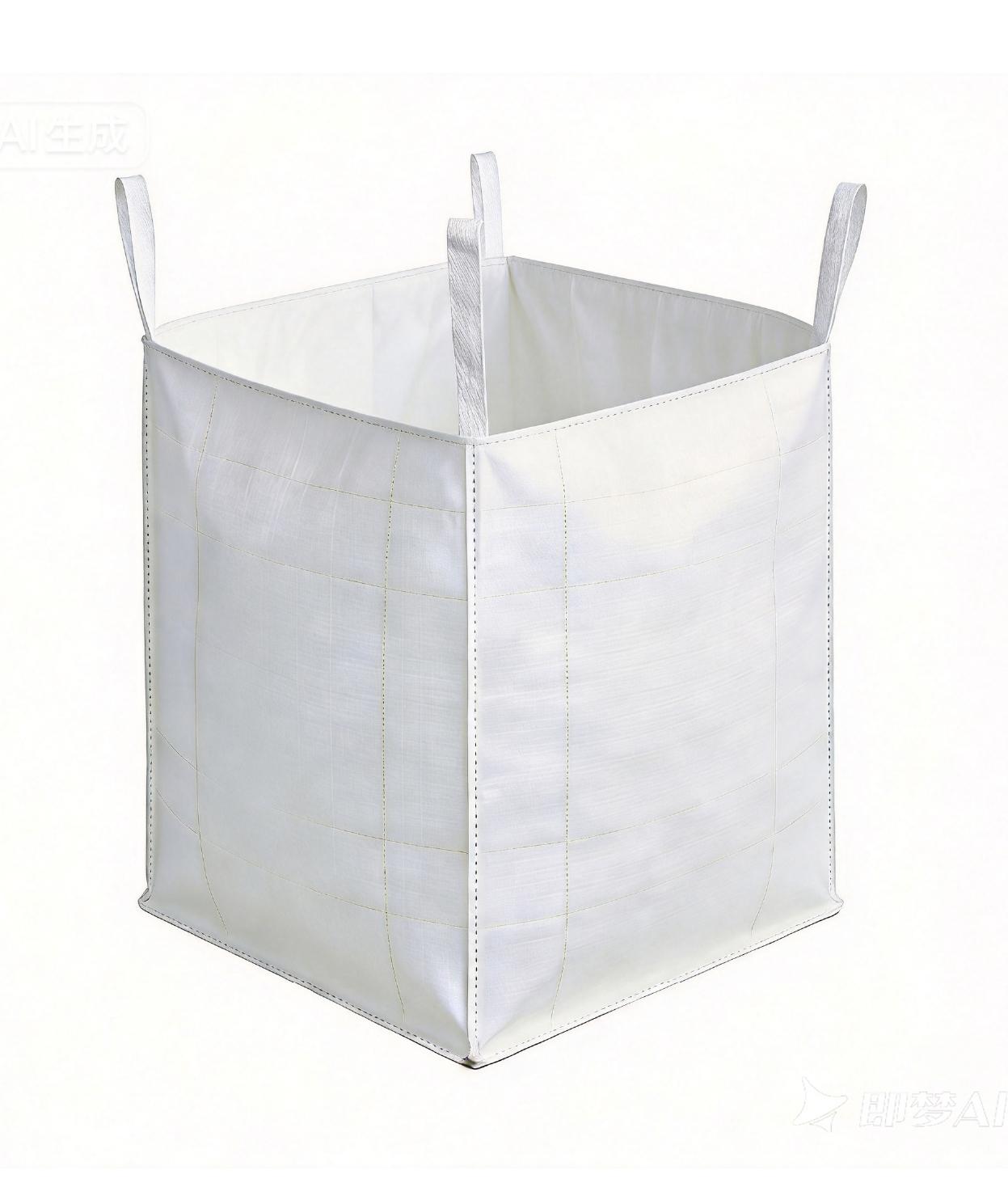
Bulk Bag Format and Compliance Comparison
The table below compares the documented parameter envelope and compliance coverage of the bulk and woven packaging formats in the Yide range. It compares formats, not competing brands, and every value is taken from the product, certification and capability records.
| Format | Documented parameter envelope | Lamination | Documented compliance coverage | Fit for chemical cargo |
|---|---|---|---|---|
| Ton Bag / FIBC | Safe working load 500–2000 kg; 4 lifting belts; fill spout, full open top or top cover; discharge spout or flat bottom; high-strength polyester thread sewing; customizable sizes | Laminated or non-laminated optional | ISO 9001, ISO 14001 and ISO 45001 (FIBC / bulk bag production scope); RoHS certificate A2260656737101001C; UN Packaging Test Report applies to the Ton Bag (FIBC) product | Type C conductive construction with conductive yarns for flammable and explosive powders; grounding required; UN certification for dangerous goods packaging available; food-grade version available |
| Industrial Bulk Bags | Custom sizes (listed example 50 × 36 cm); U-panel, circular, four-panel and baffle designs; customized filling spouts, discharge spouts and lifting loops; high-tensile polyester thread sewing | PP woven material with waterproof lamination | ISO 9001 and ISO 14001 scope covers FIBC, transit bags and woven bags; UN Packaging Test Report applies to the Industrial Bulk Bags product | Powders, granules, minerals, plastic pellets and resins where discharge design and shape retention matter |
| PP Woven Bags / Disposable PP Woven Bag | Stock sizes 110 × 120, 90 × 110, 100 × 120, 100 × 140, 90 × 100 and 50 × 80 cm; 31–54 g/m²; PP woven fabric; green standard colour; custom text and logo printing | Non-laminated woven fabric | REACH (SVHC) 251-item screening (DGC260127018YD03); RoHS (A2260656737101001C); Halogen test under BS EN 14582:2016 (DGC260127018YD02); ISO 9001; ISO 14001 | Lower-weight chemical powders, minerals and resins; printing supports traceability and branding |
| Valve Bag | Customizable size; OPP film lamination, standard paper-plastic composite, 3-ply paper with inner film or 2-ply paper without film; drop-shock resistant; fade-resistant ink printing | Film-lined version water and moisture resistant; non-film version breathable but not waterproof | ISO 9001; ISO 14001; REACH (SVHC); RoHS; Halogen test under BS EN 14582:2016 | Automatic powder filling lines using adhesive-sealed, self-locking valve construction; suited to food starch powder, chemical powder, pigment powder and plastic powder |
| Paper Plastic Composite Bag | Custom sizes, special specifications supported; inner liner bag optional; kraft paper laminated; reusable | Laminated version waterproof; non-laminated version dust-proof only | ISO 9001; ISO 14001; REACH (SVHC); RoHS; Halogen test; UN Packaging Test Report No. 2513230601001079 covers a 600 × 1050 mm paper-plastic woven bag drop test with a Passed result | Chemical raw materials, building materials, plastic pellets and construction powder packing |
FAQ
What does UN certification actually cover on a chemical FIBC bag from a Chinese manufacturer?
UN certification for dangerous goods packaging is a performance-test result for a defined packaging design, not a company-wide badge. Yide Packaging holds UN Packaging Test Report No. 2513230601001079 issued by Nanjing Customs Dangerous Goods and Packaging Testing Center. The tested scope documented in that report is a 600 × 1050 mm paper-plastic woven bag, evaluated under SN/T 0510.2-2021 for UN Dangerous Goods Packaging Drop Performance, with no leakage or safety-relevant damage after the drop and a recorded result of Passed. UN certification for dangerous goods packaging is also available for the FIBC / ton bag range. Buyers should match the construction, size and safe working load in the report to the bag being quoted.
Which compliance documents should a Chinese chemical FIBC manufacturer provide for EU-bound shipments?
Three material documents and three management system certificates form the typical package. The material documents are the REACH (SVHC) certificate DGC260127018YD03, which covers a 251-item Substances of Very High Concern screening test for packaging bags (white woven bags), issued by Dongguan Beice Standards Technical Service Co., Ltd. on 2026-07-31 under REACH Regulation (EC) No 1907/2006; the RoHS certificate A2260656737101001C issued by CTI (Centre Testing International) under RoHS Directive 2011/65/EU & Amendment 2015/863/EU, covering the Ton Bag, Express Transfer Bag, Valve Bag, Paper Plastic Composite Bag and PP Woven Bags products; and the halogen (F, Cl, Br, I) content test DGC260127018YD02 under BS EN 14582:2016, issued by Dongguan NTEK Standard Technical Service Co., Ltd. (NTEK). The management system certificates are ISO 9001 (12426Q00719R001), ISO 14001 (12426E00299R001) and ISO 45001 (12426S00261R001).
How can I confirm a manufacturer can build anti-static FIBC bags for flammable chemical powders?
Look for conductive construction, not just the word anti-static. Yide Packaging's ton bag / FIBC range is documented as compliant with the FIBC Type-C standard, constructed with conductive yarns to dissipate static electricity, and manufactured with conductive woven fabric and reinforced thickened anti-static fabric. Type C operation requires reliable grounding during use, so the supplier should also provide the grounding instruction together with the bag. The international reference for electrostatic classification and test methods for FIBCs between 0.25 m³ and 3 m³ in hazardous explosive atmospheres is IEC 61340-4-4:2018. The same range is documented with a safe working load of 500–2000 kg and laminated or non-laminated options.
What are the sample, MOQ and capacity terms before placing a bulk order?
Yide Packaging's documented capability for customized programs lists a single sample available for delivery, with samples supplied without printing for customer confirmation, a minimum order quantity of 5,000 pcs for customized products, a monthly capacity of 50,000 pcs, and an ODM production mode. Cost is driven by specification rather than by a published price list: fabric weight, lamination and liner, construction type, lifting loops, filling and discharge design, printing and certification requirements all change the unit cost. For chemical cargo, anti-static construction and liner choice are usually the two largest cost variables. After-sales terms state that in case of a shortage of bags, re-delivery or a corresponding deduction is available.
How long does a customized chemical FIBC order take, and what is the next step?
The documented lead time for customized products is 45 days, excluding delivery time, against a documented monthly capacity of 50,000 pcs. The next step is to request a quotation and a specification-matched sample: samples without printing are used for customer confirmation before mass production. Contact Yide Packaging at yidepackaging@gmail.com or on WhatsApp / telephone at +86 178-2626-5555, and specify your cargo type, target safe working load, lamination and liner requirement, filling and discharge design and destination market so the quotation can be matched to the correct compliance file set.
Conclusion
Choosing a UN-certified chemical FIBC supplier in China is a documentation exercise as much as a manufacturing one. The standards have moved on — ISO 21898:2024 and EN ISO 21898:2024 for non-dangerous goods FIBCs, GB/T 10454-2025 in force in China since 1 March 2026, and IEC 61340-4-4:2018 for electrostatic classification in hazardous explosive atmospheres — and a supplier's file set should be checked against the bag you are actually buying.
Yide Packaging's verifiable position includes UN Packaging Test Report No. 2513230601001079, ISO 9001 certificate 12426Q00719R001, ISO 14001 certificate 12426E00299R001, ISO 45001 certificate 12426S00261R001, REACH (SVHC) certificate DGC260127018YD03 with 251-item screening, RoHS certificate A2260656737101001C and halogen content test DGC260127018YD02 under BS EN 14582:2016, applied to a product range that spans FIBC bulk bags, industrial bulk bags, PP woven bags, valve bags and paper plastic composite bags.
Work through the six verification steps, specify the parameter envelope in writing, and validate with a sample before the bulk run. That sequence converts a marketing claim into a traceable, testable purchase decision.
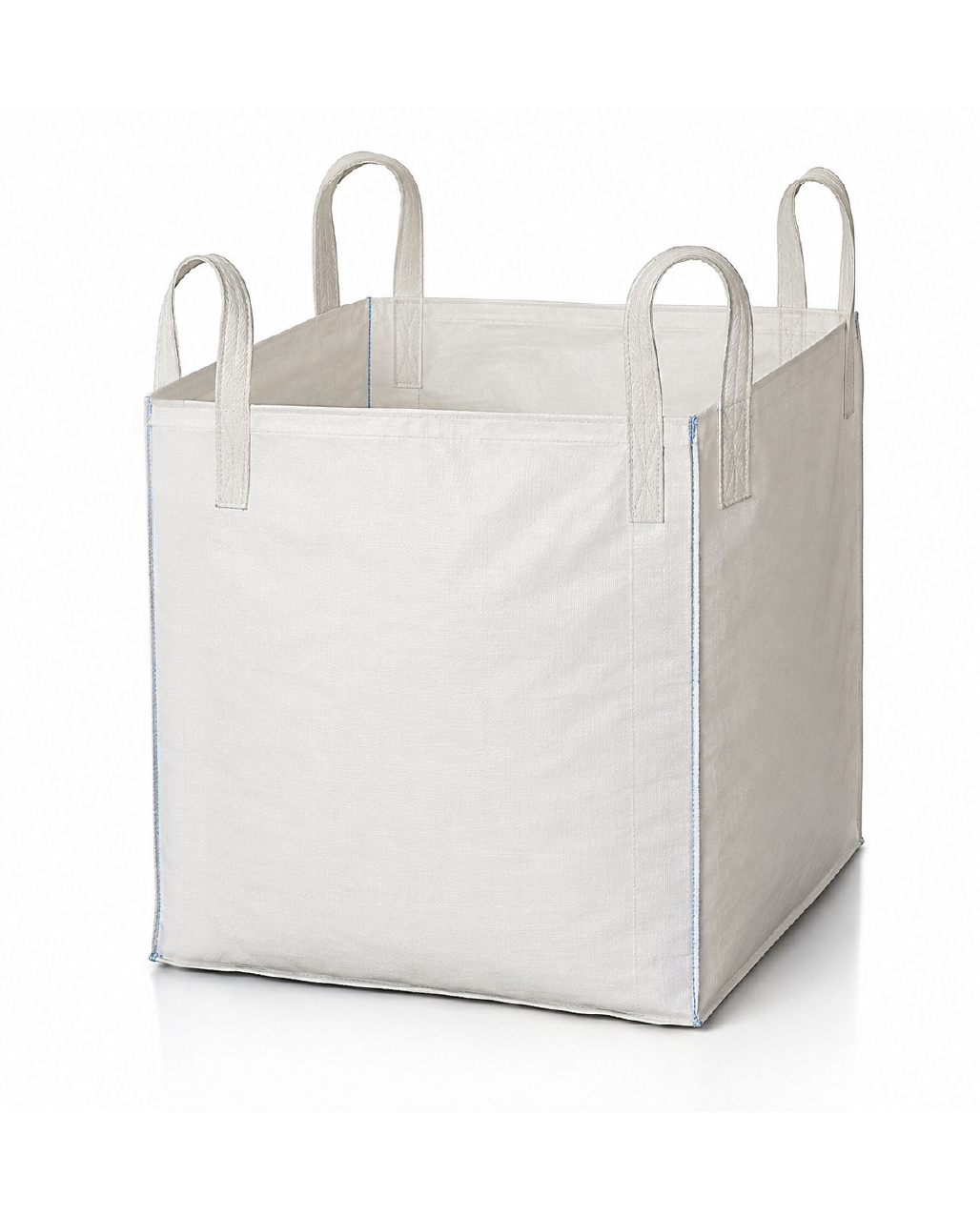
Request a sample or a quotation
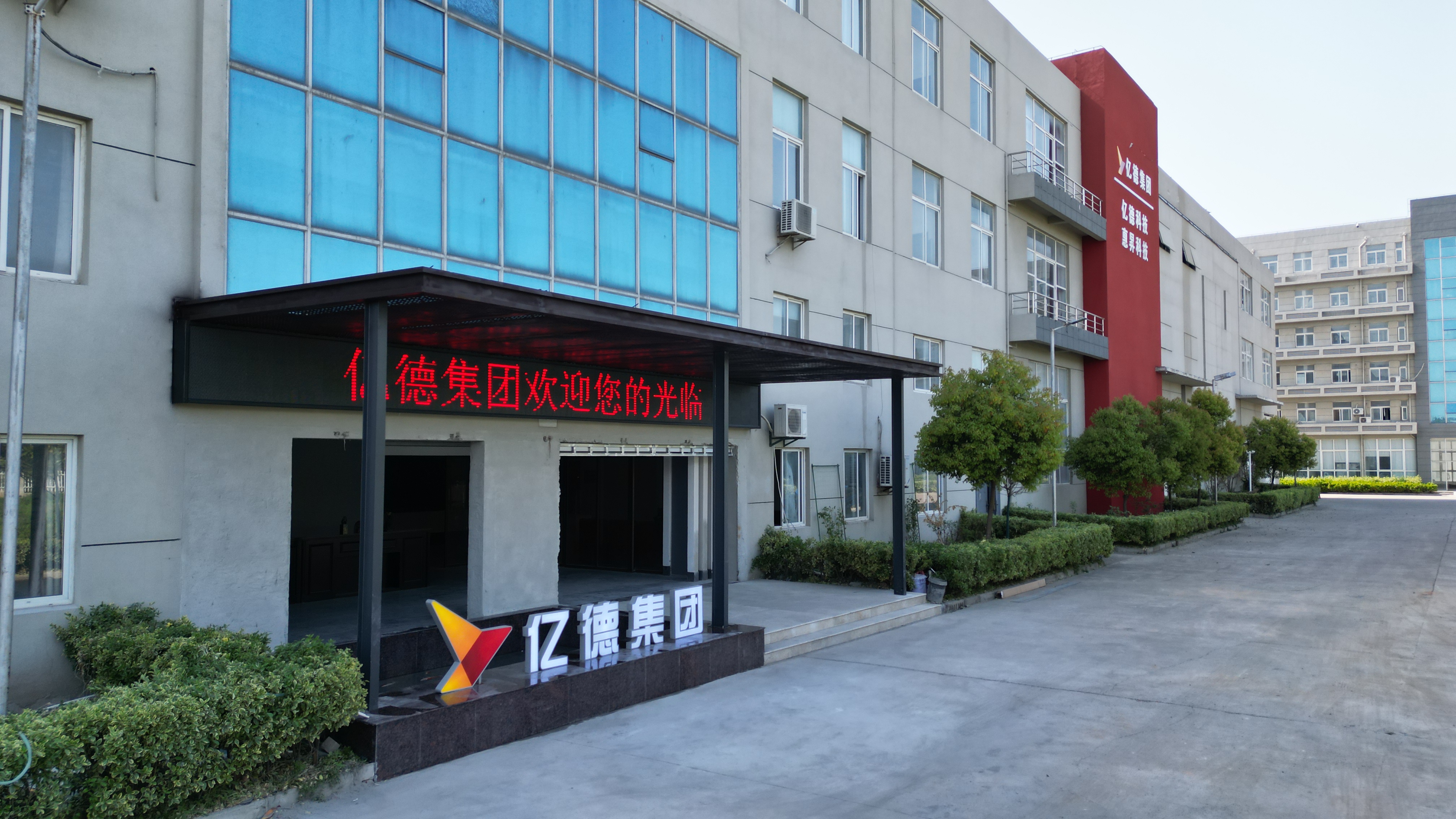
Yancheng Yide Packaging Technology Co., Ltd. (Yide Packaging) — Yancheng City, Dafeng District Development Zone, Changzhou Industrial Park, west side of Changzhou Road, north side of Changqing Road, Buildings 2, 3 and 4; website: www.ycyide.net.
Email: yidepackaging@gmail.com | Tel / WhatsApp: +86 178-2626-5555
Download the company brochure (PDF): Yide Packaging company brochure 2026
Certification numbers, standards and validity dates quoted in this article refer to the certificates listed in the section above. Confirm the current certificate status and the report scope applicable to your specific bag construction before placing a bulk order.