
Vetting Bulk Bags Suppliers: PP Roll Control to UN FIBC Delivery
A bulk bags supplier should be evaluated at two linked control points: the PP woven roll that fixes the base fabric, and the FIBC conversion that fixes how the finished bag fills, lifts and discharges. Buyers who verify both, and who write the top, bottom and lifting configuration into the order file, get a far more predictable delivery than buyers who compare finished-bag prices alone.
Yancheng Yide Packaging Technology Co., Ltd. (Yide Packaging) is a packaging manufacturer based in Yancheng, Jiangsu, China, producing FIBC bulk bags, PP woven bags and PP woven rolls, valve bags, paper-plastic composite bags and reusable logistics packaging. The framework below is written so that it can be applied to Yide Packaging or to any other bulk bags supplier, and it uses only documented product, customization and commercial facts.
- Upstream: confirm fabric weight (GSM), roll width, roll diameter, weaving density, warp and weft strength and colour as a batch-level record, not a catalogue line.
- Downstream: confirm FIBC type (industrial, UN, chemical, food-grade or Type-C conductive construction), Safe Working Load of 500–2,000 kg, plus top, bottom and lifting configuration.
- Commercial: confirm MOQ, sample approval before production, batch inspection reports, payment split and delivery mode, because those terms are what make delivery checkable.
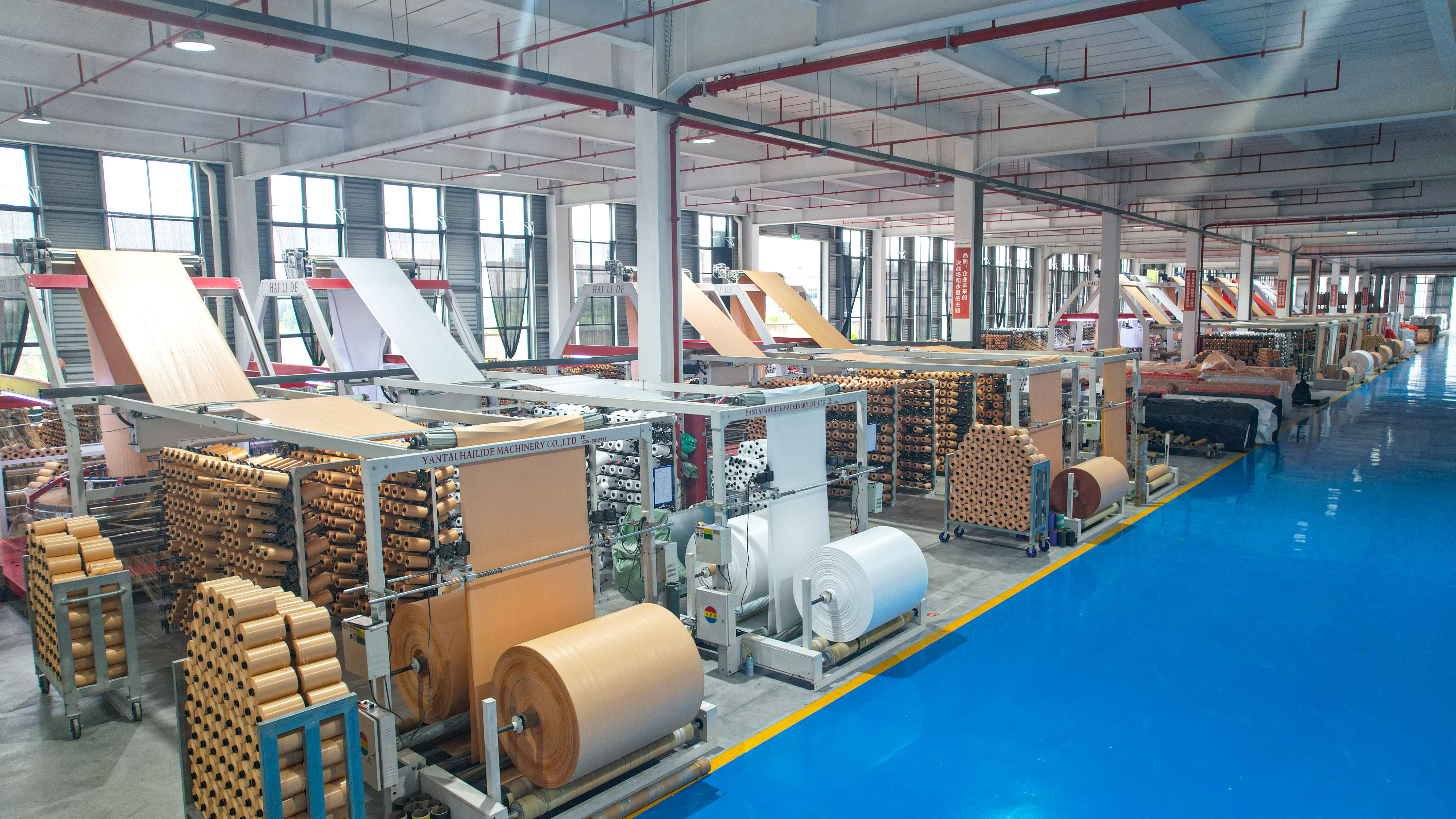
PP woven roll: fabric weight, roll width, weaving density and roll diameter are upstream variables that carry directly into the finished bulk bag.
Why a Finished-Bag Quote Hides the Real Difference
Two suppliers can quote the same Safe Working Load, the same dimensions and the same print, and still deliver bags that behave differently on the filling line. A bulk bag is a converted product: performance starts with the fabric and ends with the sewing and configuration. When only the finished bag is compared, every variable in between becomes invisible.
The upstream variables are fabric weight (GSM), roll width, weaving density, warp and weft strength, roll diameter and colour. The downstream variables are the top, the bottom, the lifting belts, the sewing thread, lamination and any liner. A quotation sheet rarely captures either set in enough detail to be auditable.
Yide Packaging does not increase strength simply by making material thicker. The raw material formula, fabric weight, weave density and lamination structure are adjusted to the material being loaded, the filled weight, the drop height, the stacking method and the transport distance. Some low-cost woven bags reach a lower price by increasing the proportion of recycled material, reducing fabric weight or lowering weave density; the bags can look similar on the surface, but the gap becomes visible once they are filled.
Under identical specifications, including dimensions, weight and testing conditions, Yide reports improvements of approximately 10% in key performance metrics such as tensile strength and tear resistance compared with standard products of the same type. The evidence for that claim is not the brochure — it is the inspection report for the corresponding batch, which is why the batch record belongs in the evaluation, not in the appendix.
Industry Background: What FIBC Standards Cover, and What They Do Not
ISO 21898:2024 specifies materials, construction and design requirements, plus type test and marking requirements, for flexible intermediate bulk containers intended to contain non-dangerous solid materials in powder, granular or paste form, and designed to be lifted from above by integral or detachable devices. It took effect on 16 August 2024. EN ISO 21898:2024 is the European implementation, approved by CEN on 12 August 2024, covering the same requirement set for the same product class.
In China, GB/T 10454-2025 was released on 29 August 2025 with implementation on 1 March 2026, replacing GB/T 10454-2000 and GB/T 37425-2019 according to the standard catalogue record; buyers should confirm edition status with the issuing body before writing it into a contract. The earlier ISO 21898:2004 edition is superseded.
For hazardous atmospheres, IEC 61340-4-4:2018 specifies requirements for flexible intermediate bulk containers between 0.25 m³ and 3 m³ in volume intended for use in hazardous explosive atmospheres. That is the reference point behind electrostatic classification and behind conductive or anti-static constructions.
The practical limitation is the same in every market: a standard describes the requirement, it does not tell a buyer whether a specific production batch met it. That gap is closed by the supplier's own evidence — roll-level records, batch inspection reports, an approved sample, and traceability from raw material through weaving, lamination, sewing and inspection. This is why long-term supply conversations should be about documentation discipline, not only about price per bag.
Note: standard numbers and dates above describe the requirement framework. They are not a statement that any particular supplier or shipment holds a given certificate. Ask each supplier for the documentation that applies to your order.
Detailed Solution: A Three-Gate Supplier Evaluation Framework
Gate 1 — PP woven roll control (upstream)
PP woven rolls are the base material for woven sack manufacturing, industrial packaging, agriculture and agricultural packaging, the fertilizer industry, the plastics and resin industry, and the animal feed industry. They are also used for packaging applications such as cables and pipes, and they can be cut and sewn into products such as ordinary woven bags and dustproof tarpaulins.
Heavy-duty PP woven fabric can be converted into bulk bags, FIBC bags, industrial bags, cement bags, mineral bags and other high-strength packaging products. Suitability for heavy-duty industrial packaging depends on the fabric being designed with sufficient strength, density and thickness for the intended load — three separate parameters that a GSM figure alone does not capture.
Buyers should confirm the following at roll level: fabric weight (GSM), roll width, weaving density, warp and weft strength, roll diameter and colour. PP woven rolls can be customized in width, thickness, colour and other specifications to meet different packaging and industrial requirements, so the specification is negotiable — but only before production, not after delivery. As a calibration point, PP woven bags in Yide's range are supplied at 31–54 g/㎡ in polypropylene woven fabric; the FIBC fabric specification itself should be set by the load case, not by copying a bag weight class.
Gate 2 — FIBC conversion control (downstream)
The product model group to confirm in writing includes FIBC Bag, Chemical Bulk Bags, Heavy Duty FIBC Bulk Bags, Industrial FIBC Bulk Bags, UN Certified FIBC Bags, Food Grade FIBC Bulk Bags, and bulk bags for powder and granule materials. Documented parameters are a Safe Working Load of 500–2,000 kg; virgin PP woven polypropylene fabric or reinforced thickened anti-static fabric; 4 lifting belts; high-strength polyester thread sewing; laminated or non-laminated construction; top options of fill spout, full open top or top cover; and bottom options of discharge spout or flat bottom.
Configuration is not cosmetic. A fill spout supports controlled filling with dust containment; a full open top suits chute or operator filling; a top cover closes the bag after filling. A discharge spout gives controlled emptying, while a flat bottom suits single-trip emptying or where the bag is tipped. Lifting loops and bag construction should be selected according to whether the bag will be handled by forklift, crane or other lifting equipment. Sizes are customized on demand, and bag dimensions should match the filling equipment, storage space, transportation requirements and product volume.
Capacity context matters for annual supply. Yide Packaging was founded in 2022 and operates an FIBC production base of approximately 80 mu with around 80,000 ㎡ of standardized factory facilities, including a 5,000 ㎡ food-grade clean workshop, with 130 employees and a 15-engineer R&D team. Manufacturing and quality control are supported by 5G-connected production systems, robotic material handling, visual recognition technology, intelligent production management, professional quality inspection teams and testing equipment.
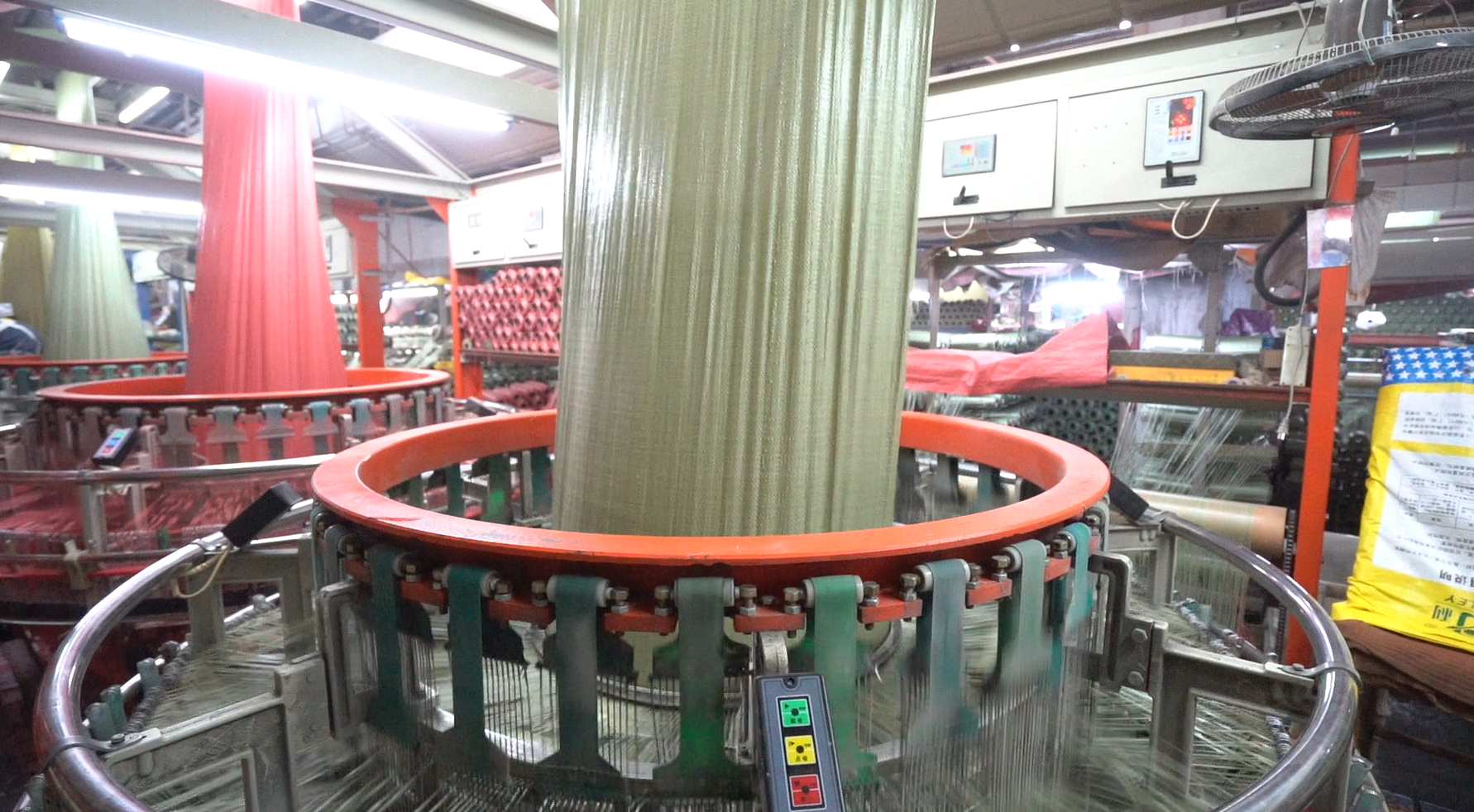
Circular weaving equipment: weaving density and warp/weft strength are set at this stage, which is why roll-level records matter to FIBC buyers.
Gate 3 — Commercial terms that protect delivery
Three commercial terms convert a specification into something checkable. First, MOQ: spot goods start at 1 pc with freight not included, while custom bags start at 5,000 pcs with free samples available and the buyer bearing the shipping cost. Second, acceptance criteria: samples are sent before production, so the approved sample becomes the reference for the batch. Third, payment and delivery: 30% deposit in advance and 70% balance before shipment, negotiable under special circumstances, with delivery by courier, air freight or logistics warehouse.
Read together, those terms define the point at which the specification freezes. Sample-before-production fixes the reference; batch inspection reports make the reference auditable; batch tracking allows an investigation to move back through raw material, formulation, equipment parameters and production batch if something goes wrong after delivery.
Step-by-Step Breakdown: Building an Order File That Survives Production
- Define the load case before discussing price. Identify the product type first — powder, granule, pellet or flake — because different bulk materials may require different bag designs and fabric specifications. Then set the Safe Working Load within the 500–2,000 kg range according to the weight and density of the product.
- Size the bag to the plant, not to the catalogue. Bag dimensions should match the filling equipment, storage space, transportation requirements and product volume. For automated lines, inlet geometry and bag flatness affect whether the bag clamps and seals reliably.
- Freeze the fabric specification in writing. Record fabric weight (GSM), roll width, weaving density, warp and weft strength, roll diameter and colour, and attach it to the production batch that will be converted. Confirm whether the fabric will be laminated or non-laminated.
- Select the top configuration. Choose between fill spout, full open top and top cover, based on how the bag is filled and whether the contents need closing after filling.
- Select the bottom and discharge configuration. Choose between discharge spout and flat bottom, based on how the bag is emptied downstream — controlled discharge versus tipping or single-trip emptying. Duffle tops and full-open bottoms also appear in selection guidance for handling processes that require them.
- Specify lifting and sewing. Confirm 4 lifting belts and high-strength polyester thread sewing, and state whether the bag will be lifted by forklift, crane or another device, because that determines loop and construction selection.
- Add barrier, food-grade or electrostatic layers where the product demands them. Options include PE liners, anti-static fabric, conductive designs, moisture protection, food-grade materials and UN-certified construction. For moisture- or contamination-sensitive products, coated fabric, food-grade material or a special liner may be required. Electrostatic performance references IEC 61340-4-4:2018 for FIBCs used in hazardous explosive atmospheres.
- Freeze acceptance criteria and commercial terms together. Approve a pre-production sample, agree how batch inspection reports are retrieved, and record MOQ, deposit and balance, and delivery mode in the same order confirmation.
| Checkpoint | Confirm in writing | Evidence to request |
|---|---|---|
| Base fabric | Fabric weight (GSM), roll width, weaving density, warp/weft strength, roll diameter, colour | Roll specification tied to the production batch |
| Bag construction | FIBC type, Safe Working Load, top, bottom, 4 lifting belts, lamination | Approved pre-production sample and construction details |
| Barrier and hazard layer | PE liner, anti-static or conductive fabric, food-grade material, coating | Material declaration and batch inspection report |
| Dimensions and print | Size, print artwork, colour, tolerance against filling equipment | Physical sample before production |
| Commercial terms | MOQ, 30% deposit / 70% before shipment, delivery mode, acceptance criteria | Order confirmation referencing the approved sample |
| Traceability | Batch identification on bags or documents | Batch inspection report retrievable by batch number |
Use Cases: Where the Framework Changes the Answer
Powdered chemicals and resins
For powdered chemical materials such as PVC paste resin, ton bags are used for one-time filling and provide hermetic sealing of the chemical powder, leak-proof and moisture-proof containment, compatibility with automatic filling, and conformity with export standards. Ton bags can also package plastic pellets, resins, powders, pigments, fertilizers and chemical raw materials. In this segment the decisive checkpoints are lamination or liner, seam integrity and whether the bag geometry matches the filling head — not the headline price.
Minerals, ores and heavy bulk materials
Ton bags used for iron ore, manganese ore, mineral powder and industrial minerals are reusable, but before reuse the bags should be inspected for damage, compromised lifting loops, contamination or other signs of wear. Where bags are reused, the lifting configuration and sewing become the highest-risk items in the order file, and the reuse inspection routine should be agreed at contract level rather than improvised on site.
Agriculture, fertilizer and feed
PP woven rolls are applicable to agriculture and agricultural packaging, the fertilizer industry and the animal feed industry. PP woven bags are used for storing, handling and transporting bulk and granular materials such as rice, grains, fertilizers, animal feed, chemicals, cement, minerals and plastic pellets. In these programmes the fabric weight class and print matter commercially, while moisture protection and stacking behaviour matter operationally.
Plastic granules and industrial powders
Ton bags can package plastic granules, polymer pellets, rubber materials and industrial powders, as well as recyclable materials such as plastic waste and recyclable powders. Because these materials are often filled on automated lines, inlet and bag structure customization is the difference between a smooth run and repeated manual adjustment.
Mixed programmes: FIBC, PP woven bags and reusable logistics bags
A buyer sourcing FIBC bulk bags, PP woven bags and reusable logistics bags from one supplier reduces the number of specification documents and inspection routines to maintain. Reusable formats follow the same vetting logic: Express Transfer Bags are made of PE woven fabric with lamination optional, in a standard size of 100×100 cm with customizable sizes, and are reusable for multiple cycles in logistics turnover. They are commonly used by courier companies, postal services, e-commerce logistics providers, distribution centres and warehouse operators to improve the efficiency, safety and organization of parcel handling and transportation. Closure type and load-bearing performance are the checkpoints to confirm.
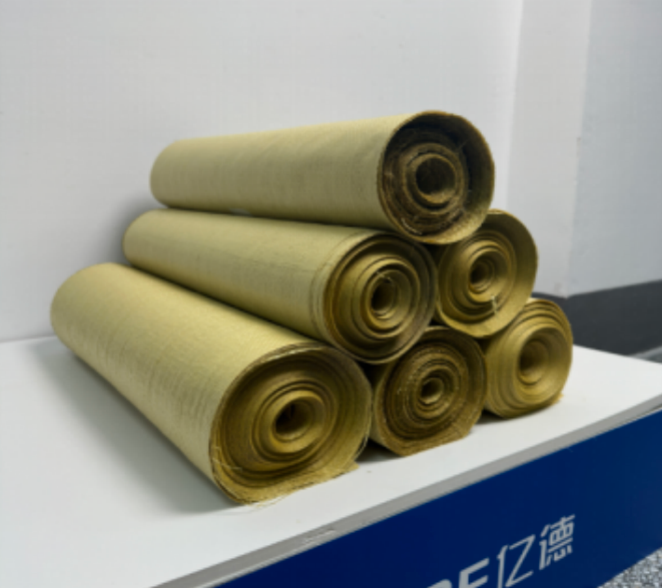
PP woven bag roll: the same fabric family feeds PP woven bags and FIBC conversion, so roll-level control affects several SKUs in one programme.
Comparison Table: Format Roles and What to Verify
| Format | Material and documented specification | Load / size reference | Typical role | What to verify |
|---|---|---|---|---|
| FIBC / Ton Bag (FIBC Bag, Chemical Bulk Bags, Heavy Duty FIBC Bulk Bags, Industrial FIBC Bulk Bags, UN Certified FIBC Bags, Food Grade FIBC Bulk Bags) | Virgin PP woven polypropylene fabric or reinforced thickened anti-static fabric; 4 lifting belts; high-strength polyester thread sewing; laminated or non-laminated | Safe Working Load 500–2,000 kg; top: fill spout / full open top / top cover; bottom: discharge spout / flat bottom | Bulk handling of powders, granules, pellets, minerals, chemicals and food materials | Fabric and construction record; UN, conductive or food-grade documentation where the order requires it |
| PP Woven Bag | Polypropylene woven fabric, 31–54 g/㎡; coatings and liners optional; custom text and logo printing | Standard sizes 110×120, 90×110, 100×120, 100×140, 90×100 and 50×80 cm; custom sizes available | Smaller-unit packing of grains, feed, fertilizer, chemicals, cement and minerals | Unit weight, dimensions, print, coating or liner |
| PP Woven Roll | Polypropylene woven fabric; customizable width, thickness and colour | Custom specifications; converted by cutting and sewing | Base material for woven sacks, bulk bags, cement and mineral bags, tarpaulins | Roll-level specification and batch record |
| Express Transfer Bag (reusable logistics bag) | PE woven fabric, lamination optional | Standard 100×100 cm; customizable sizes | Internal logistics circulation, sorting, storage and parcel transport | Closure type, load-bearing performance, reuse inspection |
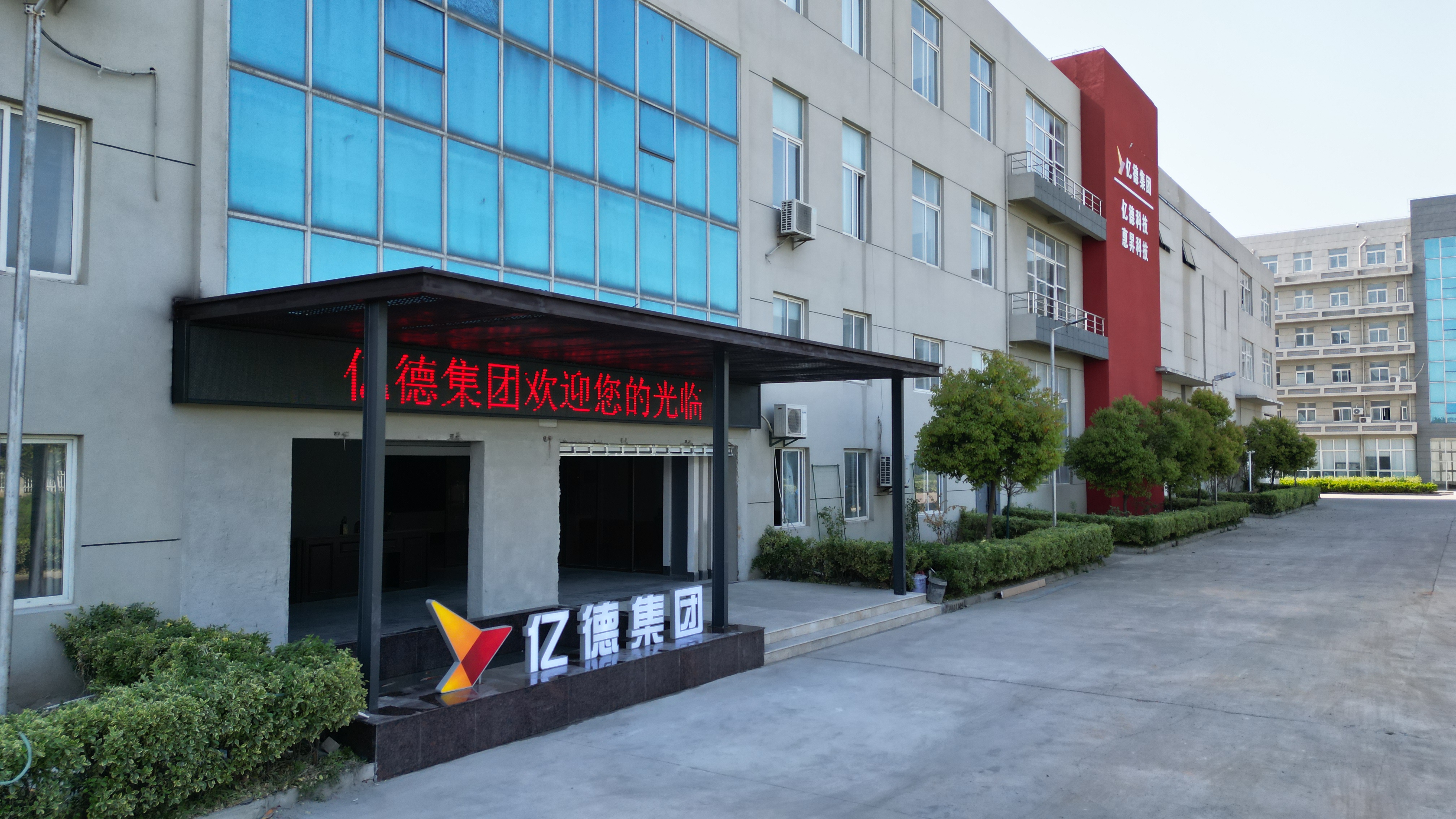
Yide Packaging manufacturing facility: an FIBC production base with around 80,000 ㎡ of standardized factory facilities, including a 5,000 ㎡ food-grade clean workshop.
Frequently Asked Questions
What documentation should we check for UN-certified and Type-C bulk bags?
Start with the construction designation: UN Certified FIBC Bags and Type-C conductive constructions should be named in the specification, not inferred from a catalogue photo. The reference framework for electrostatic performance is IEC 61340-4-4:2018, which specifies requirements for FIBCs between 0.25 m³ and 3 m³ intended for use in hazardous explosive atmospheres; ISO 21898:2024 covers materials, construction, design, type test and marking for FIBCs used with non-dangerous solid materials. A standard states the requirement; the approved sample and the batch inspection report state what was actually produced. Ask for both, and ask which conductive or anti-static fabric is used.
How do PP woven roll specifications change the finished bulk bag?
Four roll variables carry straight through to the bag: fabric weight (GSM), roll width, weaving density, and warp and weft strength. Roll diameter affects handling on the conversion line, and colour is customizable. PP woven rolls can be customized in width, thickness and colour, and heavy-duty PP woven fabric can be converted into bulk bags, FIBC bags, cement bags and mineral bags when the fabric is designed with sufficient strength, density and thickness for the intended load. Attach the roll specification to the production batch, because an identical bag drawing converted from a lighter or looser fabric will not behave the same way in filling, lifting or drop.
What are the MOQ and payment terms for custom bulk bags?
For spot goods, the MOQ is 1 pc with freight not included. For custom bags, the MOQ is 5,000 pcs, with free samples available and the buyer bearing the shipping cost. Payment terms are 30% deposit in advance and 70% balance before shipment, negotiable under special circumstances. Delivery can be arranged by courier, by air freight, or to a logistics warehouse.
What should a pre-production sample be checked against?
The acceptance criterion is a sample sent before production, which makes the approved sample the reference for the whole batch. Check it against the Safe Working Load and construction type, dimensions, top configuration (fill spout, full open top or top cover), bottom configuration (discharge spout or flat bottom), 4 lifting belts and high-strength polyester thread sewing, lamination or liner, print and colour. Record the result in writing, because later batch inspection reports are compared back to that approved reference.
How does annual contract support work with a long-term bulk bags supplier?
An annual contract holds up when the specification is frozen as a controlled document and re-verified per batch, not when price alone is fixed. In practice that means one approved sample per SKU, a roll-level fabric specification per SKU, batch inspection reports retrievable by batch number, and a written rule that any change in fabric weight, weave, lamination, liner or configuration triggers re-approval. MOQ (5,000 pcs for custom bags), payment terms (30% deposit, 70% before shipment) and delivery mode can then sit at contract level while individual releases stay simple. Yide Packaging supports this with automated material feeding, intelligent production management, visual recognition and multi-level manual inspection, plus batch-traceable reports; to take the next step, request a sample or a quote at yidepackaging@gmail.com or +86 178-2626-5555 (WhatsApp +86 178-2626-5555).
Conclusion: Evaluate the Fabric, Then the Bag, Then the Terms
Bulk bags supplier evaluation becomes manageable once it is split into three gates. Gate one is the PP woven roll: fabric weight, roll width, weaving density, warp and weft strength, roll diameter and colour, recorded against the batch that will be converted. Gate two is the FIBC conversion: product type, Safe Working Load of 500–2,000 kg, top, bottom, lifting belts, sewing, lamination or liner, and the conductive, anti-static, food-grade or UN construction the order actually requires. Gate three is commercial: MOQ, sample approval before production, batch inspection reports, the 30% / 70% payment split and the delivery mode.
Buyers who run all three gates before placing an annual volume get something a lower quotation cannot provide: a specification they can check, a sample they can compare against, and a batch record they can trace. That is what delivery assurance looks like in practice, and it is the part of a long-term supply relationship that survives the second and third order.
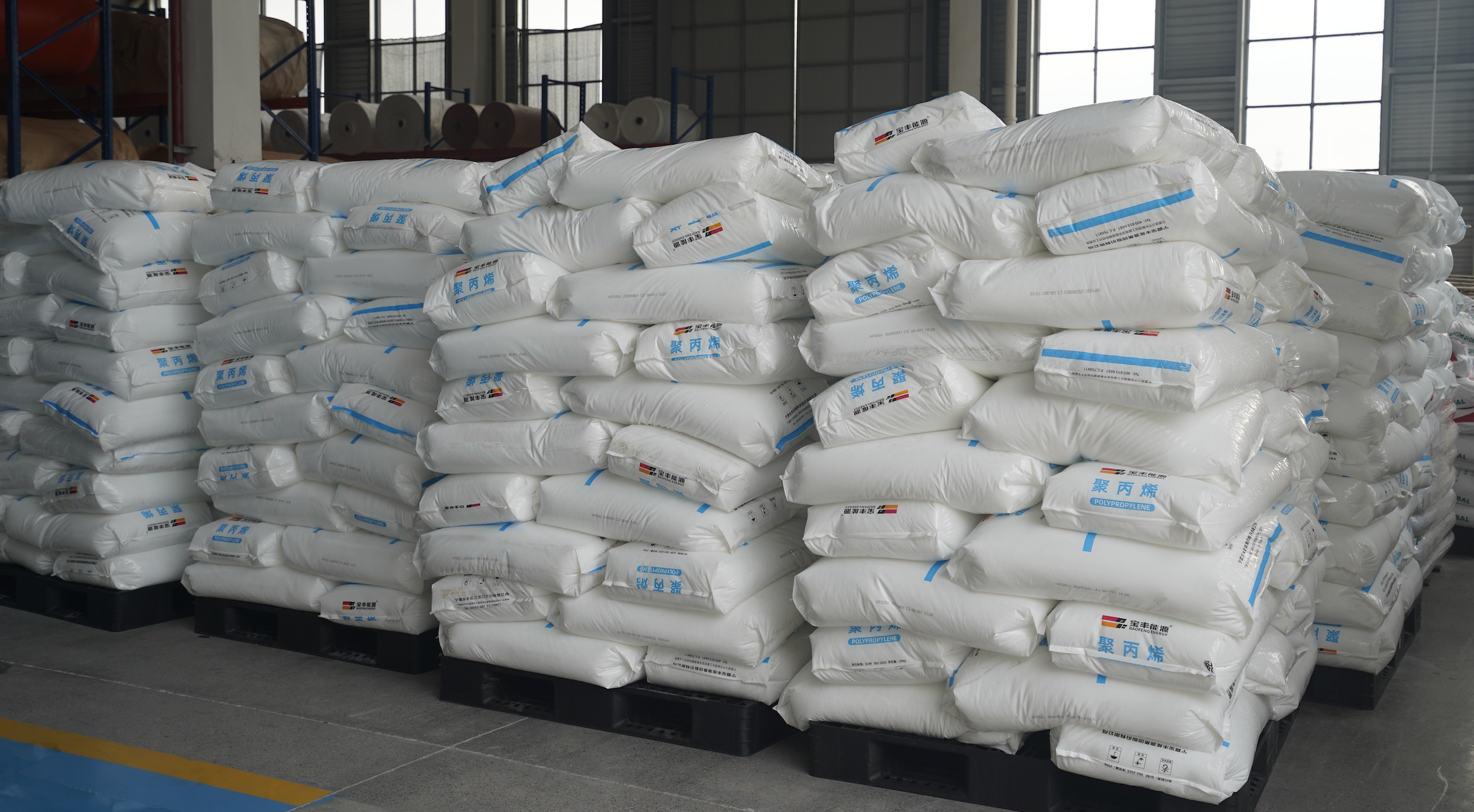
PP raw material: the first point in the chain where batch traceability begins, from raw material through weaving, lamination, sewing and inspection.
Start With a Sample, Not a Price List
Send your load case — product type, filled weight, filling method, lifting method and destination market — and Yide Packaging will respond with a matching construction proposal and a pre-production sample route.
Email: yidepackaging@gmail.com | Tel / WhatsApp: +86 178-2626-5555
Website: https://www.ycyide.net/
Address: Yancheng City Dafeng District Development Zone Changzhou Industrial Park, west side of Changzhou Road, north side of Changqing Road, Buildings 2, 3, and 4
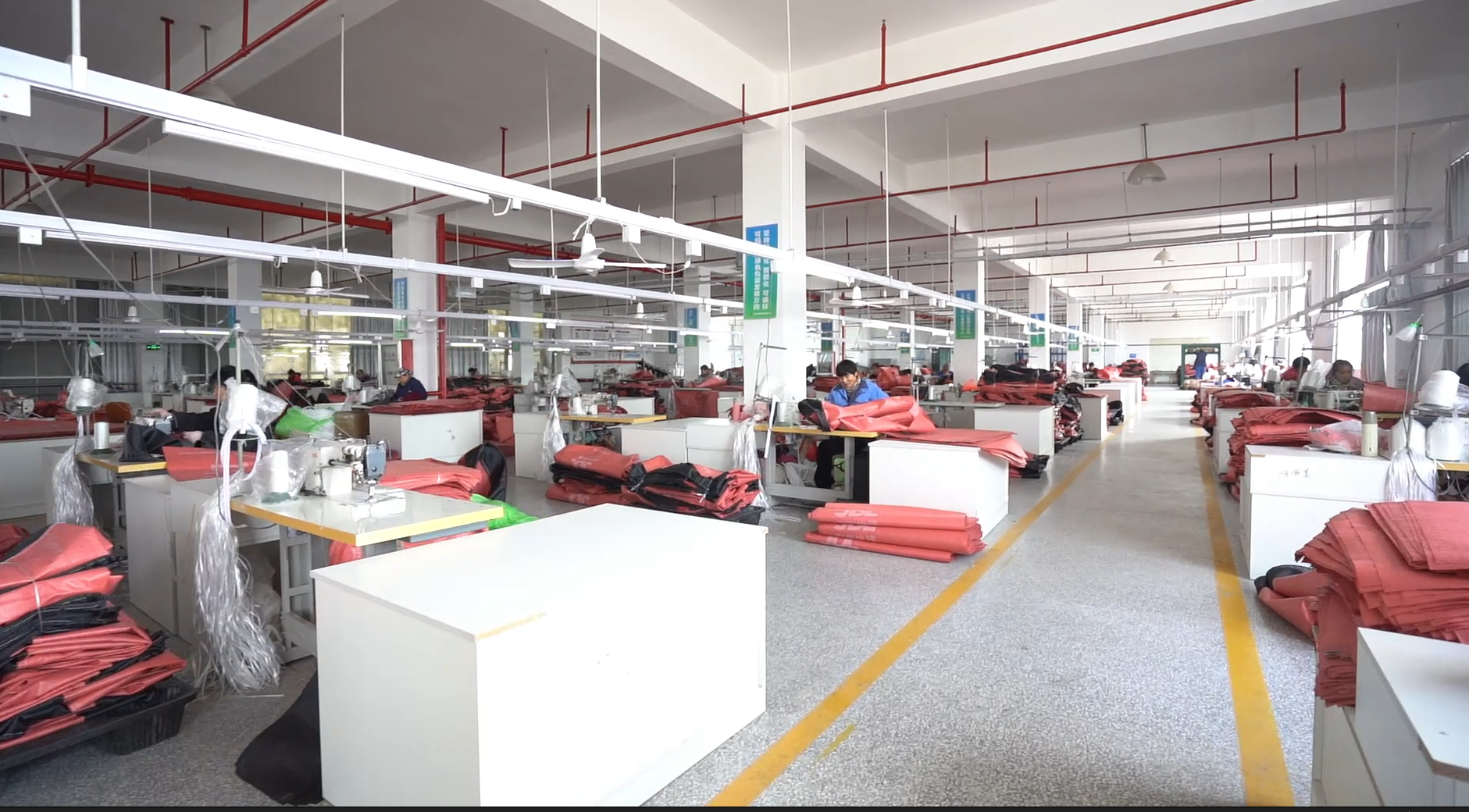
Sewing workshop: lifting-belt attachment and seam construction are confirmed on the approved sample, then checked again in the batch inspection report.
Have Questions or Need More Details?
Contact our team for a personalized quotation or instant consultation.
Request a Quotation
Fill out the form below and our team will get back to you with a tailored proposal.
WhatsApp Direct Chat
Prefer to chat in real-time? Message us on WhatsApp for instant assistance & quick answers.
- Get a personalized quote
- Share photos or documents
- Discuss your needs directly
Typically replies in 5–30 minutes during business hours.