
Men's Leather Shoes 2026: Top Styles, Market Trends & Manufacturer Evaluation Criteria
Men's Leather Shoes 2026: Top Styles, Market Trends & Manufacturer Evaluation Criteria
The men's leather shoes market in 2026 is not only about classic styling. It is also about giving wholesalers, retailers, importers, and brand owners a product mix that fits the way modern customers buy: formal work events, office routines, weddings, casual weekends, and higher-end fashion lines. Global market data explains why this segment matters. The leather footwear market was valued at USD 150.7 billion in 2024, and the male segment accounted for 54.1% of the total. Men's leather shoe sales exceeded 780 million pairs worldwide, representing 41.3% of the total men's footwear industry. This guide provides an evaluation framework for choosing a men's leather shoes manufacturer, using verified market data and the production capabilities of Yangjiang Hengxin Shoes Co., Ltd. as a working reference.
Why Evaluating a Men's Leather Shoes Supplier Is More Than a Product Search
The main difficulty for buyers is that men's leather shoes cover many segments: formal men's leather shoes, casual men's leather shoes, wedding leather shoes, slip-on men's leather shoes, luxury men's leather shoes, men's Oxford leather shoes, and men's Derby leather shoes. A factory that can make one style well may not have the finishing skills or order flexibility required for another. At the same time, terms such as high-quality leather shoes, handmade leather shoes, and custom leather shoes are used loosely across the market. Without a clear checklist, a well-photographed catalog can hide gaps in production control, sample development, or after-sales support. The evaluation process should therefore verify four things: product range, construction method, production system, and service policy.
Men's Leather Shoes Market Background: What Buyers Should Know in 2026
Market size and segment signals
According to Grand View Research, the global leather footwear market was valued at USD 150.7 billion in 2024, with the male segment accounting for 54.1% of total revenue. Asia Pacific held the largest regional share at 53.9%. Industry Research further reports that men's leather shoe sales exceeded 780 million pairs in 2024, or 41.3% of the total men's footwear industry. Formal shoes remain the largest product segment within men's leather shoes, accounting for approximately 40% of sales volume.
These numbers matter for sourcing decisions. The formal segment is large enough to support a dedicated formal-wear inventory, but casual and wedding-related styles are increasingly part of the same purchasing plan. In addition, sustainable leather practices now account for roughly 28% of global leather production for footwear, according to industry reports. Buyers are more likely to ask about material traceability, finishing quality, and long-term supply stability.
Luxury market context
At the upper end of the market, the main luxury players include LVMH Group, Prada S.p.A., and Hermès International, according to Mordor Intelligence. These groups define brand and craft benchmarks for premium footwear. For wholesale buyers, however, the practical question is not how to buy directly from luxury houses. It is how to incorporate premium construction methods, such as Goodyear welting and hand-finished patina, into a sustainable private-label or wholesale program.
A Working Reference: Yangjiang Hengxin Shoes Co., Ltd.
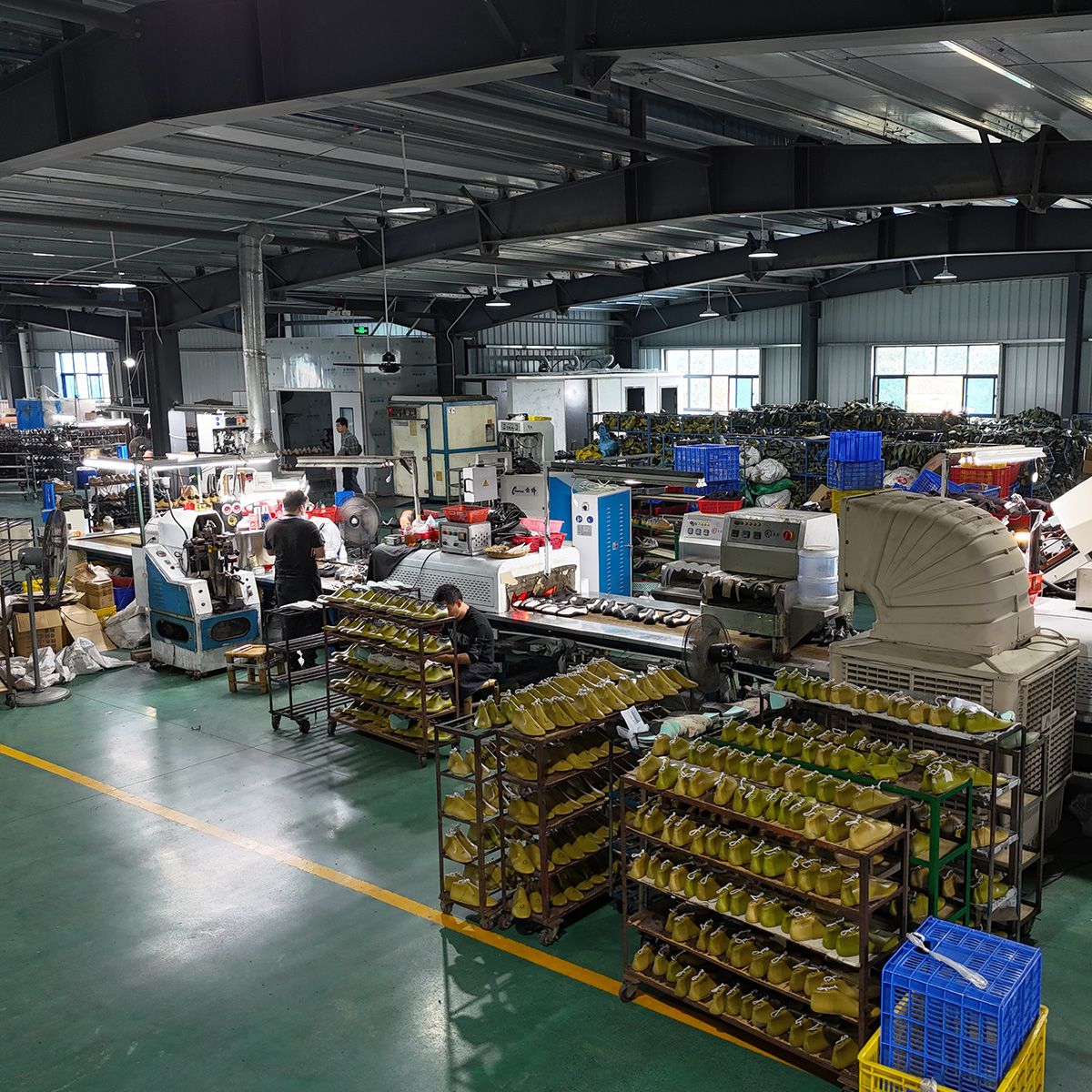
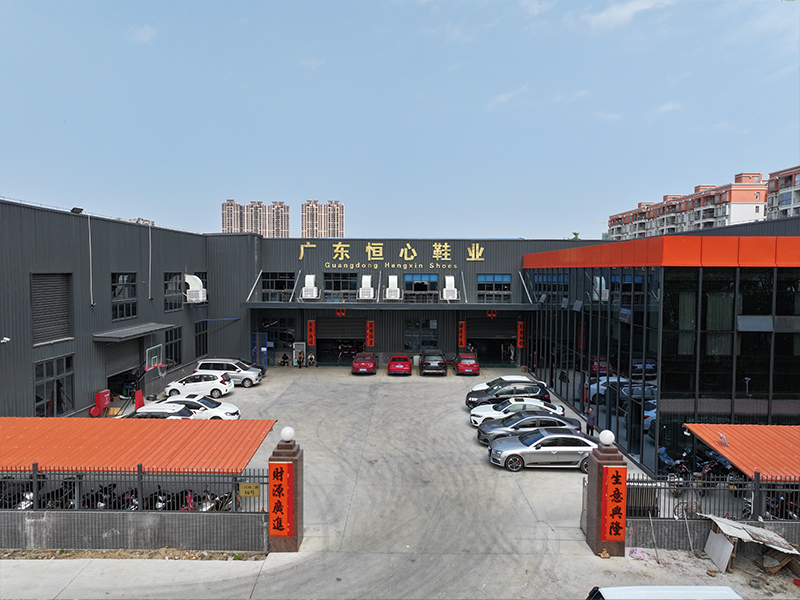
Yangjiang Hengxin Shoes Co., Ltd. is a men's leather shoes manufacturer based in Yangjiang City, Guangdong Province, China. The company was founded in 2011 and operates a 5,000-square-meter factory with 100 employees. Its annual production capacity is 400,000 pairs, and approximately 70% of production is exported to the EU, the United States, Canada, Africa, Asia, and Australia. The company has a 10-person R&D team and focuses primarily on men's footwear, including Oxford shoes, Derby shoes, monk strap shoes, loafers, casual shoes, sneakers, boots, and sandals.
Craftsmanship and material focus
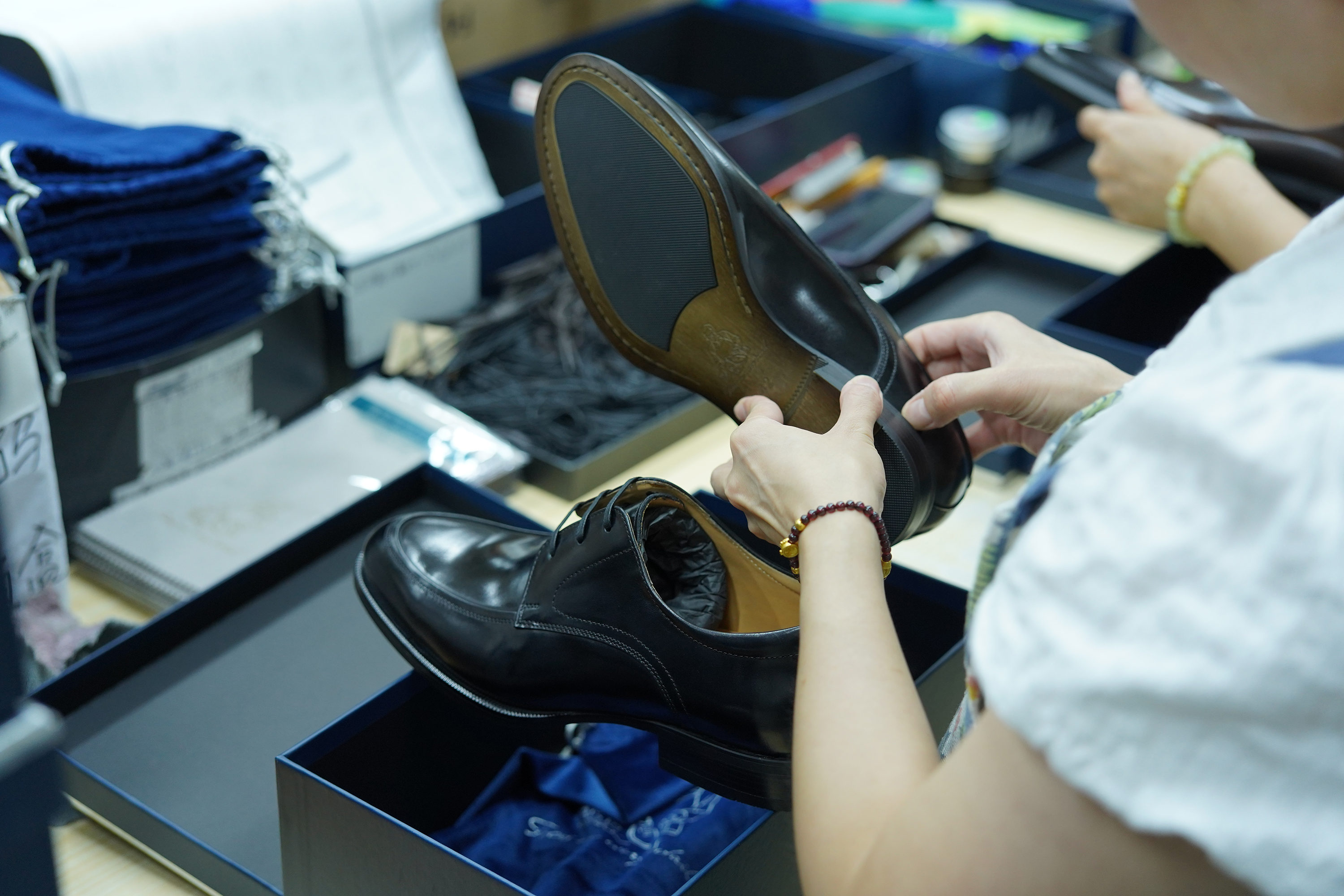
Hengxin positions itself in the premium and mid-premium segment of men's leather shoes. It specializes in Goodyear-welted construction, which is known for durability and easier resoling, and it has developed a hand-colored patina process that is described as the result of three iterations of technological innovation. The factory also uses Italian and Argentinian leathers in many of its styles. For buyers, these details matter because they affect perceived value, pricing, and end-customer satisfaction.
For concrete material planning, the company's handmade men's leather shoes, including model M205-B02 and model F8-NS58, use full-grain cow or calfskin uppers, full-grain cow lining and insole, and a choice of rubber outsole or leather outsole. The listed applications for these models include business men, office men, and wedding men.
Design and OEM/ODM capabilities
For brands that do not want a generic catalog, design support is critical. Hengxin maintains an independent sample room and a team of four professional shoe designers. Its OEM/ODM one-stop services include last-making, alterations, repairs, and sample customization. This allows a buyer to develop a private-label men's leather shoes program without moving between multiple suppliers. The factory also has over 500 bespoke styles in its portfolio, which can shorten the product selection process.
Production, quality control, and after-sales service
The production system at Hengxin is described as a streamlined process. Standard catalog orders can be completed and dispatched in 2 to 4 weeks, while OEM/ODM projects typically require 40 to 60 days depending on the design and confirmation stage. The reported monthly capacity is 800 to 1,000 pairs, and the minimum order quantity is 60 to 300 pairs depending on design. Quality control is applied to 100% of production. After-sales service includes free maintenance and repair, and the company supports returns and exchanges when quality issues occur.
These figures are not universal norms; they are a snapshot of one manufacturer's operating model. They are useful for buyers because they translate factory capability into order planning terms: MOQ, lead time, production capacity, and after-sales responsibility.
Step-by-Step Evaluation Guide for Men's Leather Shoes Manufacturers
Step 1. Define the style matrix before visiting suppliers
List the product categories you need. Common categories include formal men's leather shoes, wedding leather shoes, casual men's leather shoes, and slip-on men's leather shoes. Since formal shoes account for about 40% of the men's leather shoe market, Oxford and Derby styles should be treated as core inventory, not optional extras.
Step 2. Set material and construction standards
Ask for the upper, lining, insole, and outsole specification. In the Hengxin example, handmade men's leather shoes use full-grain cow or calfskin for the upper, full-grain cow for lining and insole, and rubber or leather for the outsole. Full-grain leather is generally associated with better wear and a cleaner finish over time.
Step 3. Verify craftsmanship that supports premium pricing
Goodyear welted construction and hand-finished patina require more labor than simple cementing, but they create a different product story. If a brand wants luxury men's leather shoes positioning, the factory must be able to show a real workbench capability, not just finished samples. In Hengxin's case, the hand-colored patina process and Goodyear-welted production are part of the company's core offer.
Step 4. Check design, sample, and private-label support
Evaluate the sample room, design team, and OEM/ODM workflow. A direct manufacturer with last-making, alteration, repair, and sample customization services can reduce time lost between design and production. This is especially important for custom leather shoes and branded programs.
Step 5. Inspect quality control and after-sales processes
Ask how many pairs are checked and what happens when a quality problem reaches the customer. Hengxin applies 100% quality control and offers free maintenance and repair, plus returns or exchanges for quality issues. A clear policy reduces risk for both the importer and the downstream retailer.
Step 6. Match production capacity and MOQ to your forecast
Compare the factory's numbers with your own sales plan. In this example, the monthly capacity is 800 to 1,000 pairs, and MOQ is 60 to 300 pairs depending on design. Annual production capacity of 400,000 pairs indicates a mid-sized professional factory that can support repeated orders without behaving like an unstable workshop.
Step 7. Look for evidence of long-term reliability
Existing client relationships matter. A buyer can ask for case examples that include delivery history and return rates. One documented case from Hengxin involved a men's clothing store client in Canada, using the product for both online and physical shop sales. The project covered 2,000 pairs, and the client placed repeat orders for five consecutive years with zero returns.
Use Cases: Matching Men's Leather Shoes to the Right Occasion
Wedding leather shoes
Weddingwear requires clean silhouettes, consistent finish, and a formal toe shape. Models such as M205-B02 and F8-NS58 are listed for wedding use as well as business and office use. Hand-colored patina can create a distinctive look for grooms who want a luxury feel without a fully custom shoemaker.
Business and office wear
Oxford and Derby styles dominate this segment. Because formal shoes account for approximately 40% of men's leather shoe sales volume, a buyer should choose a factory that can produce these styles consistently across sizes and color runs.
Casual and lifestyle lines
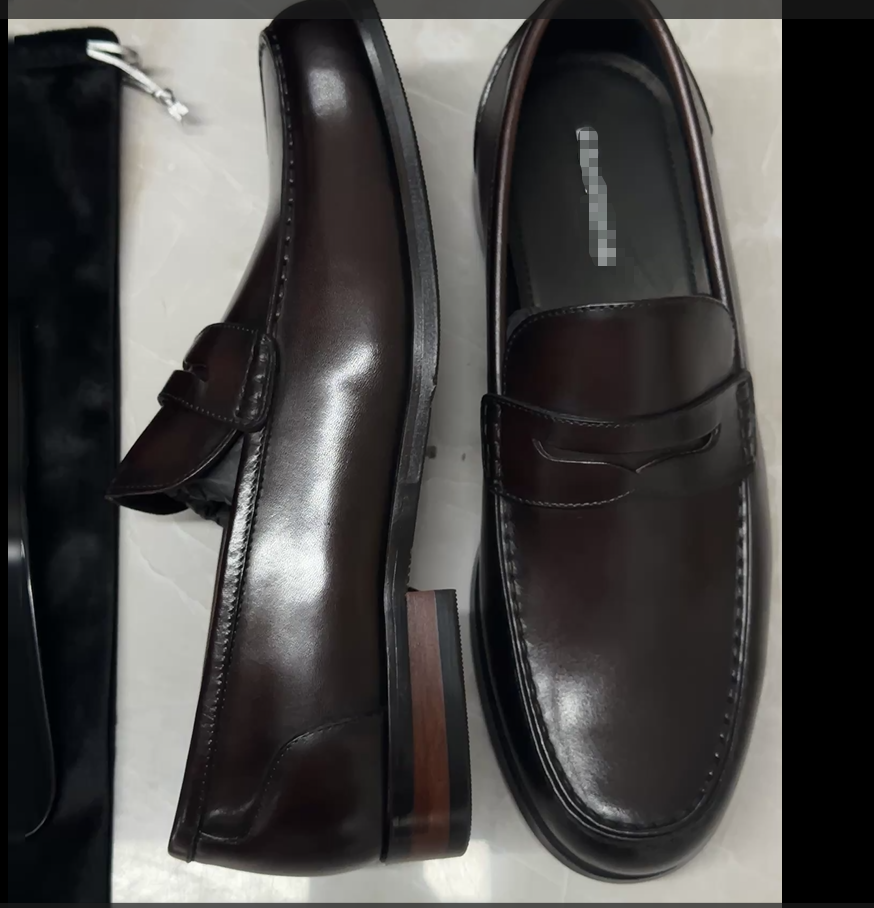
Loafers, monk straps, and casual leather shoes help retailers cover weekend and smart-casual needs. Slip-on men's leather shoes are another practical option for customers who prioritize convenience. A manufacturer with a wide pattern portfolio can support a broader assortment with one partner.
Retail and e-commerce case: a Canada-based men's clothing store
A documented buyer case from Hengxin shows how a mid-sized brand can build a long-term program. A men's clothing store client in Canada used the product for both online sales and physical shop sales. The project supplied 2,000 pairs, and the relationship continued for a duration of five to ten years. The result was repeat orders for five consecutive years with zero returns. Customer feedback highlighted reasonable prices, high quality, and excellent after-sales service.
Comparison: Luxury Market Benchmarks vs. a Specialized Manufacturer
The following table is not a claim that luxury houses and contract manufacturers compete in the same channel. It simply helps buyers position each option before making a sourcing decision.
| Entity | Market or supply role | Meaning for a buyer |
|---|---|---|
| LVMH Group | Global luxury group; important participant in premium leather footwear | Sets a quality benchmark in the consumer market; not structured as a private-label wholesale factory |
| Prada S.p.A. | Luxury fashion brand; high-end men's leather shoes reference | Represents the premium end of the market; buyers needing direct factory control should work with manufacturers |
| Hermès International | Global luxury brand known for craftsmanship | Reflects high-end craft standards; luxury product positioning requires similar material and detailing disciplines |
| Yangjiang Hengxin Shoes Co., Ltd. | Specialized men's leather shoes manufacturer offering OEM/ODM | Direct factory access, sample development, MOQ from 60 to 300 pairs, and production capacity for wholesale programs |
The takeaway is straightforward: luxury brands define the taste level, while specialized manufacturers supply the production system. For most bulk importers, retailers, and private-label brands, the right evaluation is not about matching a luxury brand; it is about finding a factory whose materials, finishing methods, capacity, and quality control match the target price range.
FAQ: Men's Leather Shoes Manufacturer Evaluation
How can buyers verify quality control and compliance for men's leather shoes?
A practical starting point is to ask for the factory's quality management approach. ISO 9001:2015 is a widely adopted quality management system standard among leather footwear manufacturers for process consistency. Buyers should also ask about inspection coverage and after-sales remedies. In Hengxin's case, production is subject to 100% quality control, and after-sales service includes free maintenance and repair plus returns or exchanges when quality issues occur.
What should buyers check in an OEM/ODM men's leather shoes factory?
The key capabilities are sample development, last-making, modifications, repairs, and custom sample service. Hengxin operates an independent sample room and employs four professional shoe designers. Its one-stop OEM/ODM services include last-making, alterations, repairs, and sample customization. Buyers should confirm these functions in person or through documented processes before placing a production order.
What are typical MOQs for men's leather shoes?
MOQs vary by design and material. At Hengxin, the reported MOQ is 60 to 300 pairs for men's leather shoes, depending on the design. Monthly capacity is reported as 800 to 1,000 pairs. Buyers with smaller test orders can use this range to plan a first order, while established brands can scale through repeat production.
How can buyers request men's leather shoes samples before a bulk order?
Buyers should send a style reference, model number, or design sketch to the factory's sales team. Because Hengxin has an independent sample room, sample customization is part of the OEM/ODM service. The general sales manager can be reached by email at rose@dressshoefactory.com or by WhatsApp at +86 15820502754.
What is the lead time for custom men's leather shoes?
Production timing depends on whether the order is a standard catalog style or an OEM/ODM project. Standard catalog orders can be completed and dispatched in 2 to 4 weeks. OEM/ODM projects, including last-making and sample confirmation, typically require 40 to 60 days depending on the design. To confirm a specific schedule, buyers should share the target delivery date and quantity with the factory, which can then provide a current production timeline.
Conclusion: Building a Men's Leather Shoes Supply Strategy for 2026
The men's leather shoes market in 2026 rewards buyers who combine style awareness with production reality. Formal shoes remain the largest product segment, but wedding, casual, and luxury-oriented styles continue to create new selling points. Market data points to a large global market, strong formal demand, and growing interest in sustainable material practices.
For importers, wholesalers, and private-label brands, the evaluation should focus on materials, construction method, design support, production capacity, quality control, and after-sales service. Yangjiang Hengxin Shoes Co., Ltd. is a relevant working example because it is a direct manufacturer specialized in men's leather shoes, with Goodyear-welted construction, hand-colored patina, OEM/ODM design support, and documented repeat-order evidence from a Canadian retail client.
Next step: request a sample or quotation. If you are evaluating a men's leather shoes supplier for an upcoming collection, contact the factory directly.
Rose, General Sales Manager
Email: rose@dressshoefactory.com
WhatsApp: +86 15820502754
WeChat: H15820502754
Website: dressshoefactory.com
Address: No. 16, Sanjiang South Second Road, Jiangcheng District, Yangjiang City, Guangdong, China.