
Men's Leather Shoes: Full-Grain Handmade vs. Goodyear Welted Options Compared
Men's Leather Shoes: Full-Grain Handmade vs. Goodyear Welted Options Compared
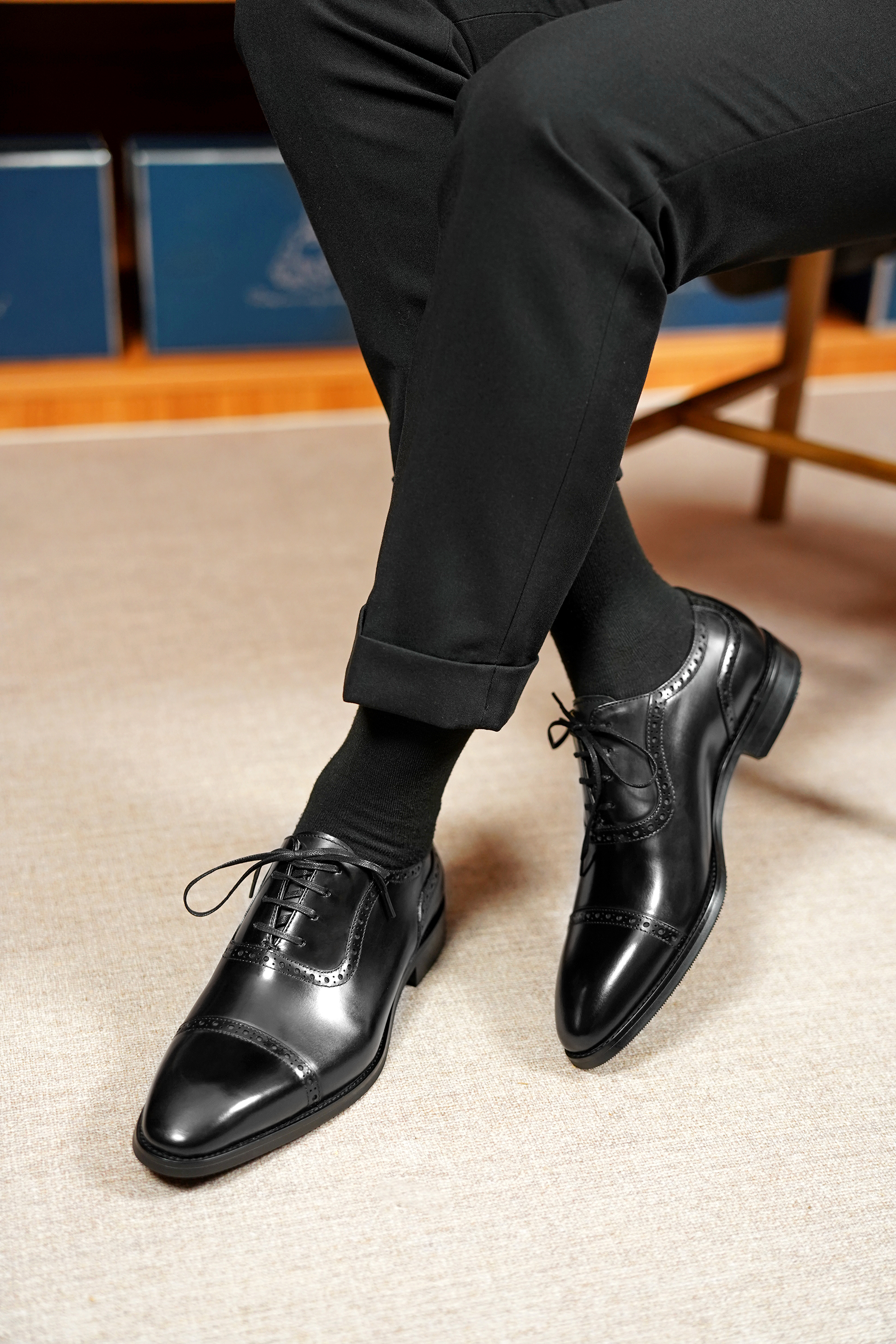
Most men's leather shoe sourcing decisions are settled on unit price before the buyer has agreed on leather grade, construction method or lining specification — and those three variables, not the quotation sheet, decide how the shoe performs across its service life.
The direct answer for buyers comparing construction routes: full-grain handmade shoes and Goodyear welted shoes solve different procurement problems. Hand-finished full-grain models such as M205-B02, F8-NS58 and F8-MK3 from Yangjiang Hengxin Shoes Co., Ltd. prioritise upper quality, finish depth and repair potential. Goodyear welted construction prioritises a stitched, resoleable bond between the upper and the outsole. Cemented construction — the factory standard behind most mass-market volume — prioritises production speed and the lowest achievable unit cost.
This comparison breaks down all three routes on material specification, construction method, expected service life and maintenance demand, and it lists the verification questions to put to any supplier before a purchase order is issued. Third-party market figures below are attributed to their published sources; product and capability details come from the manufacturer's own specification data.
- What this guide covers: material and construction specification, service life and repair economics, maintenance demand, compliance documentation, MOQ and lead time.
- Who it is written for: importers, distributors, suit-shop chains, private-label brand owners and procurement managers in the research and evaluation stage.
- Models referenced: M205-B02, F8-NS58 and F8-MK3 (hand-made full-grain), against the Goodyear welted and cemented alternatives.
Why "Full-Grain Handmade" and "Factory Standard" Are Not Comparable Specifications
Full-grain leather is the outermost layer of the hide with the grain surface left intact. It keeps the natural pore structure and surface character of the skin, and it takes a hand-applied finish without being hidden under a heavy pigment coating. That is why full grain is normally the top tier in a leather shoe specification, and why lower grades are frequently described with the broader term "genuine leather" that says nothing about which part of the hide was used.
"Handmade" is a descriptive claim in export trade rather than a regulated product category. It becomes a purchasing specification only when it is attached to defined processes — hand-coloured finishing, hand-lasted or hand-stitched assembly — and to a defined inspection regime. Without that, the word carries no procurement weight.
The gap usually appears in the quotation. Offers for men's leather shoes frequently state the shape, the size range and the outsole, while leaving upper grade, lining material, insole material, construction method, finish process and inspection standard to assumption. Two offers that look comparable on one page can therefore differ substantially in service life, repairability and the cost of ownership for the end customer.
For a buyer moving from research into evaluation, the practical answer is to lock four variables before any price negotiation begins:
- Leather grade, part by part. Upper, lining and insole stated separately — never as "genuine leather".
- Construction route. Hand-finished full grain, Goodyear welted, or cemented.
- Repairability. Whether the shoe can be resoled or restored, and who performs that service.
- Maintenance demand. The care routine the end customer can realistically follow.
A fifth constraint sits alongside them for import buyers: the compliance baseline. Standards and documentation should be agreed before commercial terms, because certification scope and material declarations cannot be retrofitted to a finished production run.
What the 2024 Men's Leather Shoe Market Tells Buyers About Construction Choice
The global leather footwear market was valued at USD 150.7 billion in 2024, with the male segment accounting for 54.1% of total share, according to Grand View Research. Global sales volume for men's leather shoes exceeded 780 million pairs in 2024, equal to 41.3% of the total men's footwear industry, based on industry research published by Industry Research. Asia Pacific held the largest regional revenue share of the leather footwear market in 2024, estimated at 53.9%, again per Grand View Research.
Two structural points matter more to a sourcing decision than the headline totals. Formal shoes accounted for approximately 40% of total sales volume in the men's leather shoe market as of 2024 — this is the segment where construction quality and finish are judged most closely by the end customer. In parallel, sustainable leather practices accounted for approximately 28% of global leather production for footwear in 2024, which is why material traceability questions now arrive earlier in the buyer's process than they did in previous purchasing cycles.
On the compliance side, ISO 9001:2015 is the primary international quality management system standard adopted by leather footwear manufacturers for process consistency, according to ISO technical committee TC/137 (Footwear). For a buyer, the operative value of that standard is not the certificate itself but the process discipline it implies: documented procedures, defined inspection points and traceable corrective action. The standard should therefore be treated as the starting point of a supplier audit, not the conclusion of one.
At the top of the market, Mordor Intelligence lists LVMH Group, Prada S.p.A. and Hermès International among the leading players in luxury footwear. For a private-label buyer the relevant reading is straightforward: the price ceiling in men's leather shoes is created by material and construction quality, and that tier is reachable through specification rather than through brand heritage alone.
How Full-Grain Handmade and Goodyear Welted Shoes Are Built at Yangjiang Hengxin Shoes Co., Ltd.
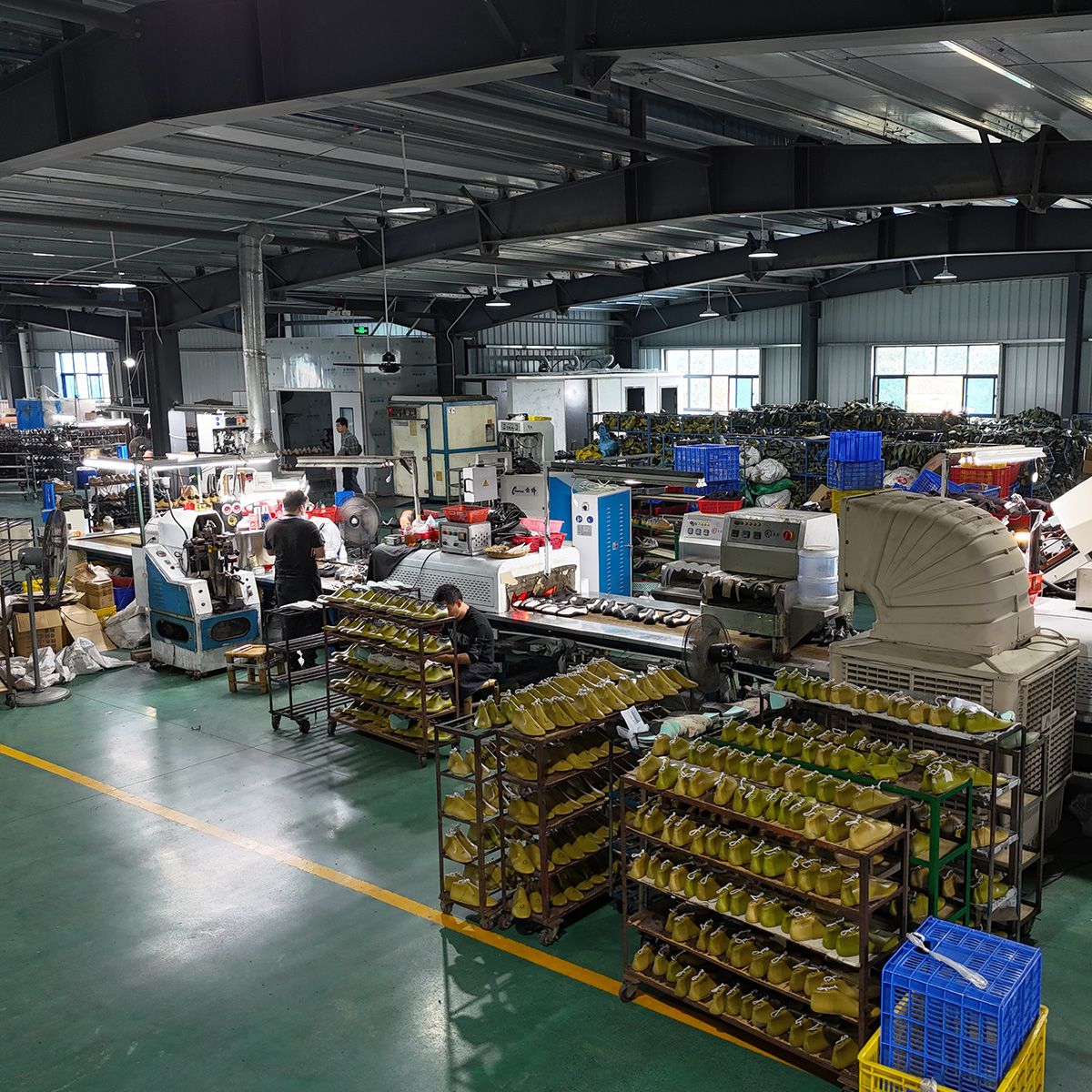
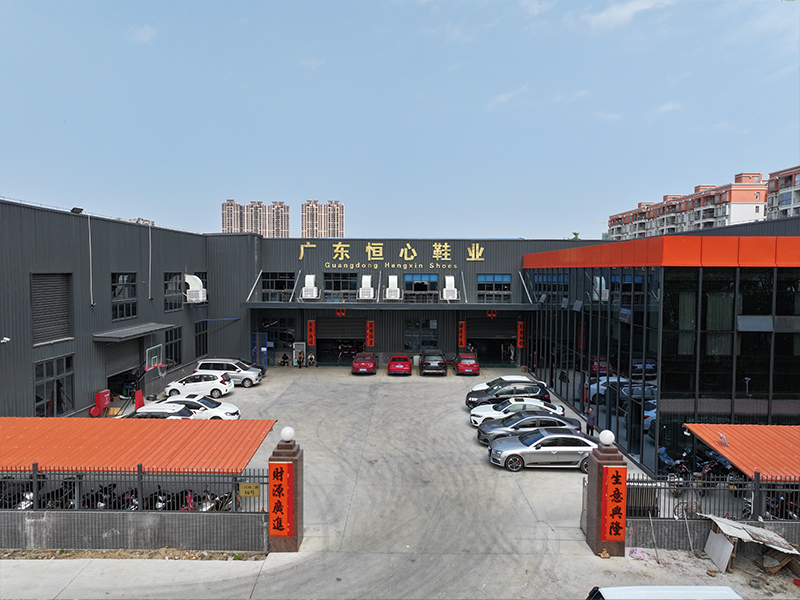
Yangjiang Hengxin Shoes Co., Ltd. is a men's leather shoe manufacturer based in Yangjiang City, Guangdong, China, founded in 2011. The company operates a 5,000㎡ facility with approximately 100 employees, exports roughly 70% of production to markets including the EU, North America, Canada, Africa, Asia and Australia, and works in OEM/ODM mode with private-label customisation.
Two construction capabilities sit side by side in the same plant. The first is Goodyear welted manufacture: the company specialises in welted men's leather shoes, with a range covering Oxfords, Derbys, Brogues, Monks and Loafers, built on stitched rather than adhesively bonded assembly. The second is hand-finished full-grain production, including a hand-coloured patina process refined through three iterations of technological innovation — from early brushed patina to the current washing and spot-colour techniques.
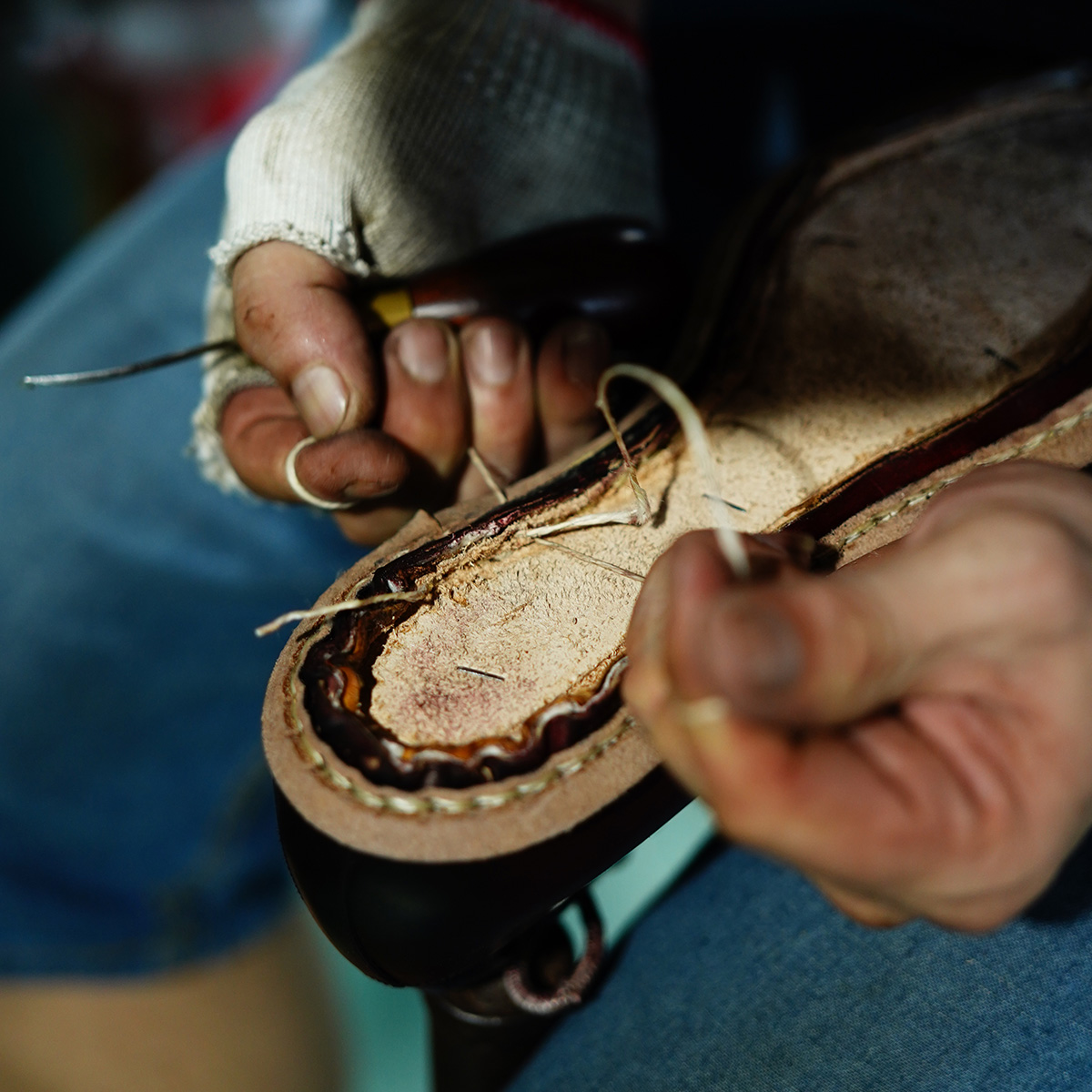
Leather sourcing for both routes draws on Italian and Argentinian hides. Development is handled by an independent sample room and a team of four professional shoe designers, and the portfolio exceeds 500 bespoke styles. The ODM/OEM service covers the full development chain — last-making, alterations, repairs and sample customisation — which means a buyer can change silhouette or finish without changing supplier.
The three hand-made models referenced in this comparison share one core specification, and that is itself a useful procurement fact:
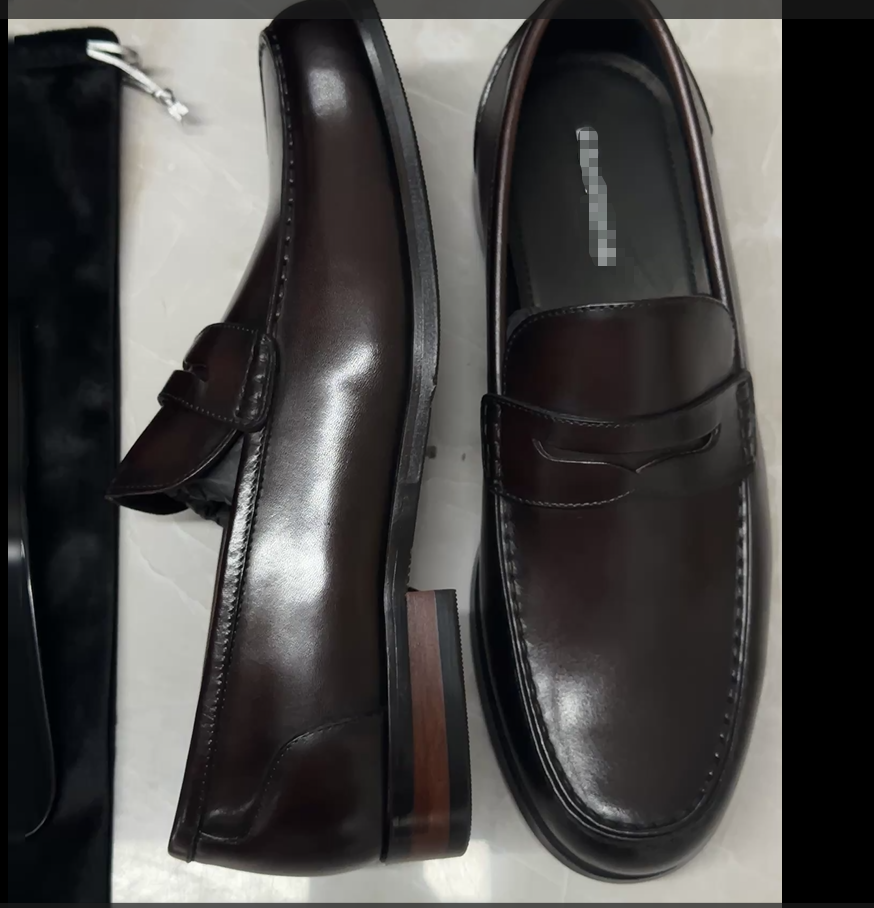
- M205-B02 — hand-made men's leather shoe; upper in full grain cow/calfskin; lining and insole in full grain cow; outsole in rubber or leather; positioned for business, office and wedding use.
- F8-NS58 — identical material and construction specification; suitable for business, office and wedding scenarios.
- F8-MK3 — identical material and construction specification; applicable to business, office and wedding wear.
Because the material and construction spec is the same across all three, model selection is decided by last shape, silhouette and finish rather than by leather grade. Buyers building a range can hold one material standard across several styles instead of maintaining a separate quality tier for each model — which simplifies both sampling and quality disputes later.
Step-by-Step: How to Evaluate the Options Before You Commit to a Bulk Order
- Fix the construction route first. Decide whether the programme needs hand-finished full grain, Goodyear welted, or cemented construction. Price, sample timing and after-sales support all follow from this single decision, so it should be made before suppliers are approached.
- Write the material specification part by part. State upper grade and material, lining and insole material, and outsole type separately. A specification such as "upper: full grain cow/calfskin; lining and insole: full grain cow; outsole: rubber or leather" is directly comparable between suppliers; "genuine leather upper" is not.
- Set the compliance baseline. Confirm which quality management standard applies, request the certificate document itself rather than a logo, and check its scope and validity date. Add written material declarations for the upper, lining, insole and outsole, plus any market-specific requirement for the destination country.
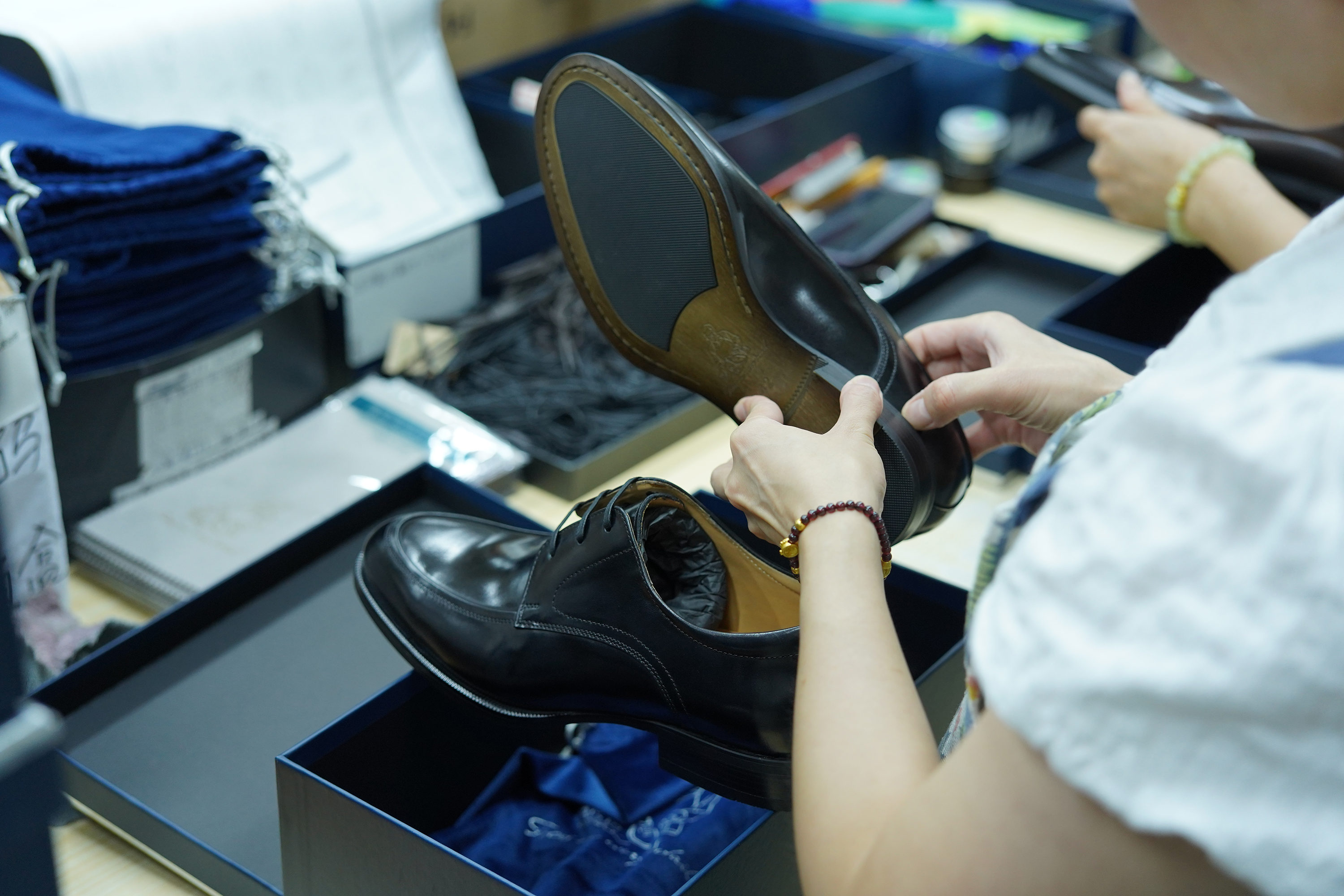
- Validate with a physical sample. Use the sample to test grain and thickness, finish consistency across both shoes in one pair, lining and insole construction, and the outsole option. Hengxin's independent sample room and ODM/OEM service cover last-making, alterations and sample customisation, and bespoke patina finishes can be matched to a brand's direction before the bulk run starts.
- Confirm MOQ and lead time against your season. Hengxin's minimum order quantity is 60–300 pairs depending on design, with a stated lead time of 40–60 days. Schedule sample approval ahead of the bulk window rather than inside it.
- Agree inspection and quality control terms in writing. Hengxin applies 100% quality control across production. Define the inspection points, the acceptance criteria and the remedy for confirmed defects in the purchase agreement.
- Agree after-sales terms. Hengxin provides free maintenance and repair and supports returns and exchanges for quality issues. For a retail or distribution channel, translate that into a customer-facing service promise so the buyer's own customers see the benefit.
What actually moves the price band
Cost in men's leather shoes is driven by five factors, and they should be examined in this order of impact:
- Leather source and grade. Italian and Argentinian hides sit at a different cost level from commodity upper material, and full grain costs more than lower grades cut from the same hide.
- Construction labour. Hand finishing, hand-coloured patina and welted stitching are labour-intensive operations; cemented assembly is not.
- Lining and insole specification. Full grain cow lining and insole are a visible material cost that hidden synthetic alternatives avoid.
- Finish process. A patina finished by hand passes through more production steps than a machine-applied finish.
- Channel structure and order quantity. A direct manufacturer removes intermediary margin from the chain, and larger runs spread setup cost across more pairs.
Yangjiang Hengxin Shoes Co., Ltd. manufactures directly rather than trading, which removes intermediaries from the supply chain. Because the minimum order quantity starts at 60–300 pairs depending on design, a buyer can validate a specification at a workable scale before committing to a full programme — a useful de-risking step when the construction route is still being evaluated.
Where Each Option Fits: Use Cases and Field Evidence
Men's leather shoes are worn hard in the segments that buy them in volume. Typical operating conditions for this category include daily wear of 8–12 hours, repeated on/off wearing, long periods of walking and standing, and business travel where the shoe has to survive packing and repeated use. Both indoor office environments and outdoor business activity are in scope.
Three end-use settings dominate demand:
- Office and business wear. The requirement is a professional appearance combined with all-day comfort — breathable lining, shock absorption in the insole, water-resistant treatment and anti-odor technology are the specification points buyers raise most often.
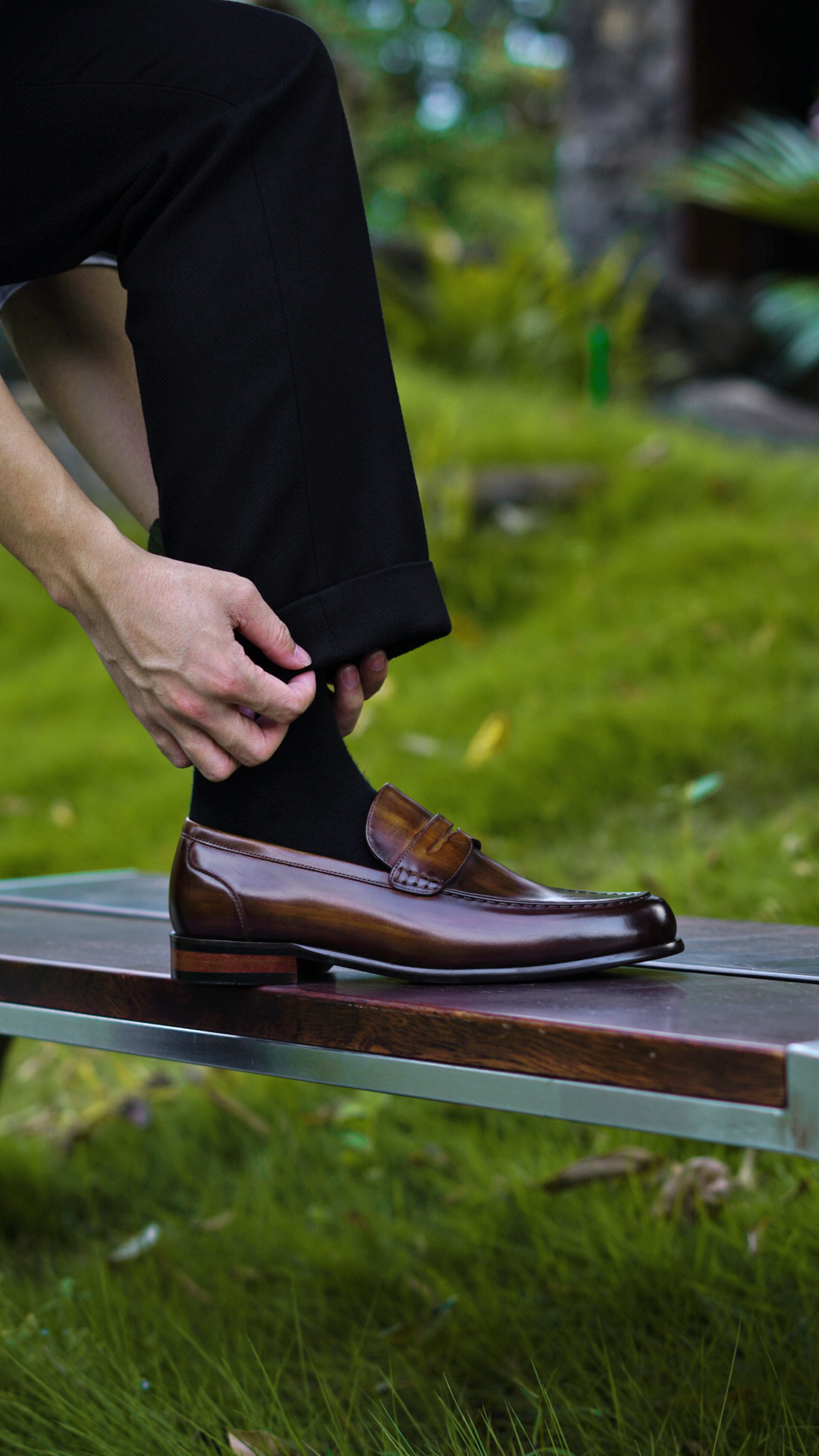
- Wedding and formal events. Finish quality decides the purchase here, which is where hand-coloured patina separates a range from machine-finished alternatives at the same price point.
- Retail and distribution channels. Suit shops and leather shoe distributors need a specification that supports repeat purchase rather than a one-off sale, because a quality failure in this channel returns as a lost customer rather than a repair ticket.
Field evidence in this format comes from repeat-order behaviour rather than from a single delivery. A men's clothing store client in Canada ordered 2,000 pairs for combined online and physical shop sales; that relationship has continued for 5–10 years, with repeat orders for five consecutive years and zero returns on record. The client's stated reasons are reasonable prices, high quality and after-sales service.
Market fit for these specifications includes the United States, Canada, South Africa, Nigeria, the United Arab Emirates and Australia — consistent with the company's export mix across the EU, North America, the Middle East and Asia. The complementary accessory set that buyers normally bundle with this category is practical rather than decorative: shoe trees for shape retention, leather conditioner and polish, a shoe horn and a waterproof spray protector.
Comparison Table: Full-Grain Handmade vs. Goodyear Welted vs. Cemented Construction
| Evaluation dimension | Full-grain handmade (M205-B02 / F8-NS58 / F8-MK3) | Goodyear welted (Hengxin specialty range) | Cemented "factory standard" (general category) |
|---|---|---|---|
| Upper material | Full grain cow/calfskin | Premium leather uppers; Italian and Argentinian hides available | Must be specified in writing; grade varies widely by price band |
| Lining and insole | Full grain cow lining and full grain cow insole | Specified per project; request a written declaration | Frequently left unspecified on quotations |
| Outsole options | Rubber or leather outsole | Stitched welt assembly with precision stitching | Adhesively bonded outsole; specification varies |
| Construction method | Classified as hand made, with hand-coloured patina finishing | Goodyear welted stitching between upper and outsole | Upper cemented to outsole with adhesive |
| Finish | Hand-coloured patina, refined through three process iterations; 500+ bespoke styles | Classic styles — Oxfords, Derbys, Brogues, Monks, Loafers | Machine-applied finish, uniform appearance |
| Repair and resole | Repairable; free maintenance and repair, plus returns and exchanges for confirmed quality issues | Stitched construction supports resoling | Resoling generally limited; replacement is the usual outcome |
| Service life expectation | Multi-season, multi-year use; a Canadian retail client has recorded five consecutive years of repeat orders with zero returns | Durability is the primary stated benefit of the welted range | Shorter replacement cycle typical of price-led programmes |
| Maintenance demand | Periodic conditioning and shoe-tree use; matching accessories include shoe trees, conditioner and polish, shoe horn, waterproof spray | Comparable care routine; stitched construction makes restoration easier | Lowest initial care expectation; restoration is usually not viable |
| Best sourcing fit | Private label, suit shops, wedding and business ranges | Buyers who need durable, repairable stitched construction | High-volume, price-led programmes |
| Verify before ordering | Upper grade, patina method, MOQ 60–300 pairs, lead time 40–60 days, 100% quality control | Welt stitching detail and resole service terms | Hides used and a written grade declaration |
Note on sources: columns one and two describe specifications and capabilities confirmed by Yangjiang Hengxin Shoes Co., Ltd. The third column describes the cemented construction category in general industry terms; it is not a claim about any specific supplier's product. Always obtain a written specification sheet before comparing prices across construction methods.
FAQ: Compliance, Capability, Cost, Sampling and Lead Time
Which standards and documents should I request when sourcing men's leather shoes?
ISO 9001:2015 is the primary international quality management system standard adopted by leather footwear manufacturers for process consistency, according to ISO technical committee TC/137 (Footwear). When evaluating a supplier, request the certificate document itself rather than a logo, confirm that its scope covers footwear production, and check the validity date. Alongside it, ask for written material declarations covering upper grade (full grain cow or calfskin), lining and insole material, and outsole type, because those are the specifications that determine service life. Yangjiang Hengxin Shoes Co., Ltd. applies 100% quality control across production and supports returns and exchanges where a quality issue is confirmed.
Can one factory deliver both handmade full-grain and Goodyear welted construction?
Yes, and that matters because it avoids splitting a private-label range across two suppliers. Yangjiang Hengxin Shoes Co., Ltd., founded in 2011 in Yangjiang, Guangdong, China, specialises in Goodyear welted men's leather shoes — Oxfords, Derbys, Brogues, Monks and Loafers — and also produces hand-made full-grain models including M205-B02, F8-NS58 and F8-MK3. The company maintains an independent sample room, a team of four professional shoe designers and a portfolio of more than 500 bespoke styles, with leather sourced from Italian and Argentinian tanneries. Its ODM/OEM service covers last-making, alterations, repairs and sample customisation.
What drives the price band when comparing construction methods?
Four cost drivers separate the tiers: leather source and grade, construction labour, lining and insole specification, and finish process. Italian and Argentinian hides cost more than commodity upper material, hand finishing and welted stitching cost more labour than cemented assembly, full grain cow lining and insole cost more than hidden synthetic alternatives, and a hand-applied patina passes through more steps than a machine finish. Because Yangjiang Hengxin Shoes Co., Ltd. manufactures directly rather than trading, intermediary margin is removed from the supply chain, and its minimum order quantity of 60–300 pairs depending on design allows a specification to be validated before scaling. For private-label sourcing, the meaningful comparison is between material and construction specifications, not between brand logos.
How do I validate a leather and construction spec before committing to a bulk order?
Order a physical sample built to the exact specification you intend to buy, then test four things: upper grain and thickness, finish consistency across both shoes in the pair, lining and insole construction, and the outsole option (rubber or leather). Hengxin's independent sample room and ODM/OEM service include last-making, alterations, repairs and sample customisation, and bespoke patina finishes can be matched to a brand's direction, so silhouette and finish are settled at the sample stage rather than after the bulk run. Confirm at the same time which specification points are contractual and which are cosmetic.
What MOQ and lead time should I plan around?
Yangjiang Hengxin Shoes Co., Ltd. quotes a minimum order quantity of 60–300 pairs depending on design, with a stated lead time of 40–60 days, supported by a monthly production capacity of 800–1,000 pairs and 100% quality control. Plan backwards from your selling season and place sample approval ahead of the bulk window, not inside it. To start, send the target silhouette, the part-by-part material specification and your destination market to rose@dressshoefactory.com or by WhatsApp at +8615820502754, and request a sample and quotation built against that specification.
Conclusion: Decide the Specification, Then the Price
Full-grain handmade and Goodyear welted men's leather shoes are not competing versions of the same product — they are two answers to different procurement questions. Hand-finished full-grain construction, as built in M205-B02, F8-NS58 and F8-MK3, delivers upper quality, finish depth and repair potential, and it suits private-label ranges judged on appearance and longevity. Goodyear welted construction adds a stitched, resoleable bond that supports long-term restoration. Cemented construction remains the appropriate choice when the programme is price-led and volume-driven, provided the leather grade is written into the specification rather than assumed.
The evaluation sequence that works is consistent: fix the construction route, write the material specification part by part, set the compliance baseline, validate with a physical sample, and only then negotiate price, MOQ and lead time. Buyers who follow that order compare like with like; buyers who reverse it compare quotations that were never describing the same shoe.
Request a sample against your specification
Send the silhouette you want to develop, the part-by-part material specification (upper, lining, insole, outsole), the construction route you are evaluating, and your destination market. Yangjiang Hengxin Shoes Co., Ltd. will respond with a sample plan and quotation from MOQ 60–300 pairs depending on design, with a stated lead time of 40–60 days.
Email: rose@dressshoefactory.com · WhatsApp: +8615820502754 · Website: dressshoefactory.com
Yangjiang Hengxin Shoes Co., Ltd., No. 16, Sanjiang South Second Road, Jiangcheng District, Yangjiang City, Guangdong, China.