Rubber vs. Leather Outsoles on Handmade Men's Leather Shoes
The short answer: specify a leather outsole when the shoe has to read as formal — business, office and wedding programmes — and specify a rubber outsole on the same handmade shoe when the wearer meets wet pavement, stands for long shifts, or wears the pair casually. Both versions are built on the same base at Yangjiang Hengxin Shoes Co., Ltd.: full grain cow or calfskin upper, full grain cow lining and insole, and Goodyear welted construction. The outsole changes how the shoe looks, grips and lives. It does not change how well the shoe is built.
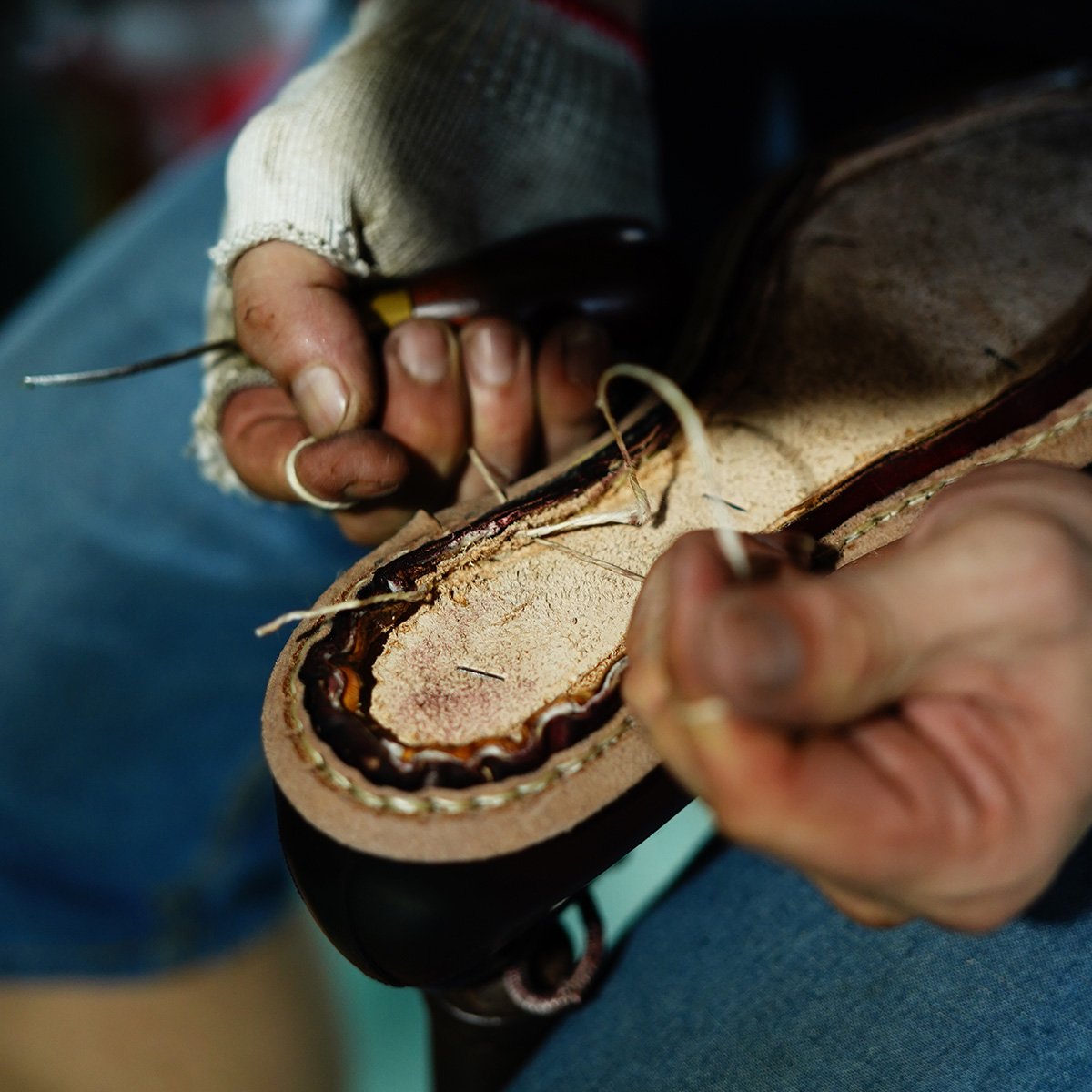
Goodyear welted construction: the stitched welt is the part that accepts either a leather or a rubber outsole, and allows it to be replaced later.
An outsole is the bottom layer of the shoe — the only part that touches the ground, and the last visible design decision a buyer signs off on. Because the sole edge sits directly under the eye of anyone looking at the pair, the rubber versus leather question is rarely settled inside the factory. It is settled by the programme: the occasion the shoe is bought for, the climate it is sold into, and the willingness of the end user to maintain it.
This is a buying decision with a deadline. Private-label, wholesale and corporate orders are placed as a single specification across a full size run, and changing the outsole after sampling triggers a new sample round, a new client confirmation and a reset of the delivery clock. Deciding late is the expensive way to decide. This guide puts the two options head to head on the specifications confirmed on Hengxin handmade models such as M205-B02, F8-NS58 and F8-MK3, then closes with the sourcing logistics — minimum order, dispatch window and customization route — so the choice can be carried straight into a purchase order.
What the rubber-versus-leather outsole decision actually covers
A leather outsole is cut from tanned hide and, on a Goodyear welted shoe, is stitched through the welt and trimmed close to the upper. That close trim keeps the sole line low and formal. A rubber outsole is a moulded rubber unit or sheet, generally thicker and patterned for traction, and it usually carries a slightly fuller edge. That fuller edge is why rubber reads casual even when the upper is a dress upper.
Three practical consequences follow. Silhouette: leather preserves the formal line, rubber alters it. Ground contact: a patterned rubber tread generally offers more grip on wet and uneven surfaces, while leather gives a firmer, flatter contact feel with less cushioning. Upkeep: leather is the more water-sensitive of the two, and the care guidance applied to these shoes is explicit — leather shoes should not be exposed to water because it can cause the colour to fade, and a pair that does get wet should be dried with a dry cloth as soon as possible, with regular colour-protection care in between.
The decision is also asymmetric in cost. Adding rubber later, after a leather-soled reference has already been photographed, listed and sold into a channel, means re-shooting, re-listing and re-briefing the sales team. Choosing once, at specification stage, costs nothing beyond the sample round that was going to happen anyway.
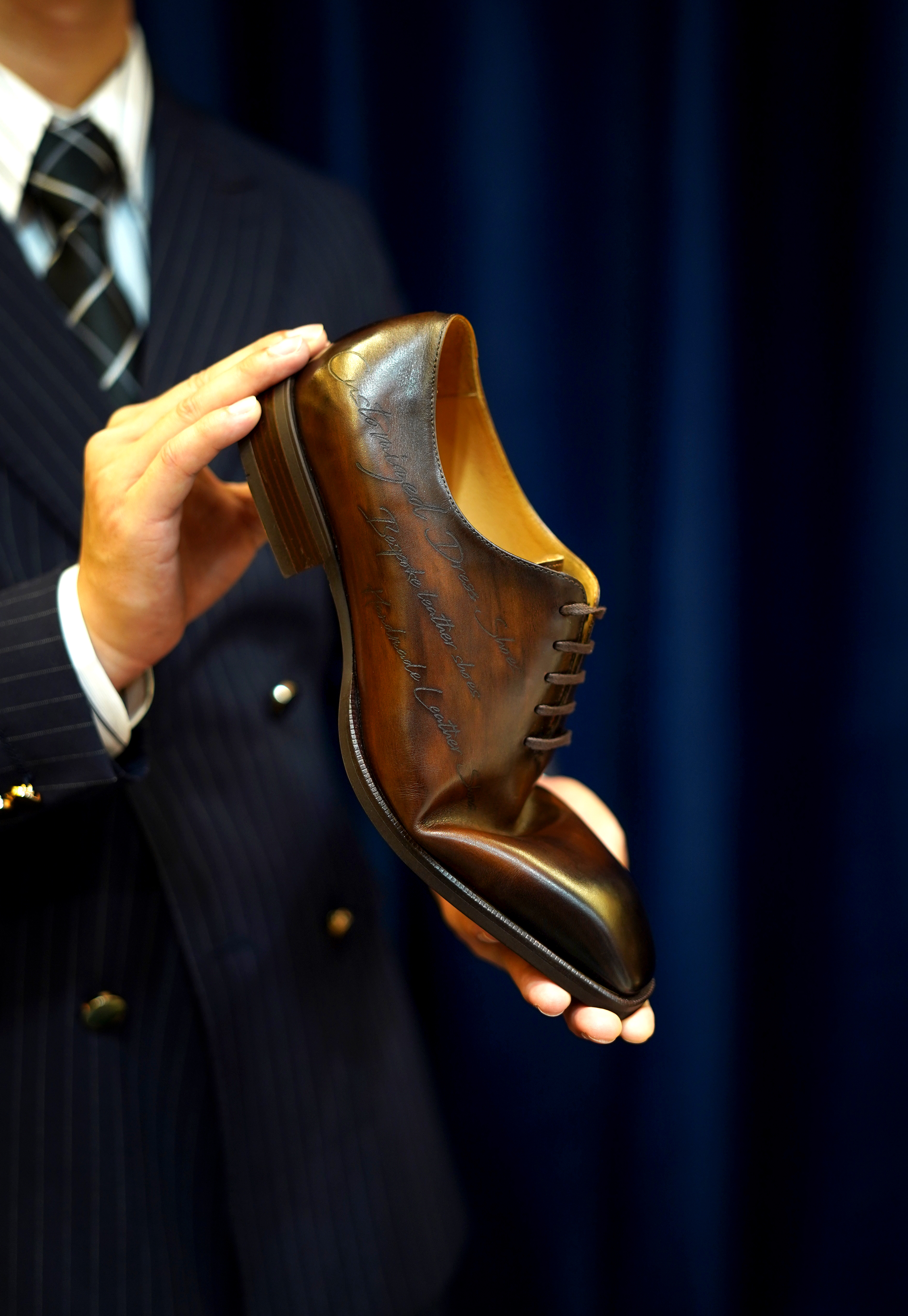
Both outsole versions share the same upper, lining and insole, so the material quality a buyer inspects is identical on either specification.
Where the demand behind this decision sits
The global leather footwear market was valued at USD 150.7 billion in 2024, and the male segment accounted for 54.1% of the total share (Grand View Research). Asia Pacific held the largest revenue share of that market in the same year, estimated at 53.9% (Grand View Research). By volume, men's leather shoe sales exceeded 780 million pairs globally in 2024, equal to 41.3% of the total men's footwear industry (Industry Research).
Inside that men's leather shoe volume, formal shoes accounted for approximately 40% of total sales volume as of 2024. That figure is the practical size of the decision: it is roughly the share of the category where a leather outsole is the conventional specification, and it is the share most private-label, uniform and retail programmes are actually buying.
Two structural signals sit alongside it. Sustainable leather practices accounted for approximately 28% of global leather production for footwear in 2024, according to industry research estimates, which tells buyers that material provenance is becoming a line item rather than a footnote. And the premium tier of the category remains anchored by luxury groups such as LVMH Group, Prada S.p.A. and Hermès International (Mordor Intelligence) — the tier whose close-trimmed, stitched soles and hand finishing set the appearance standard that mid-market programmes are measured against.
Taken together, the rubber-versus-leather choice is not a technicality. It touches about two-fifths of category volume, and it determines whether a programme can stand beside the premium tier or has to be positioned beneath it.
What both outsole options share at Yangjiang Hengxin Shoes Co., Ltd.
Yangjiang Hengxin Shoes Co., Ltd. is a men's leather shoe manufacturer based in Yangjiang, Guangdong, founded in 2011. The factory covers 5,000㎡ with around 100 employees and an annual output of 400,000 pairs. Roughly 70% of production is exported to the EU, USA, Canada, Africa, Asia and Australia, and the range covers men's Oxfords, Derbys, monkstraps, loafers, casual shoes, sneakers, boots and sandals.
Because the outsole is specified on top of a fixed construction, the two options can be compared cleanly. The specification shared by both versions is:
- Upper: full grain cow or calfskin.
- Lining and insole: full grain cow.
- Construction: Goodyear welted, combining precision stitching with premium materials across Oxfords, Derbys, brogues, monks and loafers.
- Finishing: hand-coloured patina, developed through three iterations of technological innovation, using premium Italian and Argentinian leathers.
- Lasts: replicated one-to-one from world-renowned brand lasts, so proportions do not drift between production runs.
- Programme depth: more than 500 bespoke styles in the portfolio, with an independent sample room and a team of four professional shoe designers.
- Expected service life: at least 5 years per pair.
- Maintenance load: 90% less maintenance than comparable products.
- Repeat performance: a 95% repeat purchase rate for five consecutive years.
- Price position: for orders over 500 pairs, 15–20% lower than competing suppliers.
- Service: lifetime free maintenance service.
The line that matters most to a buyer is the construction. A Goodyear welted shoe is stitched rather than cemented, which makes the outsole a replaceable component: a worn leather sole can be replaced instead of retiring the pair, and the same welt accepts a rubber outsole for a market that needs more grip. That is what turns the rubber-versus-leather choice into a specification rather than a permanent commitment. It also sits inside a factory with real programme capacity: 10 staff in R&D, more than a decade of production since 2011, and a 70% export ratio that means the specification has already been shipped into markets with very different weather.
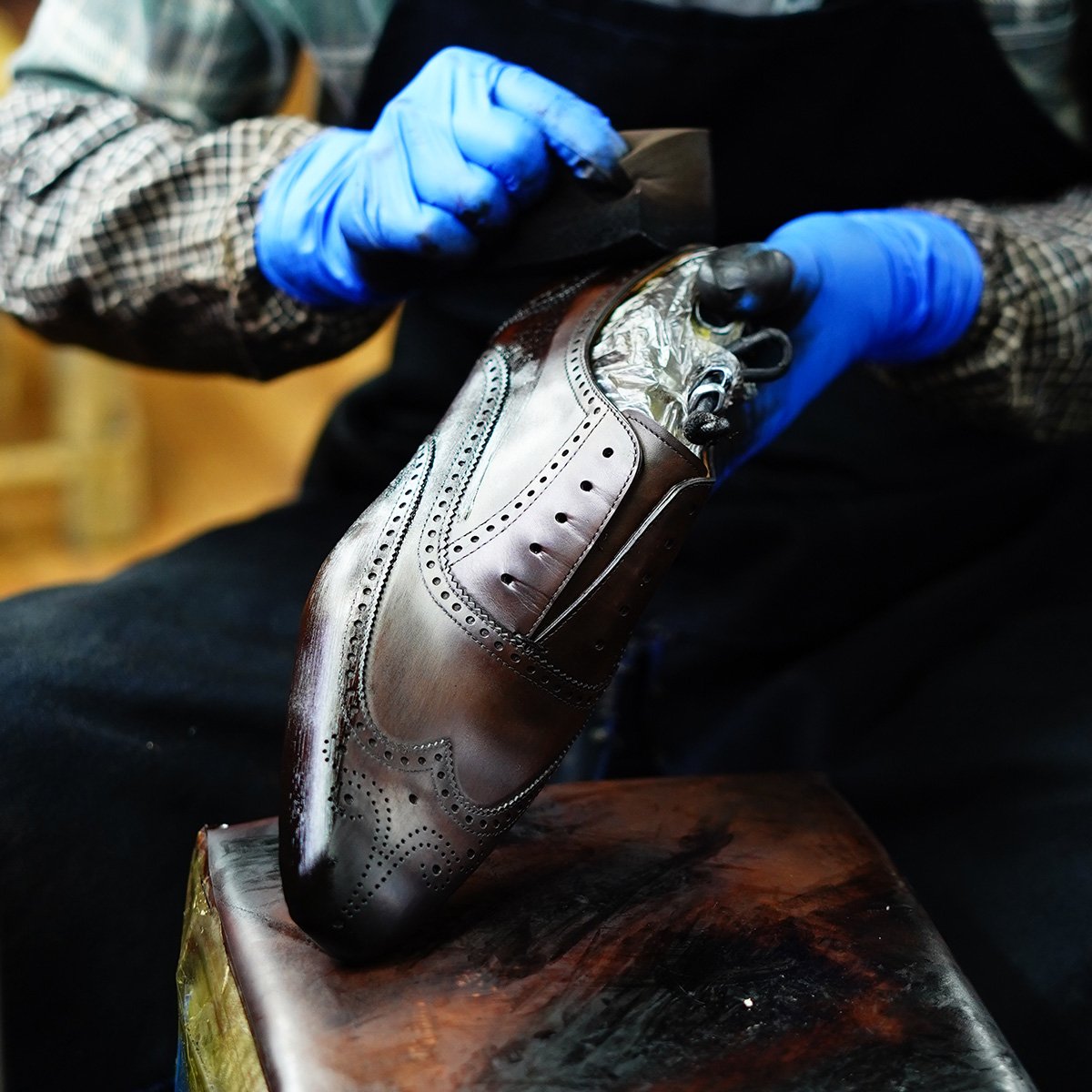
Hand-coloured patina finishing is applied to both outsole versions; the sole edge is what changes between them.
Specifying the outsole: a six-step breakdown
- Name the primary occasion. Business, office and wedding programmes default to leather, because the low, close-trimmed sole line is part of the formal code. Casual, weekend and slip-on styles default to rubber. Where one programme serves both, split the buy rather than compromise the whole run.
- Score the weather the shoe will actually meet. For destinations with a sustained wet season, remember that leather is the more water-sensitive option: exposure to water can fade the colour, so the end user must dry the pair with a dry cloth promptly and keep up colour-protection care. Rubber removes most of that daily attention. Many buyers answer this by running leather for the core formal line and rubber for the wet-season or travel assortment.
- Check the silhouette against the pitch. If the pair will be photographed for a wedding catalogue, a hotel uniform programme or a formal retail wall, the leather edge is the one that matches the reference image the client already approved.
- Estimate the end user's tolerance for upkeep. Leather rewards care; where a pair is worn hard and polished rarely, rubber is the lower-friction answer. This step is a comfort for buyers, because the upper, lining, insole and stitching are identical on either version.
- Validate on a sample pair before the run. Sample customization is part of the ODM/OEM service, supported by an independent sample room and four professional shoe designers. Fit, sole edge and finish can all be checked before volume is committed.
- Lock the commercial terms. Minimum order from 6 pairs, production completed and dispatched in 2–4 weeks, with last-making, alterations and repairs available inside the same one-stop ODM/OEM service.
Use cases: which outsole for which programme
Business and office programmes
Leather outsole. An Oxford or Derby worn with tailoring is judged on line first, and a stitched leather sole keeps the profile low and intentional. Switch to rubber only where staff stand for long shifts on hard or wet floors and the pair functions as workwear rather than as dress wear. Office is one of the two occasions explicitly identified as the best fit for this handmade construction, alongside wedding use.
Wedding programmes
Leather for the ceremony pair, rubber for the groom's travel or outdoor-shoot pair. The patina-finished upper photographs best over a close-trimmed leather sole, while a rubber-soled version protects the same upper against a wet venue floor. Selling both to the same retail account is straightforward because they share a last and a fit.
Casual and slip-on lines
Rubber outsole. Loafers and slip-on men's leather shoes sold into casual retail generally benefit from the extra traction and from the fuller, more relaxed edge that rubber gives — and buyers avoid the care claims that come with a leather sole in a casual channel.
Distributor and multi-channel assortments
Split the specification. A distributor serving both tailoring retail and casual or weather-exposed channels can hold leather-soled references for the formal wall and rubber-soled references for the rest, all built on the same lasts so that size and fit feedback stays consistent across the range instead of fragmenting by model.
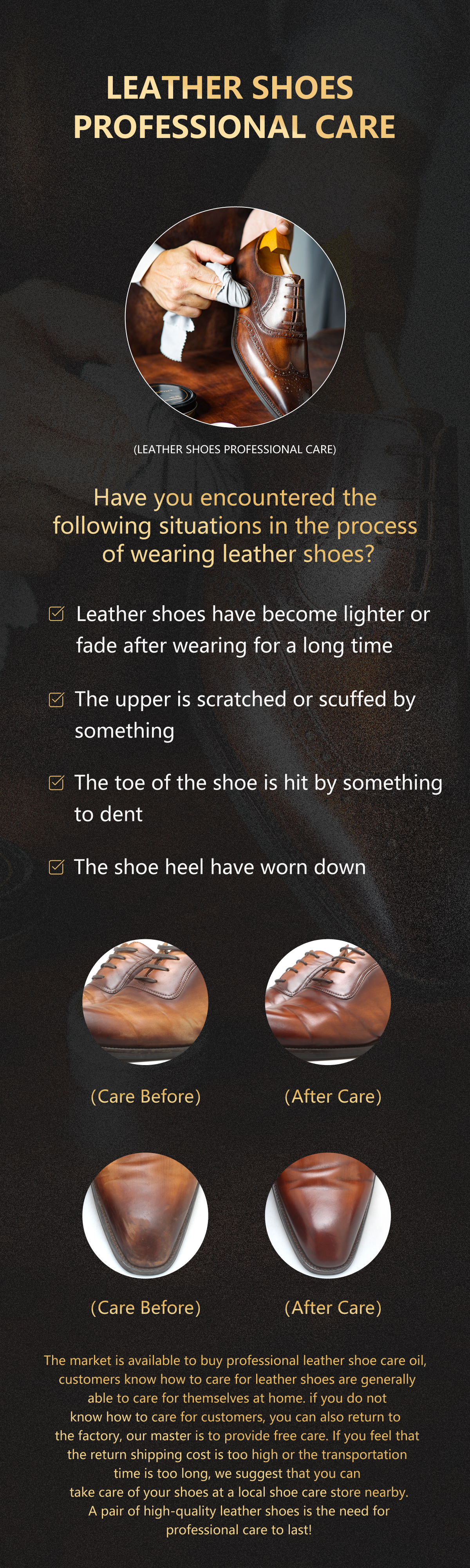
Care guidance travels with the shoe: leather outsoles need water avoidance and regular colour-protection care, and the factory covers both versions with lifetime free maintenance service.
Rubber outsole vs leather outsole: head-to-head comparison
| Decision criterion | Leather outsole | Rubber outsole |
|---|---|---|
| Formal appearance | Low, close-trimmed sole line; the conventional specification for business, office and wedding wear | Fuller edge and tread pattern; reads more casual even under a dress upper |
| Grip and surface feel | Firm, flat contact; generally the lower-traction option on wet or uneven ground | Patterned tread; generally the higher-traction option in wet weather and on rough surfaces |
| Wet-weather exposure | Should not be exposed to water, as it can cause the colour to fade; dry with a dry cloth as soon as possible and use regular colour-protection care | Far less day-to-day water attention required from the wearer in wet markets |
| Long-term upkeep | Rewards regular care; covered by the factory's lifetime free maintenance service | Lower routine upkeep; the same lifetime free maintenance service applies |
| Replaceability | Stitched, and therefore replaceable on a welted shoe | Stitched, and therefore replaceable on a welted shoe |
| Expected service life | At least 5 years per pair | At least 5 years per pair |
| Best-fit programmes | Business, office, wedding and formal retail walls | Casual, slip-on, wet-climate and long-standing-hour programmes |
Both versions share the same specification base: full grain cow or calfskin upper, full grain cow lining and insole, Goodyear welted construction, hand-coloured patina finishing, and lasts replicated one-to-one from world-renowned brand lasts. The finished product line requires 90% less maintenance than comparable products.
Sourcing logistics: from outsole choice to purchase order
Once the specification is fixed, the commercial route on a handmade order is short and defined:
- Minimum order: from 6 pairs, so a single reference in either outsole can be validated without committing to a container load.
- Dispatch: orders are completed and dispatched in 2–4 weeks, as a direct manufacturer working without intermediary layers between the buyer and the production line.
- Customization: one-stop ODM/OEM service covering last-making, alterations, repairs and sample customization, supported by an independent sample room and four professional shoe designers.
- Commercial position: for orders over 500 pairs, pricing is 15–20% lower than competing suppliers, and the manufacturer has recorded a 95% repeat purchase rate for five consecutive years.
- After-sales: lifetime free maintenance service on both outsole versions.
FAQ: rubber and leather outsoles on handmade men's leather shoes
Can a leather outsole be sold into wet or rainy markets?
Yes, but it has to be sold with care instructions rather than as an all-weather product. Leather shoes should not be exposed to water because it can cause the colour to fade. The guidance applied to these shoes is to avoid getting them wet, to dry a wet pair with a dry cloth as soon as possible, and to carry out regular leather colour-protection care. Wet-market assortments commonly pair rubber for daily wear with leather for indoor and formal use. On process consistency, ISO 9001:2015 is the international quality management standard most widely adopted by leather footwear manufacturers (ISO TC/137 Footwear).
Can the same handmade model be produced with either outsole?
Yes. Models such as M205-B02, F8-NS58 and F8-MK3 sit on one specification base — full grain cow or calfskin upper, full grain cow lining and insole, and Goodyear welted construction — and because the welt is stitched, the outsole is an attachable and replaceable component. Lasts are replicated one-to-one from world-renowned brand lasts, so size and proportions stay stable whether the pair ships with a leather or a rubber sole. The ODM/OEM service covers last-making, alterations, repairs and sample customization.
How does the outsole choice affect cost at volume?
The outsole is one line inside a specification whose economics are driven mainly by order size and construction. For orders over 500 pairs, Yangjiang Hengxin Shoes Co., Ltd. prices 15–20% lower than competing suppliers, and each handmade pair is expected to last at least 5 years while requiring 90% less maintenance than comparable products. The factory has achieved a 95% repeat purchase rate for five consecutive years.
Can we validate the specification before placing a full order?
Yes — sampling is the intended first step. The factory runs an independent sample room with a team of four professional shoe designers, and sample customization is part of the one-stop ODM/OEM service alongside last-making, alterations and repairs. Minimum order starts at 6 pairs, which allows one reference in either outsole to be checked for fit, sole edge and finish before a programme is committed.
What is the dispatch time, and how do we start an order?
Orders are completed and dispatched in 2–4 weeks. To start, send your outsole specification — leather, rubber, or a split across both — to Rose, General Sales Manager, at rose@dressshoefactory.com or on WhatsApp +8615820502754 (WeChat: H15820502754), or review the range at dressshoefactory.com.
Conclusion: the one-line decision rule
If the shoe is bought for how it looks on a formal occasion, specify leather. If it is bought for how it survives wet ground and long hours, specify rubber. Because both options share the same upper, lining, insole, Goodyear welted construction, hand-coloured patina finishing, replaceable welt and at least 5-year expected lifespan at Yangjiang Hengxin Shoes Co., Ltd., the choice costs the buyer nothing in build quality. It only changes position, protection and upkeep. Confirm the specification on a sample pair, then place the run — minimum 6 pairs, dispatch in 2–4 weeks.
Start with a sample pair
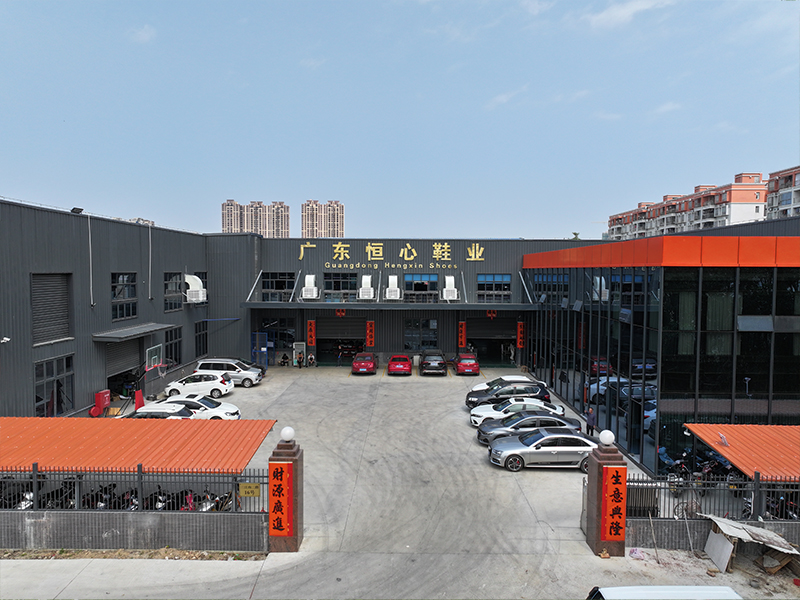
Send your outsole specification — leather, rubber, or a split order across both — and Yangjiang Hengxin Shoes Co., Ltd. will confirm the sample route, dispatch window and pricing for your programme.
Email: rose@dressshoefactory.com | WhatsApp: +86 158 2050 2754 | WeChat: H15820502754
Website: dressshoefactory.com
Address: No. 16, Sanjiang South Second Road, Jiangcheng District, Yangjiang City, Guangdong, China
Have Questions or Need More Details?
Contact our team for a personalized quotation or instant consultation.
Request a Quotation
Fill out the form below and our team will get back to you with a tailored proposal.
WhatsApp Direct Chat
Prefer to chat in real-time? Message us on WhatsApp for instant assistance & quick answers.
- Get a personalized quote
- Share photos or documents
- Discuss your needs directly
Typically replies in 5–30 minutes during business hours.