Top 5 Men's Leather Shoe Styles for Formal Wear: Oxford, Derby, Monkstrap, Loafers, and More
Top 5 Men's Leather Shoe Styles for Formal Wear: Oxford, Derby, Monkstrap, Loafers, and More
Short answer: five men's leather shoe styles cover almost every formal dress code — the Oxford, the Derby, the Monkstrap, the Loafer and the dress boot. Ranked by formality ceiling, versatility across business, office and wedding scenarios, and how cleanly each style can be specified in a custom production run, that order works for the man buying one pair and for the buyer building a formal footwear line.
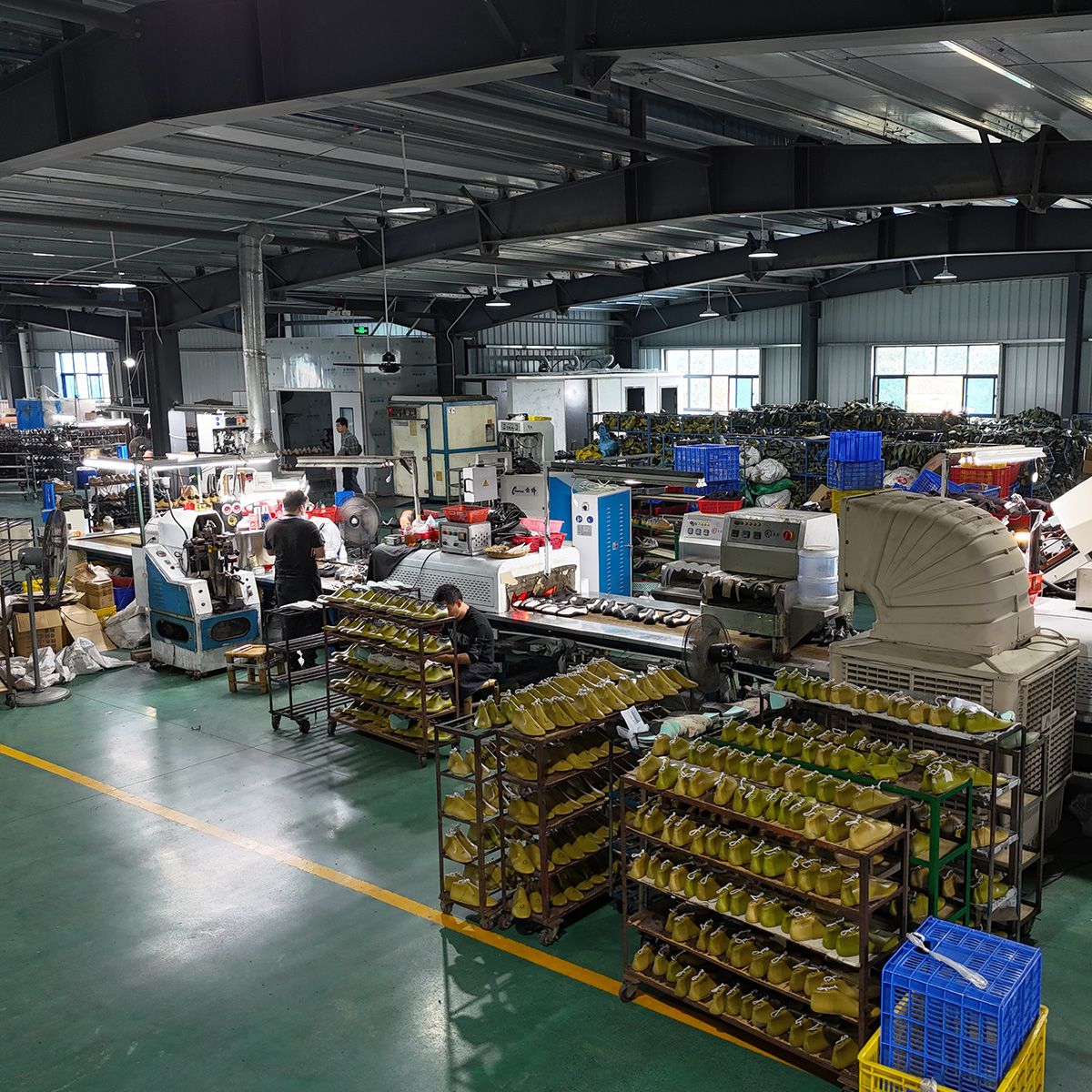
This guide serves two audiences at once: end buyers choosing formal shoes for the office, a client meeting or a wedding, and trade buyers — brand owners, wholesalers, distributors, importers and retail purchasing teams — deciding which formal styles to stock and how to specify them. Yangjiang Hengxin Shoes Co., Ltd. is a men's leather shoe manufacturer founded in 2011 in Yangjiang, Guangdong, China, operating a 5,000 m² factory with around 100 employees, a 10-person R&D team and an annual output of 400,000 pairs; roughly 70% of that output is exported to the EU, USA, Canada, Africa, Asia and Australia. The company's formal range is built on Goodyear welted construction and hand-colored patina finishing across Oxfords, Derbys, Brogues, Monks and Loafers.
Why Choosing a Formal Shoe Style Goes Wrong So Often
Most formal footwear mistakes are not quality problems. They are matching problems, and they fall into three groups.
- Dress-code mismatch. "Formal" is not a single standard. A black cap-toe Oxford, a brown suede Derby and a rugged winter boot can carry similar manufacturing cost while reading completely differently in a boardroom, at a registry office or on a trade-show floor. The safe rule is to match the style to the strictest dress code the wearer expects to meet.
- Comfort and durability traded away. Fit across the instep, outsole construction and the way the shoe can be resoled over time all determine whether a pair is worn weekly for years or left in the closet after a season. Construction choice — not decoration — drives most of that difference.
- Sourcing feasibility. For a trade buyer, a style can be exactly right for the market and still be the wrong line item: the leather may not be available in the target finish, the minimum order quantity may not fit a first trial, or the required size run may not exist on the last.
For a buyer, the same three issues appear as range risk. A formal collection that contains three lace-ups serving the same occasion, no slip-on option and nothing for autumn or winter looks complete on a planogram but converts poorly at retail. The five-style structure below exists to remove that overlap.
The Formal Leather Shoe Market in 2026: What the Data Shows
The formal segment is not a niche inside leather footwear; it is the volume core. The global leather footwear market was valued at USD 150.7 billion in 2024, with the male segment accounting for 54.1% of the total share, according to Grand View Research. Men's leather shoe sales volume exceeded 780 million pairs globally in 2024, equal to 41.3% of the total men's footwear industry, according to Industry Research. Asia Pacific held the largest regional revenue share of the leather footwear market in 2024, estimated at 53.9% (Grand View Research).
Within the men's segment, formal shoes accounted for approximately 40% of total sales volume in 2024. At the top of the price ladder, the leading luxury players are LVMH Group, Prada S.p.A. and Hermès International, with LVMH's fashion and leather goods division reporting significant growth in 2024 (Mordor Intelligence). Material sourcing is also shifting: sustainable leather practices accounted for approximately 28% of global leather production for footwear in 2024, according to industry research reports.
For manufacturers and trade buyers, the implication is narrow and practical. The question is rarely whether formal styles sell — it is whether a supply chain can deliver the specific style, leather, finish and consistency the market asks for, at a minimum order quantity that suits the buyer's first order.
The Top 5 Formal Men's Leather Shoe Styles, Ranked
The ranking below uses three criteria: (1) how high the style can go on the formality scale, (2) how many scenarios it covers without looking out of place, and (3) production readiness — how reliably the style can be customized in leather, last and finish at volume. It is a formality-and-versatility ranking, not a sales-volume ranking.
#1 Oxford — The Formality Benchmark
Oxford shoes use closed lacing: the quarters are stitched beneath the vamp, producing the cleanest silhouette in formal footwear. That is why the Oxford is generally treated as the most formal of the common lace-up styles, and why it is the default choice for business formal, interviews, ceremonies and weddings where a suit is expected.
For a first formal pair, a plain-toe or cap-toe Oxford in black or dark brown covers the widest range of dress codes with the least risk. Decoration should stay minimal; heavy broguing pushes the shoe down the formality scale.
Production note: the factory builds Oxfords within its Goodyear welted collection. Models M205-B02 and F8-NS58 are handmade men's leather shoes with full-grain cow or calfskin uppers, full-grain cow lining and insole, and either rubber or leather outsoles, listed for business men, office men and wedding wear.
Why it ranks first: the highest formality ceiling of the five, with the fewest scenario restrictions.
#2 Derby — The Versatile Lace-Up
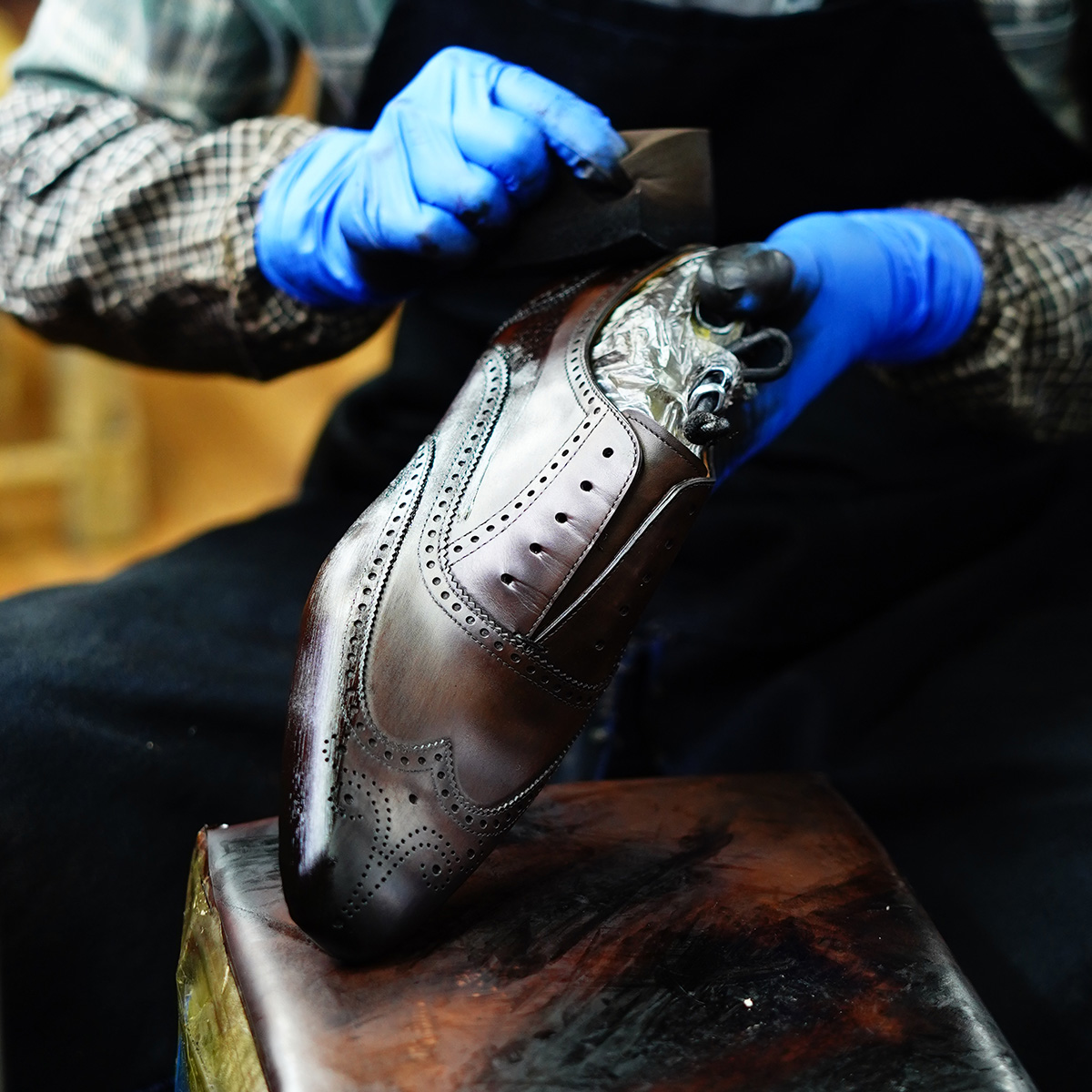
Derby shoes use open lacing: the quarters are stitched over the vamp and the laces tie across the top. The result is a slightly less formal shoe with a more forgiving fit across the instep — useful for higher insteps and for long working days. Brogue detailing, including wingtip patterns, is most commonly built on Derby-family styling.
The Derby sits one step below the Oxford on the formality scale and is the most broadly useful lace-up for office wear, business travel and smart-casual settings where a full suit is not required. It is also the style most likely to be reordered as a core everyday line item.
Production note: Derbys, Brogues and Monks sit alongside Oxfords and Loafers in the factory's Goodyear welted range, so the same construction and material logic applies across the lace-up group.
Why it ranks second: wide scenario coverage, with a formality ceiling just below the Oxford.
#3 Monkstrap — The Buckle Alternative
A Monkstrap replaces laces with a strap and buckle, usually in single or double variations. It occupies a useful middle position: cleaner and more formal than a heavily brogued Derby, slightly below a plain Oxford, and free of the practical annoyance of laces that loosen during the day.
The Monkstrap performs well at weddings, in smart office dress and at evening events, and it gives a formal line an option that stands apart visually from the lace-ups without dropping out of the formal category. It is one of the styles buyers use to differentiate a private label collection from a generic lace-up assortment.
Production note: Monkstrap models are produced within the same Goodyear welted collection as the factory's Oxfords, Derbys, Brogues and Loafers.
Why it ranks third: high formality with a distinctive silhouette, but a narrower everyday audience than the Derby.
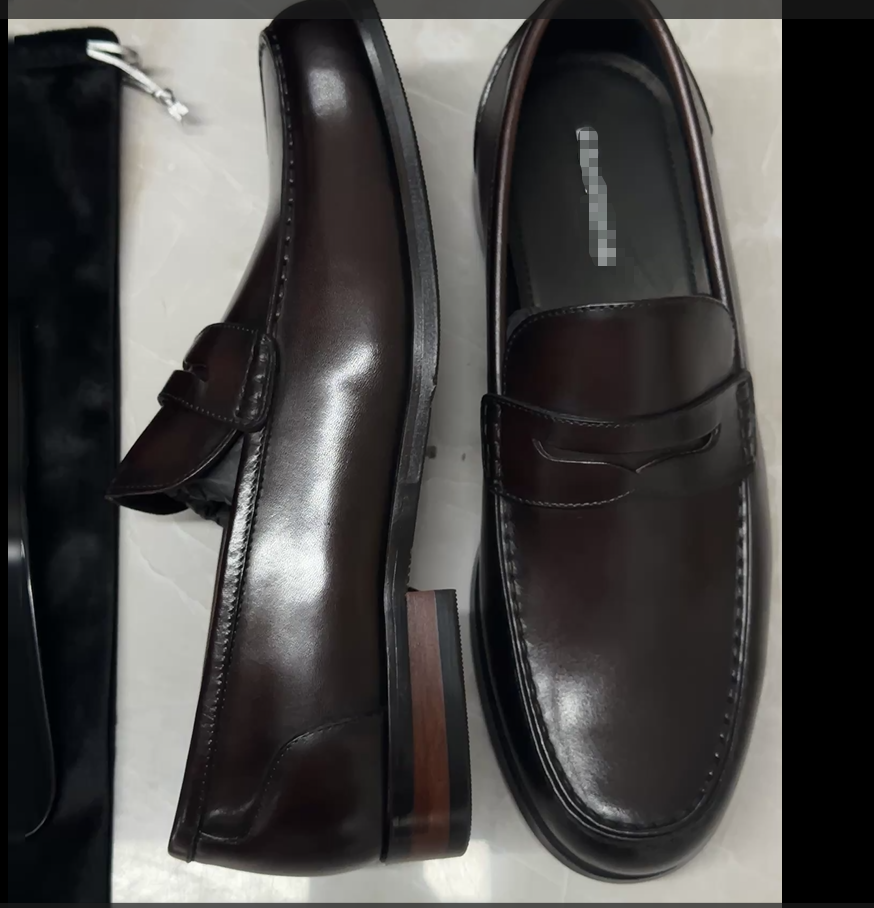
#4 Loafer — The Slip-On Option
The Loafer is the slip-on in the formal range: the fastest to put on, the most tolerant of long days on foot, and the easiest style to wear in warm weather. It is the least formal of the five, which is precisely why it belongs in the set — it covers business casual, office dress in warmer months and summer weddings where a lace-up would look heavy.
Slip-on men's leather shoes are a standard category in the manufacturer's men's range, alongside Oxfords, Derbys, Monkstraps, casual shoes, sneakers, boots and sandals. Goodyear welted construction matters more for loafers than for many other styles, because the shape of the upper depends on the structure underneath to hold its line over time.
Why it ranks fourth: excellent versatility and comfort, with a lower formality ceiling than the lace-ups and buckle styles.
#5 Dress Boot — The Cold-Weather Formal
The dress boot takes the formal vocabulary — clean leather, restrained hardware, minimal decoration — and adds ankle coverage. It ranks fifth not because it is less refined, but because it is more situational: it earns its place in autumn and winter business wear, in evening events and in markets with a genuine cold season, and it pairs well with heavier tailoring.
The manufacturer's men's range includes boots alongside Oxfords, Derbys, Monkstraps, loafers, casual shoes, sneakers and sandals, so the dress boot can be specified with the same upper and lining logic as the rest of the formal collection.
Why it ranks fifth: a genuine and sometimes irreplaceable scenario fit, but the narrowest seasonal window of the five.
And more: the factory also produces casual shoes, sneakers and sandals, but those fall outside the formal set. Within formal wear, the five styles above are the complete working structure — offering one closed-lacing option, one open-lacing option, one buckle option, one slip-on and one boot.
From Style Shortlist to Production Order: Step-by-Step
Choosing the style is the first decision, not the last. For OEM and ODM buyers, six steps take a formal style from shortlist to confirmed production.
- Fix the dress code and the market. Define which scenarios must be covered — business formal, office daily wear, wedding, or a retail line that needs all three — and how many SKUs the range can carry.
- Select the upper leather. The factory's handmade formal models use full-grain cow or calfskin uppers with full-grain cow lining and insole, and the company states that it works with Italian and Argentinian leathers for its higher-end lines. Full-grain leather is the point where a formal shoe's durability is decided.
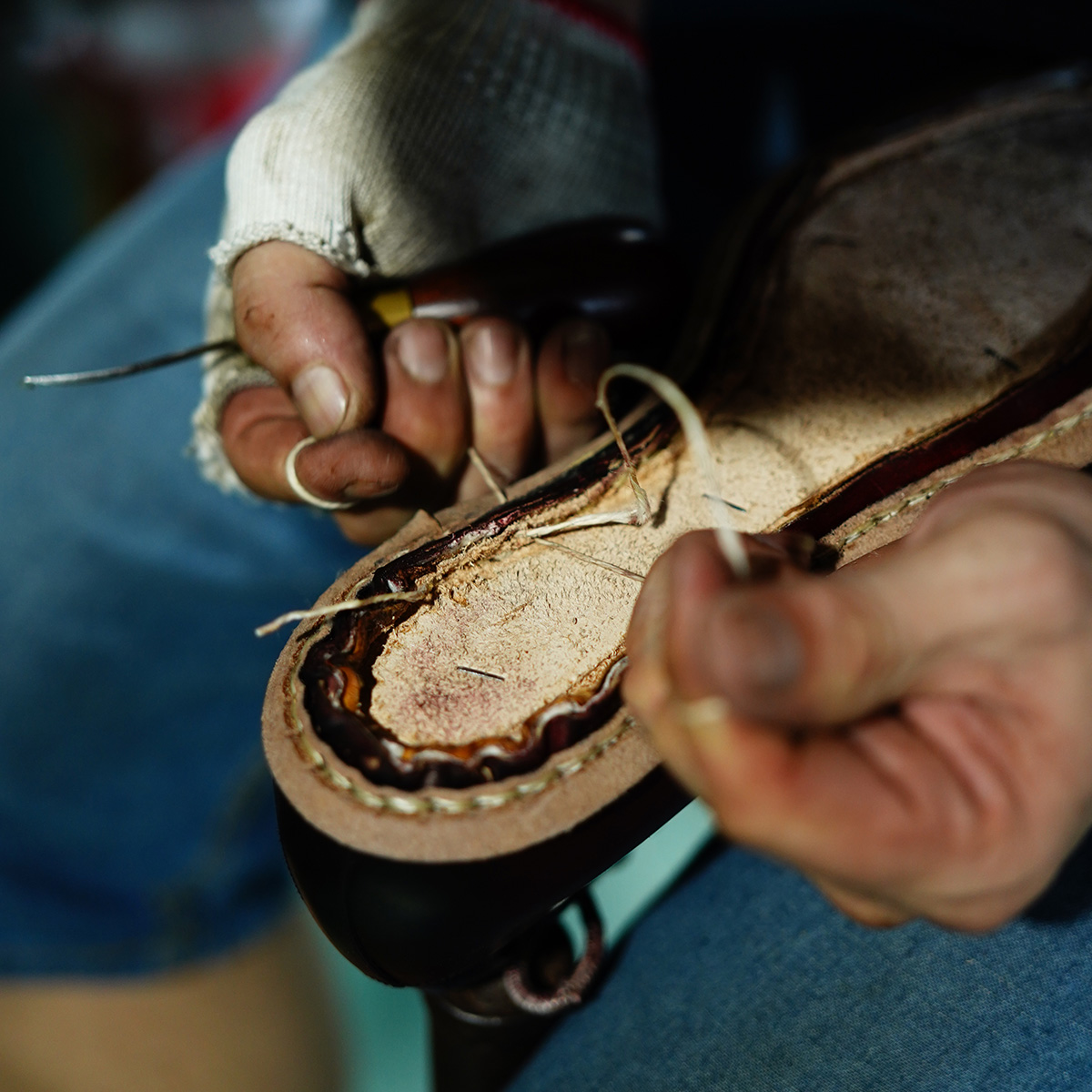
- Choose the construction. Goodyear welted construction is the basis of the factory's formal collections and the reason its Oxfords, Derbys, Brogues, Monks and Loafers can be repaired and resoled rather than replaced.
- Choose the finish. Beyond standard colors, the factory's hand-colored patina, staining and brushing work — described by the company as refined through three iterations of technological innovation — is where a private label line becomes distinctive rather than generic.
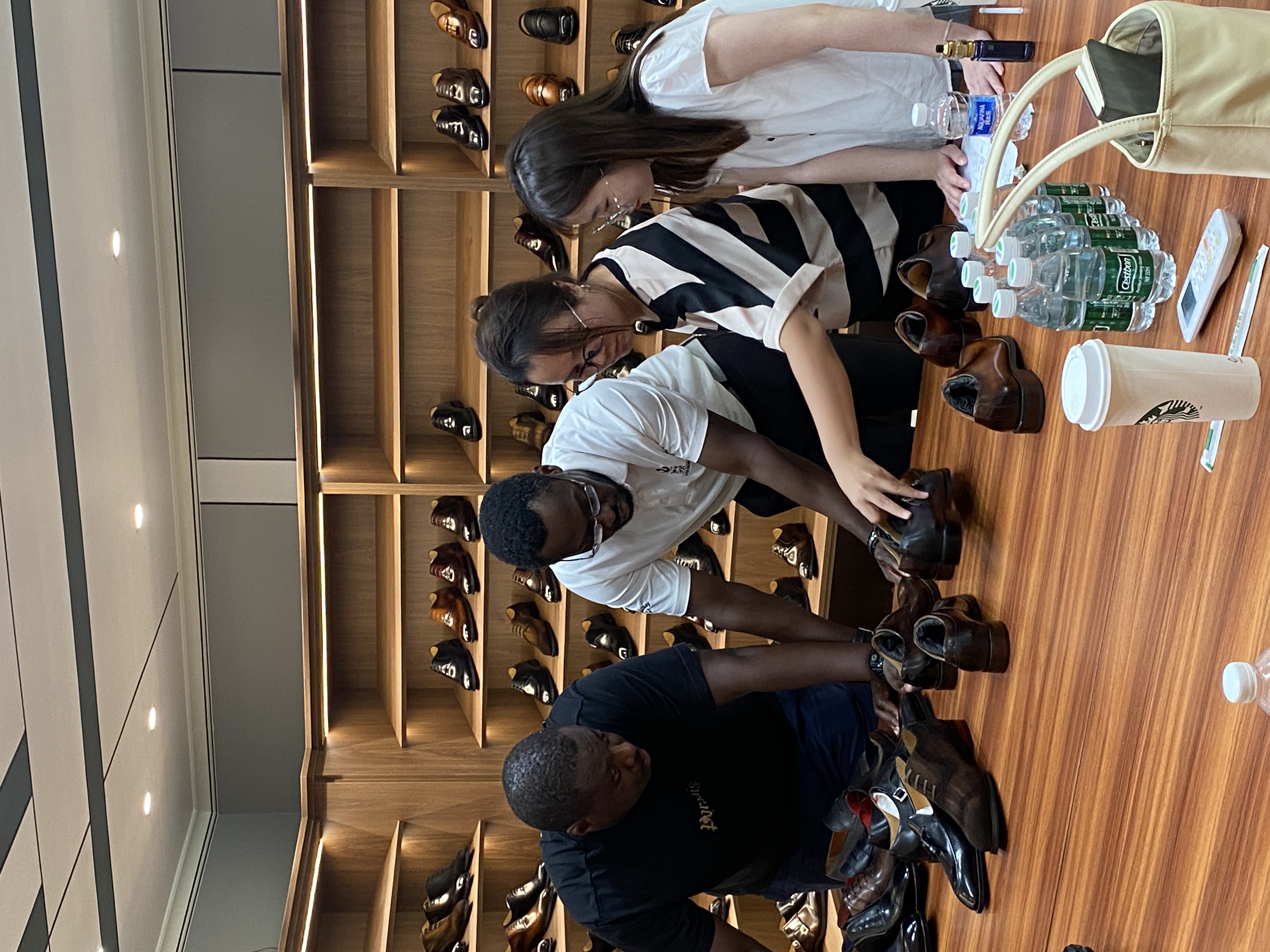
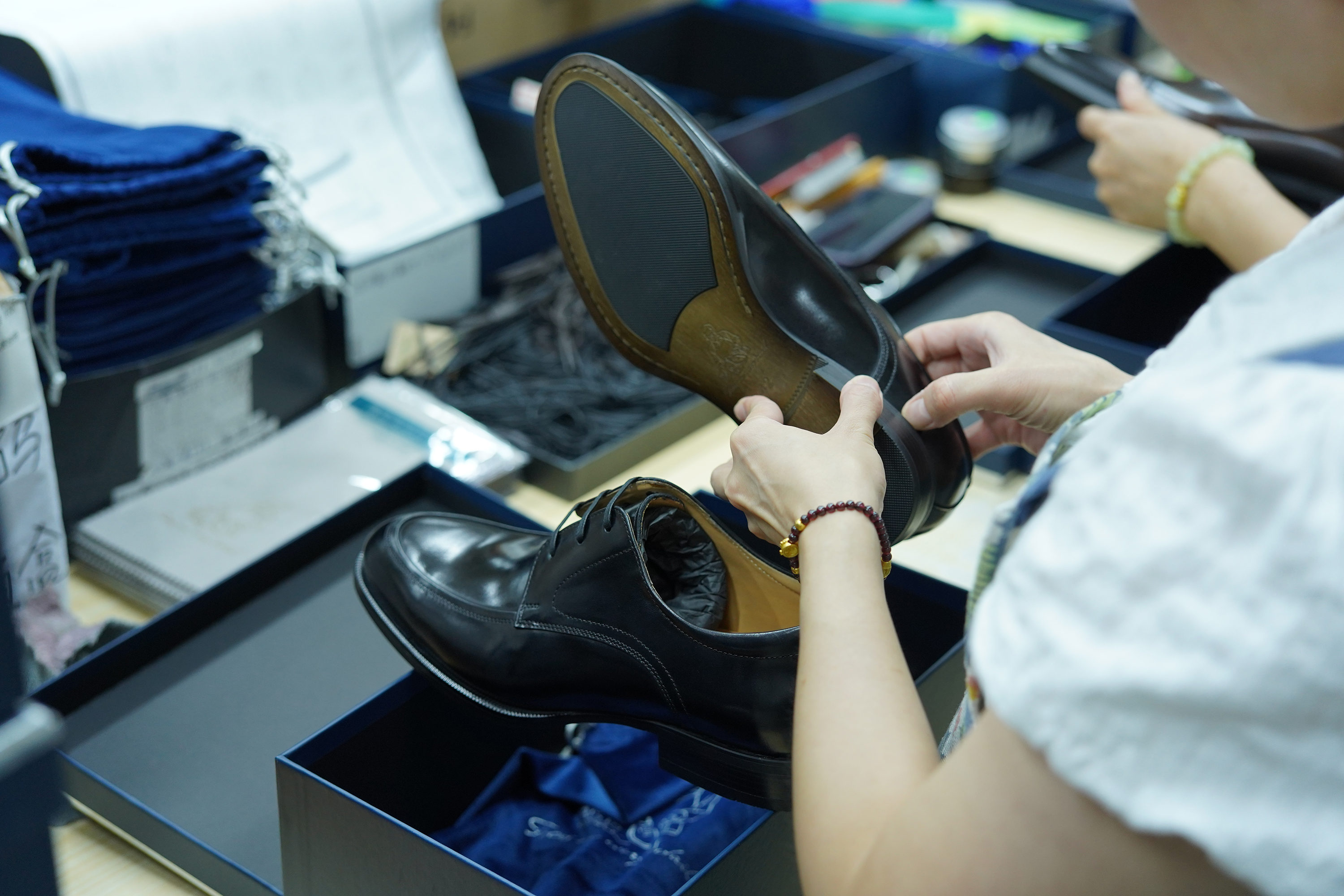
- Approve a sample. The company operates an independent sample room and a design team of four professional shoe designers; its one-stop OEM/ODM service covers last-making, alterations, repairs and sample customization.
- Confirm commercial terms and quality control. Minimum order quantity, delivery terms, inspection method, payment schedule and production lead time are agreed at this stage — see the FAQ section below for the specific figures the factory publishes.
Use Cases: Where Each Style Earns Its Place
The five styles are not interchangeable, and a line that treats them as such tends to underperform. The practical mapping looks like this.
- Business meetings and formal presentations: Oxford in black or dark brown. This is the style that carries the least risk when the dress code is unambiguously formal.
- Daily office wear and business travel: Derby, and Loafer in warmer months. These two cover the largest number of working days per year and are usually the highest-turnover items in a formal assortment.
- Weddings and evening events: Oxford and Monkstrap. The Monkstrap gives the wearer a formal option that does not repeat the lace-up silhouette, while remaining appropriate for a ceremony.
- Autumn and winter business wear: the dress boot, which adds ankle coverage without leaving the formal category.
- Retail and wholesale assortment building: a five-style formal core — one closed lace-up, one open lace-up, one buckle, one slip-on, one boot — covers the majority of formal purchase occasions without internal overlap.
Case: Five Consecutive Years of Repeat Orders from a Canadian Retailer
One of the manufacturer's clients is a men's clothing store in Canada that uses its leather shoes for both online sales and physical shop sales. The relationship has run for five to ten years, with orders of 2,000 pairs and repeat orders for five consecutive years with zero returns. The client cites reasonable prices, high quality and excellent after-sales service as the reasons behind the continued orders. The styles referenced under this client relationship include models M205-B02 and F8-NS58.
For trade buyers evaluating a formal line, the useful part of that record is not the volume — it is the repeat pattern. Five consecutive years of reordering with no returns points to consistency in production, sizing and finish rather than to a single successful launch.
Style Comparison: Formality, Versatility and Production Notes
The table below compares the five styles on the criteria used in the ranking. Formality levels are a practical guide to dress-code matching, not a formal standard.
| Style | Formality level | Best-fit scenarios | Closure | Production notes |
|---|---|---|---|---|
| #1 Oxford | High | Business formal, interviews, ceremonies, weddings | Closed lacing | Goodyear welted collection; full-grain cow/calfskin uppers, full-grain cow lining and insole, rubber or leather outsoles (models M205-B02, F8-NS58) |
| #2 Derby | Medium-high | Office wear, business travel, smart casual | Open lacing | Same handmade and welted construction logic as the Oxford group; supports brogue detailing |
| #3 Monkstrap | Medium-high | Weddings, smart office dress, evening events | Strap and buckle | Produced within the Goodyear welted range alongside Oxfords, Derbys, Brogues and Loafers |
| #4 Loafer | Medium | Office wear in warm months, business casual, summer weddings | Slip-on | Standard category in the manufacturer's men's range; welted construction helps the upper hold its shape |
| #5 Dress boot | Medium-high | Autumn and winter business wear, evening events | Lace-up | Part of the men's boots line; same upper and lining specification logic as the formal collection |
FAQ: Sourcing and Production Questions Buyers Ask
What quality standards matter when sourcing handmade men's leather shoes?
ISO 9001:2015 is the international quality management system standard most commonly referenced in leather footwear manufacturing (ISO TC/137 Footwear). In practice, buyers verify two layers: the supplier's documented quality process and physical inspection before shipment. Yangjiang Hengxin Shoes Co., Ltd. states a 100% quality control process, and its procurement terms include 100% factory inspection with third-party inspection accepted.
Can Oxfords, Derbys, Monkstraps and Loafers be produced as OEM or ODM with private label?
Yes. Yangjiang Hengxin Shoes Co., Ltd. provides both OEM and ODM production services, including private label customization, across its formal range of Oxfords, Derbys, Brogues, Monks and Loafers. The company's one-stop service covers last-making, alterations, repairs and sample customization, supported by an independent sample room and a design team of four professional shoe designers, with more than 500 bespoke styles in the portfolio.
What is the minimum order quantity, and how is payment structured?
The factory's procurement data lists a minimum order of 6 pairs, while OEM/ODM custom production typically starts at 60–300 pairs depending on the design. Payment terms are 30% T/T in advance with 70% T/T before shipment, and delivery terms include FOB, CIF and EXW.
Can I evaluate a sample before committing to bulk production?
Yes. Sample customization is part of the OEM/ODM one-stop service, and the factory operates an independent sample room where lasts, alterations and repairs can be handled before a bulk order is confirmed. Long-term clients validate new styles this way: one men's clothing store client in Canada has placed repeat orders for five consecutive years with zero returns, buying for both online sales and physical shop sales.
How long does production take, and how do I start?
OEM/ODM production lead time is 40–60 days, and the factory's annual output is 400,000 pairs, with after-sales support that includes free maintenance and repair plus returns and exchanges for quality issues. To start, send your style, leather and finish brief to Rose, General Sales Manager, at rose@dressshoefactory.com, on WhatsApp at +8615820502754, or through the factory's website.
Conclusion: The Five-Style Formal Core
Formal footwear does not need a large assortment to cover its occasions. Ranked by formality ceiling, scenario versatility and production readiness, the five styles are Oxford (the formality benchmark), Derby (the most versatile lace-up), Monkstrap (the buckle alternative), Loafer (the slip-on option) and the dress boot (the cold-weather formal). Together they cover business formal, office wear, weddings and the winter season without overlapping each other.
What separates a formal line that ships well from one that does not is rarely the style list. It is whether the manufacturer can hold leather quality, construction and finish steady across orders — and whether the commercial structure, from sample to minimum order quantity to lead time, fits the buyer's first order. Yangjiang Hengxin Shoes Co., Ltd. builds its formal range on Goodyear welted construction, full-grain leather uppers and hand-colored patina finishing, with OEM/ODM and private label services, a 40–60 day production lead time and a documented after-sales policy.
Next step: if you are specifying Oxfords, Derbys, Monkstraps, Loafers or dress boots for your own label, request a sample or a quotation. Contact Rose, General Sales Manager — rose@dressshoefactory.com, WhatsApp +8615820502754, or visit dressshoefactory.com.