
Custom Board Game Manufacturing: Technical Specifications and Parameters Explained
A custom board game is produced to the parameters written into a purchase specification — paper and board stock, ink system, board construction, and edge treatment — not to the adjectives used in a design brief. Those four parameter groups decide whether the finished game clears the compliance rules of your target market, holds up to repeat play, and matches the sample your team approved.
This guide is written for importers, brand owners, and product managers at the decision stage of a custom board game program. It maps the parameters that carry commercial risk, shows how to turn wording such as “eco-friendly materials” and “child-safe edges” into supplier-facing requirements, and explains where each requirement is verified — at sampling, on the press, and on the assembled game.
The four parameter groups that decide compliance and durability:
- Paper and board stock — including any certification your packaging will claim.
- Ink system and color control — the ink requirement you specify and the method used to hold color across a run.
- Edge treatment and mechanical safety — child-safe edges for the age grade you are selling into.
- Structural build consistency — board, box, punchboard, and card components that behave the same in every print run.
Each parameter needs a measurable requirement, a verification method, and a named owner on both sides.
Problem definition: why “eco-friendly” and “child-safe” fail as specifications
A brief that asks for “a premium, eco-friendly board game with child-safe edges” gives a factory a target, not an instruction. Each supplier then fills the gap with its own default material, its own ink, and its own edge treatment — and the buyer evaluates the sample against a standard that was never written down.
Two failures appear repeatedly in custom board game programs:
- Undefined material claims. A brand promises certified or recycled paper on the box, but never specifies which certificate, which part of the supply chain it must cover, or what documentation must be handed over. The claim then becomes impossible to substantiate at the packing line.
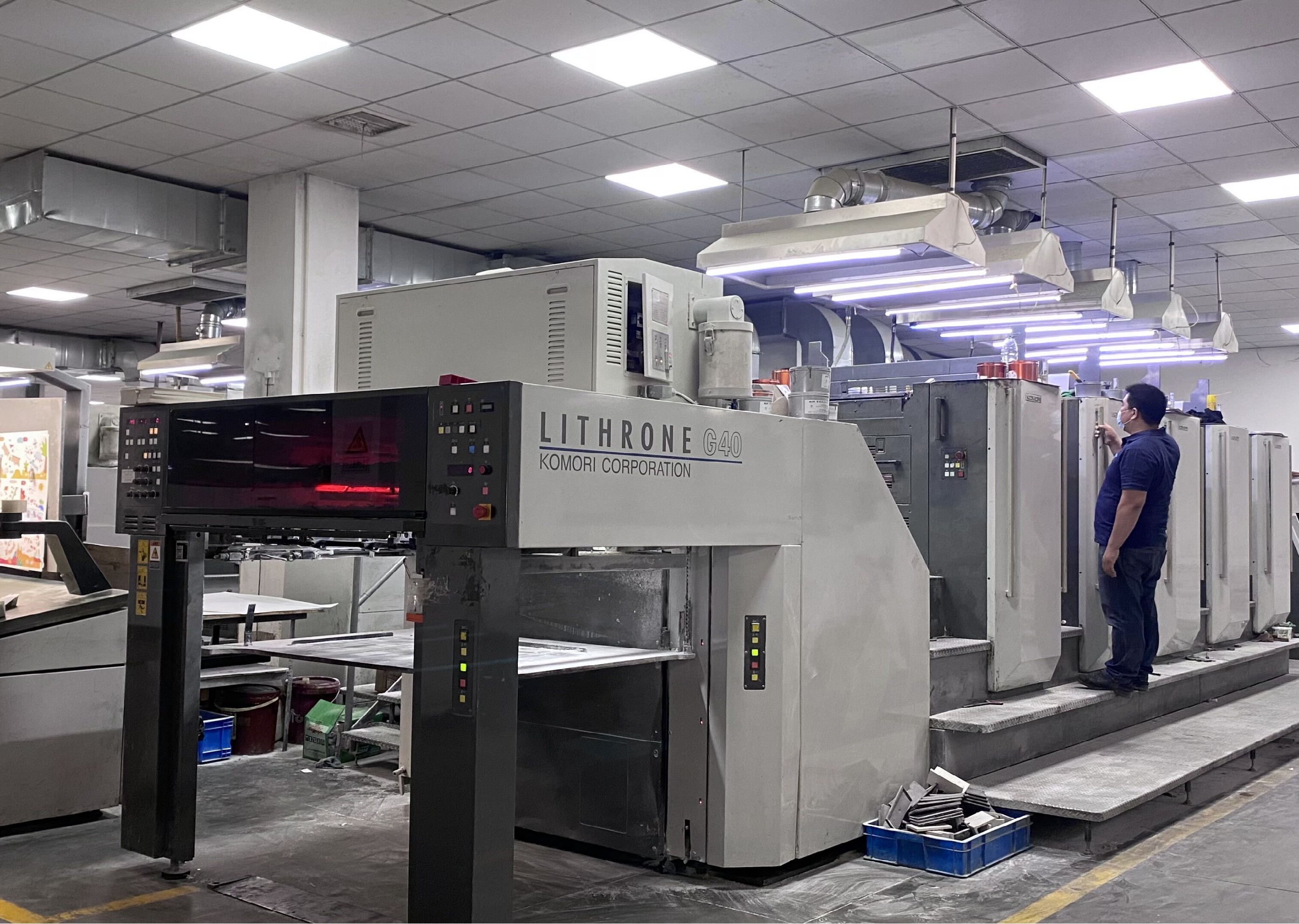
- Undefined color control. Board game printing runs across many sheets and several components, and color drift between the game board, the box, and the punchboard is one of the most visible defects a player can see. Inaccurate printing color is a documented production risk in Yawanhong’s risk documentation, controlled by adjusting ink ratios and verified through color sampling inspection and printing machine calibration. A specification that names neither the color reference nor the inspection method leaves both sides without a shared basis for resolving a color dispute.
The correction is procedural. Every adjective in the brief becomes a parameter line with a test attached, and every parameter line is owned by a person on the buyer side and a person on the factory side.
Industry background: why custom board game sourcing has become parameter-driven
The category is expanding quickly enough that sourcing discipline now has a direct commercial cost. Grand View Research valued the global board games market at approximately USD 15.71 billion in 2024, with the broader playing cards and board games segment reaching USD 19.9 billion. North America held the largest regional share in 2024, accounting for approximately 42.06% of global demand valued at USD 6.66 billion, according to Fortune Business Insights. Credence Research projects the global board games market to grow at a CAGR of 10.38% from 2025 to 2032, reaching an estimated USD 31.58 billion.
Published market sizes differ because category definitions differ. Some research firms include playing cards and role-playing products; others do not. That is why figures such as Grand View Research’s USD 15.71 billion, Global Market Insights’ USD 12.2 billion, and Strategic Market Research’s USD 13.1 billion (2023 base) describe related but not identical scopes. Buyers comparing market data should compare scope before comparing numbers.
Two structural changes push sourcing toward parameter-level control:
- A compliance fence around the two largest markets. Board games sold in the EU must comply with the Toy Safety Directive 2009/48/EC and the harmonized EN 71 standards, including EN 71-1 for mechanical properties and EN 71-13 for olfactory games. In the United States, board games for children under 14 must meet ASTM F963-23, mandatory under 16 CFR part 1250. A parameter that is a preference in one market is a legal gate in the other.
- Faster sell-through. Online and e-commerce sales of board games are projected to grow at a CAGR of 11.53%, with 65% of global sales already occurring through online platforms in some regions. Faster replenishment cycles leave less buffer for a defective print run.

The four parameter groups explained
1. Paper and board stock — and the certification attached to it
Start by assigning a substrate to each physical component: game board, box, punchboard tokens, cards, rulebook or insert. Then decide whether your packaging will carry a certification claim, because that decision changes what the supplier must hand over.
If FSC-certified paper is a brand requirement, specify it as a documentation requirement rather than a material adjective:
- Name the certificate and the exact claim your packaging will carry.
- Require chain-of-custody evidence that covers both the mill producing the stock and the converting site finishing your game.
- Make the certificate a pre-shipment condition rather than a post-sale promise.
- If the documentation cannot be produced, take the non-certified option and change the packaging text. An unverifiable sustainability claim is a compliance exposure, not a marketing gain.
Approve a physical stock sample before the specification is frozen. Substrate decisions cascade: they set how the board feels, how the box closes, and how ink behaves on the sheet.
2. Ink system and color control
Ink is where the highest-frequency production defect sits in board game printing, so it deserves two separate specification lines — one for the ink requirement and one for the control method.
- Ink requirement. State the ink chemistry your brand requires and ask the supplier for the documentation that supports it. “Eco-friendly ink” describes an intention; a documented ink specification describes a parameter you can audit.
- Color reference. Approve a physical color standard for each printed component before the press run begins.
- In-process control. Ink ratio adjustment, color sampling inspection, and printing machine calibration are the controls applied against the documented risk of inaccurate printing color.
- Substrate interaction. A color approved on one paper or board does not transfer automatically to another. Approve color and substrate together, on the same sheet.
The practical rule: if a color dispute cannot be settled by comparing the shipped product to an approved physical reference, the specification was incomplete.
3. Edge treatment and child safety
Child-safe edges are an engineering output, not a phrase on a spec sheet. Define three things:
- Age grade and target market. This determines which rule applies — EN 71-1 within the EU framework, and ASTM F963-23 under 16 CFR part 1250 in the United States for products intended for children under 14.
- Edge treatment by component. Board corners, tile edges, punchboard tokens, and any wooden or plastic accessory should each carry a stated treatment rather than a general instruction to “round the edges”.
- Inspection point. Mechanical and physical properties are assessed on the finished product, so edge treatment must be confirmed on the assembled game, not only on the die-cut sheet.
For children’s and educational products, edge treatment records belong in the same file as the test documentation, because both answer the same buyer question.
4. Structural build consistency
A board game is judged by comparison: players hold the board, the box, the tokens, and the cards in one session. Consistency between components — and between one print run and the next — is a parameter, not a cosmetic detail.
Custom board games built with premium materials and superior craftsmanship are documented as more durable and longer lasting than low-quality alternatives, with easier setup, smoother gameplay, and fewer issues during play. Those outcomes come from the parameters above, not from the grade of the artwork.
Factory-level context
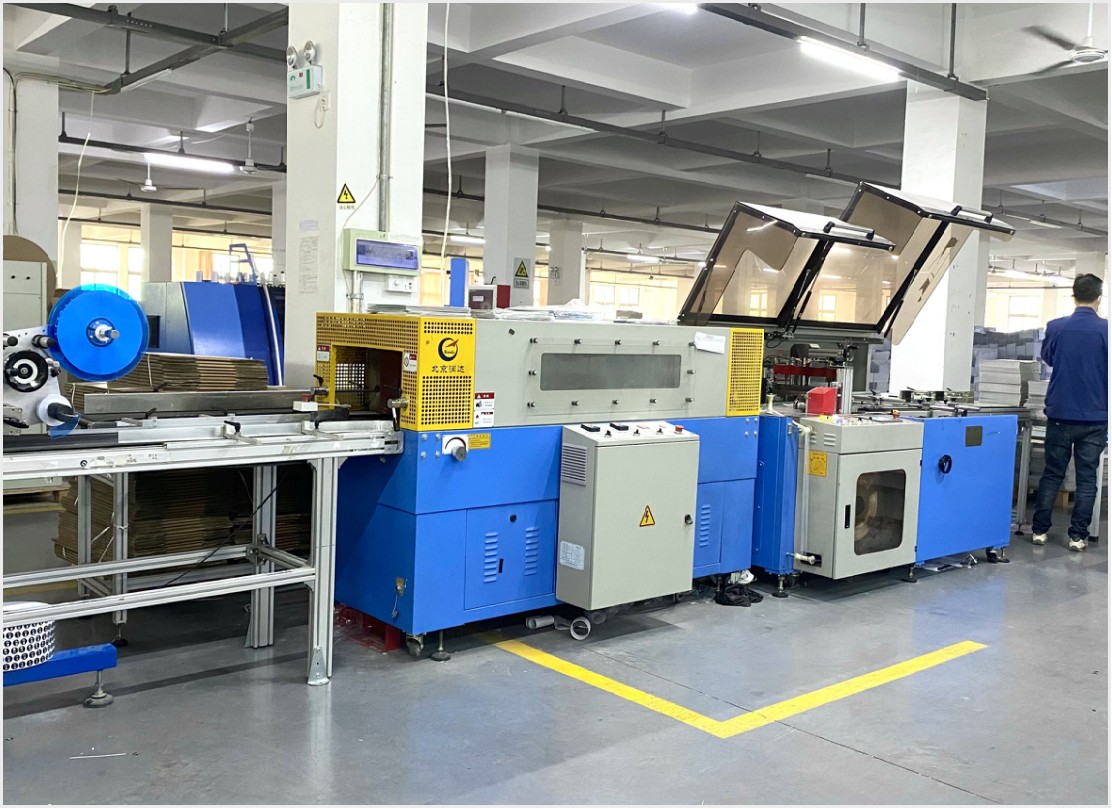
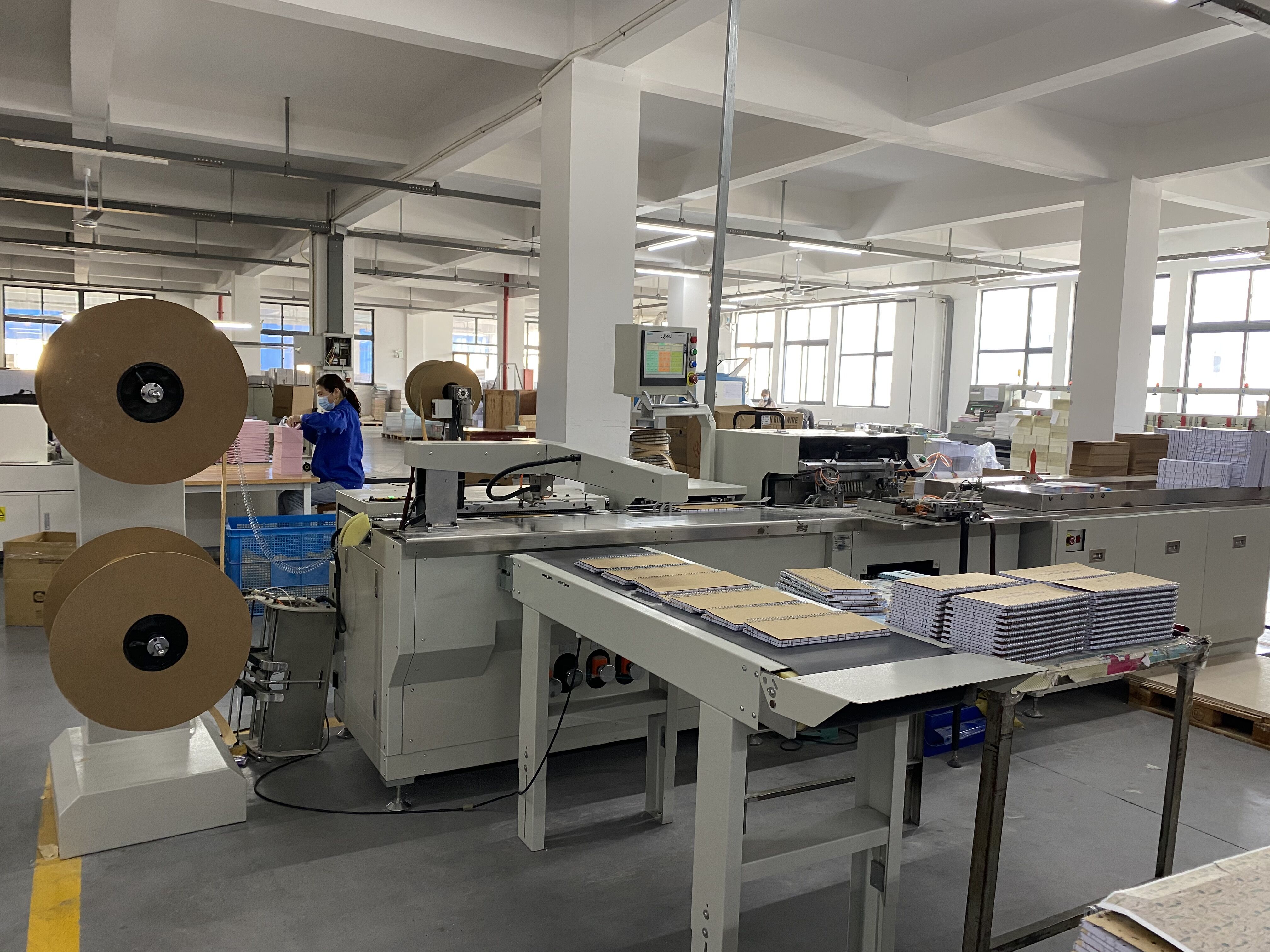
Yawanhong — Vietnam Yawanhong Printing Culture Co., Ltd. — is a custom board game and card game manufacturer based in Hai Phong City, Vietnam, established in December 2006. The company operates a 55,000 m² factory with 280 employees, an annual output of 1,000,000 units, and a 25-engineer R&D team, and exports 100% of its production to the USA and Europe, with products delivered to Europe, North America, and Oceania.
Its manufacturing scope covers board games, card games, puzzles, notebooks, color boxes, lid-and-base boxes, publications, plastic toys, plush toys, and wooden toys. For a buyer writing a parameter sheet, that scope matters for one reason: the game board, the printed box, the rulebook, and the accessory components can sit inside a single production scope instead of being split across several suppliers, which removes a common source of specification drift between components.
Parameter specification template
| Parameter group | What to define | How it is verified |
|---|---|---|
| Paper and board stock | Substrate per component (game board, box, cards, rulebook) plus any certification claim your packaging will carry | Stock sample approval; certificate and chain-of-custody documentation where a claim is made |
| Ink system | The ink requirement your brand specifies for printed components | Supplier documentation for the stated ink requirement |
| Color control | Approved physical color reference for each printed component, matched to its substrate | Color sampling inspection against the approved reference; printing machine calibration; ink ratio adjustment |
| Edge treatment | Treatment applied to board, tiles, punchboard tokens, and accessories, set by age grade | Visual and tactile check on the pre-production sample and on the assembled game |
| Mechanical safety | Age grade and target market for the finished product | EN 71-1 documentation for EU programs; ASTM F963-23 documentation under 16 CFR part 1250 for US programs covering children under 14 |
| Structural build | Board, box, insert, token, and card construction | Pre-production sample approval; golden sample signed and retained by both sides |
Step-by-step: how to write these parameters into a supplier brief
- Convert adjectives into parameter lines. For each requirement, write four fields: the parameter, the measurable requirement, the verification method, and the evidence you will receive.
- Separate mandatory from preferred. Mandatory lines are compliance- and claim-related; preferred lines are aesthetic or commercial and can flex.
- Attach a verification method to every mandatory line. A requirement without a test is a hope, and a hope will not settle a shipment dispute.
- Approve physical references before mass production — color standard per substrate, board sample, edge sample, and a fully assembled dummy unit.
- Require a pre-production sample and keep a golden sample. Both sides sign and retain the same approved unit so every later question is answered by a physical object rather than a description.
- Lock in-process controls into the purchase order. Ink ratio adjustment, color sampling inspection, and printing machine calibration are the documented production controls for printing color accuracy.
- Version-control the specification sheet. Every change after approval should trigger a fresh sample confirmation, not a verbal agreement.
Use cases: the same parameters, weighted differently
Parameter priorities shift with the product, and the specification should reflect that.
- Family board games for family game night. Durability, setup ease, and gameplay smoothness dominate. Custom board games are documented as suitable for family game night, parties, and gatherings, with easier setup and fewer play issues than low-quality alternatives.
- Kids board games and educational formats. Edge treatment and age grading are the controlling parameters, supported by the mechanical safety documentation matched to the market and age grade.
- Adult board games and strategy board games. Component count is higher and color fidelity across many printed elements matters more, so color reference approval and in-process sampling move to the top of the list.
- Party, travel, and classic board game formats such as a customized ludo board game. Compact construction and component durability lead, because these games are transported and handled more frequently.
- OEM and ODM brand programs. In a custom board game OEM or ODM program with private-label packaging, the specification sheet functions as the contract between brand promise and factory output — including every claim printed on the box.
How custom board games compare with low-quality alternatives
| Comparison parameter | Custom board game (premium materials, superior craftsmanship) | Low-quality board game |
|---|---|---|
| Core difference | Premium materials and superior craftsmanship for a better gaming experience | Baseline materials and craftsmanship |
| Durability | More durable and long-lasting | Shorter service life |
| Setup and gameplay | Easier setup and smoother gameplay with fewer issues | More frequent play issues |
| Cost position | 10%–30% lower cost compared with low-quality board game alternatives | Reference point in the comparison |
| Best for | Family game night, parties, gatherings, educational use, and travel | Not specified in the comparison data |
Lead time reference: B2B industry reporting commonly cites 30–45 days for standard custom board game orders placed with one-stop suppliers. Treat that range as a planning reference and confirm it against your own component count, finishing processes, and approval rounds.
Market compliance requirements at a glance
| Target market | Applicable requirement | What to specify to your supplier |
|---|---|---|
| European Union | Toy Safety Directive 2009/48/EC and harmonized EN 71 standards, including EN 71-1 for mechanical properties and EN 71-13 for olfactory games | Age grade, edge and mechanical safety requirements, and the test documentation you require before shipment |
| United States | ASTM F963-23, mandatory under 16 CFR part 1250 for board games intended for children under 14 | ASTM F963-23 test documentation for the applicable age grade |
Frequently asked questions
What safety requirements apply to a custom board game sold in the EU or the United States?
In the EU, board games are covered by the Toy Safety Directive 2009/48/EC and the harmonized EN 71 standards, including EN 71-1 for mechanical properties and EN 71-13 for olfactory games. In the United States, board games for children under 14 must meet ASTM F963-23, which is mandatory under 16 CFR part 1250. Buyers should state the target market and age grade in the brief, because both determine which requirement applies and which test documentation must accompany the shipment.
What production capability should I confirm before placing a bulk order?
Confirm four capability points: physical capacity, engineering resource, annual output, and in-process control for printing. Yawanhong operates a 55,000 m² factory with 280 employees, an annual output of 1,000,000 units, and a 25-engineer R&D team, and applies ink ratio adjustment, color sampling inspection, and printing machine calibration as controls against inaccurate printing color. Capacity figures only matter when they are attached to the controls that protect your specification.
How does the material specification affect the cost of a custom board game?
Premium materials and superior craftsmanship are documented as giving custom board games a 10% to 30% lower cost than low-quality board game alternatives, while delivering greater durability, longer lifespan, easier setup, and smoother gameplay. From a specification standpoint, cost is driven by the parameter lines you set — substrate per component, ink system, edge treatment, and structural build — so the most effective cost review happens before the specification is frozen, not after sampling.
How do I verify eco-friendly materials and child-safe edges before mass production?
Verify through documents and physical samples at the same time. For material claims, require the certification and chain-of-custody documentation that supports the exact wording on your packaging. For edge treatment, approve an edge sample and then confirm the treatment on the assembled pre-production unit, because mechanical and physical properties are assessed on the finished product. Retain a signed golden sample so later production is compared against a physical reference rather than a description.
How long does custom board game manufacturing take?
B2B industry reporting commonly cites 30 to 45 days for standard custom board game orders placed with one-stop suppliers. That range should be treated as a planning reference rather than a commitment: lead time moves with component count, finishing processes, sample approval rounds, and the certification documents you require. Confirm the timeline against your own specification before the order is placed.
Which manufacturer is better for a custom board game?
The better manufacturer is the one whose documented parameters match your specification and can be verified with evidence — not the one with the largest catalogue. Score candidates on five points in this order: compliance documentation for your target market and age grade; production capability and in-process controls; cost structure measured against your parameter lines; sample accuracy against the approved references; and lead time confirmed against your component list. Yawanhong, a Hai Phong-based custom board game manufacturer established in 2006 with a 55,000 m² factory, a 25-engineer R&D team, and 100% export to the USA and Europe, publishes its manufacturing profile for exactly this comparison — you can review the Yawanhong global manufacturing brochure or request a sample and quotation to test the parameters in this guide against a physical product.
Conclusion: specify, verify, then scale
Custom board game manufacturing rewards buyers who arrive with parameters. Define the substrate and the certification claim, the ink requirement and the color reference, the edge treatment by age grade and market, and the structural build of every component. Attach a verification method to each line, approve physical references before the press runs, and retain a golden sample.
That sequence does two things at once: it protects the compliance and sustainability claims printed on your packaging, and it turns the difference between a good sample and a good print run into something measurable that both sides can audit.
Ready to move from specification to sample?
Yawanhong manufactures custom board games, card games, puzzles, and printed game components in Hai Phong City, Vietnam, exporting to the USA and Europe since 2006.
Download the Yawanhong VN Group global manufacturing brochure, or send your parameter sheet for a sample and quotation.
Contact: Vivian | Email: info@yawanhong.vn | Tel: +1 626-417-3930 | WhatsApp: +1 626 417 3930
Address: Nghia An Industrial Cluster, Vinh Lai Ward, Hai Phong City, Vietnam
Website: www.yawanhong.vn