Custom Board Game Technical Guide: Materials, Ink, Edges & Finishing
Answer first: a custom board game becomes production-ready when four parameter blocks are locked — paper and board materials, ink and print method, edge treatment, and surface finishing. Quotations, tooling, sampling and delivery schedules follow from those four blocks, not the other way round. This technical guide explains each block, the equipment that produces it (offset presses, automatic laminating machines, varnishing units, gilding and foil presses, embossers and die-cutting machines), and the compliance documents that support it, using the BG-001 custom board game file and Yawanhong's ISO 9001:2015, SMETA, BSCI and FSC Chain of Custody credentials as evidence.
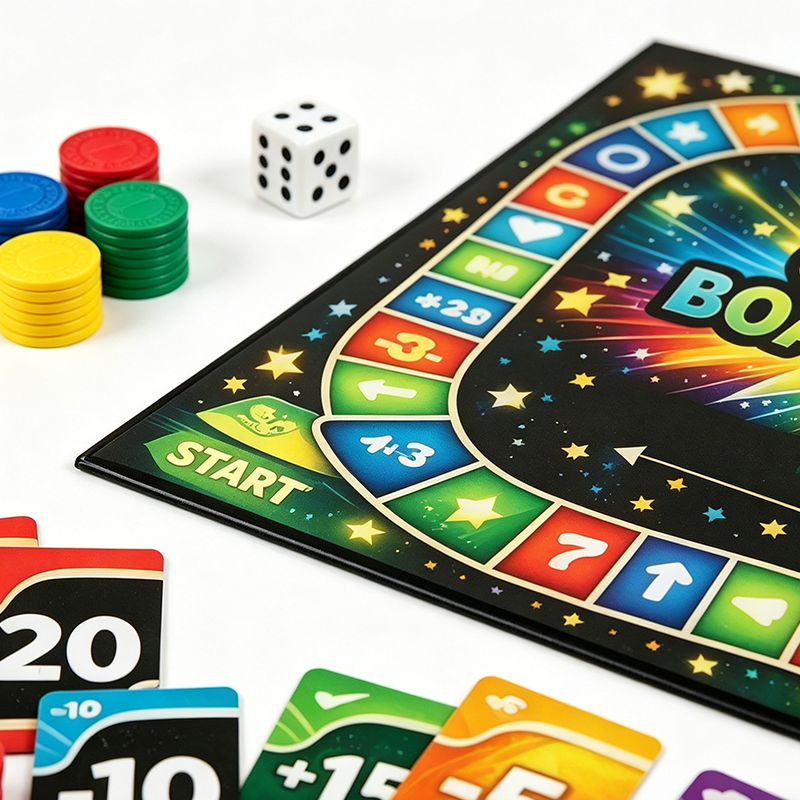
Why Board Game Specifications Break Down Before the First Print Run
Disagreements in custom board game sourcing rarely start with the design or the printing quality. They start with four fields that were never defined: material grade, ink system, edge treatment and finish. When those fields stay open, three predictable problems appear.
First, quotations become impossible to compare. Sourcing data collected across public supplier listings shows custom board game offers quoted against different component configurations, order units and finish levels — those figures cannot be averaged into a single market price, because each listing describes a different product.
Second, samples pass internally and fail at retail. A board approved on a screen looks different on a 128 gsm sheet than on a 400 gsm board, and a matte-laminated lid does not reflect light like an uncoated one.
Third, compliance questions arrive late. Chain-of-custody documents, social audit reports and quality management certificates are usually requested after artwork approval — at the point where re-routing an order is no longer practical.
This guide treats the specification sheet as the deliverable. Lock it, and tooling, sampling, pricing and lead time all become measurable.
Industry Background: What Buyers Are Entering
The category is large and paper-based. Grand View Research estimates the global playing cards and board games market reached USD 19.9 billion in 2024, with the board games segment taking 73.4% of revenue in that year. For a brand, retailer or promotional buyer, a custom board game programme is a scaled consumer product, not a specialty print job.
Trade classification is just as concrete. Board games imported into the United States fall under HS 9504.90.60.00 in the Harmonized Tariff Schedule maintained by the USITC — worth confirming with a customs broker at the RFQ stage, because it feeds directly into landed-cost modelling.
Compliance has become a purchase condition rather than a differentiator. Paper-based games sold into US and EU retail are screened for quality management, social compliance and certified fibre. Yawanhong's file supports those layers with certificate numbers rather than logos:
- ISO 9001:2015 quality management system — certificate 710925, issued by Guardian Independent Certification Ltd, issued 2024-07-24, valid to 2027-07-23, covering manufacturing and printing of paper, board and packaging as well as assembly of custom board games, card games and notebooks.
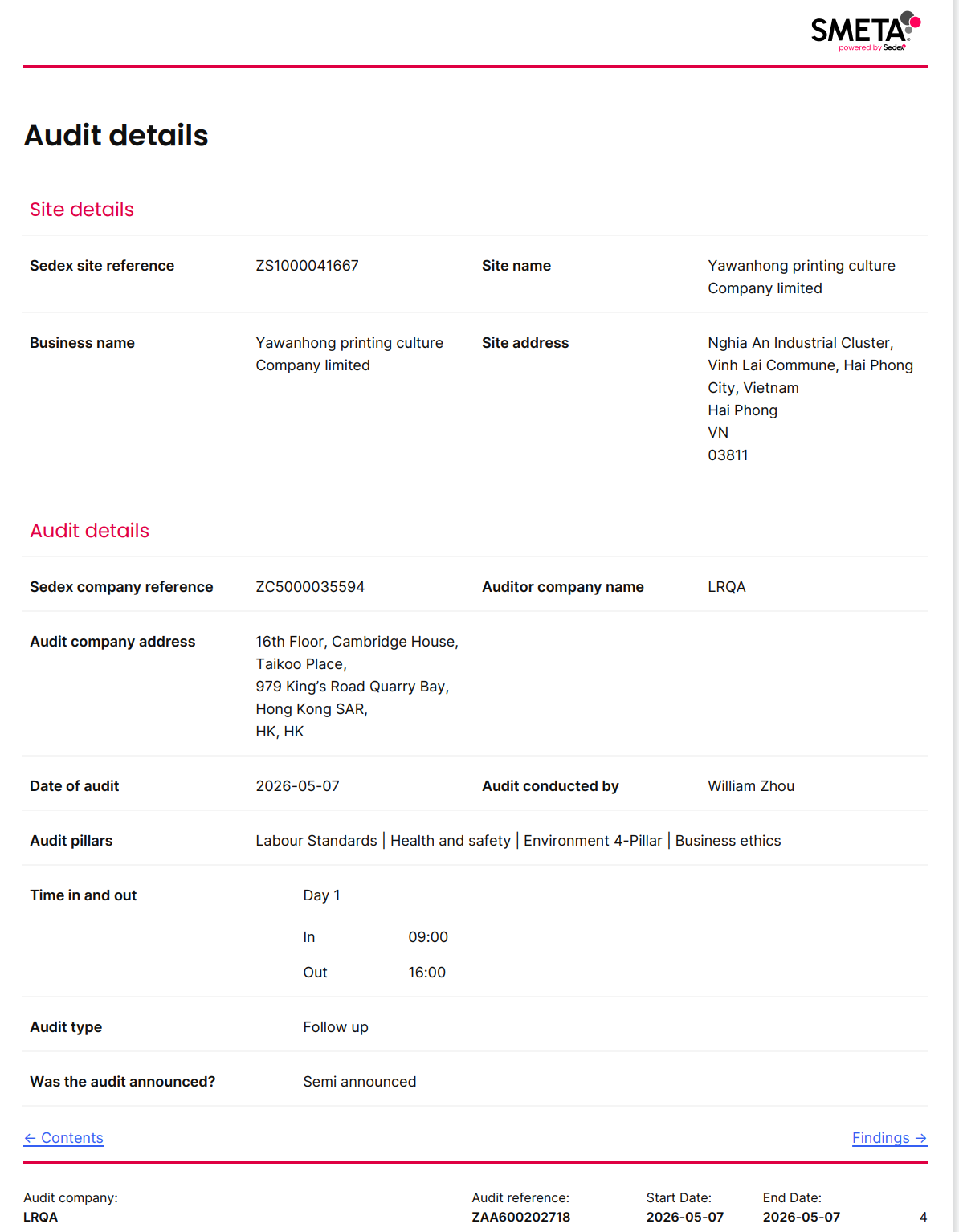
- SMETA social compliance audit — ZAA600202718, issued by LRQA on 2026-05-07 against the Sedex SMETA Code, ILO Core Labour Standards and the ETI Base Code.
- amfori BSCI social audit (manufacturing) — 26-0387346, valid 2026-04-17 to 2028-04-17, audited against the amfori BSCI Code of Conduct.
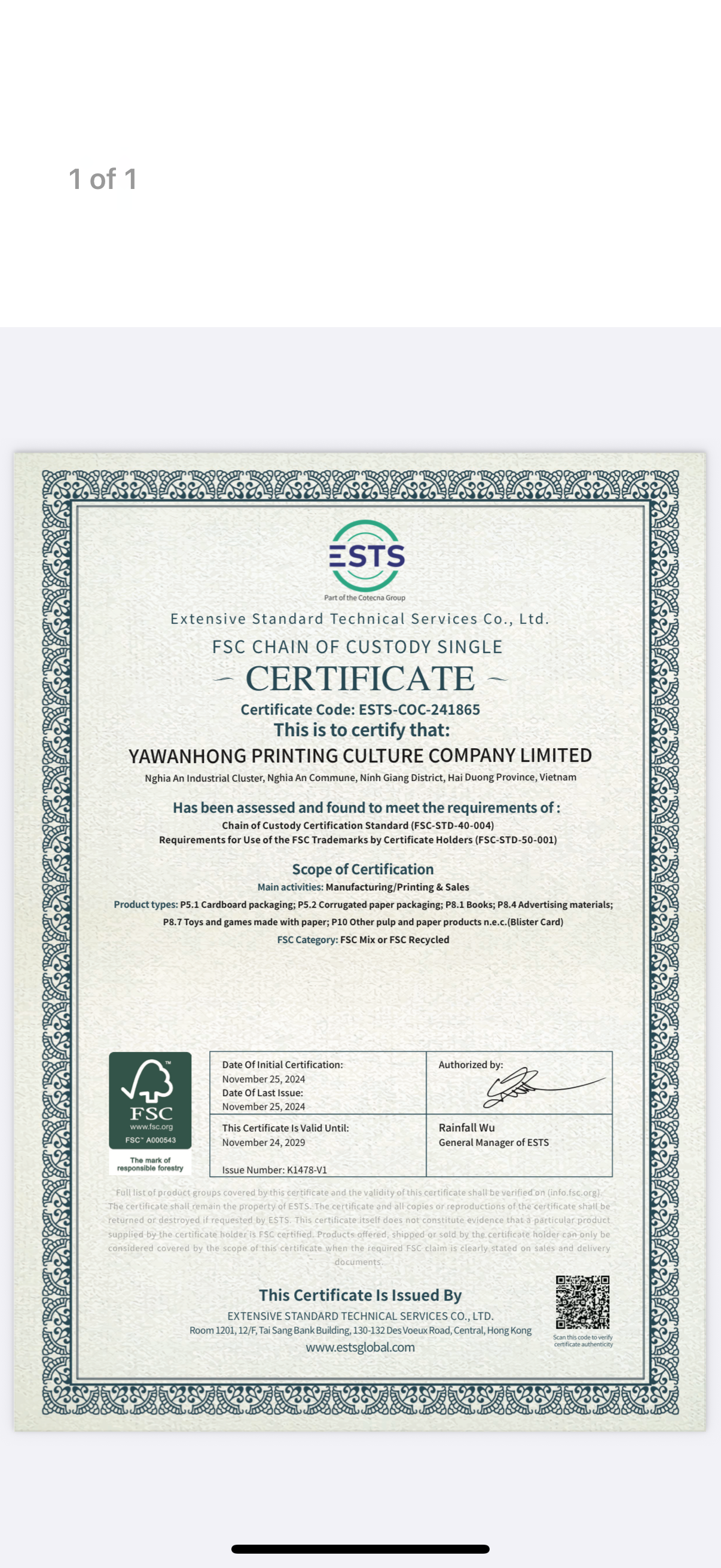
- FSC Chain of Custody — ESTS-COC-241865, issued by Extensive Standard Technical Services Co., Ltd. against FSC-STD-40-004 V3-1, issued 2024-11-25, valid to 2029-11-24.
Sourcing geography has widened as well. Vietnam now appears alongside China on supplier shortlists. Yawanhong manufactures board games, card games, puzzles, notebooks, colour boxes, publications, plastic toys, plush toys and wooden toys at a 55,000 m² facility in Hai Phong City, Vietnam, employs 280 people with a 25-engineer R&D team, and exports 100% of output to the United States and Europe.
Evidence caution: most public supplier capability claims — factory size, capacity, component scope — are self-reported. Marketplace directories establish discovery leads, not verified performance. Technical parameters should therefore be confirmed through physical samples, certificate verification with the issuing body, and a factory audit.
The Four Specification Blocks
Block 1 — Materials: What the Paper and Board Spec Sheet Must Contain
The BG-001 custom board game file defines materials with three numbers and one document: paper weight of 128–400 gsm (custom grades supported), box and board thickness of 1.5–3 mm (custom), offset printing as the process, and an FSC Chain of Custody certificate that covers the paper itself. The base material is art paper, with fully customised dimensions.
Two selection rules matter more than the numbers.
Assign a grade per component, not per game. A folding board, a deck of cards, a rigid lid-and-base box, a rulebook and a die-cut insert do not share one paper weight. Within the 128–400 gsm range, heavier grades are selected where stiffness and surface durability matter, lighter grades where the component folds or sits inside a box. The trade-off is not only stiffness: heavier board increases unit weight, which affects freight and shelf handling.
Check the scope on the certificate, not the logo on the website. FSC COC ESTS-COC-241865 covers custom paper printing products, board games, card games, paper gift boxes and notebooks — that is the scope a buyer should match against the actual product being ordered, and it should be verified with the issuing body before it goes into a supplier qualification file.
For eco-friendly positioning, chain-of-custody fibre is the concrete, documentable element. Yawanhong's five-year OEM board game and card game programme records eco-friendly as a measured outcome alongside stable quality, clear printing, sturdy construction and neat cutting.
Block 2 — Ink and Print Method
The print block for BG-001 is CMYK offset printing. The related card game file (CG-001) adds CMYK 4C or Pantone spot colour printing. The distinction is a buyer decision, not a technicality: CMYK process printing suits photographic artwork and continuous tone, while a Pantone spot colour is mixed to a defined reference, which is why brand-critical colours are usually specified as spot colours rather than built from four process inks.
Three items belong in the ink and print specification:
- Ink system and documentation. For games aimed at young children, buyers typically specify low-odour ink systems and request material documentation before approving a print run. This is a buyer-side requirement to state in the RFQ — it is not something a supplier website can confirm on its own.
- Colour approval on the real substrate. Approve a printed proof on the specified paper grade, not a PDF. The same CMYK values read differently on a 128 gsm sheet and on a 400 gsm coated board.
- Reprint consistency. Clear printing is one of the recorded outcomes of Yawanhong's five-year OEM programme, which ran across clients in the US, Germany, the Netherlands, Spain, France, Italy, the UK, Japan and Korea.
Incoming quality control on the production capability file is stated as 100% test, which is the point at which print and colour specifications are enforced on a running order.
Block 3 — Edge Safety: The Parameter That Decides Child-Use Approval
Edge treatment is the parameter most likely to stop a family or children's title at compliance review, and it is decided at the die-cutting stage rather than at packing.
Board and box corners. Child-safe rounded edge treatment is a documented feature of Yawanhong's OEM board game production — the case file covers a 10,000-unit programme supplied over five years to clients across the US, Germany, the Netherlands, Spain, France, Italy, the UK, Japan and Korea, alongside full artwork and size customisation, FSC-certified raw materials and one-stop printing and packaging.
Card corners and card edges. The card game file (CG-001) defines corner style as round corner, square corner or custom, and card edge as standard, coloured, gold foil or custom. That split is useful for specification: rounded corners and undecorated edges are the safe default for younger players, while coloured or gold-foil edges are a collector and adult-title feature that requires foil (gilding) equipment.
Cut quality. Neat cutting is recorded as a verified outcome in the same case file, and it depends on die sharpness, board composition and press maintenance rather than on artwork. Specify a corner radius and then test it by handling a finished sample — paper-based edges are judged by touch, not by a rendering.
Block 4 — Surface Finishing Parameters
Finishing is the block buyers most often over-specify as one choice for the whole game. It should be specified per component: lid, board, cards, tokens, rulebook.
The BG-001 file documents matte lamination, glossy lamination, UV coating, embossing, debossing and custom finishes. CG-001 adds varnishing and linen for cards. In practice:
- Matte lamination reduces glare under table lighting and makes handling marks less visible — a common choice for family boards played repeatedly.
- Glossy lamination increases colour saturation and suits photographic artwork, at the cost of more visible fingerprints.
- UV coating produces a high-gloss effect, typically reserved for covers and accent areas.
- Varnishing applies a thinner protective layer than film lamination and keeps the printed surface closer to the paper.
- Linen finish adds a textured, low-glare surface that reads as a classic card feel.
- Embossing and debossing press raised or recessed detail into board and box lids for premium presentation.
The trade-off is protection versus appearance: a laminated surface seals the print against moisture and abrasion, while uncoated or varnished surfaces preserve a paper feel but wear faster on frequently handled components.
Equipment and Process: How Each Parameter Is Produced
Every parameter above is produced by a specific machine group. When a supplier claims a capability, the audit question is which machines are on the floor — and the sourcing data collected for this market flags the equipment list as a common verification gap.
- Offset printing. CMYK work is produced on multi-colour sheet-fed offset presses. Heidelberg-class presses are the established platform in high-volume game and packaging printing; the actual press list (make, number of colours, sheet size) should be confirmed during a factory audit rather than assumed from a capability statement.
- Board mounting and lamination. Automatic laminating machines bond printed sheets to board and apply matte or glossy film. This stage controls the finished 1.5–3 mm box and board thickness and helps keep boards flat.
- Varnishing and UV coating. Dedicated varnishing machines apply protective or spot coatings across a full sheet.
- Foil stamping (gilding). Gilding and foil presses apply metallic foil to card edges, logos and covers — the equipment behind the gold-foil card edge option in the CG-001 specification.
- Embossing and debossing. Embossers press raised or recessed relief into board and box lids.
- Die cutting and punching. Die-cutting machines convert boards, tokens, inserts and boxes, and determine corner radius and cut cleanliness. This is the stage that delivers the neat cutting recorded in the board game case file.
- Assembly and packing. Collating cards and tokens, adding inserts and rulebooks, then boxing — positioned by Yawanhong as one-stop printing and packaging.
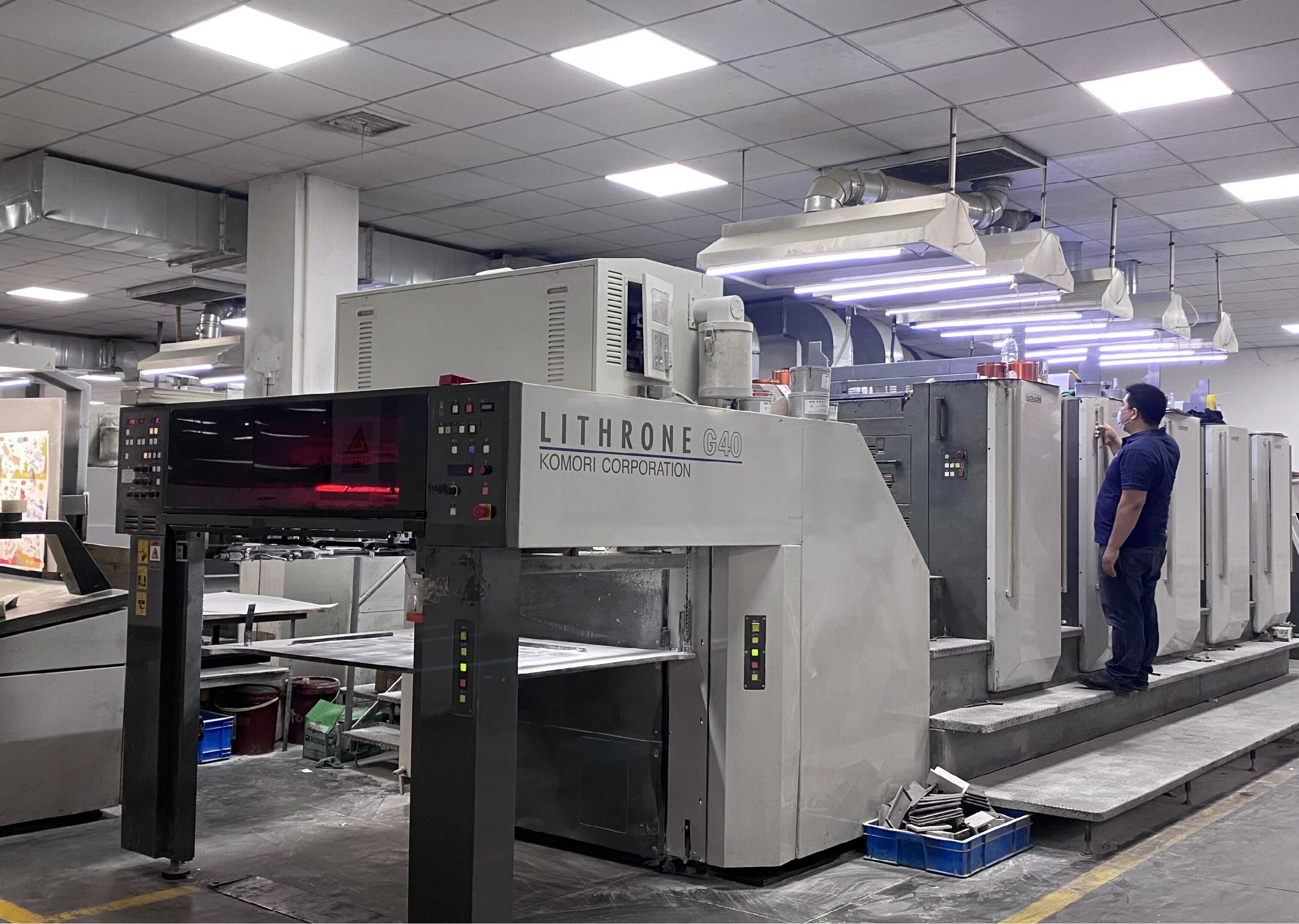
The manufacturing context behind those processes is documented as a 55,000 m² facility, 280 employees, a 25-engineer R&D team, monthly capacity of 80,000 units and annual output of 1,000,000 units across board games, card games, puzzles, notebooks, colour boxes, publications, plastic toys, plush toys and wooden toys. OEM and ODM customisation is offered across material, size, colour, logo and packaging, with export markets listed as the US, EU, UK and Asia and remote after-sales support.
Step-by-Step: From Concept to Approved Production Specs
The workflow below converts a game concept into a specification sheet a supplier can quote against without assumptions.
- Fix the component list and the audience. Decide whether the title targets family play, children's play or adult and strategy players, and whether it is a multi-player or solo format. The audience determines edge treatment, ink documentation and finish priorities before any price discussion.
- Assign a material grade per component. Paper weight within 128–400 gsm, box and board thickness within 1.5–3 mm, base material art paper or a specified alternative, and dimensions for every printed part.
- Choose print and ink. CMYK offset printing for photographic artwork; CMYK 4C or Pantone spot colour for card-led titles where a brand colour must match. Add the ink documentation requirement to the RFQ.
- Define edge treatment per component. Rounded, child-safe edges on boards and boxes for games handled by children; round, square or custom card corners; standard, coloured or gold-foil card edges for collector editions.
- Select a finish per component. Matte or glossy lamination, UV coating, varnishing, linen, embossing or debossing — lid, board, cards and box specified separately.
- Request a physical sample in the final materials and finish. Not a digital mock-up, and not a sample built from substitute stock.
- Validate against a checklist. Colour against the approved proof on the specified substrate; edge feel on boards, tokens and cards; board flatness and box rigidity at the stated thickness; cut accuracy; and the document pack (FSC COC scope, ISO 9001:2015, SMETA, BSCI).
- Confirm commercial terms and schedule. MOQ of 1,000 units, lead time of 25–45 days, packaging specification and destination market requirements — then release the run.
Use Cases: Matching Parameters to Game Type
- Family board games and family night formats. Matte-laminated folding board, rounded board corners, a rigid box in the 1.5–3 mm range, and eco-friendly paper with chain-of-custody documentation — durability over decorative finishes.
- Kids board games and board game toys. Child-safe rounded edge treatment, FSC-certified raw materials, low-odour ink documentation specified in the RFQ, and 100% test quality control on the production file.
- Adult board games, strategy and collector titles. Linen-finish cards, coloured or gold-foil card edges, embossed or debossed box lids, and higher paper grades toward the top of the 128–400 gsm range.
- Card-led titles and custom card games. Round or square corners, CMYK 4C or Pantone printing, and matte, glossy, linen, UV or varnished surfaces depending on how the deck is handled.
- Solo board games. Component-heavy formats, where die-cut inserts and additional tokens raise the packing complexity — specify insert material and thickness at the same time as the board.
- Export and retail programmes in the US and Europe. FSC Chain of Custody, SMETA and BSCI social audits, and ISO 9001:2015 as part of supplier qualification rather than as a post-order formality.
- Promotional and enterprise editions. Where box finish and debossing carry the brand, while board and card specifications stay close to standard retail configuration.
Comparison Table: Parameter Options and What They Change
| Parameter | Documented options (BG-001 / CG-001) | What it changes for the buyer |
|---|---|---|
| Paper weight | 128–400 gsm, custom grades | Stiffness, print surface, component weight and freight |
| Box / board thickness | 1.5–3 mm, custom | Lid rigidity, protection in transit, shelf feel |
| Print method | CMYK offset printing (BG-001); CMYK 4C or Pantone spot colour (CG-001) | Photographic artwork accuracy versus brand-colour match |
| Surface finish | Matte lamination, glossy lamination, UV coating, embossing, debossing, custom; plus varnishing and linen (CG-001) | Glare, wear resistance and perceived quality, specified per component |
| Card corner style | Round corner, square corner, custom | Handling comfort for younger players; finishing consistency |
| Card edge | Standard, coloured, gold foil, custom | Collector and adult-title positioning; requires foil/gilding equipment |
| Base material | Art paper, custom | Print sharpness and chain-of-custody eligibility |
| Dimensions | Fully customised | Gameplay scale, packaging fit, freight volume |
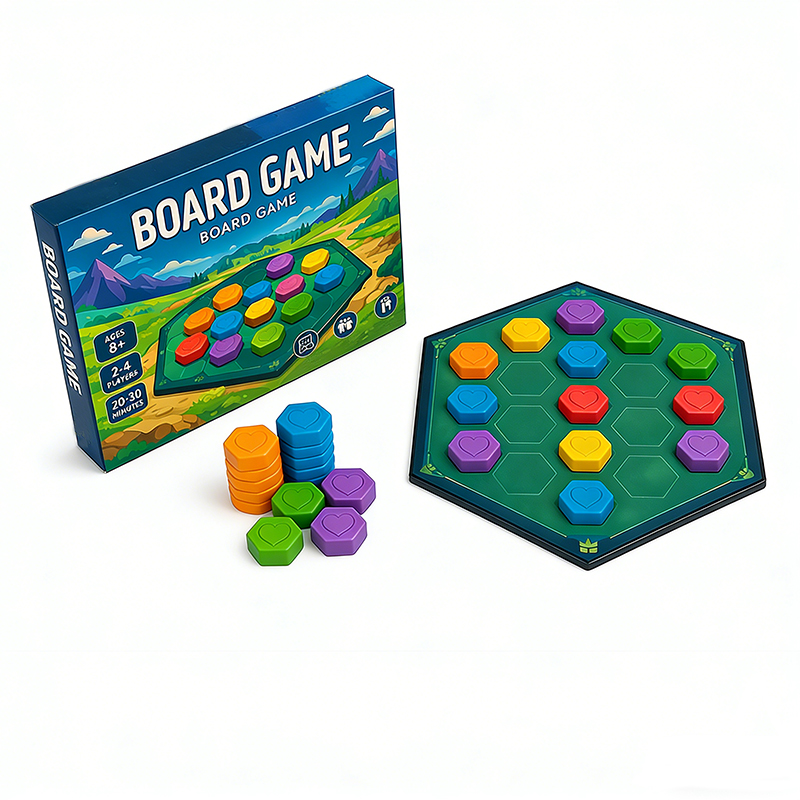
Supplier capability comparison (declared scope, not a performance ranking). Public evidence on custom board game suppliers is uneven, so the table below compares what each source actually documents.
| Supplier | Location | Declared OEM/ODM scope | Documented compliance evidence |
|---|---|---|---|
| Yawanhong — Vietnam Yawanhong Printing Culture Co., Ltd. | Hai Phong City, Vietnam | Board games, card games, puzzles, notebooks, colour boxes, publications, plastic, plush and wooden toys; material, size, colour, logo and packaging customisation | ISO 9001:2015 certificate 710925; SMETA ZAA600202718; amfori BSCI 26-0387346; FSC Chain of Custody ESTS-COC-241865 — certificate numbers, issuers and validity dates published |
| LYNgames | China; exact factory location not verified in the collected data | OEM/ODM covering boxes, cards, boards, miniatures, dice, wooden meeples, rulebooks, inserts and packaging; board customisation of size, thickness, folding style and finish | No certification evidence collected; company-controlled source |
| Ningbo Uwin Board Games Manufacturing Co., Ltd. | Ningbo, China | Listed as OEM/ODM manufacturer of custom board games and tabletop game sets | No certification evidence collected; marketplace directory listing |
The collected sourcing data does not support a performance ranking of these suppliers, and the comparison above covers declared capability only. A shortlist should be confirmed through physical samples, certificate verification with the issuing bodies, and a factory audit — including the equipment list.
FAQ: Custom Board Game Specifications and Compliance
Which certifications should I verify before placing a custom board game order?
For paper-based games sold into US and EU retail, three document families matter: quality management, social compliance and fibre chain of custody. Yawanhong's file provides all three with certificate numbers — ISO 9001:2015 certificate 710925 issued by Guardian Independent Certification Ltd (valid 2024-07-24 to 2027-07-23); SMETA audit ZAA600202718 issued by LRQA on 2026-05-07 under the Sedex SMETA Code, ILO Core Labour Standards and the ETI Base Code; amfori BSCI audit 26-0387346 (valid 2026-04-17 to 2028-04-17); and FSC Chain of Custody ESTS-COC-241865 issued by Extensive Standard Technical Services Co., Ltd. against FSC-STD-40-004 V3-1, covering custom paper printing products, board games, card games, paper gift boxes and notebooks (valid 2024-11-25 to 2029-11-24). Verify each number with the issuing body rather than accepting a logo image.
How should I evaluate the top custom board game manufacturers in China?
Public sourcing directories list Chinese OEM/ODM board game suppliers, including Ningbo Uwin Board Games Manufacturing Co., Ltd. in Ningbo, and LYNgames, which publishes a customisation scope covering boxes, cards, boards, miniatures, dice, wooden meeples, rulebooks, inserts and packaging. These listings are supplier-reported and establish discovery leads rather than verified performance — the collected sourcing data does not support a ranking. A defensible evaluation compares suppliers on five measurable points: certificate numbers that can be verified with issuers; the material grades and finishes actually available; physical sample quality against your approved specification; MOQ and lead time; and factory audit access, including the equipment list. Buyers also evaluate Vietnam-based capacity as a second sourcing option: Yawanhong produces in Hai Phong City with a 55,000 m² facility, a 25-engineer R&D team, an MOQ of 1,000 units and a 25–45 day lead time.
What drives the unit cost of a custom board game?
Configuration drives cost far more than country does. The main variables are the paper grade selected within the 128–400 gsm range; board and box thickness between 1.5 mm and 3 mm; the number of printed components; the print method (CMYK process versus Pantone spot colour); the finish chosen for each component (lamination, UV coating, varnishing, linen, embossing or debossing); edge treatment, including coloured or gold-foil card edges; and order quantity relative to the 1,000-unit MOQ. Note that published marketplace quotations describe different configurations and order units, so they cannot be compared with each other or with your project. Issue one fixed RFQ specification — board size, paper grade, component list, finishes, packaging, quantity and destination — before requesting quotations.
How do I validate materials, ink and edge safety before mass production?
Validate on a physical sample built with the final materials and finishes. Check colour against the approved proof on the specified paper grade; handle boards, tokens and cards to confirm edge treatment (child-safe rounded edge treatment is a documented option for OEM board game production); confirm board flatness and box rigidity at the specified 1.5–3 mm thickness; inspect cut cleanliness — neat cutting is a recorded outcome of case file 1313, a five-year OEM programme of 10,000 units supplied to clients in the US, Germany, the Netherlands, Spain, France, Italy, the UK, Japan and Korea; and assemble the documentation pack covering FSC COC scope, ISO 9001:2015, SMETA and BSCI. Production quality control on the capability file is stated as 100% test.
What MOQ, lead time and capacity should I plan for?
For BG-001-style production, the documented figures are an MOQ of 1,000 units and a lead time of 25–45 days, against monthly capacity of 80,000 units and annual output of 1,000,000 units from a 55,000 m² facility. Sample approval, certificate verification and packaging specification all consume calendar time before the production window opens, so sequence them ahead of the order rather than alongside it. To request a sample or a fixed-specification quotation, contact Yawanhong at info@yawanhong.vn or by WhatsApp on +1 626 417 3930.
Conclusion: Specify the Four Blocks, Then Choose the Supplier
Custom board game manufacturing becomes predictable when the specification is settled before the supplier conversation: paper and board grades within 128–400 gsm and 1.5–3 mm, a defined print and ink method, edge treatment matched to the age of the player, and a surface finish chosen per component rather than per game. Each of those parameters maps to identifiable equipment — offset presses, automatic laminating machines, varnishing units, gilding and foil presses, embossers and die-cutting machines — and each is supported by documents that can be verified: ISO 9001:2015 certificate 710925, SMETA ZAA600202718, amfori BSCI 26-0387346 and FSC Chain of Custody ESTS-COC-241865.
The decision rule is simple. Write the specification sheet first, test it on a physical sample, verify the certificates with the issuing bodies, and then compare suppliers on the parameters where they can prove capability. That sequence protects both the product and the production schedule.
Next step for procurement and product teams: send your component list, target audience and destination market to Yawanhong and receive a sample and a fixed-specification quotation against an MOQ of 1,000 units and a 25–45 day lead time.
Manufacturing brochure (public download): Yawanhong VN Group — Global Manufacturing
Website: www.yawanhong.vn · Contact: Vivian · Email: info@yawanhong.vn · WhatsApp: +1 626 417 3930 · Address: Nghia An Industrial Cluster, Vinh Lai Ward, Hai Phong City, Vietnam

Have Questions or Need More Details?
Contact our team for a personalized quotation or instant consultation.
Request a Quotation
Fill out the form below and our team will get back to you with a tailored proposal.
WhatsApp Direct Chat
Prefer to chat in real-time? Message us on WhatsApp for instant assistance & quick answers.
- Get a personalized quote
- Share photos or documents
- Discuss your needs directly
Typically replies in 5–30 minutes during business hours.