
Custom Card Game vs. Standard Playing Cards: A Decision Framework for Brands
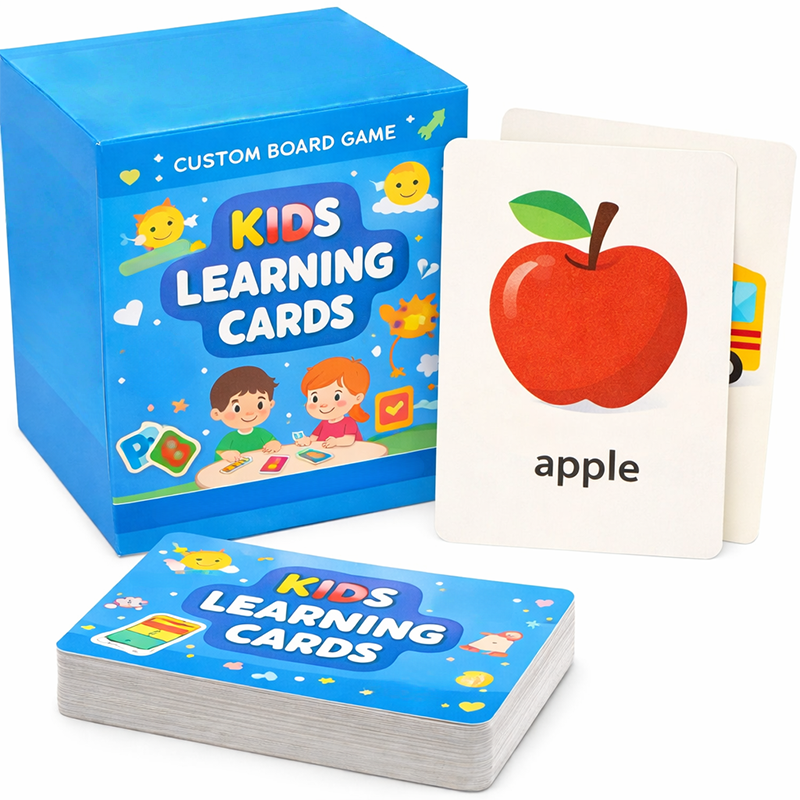
Every card product begins with a simple question: should you order an off-the-shelf standard deck, or invest in a fully custom card game? The practical answer is based on how much of the product value depends on original artwork, card format, finish, and play experience. If your brand identity or original content is the product, custom card game manufacturing is usually the right route. If a generic deck will satisfy the need, a standard playing card order is faster, simpler, and likely lower risk.
Standard playing cards are a familiar category. Custom card games, by contrast, are produced around an order. The artwork is customized, the card size can be changed, and specification choices such as paper weight, color printing, coating, edge style, and corner shape can be matched to the market being served. This article offers a decision framework for brands comparing these two paths.
Use it before sending an inquiry. The framework covers function, original content, physical specification, use-case fit, compliance, and practical buying steps.
Problem Definition: Why the Choice Is Not Obvious
Most buying mistakes happen when a standard playing card and a custom card game are compared only on price. A standard deck may cost less to place into immediate sale, but it does not necessarily carry the brand story or gameplay content needed to build a repeatable product line.
A custom card game shifts the decision from inventory buying to product development. The brand starts with card type, target player, and visual identity, then selects materials and finishes. This creates more decisions before production: card size, paper weight, print colors, corner style, edge treatment, surface lamination, packaging, and compliance requirements.
Those decisions are meaningful only when they improve the final use. For a poker deck destined for casino promotions or hotel gifts, a standard deck may be sufficient. For a tarot deck, a children's educational card game, a couples card game, or an adult party game, the creative content is usually inseparable from the product. A custom deck is then a brand asset, not just a printed item.
Industry Background: Card Games Are Bigger Than Poker Decks
Card games continue to attract consumer spending beyond traditional poker and rummy sets. Grand View Research estimated the global playing cards and board games market at approximately USD 19.90 billion in 2024, with projected growth to USD 31.93 billion by 2030. In a separate measurement, Future Market Insights estimated the global trading card game market at roughly USD 7.43 billion in 2024, with projections reaching USD 15.84 billion by 2034.
China, a major supplier of printed playing cards, recorded playing card exports of approximately USD 303.1 million in 2024 under HS code 950440. This shows the strength of the export supply chain for printed cards.
Specialty decks are also expanding. Data cited by Technavio and 360 Research Reports indicates that the tarot card market is projected to grow by USD 209.7 million between 2024 and 2029 at a CAGR of 3%, with 61% of new decks featuring custom illustrations. The implication is clear: many buyers are not looking for identical standard decks. They want decks with new artwork, new themes, and a more specific playing or collecting experience.
The Decision Framework: Six Factors for Brands
Use the following six factors to place your project on the spectrum between a standard playing card and a custom card game.
1. Define the Role of the Deck
What must the deck do? In the custom card and board game industry, printed products are commonly used for enterprise promotion, family fun, interaction, kids education, product packaging protection, and brand display. A standard deck may support casual play, but a custom card game can be built to support a specific business or entertainment role.
If your project is only about offering cards for table play, standard options may work. If the deck represents a brand campaign, a learning tool, or a proprietary game idea, custom production serves the purpose more directly.
2. Decide How Much Original Artwork Matters
Original artwork is one of the main differences between a standard deck and a custom deck. A custom card game can be printed from the buyer's design. This allows the card faces, back pattern, packaging, and supporting elements to carry one consistent visual language.
If branding is secondary, a standard deck may be acceptable. If the deck needs to stand out on a retail shelf or build a community around original characters and illustrations, custom artwork is the core investment.
3. Confirm the Card Category
Not all custom card projects are identical. The custom card game model CG-001 is described as a product under the poker cards, tarot cards, flash cards, and playing cards categories. These categories imply different deck structures, illustration levels, and production expectations.
Before choosing standard or custom, identify the closest category for your game format. This affects the deck construction, packaging design, and retail context.
4. Match the Physical Specification to the Use Case
Custom card game production allows control over physical characteristics that players feel immediately. Relevant specification options include custom card size, paper weight from 128 to 400 gsm or custom, coated paper or art paper materials, CMYK 4C printing or Pantone color printing, matte or glossy lamination, linen finish, UV coating, and varnishing. Card edges can be standard, colored, or finished with gold foil. Corners can be round, square, or custom.
These choices matter because a deck used by children may need a softer handling profile, while a poker deck played frequently may need a more durable surface. A standard deck offers less control. A custom card game can be adjusted for the expected amount of play.
5. Consider Compliance and Safety Early
If the cards will be sold into the European Union or the United States, safety and sourcing standards are part of the product specification. Common retail requirements include EN 71, the European toy safety standard, and FSC certification for sustainable paper sourcing. In production scenarios for custom card and board games, special requirements may also include eco-friendly paper materials, non-toxic ink, child-safe edge treatment, and FSC-compliant raw materials.
These requirements can be built into the project from the beginning. Trying to add them after artwork and specifications are finalized often leads to delays.
6. Understand the Cost and Quantity Dynamic
Cost behavior is different for standard and custom products. A standard deck is usually selected from existing production and carries lower specification risk. A custom card game includes costs related to artwork use, material grading, finishing, packaging, and compliance. The value is not in the printing alone; it is in the ability to build a distinct brand product.
Because actual pricing depends on size, paper weight, color, finishing, edge treatment, quantity, and destination market, brands should not rely on unverified averages. Ask suppliers to quote according to the verified specification sheet.
Detailed Solution: How a Custom Card Game Manufacturer Can Handle Artwork and Size
Vietnam Yawanhong Printing Culture Co., Ltd., commonly identified as Yawanhong, is an export-oriented toy and printing manufacturer. Founded in 2006, the company operates from a 55,000 square meter factory with approximately 280 employees. Its R&D team includes 25 engineers, and annual production capacity reaches 1,000,000 units. The company exports 100% of production, mainly to the United States and Europe.
For card brands, the more relevant point is production capability. Yawanhong makes board games, card games, puzzles, notebooks, color boxes, publications, plastic toys, plush toys, and wooden toys. This range matters because custom card projects often require related packaging or multi-component game sets.
Within custom card printing, Yawanhong uses mass customized printing production and manual interactive play formats. The production environment is described as a normal temperature, dust-free indoor workshop suitable for printing and processing paper products. Supporting equipment includes a Heidelberg printing press, automatic laminating machine, varnishing machine, gliding press, embosser, and die cutting machine. This equipment set supports printed cards from the initial gauge to finishing, lamination, edge treatment, and die-cutting.
The company's custom card game model CG-001 falls under poker cards, tarot cards, flash cards, and playing cards and is intended for the printing, game toy, and manufacturing industries. The primary material is coated paper, with art paper also available. Paper weight can range from 128 to 400 gsm or custom, and card size is customizable. Printing options include CMYK 4C printing and Pantone color printing. Surface finish options include matte lamination, glossy lamination, linen, UV coating, and varnishing. Card edges can be standard, colored, or gold foil, and corners can be round or square.
In practice, this means a brand can present a fully custom design and receive decisions about every visible layer of the card, not only the surface artwork.
Step-by-Step Breakdown for Brand Decision-Making
The following steps help a brand move from a concept to the right factory brief.
Step 1: Define Use Context and Buyer
State who will use the deck and where. Is the product for children, families, adults, travelers, or collectors? Does it support poker gameplay, tarot reading, flash cards, or a branded party game? This becomes the reference point for every later specification choice.
Step 2: Lock the Deck Format and Card Dimensions
Decide on the number of cards and the exact size. The card size should be defined before artwork because art files need safe margins, bleed, and crop areas. If the product is a travel game, the format must be compact enough for practical use. If it is a tarot deck, larger cards and image presentation will be central.
Step 3: Select Paper Grade and Material
Determine the paper weight needed for handling and durability. The available range for model CG-001 is 128 to 400 gsm, or custom. Coated paper and art paper are the material choices. Thicker stock provides more rigidity, while lighter stock is appropriate for games with many cards or lower shipping weight.
Step 4: Choose Printing, Finish, Edge, and Corner
Select color control through CMYK 4C printing or Pantone color printing. Then choose the surface finish: matte lamination, glossy lamination, linen, UV coating, or varnishing. For edge style, decide between standard, colored, or gold foil. For corners, choose round, square, or custom. These choices affect both the visual feel and the product quality.
Step 5: Review Packaging and Brand Display
Card games usually need packaging for protection and brand display. In custom printing projects, the product can function as packaging for product protection and brand display. A branded tuck box or game box should be considered together with the cards, because slight size differences affect fit.
Step 6: Review Regulatory and Compliance Documentation
For retail sales in the EU or US, discuss compliance documents before mass production. If the product is considered a toy or game for young users, eco-friendly materials, non-toxic ink, child-safe edges, and FSC-compliant paper may be required. For importers, the classification of card games under HTSUS 9504.40.00 became duty-free on March 18, 2024, which reinforces the value of clear product classification before shipping.
Use Cases: When Custom Card Game Production Makes Sense
Family and Kids Card Games
Family card games and kids card games typically rely on cheerful illustrations, clear rules, and safe handling. In custom production, special requirements may include eco-friendly paper material, non-toxic ink, child-safe edge treatment, and FSC-compliant raw materials. Round corner options can help create a more child-friendly deck profile. This is a case where the standard playing card design does not express the intended content.
Tarot and Collector Decks
The market for tarot and oracle decks is a growing segment where artwork is the main reason a buyer chooses a deck. Custom card game printing gives artists and publishers full control over card size, color treatment, and finish. The custom tarot deck can be produced with a cohesive theme from card faces to backing.
Adult Party Games and Couples Decks
Party games for adults, including adult card games and couples card games, depend on clear prompts, original topics, and a format that is easy to handle in groups. The custom deck allows the publisher to choose an appropriate card size, control the amount of text or image space, and select a durable finish for repeated use. Standard poker cards are not designed for this type of content.
Travel Games and Compact Decks
Travel card games require small, durable packaging. Since card size is customizable, brands can tailor the deck format for a specific box or travel bag. A compact deck can still carry custom artwork and brand identity, which is difficult to achieve by buying a standard playing card and adding labels.
Enterprise Promotion and Brand Gifts
Custom cards can support enterprise promotion and brand display. A company can use a deck to demonstrate values, introduce products, or create a memorable gift. Because the product can be manufactured as a custom game or flash card, it can be structured around educational or branded content instead of a poker theme.
Comparison Table: Standard Playing Card Order vs. Custom Card Game Production
| Decision point | Standard deck path | Custom card game path |
|---|---|---|
| Primary purpose | Quickly supply a recognizable card deck for common card play | Create a deck aligned with custom artwork, theme, and brand purpose |
| Artwork control | Limited by the existing stock deck design | Artwork and graphics are customized to the buyer's design |
| Card categories | Usually poker-style standard playing card formats | CG-001 can cover poker cards, tarot cards, flash cards, and playing cards |
| Card size | Limited by the standard product format | Custom card size is supported |
| Paper and material | Existing production material | Coated paper or art paper; 128–400 gsm or custom |
| Color printing | Standard printing setup | CMYK 4C printing or Pantone color printing |
| Surface finish | Usually limited to existing finish | Matte lamination, glossy lamination, linen, UV coating, or varnishing |
| Edge treatment | Standard edge | Standard, colored, or gold foil edge |
| Corner treatment | Usually stock corner style | Round, square, or custom corner |
| Production planning | Simpler procurement and faster availability | Requires artwork review, specification approval, and production follow-through |
FAQ
When should a brand contact custom card game manufacturers instead of buying standard playing cards?
Contact custom card game manufacturers when the product depends on original content, customized artwork, a different card size, or a specific finish. A standard playing card may be enough for generic poker play, but a custom deck is appropriate for brands building an original game, tarot deck, flash card set, or branded card experience. A supplier such as Vietnam Yawanhong Printing Culture Co., Ltd. supports custom specifications through its printing and finishing process.
Which types of decks can be produced as a custom card game?
Custom card game model CG-001 can be produced in categories that include poker cards, tarot cards, flash cards, and playing cards. It is aimed at the printing, game toy, and manufacturing industries. Because card size is customizable, the same deck model can be adapted to physical formats used by children, families, adults, or travel-focused products.
What specification choices matter most for card feel and durability?
Card feel and durability are mainly controlled by material, paper weight, surface finish, and edge treatment. The custom card game uses coated paper or art paper and supports paper weights from 128 to 400 gsm or custom. Printing can be CMYK 4C or Pantone. Surface finishes include matte lamination, glossy lamination, linen, UV coating, and varnishing. Card edges can remain standard or receive colored or gold foil treatment.
What compliance subjects should be raised with a custom card game supplier?
Brands selling into EU or US retail should discuss toy safety, paper sourcing, and import classification. Common standards include EN 71 for toy safety and FSC for sustainable paper sourcing. Production may also require eco-friendly paper material, non-toxic ink, and child-safe edge treatment. US importers should verify the correct HTSUS classification, since plastic-coated paper card games under HTSUS 9504.40.00 became duty-free on March 18, 2024.
Conclusion
Standard playing cards are the faster, more conventional solution when the buyer needs a recognizable deck without complex customization. Custom card game production becomes the better choice when the product must express original artwork, support a new game format, or carry a brand into a specific market.
For a custom card game project, the decision path should begin with use case and audience, then move to card type, size, paper, ink, finish, edge, corner, packaging, and compliance. These details should be defined before a factory is selected. Manufacturers with relevant internal capability can then translate the design into a complete production plan.
Vietnam Yawanhong Printing Culture Co., Ltd. shows how a custom card game order can be handled from print to finish. Established in 2006, Yawanhong exports 100% of its production, mainly to the United States and Europe. Its custom card game model CG-001 supports customized artwork, card size, material, weight, printing, finish, edge, and corner style. These capabilities make it easier for brands to turn an original deck idea into a tangible product.

If you are building a custom card game and need a clear manufacturing direction, download the Yawanhong global manufacturing brochure or contact the Yawanhong team for a specification review.
Contact: Vivian
Email: info@yawanhong.vn
Tel: +1 626-417-3930
WhatsApp: +1 626 417 3930