Custom Card Games 101: What 'Fully Customized' Means from Artwork to Packaging
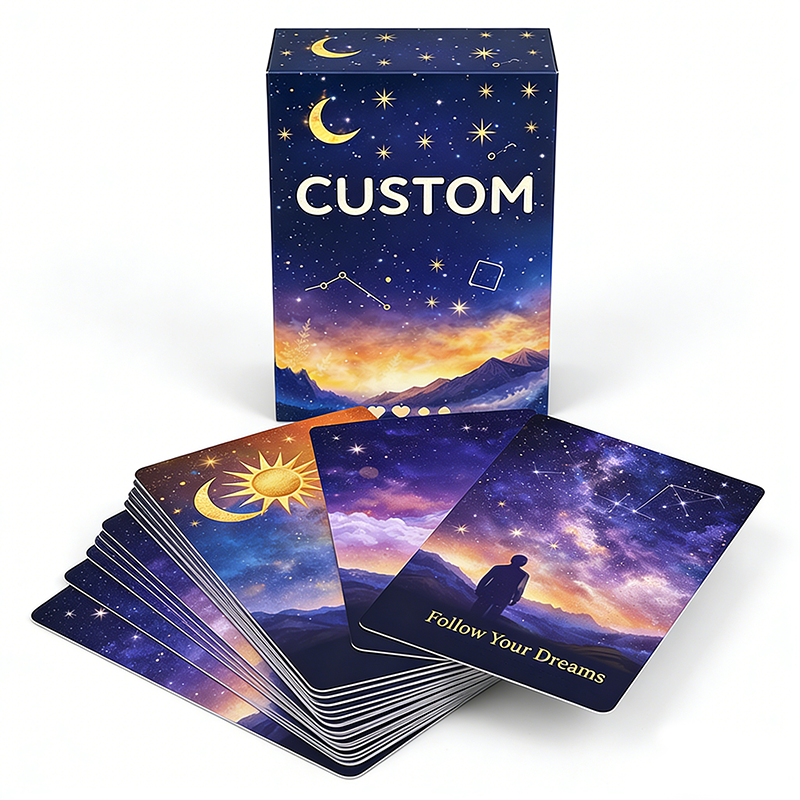
A fully customized card game is one in which the buyer controls every layer a player sees or touches — artwork, card size, paper and board material, print color, logo placement, edge treatment and packaging — instead of applying a logo to a stock deck. In production terms, full customization is a scope of work rather than a single option: each layer is specified, quoted and quality-checked, and together they decide how the game looks, how it handles, and whether it can be sold in the market the brand is targeting.
Yawanhong (Vietnam Yawanhong Printing Culture Co., Ltd.) is an OEM and ODM manufacturer based in Hai Phong, Vietnam, established in 2006, producing custom card games, board games, puzzles and printed packaging for export markets that include the United States and Europe. Its stated customization scope covers material, size, color, logo and packaging, with a 1,000-unit minimum order quantity (MOQ), a 25–45 day lead time and a monthly production capacity of 80,000 units.
At a glance
- Full customization covers seven layers: artwork, size, material, color, logo, edge treatment and packaging.
- OEM means the buyer brings the design and the factory manufactures and packs it; ODM means the factory also develops the game or its design direction for the buyer.
- One-stop printing and packaging keeps deck and box in a single production job.
- Child-safe rounded edge treatment and FSC certified raw materials sit inside the documented customization scope.
- Order terms to plan around: MOQ 1,000 units, lead time 25–45 days, capacity 80,000 units per month.
- Certification set: FSC COC ESTS-COC-241865, amfori BSCI 26-0387346, SMETA ZAA600202718, ISO 9001:2015 certificate 710925.
Why 'fully customized' is the most misused phrase in card game sourcing
The phrase usually fails at the first quotation. A buyer asks for a fully customized card game and receives a price for custom artwork printed on a standard deck in a standard tuck box. The supplier has answered a narrower question than the one asked, and the buyer discovers it only when the specification is compared line by line — a box that does not match the retail shelf, an edge treatment that was never discussed, or a material that will not survive the deck's intended use.
The ambiguity has three sources. First, each layer can be customized independently, so 'full custom' can mean anything from seven layers to one. Second, artwork, structure and packaging are often owned by different people on the buyer's side, so no single document captures the whole job. Third, some scope elements belong to the factory's design responsibility (ODM) and some to the buyer (OEM), which changes who approves what.
A workable definition is therefore operational rather than promotional: a card game is fully customized when the buyer has made and approved a decision at every layer — including the decision to keep a standard option. Once the layers are named, the quotation, the sample and the final inspection can all be measured against the same list.
Industry background: why card games reward deep customization
Cards are one of the few game formats where a small physical change is felt immediately. A few grams of board weight alters stiffness and opacity; a different corner treatment changes how the deck feels in the hand; a different finish changes how cards slide. That sensitivity is why the format supports a wide customization range and why buyers at evaluation stage benefit from specifying rather than accepting a catalogue deck.
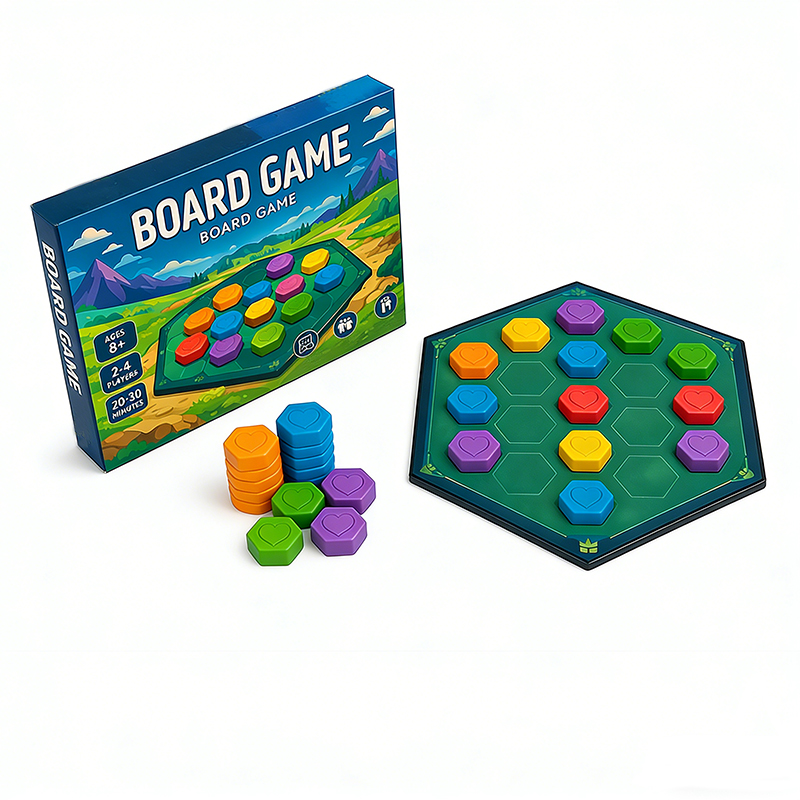
The format also covers very different products. Poker decks, tarot decks, party and drinking games, kids' games, family games, couples' games, travel games, uno-style shedding games and general card games for adults all pull customization toward different layers — opacity and color consistency for a shedding game, edge treatment and safety documentation for a children's product, compact size for a travel game.
The commercial context explains why manufacturing depth is concentrated in Asia. Custom Market Insights projects the global trading card game market at USD 14.12 billion in 2025, and Grand View Research puts the playing cards and board games market at USD 19.9 billion in its 2024 base year, with Asia Pacific holding a 39.5% revenue share in 2024. Those figures describe two differently defined categories and should not be added together; what they establish is that card and game printing is a large, structured manufacturing base in the region, which is why deep specification is practical rather than theoretical.
Compliance runs alongside the design work. In the United States, ASTM F963-23 is the mandatory toy safety standard, covering mechanical, chemical and flammability requirements for products intended for use in play by children — a definition that includes card games. For the European market, EN 71 documentation is the equivalent request. Neither standard is satisfied by a factory-level certificate; both are answered with product-level test reports for the specific item being sold.
The seven layers of a fully customized card game
1. Artwork and pre-press
Full customization starts with the print file. Yawanhong's case record for an OEM card and board game client highlights support for fully customized artwork and size, which means the deck is printed from the brand's own artwork rather than adapted from a template. This layer covers card faces, card backs and the printed surfaces of the packaging, plus the pre-press work that turns illustrations into production-ready files: dielines, bleed, and defined color references.
2. Size and format
Card size is a customization item in its own right, not a fixed house standard. Poker-style, tarot-style and compact travel formats each set a different canvas for artwork and a different handling experience, and the box must match whichever is chosen. When size is treated as part of the scope, artwork proportions and packaging dimensions are designed together rather than adjusted later.
3. Material and construction
Paper weight and board construction determine stiffness, opacity and how long a deck survives repeated play. Yawanhong's published capability material describes a card weight range of 128–400 gsm, so a brand can position a light travel deck and a heavy premium deck inside the same supplier relationship. For opacity, a manufacturer-authored technical guide from Xinyi Card Printing identifies black or blue opaque card cores as the benchmark that prevents light from showing through a card — relevant wherever hidden information matters.
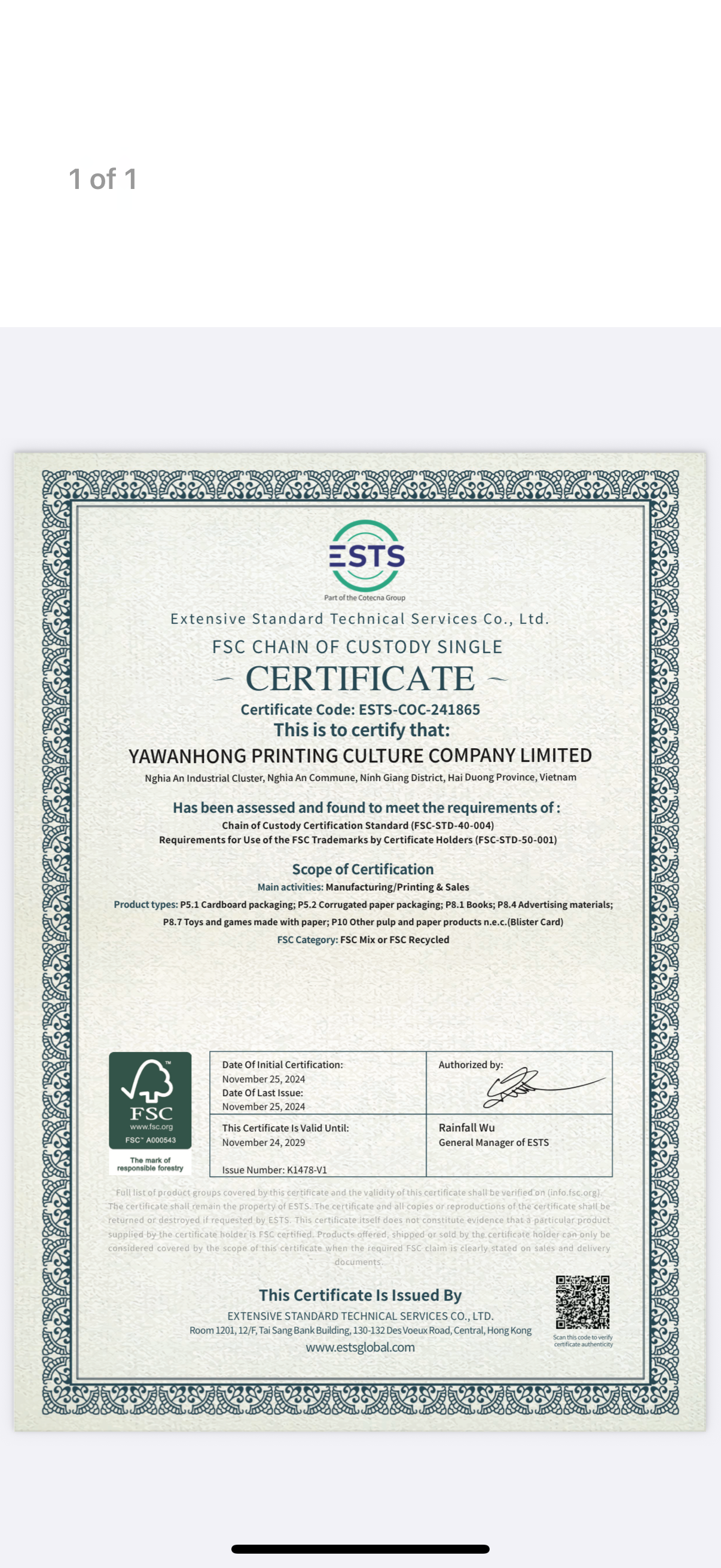
Raw material sourcing is part of this layer. The Yawanhong case record specifies FSC certified raw materials, and the company holds FSC chain-of-custody certificate ESTS-COC-241865 under standard FSC-STD-40-004 V3-1, valid from 25 November 2024 to 24 November 2029, with a scope covering custom paper printing products, board games, card games, paper gift boxes and notebooks. Chain-of-custody certification documents the paper's sourcing pathway; it is a different document from a toy-safety test report and should be filed separately.
4. Color and print system
Yawanhong's capability material lists CMYK or Pantone printing. The choice matters most where color must stay consistent across a large deck and where brand color appears on both cards and packaging: a Pantone reference pins a specific ink, while a CMYK build is reproduced from process inks. Whatever system is chosen, the approval point is a printed proof or physical sample, not a screen image.
5. Logo and brand placement
Logo is one of the five customization items in Yawanhong's stated scope, alongside material, size, color and packaging. In practice the decision is about placement and hierarchy: card backs, box lid, box sides and any printed packaging panel each carry the mark at a different scale and under different print conditions. Treating logo as its own layer prevents the common outcome where a mark is approved on a card back and then reproduced at the wrong size on packaging.
6. Edge treatment and child safety
Corner treatment is a functional decision. The Yawanhong case record for a five-year OEM card and board game programme specifies child-safe rounded edge treatment — a detail that matters most for kids' card games and family games where handling is less careful. Rounded corners reduce sharp-corner risk; they do not by themselves establish compliance for a children's product, which is assessed through the applicable market test documentation described above.
7. Packaging and one-stop production
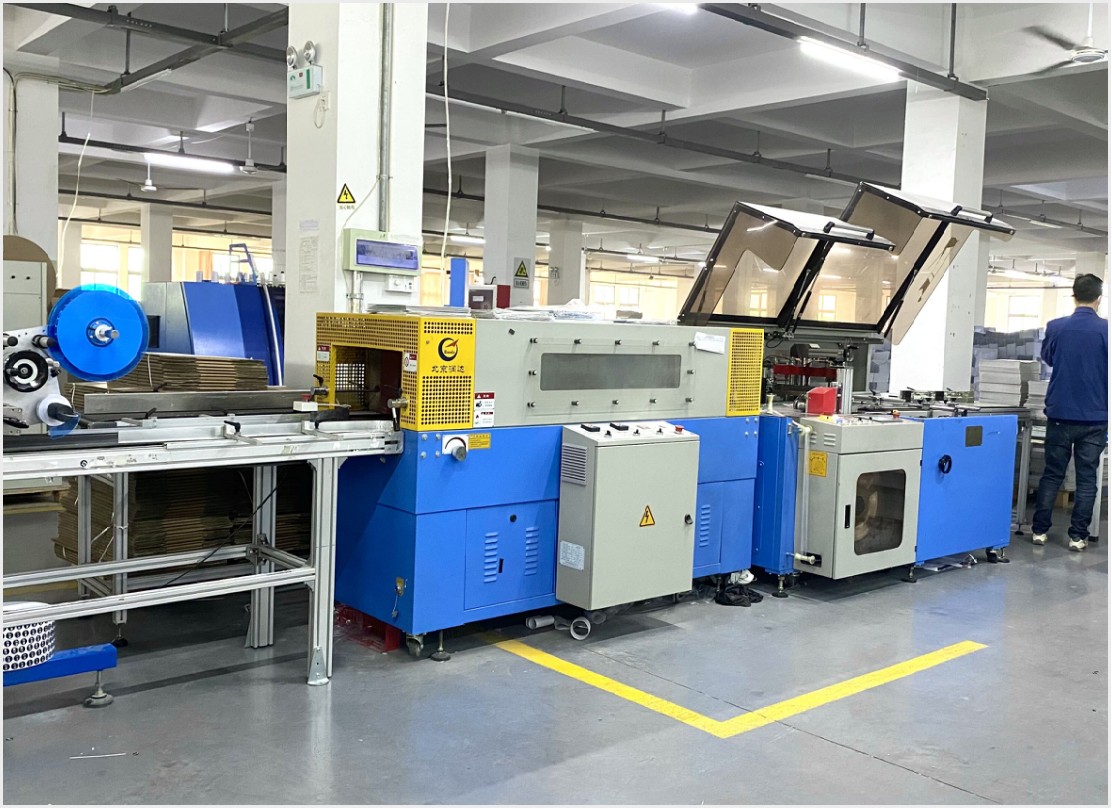
The packaging layer covers the box format, its printed surfaces, and how cards and any other components are packed together. Yawanhong's product range includes color boxes and lid-and-base boxes alongside card games, and the case record specifies a one-stop printing and packaging service — deck and box produced within the same job. That structure removes the hand-off between a card printer and a separate packaging supplier, which is usually where specification drift appears between an approved card proof and the box that finally ships.
Which layers to lock first
The following is an editorial sequencing for buyers at evaluation stage, based on how the layers constrain each other. It is not a measured ranking or a market benchmark.
- Size and material first. These two choices fix how artwork must be proportioned and how thick the finished deck will be, which in turn constrains box dimensions. Locking them later forces artwork rework.
- Artwork and color second. Pre-press work and color references can only be finalized once the canvas and the substrate are known.
- Edge treatment and safety documentation third. Corner style is a sample-stage decision, but the test documents behind a children's product have a lead time of their own, so the requirement should be declared early.
- Packaging fourth. Box format follows the deck's final thickness and the retail or e-commerce channel it must survive.
- Logo placement last. Because the mark is reproduced on cards and packaging under different conditions, its scale and position are easiest to finalize after the other surfaces are fixed.
The customization scope map
The table below converts the seven layers into a working checklist: what can be customized, what to specify in the request for quotation, and what evidence closes each layer.
| Layer | Customization available | Specify in the RFQ | Evidence to close the layer |
|---|---|---|---|
| Artwork | Fully customized artwork (case record) | Dielines, bleed, color references per surface | Approved proof and signed-off sample |
| Size | Fully customized size (case record) | Card size and matching box size | Dieline drawing and measured sample |
| Material | Material customization (stated scope); 128–400 gsm card weight range (company-published) | Target gsm, stiffness, opacity requirement | Material specification plus FSC COC ESTS-COC-241865 scope statement |
| Color | CMYK or Pantone printing (company-published) | Pantone numbers or CMYK builds per element | Printed color proof |
| Logo | Logo customization (stated scope) | Placement and size on cards and each packaging panel | Proof and production print sample |
| Finish | Matte or gloss lamination, linen finish, UV coating, varnishing (company-published) | Finish per side; face versus back | Physical finish sample |
| Edge | Child-safe rounded edge treatment (case record) | Corner style and target age group | Sample plus destination-market test report |
| Packaging | Packaging customization (stated scope); one-stop printing and packaging (case record) | Box format, printed panels, packing configuration | Packaging dieline and approved packaging sample |
Step by step: how a fully customized order runs
Step 1 — Build the scope map. The buyer completes a layer-by-layer specification covering artwork, size, material, color, logo, edge treatment and packaging, marking any layer deliberately left standard. This single document becomes the reference for quotation, sampling and inspection.
Step 2 — Fix the OEM or ODM boundary. Under OEM, the buyer supplies artwork and structure and the factory manufactures and packs to that specification. Under ODM, the factory also develops the game or design direction, and the buyer approves a concept before pre-press begins. Yawanhong operates both models, so the boundary is agreed at the start rather than assumed.
Step 3 — Complete pre-press. Artwork is checked against dielines for card faces, backs and packaging panels, with color references and bleed confirmed. Errors caught here are file edits; errors caught after printing are reprints.
Step 4 — Approve a physical sample. Material, print, finish, edge treatment and packaging are approved together, because the layers interact: a heavier card changes how a tuck box closes. The approved sample defines what the production run must match.
Step 5 — Produce. Yawanhong quotes a 25–45 day lead time against a monthly capacity of 80,000 units. The quotation should state what that window covers and when it starts, since shipping and transit time sit outside production.
Step 6 — Test during production. Yawanhong's stated quality control is 100% testing, and the documented project outcome for a long-running client programme is stable quality, clear printing, sturdy construction, neat cutting and eco-friendly properties. For a fully customized deck, that translates into checks on print registration, color against the approved reference, cutting accuracy and corner finish.
Step 7 — Pack and ship. Because printing and packaging are handled as one job, the deck enters its box within the same production flow. Yawanhong's export experience covers the US, EU, UK and Asia, with remote after-sales support after delivery.
Use cases: which layers carry the weight
Party and drinking games for adults. Visual impact and durability dominate. Bold color reproduction, a finish that resists handling during repeated play, and packaging that survives shipping are the layers that decide whether the product arrives looking as designed.
Kids' card games. Edge treatment and documentation lead. Child-safe rounded corners, a card weight that survives rougher handling, and the destination market's toy-safety test reports belong in the first conversation, not the last.
Tarot decks. Artwork and finish take priority. Consistent color across a large deck, a surface that supports the intended handling feel, and a box that presents the deck as a designed object all sit at the artwork and finish layers.
Travel games and compact formats. Size controls everything else. A smaller card changes artwork proportions, deck thickness and box dimensions, so size must be locked before pre-press.
Family games and couples' card games. These usually balance spec across layers rather than maximizing one: a mid-range card weight, a clear finish, rounded corners and retail-ready packaging.
Uno-style shedding games and general card games. Opacity and color consistency matter most, because a card that can be read through destroys the game. An opaque core requirement belongs in the material layer of the specification.
Poker cards and standard playing card formats. Snapping and handling feel rise in importance, which pushes the decision toward card weight, finish and edge — three layers that are cheap to specify and expensive to correct after printing.
What 'fully customized' does not automatically include
Full customization is a scope statement, not a promise of unlimited flexibility. Yawanhong's MOQ is 1,000 units, so a fully customized deck is built as a production run; a very small first order needs either a specification adjustment or a volume that supports the minimum. The 25–45 day lead time covers production, and the quotation should confirm its start point and what shipping adds.
The certification set should also be read precisely. FSC COC ESTS-COC-241865 is a chain-of-custody certificate covering custom paper printing products, board games, card games, paper gift boxes and notebooks, valid to 24 November 2029. amfori BSCI audit 26-0387346 (valid to 17 April 2028) and SMETA audit ZAA600202718 issued by LRQA are social compliance audits of manufacturing, not product test results. ISO 9001:2015 certificate 710925 (valid to 23 July 2027) attests a quality management system. None of these substitutes for a product-level safety report for the specific item sold in the specific market — that document is requested per SKU.
Finally, full customization shifts responsibility back to the buyer at the approval points. Artwork, logo placement and packaging panels are approved by the brand, and an approval given without checking dielines is a real cost even when every factory-side process ran exactly as specified.
FAQ: fully customized card games
Which certifications apply to a fully customized card game order?
Four documents are typically requested, and they are different evidence types rather than one bundle. Yawanhong holds FSC chain-of-custody certificate ESTS-COC-241865, with a scope covering custom paper printing products, board games, card games, paper gift boxes and notebooks and validity from 25 November 2024 to 24 November 2029; amfori BSCI audit 26-0387346, valid to 17 April 2028; SMETA audit ZAA600202718 issued by LRQA; and ISO 9001:2015 certificate 710925 for quality management, valid to 23 July 2027. Product-level safety test reports for the destination market, such as ASTM F963-23 documentation for US children's products, are separate documents requested per item.
What can actually be customized on a custom card game?
Yawanhong's stated customization scope covers material, size, color, logo and packaging, and its case record for an OEM card and board game client adds fully customized artwork and size, child-safe rounded edge treatment, FSC certified raw materials and a one-stop printing and packaging service. In practice that reaches card faces and backs, card size, card weight, print color, surface finish, logo placement, corner treatment and the box.
What order size does full customization require?
Yawanhong's minimum order quantity is 1,000 units, so a fully customized deck is built as a production run rather than a one-off. Order pricing is quoted per specification, because paper weight, finish, edge treatment and packaging format each change the material and processing content of the job.
How does artwork approval work before mass production?
Print files are checked against dielines for card faces, backs and packaging panels, with color references and bleed confirmed first. A physical pre-production sample is then approved for material, print, finish, edge treatment and packaging together, because the layers interact — a heavier card changes how a tuck box closes. Sample approval is the control point that prevents a reprint.
How long does production take, and what happens after it?
Yawanhong quotes a 25–45 day production lead time against a monthly capacity of 80,000 units, and the quotation should confirm what that window covers and when it starts, since shipping and transit sit outside production. Decks and their packaging are produced as one job through the one-stop printing and packaging service, with 100% testing during production, export experience in the US, EU, UK and Asia, and remote after-sales support. The complete capability and certification set is collected in the Yawanhong group manufacturing brochure linked at the end of this guide.
Conclusion: define the scope, then buy it
Fully customized means every layer is a decision: artwork, size, material, color, logo, edge treatment and packaging. When those seven layers are written down before quotation, the RFQ becomes comparable, the sample becomes an approval instrument, and the production run becomes verifiable. When they are left implied, 'full custom' collapses into a decorated standard deck and the gap surfaces at inspection.
For evaluation-stage buyers, the practical next step is to complete a scope map and test it against a supplier's documented terms: the MOQ of 1,000 units, the 25–45 day lead time, the 80,000-unit monthly capacity, and the certification set of FSC COC ESTS-COC-241865, amfori BSCI 26-0387346, SMETA ZAA600202718 and ISO 9001:2015 certificate 710925. A supplier that can answer at every layer — and show which documents close each one — is the one worth building the first production run with. More detail on Yawanhong's OEM and ODM manufacturing is available on the company site at www.yawanhong.vn.
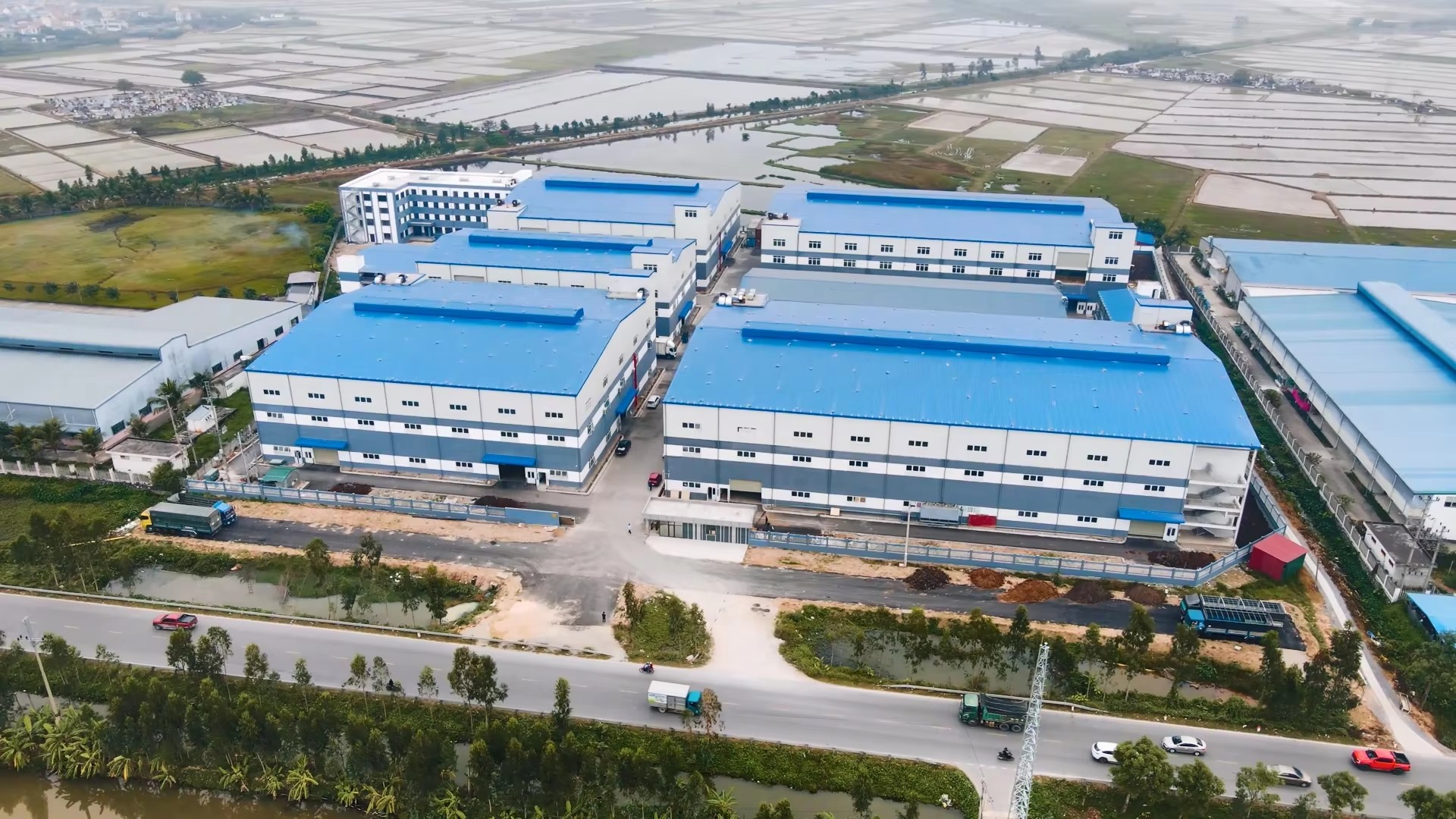
Planning a fully customized deck? The Yawanhong group manufacturing brochure collects the product range, production capability and certification details in one file: download the Yawanhong VN Group Global Manufacturing brochure.
Have Questions or Need More Details?
Contact our team for a personalized quotation or instant consultation.
Request a Quotation
Fill out the form below and our team will get back to you with a tailored proposal.
WhatsApp Direct Chat
Prefer to chat in real-time? Message us on WhatsApp for instant assistance & quick answers.
- Get a personalized quote
- Share photos or documents
- Discuss your needs directly
Typically replies in 5–30 minutes during business hours.