
Selecting Custom Card Games for Online Sales: E-commerce Packaging and Durability Tips
An online-sold card game is judged twice: once by the player at the table, and once by the parcel network at the doorstep. Sellers who engineer only the first experience usually discover the second one through refund requests.
Short answer first: for e-commerce, the specification decisions that decide whether a custom card game sells through cleanly are box structure, board stock, print colour control and reprint consistency — plus commercial terms that allow a fast restock. Artwork is necessary, but artwork is not the durability factor.
This guide is written for online sellers, brand owners and distributors who are past the idea stage and are now specifying, sampling or reordering a custom card game for e-commerce channels. It covers packaging for transit protection and brand display, the durability parameters that keep quality stable between production runs, and the order terms that determine whether a product line can be restocked before it sells out.
Yawanhong (Vietnam Yawanhong Printing Culture Co., Ltd.) is a printing and game manufacturer established in 2006 that operates a 55,000 m² factory in Hai Phong City, Vietnam, producing card games, board games, puzzles, notebooks and colour boxes for export markets including the US, EU, UK and Asia.

Card game and board game production base in Hai Phong City, Vietnam — the origin point of every durability decision discussed below.
Problem Definition: Where Online Card Game Sales Actually Break
Most post-launch problems in e-commerce card game sales come from three failure points, and each one is fixed at a different stage of the production chain. Understanding which failure you are solving prevents the common mistake of paying for artwork upgrades when the real problem is a box that collapses in a mailer.
1. Transit damage and the true cost of returns
A card game shipped as a single parcel is handled more times and with less care than a palletised retail shipment. Corner crush, scuffed box faces and decks shifting inside an oversized box are the visible outcomes. The commercial outcome is worse than the physical one: a return erases the margin of several successful orders, and marketplace return metrics follow the listing for a long time. Box structure — not the deck itself — is the primary control here.
2. Colour drift between the approved sample and mass production
Inaccurate printing colour is a recognised production risk in card game manufacturing, and it is usually invisible until hundreds of units are packed. The documented controls are ink ratio adjustment, colour sampling inspection and printing machine calibration. A seller who approves colour on a screen or on a single uncorrected sheet is approving a hypothesis, not a specification.
3. Reprint inconsistency that fragments reviews
A first run sells out, a second run is produced with different board stock or different edge cutting, and the listing accumulates reviews describing two different products. In supplier comparisons, this is where premium and low-quality card game configurations diverge most clearly: material and print method are the variables that decide whether run two matches run one.
Industry Background: Why Online Card Game Demand Supports This Level of Specification
The category is large enough that packaging quality is now a competitive variable rather than a finishing detail. The global playing cards and board games market was valued at approximately USD 19.90 billion in 2024 and is projected to reach USD 31.93 billion by 2030, according to Grand View Research.
Specialist segments reinforce the same direction. The global trading card game market was valued at approximately USD 7.43 billion in 2024, with projections reaching USD 15.84 billion by 2034, according to Future Market Insights. The tarot cards market is projected to grow by USD 209.7 million from 2024 to 2029 at a CAGR of 3%, and 61% of new decks feature custom illustrations, according to Technavio / 360 Research Reports. Illustration-led, small-batch, brand-driven decks are the norm — and those are exactly the products sold online rather than through mass retail shelf space.
Mass formats still anchor the category. Mattel's UNO property is the #1 global property in the Games category, with the company reporting a 2% net sales increase in Q4 2024. That matters for independent sellers because it keeps the underlying card format familiar to buyers.
Two structural factors shape sourcing decisions. First, compliance: custom card manufacturers must adhere to EN 71 (Toy Safety) and FSC (Forest Stewardship Council) for sustainable paper sourcing to enter EU and US retail markets. Second, tariff treatment: US Customs (CBP) reclassified plastic-coated paper card games under HTSUS 9504.40.00 as duty-free effective March 18, 2024, which changes landed-cost maths for US-facing sellers. Supply is also concentrated — China's exports of playing cards (HS 950440) reached approximately USD 303.1 million in 2024, ranking as a top global exporter.
Detailed Solution: What a Shippable, Brand-Carrying Deck Actually Requires
Solving the three failure points means specifying five things: packaging structure, board stock and print method, colour control process, whole-run quality control, and compliance documentation. Each is a production decision, so they are best confirmed together with one manufacturing partner rather than across several suppliers.
Packaging structure: protection first, display second
In e-commerce the box has two jobs that sometimes pull in opposite directions. It must absorb impact in transit, and it must read clearly as the main listing image, often at thumbnail size. Colour boxes and lid-and-base boxes are both established production formats for card games and board games, and the choice between them should be driven by shipping method and handling exposure, not only by unit price. A structurally sound box with restrained graphics usually outperforms a fragile premium-looking box that arrives dented.
Board stock and print method
Durability begins with the material. Premium card game configurations use premium cardstock material, precise CMYK offset printing, smooth edge cutting and consistent sizing, producing an enhanced durability and premium finish compared with low-quality alternatives. In documented supplier comparisons, the resulting performance gap is a lifespan of 3–5x longer usage cycles and a defect rate below 1–2%. For sellers, that translates into fewer replacements, fewer negative reviews about worn cards, and a deck that survives repeated gameplay in party, family and travel settings.
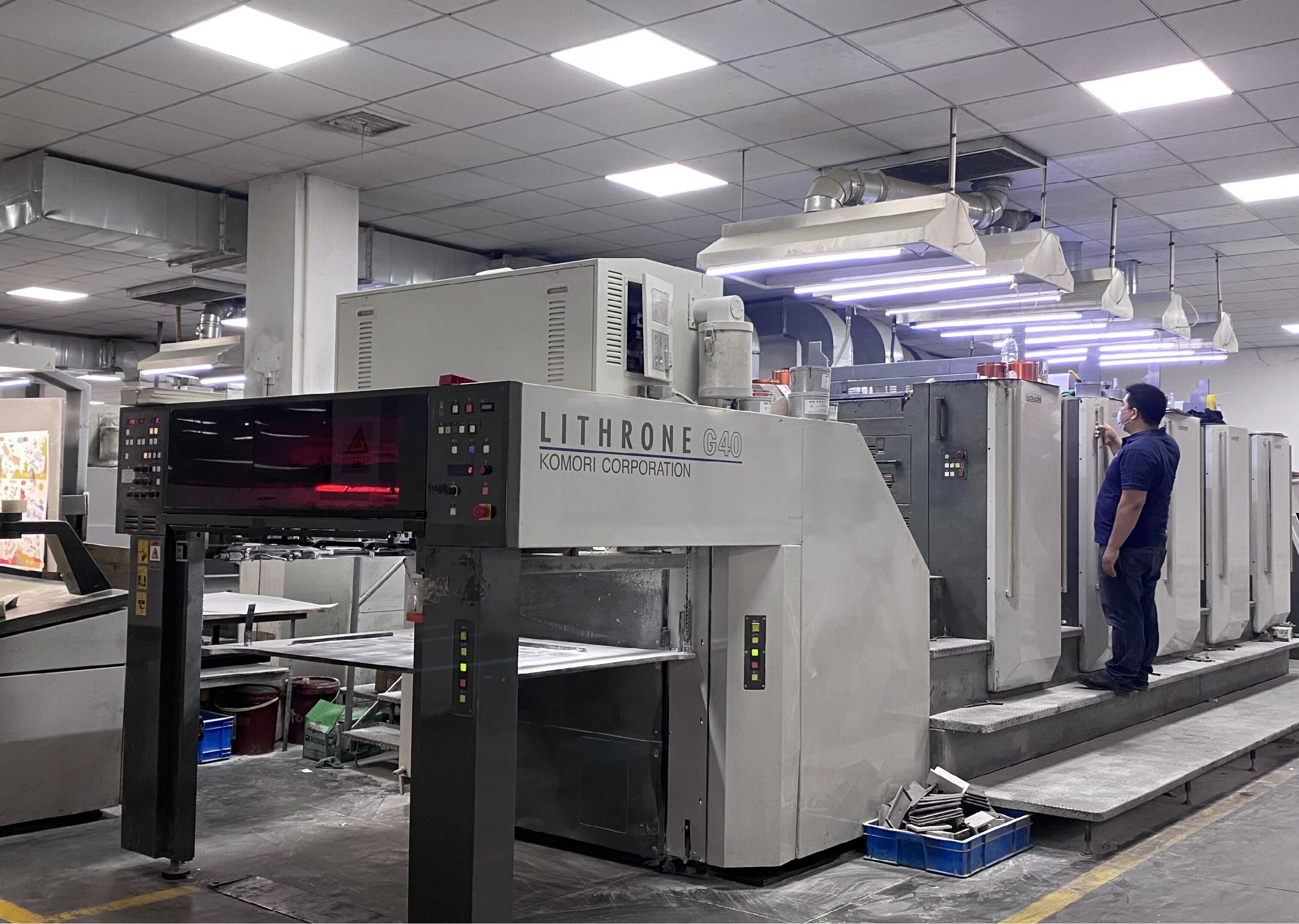
Printing and finishing equipment: colour consistency and edge cutting are controlled on the line, not fixed after packing.
Colour control is a process, not a promise
Because inaccurate printing colour is a known risk in card game production, the control method has to be written into the workflow. Documented approaches include ink ratio adjustment on press, colour sampling inspection during the run, and printing machine calibration. For a seller, the practical requirement is simple: approve colour on a physical sample that was produced with the same process and stock as the production run, then confirm that sampling inspection continues during that run.
Quality control across the entire run
Spot-checking a few decks is not the same as controlling a run. Yawanhong conducts 100% testing for quality control, and acceptance criteria for shipments are based on a pre-shipment test. That combination matters for online sellers because a listing is only as stable as its worst-shipped unit, and marketplaces evaluate the average of everything you send.
Compliance that keeps the listing live
Compliance is not a marketing detail; it is a listing eligibility issue. Manufacturers entering EU and US retail markets are expected to work to EN 71 for toy safety and to FSC for sustainable paper sourcing. Yawanhong holds certifications including BSCI, SMETA, FSC, ISO 9001 and Disney FAMA for toy and game manufacturing. FSC-certified materials also support the sustainability claims that many online card game brands now communicate directly to buyers.
Capacity and support for repeat sales
A deck that sells well creates a second problem: restocking. Monthly production capacity, lead time and minimum order quantity determine whether a listing stays in stock. The manufacturer operates a monthly production capacity of 80,000 units, with a typical production lead time of 25–45 days and a minimum order quantity of 1,000 units. After-sales support includes remote support services, which matters for sellers who are geographically far from the factory and need issue resolution without a site visit.
Step-by-Step Breakdown: Specifying a Card Game for E-commerce
The sequence below follows the order in which decisions lock each other down. Changing an early step later is expensive; changing a late step is usually just paperwork.
- Define the listing before the deck. Decide the sales channel, the primary listing image and the expected handling route. Packaging decisions follow from the listing, not the reverse.
- Choose the box structure against the shipping method. Compare a colour box against a lid-and-base box on compression resistance, printed surface area and unit cost, and match it to how the parcel will actually travel.
- Fix board stock and finish for repeated play. Match stock to the play pattern — party and drinking games are handled more roughly than collector formats — and confirm smooth edge cutting and consistent sizing.
- Approve colour on a physical sample. Use colour sampling inspection and printing machine calibration as the reference process, with ink ratio adjustment documented for the production run.
- Confirm compliance for the destination market. Verify EN 71 and FSC alignment where EU or US retail entry is intended, and collect the certification set (for example BSCI, SMETA, FSC, ISO 9001, Disney FAMA) before the purchase order is issued.
- Set acceptance criteria before production starts. A pre-shipment test as the acceptance basis avoids disputes after the container has left.
- Agree commercial terms. Minimum order quantity of 1,000 units; delivery terms of FOB, CIF, DDP or another customer-preferred arrangement; payment terms of 30/70.
- Plan the reorder against lead time. A 25–45 day production lead time against an 80,000-unit monthly capacity means the reorder point should be set by the sell-through rate, not by the moment inventory runs low.
- Keep the after-sales channel open. Remote support services cover the issues that appear after delivery, from print queries to reorder coordination.
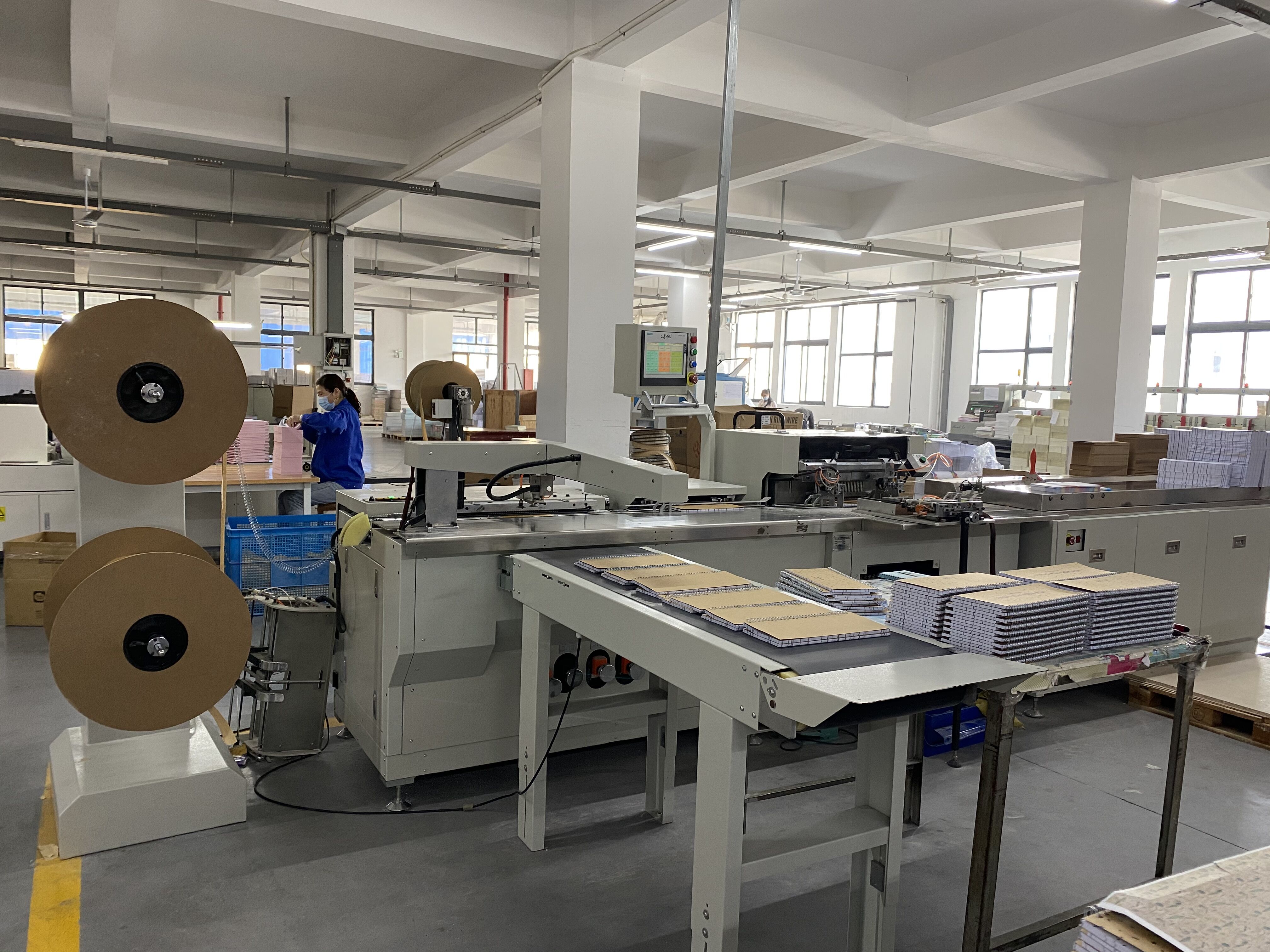
Production and inspection stages: consistency between the approved sample and the shipped run is verified inside the workshop.
Use Cases: Matching Card Game Categories to Packaging and Durability Needs
Different card game categories fail for different reasons, so the specification emphasis shifts with the product.
- Party games and drinking games: handled by groups, often on uneven surfaces. Abrasion resistance, edge cutting quality and box rigidity matter more than collector-grade finish.
- Card games for adults and couples card games: frequently launched as online-exclusive first runs. Brand-forward packaging and accurate colour reproduction carry more weight than retail shelf presence.
- Family games and kids card games: the compliance load is higher, since EN 71 toy safety and FSC paper sourcing are expected for EU and US retail entry. Durable stock also reduces replacement claims from heavy family use.
- Travel games for adults and kids card games: the box takes continuous compression inside bags. Compact structures and consistent card sizing are the priority.
- Tarot cards: with 61% of new decks featuring custom illustrations, print fidelity and colour control dominate the specification, and the deck is often a repeat-purchase item.
- Poker cards and playing cards: standard formats where consistency between production runs is the main quality signal.
- Educational card games for kids: the combination of safety compliance, smooth edges and long lifespan drives the buying decision for schools and parents.
- Online-exclusive configurations: products such as 5608 are already used for online sales and are produced with FSC-certified materials — a practical example of a deck specified around e-commerce delivery rather than retail shelf placement.
Comparison Table: Premium Versus Low-Quality Card Game Configurations
The table below summarises the documented differences that matter most after a card game is packed into a parcel.
| Parameter | Premium card game configuration | Low-quality card game |
|---|---|---|
| Material and print | Premium cardstock material with precise CMYK offset printing | Inconsistent stock and print reproduction |
| Cutting and sizing | Smooth edge cutting and consistent sizing | Irregular edges and sizing variation |
| Finish | Enhanced durability and premium finish | Finish degrades quickly with handling |
| Lifespan | 3–5x longer usage cycles | Baseline usage cycles |
| Defect rate | Below 1–2% | Higher, less predictable |
| Best for | Retail and premium card game market, family entertainment and repeated gameplay, educational use, export-grade OEM/ODM projects | Low-handling use where longevity is not a requirement |
| Cost differential | Documented 10%–30% cost difference between configurations | Lower unit cost, higher replacement frequency |
| Quality maintenance | Strict QC inspection process, stable mass production consistency, advanced die-cut and printing control, higher packaging protection standards | Limited process control |
| Efficiency outcome | Higher reusability efficiency, lower replacement frequency, better user experience retention, higher product lifecycle value | More replacements and returns |
FAQ
What certifications and material standards should be verified before ordering custom card games for the US or EU?
Custom card manufacturers must adhere to EN 71 (Toy Safety) and FSC (Forest Stewardship Council) for sustainable paper sourcing to enter EU and US retail markets. Yawanhong holds certifications including BSCI, SMETA, FSC, ISO 9001 and Disney FAMA for toy and game manufacturing, and FSC-certified materials are used in online-oriented configurations such as 5608. Separately, US Customs (CBP) reclassified plastic-coated paper card games under HTSUS 9504.40.00 as duty-free effective March 18, 2024, which affects landed cost for US sellers.
Can one manufacturer handle both the durability and the brand-display side of e-commerce packaging?
Both are production decisions on the same line, so they are normally confirmed together with a single partner. Colour boxes and lid-and-base boxes are standard packaging formats produced alongside card games, board games and puzzles. Premium configurations use premium cardstock material, precise CMYK offset printing, smooth edge cutting and consistent sizing for enhanced durability and a premium finish. Yawanhong operates a monthly production capacity of 80,000 units and conducts 100% testing for quality control, with colour managed through ink ratio adjustment, colour sampling inspection and printing machine calibration.
What drives the cost difference between a premium and a low-quality card game deck?
In documented supplier comparisons, premium card game configurations use premium cardstock material, precise CMYK offset printing, smooth edge cutting and consistent sizing, delivering a lifespan of 3–5x longer usage cycles and a defect rate below 1–2%. The recorded cost difference between configurations is 10%–30%. The useful way to read that range for an online store is per usable unit rather than per unit price: a lower-cost deck with a higher defect rate adds replacements, returns and review risk, while premium configurations are associated with higher reusability efficiency, lower replacement frequency and higher product lifecycle value.
How should an online seller validate a card game sample before committing to a full production run?
Validation should be built around the same processes used in production rather than around a single presentation sample. Colour is approved on a physical sample supported by colour sampling inspection and printing machine calibration, with ink ratio adjustment documented for the run. Cutting quality and consistent sizing should be checked on the sample, since these are the parameters most often cited when reprints diverge. Acceptance criteria for the shipment are then based on a pre-shipment test, which keeps the sample, the production run and the final delivery on one documented standard.
What order volume and lead time should an online seller plan for, and how is a restock arranged?
The minimum order quantity is 1,000 units, the typical production lead time is 25–45 days, and monthly production capacity is 80,000 units. Delivery terms can be FOB, CIF, DDP or another customer-preferred arrangement, and payment terms are 30/70. Because the lead time is measured in weeks, the reorder trigger should be set by observed sell-through rather than by remaining stock. After-sales support includes remote support services for sellers managing the account remotely. Sellers who want the full production and packaging overview before specifying a run can download the Yawanhong global manufacturing brochure, or contact the team at info@yawanhong.vn for a quote or sample request.
Conclusion
Selecting a custom card game for online sales comes down to four specification decisions that survive contact with a parcel network: a box structure chosen for the shipping route, board stock and print method that hold up under repeated play, a colour control process that keeps run two identical to run one, and quality control strong enough to make defect rates predictable. Around those sit the terms that keep a listing alive — 1,000-unit minimum order quantity, a 25–45 day lead time against 80,000 units of monthly capacity, and acceptance criteria based on a pre-shipment test.
Compliance completes the picture. EN 71 and FSC alignment support entry to EU and US retail markets, the certification set at Yawanhong includes BSCI, SMETA, FSC, ISO 9001 and Disney FAMA, and the HTSUS 9504.40.00 duty-free treatment effective March 18, 2024 changes the landed-cost calculation for US-facing stores.
The practical next step is not a larger artwork budget. It is a written specification: box structure, stock, colour approval method, acceptance criteria and reorder point, confirmed with one manufacturing partner before the first purchase order.
Planning an e-commerce card game run?
Review the full manufacturing, packaging and compliance overview in the Yawanhong global manufacturing brochure, or visit www.yawanhong.vn for product and capability details.
Sample requests and quotes: info@yawanhong.vn | WhatsApp: +1 626 417 3930 | Contact: Vivian

OEM/ODM card game production with flexible customisation for online retail programs.
Have Questions or Need More Details?
Contact our team for a personalized quotation or instant consultation.
Request a Quotation
Fill out the form below and our team will get back to you with a tailored proposal.
WhatsApp Direct Chat
Prefer to chat in real-time? Message us on WhatsApp for instant assistance & quick answers.
- Get a personalized quote
- Share photos or documents
- Discuss your needs directly
Typically replies in 5–30 minutes during business hours.