
What Is a Custom Card Game? Materials, Safety, and Global Market Basics
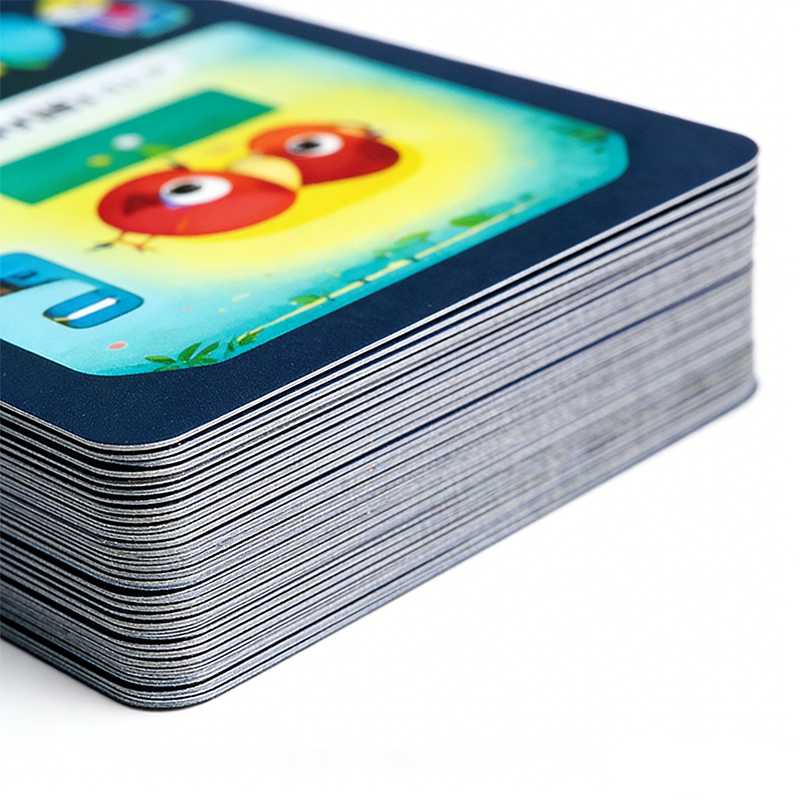
A custom card game is a printed paper game product manufactured to a buyer’s own rules, artwork, card size, paper weight and finish. It is not a standard deck taken from existing stock: the deck does not exist until the artwork, the material specification and the manufacturing brief are agreed between the buyer and the factory.
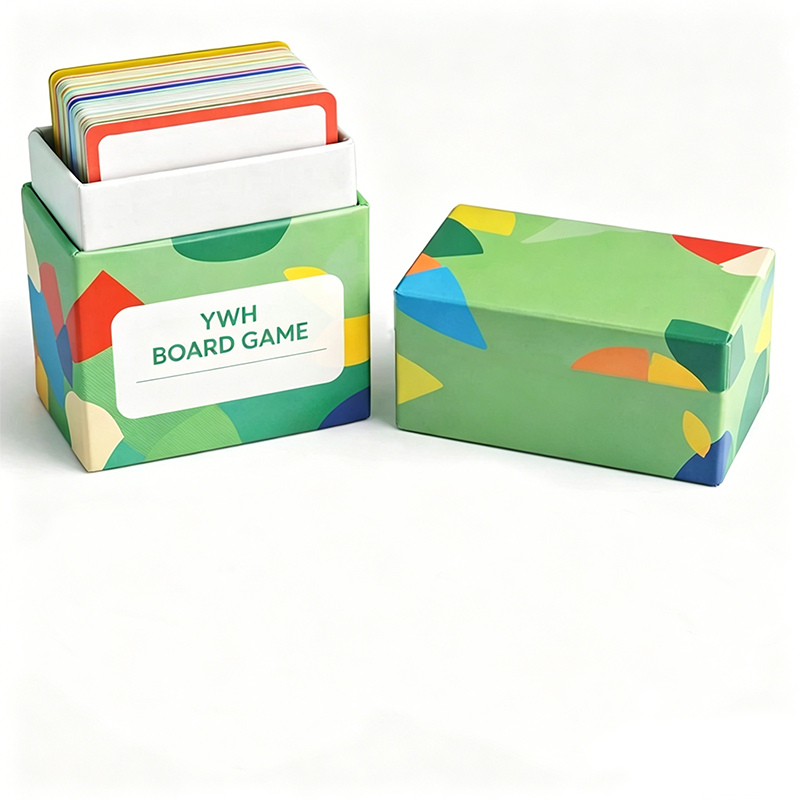
In light-industry manufacturing the term describes a production project rather than a single object. The buyer supplies rules, card faces and packaging requirements; the factory prints coated paper or art paper, laminates it, cuts it to card size and packs the finished deck. Vietnam Yawanhong Printing Culture Co., Ltd. (Yawanhong) is a printing and toy manufacturer established in 2006 in Vietnam, with a factory area of 55,000 m² and approximately 280 employees. Its catalogue covers board games, card games, puzzles, notebooks, colour boxes, publications, plastic toys, plush toys and wooden toys; its custom card game model, CG-001, is the working example used throughout this article.
This explainer answers three basic questions for a first-time buyer: what a custom card game is made of, which material and safety requirements apply, and how the market around it is structured.
Problem Definition: Why “Custom Card Game” Is a Confusing Term
The same phrase covers three different things, and mixing them up is the most common reason a first order goes wrong.
- The game concept — rules, card content, player count, tone, artwork.
- The printed deck — paper weight, printing method, surface finish, corner style, edge treatment.
- The manufacturing project — material documentation, safety testing, minimum order quantity, lead time, quality control.
A team that has agreed on the concept but not on the deck specification receives quotes that cannot be compared, because paper weight, printing system, finish and edge treatment each change both the price and the handling feel of the finished product.
Two risks follow from that gap. The first is a deck that is print-correct but play-poor: too thin for shuffling, too glossy in strong light, or see-through when cards are held against a lamp. The second is a compliance gap: card games intended for use in play by children fall under toy-safety rules, and a supplier claim printed in a brochure is not the same evidence as a test report tied to a specific product and site.
Industry Background: Where Custom Card Games Sit in the Global Market
Card games sit inside two overlapping commercial categories, and published market figures use different definitions for each. Grand View Research reports the playing cards and board games market at USD 19.9 billion for base year 2024, and states that Asia Pacific accounted for a 39.5% revenue share of that market in 2024. Custom Market Insights projects the global trading card game market, a narrower collector- and play-driven category, at USD 14.12 billion for 2025. The two figures are not additive and should not be compared as if they described the same product set.
Manufacturing for these categories is concentrated partly in Asia. The custom card game application covered by model CG-001 is specified for Vietnam and China, and Yawanhong operates a 55,000 m² facility in Vietnam with 25 engineers in its R&D team and annual production capacity of 1,000,000 units. The company exports 100% of its output, with the USA and Europe named as its main markets.
Product coverage in the CG-001 range includes poker cards, tarot cards, flash cards and playing cards, produced for the printing, game toy and manufacturing industries. Demand comes from two very different buyers: promotional buyers who need a branded deck for enterprise promotion, and consumer-product buyers who need a retail-quality game for family play, interaction, kids education, or packaging that supports product protection and brand display.
Detailed Solution: What a Custom Card Game Is Actually Made Of
A custom card game is a stack of printed, laminated paper sheets cut to a chosen size. Six specification groups decide how the deck feels, how long it survives handling, and which documents a buyer needs before ordering. All six are configurable in model CG-001.
1. Paper and card body
Coated paper is the base stock, with art paper named as the primary material for the custom card game. Paper weight is selectable from 128 to 400 gsm, or to a custom weight, and card size is fully customisable. Weight alone does not describe a card: stiffness and opacity are construction properties as much as thickness properties. A manufacturer-authored technical guide identifies black or blue opaque card cores as a benchmark for preventing light from passing through a card, which matters in any game where hidden information is part of play.
2. Printing method
Two print systems are available: CMYK four-colour process printing and Pantone colour printing. CMYK reproduces artwork with gradients and photographic detail; Pantone matches a defined colour reference, which is the usual route when a brand colour must stay identical from one print run to the next.
3. Surface finish
Finish options are matte lamination, glossy lamination, linen, UV coating and varnishing. The choice affects glare, fingerprint visibility, slip and surface wear. The available supplier data does not include standardised abrasion, bend or colour tolerances, so a physical sample remains the only reliable test of how a specific finish will behave in play.
4. Corner and edge treatment
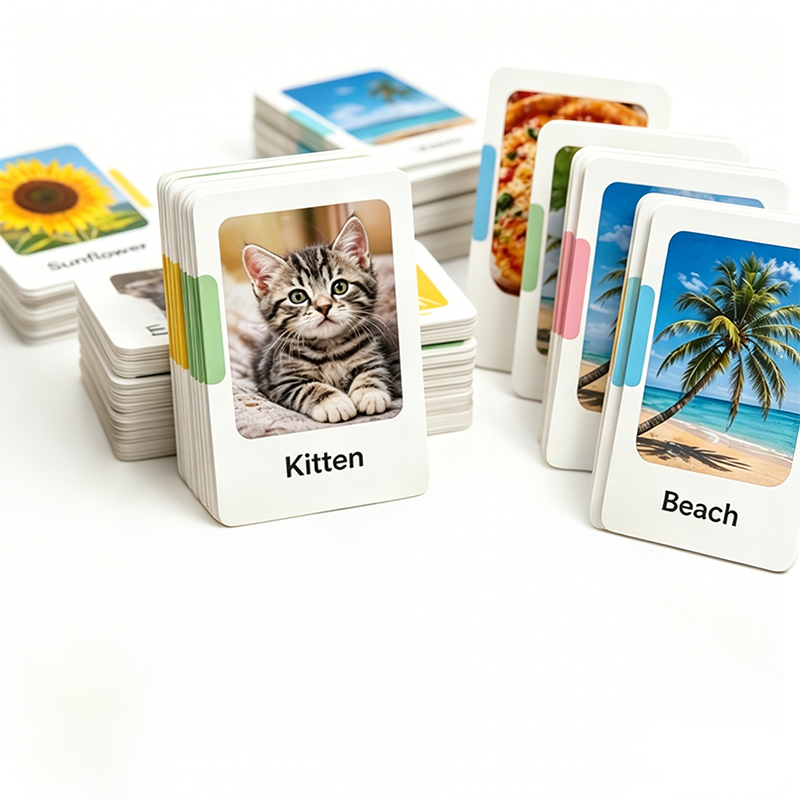
Cards can be cut with round corners or square corners, and the card edge can be standard, coloured, or gold foil. Corner style changes both the look and the wear pattern at the card point, while edge treatment is a visual and brand-display decision that is applied after cutting.
5. Inks, edges and child safety
The production brief for this application carries four special requirements: eco-friendly paper material, non-toxic ink, child-safe edge treatment, and FSC compliant raw materials. For the United States market, ASTM F963-23 is the mandatory toy safety standard, and according to the U.S. Consumer Product Safety Commission it covers mechanical, chemical and flammability testing for products intended for use in play by children — a scope that includes card games. In the European Union, toy safety is assessed under the Toy Safety Directive framework, with the EN 71 test series used for mechanical, chemical and flammability checks. Which path applies depends on who the deck is for, not on what it is called.

6. Production environment and equipment
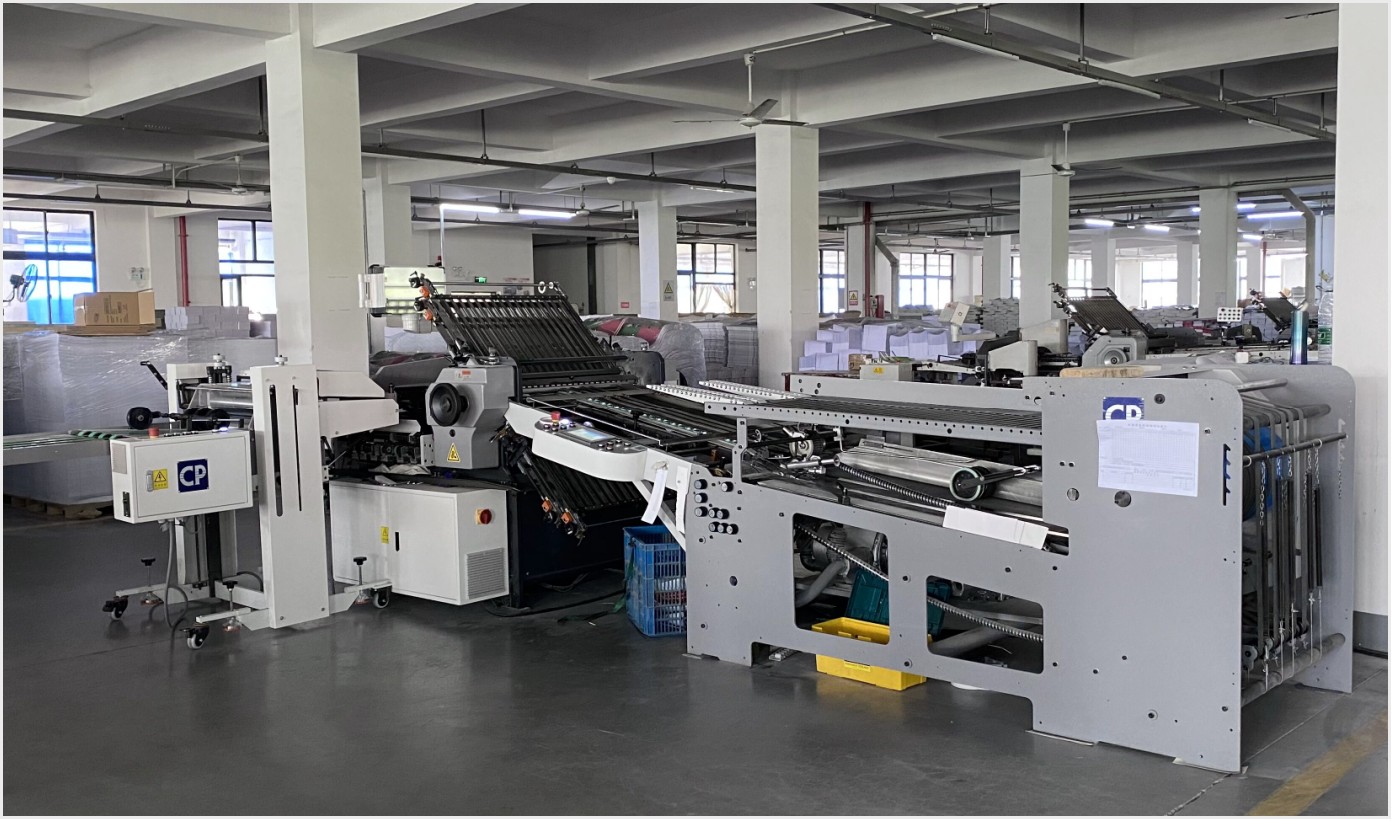
The application is specified for normal temperature and dust-free indoor workshop conditions, suitable for printing and processing of paper products projects. Supporting equipment named in the specification includes a Heidelberg printing press, automatic laminating machine, varnishing machine, gliding press, embosser and die cutting machine. Each machine maps to a decision above: the press to CMYK or Pantone, the laminator and varnisher to surface finish, the embosser and gliding press to decorative treatment, and the die cutter to card size and corner style.
Documentation a buyer should hold before ordering
Supplier claims are statements; documents are evidence. Before a purchase order is issued, request the certificate or audit report number, the issuing organisation, the scope covering the specific product and production site, and the validity date. A social audit, a forest chain-of-custody certificate, a quality management certificate and a brand licensing approval are different evidence categories and cannot be combined into a single “certified” claim.
Step-by-Step Breakdown: From Concept to a Production-Ready Deck
- Fix the audience and the play format. A deck for children and a deck for adult social play follow different compliance paths and usually different durability expectations. Decide this before any artwork is finalised.
- Write the deck specification in values, not adjectives. Card size, paper weight within the 128–400 gsm range, CMYK or Pantone, finish, corner style and edge treatment. A brief written this way can be quoted line by line.
- Match material and finish to use. A promotional deck that is handled briefly and a family game that is shuffled for years are specified differently, even with identical artwork.
- Confirm the compliance route. Child-directed products need toy-safety testing evidence for the destination market; paper sourcing documentation should be requested regardless of audience.
- Validate a physical sample. Check weight and stiffness in the hand, hold cards against a light source to assess opacity, compare printed colour against the Pantone reference, then check finish, corner and edge.
- Lock commercial terms in writing. Confirm minimum order quantity, the definition and start point of lead time, how a “unit” is defined, and the inspection plan. Capacity and lead-time figures circulating in supplier marketing material should be re-confirmed for the specific order rather than assumed.
Use Cases: Where a Custom Card Game Is Deployed
Card games serve five functions in the CG-001 application: enterprise promotion, family fun, interaction, kids education, and packaging for product protection and brand display. Those functions pull the specification in different directions.
- Enterprise promotion. Brand colour accuracy dominates, which points to Pantone printing and a finish that survives handling at events.
- Family play and interaction. Shuffle feel and opacity matter more than decorative effects; a mid-range paper weight with a linen or matte finish is usually the practical starting point.
- Kids education. Flash cards and learning decks sit closest to toy-safety scope, so non-toxic ink, child-safe edge treatment and documented testing come first.
- Adult and travel formats. Decks designed to be carried are judged on pack size and card durability rather than on the thickness of the box.
- Packaging and brand display. When the deck doubles as a product insert, protection of the cards and clarity of the printed brand message become specification requirements.
Comparison Table: Market Data and Specification Reference
The table below separates the two market figures introduced earlier, because a buyer reading them side by side without the definitions would draw the wrong conclusion about category size.
| Source | Metric | Value | Year | Scope as published | What it can and cannot tell a buyer |
|---|---|---|---|---|---|
| Custom Market Insights | Global trading card game market size | USD 14.12 billion | 2025 projection | Trading card games, forecast 2025–2034 | Indicates the scale of the collector and organised-play segment; it does not describe promotional or educational card printing. |
| Grand View Research | Playing cards and board games market size | USD 19.9 billion | Base year 2024 | Playing cards and board games combined | Useful for category context; board games and playing cards are reported together, so it cannot isolate card-only demand. |
| Grand View Research | Asia Pacific revenue share | 39.5% | 2024 | Share of the playing cards and board games market | Supports an Asia-based sourcing assumption; it is a revenue share, not a production volume measure. |
| U.S. Consumer Product Safety Commission | Mandatory toy safety standard | ASTM F963-23 | Effective 2023 | Products intended for use in play by children, including card games | Defines the testing scope for child-directed decks in the US market; it does not certify an individual supplier. |
The specification reference below is the corresponding checklist for the product itself. All values are options offered in model CG-001 and are confirmed per order.
| Specification group | Available options | Decision it controls |
|---|---|---|
| Material | Coated paper, art paper, custom | Base feel and print behaviour |
| Paper weight | 128–400 gsm or custom | Stiffness, hand feel, pack thickness |
| Card size | Custom | Format fit and packaging dimensions |
| Printing | CMYK 4C printing, Pantone colour printing, custom | Colour accuracy and reproduction of artwork |
| Surface finish | Matte lamination, glossy lamination, linen, UV coating, varnishing, custom | Glare, slip, fingerprint visibility, surface wear |
| Corner style | Round corner, square corner, custom | Handling safety and edge appearance |
| Card edge | Standard, coloured, gold foil, custom | Brand display and decorative value |
| Special requirements | Eco-friendly paper, non-toxic ink, child-safe edge treatment, FSC compliant raw materials | Market access and child-directed compliance |
Frequently Asked Questions
Which materials and safety standards matter for a custom card game?
Material selection starts with coated paper or art paper in a 128–400 gsm range, printed with non-toxic ink and finished with child-safe edge treatment where the deck is aimed at children; FSC compliant raw material is specified for this application. On the regulatory side, ASTM F963-23 is the mandatory US toy safety standard and covers mechanical, chemical and flammability testing for products used in play by children, which includes card games. Buyers should verify the test report, the issuing organisation, the product scope and the validity date rather than relying on a certification logo.
What can be customised in a custom card game?
In model CG-001 the customisable elements are card size, paper weight from 128 to 400 gsm or a custom weight, CMYK four-colour or Pantone colour printing, matte lamination, glossy lamination, linen, UV coating or varnishing, round or square corners, and standard, coloured or gold foil card edges. Product categories covered are poker cards, tarot cards, flash cards and playing cards, produced for the printing, game toy and manufacturing industries.
What determines the cost of a custom card game order?
No verified public price benchmark for custom decks is published, so cost should be read from the specification rather than from a list price. The variables that move a quotation are paper weight, print system, surface finish, edge treatment, corner style, card size, packaging format and order quantity. Sending a specification written in those values is the fastest way to receive a quotation that can be compared with another supplier’s offer.
Can I review a physical sample before production?
Yes, and a sample is the only reliable way to judge the properties that supplier data does not standardise, including stiffness in the hand, opacity against a light source, printed colour against a Pantone reference, finish behaviour and edge quality. Yawanhong accepts sample and quotation requests through info@yawanhong.vn; a full specification from step two of the process above shortens the sampling cycle considerably.
How should I evaluate custom card game manufacturers?
Compare manufacturers on evidence rather than on catalogue wording: product categories produced, material and finish range, the production equipment actually named, compliance documentation with scope and validity dates, R&D resource and stated capacity. Yawanhong, for example, lists a 55,000 m² factory, approximately 280 employees, a 25-engineer R&D team and annual capacity of 1,000,000 units, with 100% of sales exported to the USA and Europe. Confirm minimum order quantity, the definition of a unit, and the start point of lead time in writing, because those commercial terms are order-specific.
Conclusion
A custom card game is a manufacturing project expressed as a printed paper product: paper weight between 128 and 400 gsm or custom, CMYK or Pantone printing, a defined finish, corner and edge treatment, non-toxic ink and child-safe edges, and FSC compliant raw material where paper sourcing is part of the brief. The market context is large and split across definitions, with Grand View Research reporting USD 19.9 billion for playing cards and board games in base year 2024 and a 39.5% Asia Pacific revenue share, and Custom Market Insights projecting USD 14.12 billion for trading card games in 2025.
The practical lesson for a first-time buyer is that specification decisions and compliance decisions are made at the same moment. A deck whose paper, ink, edges and documentation are fixed before the artwork is signed off moves through sampling and production with far fewer corrections than one specified by adjective alone.
Next Step: Sample, Quotation or Catalogue
Yawanhong produces custom card games in poker card, tarot card, flash card and playing card formats at its Vietnam facility, with exports to the USA and Europe. To move from definition to a real deck, send your card size, paper weight, print system, finish, corner and edge requirements, and the destination market for the product.
- Email: info@yawanhong.vn
- WhatsApp: +1 626 417 3930
- Website: www.yawanhong.vn
- Factory brochure (PDF): Yawanhong VN Group Global Manufacturing
Address: Nghia An Industrial Cluster, Vinh Lai Ward, Hai Phong City, Vietnam.
Have Questions or Need More Details?
Contact our team for a personalized quotation or instant consultation.
Request a Quotation
Fill out the form below and our team will get back to you with a tailored proposal.
WhatsApp Direct Chat
Prefer to chat in real-time? Message us on WhatsApp for instant assistance & quick answers.
- Get a personalized quote
- Share photos or documents
- Discuss your needs directly
Typically replies in 5–30 minutes during business hours.