
Avoiding Risks in Vacuum Homogenizer Emulsifier Procurement
Procuring a vacuum homogenizer emulsifier mixer is a high-stakes investment for any food or cosmetic manufacturer. A wrong choice can lead to batch failures, production downtime, regulatory non-compliance, and costly delays. This guide is designed to help industrial buyers identify, evaluate, and mitigate the most common risks when sourcing these critical emulsifying machines, whether for mayonnaise, sauces, creams, or lotions.
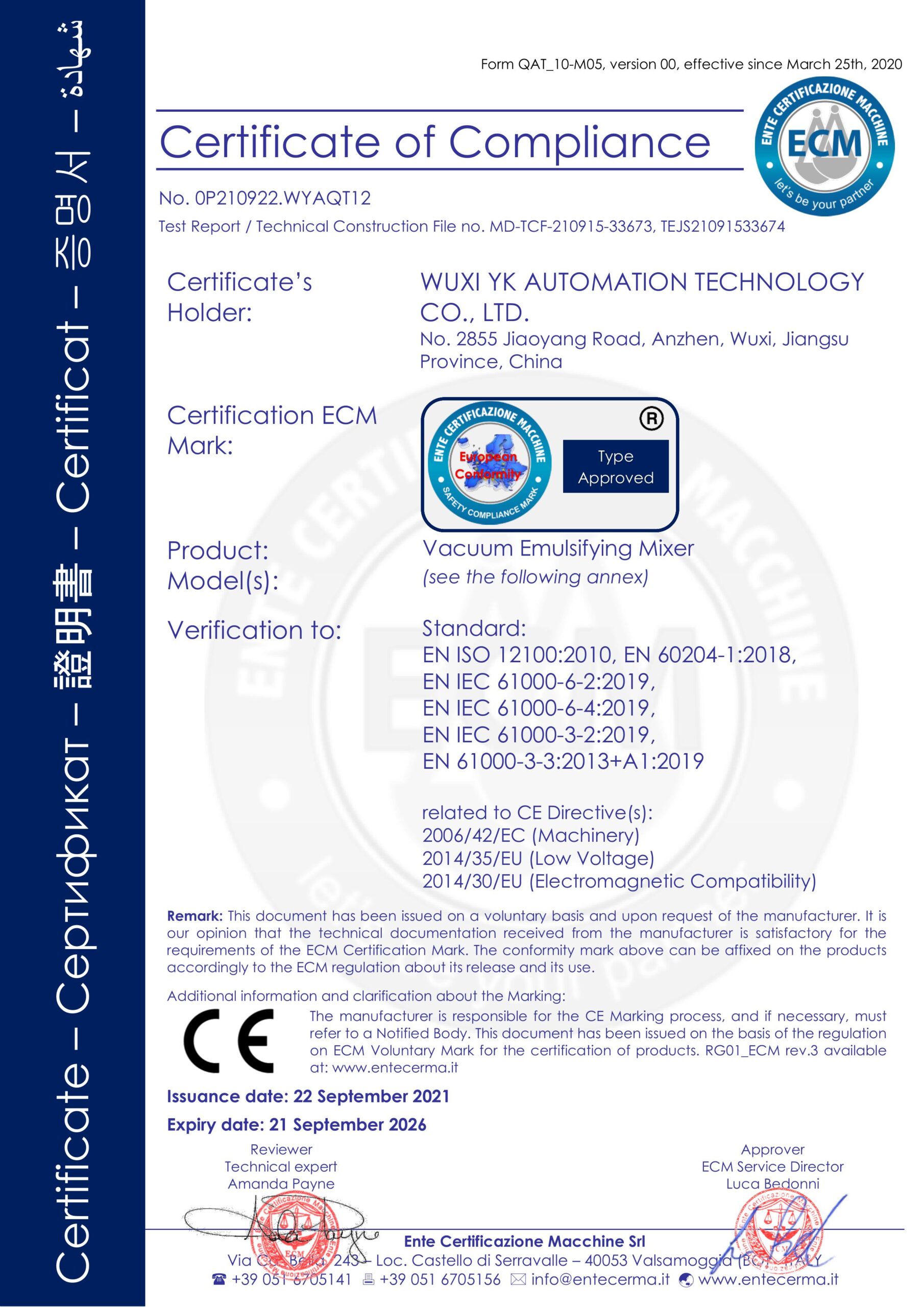
Verifiable CE certification is a primary risk mitigation factor for buyers targeting European markets.
1. What Is a Vacuum Homogenizer Emulsifier Mixer and Why Does Procurement Risk Matter?
A vacuum homogenizer emulsifier mixer is a specialized processing vessel that combines high-shear mixing, vacuum deaeration, heating, cooling, and emulsification in a single unit. It is used to produce stable emulsions with particle sizes typically in the range of 1–5 µm, far finer than conventional mixers (which produce 5–20 µm). This machine is indispensable for manufacturing mayonnaise, salad dressings, cosmetic creams, lotions, and pharmaceutical ointments.
Why risk management matters: The initial investment ranges from tens of thousands to hundreds of thousands of dollars. A poorly selected or substandard machine can result in:
- Inconsistent product quality (phase separation, graininess)
- Higher rejection rates and material waste
- Unexpected maintenance costs and production stoppages
- Non-compliance with food safety or cosmetic GMP standards
- Lack of after-sales support leading to prolonged downtime
2. Industry Background: The Growing Demand for Reliable Emulsification Equipment
The global market for processed food and personal care products continues to expand, especially in regions like Europe, Southeast Asia, and Latin America. Mayonnaise manufacturers require equipment that can handle oil-water ratios exceeding 80% while maintaining a stable, creamy texture. Cosmetic producers demand precise control over particle size and viscosity for lotions, sunscreens, and anti-aging creams. These applications push the limits of standard mixers, making the vacuum homogenizer emulsifier the preferred choice.
According to industry feedback, buyers who fail to vet suppliers thoroughly often encounter:
- Incorrect material selection (e.g., SS304 vs. SS316 for acidic or corrosive formulas)
- Inadequate vacuum depth (below –0.09 MPa) causing air bubbles
- Insufficient shear speed for breaking down droplets
- Missing or invalid certifications (CE, ISO, FDA)
3. Detailed Solution: A Systematic Approach to Risk-Free Procurement
3.1 Define Your Process Requirements First
List the key parameters: batch size, viscosity, required particle size, operating temperature (up to 110°C is common), and vacuum level (–0.09 MPa is standard). For mayonnaise, a high shear mayonnaise homogenizer with recirculation is ideal. For cosmetic creams, look for gentle mixing combined with high shear to prevent aeration.
3.2 Select the Right Machine Series
Reputable manufacturers like YeKeey (Wuxi YK Automation Technology Co., Ltd) offer multiple lines to match different production scales:
| Series | Key Features | Best For |
|---|---|---|
| MC Recirculation Homogenizing Mixer | Circulation loop, up to 2800 rpm, batch sizes 100–2500 L | Mayonnaise and sauces requiring high throughput |
| ZJR Series Vacuum Emulsifying Mixer | Up to 6000 rpm, lab to industrial (5–2500 L), –0.09 MPa | Cosmetic creams, lotions, and pharmaceuticals |
| SP Series Standard Vacuum Processing Unit | Power up to 110 kW, large capacity (30–10000 L) | High-volume production of food and personal care |
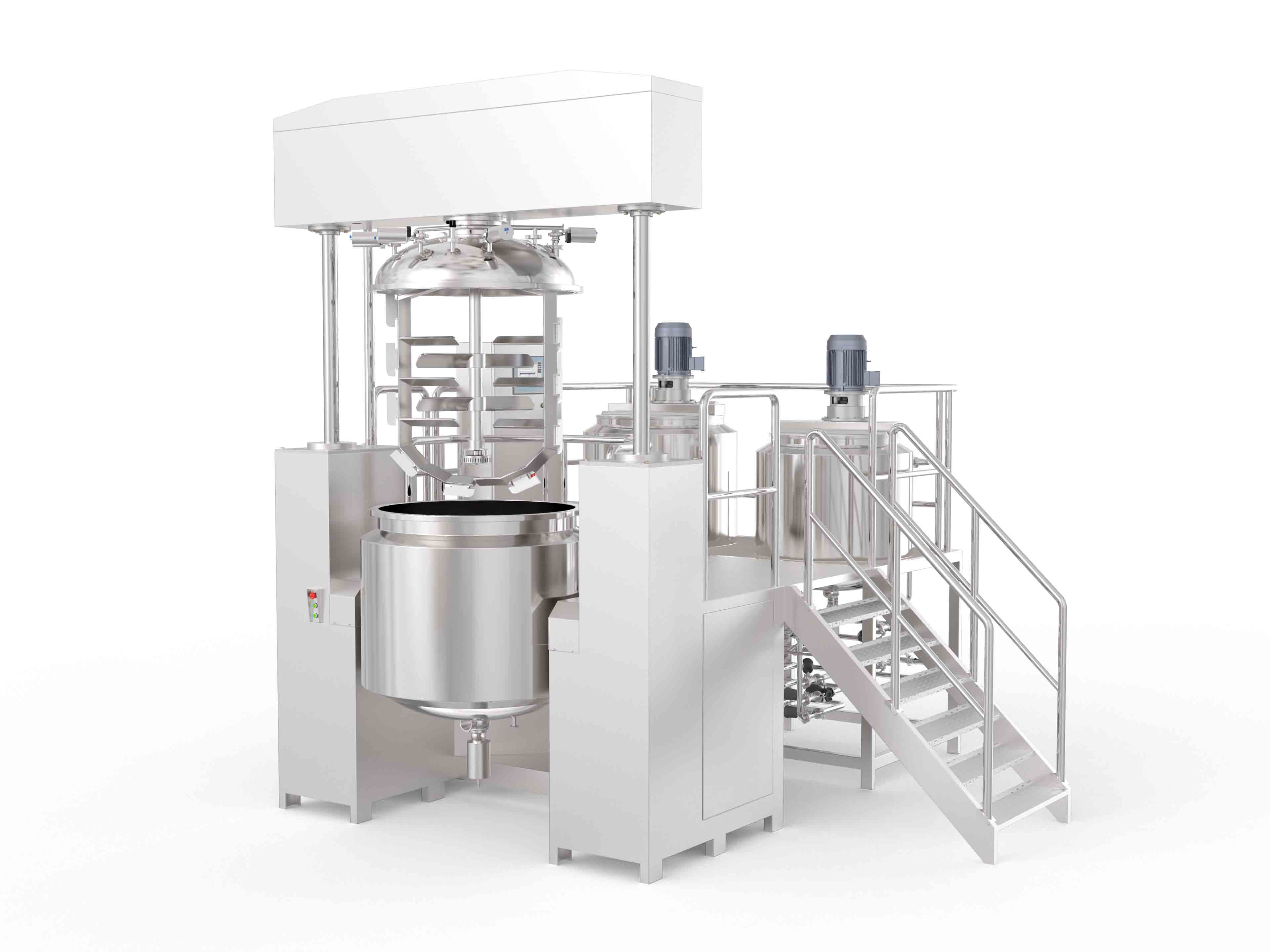
The ZJR series offers high shear speeds up to 6000 rpm for superior emulsification.
3.3 Verify Manufacturer Credentials and Certifications
Always demand proof of compliance. A reliable supplier like YeKeey holds:
- ISO 9001 quality management system (implemented since 2003)
- CE certification for Vacuum Emulsifying Mixer (Cert. No. 0P210922.WYAQT12) – valid through September 2026
- CE for High Shear Homogenizer and Filling Machine
- High-tech enterprise recognition (since 2018) with 55 patents
These certificates are verifiable through the certification body ECM, giving you legal protection and market access in the EU and other regions.
3.4 Evaluate Production Capability and Quality Control
Visit the factory if possible, or request a virtual tour. YeKeey's facility spans 20,000 m² with 80 employees and an annual output of 600 units. Their quality control includes 100% testing of every machine before shipment. The R&D team of 8 engineers ensures continuous improvement and customization capability.
Also check risk control measures: for example, anti-fall self-locking mechanism on the lifting system and high-precision liquid level sensors to prevent material entrainment into the vacuum system – these details reflect safety-first engineering.
3.5 Clarify Commercial Terms and After-Sales Support
Standard procurement terms from YeKeey include:
- Minimum Order Quantity (MOQ): 1 set – ideal for pilot plants and small-to-medium producers.
- Trade Terms: FOB, CIF, EXW, and CFR available, offering flexibility for international buyers.
- Payment: 30% advance / 70% before shipment (30/70) is standard.
- Delivery Lead Time: 30–60 days depending on customization.
- Testing: Factory Acceptance Test (FAT) can be arranged.
After-sales service includes remote video guidance, spare parts support, and dispatch of technical personnel for on-site repairs – critical for minimizing downtime.
4. Step-by-Step Procurement Checklist
- Define batch size, product viscosity, and required particle size.
- Choose the machine series (MC, ZJR, or SP) based on your application.
- Request certificates: CE, ISO, and any other regional approvals.
- Inspect manufacturer background: factory size, years in business, export experience.
- Ask about safety features (anti-fall, vacuum protection, liquid level sensors).
- Confirm MOQ, Incoterms, payment terms, and warranty period.
- Arrange FAT to witness machine performance before shipping.
- Check references – talk to existing customers in similar industries.
5. Real-World Use Case: YeKeey in Cosmetic Production (Nigeria)
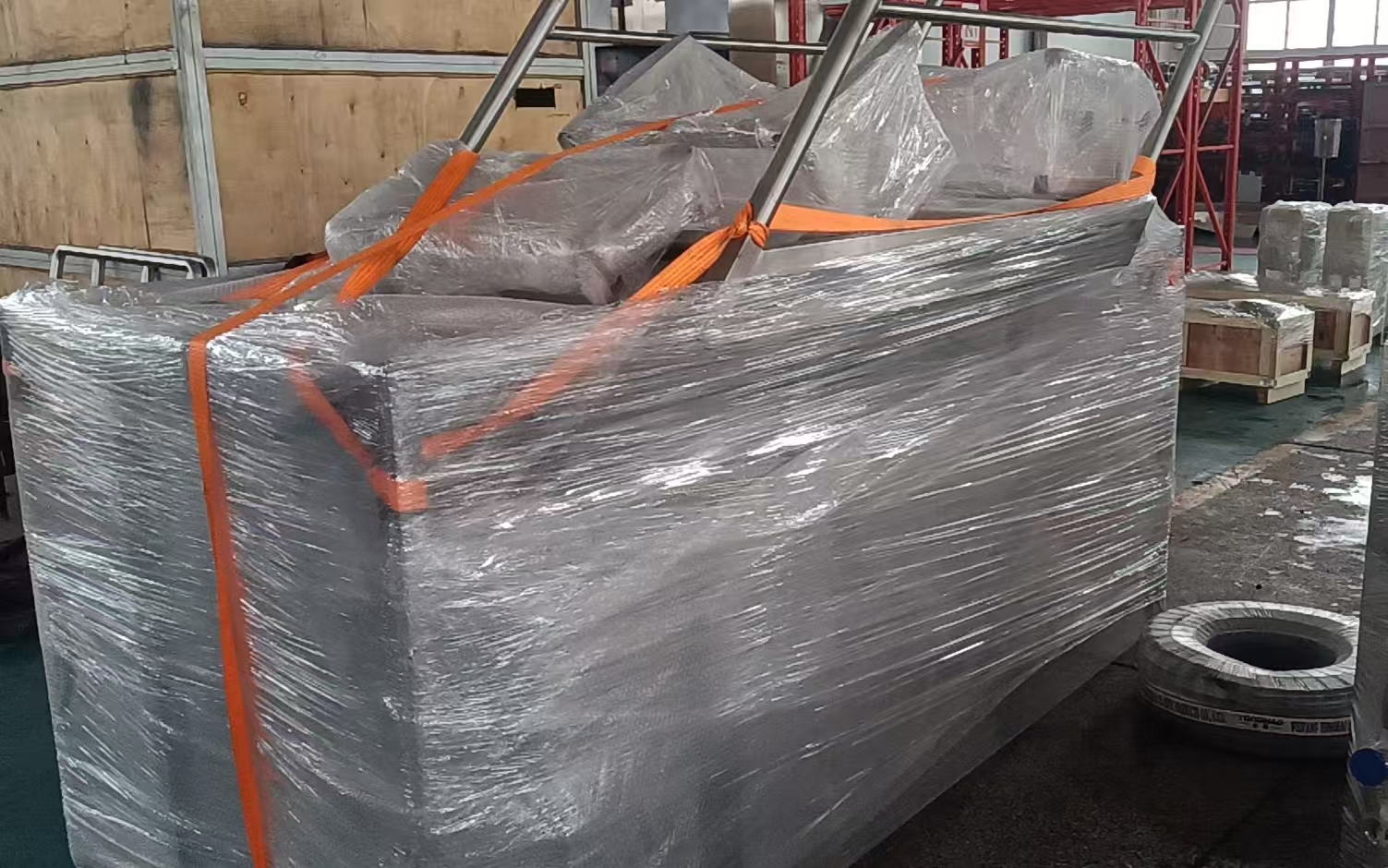
Three sets of YeKeey vacuum emulsifying mixers have operated reliably for over 10 years in Nigeria.
A Nigerian original brand manufacturer (OBM) in the cosmetics sector purchased 3 sets of vacuum emulsifying mixers from YeKeey more than a decade ago. These machines have been running continuously with stable operation and high production efficiency. The customer reports minimal maintenance and consistent product quality, demonstrating that a well-chosen supplier can deliver long-term value. This case underscores the importance of selecting a manufacturer with proven track record and robust after-sales support.
6. Frequently Asked Questions (FAQ)
Q: What is the typical MOQ for a vacuum homogenizer emulsifier?
A: The minimum order quantity is 1 set, making it accessible for both startups and established manufacturers. (Source: YeKeey standard policy)
Q: Which Incoterms does YeKeey offer?
A: Standard trade terms include FOB, CIF, EXW, and CFR, allowing buyers to choose the most cost-effective shipping method.
Q: How can I be sure the machine is safe and reliable?
A: YeKeey machines come with CE certification (certificate number 0P210922.WYAQT12 valid until September 2026), ISO 9001 quality system, and built-in safety mechanisms such as anti-fall self-locking and liquid level sensors to prevent operational hazards.
Q: Can the machine be customized for my specific recipe or raw materials?
A: Yes, YeKeey offers OEM/ODM/OBM customization options including voltage, logo, jar size, heating method, and weighing modules. Their R&D team with 8 engineers can adapt the design to your process.
Q: What after-sales support is available?
A: Support includes remote video guidance, ready stock of wear parts on request, and the ability to dispatch engineers for on-site repairs. This ensures that any issues are resolved quickly to minimize production downtime.
7. Conclusion: Secure Your Investment with a Trusted Partner
Risk-free procurement of a vacuum homogenizer emulsifier mixer is achievable when you follow a structured evaluation process. By focusing on verified certifications, proven manufacturing capability, flexible trade terms, and reliable after-sales service, you can avoid the common pitfalls that plague many buyers.
YeKeey (Wuxi YK Automation Technology Co., Ltd) has been serving the industry since 1998, with over 4,000 enterprise customers across 70+ countries. Their comprehensive portfolio – from the MC recirculation mixers for mayonnaise to ZJR/SP series for cosmetics – provides a solution for every production need. Combined with their CE and ISO certifications, 20,000 m² factory, and 1-set MOQ, they present a low-risk option for first-time and repeat buyers alike.
To get started, download the full company brochure for detailed product specifications and technical drawings:
For immediate inquiries, contact YeKeey's sales team:
Email: sales@yekeey.com
Tel: +86-510-88530599
Address: NO.2855 Jiaoyang Road, An Zhen, Wuxi, Jiangsu, China
WhatsApp: +86 15050678988