
Batch vs. Inline Vacuum Emulsifiers: How to Decide Which Process Line Fits Your Food or Cosmetic Plant
Batch vs. Inline Vacuum Emulsifiers: How to Decide Which Process Line Fits Your Food or Cosmetic Plant
A batch vacuum homogenizer emulsifier mixer performs the entire emulsifying, homogenizing, mixing and dispersing cycle inside one vessel, with the high-shear head mounted through the vessel wall. An inline configuration moves product out of the vessel, through an external high-shear homogenizing head, and back again in a circulating loop. Batch layouts favour recipe flexibility and heavy, high-viscosity masses; inline layouts favour controlled, repeatable shear exposure and faster turnover on high-volume recipes. The right answer for your plant depends on your product structure, your batch size, your compliance route, and how much changeover your line can tolerate.
For a mayonnaise or sauce plant, the difference between the two layouts usually shows up as texture drift, oil droplet size, and how much air stays trapped in the finished product. For a skin care or cream plant, it usually shows up as droplet size distribution, batch-to-batch repeatability, and how cleanly the line can be validated between SKUs. Both effects trace back to the same design question: where is high shear applied, and how many times does the product pass through the shear zone?
This guide treats that question as a decision framework rather than a product pitch. It is written for production engineers and plant managers who already know their recipe and now have to translate it into a process line configuration — whether the target is a food emulsification line for sauces, a personal care production line, or a standalone cosmetics emulsifying machine unit.
What Batch and Inline Configurations Actually Change
In a batch vacuum homogenizer emulsifier mixer, the main vessel holds the whole recipe. An anchor or scraper agitator keeps the mass moving against the jacket wall, while a high-shear homogenizing head mounted through the bottom or the side of the vessel performs the emulsifying and dispersing work. The oil phase and water phase are drawn in under vacuum, heated, mixed and homogenized in place, then cooled and discharged. The entire mass reaches the target structure together, and the homogenizing head runs for a defined time rather than for a defined number of passes.
In an inline configuration, the vessel becomes a holding and buffer tank, and the homogenizing head sits outside it in a circulating loop. A pump draws product from the bottom of the tank, pushes it through the inline head, and returns it to the vessel. Shear is therefore applied progressively: the material at the head is sheared intensely, then re-enters the bulk and blends back in. The number of effective passes is controlled by circulation time and flow rate rather than by a single processing window.
The structural consequence is simple to state and easy to underestimate. A batch layout applies one shear history to the whole batch at once. An inline layout applies repeated, incremental shear exposure with a short residence time at the head. Where a recipe tolerates repeated low-volume passes, inline circulation can deliver a tighter and more controllable droplet distribution. Where the product is a heavy, high-solids mass that cannot be pumped efficiently, forcing it through an external loop creates more problems than it solves, and the in-tank head remains the practical choice.
There is also a downstream difference. Batch lines finish with a discharge step into transfer or filling equipment. Inline lines often continue directly into transfer, holding or filling stages without a separate pump station, which changes both the floor layout and the number of product-contact components that must be cleaned between SKUs.
Problem Definition: Where This Decision Usually Goes Wrong
Mis-specified emulsifying lines tend to fail for one of three reasons.
The decision is made on tank volume and motor power instead of on shear history. Two machines with the same nominal volume can produce different particle size distributions if the homogenizing head's position, diameter or duty cycle differs. Volume tells you how much product fits. It does not tell you how many times that product meets the shear zone, or for how long.
The vacuum system is sized for vapour load without accounting for entrainment. During extraction, liquid or fine solid material can be drawn toward the vacuum port. When that happens, the vacuum system can lose performance and the batch can lose material at the same time. The practical control measure for this risk class is a high-precision liquid level sensor for real-time monitoring, so the operator sees the level condition before entrainment occurs rather than after the vacuum drops.
Safety and lifting hardware are treated as accessories. On vessels fitted with a hydraulic lifting system for the cover or the head assembly, an uncontrolled drop of the lifting system is a recognised hazard. An anti-fall self-locking mechanism — a hydraulic lifting system with a safety self-locking function — is the design answer. These items belong in the specification document, not in the after-sales conversation.
The reason the decision carries weight is that it is largely irreversible after fabrication. The vessel geometry, the jacket type, the position of the homogenizing head, the piping route and the control architecture are all set when the equipment is built. Converting a batch line to inline operation later means new piping, a new pump set, a new control philosophy and a re-validation of the cleaning regime. That is why the batch-versus-inline question deserves to be answered before the technical agreement is signed, not during commissioning.
Industry Background: Why Food and Cosmetic Plants Are Re-Specifying Emulsifying Lines
Demand for high-shear vacuum emulsification equipment tracks directly with the volume of emulsified product manufactured worldwide. The global mayonnaise market alone was worth approximately USD 12.58 billion in 2024, according to Zion Market Research, and that volume sits behind a substantial share of sauce-line emulsification capacity.
On the cosmetics side, the vacuum mixer homogenizer market is estimated at USD 1.02 billion in 2026, with cosmetics and personal care leading at a 38% share of that market, according to Future Market Insights. Broader equipment data points in the same direction: the global homogenizers market was valued at USD 2.10 billion in 2024 and is projected to reach USD 3.79 billion by 2035 at a CAGR of 5.4%, as reported by Roots Analysis. Regional supply matters too — Asia-Pacific holds a 36.2% revenue share of the homogenizing mixer market as of 2025, led by China's manufacturing ecosystem, per Dataintelo.
Two practical observations follow from this. First, published market-size estimates vary considerably depending on scope, so they are useful for direction rather than for a capital-appropriation case; use them to frame the category, not to justify a specific line. Second, because the supplier base is geographically concentrated, buyers are increasingly comparing not only process architecture but also documentation quality, compliance readiness and changeover discipline across potential vendors.
One compliance baseline is stable across regions. Vacuum emulsifying homogenizers intended for pharmaceutical and cosmetic use must generally comply with GMP standards, which typically require SUS316L stainless steel for contact parts, as noted in standard guidance published by UL Solutions. That requirement frequently determines whether a single line can serve both a food recipe and a cosmetic recipe without material substitution.
Seven Criteria That Separate a Batch Line from an Inline Line
1. Where the shear is applied, and how many times the product passes through it
This is the defining criterion. A batch machine shears the whole mass in one place, for a controllable duration. An inline machine shears a moving fraction of the mass repeatedly. If your target droplet size depends on a narrow, consistent energy input, ask the supplier to explain the shear history your recipe would actually experience — not the rated power of the motor.
2. Viscosity and structural sensitivity of the recipe
Pumpable, moderately viscous emulsions with a low yield point behave well in a circulation loop. Heavily structured products — thick sauces, high-solid pastes, formulations that set quickly after shear — resist transfer through external pipework and benefit from an in-tank head. The practical test is whether the finished product can be moved at the required temperature without losing structure.
3. Vacuum level and degassing behaviour
High vacuum degassing removes entrained air, improves density consistency and supports a narrower particle size distribution. The configuration affects how quickly that vacuum can be applied and held: a closed batch vessel is a single sealed volume, while an inline loop introduces pump seals and returning product flow as additional variables. Entrainment toward the vacuum port is a real risk in both layouts and is best managed with a high-precision liquid level sensor for real-time monitoring rather than with operator judgement alone.
4. Temperature window and heat history
Emulsification, homogenization and mixing all interact with temperature. Some sauce and cream processes require an operating temperature of up to 110 °C during the oil-phase and water-phase combination stage, which affects jacket design, gasket selection and the sequencing of the homogenizing step. Inline layouts can heat and shear in a tighter sequence because a small volume passes the head at a time; batch layouts heat the entire mass together, which simplifies the control logic but extends cycle time. Either way, the maximum operating temperature your recipe requires must be stated as a specification figure and confirmed in writing by the supplier.
5. Control architecture: button control or PLC control
Control mode determines how repeatable the line actually is, regardless of its mechanical layout. For straightforward recipes with stable parameters, button control mode is sufficient: the operator runs a fixed sequence. Where a plant runs multiple SKUs, needs recorded process curves, or must demonstrate batch traceability, PLC control is the practical option, because parameters can be stored, recalled and logged per recipe. YeKeey's vacuum homogenizer emulsifier mixers are operated through button control or PLC control, so the control choice should be made on the basis of SKU count and traceability requirements rather than on machine price alone.
6. Wetted materials and cleaning regime
Product-contact material selection drives both compliance and service life. Food sauce equipment is frequently specified in SS304, while cosmetic and pharmaceutical contact parts generally require SUS316L under GMP-aligned standards. The configuration influences how much of that material you need: an inline system adds a pump, loop piping and valves to the wetted surface list, and every added surface must be cleaned and, where relevant, validated between product families. More wetted surface usually means a longer and more complex cleaning cycle.
7. Auxiliary equipment: vacuum ducting, lifting and transfer
Ducting and vacuum routing affect vacuum stability as much as the pump does. Long runs, small diameters and poorly supported pipework introduce pressure loss and condensate traps. Lifting hardware — the hydraulic system that raises the cover or the head assembly for cleaning and maintenance — affects how safely and how quickly changeover happens; this is where an anti-fall self-locking mechanism and a hydraulic safety self-locking function matter. Transfer equipment between the emulsifier and the filling stage should be specified at the same time, because it changes the viscosity ceiling the inline option can tolerate.
Verifiable Performance: Vacuum Emulsification vs Conventional Emulsification
Whichever process architecture you choose, the performance baseline that justifies the vacuum route over a conventional emulsifier is measurable. The comparison below reflects documented equipment-level differences and is the reference point against which a batch or inline configuration should be judged.
| Comparison dimension | Vacuum homogenizer emulsifier mixer | Conventional emulsifier |
|---|---|---|
| Particle size | 1–5 μm | 5–20 μm |
| Particle size distribution | Narrower | Wider |
| Emulsification stability | Superior, with high vacuum degassing | Lower, limited degassing capability |
| Shearing force | Stronger | Lower |
| Control | Intelligent control; button control or PLC control | Typically limited parameter control |
| Maintenance requirement | Less than comparable alternatives | Higher relative requirement |
| Initial investment | Slightly higher | Lower |
| Total cost of ownership | Lower, driven by fewer rejected batches and stable production | Higher relative cost over the production cycle |
| Efficiency and material utilisation | Higher emulsification efficiency, consistent quality, better material utilisation | Lower consistency, higher reject exposure |
| Best-fit applications | High-standard cosmetics, food and pharmaceutical emulsification requiring long-term stability | General-purpose emulsification with lower stability demands |
Figures reflect documented equipment-level comparison data for vacuum homogenizer emulsifier mixers against conventional emulsifiers.
Step-by-Step: A Six-Stage Decision Workflow for Plant Engineers
Step 1 — Define the structural target, not the machine
Write down the finished-product target before speaking to any supplier: target particle size range, viscosity at processing temperature, air content limit, and the acceptance test your QA team will run. A target of 1–5 μm implies a different shear regime from a target anywhere in the 5–20 μm band. Everything that follows is easier once this is fixed.
Step 2 — Fix batch size and throughput
State the largest and smallest batch the line must produce, and the number of batches per shift at peak demand. Wide batch-size flexibility pushes the decision toward a batch vessel with a generously sized in-tank head. A narrow product range at high, steady throughput is where inline circulation earns its place.
Step 3 — Map the shear history your recipe needs
Ask the supplier to describe the shear path in both candidate configurations. For inline, that means circulation rate, loop volume and expected number of passes. For batch, it means head diameter, running duration and the agitator's contribution to overall mixing. If the answer is only a motor rating, the specification is incomplete.
Step 4 — Specify vacuum, temperature and control requirements
Set the required vacuum level, the maximum operating temperature, and the control mode. Record the vacuum figure your recipe actually needs and confirm the achievable level against it. Where the plant runs several recipes or must demonstrate traceability, specify PLC control so parameters can be stored and logged per product.
Step 5 — Select wetted materials and the cleaning regime
Decide which parts must be SS304 and which require SUS316L, based on your product families and destination-market requirements. Then count the wetted surfaces each configuration adds, and confirm the cleaning method and changeover time with your production team before committing.
Step 6 — Resolve compliance and safety documentation
Confirm CE certification for the destination market, pressure vessel classification for the jacketed vessel under local code, and whether the installation zone requires explosion-proof certification given the materials handled on site. Require documented risk controls — including vacuum-side entrainment protection and lifting-system anti-fall protection — in the technical agreement rather than as verbal assurances.

Compliance and Risk Items to Settle Before You Sign
Compliance work is where batch-versus-inline projects most often slip. Four document groups should be closed out in the technical agreement.
Equipment safety certification. For equipment shipped into the EU, CE marking is the baseline requirement. YeKeey's MC series vacuum homogenizer emulsifier mixers hold CE certification issued by ECM under Certificate No. 0P210922.WYAQT12. Buyers should request a current copy of the certificate and confirm its validity period at the time of ordering, since certificates are time-limited documents.
Material-of-construction evidence. For cosmetic and pharmaceutical contact parts, GMP-aligned standards typically require SUS316L stainless steel. Where a single line serves both food and cosmetic recipes, the higher material requirement governs.
Pressure vessel classification. Whether a jacketed vessel falls under pressure vessel regulation depends on your local code, the heating medium and the design pressure. This is a site-specific determination — confirm it with your own inspection authority and with the equipment supplier together.
Explosion-proof requirements. If the installation zone handles solvents, alcohol-based formulations or combustible powders, the area classification and any explosion-proof certification requirement come from your own EHS assessment, not from the equipment catalogue. Raise the question during specification, not during installation.
Two documented risk controls worth writing into the specification:
- Material entrainment into the vacuum system during extraction — controlled by a high-precision liquid level sensor for real-time monitoring.
- Uncontrolled drop of the lifting system — controlled by an anti-fall self-locking mechanism, implemented as a hydraulic lifting system with a safety self-locking function.
Specification Worksheet: What to Fill In Before Choosing a Configuration
The table below is a blank worksheet, not a product specification. The right-hand column shows the type of entry required; the values in brackets are illustrative placeholders only and must be replaced with figures your supplier confirms in writing against your recipe and your local code.
| Item to confirm | Why it changes the batch vs inline decision | Illustrative entry (verify before purchase) |
|---|---|---|
| Product-contact material | Determines compliance route and cleaning method; adds wetted surface in inline loops | SS304 or SUS316L, per product family and market |
| Maximum operating temperature | Drives jacket type, gasket selection and process sequencing | Up to 110 °C (example — confirm with supplier) |
| Required vacuum level | Determines degassing performance and vessel sealing requirements | −0.09 MPa (example — confirm with supplier) |
| Control mode | Sets traceability, recipe recall and operator dependency | Button control or PLC control |
| Target particle size | Defines the required shear regime and number of passes | 1–5 μm for vacuum emulsification vs 5–20 μm conventional |
| Vacuum ducting layout | Long or undersized runs reduce vacuum stability and create condensate traps | Route drawing with support points and trap positions |
| Lifting system safety | Affects cleaning access, changeover speed and operator safety | Hydraulic lifting with anti-fall self-locking mechanism |
| Vacuum-side protection | Prevents product loss and vacuum loss from entrainment | High-precision liquid level sensor, real-time monitoring |
Use Cases: Which Configuration Fits Which Plant
Mayonnaise and emulsified sauces
Mayonnaise is the reference case for high-shear vacuum emulsification. The recipe depends on a controlled oil droplet size, stable emulsion structure and minimal entrained air. Plants running a small number of fixed recipes at high volume are strong candidates for inline circulation, because pass count can be adjusted without changing the vessel. Plants running frequent recipe changes, thick variants or high-solid sauces are generally better served by an in-tank head on a batch vessel, where the whole mass is processed identically and discharge viscosity is not limited by a pump.
Cosmetic creams and skin care products
Skin care formulations place the emphasis on droplet size distribution and batch-to-batch repeatability rather than on throughput. Where the vessel doubles as a cooling and holding tank, a batch layout with an in-tank homogenizing head keeps the process sequence simple and shortens the number of wetted components that must be validated between products. It also fits plants that produce many small batches and need rapid changeover.
Multi-SKU plants moving between food and personal care
Where one line must serve both a sauce recipe and a cosmetic cream recipe, material selection usually settles the question before hydraulics do. If the cosmetic recipe requires SUS316L contact parts for GMP alignment, that specification governs the entire line, and the configuration choice then turns on cleaning complexity: inline loops add pump, piping and valve surfaces to the cleaning scope, which lengthens changeover.
High-standard applications requiring long-term stability
Vacuum homogenizer emulsifier mixers are more suitable for high-standard cosmetics, food and pharmaceutical emulsification requiring long-term stability, because the combination of superior emulsification stability, a narrower particle size distribution, stronger shearing force, high vacuum degassing and intelligent control produces a more predictable finished structure. In these applications the configuration decision should be made against a defined stability test, not against equipment price.
Where YeKeey Fits in This Decision
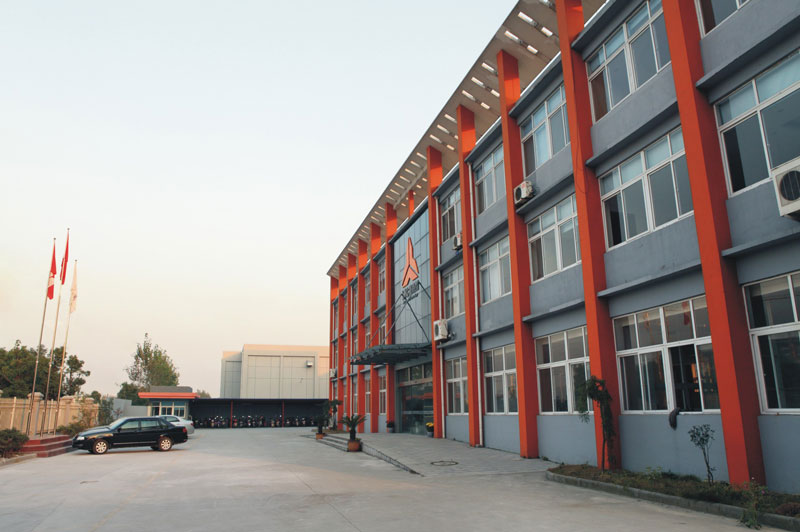
Wuxi YK Automation Technology Co., Ltd — trading as YeKeey — is a Wuxi, Jiangsu-based manufacturer of fine chemical equipment, pharmaceutical equipment and high-end processing equipment, covering research and development, design, manufacture and technical service. The company was founded in 1998 and has operated its ISO9001 quality system since 2003; its products have passed EU CE safety certification and it was certified as a high-tech enterprise in 2018.
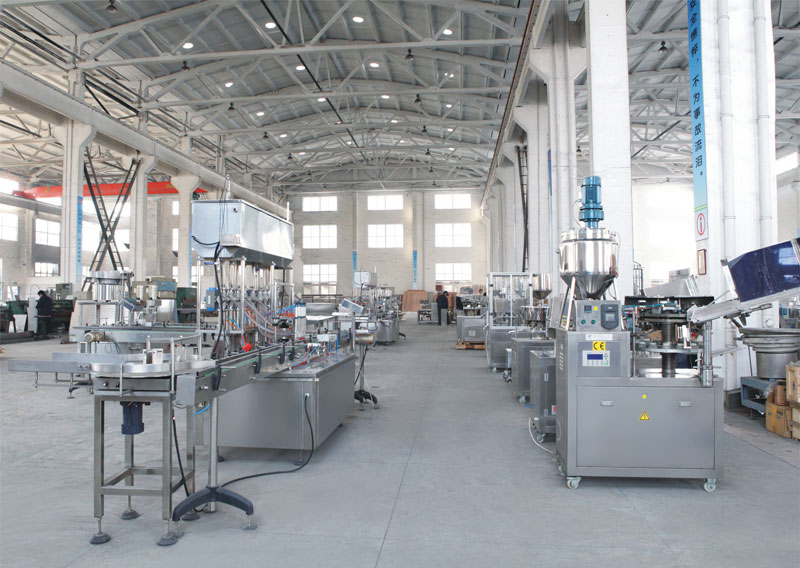
For buyers working through the batch-versus-inline question, the relevant capability facts are these: YeKeey operates a 20,000 m² facility with 80 employees, an annual output of 600 units and an R&D team of 8 engineers, and exports approximately 35% of production to Europe, Central Asia, North Africa, Latin America and Southeast Asia. As of 2023 the company held 55 patents and 3 software programs, including technology recognised as high-tech products for the "vacuum homogenizing and emulsifying machine" and the "high viscosity material mixing paddle." Its mixing, emulsifying and filling equipment and whole-plant output schemes have been applied at more than 4,000 enterprises and institutions across more than 70 countries and regions.
YeKeey's ZJR Series and MC Series vacuum emulsifying mixers are designed for the cosmetics and food products industries, with a specific application in mayonnaise production, and are operated through button control or PLC control. Buyers comparing configurations should bring their own process targets — viscosity, batch size, target particle size range, cleaning requirement and destination-market compliance — so that the configuration recommendation is built on the recipe rather than on vessel volume.
Frequently Asked Questions
What certifications and compliance documents should a food or cosmetic vacuum emulsifier come with?
Three document groups matter. First, safety certification for the equipment itself: for equipment shipped into the EU, CE marking is the baseline, and buyers should request the certificate number and confirm its current validity period. YeKeey's MC series vacuum homogenizer emulsifier mixers hold CE certification issued by ECM under Certificate No. 0P210922.WYAQT12. Second, material-of-construction evidence: vacuum emulsifying homogenizers intended for pharmaceutical and cosmetic use must typically comply with GMP standards, which generally require SUS316L stainless steel for contact parts. Third, installation-dependent approvals: whether the jacketed vessel falls under pressure vessel regulation, and whether the installation zone requires explosion-proof certification, depends on local code and the materials handled at your site. Those two determinations must come from your own inspection and EHS authority rather than from a supplier catalogue.
Can one vacuum homogenizer emulsifier mixer handle both mayonnaise and cosmetic cream?
The equipment category is designed for that overlap. YeKeey's ZJR Series and MC Series vacuum emulsifying mixers are designed for the cosmetics and food products industries, with a specific application in mayonnaise production. The technical basis is particle size: the machine produces a particle size of 1–5 μm, compared with the 5–20 μm range typical of conventional emulsifiers, and combines superior emulsification stability, a narrower particle size distribution, stronger shearing force, high vacuum degassing and intelligent control. Operation can be managed through button control or PLC control. What makes a shared machine practical is not the emulsifying head alone but the cleaning and changeover regime between product families, so treat changeover as a line-design decision alongside the machine choice.
Is a vacuum homogenizer emulsifier mixer more expensive to buy than a conventional emulsifier?
The initial investment is slightly higher, but the total cost of ownership is lower, because fewer production rejections and more stable operation offset the higher purchase price. Maintenance requirements are also lower than those of similar products. Operationally, the machine delivers higher emulsification efficiency with consistent quality, fewer rejected batches and better material utilization. When you build the budget case, weigh rejection rate and material loss against the purchase delta rather than comparing sticker prices.
How can we validate a configuration against our own recipe before ordering?
Validation starts with a written specification rather than a machine demonstration. Prepare contact material requirements, maximum operating temperature, required vacuum level, target particle size range, control mode and cleaning requirement, then review those values against your recipe's viscosity and batch range with the equipment manufacturer's engineering team. That conversation is what determines whether a batch or inline configuration genuinely suits your product. YeKeey's engineering team can be reached at sales@yekeey.com or by telephone on +86-510-88530599 to define the validation route for a specific recipe.
What determines the delivery time for a vacuum homogenizer emulsifier mixer?
Delivery is driven by four variables: the chosen configuration (batch or inline), the control mode (button control or PLC control), the material specification for wetted parts, and the compliance documentation package for the destination market. Because each of these changes the fabrication scope, a realistic schedule has to be built per project rather than quoted as a generic figure. Ask the supplier to break the schedule into design confirmation, fabrication, testing and documentation stages so progress can be tracked against real milestones, and confirm the current lead time directly with the manufacturer before committing to a commissioning date.
Conclusion: Decide on Shear History, Then Confirm It in Writing
Batch and inline vacuum emulsifier configurations are not competing quality tiers — they are two ways of delivering shear to a product. Batch layouts process the entire mass in one vessel with one shear history, which suits thick, structurally sensitive recipes and plants with frequent product changes. Inline layouts circulate product through an external high-shear head repeatedly, which suits stable, pumpable recipes produced at high volume where pass control matters more than vessel size.
Whichever direction your analysis points, the same four things decide whether the project succeeds: a defined particle size target that justifies the vacuum route over a conventional emulsifier, a control mode matched to your SKU count and traceability needs, wetted materials matched to your compliance route, and safety hardware — vacuum-side entrainment protection and lifting-system anti-fall protection — written into the technical agreement rather than assumed.
Next Step
Send your recipe parameters — viscosity, batch range, target particle size, required vacuum level, operating temperature and destination market — to YeKeey's engineering team and ask for a configuration recommendation with the supporting specification in writing.
Email: sales@yekeey.com | Tel: 86-510-88530599 | WhatsApp: +8615050678988
Website: www.yekeey.com | Download the product catalogue: YeKeey equipment brochure (PDF)
Address: NO.2855 Jiaoyang Road, An Zhen, Wuxi, Jiangsu Province, China