
Compliance Roadmap for Vacuum Emulsifier Mixers: Explosion-Proof and Pressure Vessel Standards

YeKeey manufacturing site — the production space where compliance-relevant documentation is prepared before dispatch.
Compliance for a vacuum homogenizer emulsifier mixer is manageable when buyers break it into three verifiable layers: the supplier’s mechanical safety baseline, the explosion-proof scope for the specific process area, and the pressure or vacuum vessel documentation that the destination market will accept before commissioning. Each layer carries its own evidence trail, and a weakness in any one of the three surfaces during factory acceptance, import clearance, or plant commissioning.
At the decision stage, this matters most for lines producing mayonnaise sauce, cosmetic cream, or skincare emulsions, where the equipment works under vacuum at approximately -0.09 MPa and must be documented as fit for the room it sits in. The roadmap below sets out the verification sequence that buyers and plant engineering teams can run before issuing a purchase order.
Why compliance failures surface at the decision stage, not at installation
Most compliance gaps originate between technical agreement and shipment, and they surface at the worst possible moments. Buyers who audit their supplier only after the equipment has been delivered routinely discover that the mechanical package and the documentation package do not match.
Three recurring failure patterns explain most of the delay:
- Explosion-proof scope gaps. The mechanical package is certified, but the electrical and instrumentation components are not documented for the classified zone where the mixer will operate. The plant safety team cannot approve installation, and the protection package requires rework or replacement.
- Vessel documentation gaps. The vacuum vessel is treated as a utility tank during the RFQ. When the inspector asks for design pressure, material certificates, welding records, or a third-party declaration, the supplier’s file does not contain them.
- Destination mismatch. A document set accepted in one market is rejected in another, either because the recognized conformity route differs or because the national interpretation of the applicable standard is stricter.
Each of these is preventable through pre-order verification, and each step below is designed to close a specific gap.
Industry context: why equipment volume is driving more compliance review
Compliance scrutiny rises with equipment volume, and the category volume is rising. The global vacuum mixer homogenizer market was estimated at USD 1.02 billion in 2026, with Fact.MR projecting growth to approximately USD 1.61 billion by 2036. Demand from the mayonnaise segment alone is projected to grow from USD 12.34 billion in 2025 to USD 19.27 billion by 2035, according to Market Research Future. On the supply side, Asia Pacific held 44.1% of homogenizer market revenue in 2023, based on Grand View Research figures.
The practical consequence is that more buyers in more markets are reviewing compliance files, more factory acceptance tests include documentation checks, and the buyer-side question is shifting from “does the machine work” to “does the machine’s file stand up to local inspection.” That shift favors suppliers who maintain a current documentation package and penalizes suppliers who treat certification as a marketing line item.
What a compliance-ready vacuum homogenizer emulsifier mixer includes
A compliance-ready machine is built from three connected technical components. The first is the vacuum and mixing system, which defines the operating envelope the equipment must be documented for. The second is the mechanical risk-control set, which supports safe operation under that envelope. The third is the supplier’s certification baseline, which determines which documents are available on request.
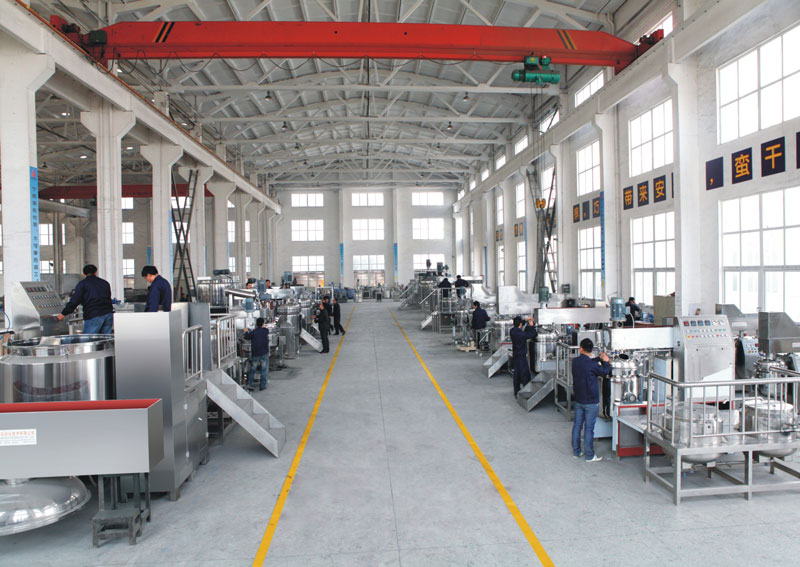
Assembly area where the vacuum system, control panel, and mechanical risk controls are integrated before testing.
The vacuum and mixing envelope
Vacuum homogenizers typically operate at a negative pressure of approximately -0.09 MPa, which allows the mixer to deaerate the product and prevent oxidation during emulsification. Vacuum processing is a widely recognized method of removing air bubbles from mayonnaise, and the same principle supports stability in cosmetic emulsions. For process documentation, the -0.09 MPa operating level is the reference pressure that the vessel, seals, and instrumentation must be qualified against.
The mechanical risk-control set
A vacuum homogenizer emulsifier mixer is expected to carry two mechanical risk controls that appear directly in compliance reviews:
- High-precision liquid level sensor with real-time monitoring. This control addresses the risk of material entrainment into the vacuum system during extraction. A monitored level prevents the vacuum line from pulling product through the extraction path, which protects the pump, the pipework, and the product itself.
- Hydraulic lifting system with safety self-locking function. This control addresses the risk of uncontrolled drop of the lifting system. The anti-fall self-locking mechanism keeps the lid or mixing head from descending unexpectedly during maintenance or ingredient charging.
Both controls are worth inspecting during the factory acceptance test, because they are the two mechanical safety features that inspection bodies most often ask suppliers to demonstrate.
The supplier’s certification baseline
YeKeey (Wuxi YK Automation Technology Co.,Ltd) is a Chinese equipment manufacturer based in Wuxi, Jiangsu Province, established in 1998, producing emulsifying machines, industrial mixers, lab mixers, and filling machines for cosmetic and food applications. Its published certification position includes ISO 9001 implementation since 2003 and EU CE safety certification for its products. These two documents establish the mechanical baseline. They do not, on their own, establish explosion-proof suitability or pressure vessel conformity for a specific installation, which is why the next section separates those questions.
Step-by-step compliance roadmap
The roadmap below is ordered by the sequence a buyer actually works through, from scoping the room to accepting the machine.
Step 1 — Map the process risks in the room
Before requesting certificates, confirm what the equipment will handle and where it will sit. Powder charging, solvent-bearing flavor systems, volatile fragrance oils, ethanol-based cosmetic actives, and dust-generating ingredient preparation all change the classification of the room. The answer determines whether explosion-proof protection is required for the electrical and instrumentation package, and if it is required, which zone classification applies.
Step 2 — Confirm destination-market requirements
Import requirements for processing machinery are not identical across markets. A machine documented for one European destination may need an additional national declaration in another. Markets such as Andorra, the UAE, and Afghanistan each have their own acceptance route, and the buyer should confirm the specific documents that the local authority or the plant inspector will ask for before commissioning. The safe default is to ask the supplier to enumerate the documents that will be provided, in writing, at the quotation stage.
Step 3 — Verify the mechanical baseline
Request the ISO 9001 certificate and the EU CE safety documentation for the specific model. Confirm that the certificate scope matches the equipment being purchased. For YeKeey equipment, ISO 9001 has been implemented since 2003 and CE safety certification is held for the product range, so these documents are the starting point of the file rather than the end of the conversation.
Step 4 — Qualify the explosion-proof scope
If the process room has been classified, the explosion-proof conversation moves to the electrical and instrumentation package. Confirm which components require protection, which certification route the destination market recognizes for the protected equipment, and how the supplier documents the boundary between protected and unprotected components. A CE-marked mechanical package alone does not answer this question; the buyer needs a separate declaration for the protected electrical scope.
Step 5 — Review pressure and vacuum vessel documentation
The vacuum vessel is pressure-retaining equipment and should be documented accordingly. Buyers should ask for design pressure and design vacuum, the material certificates for the wetted surfaces, and the welding and inspection records. The -0.09 MPa operating level is the reference point for this documentation. Where the destination market applies a pressure equipment conformity route, the buyer should confirm which declaration the supplier can provide and whether a third-party inspection body is involved. If the supplier’s file does not support the destination requirement, the buyer learns this before shipment, not after installation.
Step 6 — Inspect the mechanical risk controls
During the factory acceptance test, run through the two mechanical risk controls described above: confirm that the high-precision liquid level sensor triggers an alarm or stops extraction at the set level, and confirm that the hydraulic lifting system’s anti-fall self-locking mechanism holds the load when the control is released. A witnessed test is often the strongest piece of evidence a buyer can put in the file.
Step 7 — Record the control mode and operating limits
Confirm the control mode in the technical file — button control or PLC control — together with the operating envelope of the specific model. For YeKeey’s MC series, design volumes range from 15 L to 1300 L across the MC-H and MC-V configurations, so the documentation package should match the specific model rather than the series as a whole.
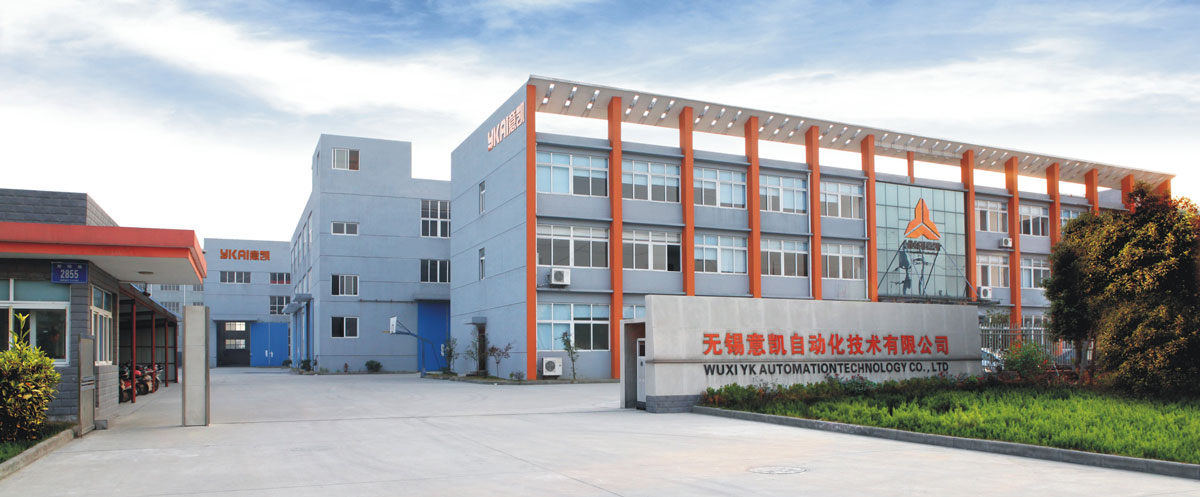
Fabrication area — the stage at which vessel documentation must be traceable to the specific unit.
Where the roadmap changes: three application patterns
Cosmetic cream and skincare production
Cosmetic manufacturing lines producing cream, lotion, or skincare emulsions typically use a vacuum homogenizer for cosmetic cream or a high shear mixer for cosmetics when the product requires narrow droplet distribution and long-term stability. The compliance focus for these lines is the document set that covers material contact, the vacuum envelope, and the control mode. Where the formulation includes ethanol-based actives or volatile fragrance oils, the explosion-proof question becomes material and the electrical scope must be qualified separately.
Mayonnaise and sauce production
Mayonnaise vacuum homogenizer mixer installations put the compliance focus on the vacuum envelope, deaeration, and cleaning procedure rather than on explosion-proof scope, because the process itself is food-based and water-bearing. The mechanical risk controls still apply, and the pressure and vacuum documentation is still required. For food lines, the destination-market food-contact requirements also enter the document package, and buyers should request them alongside the mechanical certificates.
Multi-product plants and turnkey projects
Plants running both a sauce emulsifier mixer for food and a cosmetic emulsifying machine share a vacuum system and support infrastructure. In these plants, the compliance file is a single file covering multiple product lines, so the explosion-proof scope must be settled before the room is commissioned, not after the first cosmetic batch has run. This is the strongest argument for running the roadmap in Step 1-style room-level terms rather than product-level terms.
Comparing vacuum homogenizer emulsifier mixers with conventional emulsifiers
Buyers comparing a vacuum homogenizer emulsifier mixer against a conventional emulsifier need to weigh two dimensions side by side: the operational outputs the equipment is designed to deliver, and the compliance file the equipment can support. The verified comparison below covers the first dimension; the second dimension belongs to the roadmap above.
| Comparison criterion | Vacuum homogenizer emulsifier mixer | Conventional emulsifier |
|---|---|---|
| Particle size output | 1–5 μm | 5–20 μm |
| Emulsification stability | Superior stability | Baseline |
| Shearing force | Stronger | Baseline |
| Vacuum degassing | High vacuum degassing | Not described as a design characteristic |
| Control | Intelligent control | Baseline |
| Initial investment | Slightly higher | Lower |
| Total cost of ownership | Lower, driven by fewer rejections and stable production | Higher |
| Maintenance | Less maintenance required | More |
| Best fit | High-standard cosmetics, food, and pharmaceutical emulsification requiring long-term stability | General emulsification |
The compliance implication of this table is straightforward. The initial investment gap between the two configurations is real, but the operating characteristics that justify the vacuum homogenizer — narrower particle size, high vacuum degassing, and longer-term stability — also change what the buyer must document. A machine that delivers a 1–5 μm particle size and operates at -0.09 MPa must have its vacuum envelope, control system, and mechanical risk controls documented in the compliance file, because those are the features an inspector will test against.
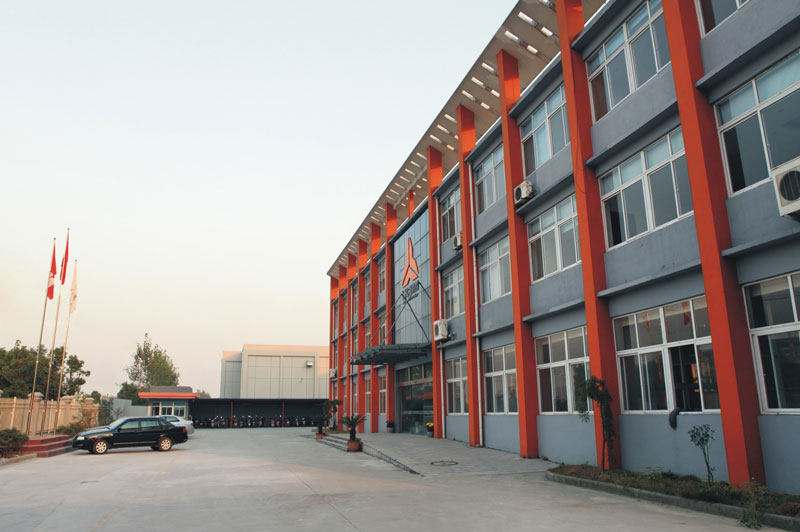
Production base — where the machine and its documentation package are assembled before shipment.
Frequently asked questions
When does a vacuum homogenizer emulsifier mixer require explosion-proof certification?
Explosion-proof documentation is required when the equipment will be installed in a process room that has been classified as hazardous because of flammable solvents, volatile fragrance oils, ethanol-based cosmetic actives, or combustible dust. In those rooms, the electrical and instrumentation package must be certified for the applicable zone, and the supplier must provide a declaration that matches the room classification. A standard CE safety certificate for the mechanical package does not by itself satisfy this requirement; the explosion-proof scope is a separate document. Buyers should raise this at the RFQ stage, because retrofitting an unprotected electrical package after delivery is more expensive than specifying it upfront.
Is a vacuum homogenizer emulsifier mixer a pressure vessel?
The vacuum vessel is a pressure-retaining component, and it operates at a vacuum level of approximately -0.09 MPa on typical installations. Whether it falls under a specific pressure equipment regulation depends on the destination market, the vessel volume, and the design pressure and vacuum values. The safe approach for the buyer is to ask the supplier for the design pressure, design vacuum, material certificates, welding records, and inspection reports, and to confirm with the destination authority which conformity route is expected. If the supplier’s documentation package does not match the destination requirement, the gap should be closed before the purchase order, not after delivery.
What certifications does YeKeey hold for its vacuum homogenizer emulsifier mixers?
YeKeey (Wuxi YK Automation Technology Co.,Ltd) has implemented the ISO 9001 quality system since 2003, and its products have passed EU CE safety certification. The company has also been certified as a “high-tech enterprise” since 2018. These certifications establish the mechanical safety baseline. Explosion-proof suitability and pressure equipment conformity are installation-specific and must be assessed for each project, which is why YeKeey treats them as a project-level documentation task rather than a fixed catalogue attribute.
Which mechanical risk controls should buyers verify during a compliance review?
Two risk controls appear most often in compliance reviews for vacuum homogenizer emulsifier mixers. The first is a high-precision liquid level sensor with real-time monitoring, which prevents material entrainment into the vacuum system during extraction. The second is a hydraulic lifting system with a safety self-locking function, which prevents the lifting system from dropping uncontrollably during maintenance or ingredient charging. Both should be demonstrated during the factory acceptance test, and the witness record should be retained in the compliance file.
How can buyers verify compliance before placing an order?
Buyers can run the seven-step roadmap above during the RFQ and factory acceptance stages. Request the ISO 9001 certificate and the CE documentation for the specific model, ask the supplier to enumerate the explosion-proof scope and the pressure vessel documents in writing, and witness the mechanical risk controls during FAT. YeKeey’s documentation package, including the product catalogue and the specification sheets for the MC-H and MC-V series, is available through the downloadable product brochure, and the sales team can be reached at sales@yekeey.com for a project-specific compliance scope.
Conclusion: build the compliance file alongside the technical file
Compliance is not an add-on to a vacuum homogenizer emulsifier mixer purchase. It is a parallel file that runs alongside the technical specification from the first RFQ to the factory acceptance test. The three layers — mechanical baseline, explosion-proof scope, and pressure vessel documentation — each require their own evidence, and each can be closed before the purchase order if the buyer asks the right questions in the right order.
For mayonnaise vacuum homogenizer mixer lines and cosmetic manufacturing emulsifier equipment, the practical rule is to confirm the room classification first, the destination-market requirements second, and the supplier’s documentation package third. YeKeey’s ISO 9001 and CE baseline, its -0.09 MPa vacuum operating level, and its high-precision liquid level sensor and hydraulic lifting system with safety self-locking function give buyers a starting file that can be extended into a complete compliance package for the specific project. The next step is a written documentation scope from the supplier, not a general assurance.
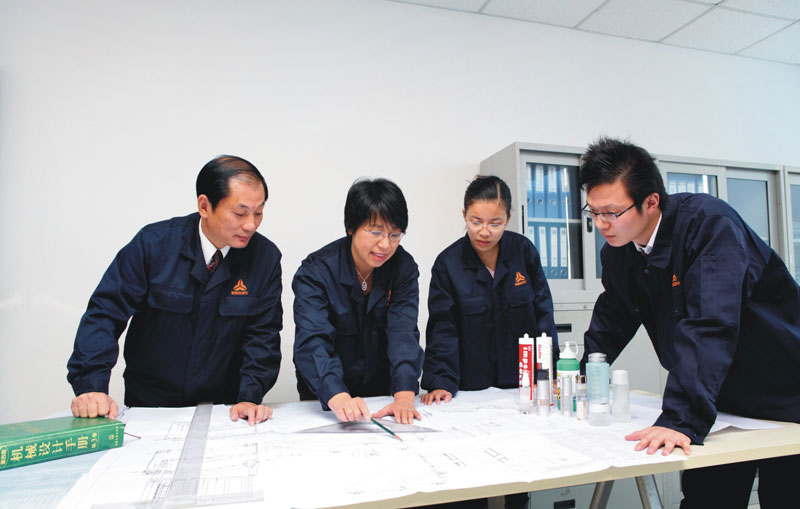
Documentation review — where the compliance scope is matched to the specific project and destination market.
Next step: download the YeKeey product brochure, or send your destination market, room classification, and process parameters to sales@yekeey.com to receive a project-specific compliance documentation scope.
Have Questions or Need More Details?
Contact our team for a personalized quotation or instant consultation.
Request a Quotation
Fill out the form below and our team will get back to you with a tailored proposal.
WhatsApp Direct Chat
Prefer to chat in real-time? Message us on WhatsApp for instant assistance & quick answers.
- Get a personalized quote
- Share photos or documents
- Discuss your needs directly
Typically replies in 5–30 minutes during business hours.