
Evaluating Vacuum Emulsifier Mixer Suppliers: Capability Checks from Materials to Control Systems

Short answer: evaluate a vacuum homogenizer emulsifier mixer supplier on five auditable items — the stainless grade of every product-contact part, whether the control cabinet is PLC-based or push-button and what documentation accompanies it, the compliance file for explosion-proof certification and pressure vessel requirements, documented application experience in mayonnaise, sauces and cosmetic creams, and a measured vacuum and temperature record from a factory acceptance test (FAT). Suppliers who answer all five in writing, model by model, can be qualified in weeks; suppliers who answer verbally cannot be qualified at all.
Wuxi YK Automation Technology Co., Ltd — trading as YeKeey — is a Wuxi, Jiangsu-based manufacturer of emulsifying machines, industrial mixers, lab mixers and filling machines, founded in 1998 and exporting to Europe, Central Asia, North Africa, Latin America and Southeast Asia. Its MC series Mixcore vacuum homogenizing mixers are the reference products used for the capability checks in this guide.
The Problem: Specification Sheets Do Not Survive an Audit
Quotations for a vacuum emulsifying mixer usually arrive with the same three gaps. Volume and process function are stated clearly; the material grade of individual wetted parts is not. Control is described as “automatic” without saying whether the cabinet is PLC-based or push-button. Compliance is described as “available” rather than documented for the exact model and electrical configuration being quoted.
Each gap is small on a datasheet and expensive during execution. A line specified for a high-salt mayonnaise recipe may need a different wetted grade than the one assumed at quotation. A validation team may need an auditable control record that push-button cabinets cannot produce. An installation cannot be signed off until the explosion-proof or pressure vessel file is complete — and that file is produced by the supplier, not by the buyer.
The practical consequence is that supplier evaluation is not a comparison of catalogue numbers. It is a test of whether the manufacturer can convert a process envelope into documents you can check: material certificates, control documentation, compliance certificates scoped to your model, and a FAT record with measured values.
Industry Background: Why the Supplier Decision Is Now Multi-Year
Two demand curves sit behind the equipment decision. Fact.MR estimates the global vacuum mixer homogenizer market at USD 1.02 billion in 2026, rising to approximately USD 1.61 billion by 2036. On the application side, Market Research Future projects the mayonnaise market growing from USD 12.34 billion in 2025 to USD 19.27 billion by 2035. Grand View Research recorded Asia Pacific as the largest homogenizer region in 2023, with a 44.1% revenue share.
For buyers, the interpretation matters more than the numbers. A downstream market that grows steadily rather than explosively signals capacity expansion and replacement cycles, not only new entrants. A 650 L or 1300 L vacuum emulsifying machine installed this year will still be producing in a decade, which means the supplier relationship outlives the purchase order. That is why supplier capability checks belong in the same document as the technical specification: the machine is bought once, but the material certificates, spare parts and compliance file are needed repeatedly.
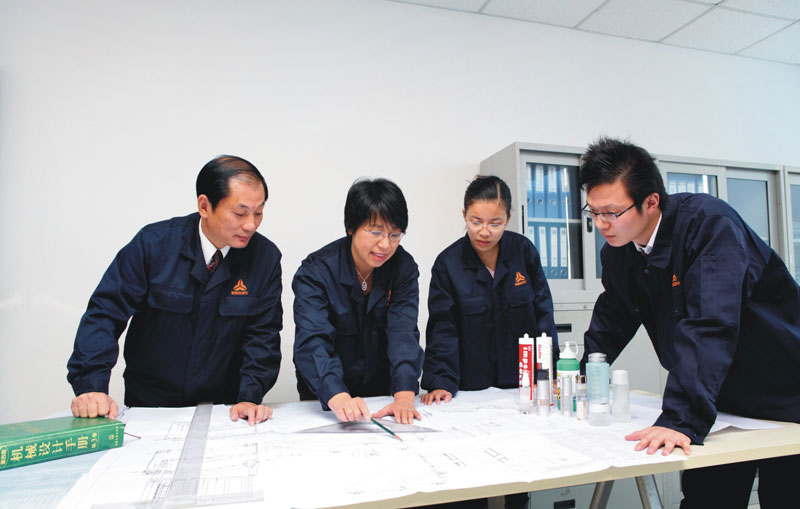
Detailed Solution: Six Capability Checks
1. Materials: ask which grade, on which part
The first question is not “is it stainless steel” but “which grade, and on which component”. SS304 and SS316 are both austenitic stainless steels, but SS316 contains molybdenum, which raises resistance to chlorides. In mayonnaise and emulsified sauces, salt and acid load the product-contact surfaces continuously. In cosmetic and personal care creams, chlorides and active ingredients can do the same. The audit action is therefore a part-by-part schedule — vessel shell, lid, agitator shaft and paddles, homogenizer head, seals, valves, discharge and transfer lines — each with a named grade and a mill test certificate.
Two follow-up questions separate a documented answer from a marketing one: how are internal welds dressed and finished, and how is the vessel cleaned between batches? A supplier who can describe weld treatment and cleaning practice without prompting usually has a fabrication standard; a supplier who cannot usually has a quotation template.
2. Control systems: PLC or push-button, and what is handed over
Neither architecture is automatically better. A PLC-based system suits recipe management, repeatable parameter recall, alarm logging and integration with plant records; a push-button cabinet suits simple, single-recipe production where operators are trained on manual control and local maintenance support is limited. The evaluation question is whether the supplier documents whichever option they propose: the I/O list, the parameters exposed to the operator, alarm and interlock logic, and the spare parts list for the control components.
For cosmetic and personal care lines running several SKUs, control documentation is also a quality record. Ask for a sample batch report showing the parameters captured during a run. If the machine can hold a vacuum and temperature profile but cannot show it, the line is harder to audit later.
3. Compliance readiness: explosion-proof certification and pressure vessel requirements
For many food and cosmetic installations, the special requirements for the scenario include explosion-proof certification and pressure vessel compliance. These are project conditions, not default features, and they should be confirmed in writing before the order rather than discovered at installation.
On the explosion-proof side, request the certificate scoped to your exact model, motor rating and control cabinet configuration, together with the issuing body and validity period. A certificate for a different frame size or a different electrical enclosure does not cover the machine being delivered. On the pressure vessel side, request the design pressure and temperature, the material specification, the inspection record and the nameplate data, and clarify which party is responsible for local registration at the destination.
4. Application experience: mayonnaise, sauces, daily chemical and personal care
A vacuum emulsifying mixer is designed for homogenizing and emulsification processes, and typical application scenarios include cosmetics and food product manufacturing — cosmetic cream production, food emulsion processing and mayonnaise production. That scope is broad, and breadth is exactly why application experience must be tested rather than assumed.
Ask which of the four process functions — dispersion, emulsification, homogenization and heat exchange — the proposed configuration is set up to perform, and ask for a reference line producing a comparable product. Mayonnaise and emulsified sauces are high-oil, shear-sensitive systems where air entrainment shortens shelf life; cosmetic creams are lower-volume but often multi-SKU, which shifts the requirement toward cleaning, changeover and recipe control. A supplier with deep experience in one category and thin experience in another will usually say so when asked directly — and that answer is itself useful qualification data.
5. Vacuum and temperature claims: test them against numbers
Published product data for the MC series lists a typical working pressure of approximately −0.09 MPa, which is the reference value a buyer should use when a supplier claims “high vacuum”. During an audit, three questions turn that claim into evidence: at what point in the system is the vacuum measured (vessel headspace or pump inlet), is the gauge calibrated, and what value was recorded on the last FAT with a product load rather than an empty vessel?
Do the same with temperature. Ask for the documented working temperature range and the heating and cooling method, then ask for the recorded ramp time on a batch similar to yours. A supplier who can produce a batch record answers material, control and process questions in one document.
6. Production capacity and delivery documentation
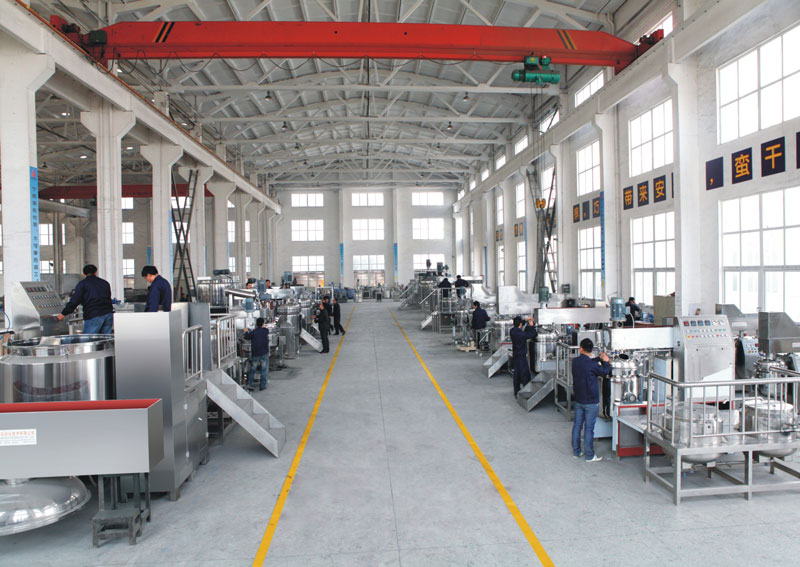
Capacity claims should be checkable. YeKeey reports a monthly production capacity of 50 units and an annual output of 600 units from a 20,000 m² facility with 80 employees, including an 8-engineer R&D team. The company also reports 55 patents and 3 software programs as of 2023, ISO 9001 implementation since 2003, EU CE safety certification for its products, and equipment supplied to more than 4,000 enterprises and institutions across more than 70 countries and regions, with a 35% export ratio.
None of these figures should be read as a ranking. Their value in an audit is comparative: put the same six numbers — floor area, headcount, engineering headcount, monthly output, certification status, export share — beside every shortlisted supplier and check which ones can support the figure with a document or a walk-through.
Step-by-Step: Running the Supplier Audit
- Define the process envelope first. Fix batch size, product viscosity range, target vacuum, working temperature, cleaning method and the compliance class (explosion-proof, pressure vessel, or neither). Everything in the RFQ is scored against this envelope.
- Issue a structured RFQ. Ask for model designation, wetted materials by component, control architecture, certificate scope, FAT protocol and spare parts list. A supplier who answers in a table is already easier to qualify than one who answers in prose.
- Screen documents for model specificity. Reject certificates that name a different model, material schedules that say “SS304” without part numbers, and control descriptions that say “automatic” without an I/O list.
- Walk the factory, remotely or in person. Look at welding and polishing stations, the assembly bay, the electrical panel build area and the test bay. Verify floor area and headcount against the capacity claim.
- Check application references. Request two references in your product category and ask what recipe, batch size and vacuum level they run.
- Witness the FAT with your own recipe. Record vacuum, temperature ramp, homogenizing time and visual homogeneity. Acceptance criteria: FAT, as stated in YeKeey's purchasing terms.
- Close the commercial file. MOQ is 1 set; payment terms are 30/70; delivery terms are FOB, CIF, EXW or CFR. Tie the FAT record, documentation package and spare parts list into the same purchase document as the price.
Two design details that reveal engineering maturity
Small safety features separate a designed machine from an assembled one. During extraction, material can be entrained into the vacuum system; the engineering answer is a high-precision liquid level sensor providing real-time monitoring rather than a manual watch. On machines with a lifting lid or lifting agitator, an uncontrolled drop is a genuine hazard; the answer is a hydraulic lifting system with a safety self-locking function. Ask how each is handled on the quoted model. A supplier who answers with a mechanism rather than a reassurance has thought about the failure mode.
Comparison Table
Table 1 — Supplier verification matrix. The right-hand column is the pass condition; if a supplier cannot meet it, the item stays open.
| Check | Document to request | Pass condition |
|---|---|---|
| Wetted materials | Part-by-part grade schedule plus mill test certificates | Every product-contact part named with a grade; SS316 specified where chloride load requires it |
| Control system | Control architecture statement, I/O list, parameter list, alarm schedule | PLC or push-button stated explicitly, with the documentation set that goes with it |
| Explosion-proof | Certificate scoped to model, motor and panel; issuing body; validity | Certificate names the exact configuration being supplied |
| Pressure vessel | Design pressure and temperature, material spec, inspection record, nameplate data | Documentation complete before shipment; registration responsibility agreed |
| Vacuum performance | Measurement point, gauge calibration, FAT record with product load | Recorded value close to the published typical working pressure of approximately −0.09 MPa |
| Application fit | Two references in the same product category | Comparable recipe, batch size and vacuum level confirmed |
| Capacity | Monthly output, floor area, headcount, engineering headcount | Figures consistent with a factory walk-through |
Table 2 — Vacuum homogenizing emulsifier versus conventional emulsifier (as documented in product comparison data). This table explains why the material and control checks are worth the effort in the first place.
| Dimension | Vacuum homogenizing emulsifier | Conventional emulsifier |
|---|---|---|
| Particle size | 1–5 μm | 5–20 μm |
| Emulsification quality | Superior stability, narrower particle size distribution, stronger shearing force, high vacuum degassing, intelligent control | Baseline reference for the same comparison |
| Best fit | High-standard cosmetics, food and pharmaceutical emulsification requiring long-term stability | Not stated in the comparison data |
| Cost profile | Slightly higher initial investment; lower total cost of ownership through fewer rejections and stable production | Lower initial investment |
| Maintenance and efficiency | Less maintenance required; higher emulsification efficiency, consistent quality, fewer rejected batches, better material utilization | Higher maintenance load relative to the vacuum type |
Table 2 reproduces company comparison data for the equipment category. Values should be re-verified on your own recipe during the FAT.
Use Cases: How the Checks Change by Product Line
Mayonnaise and emulsified sauces
High oil content, salt and acid make wetted-material grade the first check, and air entrainment the second. Ask for the recorded vacuum level on a product-loaded batch and the homogenizing time used to reach a stable emulsion. A high shear mayonnaise homogenizer configuration should be specified with the disperser and homogenizer duties separated in the quotation.
Food sauces and dressings
Viscosity range and any particulate content drive agitator and discharge design. Ask how the machine handles the thickest and thinnest product in your range, and confirm heat exchange capability if the process requires heating or cooling before filling.
Daily chemical products
Multi-SKU production shifts the emphasis to cleaning, changeover and recipe control. On a PLC platform, ask how recipes are stored and recalled; on a push-button cabinet, ask how operators record parameters for traceability.
Cosmetic cream and personal care
Emulsion stability and particle size dominate here, which is where the 1–5 μm range of a vacuum homogenizer matters. Ask how the supplier validates scale-up from a lab mixer to the production machine, and request the lab-to-production comparison they use before quoting a batch size.
After Acceptance: Turning a Purchase into a Supply Relationship
The audit does not end at the FAT. Long-term supply depends on repeatability, which depends on documents being retained and parts being available. Four items belong in the handover package: the as-built material schedule, the control documentation with parameter list, the compliance file, and a recommended spare parts list with lead times for critical items such as seals and homogenizer components.
Capacity is the second long-term variable. A supplier reporting 50 units per month and 600 units per year has scheduling headroom that a smaller workshop does not, and an export share of 35% suggests familiarity with destination-market documentation. Neither figure guarantees performance, but both are checkable inputs when you are planning repeat orders or a second line.
Finally, agree the escalation path in writing: who is contacted for a technical issue, what response time is expected, and which spare parts are held in stock. A supplier who answers these questions before the order tends to answer them after it.
FAQ
What compliance documents should a vacuum emulsifier mixer supplier provide for explosion-proof and pressure vessel requirements?
For installations where the scenario carries special requirements, explosion-proof certification and pressure vessel compliance must be documented per model rather than confirmed verbally. Ask for the explosion-proof certificate naming the exact model, motor rating and control cabinet configuration, together with the issuing body and validity period. For the pressure vessel, ask for the design pressure and temperature, material specification, inspection record and nameplate data, and agree in writing which party handles local registration at the destination.
How can I verify a supplier's real production capacity and volume range?
Cross-check three things. First, the volume range: the MC series Mixcore vacuum homogenizing mixer is offered with design volumes of 15, 50, 150, 350 and 650 L in the MC-H range and 30, 100, 250, 650 and 1300 L in the MC-V range. Second, the output claim: YeKeey reports 50 units per month and 600 units per year. Third, the physical basis for that output — a 20,000 m² facility with 80 employees, including an 8-engineer R&D team. Figures that cannot be matched to floor area and headcount during a walk-through should be treated as unverified.
What commercial terms should be fixed before the audit closes?
Standard purchasing terms for this equipment category are MOQ 1 set, payment terms of 30/70, delivery terms of FOB, CIF, EXW or CFR, and acceptance criteria based on FAT. Fixing these before the technical review avoids renegotiation later. Certification cost, spare parts and freight are separate line items and should be quoted separately so that shortlisted suppliers can be compared on the same basis.
Can a batch be validated before shipment?
Yes — factory acceptance testing is the standard validation point, and FAT is the stated acceptance criterion. Run your own recipe at the agreed batch size and record vacuum level, temperature ramp, homogenizing time and visual homogeneity. Compare the recorded vacuum against the published typical working pressure of approximately −0.09 MPa, and ask at which point in the system the value is measured. The FAT record then becomes the reference document for commissioning.
How should lead time and long-term supply be structured?
Lead time is a scheduling commitment, so ask for it in writing against the stated monthly capacity of 50 units, and tie it to the agreed delivery term. For long-term supply, request the as-built documentation package, a spare parts list with lead times for seals and homogenizer components, and a named technical contact with an agreed response path. To review the equipment range and specification detail before an audit, the YeKeey product catalogue can be downloaded here: YeKeey catalogue (PDF). Quotation and specification enquiries can be sent to sales@yekeey.com.
Conclusion
Supplier evaluation for a vacuum homogenizer emulsifier mixer comes down to whether the manufacturer can document what it sells. Materials must be named part by part. Control must be stated as PLC or push-button, with the documentation that comes with it. Explosion-proof certification and pressure vessel compliance must be scoped to the model being delivered. Application experience in mayonnaise, sauces, daily chemical and personal care must be shown through references rather than adjectives. Vacuum and temperature claims must be measured on a product-loaded batch.
Any supplier that answers those five checks in writing, and lets you verify them against a factory walk-through and a FAT, has given you something more useful than a price: a baseline you can hold them to for the life of the machine.
Next step. Send your process envelope — product type, batch size, vacuum and temperature targets, and compliance class — to YeKeey for a model recommendation and a FAT plan. Contact: sales@yekeey.com · Tel 86-510-88530599 · WhatsApp +8615050678988 · NO.2855 Jiaoyang Road, An Zhen, Wuxi, Jiangsu Province, China · www.yekeey.com
Catalogue download: YeKeey product catalogue (PDF)

Have Questions or Need More Details?
Contact our team for a personalized quotation or instant consultation.
Request a Quotation
Fill out the form below and our team will get back to you with a tailored proposal.
WhatsApp Direct Chat
Prefer to chat in real-time? Message us on WhatsApp for instant assistance & quick answers.
- Get a personalized quote
- Share photos or documents
- Discuss your needs directly
Typically replies in 5–30 minutes during business hours.