
Long-Term Support FAQ: Vacuum Homogenizer Emulsifier Mixer for Mayonnaise & Cosmetics
Long-Term Support FAQ: Vacuum Homogenizer Emulsifier Mixer for Mayonnaise & Cosmetics
Short answer: long-term support for a vacuum homogenizer emulsifier mixer is a defined scope of work, not a promise. For mayonnaise and cosmetic production it covers factory testing of the ordered unit before shipment, commissioning at your plant, operator training matched to the control mode you ordered, a maintenance routine built around vacuum operation at -0.09 MPa and processing temperatures up to 110 °C, supply of wear parts and custom components, remote video guidance, and on-site technician dispatch when a remote fix is not enough. YeKeey (Wuxi YK Automation Technology Co.,Ltd), a Wuxi-based manufacturer of emulsifying, mixing and filling equipment founded in 1998, delivers these elements as part of its OEM/ODM/OBM equipment supply.
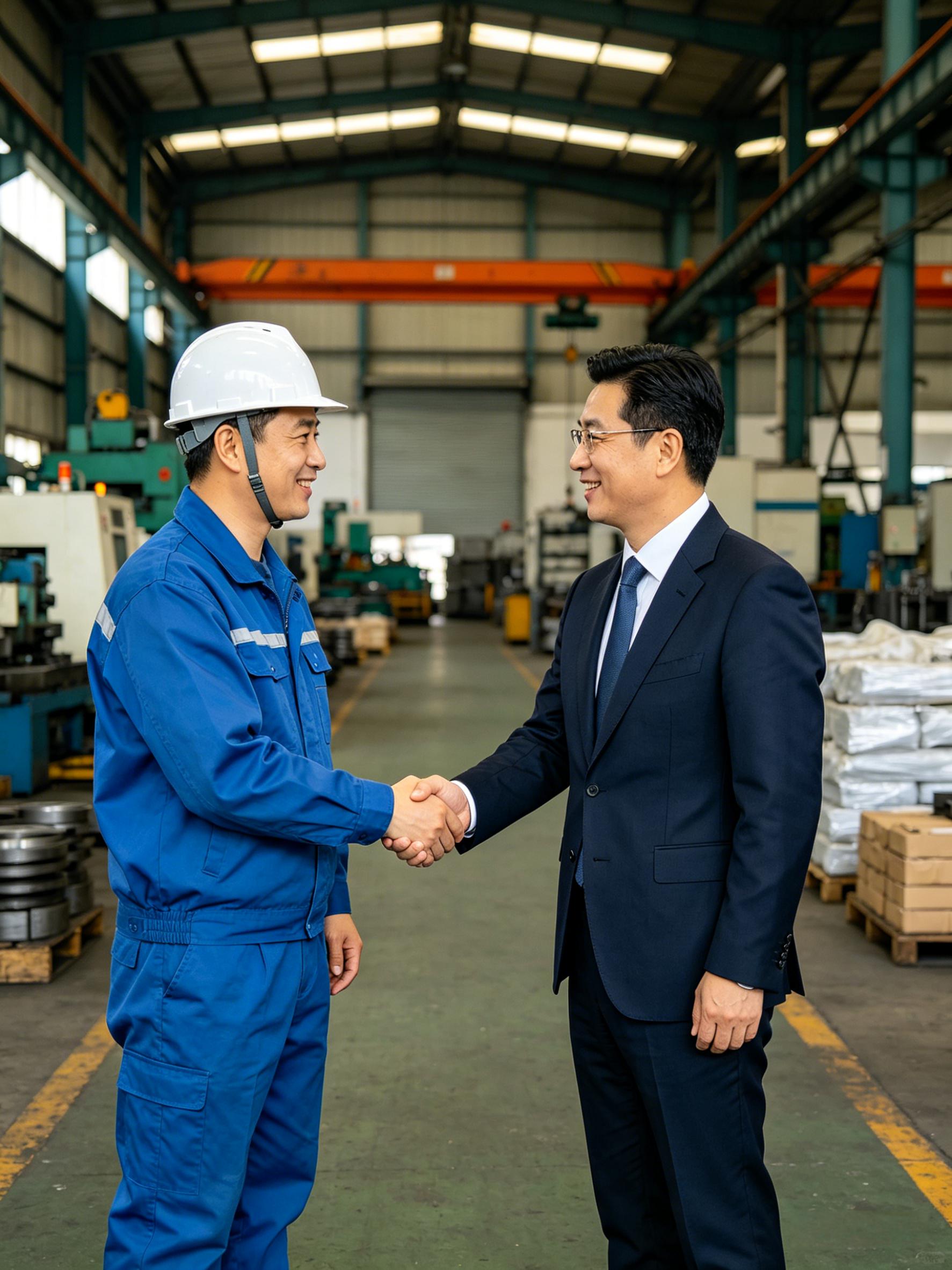
This article answers the support and partnership questions that arrive after a machine has been shortlisted. It is written for importers, brand owners, production managers and procurement engineers who are comparing vacuum homogenizer emulsifier mixers for mayonnaise, sauces and cosmetic emulsions, and who need to know what happens in year one, year three and year ten — not only what happens on the day of installation.
Problem Definition: Why Support Becomes the Deciding Variable After the Shortlist
By the time a mayonnaise or cosmetic producer reaches the evaluation stage, the shortlist is usually built on parameters that look broadly similar across suppliers: achievable vacuum level, maximum processing temperature, contact material, drive power and mixing speed. Those parameters are essential, and they are also the easiest part of the decision to compare on paper.
The questions that separate suppliers appear later. Who tests this specific unit before it leaves the factory floor? Who teaches the second shift to change a recipe without breaking the emulsion? Who supplies the mechanical seal, the gasket set or the customised weighing module in year four? Who confirms that the delivered model still matches the compliance document on file?
The cost of weak support is specific to these two product categories. Mayonnaise is a high-viscosity oil-in-water emulsion that depends on consistent high-shear energy; cosmetic creams and lotions depend on droplet size distribution for stability, texture and shelf life. A stop in either line does not only lose output — it can lose a batch, and occasionally a customer.
Industry Background: A Growing Installed Base Makes Support Economics Visible
The commercial case for evaluating support properly is visible in the equipment market itself. According to Roots Analysis, the global homogenizers market was valued at USD 2.10 billion in 2024 and is projected to reach USD 3.79 billion by 2035 at a CAGR of 5.4%. Future Market Insights estimates the vacuum mixer homogenizer market at USD 1.02 billion in 2026, with the cosmetics and personal care segment leading at a 38% market share. On the food side, Zion Market Research values the global mayonnaise market at approximately USD 12.58 billion in 2024, a figure that reflects continuing demand for high-shear vacuum emulsification equipment.
Supply is concentrated as well. Dataintelo reports that Asia-Pacific dominates the homogenizing mixer market with a 36.2% revenue share as of 2025, led by China's manufacturing ecosystem. For buyers in Europe, Central Asia, North Africa, Latin America and Southeast Asia — the export markets YeKeey serves, representing 35% of its output — that concentration means the support relationship is usually cross-border, and therefore has to be designed rather than assumed.
A second constraint shapes after-sales coordination for cosmetic and personal care lines. Vacuum emulsifying homogenizers used in pharmaceutical and cosmetic production must comply with GMP standards, which typically require SUS316L stainless steel for contact parts (Machinery Safety Standards / UL Solutions). YeKeey builds its vacuum emulsifying mixers in SS304 or SS316. Buyers whose target market specifies SUS316L contact parts should therefore confirm the material grade during specification, because material grade is fixed at build stage and cannot be corrected by service work later.
Detailed Solution: What Long-Term Support Actually Covers
YeKeey's documented after-sales model combines remote video guidance, after-sales support for custom components and wear parts, and dispatch of professional technical personnel to the site for repairs. In practice, that model breaks down into six service blocks that buyers should map against their own maintenance organisation before signing.
1. Commissioning and Handover
Commissioning converts a delivered machine into a running process line. For a vacuum homogenizer emulsifier mixer, the handover sequence covers mechanical verification, vacuum integrity at the working level of -0.09 MPa, heating circuit checks against the defined maximum of up to 110 °C, rotation checks on the high-shear head, and a first production run that proves the emulsifying, homogenizing, mixing and dispersing functions behave as specified for the actual formulation.
Because YeKeey operates an OEM/ODM/OBM model, the handover checklist should follow the configuration that was ordered — not a generic template. Customised voltage, designated appliance brands, weighing module, logo, machine dimensions, jar size and heating method all change what has to be verified on site.
2. Operator Training for PLC and Button Control Modes
Training scope is defined by the ordered configuration, and this is where buyers most often under-specify. A unit delivered with a PLC-based interface requires recipe and parameter training: how to enter and lock a homogenising profile, how to read vacuum and temperature trends, and what the interlocks prevent. A unit delivered with a conventional button control panel requires sequence training instead: start-up order, vacuum timing, homogeniser engagement, discharge and emergency stop logic.
Ask two questions before the purchase order is issued. First, which control mode is being trained, and for how many operators? Second, is the training delivered during commissioning while the line is running real product? Remote video guidance can support refresher sessions later, which matters for sites with operator turnover, but the initial training is far more effective when it happens against a live batch.
3. Maintenance Planning Around Vacuum, Temperature and Stainless Construction
Every vacuum homogenizer emulsifier mixer sold by YeKeey operates at a vacuum level of -0.09 MPa and at process temperatures up to 110 °C, and is constructed in SS304 or SS316. Those three facts drive the recurring maintenance list more than any other parameter.
- Vacuum side: lid seals, gaskets, vacuum lines and pump condition determine whether the machine can hold -0.09 MPa. Seal condition should be inspected on a fixed interval, not only when vacuum performance drops.
- Heat side: heating circuits, jacket condition and temperature sensors work harder at higher set points, so the maintenance schedule should reference the actual operating temperature rather than the machine's maximum rating.
- Stainless side: SS304 and SS316 both require disciplined cleaning and passivation routines after production of acidic mayonnaise or of cosmetics containing actives and fragrance, to protect surface condition and product hygiene.
A maintenance plan that ignores these three areas usually reveals itself as slowly declining vacuum, inconsistent emulsion or longer batch cycles — not as a single dramatic failure.
4. Wear Parts, Custom Components and Spare Continuity
YeKeey's after-sales scope explicitly includes support for custom components and wear parts. That matters most in two situations: when the machine carries site-specific customisation, and when the line has been in service long enough that the original part numbers are no longer on a current price list.
Two operational figures should be built into spare-part planning. YeKeey's production lead time is 30–60 days, and monthly capacity is 50 units. Both figures are positive signals for delivery capability, but they also mean that non-stock custom parts should be identified and, where practical, pre-ordered before a scheduled maintenance window rather than after a breakdown.
5. Remote Video Guidance and On-Site Dispatch
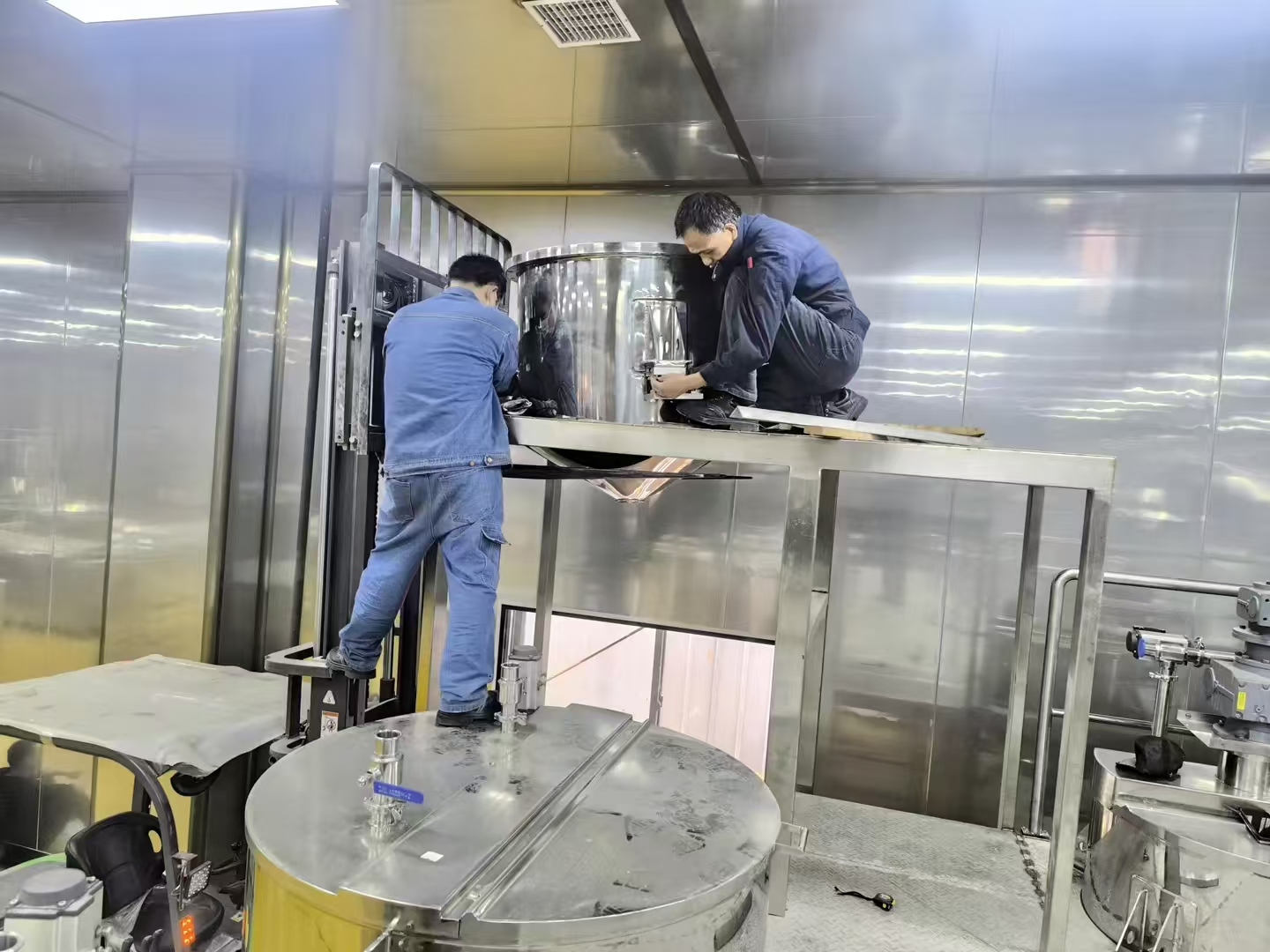
The first line of support is remote video guidance. For a cross-border buyer, this is the fastest route for parameter questions, alarm interpretation and adjustment advice, because it requires no travel and can be delivered during the production shift when the issue actually appears.
When remote guidance cannot resolve the problem, the escalation path is dispatch of professional technical personnel to the site for repairs. Buyers should clarify two points during negotiation: which failure categories qualify for on-site dispatch, and who covers travel and time. Agreeing this at order stage is far cheaper than negotiating it during a stoppage.
6. Compliance and Documentation Continuity
Certificate continuity is a long-term support item that is frequently overlooked. YeKeey holds a CE Certificate of Compliance issued by ECM for the Vacuum Emulsifying Mixer, certificate number 0P210922.WYAQT12, issued on 22 September 2021 with a listed validity through 21 September 2026, assessed against EN ISO 12100:2010, EN 60204-1:2018, EN IEC 61000-6-2:2019, EN IEC 61000-6-4:2019, EN IEC 61000-3-2:2019 and EN 61000-3-3:2013+A1:2019.
Two separate certificates cover related equipment: 0P210922.WYAQT10 for the High Shear Homogenizer (models LR-5 to LR-5000) and 0P210922.WYAQT11 for the Filling Machine. Because CE certificates carry a defined validity window, buyers should request the current certificate status together with the order documentation, and confirm that the certificate scope matches the exact model being purchased.
Step-by-Step Breakdown: From Specification Freeze to Year Five
The support relationship follows a predictable sequence. Each step produces a document that the buyer should retain, because that document set becomes the basis for later claims and maintenance planning.
- Specification freeze. Confirm model and series, capacity, voltage, control mode, jar size, machine dimensions, heating method, weighing module and any logo or designated appliance brand requirements. Confirm contact material grade (SS304 or SS316) against the material rules of your target market.
- Support scope in writing. Record what commissioning, operator training, remote video guidance and on-site dispatch include, and what they exclude. Confirm the spare-part and wear-part policy for custom components.
- Factory testing. YeKeey applies 100% testing as its quality control standard, so the ordered unit is tested before shipment rather than only on arrival.
- Site readiness before arrival. Prepare power supply, steam or heating source, water, drainage, floor loading and — where applicable — extraction ducting and any local pressure vessel or explosion-proof approvals. Missing site scope is the most common cause of delayed commissioning.
- Commissioning and first production run. Verify vacuum integrity at -0.09 MPa, heating performance against your working temperature up to 110 °C, and emulsion quality on a real batch of mayonnaise or cosmetic cream.
- Operator training. Train against the ordered control mode, and record who was trained and which procedures were covered, so refresher sessions can be delivered remotely later.
- Year one to year five and beyond. Move to a scheduled maintenance routine, keep a wear-part list, and use remote video guidance for parameter optimisation as formulations change.
Use Cases: What Long-Term Support Looks Like in Real Lines
Mayonnaise and Sauce Production
In mayonnaise production the vacuum homogenizer emulsifier mixer emulsifies, homogenizes, mixes and disperses the oil, water and egg or starch phases under vacuum. Support priorities for this line type are vacuum seal condition, homogeniser head wear and recipe repeatability. Because mayonnaise formulations are acidic and often salted, cleaning and surface-condition routines on the SS304 or SS316 contact parts belong in the written maintenance plan from day one.
Cosmetic Cream and Lotion Production
For skincare and cream production, the same machine performs emulsifying, homogenizing, mixing and dispersing, but the critical output is droplet size distribution and texture consistency. Support priorities here are temperature control accuracy during the heating and cooling phases, hygiene routines, and the ability to adjust homogenising parameters as new formulations are introduced. Buyers evaluating a vacuum emulsifier for skincare products should ask how recipe parameters are changed and re-validated after the initial commissioning.
Reference Installation: Cosmetics Producer in Nigeria
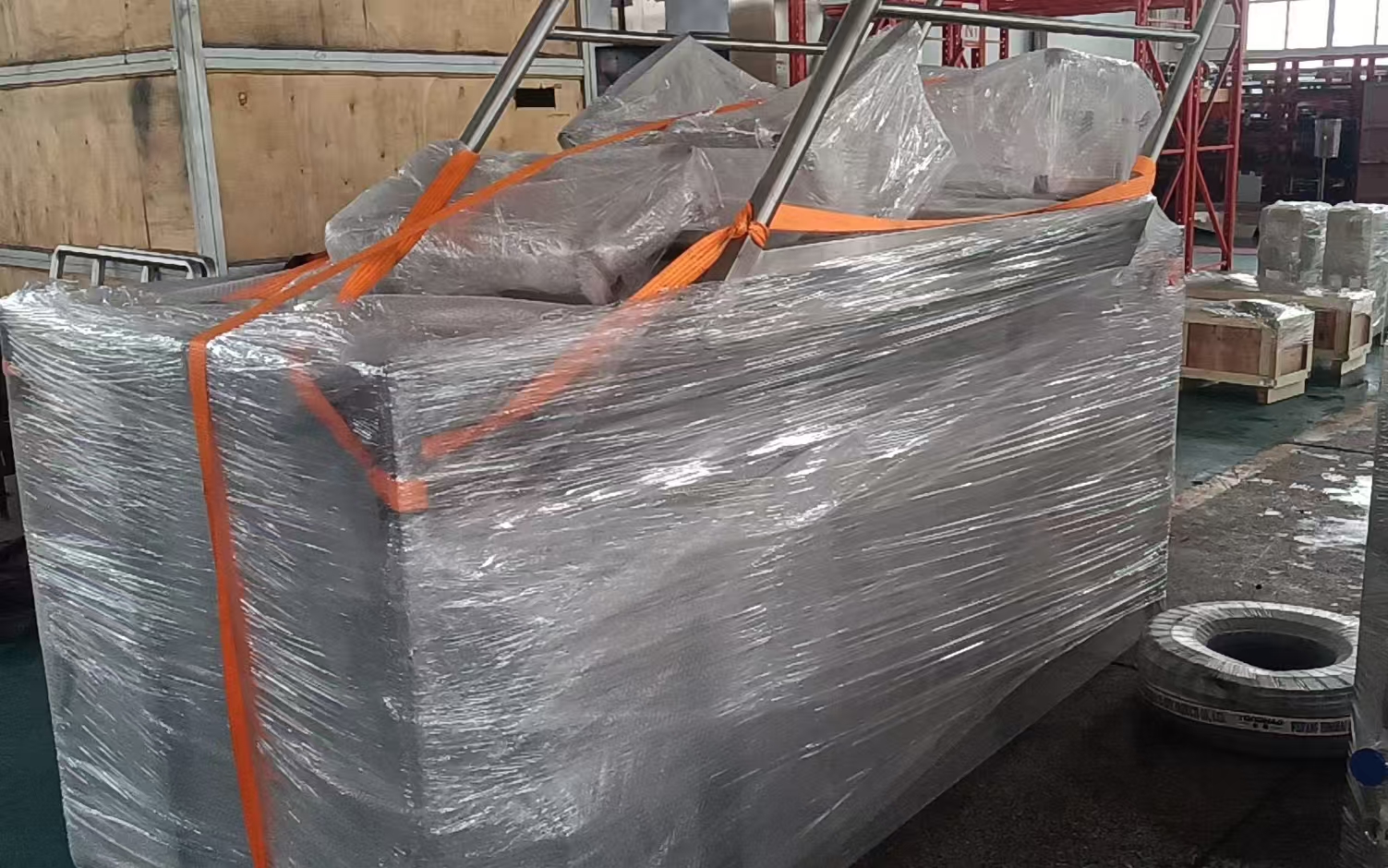
A documented YeKeey reference involves an OBM cosmetics client in Nigeria with an installation of 3 sets of vacuum emulsifying mixers. The project has a duration of at least 10 years and has achieved stable operation results and high production efficiency. This is the kind of reference that matters at evaluation stage: not a single successful start-up, but a decade of operation on the same site with the same equipment family.
What Evaluation-Stage Buyers Rank Highest in Long-Term Support
Once the machine comparison is complete, buyer attention typically shifts to a shorter list of support attributes. The ranking below is a scoring framework for building your own supplier comparison — it is presented as an evaluation structure, not as survey data.
- Commissioning completeness and operator training. Ranked first because every later support interaction depends on the line having been set up and understood correctly at the start. Ask for the training outline for the control mode you ordered.
- Wear-part and custom-component continuity. Ranked second because these parts have the longest procurement path. A documented wear-part list with lead times prevents the most expensive category of downtime.
- Remote diagnostic capability. Ranked third because it is the fastest route to resolution for cross-border buyers and requires no travel.
- Documentation and certificate currency. Ranked fourth because it is invisible until it is needed — at a customs check, an audit or a customer qualification visit.
- On-site escalation terms. Ranked fifth only because it should be used least often; the terms still need to be defined before the order, not after.
Comparison Table
Machine Series and Support-Relevant Specifications
| Series | Model range | Power range | Vacuum | Temperature | Output speed | Material | Application focus |
|---|---|---|---|---|---|---|---|
| SP Series Standard Vacuum Processing Unit | SPA-30 to SPA-10T | 3.7–110 kW | -0.09 MPa | up to 110 °C | up to 2800 r/min | SS304 / SS316 | Cosmetics; food products with mayonnaise as a key focus |
| ZJR Series Vacuum Emulsifying Mixer (includes ZJR-Lab laboratory emulsifying mixer) | ZJR-5 to ZJR-2500 | 5–91.5 kW | -0.09 MPa | up to 110 °C | 2800–6000 r/min | SS304 / SS316 | Cosmetics; food products with mayonnaise as a key focus |
| MC Recirculation Homogenizing Mixer (includes MC Lab recirculation homogenizing mixer) | MC-100 to MC-2500 | 5–91.5 kW | -0.09 MPa | up to 110 °C | up to 2800 r/min | SS304 / SS316 | Cosmetics; food products with mayonnaise as a key focus |
Support Claims to Verify Before Signing
| Support dimension | What to ask | Evidence to request | Why it matters to your line |
|---|---|---|---|
| Commissioning and handover | What is verified on site, and against which configuration? | Written commissioning scope and handover checklist | Vacuum integrity at -0.09 MPa and heating to your working temperature must be proven on the delivered unit |
| Operator training | Which control mode is trained, and for how many operators? | Training outline for the ordered control mode | Recipe consistency in mayonnaise and cosmetic emulsions depends on operators understanding the panel |
| Maintenance planning | Which intervals apply to seals, vacuum pump, heating circuit and sensors? | Recommended maintenance schedule | Slow loss of vacuum or heat accuracy is the most common hidden cost driver |
| Wear parts and custom components | How are custom parts resupplied after the warranty period? | Wear-part list with production lead time (30–60 days) | Custom parts have the longest replacement path and cause the longest stops |
| Compliance documentation | Which certificate covers the exact model being delivered? | Certificate number, issuing body, validity window | CE certificate 0P210922.WYAQT12, issued by ECM, is listed through 21 September 2026 and should be re-confirmed at order stage |
| Remote and on-site escalation | When does remote video guidance convert into an on-site visit? | Support process description and dispatch terms | Cross-border buyers need a defined escalation path before a stoppage, not during one |
FAQ
1. Does the CE certification of a vacuum homogenizer emulsifier mixer stay valid across the machine's service life?
No certificate stays valid indefinitely, so certificate continuity has to be managed as a support item. YeKeey holds a CE Certificate of Compliance for the Vacuum Emulsifying Mixer, certificate number 0P210922.WYAQT12, issued by ECM on 22 September 2021 with a listed validity through 21 September 2026, assessed against EN ISO 12100:2010, EN 60204-1:2018, EN IEC 61000-6-2:2019, EN IEC 61000-6-4:2019, EN IEC 61000-3-2:2019 and EN 61000-3-3:2013+A1:2019. Separate certificates cover the High Shear Homogenizer (0P210922.WYAQT10, models LR-5 to LR-5000) and the Filling Machine (0P210922.WYAQT11). Buyers should confirm the current certificate status, and confirm that the scope matches the exact model ordered. The listed standards address machinery safety and electromagnetic compatibility; explosion-proof requirements and pressure vessel registration are separate scopes that must be agreed at specification stage.
2. If a wear part or a customised component fails years after commissioning, how is it replaced?
YeKeey's after-sales scope includes support for custom components and wear parts, with remote video guidance as the first response and dispatch of professional technical personnel to the site for repairs when remote resolution is not possible. Because the machines are built on an OEM/ODM/OBM basis with customised voltage, weighing module, jar size, machine dimensions, heating method and other options, the practical step for buyers is to request a wear-part and custom-component list at order stage and to note YeKeey's production lead time of 30–60 days. Parts that are identified in advance can be ordered before a scheduled maintenance window instead of after a breakdown.
3. What should a mayonnaise or cosmetic producer budget for long-term service?
Long-term service cost is driven by four variables rather than by a single service fee: the wear parts consumed by a high-shear machine running at -0.09 MPa and up to 110 °C; the spare parts held on site; the frequency of on-site technical visits; and the production loss attached to each hour of downtime. The most controllable of these is the spare-part policy, followed by maintenance discipline on seals, vacuum lines, heating circuits and sensors. Equipment pricing and service terms are configuration-specific, so a written quotation is required rather than an estimate — buyers can request one against their exact model, capacity and automation requirements.
4. Can we validate performance on a sample before committing to a full production line?
Yes, at laboratory scale. The YeKeey vacuum emulsifying mixer range includes a ZJR-Lab laboratory emulsifying mixer within the ZJR-5 to ZJR-2500 series, and an MC Lab recirculation homogenizing mixer within the MC-100 to MC-2500 series. Both sit alongside the production models and share the same equipment family, so formulation trials can be run at lab scale before scaling to a production unit. The minimum order quantity recorded for YeKeey equipment is 1 unit, which allows a single-machine validation approach. Confirm the lab configuration, the parameters to be validated and the reporting you need when requesting the trial.
5. How long does delivery take, and how is commissioning scheduled after arrival?
YeKeey lists a production lead time of 30–60 days with a monthly capacity of 50 units, and applies 100% testing before shipment. Commissioning follows delivery and is sequenced after site readiness is confirmed — power, heating source, water and drainage, floor loading, and where applicable extraction ducting and local approvals. Operator training for the ordered control mode is delivered as part of the commissioning phase. Planning site scope in parallel with the 30–60 day production window is the most effective way to avoid a machine standing idle after arrival. The full equipment and service overview is available in the YeKeey product catalogue (PDF), and configuration-specific questions can be sent to sales@yekeey.com.
Conclusion: Support Is Part of the Equipment Decision
Choosing a vacuum homogenizer emulsifier mixer for mayonnaise or cosmetic production is usually framed as a comparison of vacuum level, temperature range, materials and drive power. Those parameters decide whether the machine can do the job. The support structure behind the machine decides whether it keeps doing the job in year three, year five and year ten.
The practical conclusion for buyers at evaluation stage is to convert support from a promise into a checklist: confirmed commissioning scope, defined operator training for the ordered control mode, a written maintenance routine built around -0.09 MPa vacuum and up to 110 °C operation, a spare-part and custom-component plan against a 30–60 day lead time, a defined remote-to-on-site escalation path, and current compliance documentation covering the exact model being delivered.
YeKeey has manufactured fine chemical, pharmaceutical and high-end processing equipment since 1998 from a 20,000 m² facility in Wuxi, Jiangsu Province, China, supported by 8 R&D engineers and a quality system implemented to ISO 9001 since 2003, with equipment delivered to more than 70 countries. For buyers who treat long-term support as part of the machine specification, that operating history is the relevant reference point — and a Nigerian cosmetics installation of 3 sets, in stable operation for at least 10 years, is the kind of reference that answers the question directly.
Next Step
If you are finalising an evaluation of a vacuum homogenizer emulsifier mixer for mayonnaise, sauces or cosmetic emulsions, request the technical catalogue and a configuration-specific quotation including commissioning, training and spare-part terms.
Catalogue: Download the YeKeey product catalogue (PDF)
Email: sales@yekeey.com | Tel: 86-510-88530599 | WhatsApp: +8615050678988
Website: www.yekeey.com | Address: NO.2855 Jiaoyang Road, An Zhen, Wuxi, Jiangsu Province, China

Article prepared by YeKeey (Wuxi YK Automation Technology Co.,Ltd). Product specifications, certifications, lead times and reference project details are stated as recorded in company documentation. Buyers should confirm current certificate status and configuration-specific scope at order stage.
Have Questions or Need More Details?
Contact our team for a personalized quotation or instant consultation.
Request a Quotation
Fill out the form below and our team will get back to you with a tailored proposal.
WhatsApp Direct Chat
Prefer to chat in real-time? Message us on WhatsApp for instant assistance & quick answers.
- Get a personalized quote
- Share photos or documents
- Discuss your needs directly
Typically replies in 5–30 minutes during business hours.