
Matching a Vacuum Homogenizer Emulsifier Mixer to Mayonnaise and Cosmetic Lines
How to Match a Vacuum Homogenizer Emulsifier Mixer to Your Mayonnaise or Cosmetic Production Line
When you are planning a new sauce line or upgrading a cream plant, the question is not only “which vacuum homogenizer emulsifier mixer is good” but “which configuration fits my line, my product, and my capacity.” This guide explains how to match a vacuum homogenizer emulsifier mixer to mayonnaise and cosmetic production requirements, covering machine series, key parameters, supporting equipment, and the practical decisions that affect installation and daily operation.
What a Vacuum Homogenizer Emulsifier Mixer Does in Mayonnaise and Cosmetic Lines
A vacuum homogenizer emulsifier mixer is a processing vessel that combines mixing, emulsifying, homogenizing, and dispersing under vacuum. It is widely used in food sauce production and cosmetics manufacturing. In mayonnaise lines, the machine creates a stable oil-in-water emulsion from oil, egg yolk, vinegar, and seasonings. In cosmetic lines, it produces creams, lotions, and similar emulsions with controlled particle size and texture.
The machine matters because the same formulation can produce different results depending on how the phases are mixed, how much air is removed, and how uniformly the droplets are reduced. A vacuum environment removes air bubbles, while high-shear mixing reduces droplet size.
The global mayonnaise market was worth approximately USD 12.58 billion in 2024, which continues to drive demand for high-shear vacuum emulsification equipment. The vacuum mixer homogenizer market is estimated at USD 1.02 billion in 2026, with the cosmetics and personal care segment leading with a 38% market share.
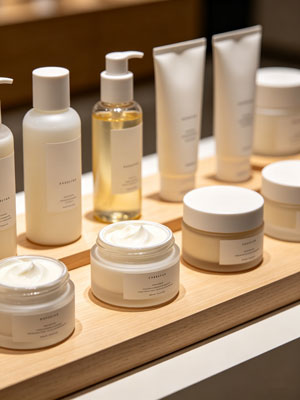
Cosmetics and personal care production is one of the primary application areas for vacuum emulsifying mixers.
Typical Project Conditions for Food Sauce and Cosmetic Lines
Vacuum homogenizer emulsifier mixers are applied in specific working conditions. For food sauce projects, the equipment typically operates under high temperature or ambient temperature, with vacuum, and is used in food emulsification lines or as an emulsifier unit. For daily chemical and personal care projects, the machine is installed in personal care product production lines. In both cases, the core functions are the same: emulsifying, homogenizing, mixing, and dispersing.
Two operation modes are commonly available:
- Button control
- PLC control
PLC control is generally chosen when the line requires repeatable recipes, automated sequences, and integration with other process equipment.
Site preparation is one of the most overlooked parts of a project. The product requires supporting equipment such as a ducting system. Plant engineers should confirm the availability of ducting, utility connections, and enough floor space before delivery.
Which YeKeey Series Should You Choose?
YeKeey (Wuxi YK Automation Technology Co., Ltd) supplies three vacuum emulsifying mixer series that can be matched to different line requirements: ZJR, SP, and MC. All three are available in SS304 or SS316 materials and are used in cosmetics and food products, with mayonnaise as a key food focus.
ZJR Series Vacuum Emulsifying Mixer
The ZJR series is the standard vacuum emulsifying mixer line, covering laboratory to production-scale models: ZJR-5, ZJR-10, ZJR-30, ZJR-50, ZJR-100, ZJR-150, ZJR-200, ZJR-250, ZJR-350, ZJR-500, ZJR-650, ZJR-850, ZJR-1000, ZJR-1300, ZJR-2000, and ZJR-2500. It also includes the ZJR-Lab Laboratory Emulsifying Mixer. The ZJR series has a power range of 5–91.5 kW, a vacuum pressure of −0.09 MPa, a temperature capability up to 110°C, and an output speed range of 2800–6000 r/min.
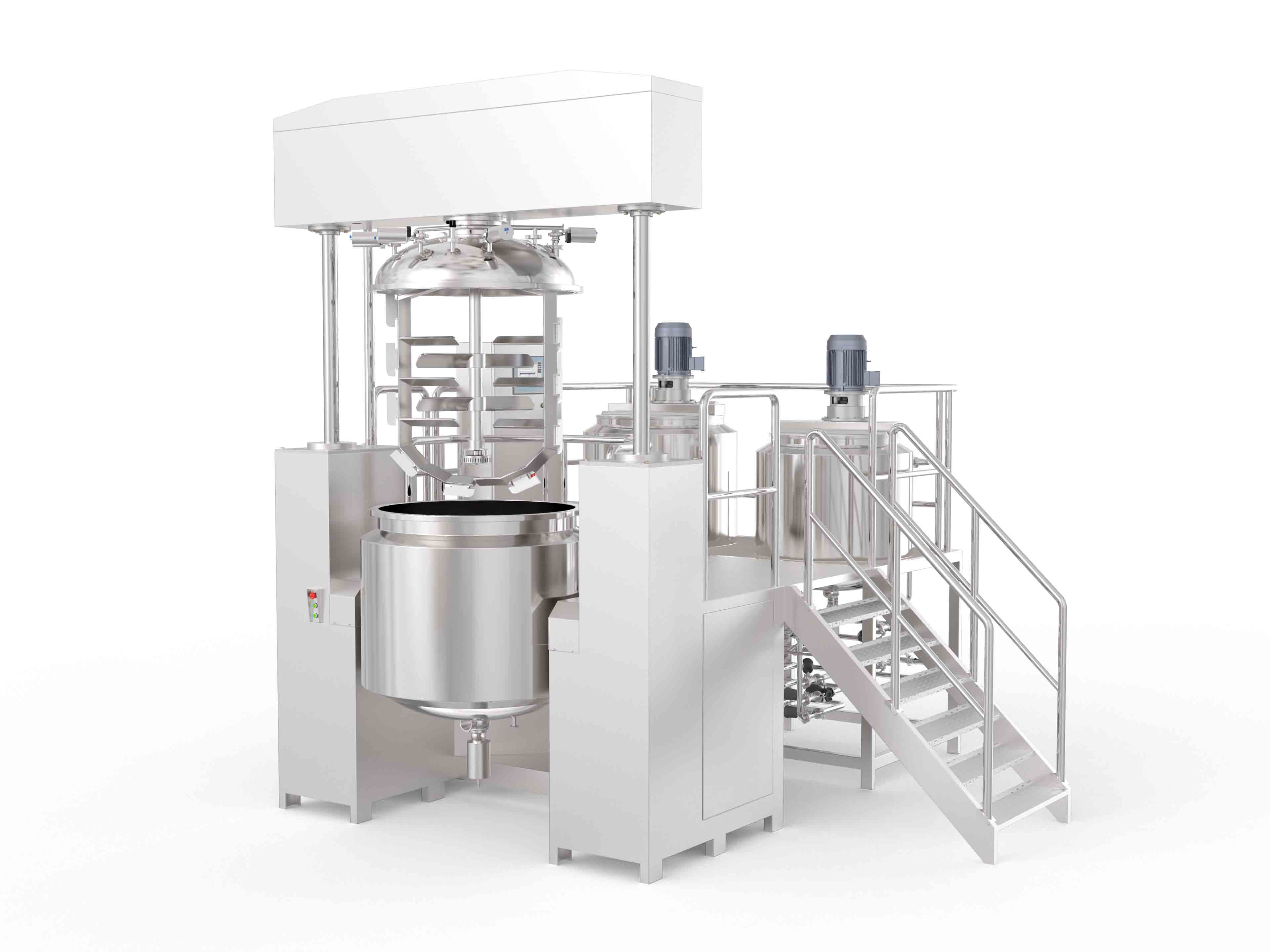
The ZJR series covers laboratory and production volumes in a single platform.
SP Series Standard Vacuum Processing Unit
The SP series is positioned as a standard vacuum processing unit with a broader capacity range: SPA-30 through SPA-6000 and SPA-10T. The power range is 3.7–110 kW, vacuum pressure is −0.09 MPa, temperature capability is up to 110°C, and maximum output speed is up to 2800 r/min.
MC Recirculation Homogenizing Mixer
The MC series is the recirculation homogenizing mixer line, with models from MC-100 to MC-2500. It also includes an MC Lab Recirculation Homogenizing mixer. Key parameters are a power range of 5–91.5 kW, vacuum pressure of −0.09 MPa, temperature up to 110°C, and output speed up to 2800 r/min.
Recirculation designs are often selected when the process demands repeated passes through the homogenizing zone, which can help achieve a more uniform emulsion in formulations that are sensitive to droplet size distribution.
Step-by-Step: Matching the Machine to Your Line
Step 1. Define the product and formulation
Confirm whether the line is for mayonnaise, salad dressing, sauce, cream, lotion, or another emulsion. Different products place different demands on shear, vacuum, and temperature control.
Step 2. Check the batch size and capacity
Match the working vessel volume to the required batch size. YeKeey offers laboratory models for R&D and pilot batches, as well as production models up to 2500 L (MC and ZJR) and larger process units in the SP series up to 10 T.
Step 3. Select the material of construction
Choose SS304 or SS316. For cosmetic and pharmaceutical-style processes, GMP guidance typically requires SUS316L stainless steel for contact parts. Confirm the contact material with the supplier according to your market and quality system.
Step 4. Define the control mode
Choose button control for simple lines or PLC control when you need repeatability, data logging, and automated process sequences.
Step 5. Confirm the operating parameters
Verify that the selected model can achieve the process temperature, vacuum pressure, and homogenizing speed you need. Key technical parameters across these mixers include an output speed up to 2800 r/min, an operating temperature up to 110°C, an operating vacuum pressure of −0.09 MPa, and a power range from 3.7 to 110 kW. Some ZJR models reach an output speed range up to 6000 r/min.
Step 6. Plan the supporting equipment
This product requires supporting equipment such as a ducting system. The machine must be used in conjunction with a ducting system. Discuss the layout with the supplier so that the line can be designed with the correct connections.
Step 7. Define the scope of supply and compliance
Confirm the power supply, voltage, and any explosion-proof or pressure-vessel requirements. Both food sauce and daily chemical applications can require explosion-proof or pressure vessel configurations depending on the ingredients and local regulations.
Parameter Comparison: ZJR, SP, and MC Series
| Feature | ZJR Series | SP Series | MC Series |
|---|---|---|---|
| Series type | ZJR Vacuum Emulsifying Mixer / ZJR-Lab Laboratory Mixer | SP Standard Vacuum Processing Unit | MC Recirculation Homogenizing Mixer / MC Lab Mixer |
| Available models | ZJR-5 to ZJR-2500 | SPA-30 to SPA-6000, SPA-10T | MC-100 to MC-2500 |
| Power range | 5–91.5 kW | 3.7–110 kW | 5–91.5 kW |
| Vacuum pressure | −0.09 MPa | −0.09 MPa | −0.09 MPa |
| Temperature | up to 110°C | up to 110°C | up to 110°C |
| Output speed | 2800–6000 r/min | up to 2800 r/min | up to 2800 r/min |
| Material | SS304 / SS316 | SS304 / SS316 | SS304 / SS316 |
| Typical applications | Cosmetics; food products with mayonnaise as a key focus | Cosmetics; food products with mayonnaise as a key focus | Cosmetics; food products with mayonnaise as a key focus |
Table based on YeKeey published product specifications. Verify model-specific details with the manufacturer before final selection.
Use Cases: Mayonnaise, Sauce, and Cosmetic Projects
Mayonnaise and food sauce line
In a food sauce emulsification line, the mixer must handle high temperature or ambient temperature conditions under vacuum. The machine provides the emulsifying, homogenizing, mixing, and dispersing functions needed for stable sauce texture. Explosion-proof or pressure-vessel configurations may be required depending on the process.
Cosmetic cream line
In a cosmetic manufacturing line, the machine is used as the central emulsifying unit. The same vacuum emulsifying mixer platform can process creams, lotions, and similar personal care emulsions with controlled particle size and air removal. PLC control is often used to maintain consistent batch-to-batch quality.
Daily chemical and personal care production
For daily chemical industry projects, personal care production lines use the mixer to produce emulsion-based products under vacuum. Ducting and utility integration must be planned as part of the line design.
Why Project Fit Matters More Than Brand Alone
Buyers at the evaluation stage sometimes compare brands before confirming their own process conditions. But the more useful sequence is: first confirm the product formula, batch size, material requirements, and site constraints; then select the machine series and configuration that fits those conditions.
YeKeey supports this evaluation process through OEM, ODM, and OBM production modes. Customization options include voltage, designated appliance brands, weighing modules, logo, machine dimensions, jar size, and heating method. This means the machine can be adapted to your local electrical standards and line layout.
The company has a monthly capacity of 50 units, a standard lead time of 30–60 days, a minimum order quantity of 1 unit, and 100% testing as part of quality control. For after-sales support, YeKeey provides remote video guidance, after-sales support for custom components and wear parts, and can dispatch professional technical personnel to the site for repairs.
Case Experience: Nigeria OBM Cosmetics Line
A practical example of long-term project fit is a YeKeey customer in Nigeria operating an OBM cosmetics application. The client purchased 3 sets of vacuum emulsifying equipment and has been running them for at least 10 years. The result reported is stable operation with high production efficiency.
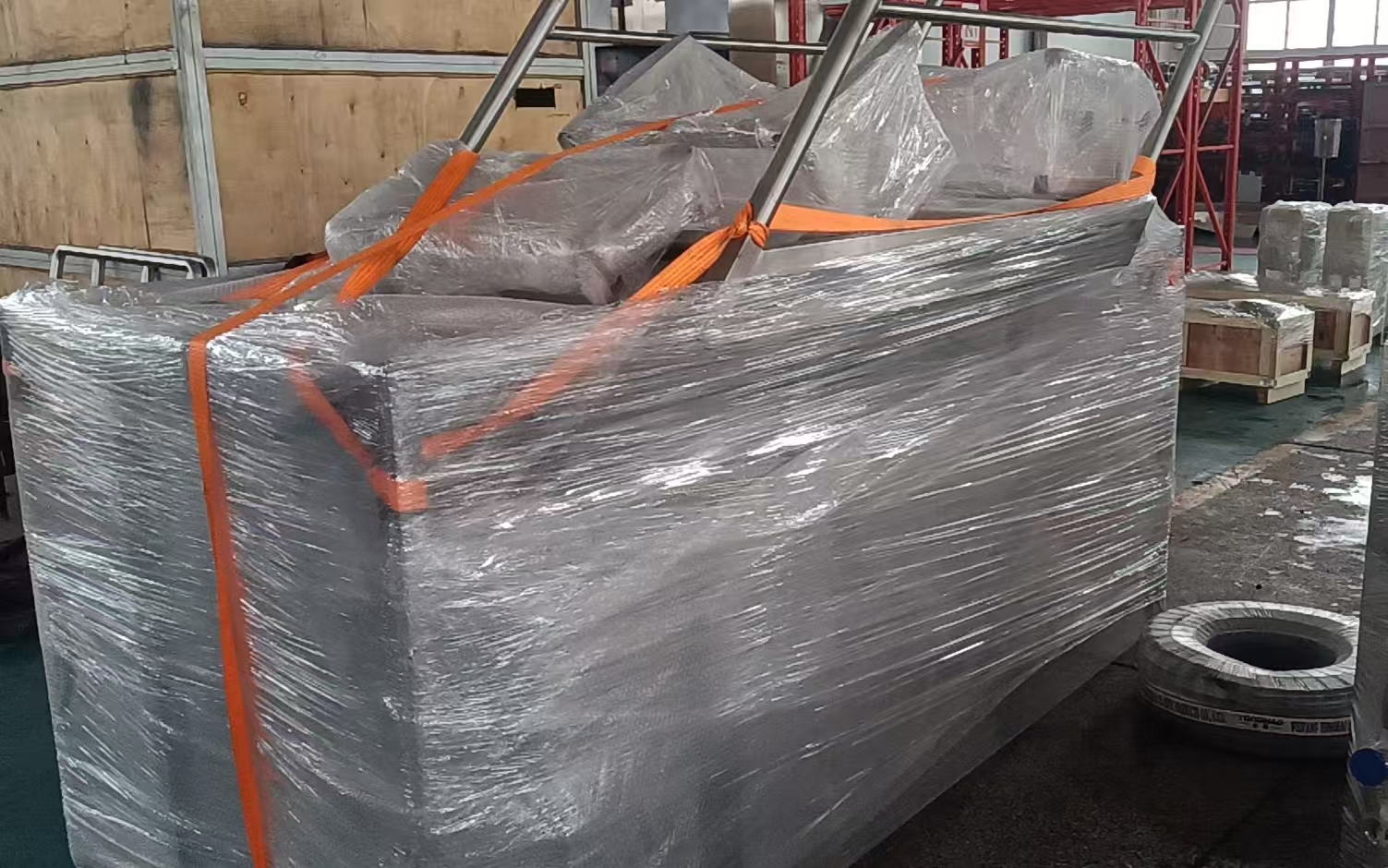
An OBM cosmetics customer in Nigeria has used YeKeey equipment for at least 10 years.
This case shows that a well-matched machine is not a single-purchase decision but a long-term production asset. For a buyer, the relevant question is whether the supplier can support the line after installation.
Selection Checklist for Your Project
- Product type: mayonnaise, sauce, cream, lotion, or other emulsion
- Batch volume and production capacity per shift
- Contact material: SS304, SS316, or SS316L for GMP-oriented lines
- Control mode: button or PLC
- Process temperature, vacuum level, and homogenizing speed
- Site preparation: ducting system, utilities, floor space
- Compliance: explosion-proof, pressure vessel, CE, or GMP requirements
- Customization: voltage, dimensions, heating method, logo
- After-sales support: remote guidance, spare parts, site service
Frequently Asked Questions
Does a vacuum homogenizer emulsifier mixer require additional equipment on site?
Yes. The product requires supporting equipment such as a ducting system. It must be used in conjunction with a ducting system, so the site design should include the necessary ducting connections before installation.
Can the same vacuum homogenizer emulsifier mixer handle both mayonnaise and cosmetic products?
The same machine series is used for both cosmetics and food products, with mayonnaise as a key food focus. However, the final configuration depends on the formulation, material of construction, control mode, and whether the line requires food-grade or cosmetic-grade compliance. Confirm the contact materials and cleanability with the supplier.
What are the key technical parameters to check for a vacuum homogenizer emulsifier mixer?
Key technical parameters include an output speed up to 2800 r/min, an operating temperature up to 110°C, an operating vacuum pressure of −0.09 MPa, and a power range from 3.7 to 110 kW. Some ZJR models reach an output speed range up to 6000 r/min.
Can I get a customized vacuum homogenizer emulsifier mixer for my project?
YeKeey supports OEM, ODM, and OBM production with customization options such as voltage, designated appliance brands, weighing modules, logo, machine dimensions, jar size, and heating method. The minimum order quantity is 1 unit, and the standard lead time is 30–60 days.
How long does a YeKeey vacuum homogenizer emulsifier mixer last in production?
One documented example is a Nigeria OBM cosmetics customer who has used 3 sets of YeKeey equipment for at least 10 years with stable operation and high production efficiency. Equipment lifespan depends on maintenance, operating conditions, and usage intensity.
What is the first step to get a recommendation for my mayonnaise or cosmetic line?
Send your product type, batch size, target capacity, material requirement, and site conditions to YeKeey. Based on this information, the supplier can recommend a suitable series and configuration for your project.
Need help matching a mixer to your line?
Contact YeKeey at sales@yekeey.com or WhatsApp +86 15050678988.
Download the YeKeey brochure to review the product range.