OEM/ODM Execution for Vacuum Homogenizer Emulsifier Mixers: From Specification to Startup
OEM/ODM Execution for Vacuum Homogenizer Emulsifier Mixers: From Specification to Startup
The technical sheet for a vacuum homogenizer emulsifier mixer can look similar across quotations: stainless steel contact surfaces, an emulsifying head, vacuum capability, a temperature-controlled jacketed vessel, and an agitator system. In practice, what separates a smoothly running production line from a machine that needs repeated adjustment happens before the machine is built. The supplier must translate your project type into the right mixer family, apply the correct customization, test the assembled unit, and continue supporting it after shipment.
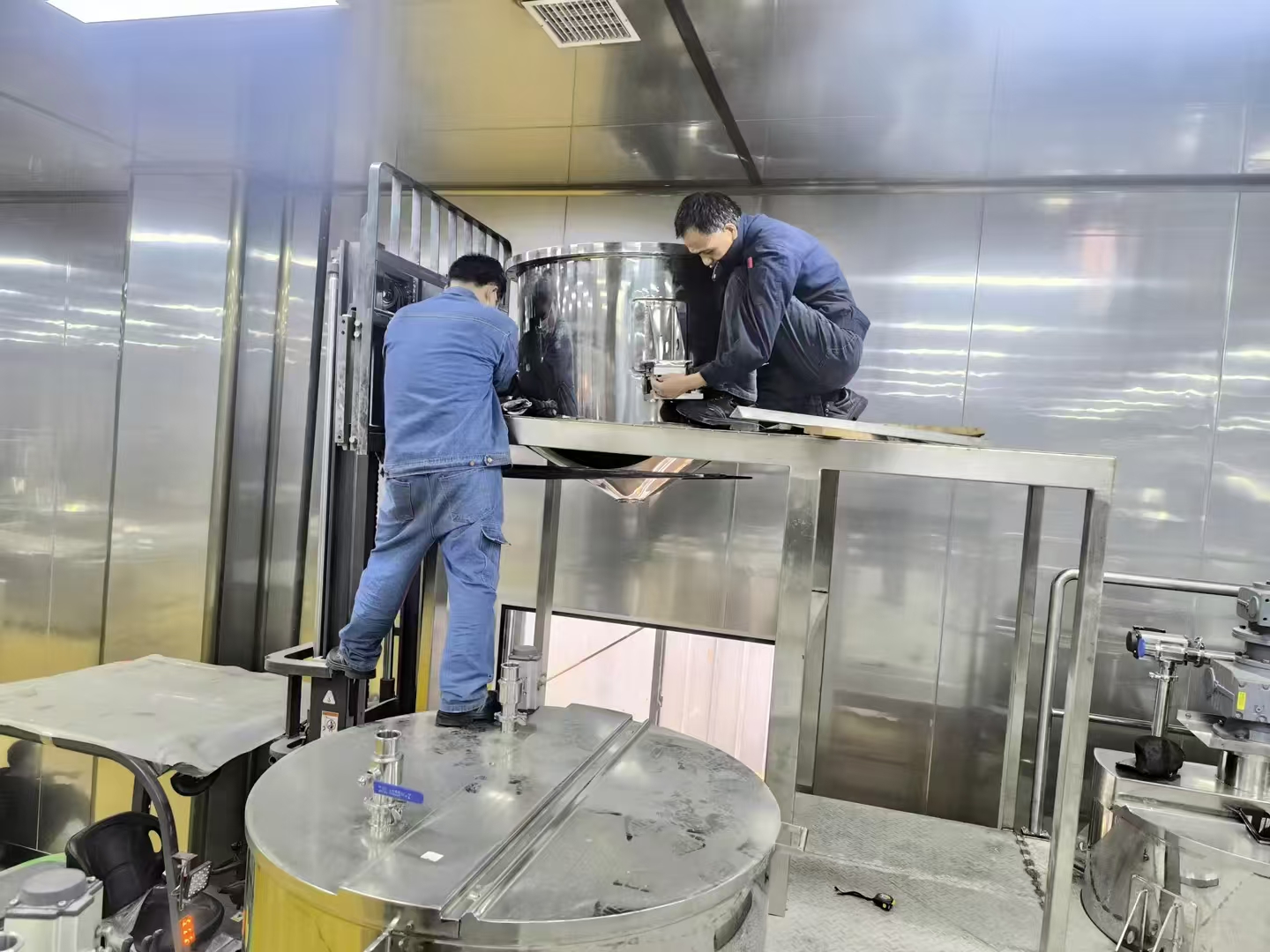
This guide is written for buyers who have already identified a vacuum homogenizer emulsifier mixer as their core processing machine and now need to verify OEM/ODM execution. It covers YeKeey product families, custom options, quality and certification gates, a practical step-by-step workflow, project use cases, and procurement questions that matter during the evaluation-to-execution transition.
Problem Definition: Moving from Machine Selection to OEM Project Execution
A common procurement task is to compare one 500 L mixer against another of the same nominal size. That comparison is useful, but it does not answer the OEM-specific question: can this supplier build the machine for my actual operating environment?
In food and cosmetics projects, execution variables rarely fit a single catalog specification. Plant voltage may be 380 V, 415 V, or another standard. The buyer may require a specific appliance brand, a weighing module, a particular jar size, or a heating method suited to the formula. A cosmetics company may enter as an OBM and need its own brand visible on the machine. A mayonnaise or sauce producer may need a production-scale recirculation homogenizing configuration rather than a standard vessel-only design.
The real decision, therefore, is not only which vacuum homogenizer emulsifier mixer to buy; it is whether the maker can execute an OEM/ODM project with clear customization, testing, lead time, and after-sales procedures.
Industry Background: Why Food and Cosmetic Producers Are Evaluating Emulsifying Equipment
Public market research illustrates why emulsifying and homogenizing machinery remains central to food and cosmetics investment. Roots Analysis valued the global homogenizers market at about USD 2.10 billion in 2024 and projected growth to USD 3.79 billion by 2035 at a 5.4% compound annual growth rate. Future Market Insights estimated the vacuum mixer homogenizer market at about USD 1.02 billion in 2026, with the cosmetics and personal care segment representing roughly 38% of that market. The mayonnaise market also contributes directly: according to Zion Market Research, the global mayonnaise market was worth approximately USD 12.58 billion in 2024, sustaining demand for high-shear vacuum emulsification equipment used to make stable dressings and sauces.
On the supply side, Dataintelo reports that Asia-Pacific accounted for about 36.2% of homogenizing mixer revenue in 2025, partly because China hosts a large manufacturing ecosystem. Those statistics are useful context, but they are not interchangeable: each market-research company defines the product category differently. For an industrial buyer, the practical conclusion is that demand for stable emulsions is broad and that proven equipment supply is increasingly concentrated in Asia-Pacific.
A machine specification, however, still has to be proven in the buyer's project type. YeKeey documents its vacuum emulsifying mixers across project categories that include cosmetics emulsifying machine units, cosmetic manufacturing lines, personal care product production lines, emulsifier units, and food emulsification lines. For food products, mayonnaise is regularly named as a key focus in the product records.
Detailed Solution: Three YeKeey Product Families for Custom Projects
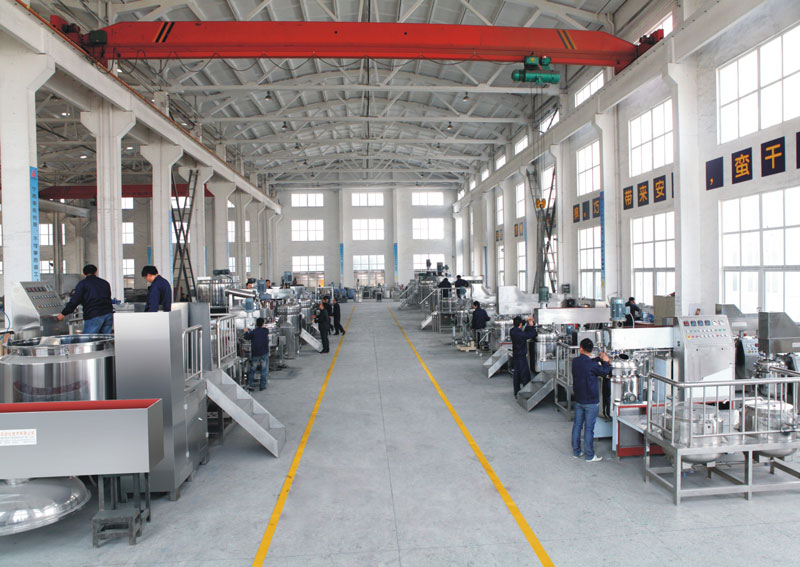
Wuxi YK Automation Technology Co., Ltd., also known as YeKeey, designs and manufactures mixing, emulsifying, filling, and processing equipment. The company was founded in 1998 and operates from a 20,000 m² facility in Wuxi with approximately 80 employees and an R&D engineering team of eight. Its product records for vacuum processing include the SP Series Standard Vacuum Processing Unit, the ZJR Series Vacuum Emulsifying Mixer, and the MC Recirculation Homogenizing Mixer.
The series names matter because they guide the buyer to the processing function being tested.
| Documented Feature | SP Series Standard Vacuum Processing Unit | ZJR Series Vacuum Emulsifying Mixer | MC Recirculation Homogenizing Mixer |
|---|---|---|---|
| Model examples | SPA-30 through SPA-10T | ZJR-5 through ZJR-2500; ZJR-Lab Laboratory Emulsifying Mixer | MC-100 through MC-2500; MC Lab Recirculation Homogenizing Mixer |
| Power range | 3.7–110 kW | 5–91.5 kW | 5–91.5 kW |
| Output speed | Up to 2,800 r/min | 2,800–6,000 r/min | Up to 2,800 r/min |
| Vacuum level | Up to −0.09 MPa | Up to −0.09 MPa | Up to −0.09 MPa |
| Operating temperature | Up to 110°C | Up to 110°C | Up to 110°C |
| Material option | SS304 or SS316 | SS304 or SS316 | SS304 or SS316 |
| Laboratory scale covered | Standard processing unit line | ZJR-Lab included | MC Lab included |
Product records also state that the MC Recirculation Homogenizing Mixer categories are suitable for laboratory-scale and production-scale recirculation homogenizing mixing. That makes the MC line useful when a company wants to develop a formula on a lab unit and later transfer the same mixing principle to a larger production unit.
OEM, ODM, and OBM Capabilities
OEM execution becomes meaningful when the manufacturer offers more than a painted logo. YeKeey states its production modes as OEM, ODM, and OBM. It also provides ODM design and production services. For a private brand launching cosmetics, personal care, or food emulsion products, OBM means the machine can carry the buyer's brand identity rather than only the factory label.
Available customization options include:
- Voltage, for plants that operate on different electrical standards.
- Designated appliance brands, where the buyer has an approved electrical component preference.
- A weighing module, when the process needs batch accuracy inside the machine.
- Logo application, for private-label equipment.
- Machine dimensions and jar size, to match building layout or batch volume.
- Heating method, to adapt the vessel to the product and utility available.
From a buyer's perspective, these options decide whether the machine can be integrated into a real factory. Voltage alone can eliminate a supplier if the cabinet cannot be changed. Jar size determines whether the quoted vessel matches the operator's existing transfer system. Heating method affects cooking and cooling cycles for mayonnaise, sauces, creams, and lotions.
Quality Gates and Certification
For EU-bound projects, the relevant compliance proof includes CE certification. YeKeey's vacuum emulsifying mixer category is covered by CE Certificate of Compliance No. 0P210922.WYAQT12, issued by ECM and valid through 21 September 2026. The company also reports that it fully implemented the ISO9001 quality system beginning in 2003.
Material selection is another quality gate. The standard records for these mixer families list SS304 and SS316 as material options. For pharmaceutical and cosmetic processing, GMP-oriented projects often require SUS316L stainless steel for contact parts; this is a broader industry expectation and should be written into the technical specification rather than assumed.
Step-by-Step Breakdown: From Requirement to Startup
Step 1: Define the Project Type and Batch Format
Before the supplier selects a series, the buyer should state whether the machine will serve a food emulsification line, a cosmetics manufacturing line, a personal care production line, an emulsifier unit project, or a combination of these. In YeKeey documentation, the product is explicitly referenced as suitable for those project types. For food customers, the records highlight mayonnaise as a key application focus within food products.
Step 2: Choose the Processing Family
The SP series can be considered when the project is structured as a standard vacuum processing unit. The ZJR family, including the ZJR-Lab unit, is listed as a vacuum emulsifying mixer category. The MC family, including MC Lab, is positioned for recirculation homogenizing mixing at laboratory and production scale. The manufacturer's engineering team can guide this choice when the formula and batch size are known.
Step 3: Confirm Customization and Order Flexibility
YeKeey accepts a minimum order quantity of one unit, which is important for a first production-scale trial. The order can specify voltage, designated appliance brands, weighing module, logo, machine dimensions, jar size, and heating method. ODM design and production is available when the buyer needs development work beyond a standard configuration.
Step 4: Plan Production and Testing
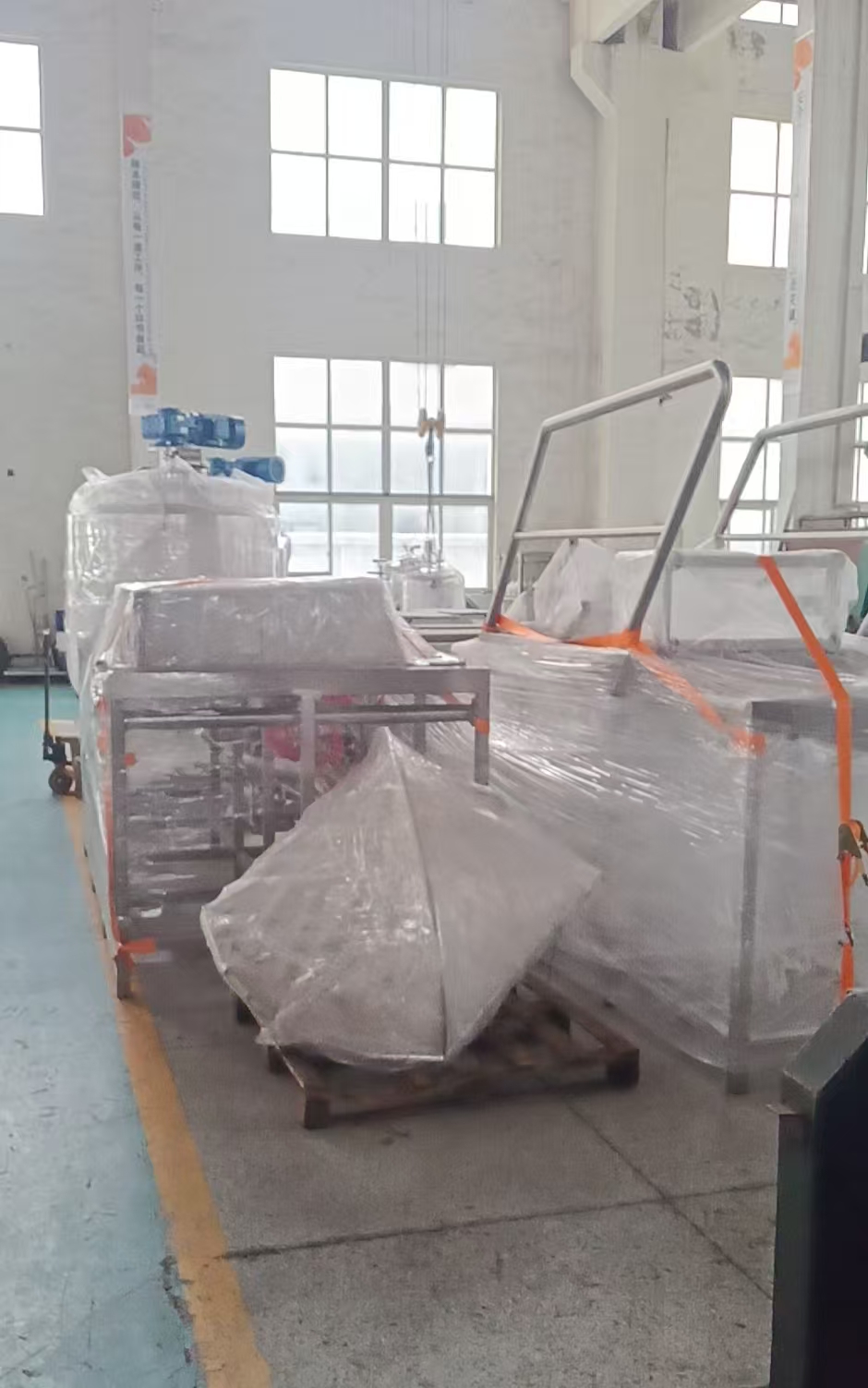
YeKeey lists a monthly production capacity of about 50 units and an annual output of approximately 600 units. Its typical manufacturing lead time is 30–60 days. The factory applies 100% testing to machines before delivery. Buyers should ask about factory acceptance test arrangements before the unit is packed; YeKeey includes FAT in its acceptance procedure.
Step 5: Arrange Logistics, Payment, and Startup Support
Export delivery methods include FOB, CIF, EXW, and CFR, while the standard payment structure often follows a 30/70 split. After-sales service includes remote video guidance, support for custom components and wear parts, and dispatch of professional technical personnel when site repair is required. For manufacturers using the equipment in a new production hall, the last point can reduce commissioning risk dramatically.
Use Cases: What OEM/ODM Execution Looks Like in the Field
One documented YeKeey project involved a cosmetics industry client in Nigeria. That customer operates as an OBM and uses the supplied equipment for cosmetic production. According to project records, the customer has used the machines for at least 10 years with stable operation; high production efficiency was highlighted in the project evaluation.
This case is useful because OBM cosmetics producers often need exactly the capabilities discussed above: equipment that can be branded, integrated into a production room, and supported over a long service life. Stable operation and high efficiency do not emerge from a single component. They depend on a coherent processing vessel, homogenizing system, control integration, and installation follow-up.
The same equipment families are cited by YeKeey for other project contexts, including cosmetics emulsifying machine unit projects, personal care product production line projects, food emulsification line projects, and emulsifier unit projects. In such projects, the buyer may enter at different points: replacing a single emulsifier unit, building a complete cream-making line, or expanding a mayonnaise production line.
Comparison Table: What a Capable OEM Partner Should Document
| Procurement Question | Relevant YeKeey Evidence |
|---|---|
| Which machine families are available? | SP Series Standard Vacuum Processing Unit, ZJR Series Vacuum Emulsifying Mixer, MC Recirculation Homogenizing Mixer |
| Do laboratory and production scales exist? | ZJR-Lab and MC Lab categories are documented alongside production-scale models |
| What customization can the buyer specify? | Voltage, designated appliance brands, weighing module, logo, machine dimensions, jar size, heating method |
| Does the maker support ODM? | Yes, ODM design and production services are offered; OEM, ODM, and OBM are the stated production modes |
| What sample or pilot path exists? | Minimum order quantity is 1 unit; laboratory categories are listed for laboratory-scale processing |
| What is the delivery lead time? | 30–60 days, subject to a 50-unit monthly production capacity |
| How is quality controlled before shipment? | CE certification, ISO9001 system since 2003, and 100% testing of equipment |
Frequently Asked Questions
Which compliance documents and stainless steel materials matter for a vacuum homogenizer emulsifier mixer used in food or cosmetic production?
For EU-bound machines, YeKeey's vacuum emulsifying mixer categories are covered by CE Certificate of Compliance No. 0P210922.WYAQT12, issued by ECM and valid until 21 September 2026. The documented material options for these mixer families are SS304 and SS316. GMP-oriented cosmetics and pharmaceutical projects often require SUS316L stainless steel for contact parts, so this should be confirmed in the technical specification.
Does YeKeey offer laboratory-scale and production-scale vacuum homogenizer emulsifier mixers before an OEM order is scaled up?
Yes. The YeKeey product categories include the ZJR-Lab Laboratory Emulsifying Mixer and the MC Lab Recirculation Homogenizing Mixer. The MC Recirculation Homogenizing Mixer family is documented as suitable for both laboratory-scale and production-scale recirculation homogenizing mixing. This makes it practical to develop a formula on a smaller unit before committing to a large production machine.
Which industrial line types are suitable for YeKeey vacuum emulsifying mixers?
YeKeey documents the following project applications: cosmetics emulsifying machine unit projects, cosmetic manufacturing line projects, personal care product production line projects, food emulsification line projects, and emulsifier unit projects. In the food product category, mayonnaise is listed as a key focus in the product records.
What can be customized on an OEM/ODM vacuum homogenizer emulsifier mixer?
Available customization includes voltage, designated appliance brands, a weighing module, logo application, machine dimensions, jar size, and heating method. YeKeey also states OEM, ODM, and OBM production modes, with ODM design and production available. A buyer can therefore specify both process-related and brand-related features.
What are YeKeey's MOQ, lead time, and after-sales support for export machines?
The minimum order quantity is 1 unit. The typical lead time is 30–60 days, and monthly production capacity is about 50 units. Export delivery methods include FOB, CIF, EXW, and CFR; the common payment structure is 30/70. After-sales support includes remote video guidance, after-sales support for custom components and wear parts, and dispatch of professional technical personnel for site repairs. To receive a current quotation or discuss your project, contact YeKeey at sales@yekeey.com.
Conclusion
A vacuum homogenizer emulsifier mixer can be evaluated as hardware, but it is executed as a project. The buyer should verify the machine family, the customization path, the quality control procedure, and the after-sales structure at the same time as the price.
YeKeey addresses those execution requirements through SP, ZJR, and MC series equipment, ODM-supported customization, an MOQ of one unit, 30–60 day manufacturing lead times, CE certification, and support that includes remote video guidance and site dispatch. For mayonnaise and cosmetic manufacturers, the documented applications span food emulsification lines, cosmetic manufacturing lines, personal care production lines, and emulsifier unit projects. The Nigeria OBM cosmetics case demonstrates that long operational life and stable production are realistic expectations when the supplier executes the full project rather than only selling a tank.
Next step for buyers in evaluation or execution: download the YeKeey company brochure(PDF), or contact YeKeey to discuss the machine series, customization, FAT, and shipment details for your line.

Email: sales@yekeey.com
Tel: 86-510-88530599
WhatsApp: +8615050678988
Website: www.yekeey.com