
Top Vacuum Emulsifying Mixers for Mayonnaise and Personal Care: A Ranked List for 2026
Top Vacuum Emulsifying Mixers for Mayonnaise and Personal Care: A Ranked List for 2026
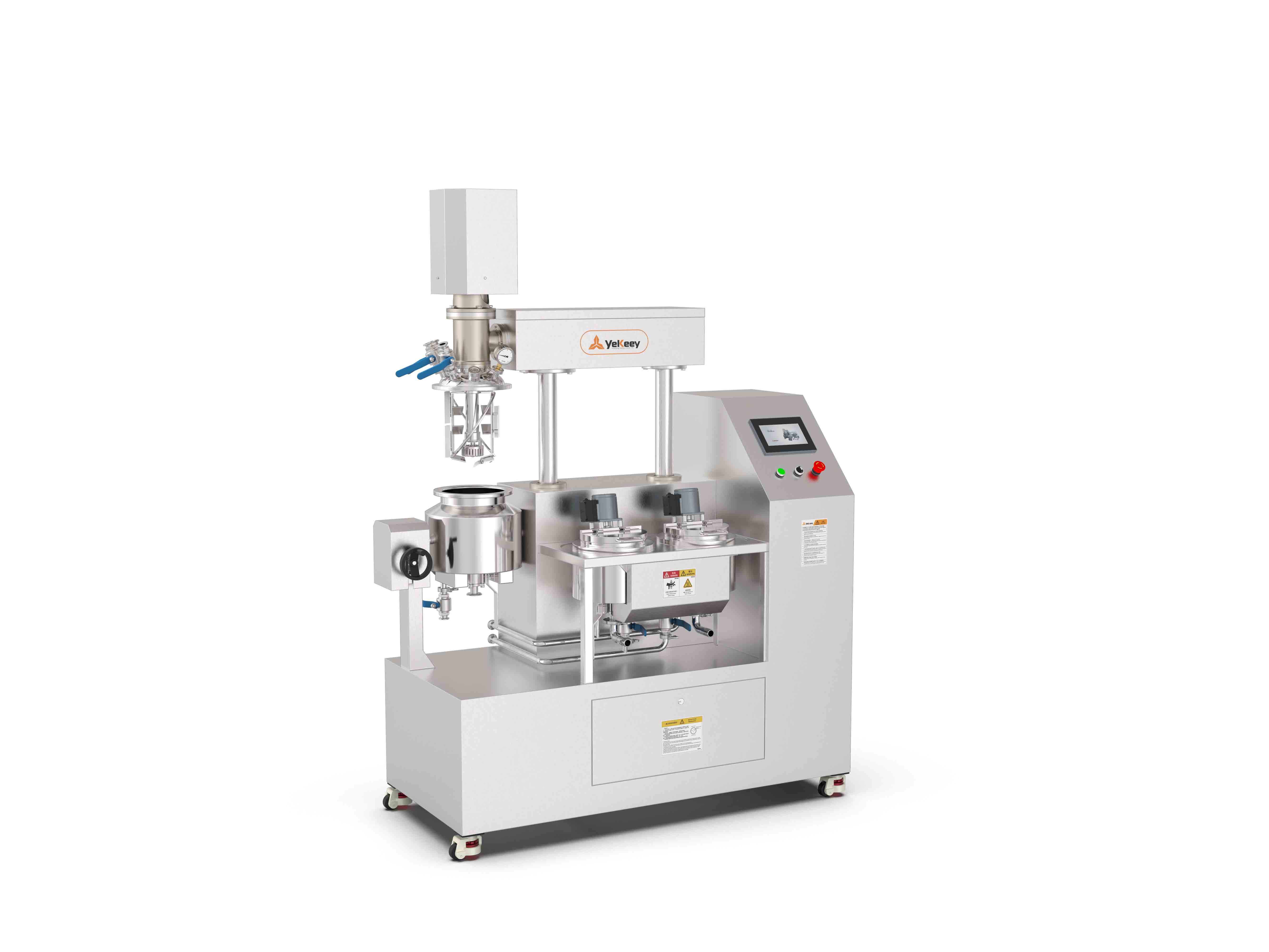
ZJR Series vacuum emulsifying mixer — ranked first for combined mayonnaise and personal care coverage.
For a buyer shortlisting a vacuum homogenizer emulsifier mixer for mayonnaise, cosmetics, or personal care production, the decision usually narrows to four equipment platforms plus one configuration layer. What separates them is not the vacuum pressure or the temperature ceiling — those repeat across product families — but the model range, output speed band, power envelope, control mode, material options, and the project-type requirements each platform can carry.
This ranked list orders YeKeey's published vacuum emulsifying mixer platforms by how completely each one covers three production targets: mayonnaise and food sauce emulsification, cosmetic cream manufacturing, and daily chemical / personal care lines. Every specification below comes from published equipment data. The ranking does not use third-party ratings, performance scores, or awards, and no ranking position depends on an unverifiable source. Where a platform has an application limit, that limit is stated.
Wuxi YK Automation Technology Co., Ltd — trading as YeKeey — is a Wuxi, China-based manufacturer of fine chemical equipment, pharmaceutical equipment, and high-end processing equipment, established in 1998. The company designs, manufactures, and services emulsifying machines, industrial mixers, lab mixers, and filling machines, and exports to markets including Europe, Central Asia, North Africa, Latin America, and Southeast Asia.
Why One Vacuum Homogenizer Specification Rarely Fits Three Different Projects
Mayonnaise, cosmetic cream, and personal care products are all oil-and-water emulsions, which is why buyers often assume a single machine type will cover all three. The published specification envelope reinforces that assumption: vacuum pressure at -0.09 MPa, operating temperature up to 110°C, output speed up to 2800 r/min, and power from 5 kW to 91.5 kW on the MC and ZJR platforms. On physical parameters alone, the platforms look interchangeable.
They are not interchangeable in a project context. The variables that actually decide fit sit outside the headline three numbers:
- Shear and viscosity demand. A mayonnaise or thick sauce emulsion needs repeated high-shear passes to reach a stable, non-separating texture, while a cosmetic cream typically needs a finer droplet size at higher homogenizing speed. The required output speed band differs.
- Batch size and model position. A 5-litre pilot batch and a multi-tonne production batch sit in the same product family but in different model sizes, and the power demand moves with them.
- Process mode. Recirculation homogenizing suits continuous, repeat-pass emulsification; a standard batch processing unit suits single-batch throughput.
- Hygiene and material grade. Cosmetic and personal care work raises material questions that food sauce work does not always raise.
- Site and safety requirements. Explosion-proof construction, pressure vessel construction, and a supporting ducting system are project-level requirements that change scope and delivery, not just machine choice.
- Control mode. Button control and PLC control are both available, and the choice affects operator workflow and integration with the rest of the line.
This is the practical definition of a project-fit problem: three different production realities, one equipment category, and a specification sheet that does not by itself tell a buyer which platform belongs in which plant. Project types map to the equipment in a predictable way — a food emulsification line or emulsifier unit, a personal care product production line, and a cosmetic manufacturing line or cosmetics emulsifying machine unit each place different weight on the same parameter set. All three run under a combination of high temperature, ambient temperature, and vacuum conditions.
One planning detail is frequently missed: this product requires supporting equipment such as a ducting system. Budgeting the mixer without the ducting scope is a common cause of installation delay.
Industry Background: Why Emulsification Equipment Demand Keeps Broadening
Three separate demand signals support continued investment in vacuum emulsifying capacity.
The homogenizers market was valued at USD 2.10 billion in 2024 and is projected to reach USD 3.79 billion by 2035, a compound annual growth rate of 5.4%, according to Roots Analysis. Within that broader category, the vacuum mixer homogenizer market is estimated at USD 1.02 billion in 2026, with the cosmetics and personal care segment leading at a 38% share, according to Future Market Insights. Regionally, Asia-Pacific holds a 36.2% revenue share of the homogenizing mixer market as of 2025, led by China's manufacturing ecosystem, according to Dataintelo.
On the food side, the global mayonnaise market was worth approximately USD 12.58 billion in 2024, driving demand for high-shear vacuum emulsification equipment, according to Zion Market Research. The wider emulsifier market is expected to reach USD 12.13 billion by 2030 at a 4% compound annual growth rate, according to Mordor Intelligence.
Published market size estimates for homogenizing equipment vary by scope — total mixers versus specific homogenizer categories — so buyers comparing supplier presentations should check what each figure includes rather than treating the numbers as directly comparable. The directional signal is consistent: cosmetic, personal care, and sauce emulsification are all expanding categories for the same class of vacuum equipment.
The Ranking: Five Vacuum Emulsifying Mixer Options Ordered by Application Fit
The ranking below applies three weighted criteria, in this order: coverage across the three target applications (mayonnaise and food sauce, cosmetic cream, personal care), breadth of model and output speed range within the platform, and added compliance or configuration value for project buyers. The list ranks YeKeey's published mixer platforms against each other on those criteria. It is a specification-fit ranking, not a third-party product ranking.
Rank 1ZJR Series Vacuum Emulsifying Mixer — Broadest Coverage Across Mayonnaise and Personal Care
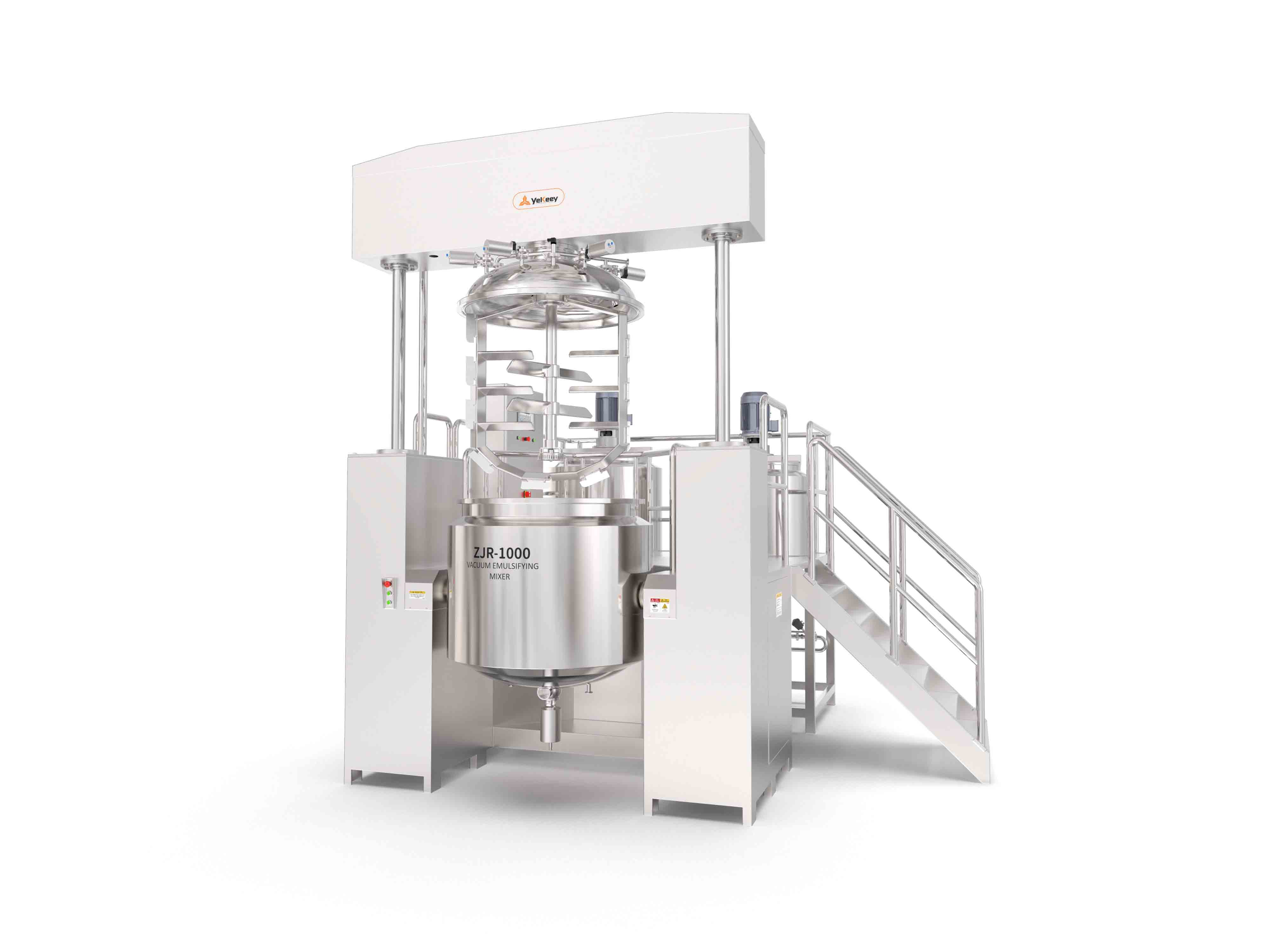
ZJR Series Vacuum Emulsifying Mixer — the widest output speed band in the ranked set.
The ZJR Series Vacuum Emulsifying Mixer ranks first because it offers the widest single-platform coverage of the three target applications. It is available in 16 model sizes from ZJR-5 through ZJR-10, ZJR-30, ZJR-50, ZJR-100, ZJR-150, ZJR-200, ZJR-250, ZJR-350, ZJR-500, ZJR-650, ZJR-850, ZJR-1000, ZJR-1300, ZJR-2000, and ZJR-2500. Its published output speed band is 2800–6000 r/min, the highest range in this list, which matters for cosmetic cream and personal care emulsions where fine droplet size is a formulation objective. Power range is 5–91.5 kW, vacuum pressure is -0.09 MPa, and operating temperature reaches up to 110°C. Material options are SS304 and SS316, and applicable industries are cosmetics and food products with mayonnaise as a key focus.
Limit to note: the high end of the speed band is a capability, not a requirement. Mayonnaise recipes that rely on controlled shear for texture should be validated at the actual production speed rather than at the platform maximum.
Rank 2MC Series Recirculation Homogenizing Mixer — Strongest Fit for Mayonnaise and Viscous Sauces
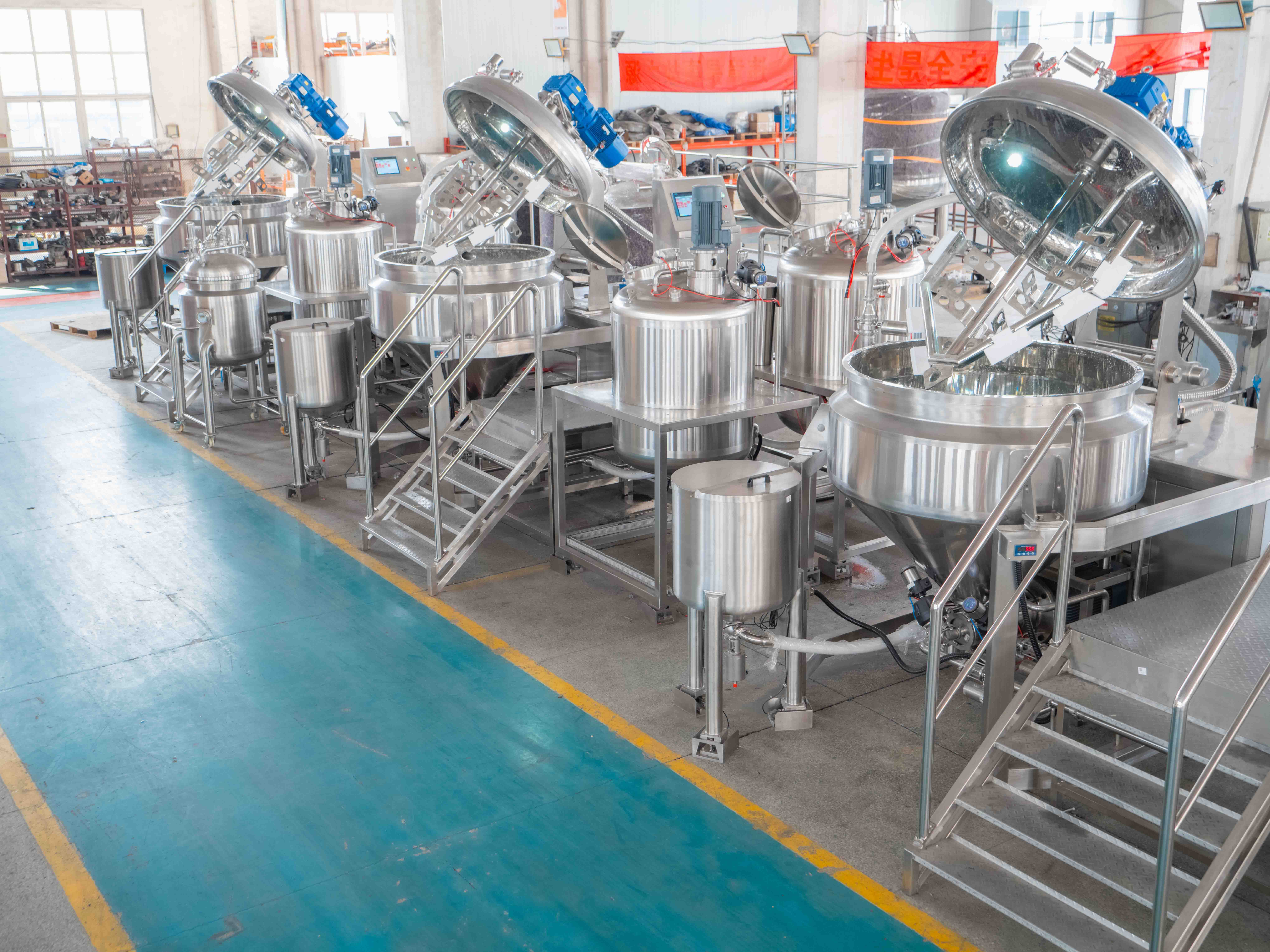
MC Recirculation Homogenizing mixer — designed around repeated high-shear passes for viscous emulsions.
The MC Series Recirculation Homogenizing Mixer ranks second and is the platform most directly associated with mayonnaise and viscous sauce emulsification. Its defining characteristic is the recirculation homogenizing design, which carries material through repeated high-shear passes rather than a single homogenizing cycle. Model sizes run from MC-100 through MC-150, MC-250, MC-350, MC-500, MC-650, MC-1000, MC-1300, MC-1500, MC-2000, and MC-2500. Published specifications include output speed up to 2800 r/min, vacuum pressure of -0.09 MPa, operating temperature up to 110°C, and a power range of 5–91.5 kW. Material options are SS304 and SS316.
The MC Series mixer holds CE certification issued by ECM under Certificate No. 0P210922.WYAQT12. For food sauce and personal care producers supplying European markets, that certification is a concrete compliance data point rather than a general quality claim.
Limit to note: with a top output speed of 2800 r/min, this platform sits below the ZJR speed band. Projects that need both high-speed fine emulsification and recirculation should compare both platforms against the actual formulation.
Rank 3SP Series Standard Vacuum Processing Unit — Largest Power and Capacity Envelope
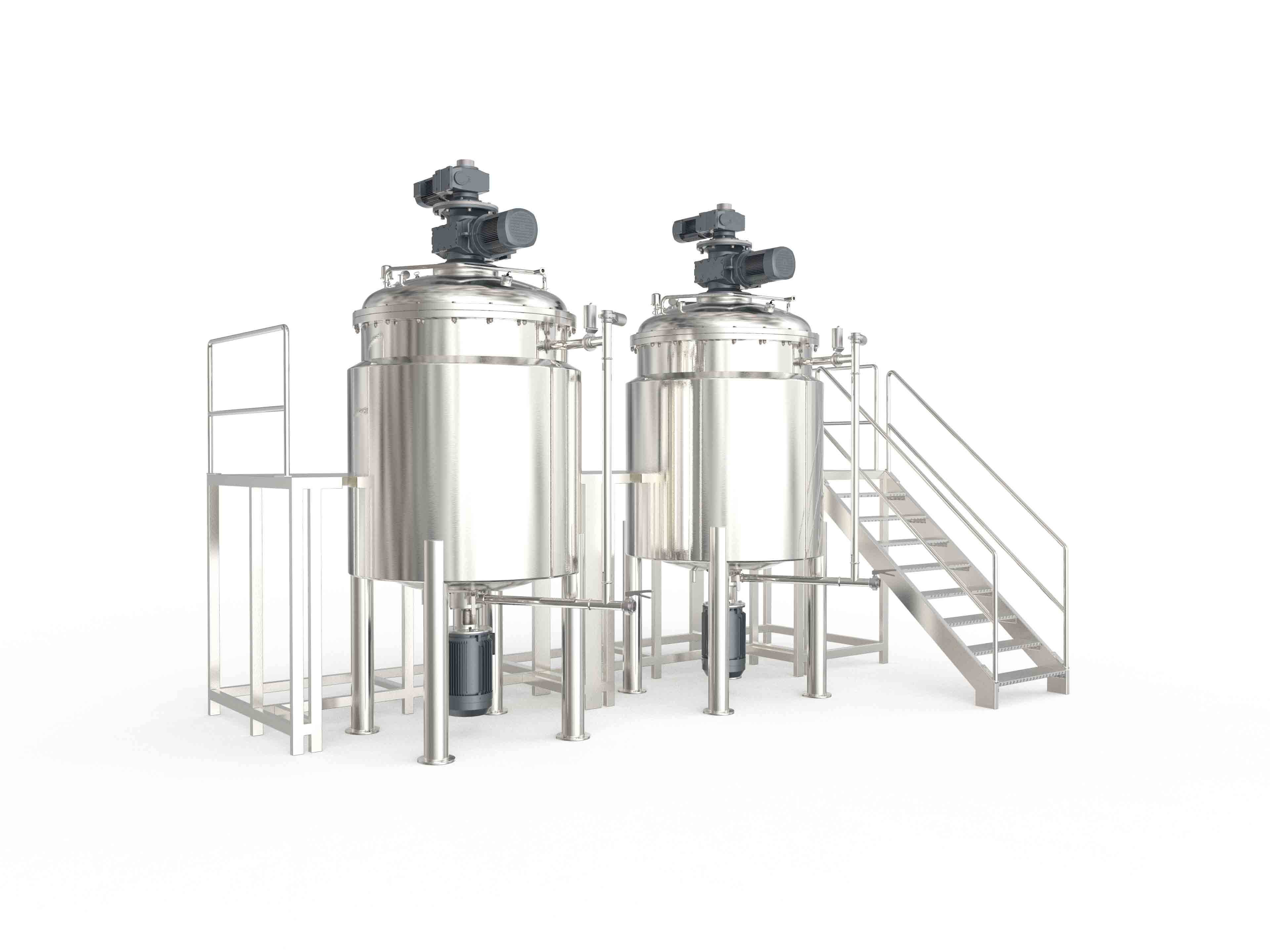
SP Series Standard Vacuum Processing Unit — the widest model ladder, up to SPA-10T.
The SP Series Standard Vacuum Processing Unit ranks third. It covers the widest model ladder in this list, from SPA-30 through SPA-50, SPA-100, SPA-150, SPA-200, SPA-250, SPA-350, SPA-650, SPA-850, SPA-1000, SPA-1300, SPA-2000, SPA-2500, SPA-3000, SPA-4000, SPA-5000, SPA-6000, and SPA-10T, with a power range of 3.7–110 kW. That is the largest power envelope in the ranked set, which positions the platform for high-volume food sauce and personal care output. Vacuum pressure is -0.09 MPa, operating temperature reaches up to 110°C, output speed runs up to 2800 r/min, and material options are SS304 and SS316.
Limit to note: it is a standard vacuum processing unit. Projects at pilot or mid-scale batch sizes may find the larger end of this ladder over-specified, and the ZJR or MC platforms a better match for the batch volume actually planned.
Rank 4ZJR-Lab and MC Lab Units — Pilot-Scale Validation Before Full Commitment
The laboratory variants — the ZJR-Lab Laboratory Emulsifying Mixer and the MC Lab Recirculation Homogenizing Mixer — rank fourth because they serve a different job: proving a formulation and a process before a production line is ordered. They carry the same series-level specification envelope as their production counterparts, including vacuum pressure of -0.09 MPa, operating temperature up to 110°C, and output speed up to 2800 r/min, so a pilot batch is developed inside a comparable process window. Minimum order quantity is 1 unit, and every unit is 100% tested.
Limit to note: lab units are validation tools, not production capacity. They reduce formulation risk; they do not replace the production platform selected in ranks 1 to 3.
Rank 5Configured Project Units — Explosion-Proof, Pressure-Vessel, and Ducting-Integrated Builds
Rank 5 is a configuration layer rather than a separate machine family. Any of the platforms above can be specified for projects that carry explosion-proof or pressure vessel requirements — a common condition in food sauce, daily chemical, and cosmetic manufacturing environments. These projects also require supporting equipment such as a ducting system, and they run under combined high temperature, ambient temperature, and vacuum conditions. Because the requirements change the delivery scope and the engineering review, they rank as a distinct decision rather than an afterthought on the purchase order.
How to Shortlist in Six Steps
The ranked list above shortens the field. The sequence below turns it into a specification you can send for quotation.
Step 1 — Fix the product family and the batch size. Decide whether the line is primarily mayonnaise or sauce, cosmetic cream, or a personal care product. Then set the target batch volume. That single decision eliminates most of the model ladder: a 100-litre batch and a multi-tonne batch belong to different model sizes in the same series.
Step 2 — Set the physical envelope. Confirm the process requirements for vacuum pressure (-0.09 MPa is the published platform value), operating temperature (up to 110°C), and output speed. For mayonnaise and thick sauces, define the shear requirement by process outcome. For cosmetic cream, define the target droplet size and the speed band needed to reach it.
Step 3 — Choose material and control mode. Select SS304 or SS316 according to the product and cleaning regime. Then choose between button control and PLC control; both are available across the platforms. PLC control is the usual choice when the mixer must integrate with a wider line.
Step 4 — Declare the special requirements. State early whether the installation needs explosion-proof construction or pressure vessel construction. These are project-level classifications that affect engineering and delivery, not options to add at shipment.
Step 5 — Plan the supporting equipment. Include the ducting system in the scope. Mixer selection without the supporting equipment scope is an incomplete project plan.
Step 6 — Validate, then configure. Run a pilot batch on a lab unit, then lock the production configuration. YeKeey's customization options cover voltage, designated appliance brands, weighing module, logo, machine dimensions, jar size, and heating method, under OEM, ODM, or OBM production. Monthly capacity is 50 units, minimum order quantity is 1 unit, and the published lead time is 30–60 days.
Where Each Platform Fits: Application Scenarios
Mayonnaise and food sauce production
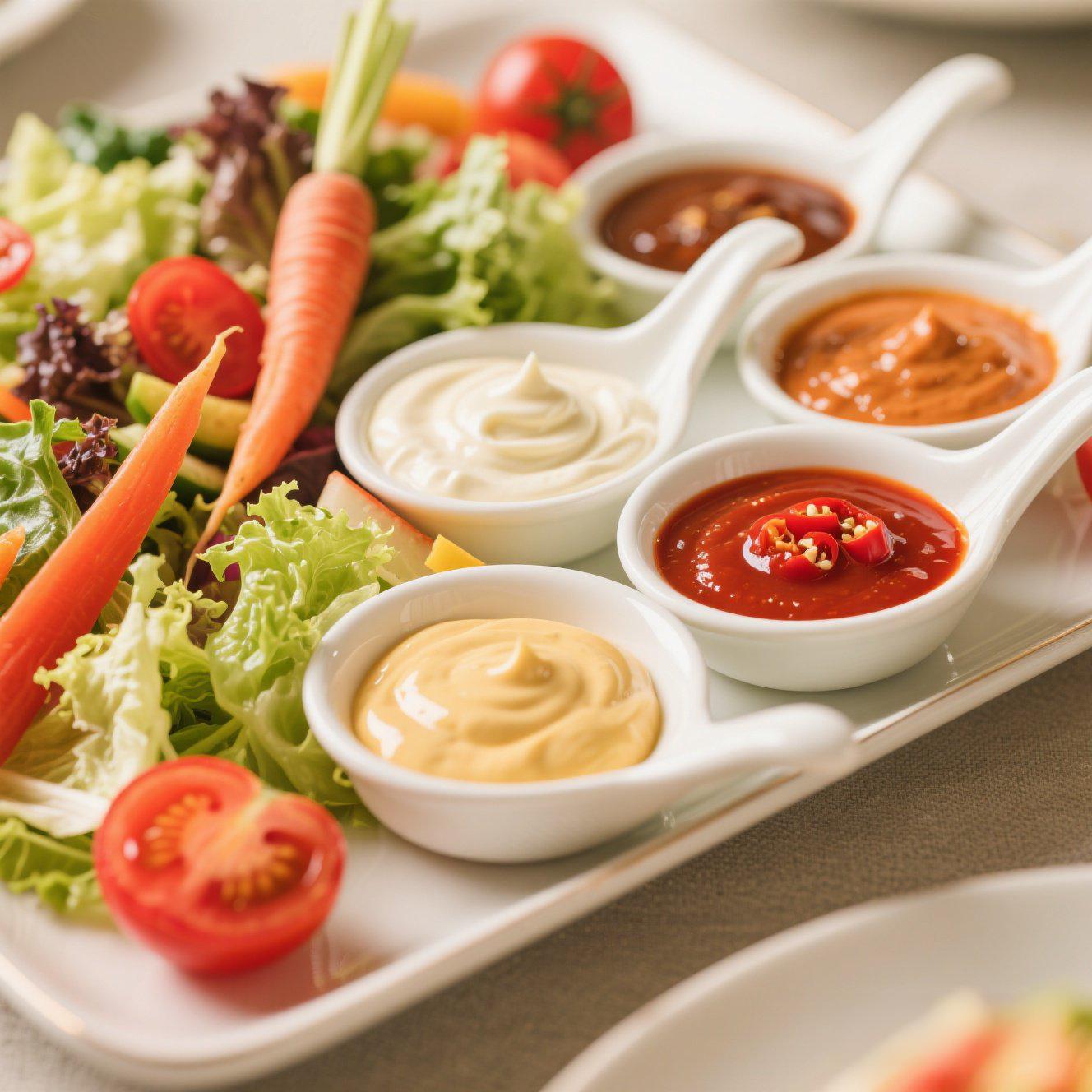
Food sauce application — mayonnaise and dressing emulsions are a primary focus of the MC and ZJR platforms.
Mayonnaise is an oil-in-water emulsion where texture stability depends on shear history and on excluding air during mixing. The MC Recirculation Homogenizing Mixer addresses the shear-history side through repeated recirculation passes; the vacuum condition at -0.09 MPa addresses air entrainment. The ZJR Series adds a higher speed band for producers who also run finer emulsions. For larger sauce volumes, the SP Series extends the model ladder to SPA-10T.
Cosmetic cream and skincare manufacturing
Cosmetic manufacturing lines and cosmetics emulsifying machine units put the emphasis on fine emulsification at higher speed and on material hygiene. The ZJR Series, with a 2800–6000 r/min output speed band and SS316 as an available contact material, is the natural starting point. Because guidance for pharmaceutical and cosmetic vacuum emulsifying homogenizers typically requires SUS316L stainless steel for contact parts under GMP standards, buyers whose compliance documentation names a specific grade should confirm the material callout with their quality team before the order is placed — YeKeey publishes SS304 and SS316 as the available material options.
Personal care and daily chemical lines

Personal care and daily chemical production — a core application segment for vacuum emulsifying mixers.
Personal care product production lines face a wider product mix than either mayonnaise or a single cream SKU: lotions, gels, and creams in the same plant. That mix favours a platform with a broad model ladder and flexible control, which is where the SP Series and the ZJR Series both fit. Where the plant also handles solvent-bearing or hazardous materials, the explosion-proof configuration in rank 5 enters the scope.
Field reference: a long-running cosmetic installation
One reference point for durability questions comes from an OBM client in Nigeria that installed three sets of equipment for cosmetics production. The installation has been running for at least 10 years with stable operation, and the client reports high production efficiency. The relevant procurement lesson is not the headline result but the maintenance model behind it: remote video guidance, after-sales support for custom components and wear parts, and dispatch of professional technical personnel to the site for repairs when required.

After-sales support: remote video guidance, wear-part support, and on-site technician dispatch.
Ranked Comparison Table
The table below places the five ranked options side by side on published specifications. It is intended for direct comparison during shortlisting — not for evaluating any product outside the YeKeey platform range.
| Rank | Platform | Model Range | Power Range | Vacuum / Temperature | Output Speed | Material & Control | Primary Fit |
|---|---|---|---|---|---|---|---|
| 1 | ZJR Series Vacuum Emulsifying Mixer | ZJR-5 to ZJR-2500 (16 sizes) | 5–91.5 kW | -0.09 MPa / up to 110°C | 2800–6000 r/min | SS304, SS316; button or PLC | Cosmetic cream, personal care, mayonnaise |
| 2 | MC Recirculation Homogenizing Mixer | MC-100 to MC-2500 (11 sizes) | 5–91.5 kW | -0.09 MPa / up to 110°C | Up to 2800 r/min | SS304, SS316; button or PLC | Mayonnaise, sauces, viscous emulsions |
| 3 | SP Series Standard Vacuum Processing Unit | SPA-30 to SPA-10T (18 sizes) | 3.7–110 kW | -0.09 MPa / up to 110°C | Up to 2800 r/min | SS304, SS316; button or PLC | Large-batch food sauce and personal care |
| 4 | ZJR-Lab and MC Lab Units | ZJR Lab; MC Lab | 5–91.5 kW (series envelope) | -0.09 MPa / up to 110°C | Up to 2800 r/min | SS304, SS316 | Formulation and pilot validation |
| 5 | Configured project units (explosion-proof / pressure vessel) | Any series above | Per selected series | -0.09 MPa / up to 110°C | Per selected series | Per selected series | Food sauce, daily chemical, cosmetics lines with site-level requirements |
All units in ranks 1–5 require supporting equipment such as a ducting system for operation.
FAQ
What compliance documentation should a mayonnaise or cosmetic producer expect from a vacuum homogenizer emulsifier mixer supplier?
YeKeey has implemented the ISO9001 quality system since 2003, and the company's products have passed EU CE safety certification. The MC series vacuum homogenizer emulsifier mixers specifically hold CE certification issued by ECM under Certificate No. 0P210922.WYAQT12. Separately, GMP guidance for pharmaceutical and cosmetic vacuum emulsifying homogenizers typically specifies SUS316L stainless steel for contact parts, while YeKeey publishes SS304 and SS316 as its available material options. If your compliance documentation names a specific contact-part grade, confirm the material callout against that document before placing the order.
Can a vacuum homogenizer emulsifier mixer be customized for a specific mayonnaise or personal care project?
Yes. YeKeey operates OEM, ODM, and OBM production. Available customization covers voltage, designated appliance brands, weighing module, logo, machine dimensions, jar size, and heating method. Control can be specified as button control or PLC control, and the machine can be built in SS304 or SS316. Project-level requirements such as explosion-proof construction, pressure vessel construction, and ducting-system integration are handled as part of the configuration. Monthly production capacity is 50 units.
What drives the cost of a vacuum homogenizer emulsifier mixer?
Cost follows configuration, not a single headline number. The main drivers are the selected model size within the series, the power requirement (5–91.5 kW across the MC and ZJR ranges, or 3.7–110 kW across the SP range), the material specified (SS304 or SS316), the control system (button or PLC), any explosion-proof or pressure vessel requirement, the scope of supporting equipment such as a ducting system, and the extent of customization. Minimum order quantity is 1 unit. Because each configuration is built to order, pricing is quoted against a defined specification rather than published as a list price.
Can a sample or pilot batch be validated before committing to a full production line?
Yes. The ZJR-Lab Laboratory Emulsifying Mixer and the MC Lab Recirculation Homogenizing Mixer are designed for exactly this purpose. They operate within the same series-level envelope as the production units — vacuum pressure of -0.09 MPa, operating temperature up to 110°C, and output speed up to 2800 r/min — so a formulation developed on the lab unit can be scaled with a known process reference. Minimum order quantity is 1 unit, and every unit is 100% tested before shipment.
What is the lead time, and what support follows delivery?
YeKeey publishes a lead time of 30–60 days for these vacuum emulsifying mixers, against a monthly capacity of 50 units and a minimum order quantity of 1 unit. After delivery, support includes remote video guidance, after-sales support for custom components and wear parts, and dispatch of professional technical personnel to the site for repairs. If you want to check a lead time against your project schedule, send the required models, batch size, and special requirements to sales@yekeey.com or start a conversation on WhatsApp at +8615050678988, and the configuration can be quoted against your production plan.
Conclusion: Turning the Ranking Into a Configured Order
The 2026 shortlist for mayonnaise and personal care production resolves into four platforms and one configuration layer. The ZJR Series Vacuum Emulsifying Mixer leads on combined coverage, with a 2800–6000 r/min output speed band and 16 model sizes. The MC Recirculation Homogenizing Mixer follows for mayonnaise and viscous sauces, and carries CE certification issued by ECM. The SP Series Standard Vacuum Processing Unit covers the largest capacity ladder up to SPA-10T with a 3.7–110 kW power range. The ZJR-Lab and MC Lab units handle pilot validation, and the configured project layer covers explosion-proof, pressure vessel, and ducting-integrated builds.
Across all five, the constants are vacuum pressure at -0.09 MPa, operating temperature up to 110°C, SS304 or SS316 material options, and a choice between button control and PLC control. Those constants are why the ranking is driven by model range, speed band, and project requirements rather than by headline specifications.
YeKeey (Wuxi YK Automation Technology Co., Ltd) has been manufacturing this equipment since 1998 from a 20,000 m² facility with 80 employees and an 8-engineer R&D team, producing 600 units annually at a 35% export ratio. Equipment has been applied in more than 70 countries and by more than 4,000 enterprises and institutions.
Next step: match a ranked platform to your line. Send your product type, batch size, required model, control mode, and any explosion-proof or pressure vessel requirement, and the configuration will be quoted against your project.
Email: sales@yekeey.com | Tel: 86-510-88530599 | WhatsApp: +8615050678988
Address: NO.2855 Jiaoyang Road, An Zhen, Wuxi, Jiangsu Province, China | Website: www.yekeey.com
Product catalog and full specification data: download the YeKeey brochure (PDF)
Request a configuration quotation for your mayonnaise, cosmetic, or personal care line.