
Vacuum Homogenizer Mixer Selection for Mayonnaise & Cosmetics
Vacuum Homogenizer Mixer Selection for Mayonnaise & Cosmetics Projects
Selecting the right vacuum homogenizer emulsifier mixer for a new production line in mayonnaise or cosmetics manufacturing requires matching machine capabilities to specific project parameters such as batch size, viscosity, emulsion stability requirements, and regulatory compliance. This guide translates operational needs into equipment specifications using the YeKeey product portfolio as a reference platform.
1. The Problem: Matching Equipment to Production Scenarios
A common mistake in process-equipment procurement is selecting a homogenizer based solely on tank volume or motor power without considering the physical and chemical behavior of the product. Mayonnaise, for example, requires high-shear emulsification under vacuum to prevent air incorporation and achieve a stable oil-in-water emulsion. Cosmetic creams need fine droplet size distribution for texture and spreadability. Both applications demand equipment that can operate under vacuum (-0.09 MPa), reach output speeds up to 2800 r/min (and up to 6000 r/min for certain models), and maintain process temperatures up to 110°C. The same machine must also comply with food-grade or cosmetic-grade standards (e.g., GMP, SUS316L contact parts). Without a structured selection process, buyers risk overspending on oversized units or under-specifying critical parameters that affect product quality.
2. Industry Background: The Demand for Vacuum Homogenizers
The global homogenizers market was valued at USD 2.10 billion in 2024 and is projected to reach USD 3.79 billion by 2035, growing at a CAGR of 5.4% (Roots Analysis). The vacuum mixer homogenizer segment alone is estimated at USD 1.02 billion in 2026, with the cosmetics and personal care segment holding a 38% market share (Future Market Insights). The global mayonnaise market—worth approximately USD 12.58 billion in 2024—directly drives demand for high-shear vacuum emulsification equipment (Zion Market Research). Asia-Pacific currently dominates the homogenizing mixer market with a 36.2% revenue share, led by China's manufacturing ecosystem (Dataintelo).
Against this backdrop, manufacturers in emerging markets (e.g., Nigeria, Central Asia, Latin America) are investing in automated emulsification lines that can handle both food sauces and cosmetic creams with minimal changeover time. YeKeey, based in Wuxi, China, has supplied mixing, emulsifying, and filling equipment to over 4,000 enterprises across more than 70 countries since its founding in 1998.
3. Detailed Solution: YeKeey Vacuum Homogenizer Mixer Portfolio
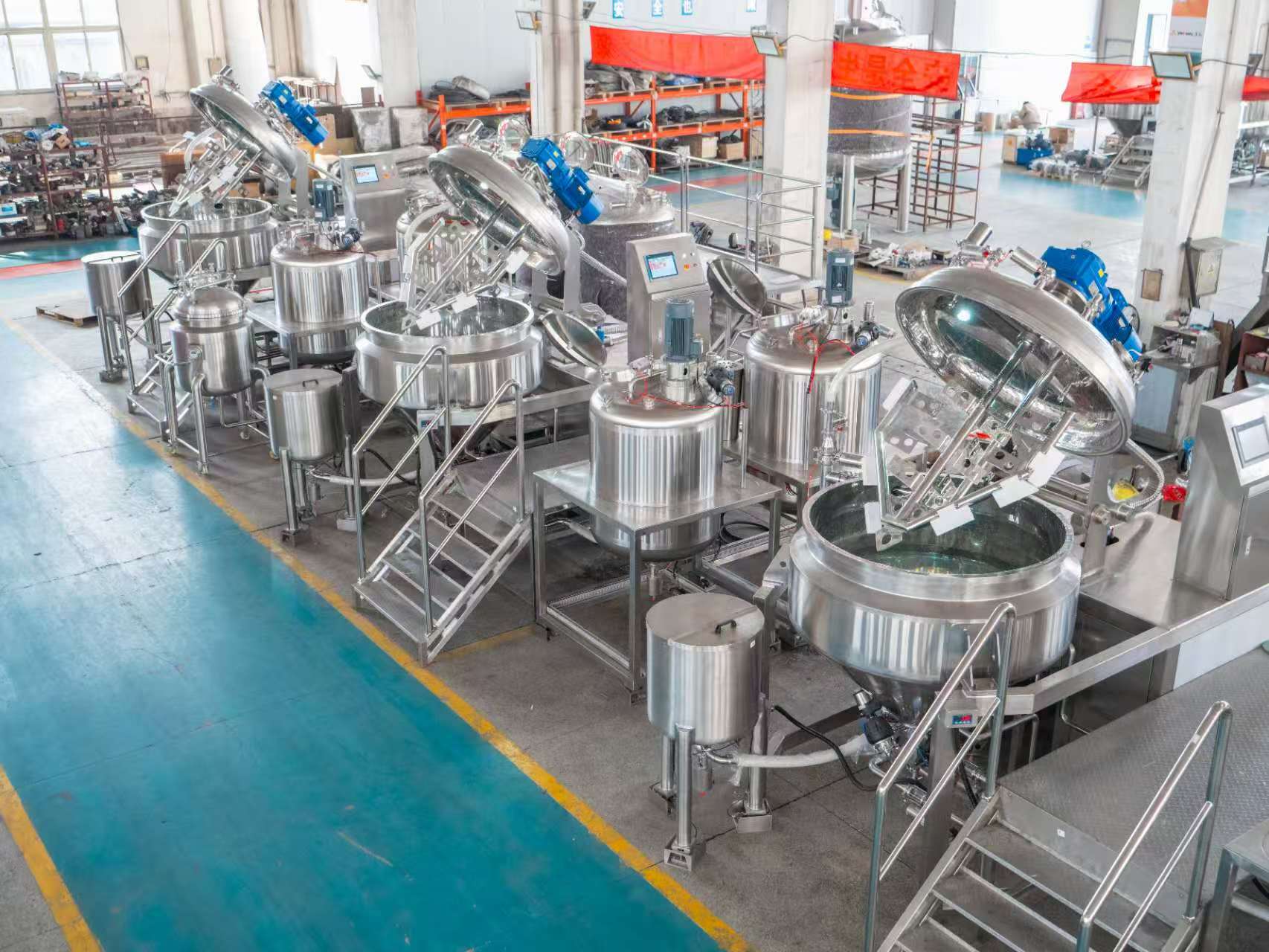
YeKeey (Wuxi YK Automation Technology Co., Ltd) is a Chinese manufacturer of fine chemical and pharmaceutical processing equipment, specializing in vacuum emulsifying mixers for food and cosmetics. The company operates a 20,000 m² factory with 80 employees and an annual output of 600 units. Its product range includes three main series tailored to different production scales and process requirements:
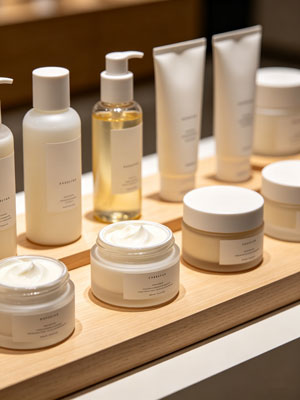
- SP Series (Standard Vacuum Processing Unit): Available in 18 models from SPA-30 (30L) to SPA-10T (10,000L). Power range 3.7–110 kW, output speed up to 2800 r/min, vacuum -0.09 MPa, temperature up to 110°C. Materials: SS304 or SS316.
- ZJR Series Vacuum Emulsifying Mixer: 16 models from ZJR-5 to ZJR-2500. Power range 5–91.5 kW, output speed 2800–6000 r/min. The wider speed range suits products requiring very fine particle size distribution.
- MC Recirculation Homogenizing Mixer: 11 models from MC-100 to MC-2500. Same operating parameters (up to 2800 r/min, -0.09 MPa, 110°C). The recirculation design continuously returns product to the high-shear zone for uniform emulsion quality.
All series operate under vacuum conditions with a pressure of -0.09 MPa and can handle materials at temperatures up to 110°C. The mixers require supporting equipment such as a ducting system for complete line integration. YeKeey offers customization options including voltage, logo, machine dimensions, jar size, heating method, and weighing modules.
4. Step-by-Step Selection Breakdown
- Define batch size and production capacity. Match the machine’s working volume (e.g., 100L, 500L, 2000L) to your target daily output. YeKeey’s SP and ZJR series offer models from laboratory scale (5L) to industrial scale (10,000L).
- Determine required output speed and shear. For mayonnaise emulsification, speeds around 2800 r/min are typical. For cosmetic creams where droplet size below 5 μm is needed, the ZJR series’ top speed of 6000 r/min provides higher shear intensity.
- Select material grade. SS316 is preferred for cosmetic and pharmaceutical products requiring GMP compliance. SS304 is suitable for general food applications.
- Verify vacuum and temperature compatibility. All YeKeey mixers offer -0.09 MPa vacuum and 110°C maximum temperature, covering standard mayonnaise and cream processes.
- Plan for auxiliary equipment. The homogenizer must be integrated with a ducting system, heating unit, and control panel (PLC or button control).
- Check certifications and compliance. YeKeey’s MC series holds CE certification (Certificate No. 0P210922.WYAQT12, valid until September 2026). The company has been ISO9001-certified since 2003 and passed EU CE safety certification.
5. Use Cases
Mayonnaise Production (Food Sauce)
A Nigerian OBM cosmetics manufacturer has used three units of YeKeey vacuum emulsifying mixers for at least 10 years. The equipment operates stably with high production efficiency. Mayonnaise lines typically incorporate the SP series in a PLC-controlled setup, with a ducting system to transfer oil and vinegar phases into the vacuum vessel. The vacuum prevents foaming, and the high-shear rotor-stator creates a consistent viscosity.
Cosmetic Cream Manufacturing (Daily Chemical Industry)
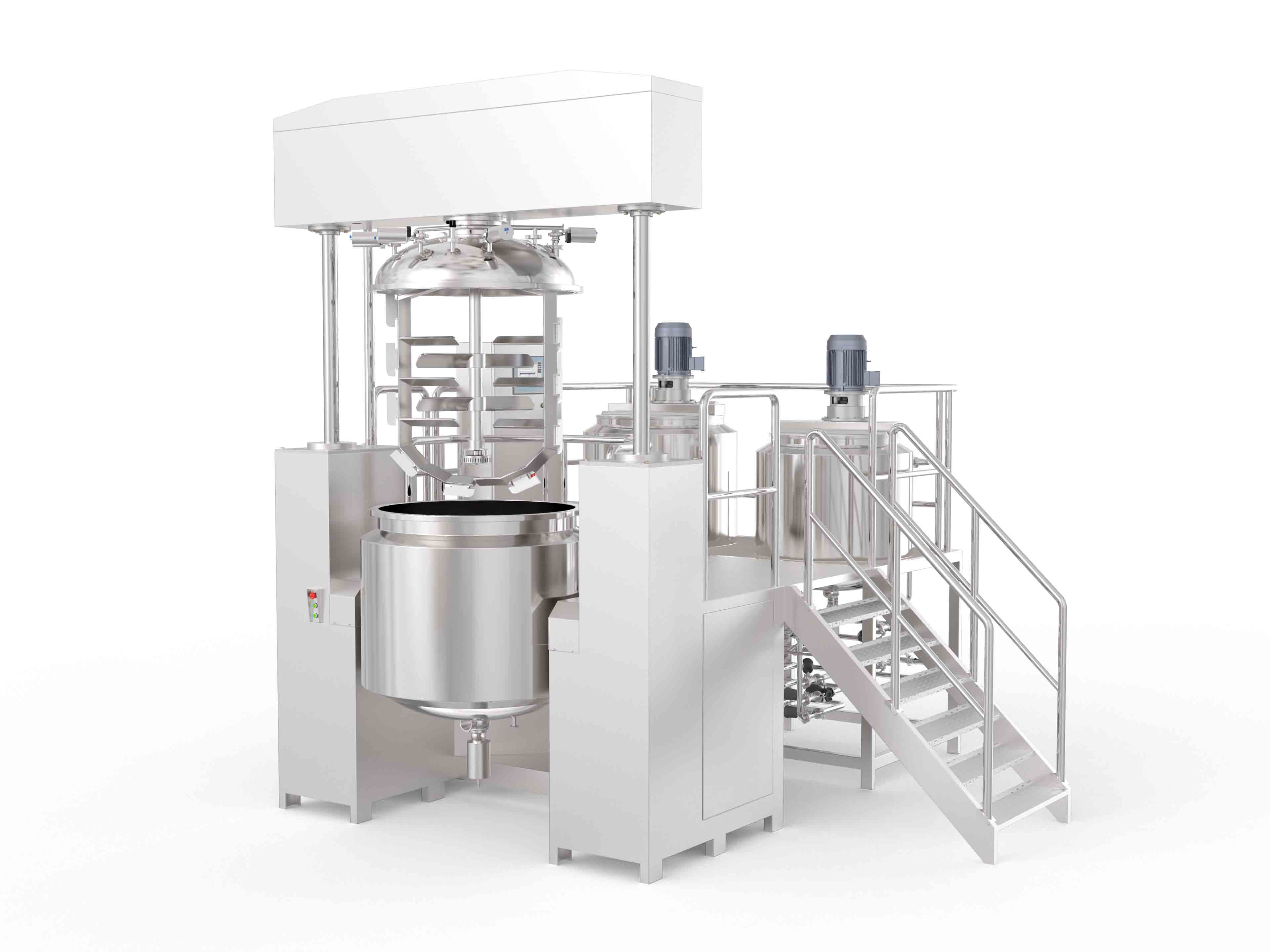
For personal care products such as face creams, lotions, and sunscreens, the ZJR series’ higher output speed (up to 6000 r/min) helps achieve a finer emulsion. The machine can be configured with explosion-proof and pressure vessel options for volatile ingredients. YeKeey has supplied equipment to clients in Europe, Central Asia, North Africa, Latin America, and Southeast Asia across both cosmetics and food sectors.
6. Comparison Table: YeKeey Series vs. Typical Requirements
| Parameter | Mayonnaise Requirement | Cosmetic Cream Requirement | YeKeey SP Series | YeKeey ZJR Series | YeKeey MC Series |
|---|---|---|---|---|---|
| Output Speed (r/min) | ≥2800 | ≥3500 | up to 2800 | 2800–6000 | up to 2800 |
| Vacuum (MPa) | -0.09 | -0.09 | -0.09 | -0.09 | -0.09 |
| Temperature (°C) | ≤110 | ≤110 | up to 110 | up to 110 | up to 110 |
| Power (kW) | varies per capacity | varies per capacity | 3.7–110 | 5–91.5 | 5–91.5 |
| Material Options | SS304/SS316 | SS316 (GMP) | SS304/SS316 | SS304/SS316 | SS304/SS316 |
| Certification | CE, ISO9001 | CE, GMP applicable | CE, ISO9001 | CE, ISO9001 | CE (ECM) |
7. Frequently Asked Questions
What certifications does a vacuum homogenizer need for mayonnaise production?
For mayonnaise, the equipment should comply with food-grade standards. YeKeey’s MC series vacuum homogenizer emulsifier mixers hold CE certification (Certificate No. 0P210922.WYAQT12, issued by ECM, valid until September 2026). The company has also passed ISO9001 quality system certification since 2003 and EU CE safety certification. For export markets, additional certifications such as FDA or local food authority approvals may be required. YeKeey can provide relevant documentation upon request.
Can one machine handle both mayonnaise and cosmetic cream production?
Yes, with proper changeover and cleaning. YeKeey’s vacuum emulsifying mixers (SP, ZJR, and MC series) are designed for both food and cosmetics applications. The key difference is the required output speed: mayonnaise typically needs up to 2800 r/min, while cosmetic creams benefit from higher speeds up to 6000 r/min available in the ZJR series. The machine must be thoroughly cleaned between product changes to avoid cross-contamination. YeKeey offers SS316 material for GMP-compliant cleaning.
What is the typical budget range for a vacuum homogenizer mixer?
Budget depends on working volume, material grade, and control system. YeKeey’s standard price range for the SP series starts at approximately USD 10,000 for a 100L unit and can exceed USD 100,000 for a 10,000L unit. Custom features (explosion-proof, pressure vessel, PLC with remote access) will add cost. YeKeey offers OEM/ODM/OBM services with a typical lead time of 30–60 days after order. A quotation can be obtained by contacting the sales team with your batch size and product details.
Can I get a sample batch produced before purchasing?
YeKeey encourages lab-scale testing. The company offers laboratory vacuum emulsifying mixers (ZJR-Lab and MC Lab models) that allow customers to test small batches (5–50L). For custom formulations, YeKeey can simulate production conditions in its R&D facility, operated by a team of 8 engineers. Results are documented and shared with the buyer. This service helps validate machine suitability before committing to full-scale equipment.
What is the lead time for a custom vacuum homogenizer mixer?
Standard lead time is 30–60 days, depending on model complexity and order quantity. YeKeey’s monthly production capacity is 50 units, and the minimum order is 1 unit. For custom configurations (voltage, logo, jar size, heating method), the design phase adds 1–2 weeks. After-sales support includes remote video guidance, replacement of wear parts, and dispatch of technical personnel for on-site repairs. For an accurate timeline, please forward your project specifications to sales@yekeey.com or use WhatsApp (+8615050678988) to discuss with the team. Visit the YeKeey website for complete product catalogs and the latest brochure.
Need help selecting the right model for your mayonnaise or cosmetic project? Contact YeKeey’s application engineers for a free consultation and a customized proposal. Download the full product brochure here or reach out via sales@yekeey.com / WhatsApp: +8615050678988.
8. Conclusion
Selecting a vacuum homogenizer emulsifier mixer for mayonnaise or cosmetic production does not need to be complex. By mapping your project’s required output speed, vacuum level, temperature range, material compatibility, and certification needs to a specific series—such as YeKeey’s SP, ZJR, or MC—you can make a technically sound investment. YeKeey, with its 20,000 m² factory, ISO9001/CE certifications, and over two decades of experience, provides a reliable base for both food and cosmetic emulsification lines. Evaluate your production scenario, request lab trials, and work with a supplier that offers both standard models and customization to meet your exact project parameters.