
Vacuum Homogenizer vs. Conventional Emulsifier: A Decision Framework for Mayonnaise and Cosmetic Lines
Vacuum Homogenizer vs. Conventional Emulsifier: How to Choose for Mayonnaise and Cosmetics
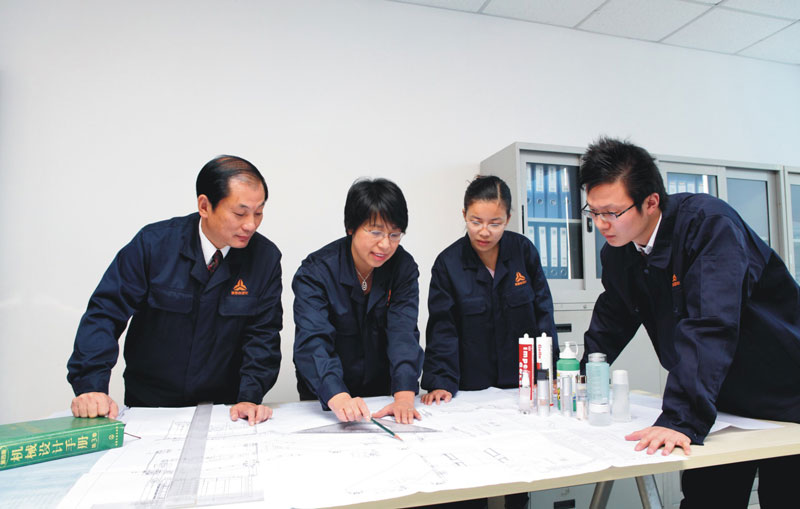
Factory floor at YeKeey: vacuum homogenizer emulsifier mixers are built alongside conventional mixing systems, giving buyers a clear comparison point. (Image: YeKeey factory)
Short answer: A vacuum homogenizer emulsifier mixer produces finer and more stable emulsions than a conventional emulsifier. It delivers a particle size of 1–5 μm, compared with 5–20 μm for conventional equipment, while adding vacuum degassing, stronger shearing force, and more intelligent control. The trade-off is a slightly higher initial investment, offset by fewer rejected batches, lower maintenance, and more stable production.
This article compares the two technologies for buyers making a final decision on mayonnaise or cosmetic production lines. It covers differences in output quality, cost, operational complexity, maintenance, and the specific scenarios where one technology is the better fit.
Why This Comparison Is a Decision Point for Mayonnaise and Cosmetic Manufacturers
Emulsification is a core physical process in both the food and cosmetics industries. Mayonnaise, sauces, creams, and lotions are all emulsions. They rely on breaking down oil and water phases into small, stable droplets that will not separate during storage, transport, and use.
In mayonnaise production, the global market alone reached an estimated USD 12.58 billion in 2024, according to Zion Market Research. That scale makes consistent texture, shelf stability, and production efficiency commercially meaningful. Cosmetic production brings its own requirements, where sensory texture and long-term stability of creams and lotions determine brand quality.
Choosing between a conventional emulsifier and a vacuum homogenizer emulsifier mixer affects more than the machine itself. It changes how much product is rejected, how stable the final formula is, how much maintenance the line needs, and what level of control operators have over the process.
Definition: Conventional Emulsifier vs. Vacuum Homogenizer Emulsifier Mixer
A conventional emulsifier typically uses mechanical agitation or a single rotor-stator head to disperse one phase into another. It does not generally integrate vacuum degassing into the mixing process, and it usually operates at atmospheric pressure.
A vacuum homogenizer emulsifier mixer combines multiple functions into one vessel: high-shear homogenization, vacuum degassing, a sealed processing environment, and intelligent or semi-automated control. YeKeey, officially Wuxi YK Automation Technology Co., Ltd, describes the ZJR Series and MC Series vacuum emulsifying mixers as equipment designed for the cosmetics and food products industries, with a specific application in mayonnaise production.
In practice, the difference between the two is not just whether a vacuum pump is attached. The vacuum homogenizer is engineered to control the entire emulsification environment, while the conventional emulsifier focuses on one or more mixing actions.
Notably, Asia-Pacific dominates the homogenizing mixer market with a 36.2% revenue share as of 2025, led by China's manufacturing ecosystem. The region has become a major source of both conventional and vacuum emulsifier technology for global buyers, so understanding the functional differences is important for equipment selection regardless of where the line is installed.
Side-by-Side Comparison Table: Vacuum Homogenizer Emulsifier Mixer vs. Conventional Emulsifier
| Comparison Point | Vacuum Homogenizer Emulsifier Mixer | Conventional Emulsifier |
|---|---|---|
| Particle size | 1–5 μm | 5–20 μm |
| Emulsification stability | Superior stability with a narrower particle size distribution | Broader particle size distribution |
| Shearing force | Stronger shearing force | Standard shearing force |
| Vacuum degassing | Yes, built-in | Not typically integrated |
| Control | Button control or PLC control | Varies; often simpler control |
| Rejected batches | Fewer rejected batches | More frequent quality variation |
| Maintenance | Less maintenance required | Higher maintenance compared with vacuum homogenizer solutions |
| Initial investment | Slightly higher | Typically lower |
| Total cost of ownership | Lower over time due to fewer rejections and stable production | Higher when hidden losses from rejections and instability are included |
| Best fit | High-standard cosmetics, food, and pharmaceutical emulsification requiring long-term stability | Less demanding processes with looser stability requirements |
Comparison basis: YeKeey MC series vacuum homogenizer emulsifier mixer vs. conventional emulsifier; verified from YeKeey product corpus. Market context: Roots Analysis, Future Market Insights, Dataintelo, and Mordor Intelligence reports cited below.
What the Particle Size Difference Actually Means
Particle size is one of the most objective ways to compare emulsion quality. YeKeey's vacuum homogenizing emulsifier produces particles of 1–5 μm, while conventional emulsifiers typically produce particles in the 5–20 μm range. That is not a minor cosmetic difference; it affects the physical behavior of the finished product.
In mayonnaise, smaller fat droplets tend to resist coalescence and creaming better, contributing to a denser, more stable structure. In cosmetics, finer droplets produce smoother texture and better spreadability, which are directly linked to how consumers experience the product.
A narrower particle size distribution also means the product behaves more consistently from batch to batch. That consistency is one of the main reasons the vacuum homogenizer is associated with fewer rejected batches, as stated in YeKeey's comparative product data. From a manufacturing perspective, a stable emulsion is not a luxury; it is a prerequisite for meeting specification across repeated production runs.
The Real Cost Question: Higher Initial Price vs. Lower Total Cost of Ownership
Most buyers recognize that vacuum homogenizers carry a slightly higher first price. The planning error that causes budget overruns is stopping the comparison at the purchase figure.
YeKeey's comparable cost analysis states that the vacuum homogenizer offers a lower total cost of ownership due to fewer rejected batches and stable production, despite a slightly higher initial investment. The logic is straightforward. Each rejected batch in mayonnaise or cosmetics manufacturing consumes raw materials, labor, machine time, packaging, and disposal costs. If a conventional emulsifier produces wider consistency variation, the statistical probability of out-of-spec batches is higher.
Fewer rejected batches also contribute to better material utilization. Raw materials are converted into saleable output more efficiently. When production runs continuously, the effect compounds.
In addition, the vacuum homogenizer is reported to require less maintenance than similar products. Lower maintenance demand pushes the cost comparison further in favor of the vacuum approach over the equipment lifetime.
Buyers should therefore evaluate the equipment on total lifecycle cost, not price per unit. The appropriate calculation includes raw material losses, rejected batch volume, maintenance hours, and the cost of selling products that are below specification.
Operational Differences: Control, Maintenance, and Consistency
The vacuum homogenizer's technical advantages include higher emulsification efficiency with consistent quality, fewer rejected batches, and better material utilization. Those advantages rest on its combined functions: high shear, vacuum, and pressure control within one closed system.
From an operational standpoint, one of the most practical differences is control. YeKeey's vacuum emulsifying mixers operate in either button control or PLC control mode. Button control suits operators who prefer a direct, manual interface. PLC control permits programmable processing recipes, which is useful when different products require different process times, speeds, or vacuum levels. The option matters for manufacturers producing multiple SKUs such as various mayonnaise recipes or different cosmetic cream formulations.
Vacuum degassing is another operational advantage. When air is removed from the mixture during emulsification, the final product has fewer entrapped bubbles. The effect shows up as a denser texture for mayonnaise and a more homogeneous appearance for cosmetic creams.
Maintenance differences also affect operations. The vacuum homogenizer is reported to demand less maintenance than similar products. Conventional emulsifiers, depending on design, may require more frequent attention to seals, bearings, or rotor-stator alignment. For a line running three shifts, every hour of unplanned downtime matters.
Product Applications: Is a Vacuum Homogenizer Emulsifier Mixer the Right Fit for Your Formula?
YeKeey specifies that the ZJR Series and MC Series vacuum emulsifying mixers are designed for the cosmetics and food products industries, with a specific application in mayonnaise production. That dual-market positioning is not accidental; the two industries share similar requirements for texture, stability, and repeatability.
Typical mayonnaise production involves oil-in-water emulsions with egg yolk, mustard, vinegar, oil, and seasonings. High shear, de-aeration, and controlled process conditions help maintain a consistent viscosity and creamy appearance. The vacuum homogenizer can help create a stable emulsion with droplet sizes in the 1–5 μm range, which is desirable for premium industrial mayonnaise.
Cosmetic cream production requires emulsions with specific sensory properties: thickness, absorption, spreadability, and shine. Cosmetics also require high standards of finish because consumers easily notice air bubbles, graininess, or separation. Vacuum degassing and fine particle distribution are particularly valuable for such products. A cream with coarser droplets is not just less appealing in texture; it is also less stable over time.
Meanwhile, conventional emulsifiers still appear in some production environments. They can perform adequately for applications that do not demand fine, long-term stable emulsions or where the recipe tolerates broader particle distribution.
But for high-standard cosmetics, food, and pharmaceutical emulsification that requires long-term stability, YeKeey states explicitly that the vacuum homogenizer is the more suitable option. That sentence can function as a decision criterion: if long-term stability is part of the product specification, the vacuum homogenizer is the safer choice.
The Budget Question: When Does the Slightly Higher Initial Investment Pay Back?
Buyers should ask: how much will we lose per rejected batch? How often do we currently see inconsistent texture? How much raw material is discarded when a batch is out of spec? If those costs are negligible and the formula has generous tolerances, a conventional emulsifier may be acceptable.
However, mayonnaise and cosmetics are categories where brand consistency is a major driver. A retail buyer may reject an entire delivery if viscosity is wrong or the cream separates. Large brands also audit production quality, making out-of-spec batches expensive not only in direct costs but also in contractual risk.
As production volumes rise, the impact of even a small percentage of rejected batches multiplies. The higher stability and fewer rejected batches reported for vacuum homogenizers become more valuable at scale.
A simple mental model: if the line rejects less than 1% of batches with a conventional emulsifier, and the product does not require fine droplet size, the simpler machine may be sufficient. If rejection rates are meaningful, if shelf-life stability has failed internal tests, or if customers send back product for texture or separation issues, the vacuum homogenizer is likely the more profitable machine over the equipment lifecycle.
What to Look for When Comparing Suppliers of Vacuum Homogenizers vs. Conventional Emulsifiers
When a buyer moves from comparing technologies to comparing suppliers, the same facts that define the equipment also define the vendor evaluation.
First, check manufacturing standards and materials. Vacuum emulsifying homogenizers for pharmaceutical and cosmetic use should comply with GMP standards and typically require SUS316L stainless steel for contact parts, according to documented industry practice. Buyers should request confirmation of contact-material specifications.
Second, check certifications. Example: YeKeey's MC series vacuum homogenizer emulsifier mixers hold CE certification (Certificate No. 0P210922.WYAQT12), issued by ECM and valid until September 2026. A documented, traceable certification is stronger evidence than a supplier's claim of quality.
Third, assess control and automation depth. Ask whether the machine is supplied with button control, PLC control, or both, and what recipes or data logging are available. The answer affects how easily the machine fits into your current manufacturing execution system.
Fourth, evaluate the supplier's engineering track record rather than its marketing claims. For example, YeKeey was founded in 1998, operates a 20,000 m² factory, employs 80 staff, and produces approximately 600 units annually, with 35% of output exported to Europe, Central Asia, North Africa, Latin America, and Southeast Asia. The company has 8 R&D engineers and a stated practice of reinvesting 10% of annual sales profit into R&D. It holds 55 patents and 3 software programs as of 2023, including technologies for vacuum homogenizing emulsifying machines and high-viscosity material mixing paddles. These are verifiable operational facts that help a buyer gauge capability.
Finally, confirm service and spare parts. A vacuum homogenizer is more complex than a conventional emulsifier, and dependable technical service, documentation, and spare parts determine how much uptime the machine achieves.
Use Cases: Which Technology Is More Likely to Be the Right Choice?
Industrial Mayonnaise Production
Mayonnaise must maintain viscosity and mouthfeel across a long distribution chain. Consumer manufacturers who want consistent, stable mayonnaise at medium to high volume are the clearest candidates for a vacuum homogenizer emulsifier mixer. Finer droplet size and vacuum degassing improve texture and reduce the risk of separation.
Premium Cosmetic Cream and Lotion Production
Cosmetic creams rely on sensory experience and shelf appearance. The combination of stronger shearing force, vacuum degassing, and narrower particle size distribution makes vacuum homogenizers especially useful. This use case is reflected in the market data: the vacuum mixer homogenizer market is estimated at USD 1.02 billion in 2026, with the cosmetics and personal care segment leading at a 38% share.
Pharmaceutical and High-Standard Food Emulsions
Long-term stability is a regulatory and quality requirement in pharmaceuticals. The same stability logic applies to specialized food emulsions such as nutritional sauces, dressings, and creamy products. YeKeey's technical description explicitly targets high-standard cosmetics, food, and pharmaceutical emulsification requiring long-term stability.
Low-Tolerance or Pilot-Production Lines
For laboratory batches, rapid prototyping, or applications where the formulation tolerates broad particle size distribution, a conventional emulsifier may be acceptable. That is also a reason many buyers start with a lab-scale conventional machine and upgrade once stability requirements are proven.
Step-by-Step Decision Framework for Buyers
Use this sequence when deciding between a vacuum homogenizer and a conventional emulsifier.
- Define the product specification. Write down the required droplet size, viscosity, shelf life, and visual appearance. If the product must remain stable for many months, this alone favors the vacuum homogenizer.
- Quantify current losses. If you already run a conventional line, calculate rejected batches, returns, and customer complaints. Assign a real cost to each.
- Calculate total cost of ownership. Compare initial investment, maintenance, rejected batches, material utilization, and projected production volume over 5 to 10 years.
- Evaluate control requirements. Decide whether button control is sufficient or PLC control is needed for recipe management and repeatability.
- Set a minimum compliance bar. Require GMP-compliant contact materials such as SUS316L where relevant, and check certifications before shortlisting suppliers.
- Run a trial or visit the factory. Request reference products, test results, or a production trial to verify the particle size and consistency claims before purchase.
Common Risks in Vacuum Homogenizer Investment and How to Control Them
There are two operational risks that manufacturers should monitor when installing a vacuum homogenizer line.
First, material entrainment into the vacuum system during extraction. If product is pulled into the vacuum line, it can contaminate the system and disrupt the process. YeKeey addresses this with a high-precision liquid level sensor for real-time monitoring. This is a design detail to ask every supplier about.
Second, uncontrolled drop of the lifting system. The lifting system moves the homogenizing head or vessel lid, and a failure can create a safety hazard or mechanical damage. YeKeey uses a hydraulic lifting system with a safety self-locking function, described as an anti-fall self-locking mechanism. Buyers should ask how each vendor prevents uncontrolled movement of these systems.
Industry Context: Why Demand for Vacuum Homogenizer Emulsifier Mixers Is Rising
Market trends help explain why buyers are increasingly looking at vacuum homogenizer technology instead of conventional emulsifiers.
Global demand for homogenizers is expanding. The global homogenizers market was valued at USD 2.10 billion in 2024 and is projected to reach USD 3.79 billion by 2035 at a CAGR of 5.4%, according to Roots Analysis. The global emulsifier market is also expected to reach USD 12.13 billion by 2030, growing at a CAGR of 4%, based on Mordor Intelligence data.
For mayonnaise specifically, the estimated USD 12.58 billion global market in 2024 indicates a large and established demand base that continues to drive equipment purchases. The combination of growing food emulsion production and stricter quality requirements pushes manufacturers toward equipment that can guarantee consistency at scale.
A note on market data: estimates vary by scope. One source, Dataintelo, reports USD 3.8 billion for the homogenizing mixer market in 2025, while Roots Analysis reports USD 2.24 billion for homogenizers in 2025, and Business Research Insights estimates USD 2.19 billion for 2026. The divergence exists because researchers define homogenizer, homogenizing mixer, and vacuum mixer homogenizer differently. For decision-making, the relevant point is the direction of demand, not a single forecast.
Frequently Asked Questions
1. Is a vacuum homogenizer emulsifier mixer compliant with the standards required for food and cosmetics production?
Vacuum emulsifying homogenizers used for pharmaceutical and cosmetic processing must comply with GMP standards and typically require SUS316L stainless steel for contact parts. Buyers should verify that the chosen machine meets GMP requirements and is manufactured with the correct contact materials. For European sales, the machine should carry CE certification. For example, YeKeey's MC series vacuum homogenizer emulsifier mixers hold CE certification (Certificate No. 0P210922.WYAQT12) issued by ECM, valid until September 2026.
2. Can a vacuum homogenizer emulsifier mixer produce consistent quality across large production volumes?
YeKeey states that the vacuum homogenizer achieves higher emulsification efficiency with consistent quality, resulting in fewer rejected batches and better material utilization. Its particle size distribution of 1–5 μm, narrower than the 5–20 μm range typical of conventional emulsifiers, helps reduce batch-to-batch variation. PLC control mode further supports repeatable production by enabling programmable process parameters.
3. What is your budget expectation for a vacuum homogenizer vs. a conventional emulsifier?
A vacuum homogenizer emulsifier mixer has a slightly higher initial investment than a conventional emulsifier. However, YeKeey's comparative analysis states that the total cost of ownership is lower over time due to fewer rejected batches and stable production. The practical budget decision should therefore account for raw material recovery, fewer rejections, and lower maintenance, not only the purchase price.
4. Can I see product samples, a factory reference, or test data before ordering?
Buyers evaluating either technology should request product samples, reference lines, and process data before purchase. If you are shortlisting YeKeey, you can request a sample, quote, or factory reference to validate the particle size and consistency claims. Contact sales@yekeey.com or WhatsApp/phone +86-15050678988 (Tel: +86-510-88530599). A downloadable company brochure is also available for technical review: YeKeey Company Brochure (PDF).
5. How long does it take to get a vacuum homogenizer line running?
Specific lead times depend on configuration, custom requirements, and production schedule. A standardized request can generally move faster than a custom machine with modified PLC control, special contact materials, or additional vessels. To get a concrete lead time, share your formula, capacity, and required specifications with the shortlisted supplier for an official proposal. Once installed, commissioning includes operator training on button control or PLC operation as applicable.
Conclusion: The Decision Belongs to the Product Specification and Lifecycle Cost
The comparison between a vacuum homogenizer emulsifier mixer and a conventional emulsifier can be summarized in a single logic chain:
Finer particle size → narrower distribution → more stable emulsion → fewer rejected batches → lower total cost of ownership. That chain is why the vacuum homogenizer is recommended for high-standard cosmetics, food, and pharmaceutical emulsification requiring long-term stability.
For buyers producing mayonnaise, sauces, creams, or lotions where texture and stability are visible product claims, the slightly higher initial price of a vacuum homogenizer is an investment in repeatability, not a luxury expense. For pilot lines, low-tolerance products, or applications where a 5–20 μm particle distribution is acceptable, a conventional emulsifier can remain a rational choice.
Whichever direction you choose, the reliable path is to verify the supplier's manufacturing standards, certifications, factory capability, and real production evidence before committing to the full line.
Need help deciding? YeKeey is an experienced manufacturer of vacuum homogenizer emulsifier mixers for mayonnaise and cosmetics. Send your recipe and capacity requirements for a sample, quote, or factory reference.
Email: sales@yekeey.com
Tel/WhatsApp: +86-510-88530599 / +86-15050678988
Website: www.yekeey.com
Sources: YeKeey product and company data (Wuxi YK Automation Technology Co., Ltd); Roots Analysis homogenizers market report; Future Market Insights vacuum mixer homogenizer market analysis; Zion Market Research mayonnaise market report; Dataintelo homogenizing mixer market report; Mordor Intelligence emulsifier market report; UL Solutions machinery safety standards note.