
What Mayonnaise and Cosmetic Buyers Now Prefer in a Vacuum Homogenizer Emulsifier Mixer
What Mayonnaise and Cosmetic Buyers Now Prefer in a Vacuum Homogenizer Emulsifier Mixer
Evaluation-stage buyers no longer ask only whether a vacuum homogenizer emulsifier mixer can mix. The more useful question in 2026 is which combination of compliance, material quality, high-shear performance, customization, lead time, and after-sales support should move a supplier onto the final shortlist. For mayonnaise and cosmetic production, the preferred equipment usually needs to emulsify, homogenize, mix, and disperse under vacuum while offering enough configuration flexibility to support a specific formulation and production scale.
Why Preference Matters at the Evaluation Stage
Mayonnaise and cosmetic cream are both sensitive to droplet size, air content, and batch consistency. Buyers evaluating a vacuum homogenizer emulsifier mixer for mayonnaise or a cosmetic homogenizer mixer are typically comparing technical capability before committing to a purchase. They want reliable emulsification and homogenization without excessive air entrapment, and they need the same machine to be cleanable, repeatable, and supportable across shifts.
The product's role in this scenario is to emulsify, homogenize, mix, and disperse. For mayonnaise, the machine should support high shear mayonnaise homogenizer performance and prevent batch-to-batch texture drift. For skin care and cream products, a vacuum emulsifier for skincare products should support stable emulsification under controlled temperature and pressure.
Industry Signals Shaping the 2026 Shortlist
Several market signals explain why buyer preferences are becoming more structured. According to Roots Analysis, the global homogenizers market was valued at USD 2.10 billion in 2024 and is projected to reach USD 3.79 billion by 2035 at a CAGR of 5.4%. Future Market Insights estimates the vacuum mixer homogenizer market at USD 1.02 billion in 2026, with the cosmetics and personal care segment leading with a 38% market share. Zion Market Research reports that the global mayonnaise market was worth approximately USD 12.58 billion in 2024, driving demand for high-shear vacuum emulsification equipment.
Geographically, Dataintelo notes that Asia-Pacific dominates the homogenizing mixer market with a 36.2% revenue share as of 2025, led by China's manufacturing ecosystem. This matters for buyers because it raises the importance of supplier verification: strong regional supply does not automatically mean every supplier offers the same certification or after-sales depth.
A Five-Point Preference Shortlist for Mayonnaise and Cosmetic Lines
1. CE Compliance and Machinery Documentation
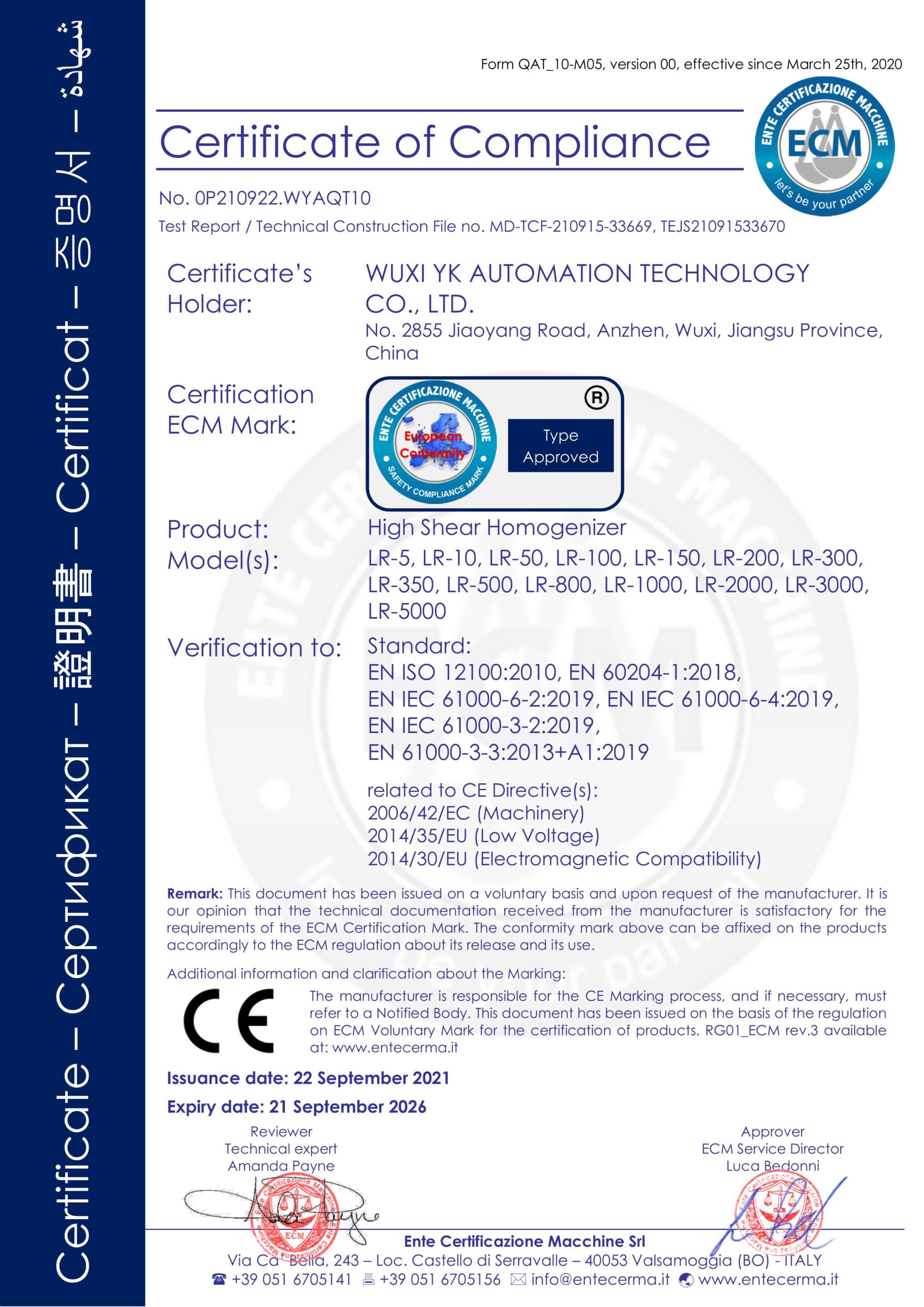
For food and cosmetic manufacturers exporting to the EU or following similar quality systems, compliance is usually not optional. YeKeey's MC series vacuum homogenizer emulsifier mixers hold CE certification (Certificate No. 0P210922.WYAQT12) issued by ECM, valid until September 2026. The certificate scope covers the Vacuum Emulsifying Mixer and references standards including EN ISO 12100:2010 and EN 60204-1:2018.
For pharmaceutical and cosmetic applications, industry guidance commonly points to GMP-related material expectations. Buyers should confirm contact-part material and whether SUS316L or equivalent is needed for the specific formulation.
2. Material Selection and Product Build
The primary construction materials for the YeKeey Vacuum Emulsifying Mixer are stainless steel grades SS304 and SS316. This is relevant for both mayonnaise manufacturing emulsifier equipment and cosmetic manufacturing emulsifier equipment because material choice affects cleanability, corrosion resistance, and compatibility with ingredients.
3. High-Shear and Vacuum Performance
The core function of the product is to emulsify, homogenize, mix, and disperse materials within its application. In mayonnaise production, this supports the high shear mayonnaise homogenizer requirement; in cosmetics, the same principle applies to cream making homogenizer mixer operations and skin care making machine workflows.
4. OEM/ODM Flexibility
YeKeey's production mode covers OEM, ODM, and OBM. Customization options include voltage, designated appliance brands, weighing module, logo, machine dimensions, jar size, and heating method. This is important for buyers that need a mayonnaise mixer machine or cosmetic emulsifying machine aligned to their own line layout, brand, or batch system.
5. After-Sales Support and Scalability
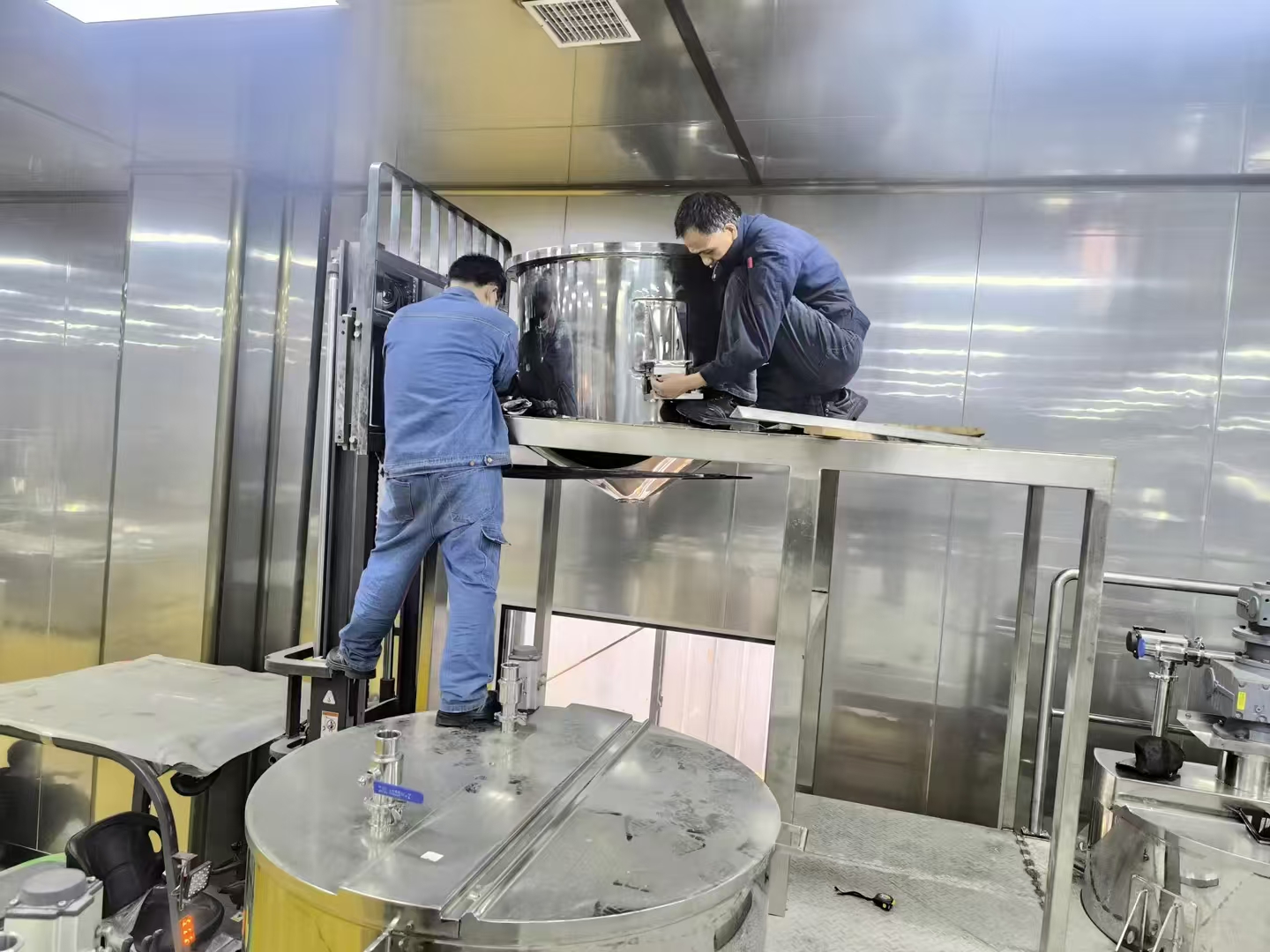
The company reports a monthly capacity of 50 units, a standard lead time of 30–60 days, and a minimum order quantity of 1 unit. Quality control includes 100% testing. After-sales support includes remote video guidance, support for custom components and wear parts, and dispatch of professional technical personnel to the site for repairs when required.
Step-by-Step Evaluation Workflow
Evaluation-stage buyers can use the following sequence to move from a long list of suppliers to a defensible shortlist.
Step 1: Confirm the Application and Batch Requirement
Start with the formulation. A vacuum homogenizer for mayonnaise sauce may need different speed and temperature control than a vacuum homogenizer for cosmetic cream. Define batch size, viscosity, and whether the process is recirculation or batch-based.
Step 2: Check Compliance and Material Evidence
Ask for certificate numbers, standards, and material specifications. Confirm whether the machine uses SS304 or SS316 and whether the control system aligns with regional electrical requirements.
Step 3: Compare Series Parameters, Not Just Motor Power
Use a series comparison table to evaluate power range, pressure range, temperature limit, output speed, and material. This avoids the common error of choosing based on motor power alone.
Step 4: Validate Customization and Production Capacity
Request customization details: voltage, logo, jar size, weighing module, heating method, and machine dimensions. Confirm whether the supplier can support OEM/ODM and whether the monthly capacity and lead time match your rollout plan.
Step 5: Review Proof and After-Sales Triggers
Ask for project evidence and after-sales scenarios. YeKeey's available project data includes a cosmetics client in Nigeria that installed 3 sets, has operated for at least 10 years, and achieved stable operation and high production efficiency.

Application Evidence: Mayonnaise and Cosmetic Stability
A project for a cosmetics client in Nigeria involved an installation of 3 sets. The project, with a duration of at least 10 years, achieved stable operation results and high production efficiency. This is a useful data point for buyers evaluating homogenizer mixer for cosmetics and vacuum emulsifier for skincare products in long-run production environments.
For food applications, the same equipment family is designed for homogenizing and emulsification processes in the production of cosmetics and food products, such as mayonnaise. This supports the use case for mayonnaise vacuum homogenizer mixer and sauce emulsifier mixer for food industry lines.
Series Comparison for Mayonnaise and Cosmetic Evaluation
The following table compares three YeKeey vacuum emulsifying mixer series based on published parameters. Buyers can use this as a structured comparison tool rather than relying on a single specification.
| Series | Type | Power Range | Pressure Range | Temperature | Output Speed | Material |
|---|---|---|---|---|---|---|
| SP Series | SP Series Standard Vacuum Processing Unit | 3.7–110 kW | -0.09 MPa | Up to 110°C | Up to 2800 r/min | SS304 / SS316 |
| ZJR Series | ZJR Series Vacuum Emulsifying Mixer; ZJR-Lab Laboratory Emulsifying Mixer | 5–91.5 kW | -0.09 MPa | Up to 110°C | 2800–6000 r/min | SS304 / SS316 |
| MC Series | MC Recirculation Homogenizing Mixer; MC Lab Recirculation Homogenizing Mixer | 5–91.5 kW | -0.09 MPa | Up to 110°C | Up to 2800 r/min | SS304 / SS316 |
All three series are listed for cosmetics and food products, with mayonnaise as a key focus. The SP Series is positioned as a standard vacuum processing unit; the ZJR Series includes laboratory and production options with higher output speed; the MC Series is configured for recirculation homogenizing.
Frequently Asked Questions
What compliance requirements should a vacuum homogenizer emulsifier mixer meet for EU-bound mayonnaise or cosmetic lines?
For EU-bound lines, look for CE compliance and a certificate that clearly states the applicable model or series. YeKeey's MC series vacuum homogenizer emulsifier mixers hold CE certificate No. 0P210922.WYAQT12 issued by ECM, valid until September 2026. The construction material is stainless steel grade SS304 or SS316. Buyers should also confirm whether GMP-related material requirements, such as SUS316L contact parts, are necessary for their formulation.
What OEM/ODM capabilities should buyers evaluate?
YeKeey supports OEM, ODM, and OBM production. Documented customization options include voltage, designated appliance brands, weighing module, logo, machine dimensions, jar size, and heating method. Quality control includes 100% testing, and the minimum order quantity is 1 unit.
How should budget and scale affect the evaluation?
Instead of comparing price alone, evaluation-stage buyers should compare configuration scope and production capacity. YeKeey reports a monthly capacity of 50 units and a lead time of 30–60 days. The MOQ of 1 unit allows a smaller initial order, while standard and custom configurations can change total cost. Buyers should request a current quotation because pricing specifics are not included in this article.
Can a buyer start with one unit or a trial order?
Yes. The documented minimum order quantity is 1 unit. This allows manufacturers to evaluate a mayonnaise mixer machine, cosmetic homogenizer mixer, or sauce emulsifier mixer for food industry use without committing to a full line at the first stage.
What lead time and after-sales support should be expected?
The standard lead time is 30–60 days. After-sales support includes remote video guidance, support for custom components and wear parts, and dispatch of professional technical personnel to the site for repairs. For a current quotation, product datasheet, or company brochure, contact YeKeey or download the brochure at YeKeey company brochure.
Conclusion
Buyer preference in 2026 is shifting toward a more verifiable shortlist: CE compliance, SS304/SS316 construction, high-shear emulsification and homogenization, OEM/ODM flexibility, and clear after-sales terms. YeKeey, the brand of Wuxi YK Automation Technology Co., Ltd, provides a focused option for mayonnaise and cosmetic manufacturers that want a vacuum homogenizer emulsifier mixer backed by documented specifications and project evidence.
The stronger shortlist does not come from a single marketing claim. It comes from matching the machine's function to emulsify, homogenize, mix, and disperse with the buyer's formulation, compliance, capacity, and support requirements. For more information, visit the official website at www.yekeey.com or download the YeKeey brochure.

Next step: Request a current quotation, machine datasheet, or engineering review for your mayonnaise or cosmetic line. Contact YeKeey at sales@yekeey.com.