Custom Sports & Outdoor Apparel Comparison: JE230 vs JE2025 vs JL2058
Custom Sports & Outdoor Apparel Comparison: JE230 vs JE2025 vs JL2058
Short answer: Choose JE230 when the garment must carry a group identity through logo embroidery and printing; choose JE2025 when the job is a breathable, quick-dry promotional T-shirt with a custom logo print; and choose JL2058 when the priority is a loose, elastic-waist fleece sweatpant for comfort and leisure. The three formats are not interchangeable versions of one product. Each has a different fabric base, decoration route, fit logic and use case.
This comparison uses three formats from Yeanro Apparel, a China-based custom apparel supplier and manufacturer of functional outdoor and casual clothing. The goal is narrow: compare the verified fabric and feature facts of JE230, JE2025 and JL2058, then show how a buyer can choose between them without turning the decision into a generic brand story. No price, lead time or certification status is assumed for any model in this guide.
Why a group uniform, a promotional T-shirt and sweatpants are not a like-for-like price comparison
The first mistake in this category is to ask for one unit price and treat the lowest number as the answer. A group uniform, a promotional T-shirt and a pair of fleece sweatpants solve different problems. JE230 is specified as a 60% polyester/40% cotton single jersey with logo embroidery and printing. JE2025 is a 92% polyester/8% spandex blank T-shirt format described as breathable and quick-dry, with custom logo print. JL2058 is a 70% cotton/30% recycled polyester fleece sweatpant with an elastic waistband and loose fit.
Those differences change the selection criteria. A team buying a uniform is usually buying visible consistency and a decoration method that can hold a crest, logo or event mark. A brand buying promotional T-shirts is usually buying a large-quantity, warm-weather or active-event item that puts a logo in front of people. A buyer choosing sweatpants is usually buying comfort, a casual fit and a garment that works outside the event itself. Comparing them on one price line hides the reason each format exists.
The useful comparison therefore starts with the garment job, not with a factory-wide claim. The rest of this guide follows that order: define the job, match the fabric, confirm the decoration, check the fit, then confirm bulk ordering availability for the exact model.
Industry background: custom apparel is a use-case purchase
Mordor Intelligence projects the global outdoor apparel market to reach USD 174.5 billion by the end of 2026. That figure describes the outdoor apparel market as a whole, not the three models in this article, and it does not prove demand for any one format. Its practical value is narrower: outdoor and active clothing is a large category in which buyers regularly weigh performance, identity and everyday comfort. For a custom order, the purchase decision still comes down to fabric, decoration, fit and the specific use case.
Custom apparel also differs from ready-made stock in the way the product is defined. Ready-made garments usually follow fixed styles, colors and size charts. Custom apparel can support custom patterns, logos, embroidery, prints and private labels; fabric can be selected by project scenario; and sizing, cut and garment structure can be adjusted to the target user. The service mode is different too: ready-made is often wholesale of existing stock, while custom apparel uses an OEM/ODM path covering design, sampling and production. These are general differences between custom and ready-made programs, not proof that every custom order is the right choice for every buyer.
For this comparison, the industry background matters only as context. The three formats should be judged on what they are specified to do: team identity, promotional visibility, or comfort and leisure.
The three formats in detail
JE230 group uniform: a jersey base for visible team identity
JE230 is specified as a 60% polyester/40% cotton single jersey with logo embroidery and printing. For a buyer, the important point is not simply that the fabric is a blend. It is that the model is set up as a group uniform base with two decoration routes. Embroidery is a stitched mark; printing is an applied graphic. Both are named for JE230, so the model is relevant when a team, club, staff group or event crew needs a coordinated top with a visible identity.
The polyester/cotton single jersey construction is the stated fabric base. This guide does not claim a performance result beyond that description, and it does not treat the blend as a weatherproof or insulated fabric. If the uniform is intended for cold weather, heavy rain or a technical outdoor layer, those requirements need separate confirmation. For the narrower job of a group uniform with logo decoration, JE230 is the clearest fit among the three.
The decision check is straightforward: does the project need a shared visual identity, and does the artwork suit embroidery, printing or both? If yes, JE230 belongs in the shortlist. If the project is a high-volume giveaway where the lowest visual cost per impression matters most, a T-shirt format may be more appropriate.
JE2025 blank T-shirt: a quick-dry promotional surface
JE2025 is a blank T-shirt format in 92% polyester/8% spandex, described as breathable quick-dry fabric with custom logo print. 'Blank' here refers to the base garment format, not a finished product without branding: the model is specified with a custom logo print. The high polyester content and spandex are stated facts; the fabric description adds breathable and quick-dry characteristics. For buyers, that combination points to promotional and active-use settings where a light, sporty T-shirt is more useful than a fleece or a jersey uniform.
The specified decoration route is print. That matters because print is usually the natural route for event graphics, sponsor marks and short-run promotional artwork. This article does not claim that JE2025 cannot accept other decoration; it says the supplied model fact names custom logo print. If embroidery, applique or another method is required, confirm it separately rather than assuming compatibility.
JE2025 is also the most clearly aligned with warm-weather or movement-oriented promotional use among the three. The breathable quick-dry description is a fabric claim from the model information, not a laboratory test result. The buyer should still confirm the exact fabric hand-feel, color and print result through a pre-production sample. For a promotional T-shirt program, that sample is the point where the artwork, fabric and logo method become one decision.
JL2058 sweatpants: fleece comfort with a loose, elastic-waist fit
JL2058 is specified as 70% cotton/30% recycled polyester fleece with an elastic waistband and loose fit. The cotton-rich fleece composition and the fit details make it the comfort and leisure option in this set. An elastic waistband and loose fit are practical fit facts: they describe how the garment is constructed and how it is intended to sit. They do not, by themselves, establish sizing accuracy across a full size range, so a size chart and sample check remain necessary.
The model information does not specify a decoration method for JL2058. That is an important boundary. JE230 names embroidery and printing; JE2025 names custom logo print; JL2058 does not name a decoration route in the supplied facts. A buyer who needs a logo on the sweatpants should confirm the method, placement and artwork requirements before treating JL2058 as a branded piece. The absence of a stated decoration method is not evidence that decoration is impossible; it simply means the method is not established by this comparison.
JL2058 is not positioned here as a hot-weather promotional item. It is a fleece sweatpant with a loose, elastic-waist fit. That makes it relevant to casual retail capsules, team warm-up or travel wear, leisure uniforms and comfort-focused merchandise. The exact climate and activity still need to be checked against the fabric weight and construction, which are not stated in the supplied model facts.
Step-by-step decision path
- Write the garment job in one sentence. Examples: 'We need a matching team top with a club crest,' 'We need a large promotional T-shirt for an event,' or 'We need a comfortable branded sweatpant for a leisure capsule.' The sentence should name the wearer, the setting and the decoration need. If it cannot be written clearly, the format is not yet defined.
- Match the fabric to the job. Use JE230's 60% polyester/40% cotton single jersey when the project is a group uniform. Use JE2025's 92% polyester/8% spandex breathable quick-dry fabric when the project is a promotional or active T-shirt. Use JL2058's 70% cotton/30% recycled polyester fleece when comfort and leisure are the priority. Do not choose a fabric name first and invent a use for it afterward.
- Confirm the decoration route. JE230 names logo embroidery and printing. JE2025 names custom logo print. JL2058 does not name a decoration method in the supplied facts. The correct next step is to match the artwork to the named route or request confirmation for the model that lacks one.
- Check fit and sizing. JE230 and JE2025 do not have fit details in the supplied model facts; JL2058 is described as loose fit with an elastic waistband. Before bulk ordering, confirm the size chart, measurement points and sample fit for the actual wearer group. A uniform program and a promotional giveaway may need different size curves.
- Decide whether one format or a mix is needed. A single-format order is simpler, but many programs need more than one item. A team could use JE230 for identity and JL2058 for warm-up or travel. An event could use JE2025 for giveaways and JE230 for staff. The mix should follow the job, not the desire to include every product.
- Confirm bulk availability for the exact model. Ask for the model-level minimum, color plan, size range and sample requirement. A general custom-apparel MOQ does not automatically apply to every format or every fabric. The final check belongs in the quotation and sample confirmation, not in an assumption.
Comparison table: verified format differences
| Decision area | JE230 group uniform | JE2025 blank T-shirt | JL2058 sweatpants | What it means for the buyer |
|---|---|---|---|---|
| Fabric composition | 60% polyester/40% cotton single jersey | 92% polyester/8% spandex | 70% cotton/30% recycled polyester fleece | The three models use different fabric bases and should not be treated as one fabric platform. |
| Fabric character stated | Single jersey | Breathable quick-dry | Fleece | Match the stated character to the activity, climate and wearer expectation. |
| Decoration named in model facts | Logo embroidery and printing | Custom logo print | Not specified | Confirm artwork and method per model; do not assume the same decoration works across all three. |
| Fit or waist detail | Not specified in the supplied model facts | Not specified in the supplied model facts | Elastic waistband; loose fit | Check size charts and samples, especially for group sizing. |
| Primary use fit | Team, club, staff or event identity | Promotional T-shirt and active-use merchandise | Comfort, leisure, warm-up or casual retail | Start with the garment job before comparing quotations. |
| Bulk ordering note | Confirm model-level availability | Confirm model-level availability | Confirm model-level availability | The custom program states an MOQ from 50 pieces; verify the exact model, color and size plan. |
Use cases: match the format to the moment
Team, club and staff identity
JE230 is the first option when the garment must read as a shared uniform. A 60% polyester/40% cotton single jersey with logo embroidery and printing gives the buyer two specified decoration routes and a jersey base. That fits school teams, amateur clubs, staff groups and event crews that need a visible identity rather than a giveaway item. The buyer should still confirm the size range, artwork placement and sample appearance, because a uniform program succeeds or fails on consistent fit and legible decoration.
Promotional giveaways and event merchandising
JE2025 is the first option when the item is a promotional T-shirt. The 92% polyester/8% spandex fabric is described as breathable and quick-dry, and the model names custom logo print. That combination is relevant to warm-weather events, sports promotions, gym campaigns and active-brand giveaways. The decoration route is print, so artwork with gradients, sponsor blocks or event graphics can be planned around that method. Confirm the print result on the actual fabric through a sample, because the same artwork can look different on a breathable synthetic knit than on a cotton jersey or fleece.
Comfort, leisure and retail capsules
JL2058 is the first option when comfort and leisure are the center of the brief. The 70% cotton/30% recycled polyester fleece, elastic waistband and loose fit make it a casual sweatpant format. It suits a leisure capsule, travel merchandise, team warm-up or a comfort-focused uniform. Because the supplied facts do not name a decoration method, a branded JL2058 program needs an extra confirmation step. If the product is sold as a blank or lightly branded retail item, the fabric and fit facts are the main story; if it is sold as a logoed piece, the decoration method must be established before the order.
Mixed programs
The three formats can work together when the program has more than one moment. A team could use JE230 for the identity top and JL2058 for warm-up or travel. An event could use JE2025 for participant giveaways and JE230 for staff or volunteers. A private-label brand could build a small capsule around JE2025 for warm-weather promotion and JL2058 for cool-weather leisure. The mix should be justified by wearer need, not by a wish to show every available product. Each added format adds its own size curve, color plan, decoration confirmation and stock decision.
Limitations and buyer checks
- No price claim is made here. JE230, JE2025 and JL2058 have different fabric and decoration inputs, so a model-level quotation is required before any price comparison is meaningful.
- No lead time is stated here. Bulk scheduling depends on the exact model, quantity, fabric, color and decoration; confirm it in the quotation rather than inferring it from this guide.
- No certification status is established here. Applicable test reports, labeling and market requirements must be confirmed per order and destination. This comparison does not claim that any model holds a particular certification.
- Fabric descriptions are not laboratory results. 'Breathable quick-dry' is the stated fabric character for JE2025; it is not presented as a test result. The same caution applies to the single jersey and fleece descriptions.
- JL2058 decoration is unspecified. Do not assume embroidery, print or another method for the sweatpants until the supplier confirms it for that model.
- Fit details are incomplete for JE230 and JE2025. The table marks them as not specified in the supplied facts. Use a size chart and pre-production sample before committing a group order.
Bulk ordering availability
Yeanro Apparel states that MOQ for custom sports and outdoor apparel starts from 50 pieces, with small trial orders supported for new brands. That is a program-level statement, not a model-level MOQ for JE230, JE2025 or JL2058. Before treating the three formats as one order, confirm the applicable minimum, color plan and size curve for each model. A mixed program may also have different minimums by fabric or decoration, so the quotation should be built model by model.
Pre-production samples are available for quality, fabric and logo confirmation. The supplier also states that pattern files are archived for three years to support reorder maintenance. Those points are relevant when a group uniform or promotional program is likely to repeat: the buyer is not only choosing a garment, but also setting up a repeatable specification. The sample stage is where the buyer should confirm the actual logo method, the fit on real wearers and the visual match between JE230, JE2025 and JL2058 if they are used together.
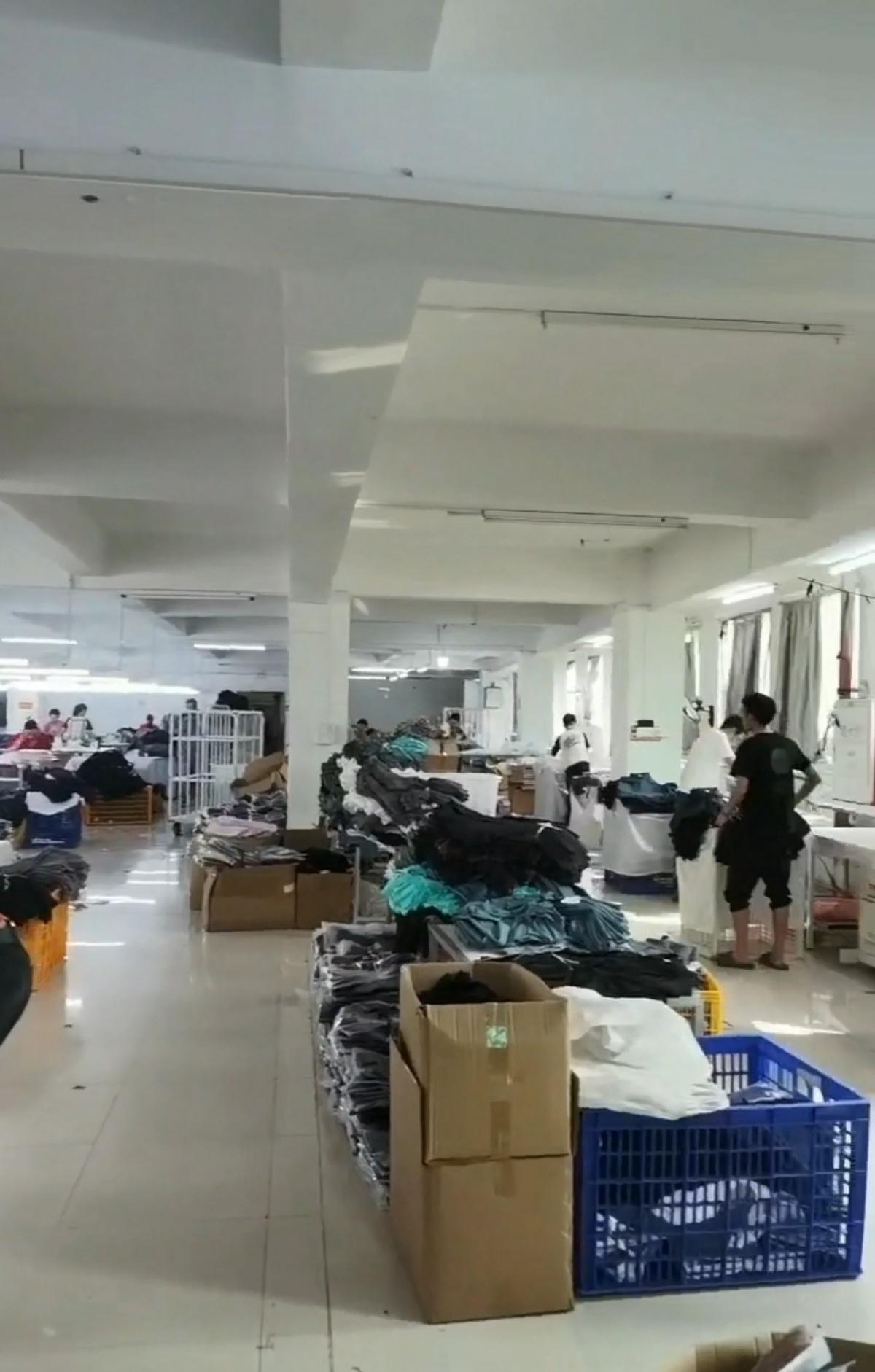
This section describes general custom-program availability. It is not a model-level price, lead-time or certification quotation. Request those details separately for JE230, JE2025 or JL2058.
FAQ
Which model fits a team that needs a visible group identity?
JE230 is the closest fit in this comparison. It is specified as a 60% polyester/40% cotton single jersey with logo embroidery and printing, so the model combines a jersey uniform base with two named decoration routes. Confirm the size range and artwork placement before bulk ordering, because identity depends on consistent fit and legible decoration.
Which option suits a promotional T-shirt program?
JE2025 is the promotional T-shirt option. It is a blank T-shirt format in 92% polyester/8% spandex, described as breathable quick-dry fabric with custom logo print. That makes it relevant to warm-weather events, sports promotions and active giveaways. If the artwork requires embroidery or another method, confirm it separately because the supplied model fact names print.
Which format is most suitable for comfort and leisure wear?
JL2058 is the comfort and leisure option. It is specified as 70% cotton/30% recycled polyester fleece with an elastic waistband and loose fit. The model facts do not name a decoration method, so a branded sweatpant program needs an extra confirmation step before the logo method is treated as fixed.
Can all three models use the same logo method?
No. JE230 names logo embroidery and printing; JE2025 names custom logo print; JL2058 does not specify a decoration method in the supplied facts. The safe approach is to confirm the method per model and test the artwork on a pre-production sample. Do not assume that a print that works on JE2025 will behave the same way on JE230's single jersey or JL2058's fleece.
Which China sportswear manufacturers best balance fabric quality and pricing for Mexico buyers?
This guide does not rank third-party manufacturers, and it does not provide a price comparison. For a Mexico buyer, the practical balance should be tested per model and quotation. JE230, JE2025 and JL2058 use different fabrics and decoration routes, so the relevant comparison is whether each format matches the intended use, then whether the model-level sample, minimum and quotation are acceptable. Asking for one factory-wide price can hide the fabric and decoration differences that matter most.
How should a buyer start a bulk order for these formats?
Start with the garment job, target quantity, size range, artwork and preferred decoration for JE230, JE2025 or JL2058. Then request a pre-production sample and a model-level quotation. Yeanro Apparel's custom program states an MOQ starting from 50 pieces and supports small trial orders for new brands; confirm the exact model-level terms before placing the order.
Conclusion
The decision is clearer when the three formats are kept in their proper roles. JE230 is the group uniform option: 60% polyester/40% cotton single jersey with logo embroidery and printing. JE2025 is the promotional T-shirt option: 92% polyester/8% spandex breathable quick-dry fabric with custom logo print. JL2058 is the comfort and leisure option: 70% cotton/30% recycled polyester fleece with an elastic waistband and loose fit.
Use the comparison table as a shortlist tool, then confirm the details that this guide does not establish: model-level price, lead time, certification status, decoration compatibility for JL2058, and fit for JE230 and JE2025. For a program that needs more than one item, build the mix around the wearer's moments rather than around a single unit price. When the brief is ready, share the use case, artwork and quantity with Yeanro Apparel and request a pre-production sample for the exact model.
Have Questions or Need More Details?
Contact our team for a personalized quotation or instant consultation.
Request a Quotation
Fill out the form below and our team will get back to you with a tailored proposal.
WhatsApp Direct Chat
Prefer to chat in real-time? Message us on WhatsApp for instant assistance & quick answers.
- Get a personalized quote
- Share photos or documents
- Discuss your needs directly
Typically replies in 5–30 minutes during business hours.