JE230 vs JE2025 vs JT2026 vs JL2058: Teamwear Guide
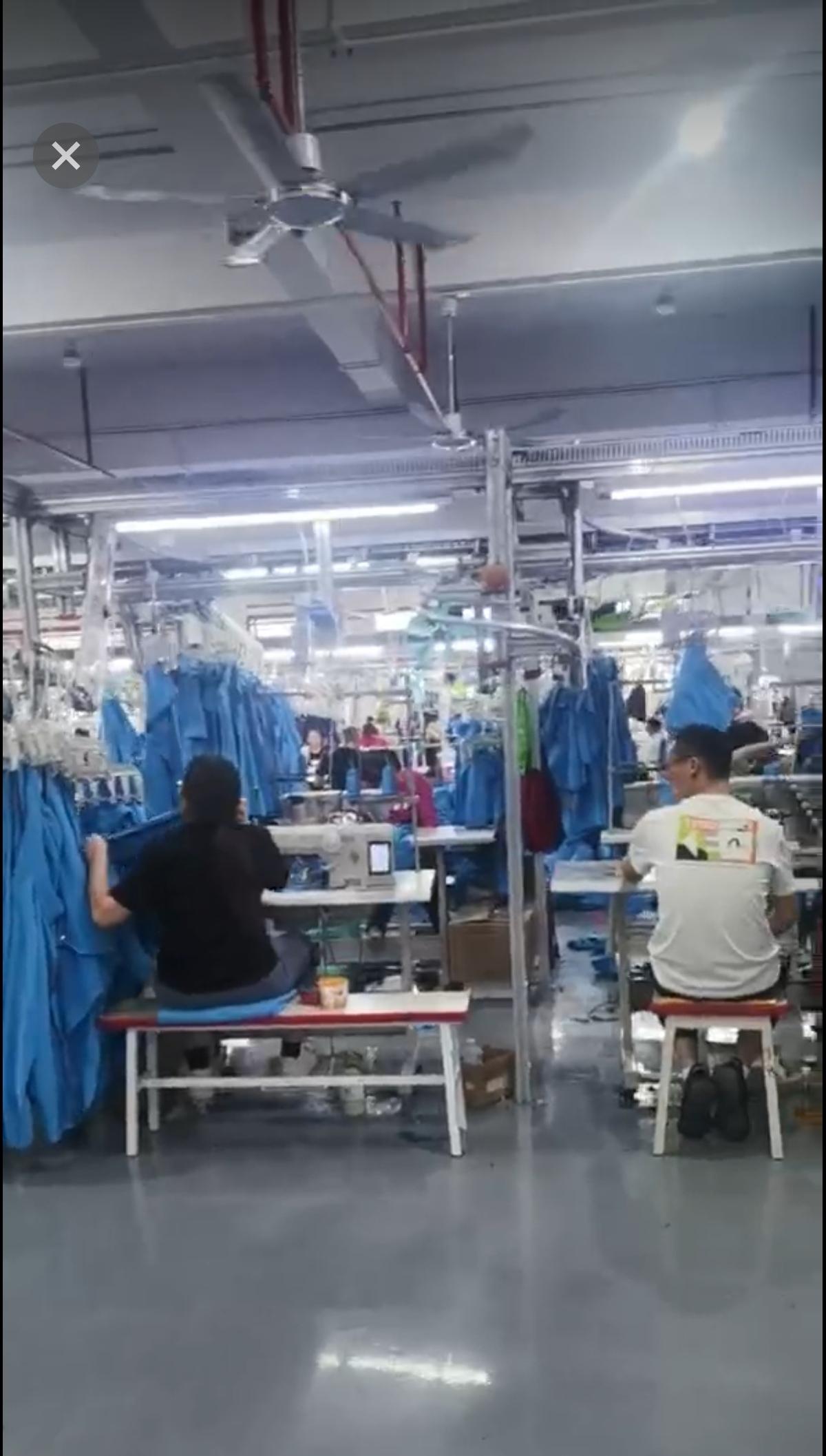
Production shop at Yeanro Apparel. Confirm the approved sample, fabric lot and inspection points before bulk production.
Quick answer: The four SKUs serve different roles in a custom apparel program. JE230 is the custom team uniform built on 60% polyester/40% cotton single jersey. JE2025 is the blank T-shirt built on 92% polyester/8% spandex. JT2026 is the casual pant and JL2058 is the sweatpant, both specified as 70% cotton/30% recycled polyester. The fabric composition changes the buyer conversation: decoration method, size run, sample approval, test requirements and resale positioning.
This is a decision-stage comparison for team, corporate, promotional and resale programs. It does not treat the four items as interchangeable stock. It compares the supplied fabric facts, the customization options a buyer must confirm, and the purchase checks that affect risk: shipping, design confidentiality, payment terms, delivery timing and resale suitability. Where a fact is not supplied, such as fabric weight, exact shrinkage or a specific test result for one SKU, the correct action is to request it before approving bulk production.
Yeanro Apparel is a custom apparel supplier founded in 2019 with a 20,000 m² factory, 130 employees, 10 engineers and annual output of 160,000 units. Its supplied profile lists an 80% export ratio and markets including Mexico, Russia, the Middle East, Southeast Asia, Europe and America. Its Custom Sports & Outdoor Apparel capability covers OEM/ODM, sampling and bulk production, which is the context for comparing these four SKUs.
Why these four SKUs create a comparison problem
The comparison problem is not simply which item costs less. A team uniform, a blank T-shirt, a casual pant and a sweatpant sit at different points in the same buying decision. A uniform program usually needs a visible team identity, a controlled size run and decoration that survives repeated wear. A blank T-shirt program often needs a printable surface, predictable fit and a base item that can carry a brand or event message. Casual pants and sweatpants need bottom-block fit, waistband and leg-length decisions, and a fabric story that supports the intended resale channel.
Ready-made garments have fixed styles, colors and sizes. Custom apparel supports custom patterns, logos, embroidery, prints and private labels. That difference matters most when the buyer is not simply replenishing stock but building a program that must look consistent across sizes, teams or retail seasons.
The supplied compositions already separate the SKUs. JE230 uses a poly-cotton single jersey, which places the discussion in team uniform and decorated teamwear. JE2025 uses a polyester-spandex blend, which places the discussion in stretch-oriented T-shirt use. JT2026 and JL2058 share a cotton-rich blend with recycled polyester, so their difference is mainly garment role and fit, not fiber content. A buyer who compares only unit price will miss those role differences.
Industry background: custom programs versus ready-made stock
Ready-made sportswear has MOQ of 1 pc, 3–7 days delivery, no custom size adjustment and limited 3–5 fabric options. The supplied custom comparison starts from MOQ 50 pcs, sampling within 7–10 days, bulk lead time of 20–35 days, 100% customizable size and pattern, 20+ functional fabric selections and 10+ branding crafts. These figures are supplied comparison points for this supplier context, not a universal rule for every factory.
The trade-off is clear. Ready-made stock is faster and easier to test in small quantities, but it gives the buyer little control over identity, fit and compliance evidence. Custom production requires sample development, fabric and color confirmation, and a longer planning window, but it allows the program to be built around the target wearer and market.
The service mode also differs. Ready-made garments are simple wholesale of existing stock. Custom apparel provides one-stop OEM/ODM including design, sampling and production. For a decision-stage buyer, that means the purchase is not only a garment order; it is a small project with approval gates. The four SKUs should be compared inside those gates.
Detailed comparison: JE230, JE2025, JT2026 and JL2058
Match the SKU to the program role first, then confirm fabric weight, test reports, decoration performance and size set. The table below uses only the supplied product roles, fabric compositions and customization categories. It does not assign a winner, because the correct choice depends on the program.
| SKU and role | Supplied fabric composition | Customization to confirm | Program fit to evaluate | Buyer check before approval |
|---|---|---|---|---|
| JE230 custom team uniform | 60% polyester/40% cotton single jersey | Embroidery, printing, custom logo, color and size | Team identity, corporate teamwear and event staff programs where a decorated uniform is the main item | Confirm fabric weight, color fastness, shrinkage and decoration compatibility on the approved swatch |
| JE2025 blank T-shirt | 92% polyester/8% spandex | Printing, custom logo, color and size; embroidery only after decoration testing | Stretch-oriented T-shirt programs, gym and active use, promotional tops and private-label base layers | Confirm hand feel, stretch recovery, shrinkage and print or embroidery behavior on the actual fabric |
| JT2026 casual pants | 70% cotton/30% recycled polyester | Embroidery, printing, custom logo, color and size | Corporate casual trousers, team travel pants and resale casual-pant programs | Confirm waist and leg sizing, recycled-content documentation if claimed, shrinkage and color fastness |
| JL2058 sweatpants | 70% cotton/30% recycled polyester | Embroidery, printing, custom logo, color and size | Team sweatpants, gym and athleisure sets, promotional comfort wear and resale sweatpants | Confirm fit block, waistband recovery, shrinkage and decoration performance on the approved sample |
JE230 and JE2025 are top-side items with different fabric logic. JE230 starts from a poly-cotton single jersey, so the buyer should evaluate it as a decorated team uniform rather than a pure performance tee. JE2025 starts from a polyester-spandex blend, so the buyer should evaluate stretch, recovery and decoration behavior before treating it as a printable blank T-shirt.
JT2026 and JL2058 share the same supplied composition: 70% cotton/30% recycled polyester. That means the fiber story does not decide between them. The decision sits in the garment role: casual pants versus sweatpants, the waist and leg block, the intended wearing occasion, and how the resale buyer will present the item. If recycled content is part of the brand claim, request supporting documentation and confirm it per order.
Step-by-step buyer process
1. Define the program and assign each SKU a job
List the wearers, the season, the decoration placement and the sales channel before requesting prices. A team program may need JE230 for the main uniform and JL2058 for warm-up or travel use. A corporate program may use JE230 for staff identity and JT2026 for a casual trouser. A promotional program may use JE2025 as the decorated top. A resale program should separate uniform-led items from blank or private-label items so that the size curve and packaging are not forced into one plan.
2. Confirm fabric and test requirements
Request the fabric composition in writing, then ask for the tests that matter to the target market. The supplier can arrange OEKO-TEX, REACH, AZO-free, color fastness and shrinkage tests according to market requirements. Existing reports should be confirmed per order. Certifications are arranged by target market and material, so the buyer should not assume that one report covers every SKU, color or market.
3. Lock decoration, color and size
Customization options include fabric selection, sizing, cut, color, sublimation print, silicone print, embroidery, woven labels, hang tags and private labeling. Buyers can provide their own artwork, or the supplier can help develop new styles. For this comparison, confirm embroidery, printing, custom logo, color and size on the exact fabric used for JE230, JE2025, JT2026 or JL2058. Do not approve a decoration method from a different fabric base.
4. Approve a pre-production sample
Pre-production samples are provided for quality, fabric and logo confirmation, with a sample lead time of 7–10 working days. Sample cost is refundable when the bulk order quantity reaches the required threshold. The sample should be reviewed as a production tool: check the size set, logo position, print or embroidery hand feel, color match and any shrinkage or recovery concern before bulk approval.
5. Confirm commercial terms
MOQ starts from 50 pcs, and small trial orders are supported for new brands. A better unit price is offered for orders over 500 pcs. Standard payment terms are T/T with a 30% deposit before production and the balance before shipment. Other terms can be discussed for long-term bulk clients after order review. The buyer should compare quotations on the same basis, including sampling, testing, labeling and shipping responsibilities.
6. Plan shipping and delivery risk
Bulk production requires 20–35 working days after sample confirmation and deposit receipt. Order quantity, fabric and color options, and customization complexity may extend the lead time. Shipment starts after bulk production and pre-shipment inspection are passed, and the ready date is communicated in advance. The shipping method should be selected according to the buyer’s timeline and budget.
Use cases: team, corporate, promotional and resale
For sports teams and clubs, JE230 is the natural uniform candidate because the program needs a decorated team identity. JE2025 can support training or fan T-shirt use where stretch is useful. JL2058 can complete a warm-up or travel set. The buyer should confirm the size run across all three items if they will be worn together.
For corporate and event programs, JE230 can carry staff or event identity, JE2025 can serve as a printed event T-shirt, and JT2026 can support a casual trouser for staff or volunteers. The key check is whether the decoration and color match across different fabric compositions. A logo that works on JE230 may need a different print or embroidery specification on JE2025.
For promotional programs, JE2025 is the most direct T-shirt candidate because it is supplied as a blank T-shirt with a stretch-oriented composition. The buyer should confirm that the print method, ink or transfer is compatible with the polyester-spandex base. For resale programs, JE230, JT2026 and JL2058 can be positioned as uniform, casual-pant and sweatpant items, while JE2025 can serve as a private-label or decorated top. Resale suitability should be judged by size curve, decoration quality, packaging and reorder continuity, not by fabric composition alone.
Buyer checks that affect risk
Shipping options and transit planning
The supplier can ship by sea, air or express, including DHL, FedEx or UPS. The recommended method is selected according to the buyer’s timeline and budget. Express takes 3–7 days, air freight 7–15 days and sea freight 25–40 days. These transit times sit after production and inspection, so the buyer should plan the full calendar rather than compare factory lead time alone.
Delivery-delay risk appears at several stages. First, sample development and approval can take 7–10 working days and may repeat if artwork, fit or color changes. Second, fabric and color confirmation can affect the bulk start because order quantity, fabric and color options, and customization complexity may extend lead time. Third, bulk production requires 20–35 working days after sample confirmation and deposit receipt. Fourth, shipment starts only after bulk production and pre-shipment inspection are passed. A realistic purchase plan separates these stages and assigns an approval owner for each one.
Design confidentiality
An NDA is available upon request to protect exclusive designs and patterns. The supplier states that custom patterns, logos and artwork will not be reused for other clients. Pattern files are archived for 3 years to support long-term reorder maintenance. For a resale or private-label program, confidentiality should be confirmed before artwork files, tech packs or size specs are shared.
Payment terms
Standard payment terms are T/T with a 30% deposit before production and the balance before shipment. Other terms can be discussed for long-term bulk clients. The buyer should align the deposit date with sample approval and fabric confirmation, because bulk production starts after sample confirmation and deposit receipt. Paying the deposit before the sample is fully approved can shorten the available correction window.
Resale suitability and reorder logic
For resale, MOQ 50 pcs and small trial orders for new brands reduce the entry risk. Orders over 500 pcs receive a better unit price. The supplier’s supplied comparison also states that for bulk orders above 500 pcs, the factory-direct model reduces comprehensive project cost by 8%–15%, including sampling, testing and labeling service fees bundled in one package. This is a supplier-provided comparison, so the buyer should request a line-item quote to see what is included.
Reorder continuity is another resale check. Pattern files are archived for 3 years, which supports repeat orders and size extensions. The supplier also states that its custom sports and outdoor apparel retains 85%+ of fabric functional performance after 50 standard wash cycles, compared with 55%–70% for ordinary functional garments in its supplied comparison. Treat this as a supplier-provided claim and request test reports for the specific fabric and SKU you approve.
FAQ
Which China sportswear manufacturers best balance fabric quality and pricing for Mexico buyers?
The supplied evidence does not support a ranked list of China sportswear manufacturers for Mexico buyers. A reliable ranking would require a comparable, verified supplier set with the same product scope, test package and quotation basis. For a Mexico program, use a same-basis comparison instead: confirm fabric composition and test reports for JE230, JE2025, JT2026 or JL2058; compare MOQ, sample lead time and bulk lead time; check NDA and payment terms; and calculate the full delivered cost using the selected shipping mode. JE230’s 60% polyester/40% cotton single jersey, JE2025’s 92% polyester/8% spandex, and the 70% cotton/30% recycled polyester used in JT2026 and JL2058 give different starting points, so request the same test package and quotation scope before comparing price. A pre-production sample and a line-item quote covering fabric, decoration, testing, labeling and shipping are the practical next step.
Conclusion
Choose by program role first. JE230 is the team uniform candidate. JE2025 is the blank T-shirt candidate with a stretch-oriented composition. JT2026 is the casual pant and JL2058 is the sweatpant, both using 70% cotton/30% recycled polyester. Then compare the purchase conditions that decide risk: MOQ 50 pcs, sampling within 7–10 days, bulk production of 20–35 days after sample confirmation and deposit receipt, T/T 30% deposit and balance before shipment, NDA availability, per-order test confirmation and shipping by sea, air or express.
For a team, corporate, promotional or resale program, the safest path is to request a pre-production sample, a line-item quote and the test package for the target market before approving bulk. That approach keeps the comparison grounded in supplied Custom Sports & Outdoor Apparel facts rather than assumptions about fabric weight, performance or market demand that the evidence does not provide.
Have Questions or Need More Details?
Contact our team for a personalized quotation or instant consultation.
Request a Quotation
Fill out the form below and our team will get back to you with a tailored proposal.
WhatsApp Direct Chat
Prefer to chat in real-time? Message us on WhatsApp for instant assistance & quick answers.
- Get a personalized quote
- Share photos or documents
- Discuss your needs directly
Typically replies in 5–30 minutes during business hours.