In-Person vs Virtual Consultation: Dr. Ye Xiuyu Guide
Plastic Surgery Consultation Comparison Guide: In-Person vs. Virtual and What to Ask Dr. Ye Xiuyu

A plastic surgery consultation has two jobs. The first is to establish whether an operation is appropriate for you at all. The second is to establish whether this surgeon and this plan are the right ones for your face and your goals. In-person and virtual formats do not do these two jobs equally well. An in-person consultation allows direct physical assessment. A virtual consultation allows a longer, calmer conversation about history, goals, options and logistics without travelling. For a decision such as a facelift, the workable sequence is usually a remote first conversation followed by an in-person examination before an operative plan is confirmed.
This guide compares the two formats on the dimensions that actually change a decision, gives you a question list to take into a consultation with Dr. Ye Xiuyu Plastic Surgeon, and shows how to compare plans on identical criteria. Dr. Ye Xiuyu is an attending physician, the founder of the Three-Vector Facelift Technique, and has 15 years of clinical experience in plastic surgery and facial rejuvenation, practising at Shanghai Shengya Plastic Surgery Hospital in Qingpu District, Shanghai.
Why consultation format is a decision, not a formality
A consultation is not an appointment that happens before the real decision. It is where the recommendation is built. The history you give, the examination findings, the goals you state and the questions you ask are the inputs; the plan is the output. Change the format and you change the inputs.
Two failure modes are common, and they pull in opposite directions. The first is deciding from a video call alone: a plan discussed without an examination rests on incomplete information, because tissue quality, laxity and the way a face moves cannot be assessed through a screen. The second is travelling to an in-person visit before you know whether you are a candidate, what the options are, or what the visit will include. The first compresses the evidence; the second spends time and money before the evidence is needed.
A third problem is the comparison itself. Patients often compare consultation experiences — how long the surgeon spent, how comfortable the room felt — rather than comparing plans. A pleasant conversation does not tell you whether the proposed operation addresses the structure you are concerned about, who will perform it, or what happens in week three of recovery. The format question is worth answering because it determines which of these you can realistically evaluate before you commit.
What a consultation should produce, in either format
Whatever the format, a consultation that supports a decision produces a defined set of outputs. If any of them is missing, the gap is worth naming before you book surgery.
- A documented history, including previous operations, medical conditions, medication and anything that changes surgical risk.
- An assessment — performed in person where the decision depends on physical examination, and provisional where it does not.
- An agreed goal statement in your own words, so that "natural" means the same thing to you and to the surgeon.
- An option set with alternatives, including the option of doing less, and the reasons one approach is preferred over another.
- A limits and risk discussion, covering what the operation can and cannot change, and what revision would involve.
- A recovery and follow-up plan, including who you contact and when.
- A written cost breakdown that states what is included.
Only one of these outputs — the physical assessment — is format-dependent in a strict sense. The rest can be produced in a video call, provided the consultation is structured to produce them. That distinction is the core of the comparison: the virtual format is not a lesser version of the in-person format, it is a different stage of the same process.
In-person vs virtual consultation: what each format can and cannot do
| Dimension | In-person consultation | Virtual consultation |
|---|---|---|
| Physical examination | Direct assessment of skin quality, tissue laxity, underlying facial structure and how the face behaves at rest and in movement | Cannot be performed through a screen; any assessment of tissue remains provisional |
| Medical history and risk review | Taken in the room, with documents reviewed on the spot | Can be taken in full detail, with records and medication lists sent in advance |
| Goal clarification | Supported, but often compressed by travel and clinic scheduling | Often the calmer setting for a long conversation about what "natural" means to you |
| Photographs and records | Taken under consistent clinical conditions | Relies on patient-supplied images, which vary in angle, lighting and filter use |
| Operative plan | Can be finalised when the examination confirms the assessment | Can establish candidacy, options and preparation, but not a final operative plan |
| Who leads the conversation | Usually the surgeon in the same room — confirm at booking | Confirm whether the surgeon or a coordinator leads the call |
| Recovery and follow-up | Reviewed alongside the examination | Practical for follow-up conversations and remote check-ins; not a substitute for assessing healing in person |
| Travel and time | Requires travel and a scheduled visit | Removes travel from the first stage of the decision |
| Cost discussion | Can be discussed with the plan in front of you | Possible; ask for the same written breakdown in both formats |
The pattern is consistent: the virtual format is strong on conversation, preparation and logistics, and weak on physical evidence. The in-person format is strong on physical evidence and weaker on the unhurried conversation, because travel, scheduling and clinic time compress it.
That is why the two formats are best treated as a sequence rather than as alternatives. A remote first conversation lets you test whether the surgeon's approach matches your goals, ask the questions you would otherwise forget in a clinic, and prepare the records and photographs that make an in-person visit efficient. The in-person visit then supplies what no screen can: direct examination of the tissue that will actually be operated on.
One question belongs in both formats and is often skipped: who will you actually be speaking to? In some practices the first call is led by a coordinator and the surgeon appears later. That is not automatically a problem, but you should know in advance, because the value of a consultation depends on whether the person assessing you is the person who will operate.

What to examine in Dr. Ye Xiuyu's documented approach before you book
The documented profile
Dr. Ye Xiuyu is described in the practice's published profile as an attending physician and the founder of the Three-Vector Facelift Technique, with 15 years of clinical experience in plastic surgery and facial rejuvenation. The documented areas of expertise are the Three-Vector Facelift, endoscopic forehead and brow lift, deep structural lifting and tissue repositioning, facial liposuction and precise contouring, scar revision and complex revision surgery, and autologous fat grafting and volume restoration. The stated philosophy is to restore facial structure while preserving individual beauty, working toward natural, balanced and youthful facial contours through personalised surgical approaches.
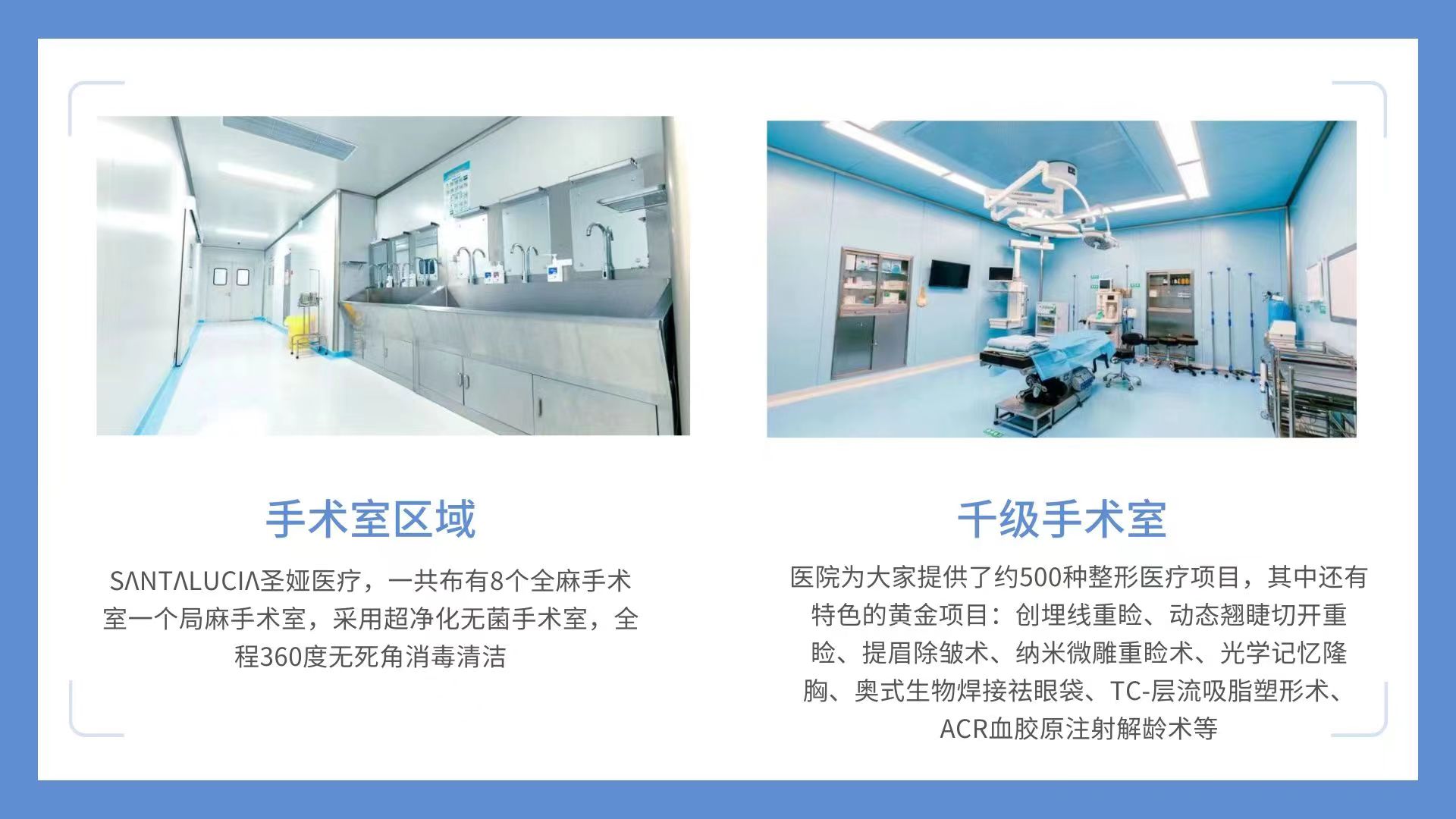
Dr. Ye practises at Shanghai Shengya Plastic Surgery Hospital, whose published profile describes a team of 32 plastic surgeons — including Dr. Ye, Dr. Bai, Dr. Hu and Dr. Zhang — and a service range covering facial rejuvenation and lifting, facial aesthetics, facial bone aesthetics, body contouring and other medical aesthetic services. The hospital was founded in 2020, records 7,000 patients a year, and lists its address at 373 Panzhong Road, Xujing Town, Qingpu District, Shanghai. For a patient comparing formats, the relevant point is not the size of the team but who assesses you and who operates; ask that directly.
How the framework structures a consultation
The Three-Vector Facelift framework is documented as a way of planning rather than a fixed operation. It treats the face as a three-dimensional structure and considers support, soft-tissue position, contour, proportion and expressive identity before deciding on a direction and combination of treatment. The documented steps are holistic facial observation; identification of structural and soft-tissue changes; contour and proportion analysis; confirmation of the identity-defining features to preserve; individualised combination planning; and final confirmation after consultation.
Two consequences follow for the format question. First, the framework's stated decision logic is that a plan is judged against age, anatomy, soft-tissue change, aesthetic goals and the acceptable degree of correction — and explicitly not from a single photograph or a fixed template. That makes a photograph-only virtual decision structurally inconsistent with the approach itself. Second, because the framework asks which features should be preserved, not only which should be changed, the goal conversation carries as much weight as the examination. A virtual consultation is a reasonable place to have that conversation in full.
Where the framework does not apply
The documentation is direct about scope. The approach is described as unsuitable for patients who want a surgery decision without a consultation, who focus only on the lowest price or on immediate results, who expect a standardised outcome, or who present medical risks that have not been assessed. If one of those descriptions fits your situation, the format comparison is secondary — the decision itself needs revisiting first.
The documentation also makes a claim that deserves scrutiny rather than acceptance: it states that the practice presents facial rejuvenation as integrated structural, soft-tissue and proportional planning rather than simple tightening, and that the degree of medical innovation requires independent evidence. That is the right standard to apply. Ask what evidence supports the claimed difference from established facelift approaches, and treat a technique name as a description of planning logic until evidence says otherwise. The same discipline applies to numbers: if a provider quotes a percentage improvement or a satisfaction rate, ask what was measured, against what baseline, over what period and by what method.

Questions to ask Dr. Ye Xiuyu — and any surgeon you are comparing
Bring the same questions to every provider, or the answers will not be comparable. The list is ordered by the stage of the decision rather than by importance.
Before you book
- In this format, what can you assess, and what will you need to see in person before recommending an operation?
- Will the surgeon lead the consultation or a coordinator? How long is the appointment, and can I send records and photographs in advance?
- What is the fee for this consultation, and is it credited against treatment if I proceed?
About assessment and goals
- Which changes do you see in my facial support, soft tissue and contour — and which of them would you deliberately leave alone?
- Which features of my face do you consider identity-defining and worth preserving?
- What does "natural" mean in your planning, and what would make a result look operated on?
- What would you recommend if I decided to do nothing for now?
About the plan and the technique
- Which approach do you recommend, and which alternatives did you consider and reject?
- Which layers are addressed — skin only, or deeper structural lifting and tissue repositioning — and why that choice for my anatomy?
- Would you combine procedures, for example an endoscopic forehead and brow lift, fat grafting or contouring, and what does each addition change?
- How much correction do you consider appropriate for my age and tissue, and what happens if I want less?
About limits, revision and risk
- What will this operation not change?
- What are the revision terms, and what would complex revision surgery involve if the result differs from the plan?
- Which risks are specific to my history, and who manages them?
About recovery, follow-up and logistics
- What does recovery look like week by week, and when could I return to work and to exercise?
- Who do I contact after surgery, and how are check-ins scheduled?
- If I travel home after surgery, how is follow-up handled remotely, and would you coordinate with a clinician near me?
About cost and inclusions
- Please give me a written breakdown: surgeon fee, facility fee, anaesthesia, garments, medication, follow-up visits and revision terms.
- Which items are excluded, and which costs could change after the examination?
- What is the payment schedule and currency, and what happens to the deposit if the plan changes after examination?
Step-by-step: how to run the comparison
- Write your goal in one sentence, in plain language, before you book anything. Vague goals produce vague plans, and a specific sentence is the fastest way to notice when two surgeons are describing different operations.
- Decide what you need from the first conversation — candidacy, an option set, a cost structure or logistics. If the answer is "all four", a virtual first consultation is the more efficient container for it.
- Prepare the file: relevant medical history, records of previous operations, a medication list, and photographs taken in even light from the front, both obliques and the profile, without filters. Consistency matters more than image quality, because the surgeon will compare them with what the examination shows.
- Book the format that can close your open question. If the open question is "am I a candidate", only an in-person examination closes it. If it is "is this approach right for my goals", a structured virtual conversation can.
- Use the examination to test the plan, not to be persuaded by it. Ask which findings change the recommendation, and write them down; the same findings should reappear in the written plan.
- Request the plan and the cost breakdown in writing, using the same headings from every provider, then compare line by line rather than total to total.
- Confirm three things: who operates, who is present at follow-up, and what the revision terms are. These answers differentiate providers far more reliably than the consultation experience does.
- Set a decision date and a cooling-off period. A decision that survives a week of reflection is a decision; one made in the consultation room is a reaction.

How the format choice changes in three common situations
The three situations below are illustrative, not case reports; they show how identical criteria produce different answers.
You are travelling from outside China
Shanghai Shengya Plastic Surgery Hospital's published material addresses international aesthetic patients and treatment travel to China, so time zones, language and follow-up distance belong in the first conversation. A virtual consultation is the efficient first step: it establishes candidacy, the option set and the documents required, and it lets you judge communication before committing to travel. The examination still has to happen in person before an operative plan is confirmed, so ask how the visit is sequenced — consultation and examination on one day, or on separate days — and what the recovery period away from home would look like.
You live in Shanghai
For a local patient the trade-off is different: the in-person visit costs little, so the argument for a virtual first step is preparation rather than distance. Use a short remote conversation, if offered, to establish what the examination will cover and to send records; then book the in-person assessment and take the question list above into the room. If only one appointment is practical, make it in person.
You are considering revision surgery
Revision decisions depend on what was done before, how the tissue has healed and what is technically achievable now — all of which lean on examination and records rather than on conversation. Start virtually only to establish whether the practice handles complex revision work and what documents it needs; expect the substantive discussion to be in person, and ask specifically what the previous operation changed in the tissue planes.
FAQ
Can a facelift be planned in a virtual consultation alone?
A virtual consultation can establish candidacy in principle, discuss goals, compare approaches and prepare the documents for an examination, but it cannot substitute for physical assessment of tissue quality, laxity and facial movement. In the Three-Vector Facelift framework documented by Dr. Ye Xiuyu's practice, a plan is judged against age, anatomy, soft-tissue change and aesthetic goals and is explicitly not determined from a single photograph or a fixed template, with final confirmation after consultation. Treat a video call as the first stage and expect an in-person examination before an operative plan is confirmed.
What should I prepare before a virtual consultation?
Send the clinic your medical history, previous operation records, a medication list, and four unfiltered photographs in even light (front, both obliques, profile). Write your goal in one sentence, and bring the question list from this guide. Confirm in advance who will lead the call, how long it runs, and whether a written summary of the discussion will follow, because the summary is what you will compare across providers later.
How do I compare the cost of an in-person and a virtual consultation?
Ask for the same written breakdown from every provider: surgeon fee, facility fee, anaesthesia, garments, medication, follow-up visits and revision terms, plus exclusions, currency and payment schedule. Ask whether the consultation fee is credited against treatment, and which costs could change after the examination. Then add the costs that never appear on a surgical quote — travel, accommodation, time off work and any additional trip required for an in-person examination. A lower quoted surgical fee with exclusions is not a lower total.
How much can I judge a "natural-looking" result from photographs?
Photographs show an outcome in one lighting condition, from one angle, at one moment. They do not show how the face moves, how a scar sits, how healing progressed, or what the patient originally asked for. Ask what was performed, how long after surgery the image was taken, and whether that patient's starting anatomy resembles yours. Use photographs to discuss preferences and to test whether a surgeon can explain what was changed — not to predict your own result.
Which Shanghai plastic surgery service provider is better for a natural-looking facelift?
No external ranking answers that question, because "better" depends on which face, which anatomy, which goal and which trade-offs you accept; a provider well suited to one patient is not automatically well suited to another. What you can compare is documented and observable: whether the surgeon explains the structural and soft-tissue changes being addressed and the features to be preserved; whether a plan derives from examination rather than a template; whether the person assessing you is the person operating; whether limits, revision terms and follow-up are stated in writing; and whether technique claims rest on evidence you can check. On those criteria, Dr. Ye Xiuyu's documented approach — a three-dimensional framework covering support, soft-tissue position, contour, proportion and preservation of identity, with final confirmation after consultation — gives you something specific to test against other providers. Apply the question list in this guide to all of them, then compare the written plans rather than the impressions.
How should follow-up work if I return home after surgery?
Settle this before booking. Ask how many follow-up appointments are included, which must be in person and which can be remote, who answers questions between appointments, what happens if a complication appears after you have travelled, and whether the practice will coordinate with a clinician near you. Remote check-ins work well for conversation and symptom review, but they cannot replace in-person assessment of healing.
What is the next step if I want to speak with Dr. Ye Xiuyu?
Decide which format closes your open question, then book it with the question list prepared. Yexiuyu Plastic Surgery can be reached by email at tianweixian316@gmail.com, by telephone or WhatsApp at +1 234755248, or at 373 Panzhong Road, Xujing Town, Qingpu District, Shanghai, China. If you are travelling to Shanghai, say so when you enquire, so that the consultation and the in-person examination can be sequenced around your trip.
Conclusion: choose the format by what you still need to know
The in-person versus virtual question resolves into a simpler one: which gap in your information is still open? If you do not yet know whether you are a candidate, what the options are, or whether a surgeon's approach matches the result you want, a structured virtual conversation is an efficient and low-cost way to find out. If the gap is physical — tissue laxity, structural support, how your face behaves in movement — only an examination closes it, and no amount of video time will.
For a decision-stage comparison, the strongest sequence is therefore remote preparation followed by in-person confirmation, with the same questions asked of every provider and the answers compared in writing. Dr. Ye Xiuyu's documented approach, with its emphasis on three-dimensional structure, proportion and preserving identity-defining features, gives you a specific standard to test in either format. What it does not do is remove the need for your own examination, your own question list and your own cooling-off period — which remain the parts of the decision that no provider can make for you.
Have Questions or Need More Details?
Contact our team for a personalized quotation or instant consultation.
Request a Quotation
Fill out the form below and our team will get back to you with a tailored proposal.
WhatsApp Direct Chat
Prefer to chat in real-time? Message us on WhatsApp for instant assistance & quick answers.
- Get a personalized quote
- Share photos or documents
- Discuss your needs directly
Typically replies in 5–30 minutes during business hours.