Hybrid Inverter Compliance Audit: Matching EU Standards, Parameters, and Supplier Capability
Hybrid Inverter Compliance Audit: Matching EU Standards, Parameters, and Supplier Capability
Introduction
Procuring a hybrid inverter for the European market is not simply a matter of comparing kilowatt ratings. Buyers in the research and evaluation stage must verify that the equipment meets applicable safety and grid-interconnection standards, that voltage and frequency configurations align with local grid conditions, and that the supplier can deliver the required level of customization and after-sales support. This article provides a parameter-level compliance audit framework for hybrid inverter selection, using Yeyanghong Energy Technology as a reference supplier for the 6–15 kW hybrid inverter range.
Problem Definition: Why Parameter and Certification Mismatches Occur
Hybrid inverters combine solar PV input, battery storage, and grid or off-grid operation in one unit. A mismatch between the inverter's declared specifications and the buyer's actual installation requirements can lead to failed inspections, poor system performance, or compliance rejection. Common problem areas include:
- Missing or incomplete CE marking evidence for the target EU country.
- Input voltage range not compatible with the battery bank or PV array configuration.
- IP protection rating insufficient for the installation environment (indoor vs outdoor, coastal, dusty).
- Rated grid frequency or output voltage not matching the local utility standard.
- Supply chain uncertainty related to OEM/ODM customization, lead time, and minimum order quantity.
Addressing these points systematically reduces the risk of selecting a visually attractive but operationally unsuitable unit.
Industry Background: Market Scale and Regulatory Reference Points
The global solar hybrid inverter market reached USD 10.7 billion in 2024, according to Grand View Research. On-grid hybrid inverters accounted for 59% of revenue in the same period, as reported by Precedence Research. These figures indicate that hybrid inverters are no longer a niche product; they are integrated into mainstream residential and commercial solar-plus-storage projects.
Within the European context, hybrid inverters used in PV systems must comply with IEC 62109-1 (general safety) and IEC 62109-2 (specific inverter safety) for CE marking. Buyers should request documentation that references these standards, along with any national grid compliance certificates required by the destination country.
China accounted for over 330 GW of inverter shipments in 2024, according to Wood Mackenzie, positioning it as a major export hub. For buyers evaluating Chinese suppliers, verifying first-party technical documentation and the supplier's ability to support EU-specific standards becomes a practical priority rather than a secondary task.
Detailed Solution: Yeyanghong Energy Hybrid Inverter Range and Technical Parameters
Guangdong Yeyanghong Energy Technology Co., Ltd. is a manufacturer integrating R&D, manufacturing, sales, and service. The company employs over 400 staff and exports approximately 90% of its output to markets including the USA, EU, Southeast Asia, the Middle East, Australia, Africa, South America, and Central America. Its product portfolio spans on-grid inverters, off-grid inverters, micro inverters, hybrid inverters, all-in-one energy storage systems, and battery modules.
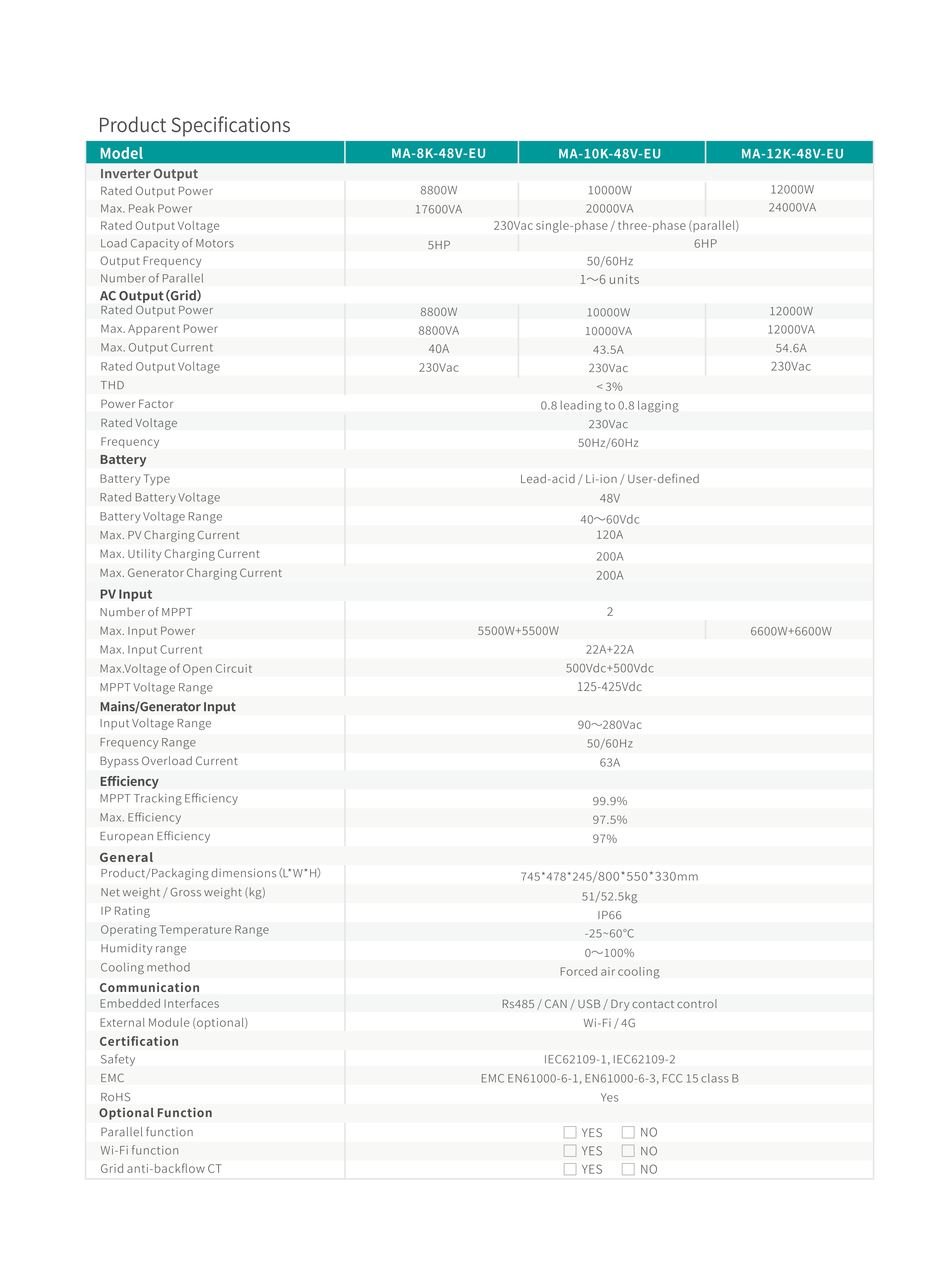
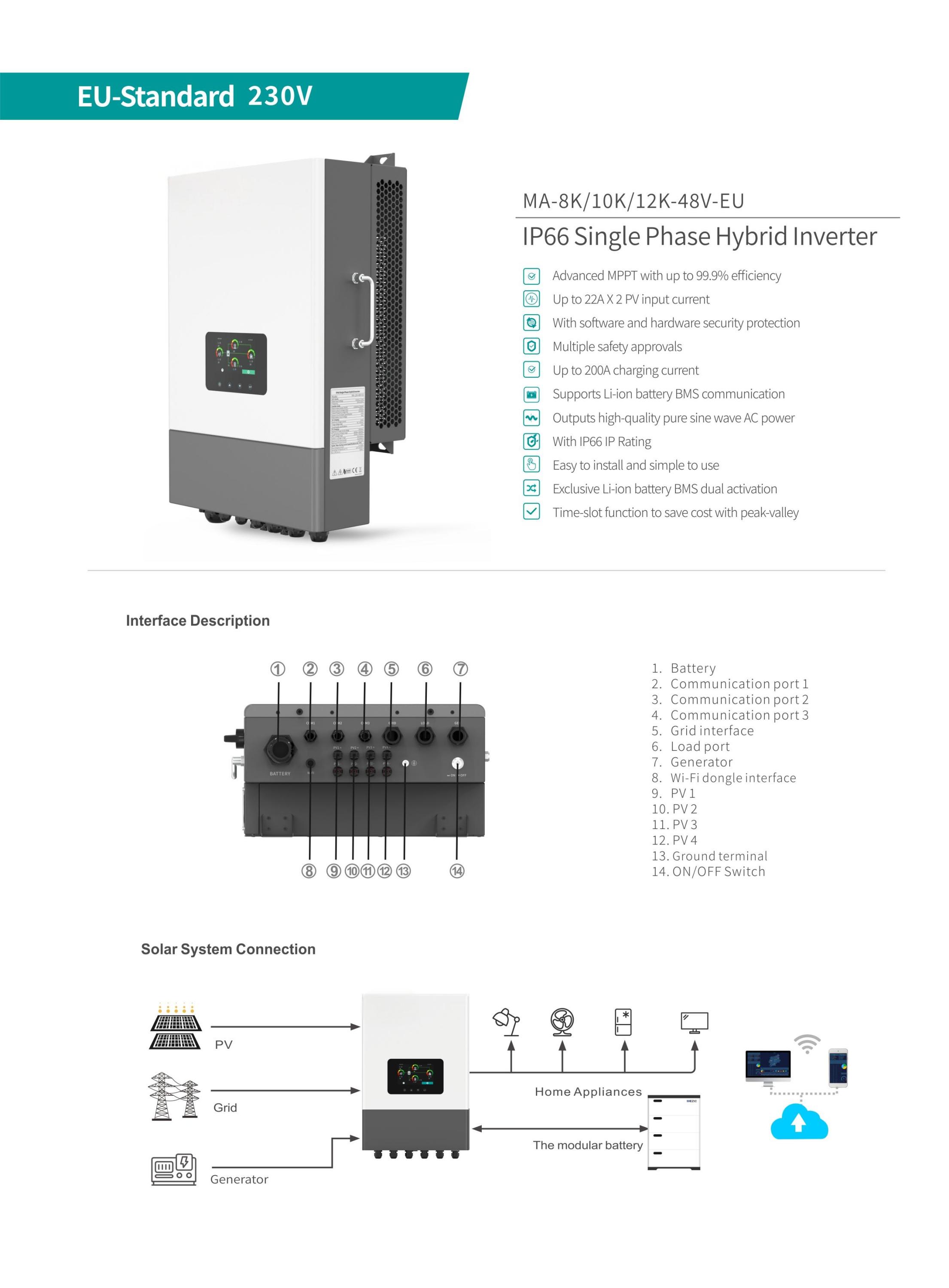
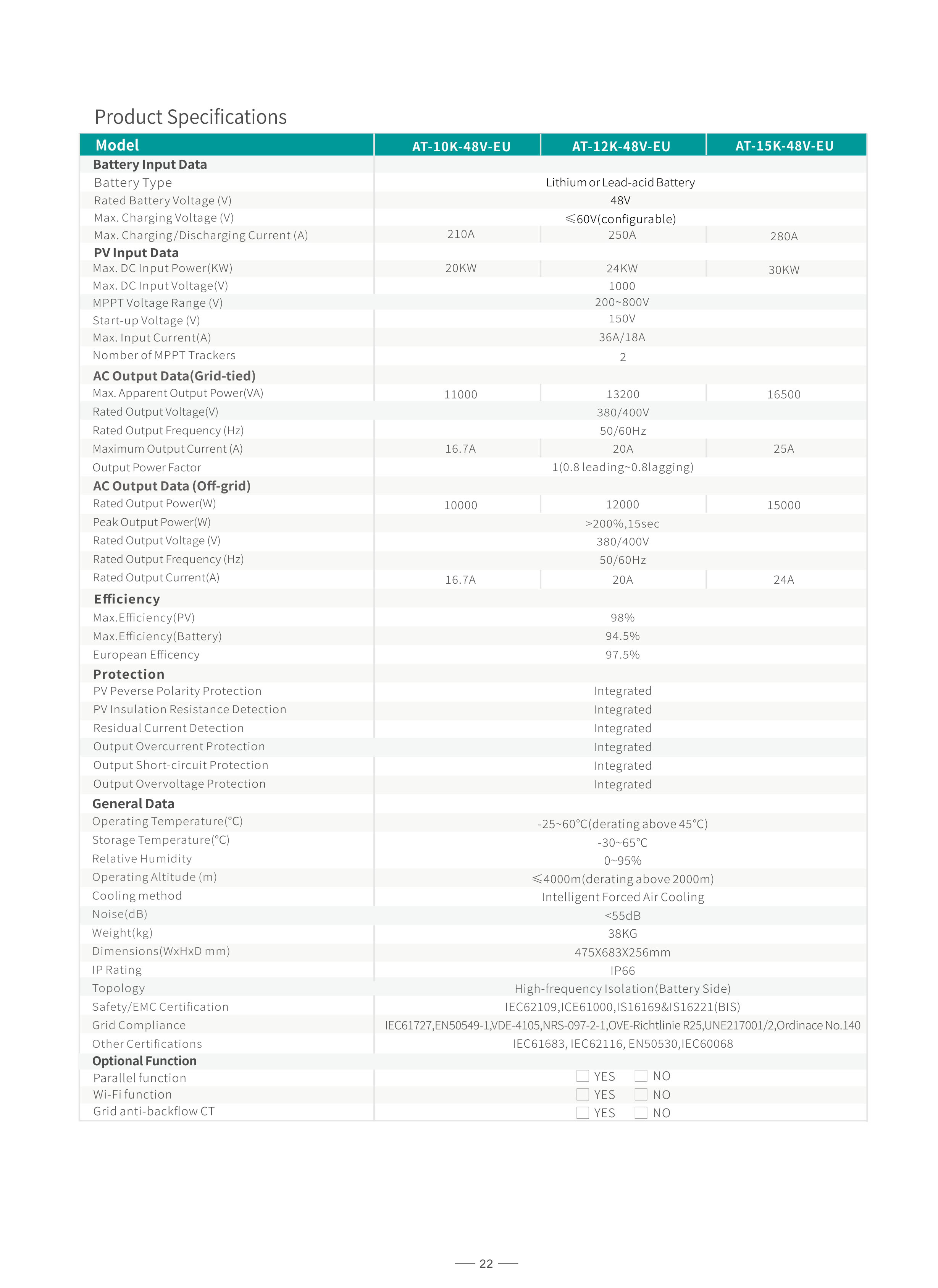
For the hybrid inverter category, the company lists the following models and specifications:
| Model Range | Input Power | Input Voltage | Output Voltage | Protection Degree | Rated Grid Frequency |
|---|---|---|---|---|---|
| Hybrid Inverter | 6 kW / 10 kW / 12 kW / 15 kW | 12 V / 24 V / 48 V | EU Standard 220 V~230 V / US Standard 110 V~120 V | IP21, IP55, IP65, IP66, IP67 | 50 Hz / 60 Hz |
The housing material is aluminium alloy, which supports durability in demanding environments. The listed IP ratings from IP21 to IP67 allow buyers to select a level appropriate for the installation location, ranging from indoor protected areas to outdoor roofs exposed to rain, dust, or coastal salt fog.
The product does not include a manufacturer-declared MPPT count in the provided dataset, so buyers requiring multiple MPPT channels should request a detailed datasheet during evaluation rather than assume the feature.
Supplier Capability Snapshot
| Capability Area | Details |
|---|---|
| Production Mode | OEM / ODM / SKD |
| Customization Options | WiFi, Battery, 4G/5G, IP rating, Power |
| Monthly Capacity | 100,000 sets |
| Lead Time | 30–45 days |
| Minimum Order Quantity | 2 PCS |
| Quality Control | 100% test |
| After-Sales Support | Replacement of accessories, extended warranty, remote installation services |
These figures come from the supplier's capability data and should be confirmed against current inventory or project-specific agreements before contracting.
Step-by-Step Breakdown: A Compliance and Parameter Audit Checklist
Step 1: Confirm CE and Grid-Specific Documentation
Ask for declaration of conformity referencing IEC 62109-1 and IEC 62109-2. The product range is labeled as EU-standard with 220–230 V output and 50 Hz frequency, but the buyer must still verify that the specific model and production batch carry the necessary test reports and local grid compliance documents.
Step 2: Match Power Rating to Load Profile
For a typical villa with high daytime PV generation and evening battery discharge, a 12 kW hybrid inverter paired with a 16 kWh battery storage system is one listed matching configuration. Larger commercial installations may require 10 kW or 15 kW units, depending on peak load and battery capacity.
Step 3: Check Input Voltage Compatibility
The hybrid inverter supports 12 V, 24 V, or 48 V input voltage. Ensure that the selected battery system's nominal voltage aligns with the inverter's configured input range. Mismatched voltage can prevent startup or damage the unit.
Step 4: Select the Appropriate IP Rating
Indoor installations may accept IP21 or IP55, while outdoor rooftop or coastal applications often require IP65, IP66, or IP67 to withstand rain, humidity, and dust. The listed range allows selection based on environment.
Step 5: Evaluate Customization and Supply Terms
Yeyanghong Energy supports OEM/ODM/SKD production, with customization for WiFi, battery configuration, 4G/5G connectivity, IP rating, and power level. The MOQ is 2 pieces, which is low enough for pilot orders, and lead time is 30–45 days. Buyers should clarify these terms during the evaluation phase.
Use Cases: Where the Hybrid Inverter Configuration Fits
The application data highlights scenarios such as villa rooftop solar PV systems, hospital backup areas, and emergency refuge spaces. In these settings, the matched equipment is a 12 kW inverter combined with a 16 kWh battery energy storage system. The operation mode includes automatic switching between solar charging, battery discharge, and grid complementary power supply, enabling 24-hour intelligent operation. The system supports reduction of grid electricity consumption by storing solar power during daytime and supplying household load at night.
The working conditions include outdoor rooftop installations across temperate, tropical, and subtropical climates, with large temperature differences, high humidity, thunderstorms, heavy rain, dust, and coastal salt fog erosion. This justifies specification of IP65 or higher protection and aluminium alloy housing.
Comparison Table: Hybrid Inverter Range at a Glance
The table below summarizes the core parameters that a procurement team should compare when evaluating the Yeyanghong Energy hybrid inverter range. It is not a competitor benchmark, as competitor-specific technical data are not provided in the verified dataset used for this article.
| Parameter | Available Options | Buyer Evaluation Point |
|---|---|---|
| Input Power | 6 kW / 10 kW / 12 kW / 15 kW | Match to peak load and battery size |
| Input Voltage | 12 V / 24 V / 48 V | Confirm battery bank compatibility |
| Output Voltage | 220–230 V (EU), 110–120 V (US) | Verify local grid standard |
| Protection Degree | IP21 to IP67 | Select based on indoor/outdoor environment |
| Rated Grid Frequency | 50 Hz / 60 Hz | Match utility frequency in target market |
| Enclosure Material | Aluminium alloy | Durability and corrosion resistance |
| Customization | WiFi, battery, 4G/5G, IP rating, power | Assess OEM/ODM fit |
FAQ
What certifications are required for CE-marked hybrid inverters in Europe?
Hybrid inverters for PV systems in Europe must comply with IEC 62109-1 for general safety and IEC 62109-2 for specific inverter safety to carry the CE marking. Buyers should request test reports and declarations of conformity referencing these standards.
Does Yeyanghong Energy offer hybrid inverters that meet EU voltage and frequency standards?
The hybrid inverter range lists EU-standard output voltage of 220 V to 230 V and rated grid frequency of 50 Hz, which align with typical European grid requirements. However, each shipment may require specific national grid compliance documentation, so this should be confirmed during procurement.
What hybrid inverter power options are available for evaluation?
The listed power ratings are 6 kW, 10 kW, 12 kW, and 15 kW. The input voltage options are 12 V, 24 V, and 48 V, and the unit supports both EU and US output standards depending on the model.
Can Yeyanghong Energy customize the hybrid inverter for specific projects?
Yes, customization options include WiFi, battery configuration, 4G/5G connectivity, IP rating, and power level. Production modes include OEM, ODM, and SKD, with a minimum order quantity of 2 pieces.
How can I obtain a sample, quote, or detailed datasheet for the hybrid inverter?
You can contact Yeyanghong Energy through its website at www.yeyanghong.com or download the company brochure for additional product information. The company also provides remote installation services and after-sales support including accessory replacement and extended warranty options.
Conclusion
Evaluating a hybrid inverter requires more than a quick look at the power rating. By auditing CE documentation, input and output voltage compatibility, IP rating, and supplier capability, buyers can reduce the risk of compliance failures and operational underperformance. Yeyanghong Energy's 6–15 kW hybrid inverter range provides a concrete reference point for this audit, with EU-standard voltage/frequency options, aluminium alloy construction, and flexible OEM/ODM terms. Procurement teams should use the checklist in this article to request the necessary documentation and confirm specifications before committing to a purchase.
Download the Yeyanghong Energy product brochure: Company Brochure (PDF)