Hybrid Inverter vs On-Grid vs Off-Grid: A Practical Comparison for 2025 Buyers
Hybrid Inverter vs On-Grid vs Off-Grid: A Practical Comparison for 2025 Buyers
Choosing between a hybrid inverter, an on-grid inverter, and an on/off-grid-capable inverter comes down to how the site uses electricity. A solar hybrid inverter combines solar charging, battery discharge, and grid-complementary operation in one system; an on-grid inverter sends solar power to the grid while offsetting daytime usage; an on/off-grid product gives installers more flexibility where backup operation matters. The comparison below is based on published specifications from Guangdong Yeyanghong Energy Technology Co.,Ltd. (Yeyanghong Energy), a manufacturer based in Foshan, Guangdong, whose main markets include the USA, EU, Southeast Asia, Middle East, Australia, Africa, and South/Central America.
Rather than comparing brand slogans, 2025 buyers should compare four documented inputs: power range, input/output voltage and frequency, protection degree, and the cycle life of any paired battery. These inputs are easier to put on a datasheet and easier to defend in an internal review.
The Real Decision: Grid Dependency, Storage, and Power Range
At a project level, the choice of inverter type affects electrical design before it affects price. The first question is not “which inverter is best”; the practical question is: what must the system do when the grid is present, when the grid is absent, and when batteries are charged?
- Does the site need to export solar power to the grid? If yes, an on-grid inverter is normally the main product family.
- Does the owner want night-time use of stored solar energy? If yes, hybrid or on/off-grid architecture with battery storage becomes relevant.
- Does the site need automatic backup during grid failure? If yes, the inverter should be able to switch among solar charging, battery discharge, and grid-complementary power.
- What AC output standard applies? Yeyanghong Energy product data separates EU Standard 220V-230V output from US Standard 110V-120V output.
- What protection degree is required? The product families list IP21, IP55, IP65, IP66, and IP67 options.
- Is storage capacity documented by cycle life? The paired wall-mounted and floor-standing battery models list 6000 or 8000 cycles at 90% Depth of Discharge.
Industry Background: Why the Solar Inverter Comparison Is More Than a Spec Sheet
Third-party research helps explain why the category is active and why “hybrid” means different things to different research houses. Grand View Research estimated the global solar hybrid inverter market at USD 10.7 billion in 2024. Precedence Research reported that on-grid hybrid inverters accounted for 59% of hybrid inverter revenue in 2024. On the supply side, Wood Mackenzie reported that China accounted for over 330 GW of global inverter shipments in 2024 and that Huawei and Sungrow together accounted for 55% of global shipments. S&P Global Commodity Insights ranked Growatt as the No.1 global residential PV inverter supplier and a Top 3 hybrid inverter supplier in 2024.
Estimates vary across research firms, but the common theme is that buyers need a classification framework rather than a one-line answer. This is especially true when the project brief says “solar inverter” without describing whether storage is included.
Detailed Solution: Comparing the Three Inverter Architectures
The following sections use Yeyanghong Energy product data to show what is actually listed for each family. Some suppliers call similar products “solar PV inverter”, “solar power inverter”, or “MPPT hybrid inverter”. Always match the product-specific datasheet.
Hybrid Inverter 6kW-15kW: One Unit for Solar, Battery, and Grid
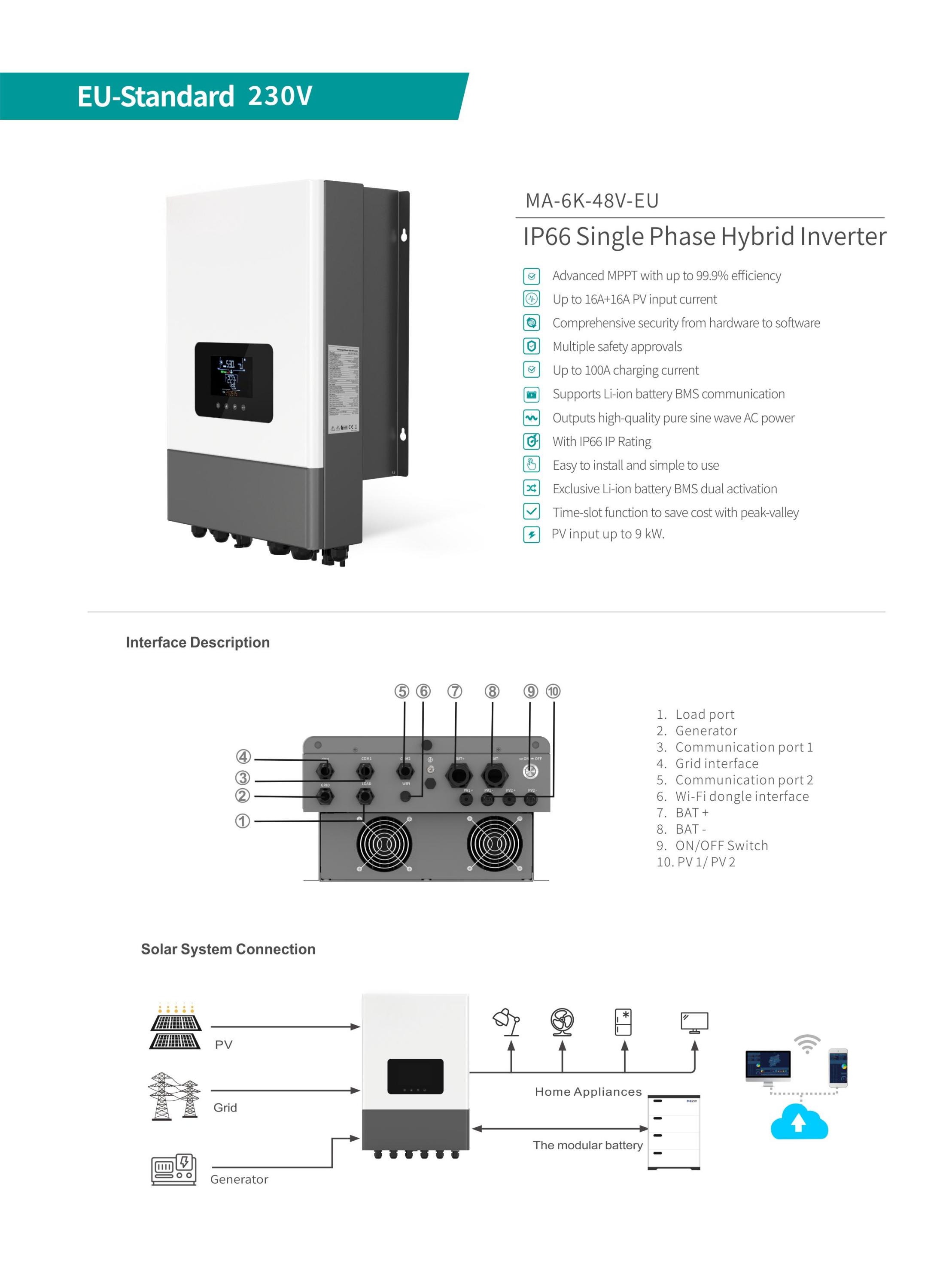
In the Yeyanghong Energy catalog, the hybrid inverter series is listed as Hybrid Inverter 6KW / 10KW / 12KW / 15KW. It covers 6kW, 10kW, 12kW, and 15kW AC power. The input voltage options are 12V, 24V, and 48V; output can be EU Standard 220V-230V or US Standard 110V-120V; grid frequency can be 50Hz or 60Hz; available protection degrees are IP21, IP55, IP65, IP66, and IP67.
Application material for this class of product references villa roof solar PV systems and hospital projects, plus escape and refuge area projects. The described operating mode is automatic: solar charging, battery discharge, and grid-complementary supply switch in a 24-hour intelligent operation. The stated role is to save electricity bills by storing solar power during the day and supplying household loads at night.
On-Grid Inverter 2kW-320kW: The Direct Feed-In Family
An on-grid solar inverter is normally specified for PV systems tied to the public electricity network. Yeyanghong Energy’s on-grid product family covers 2KW, 3KW, 4KW, 6.2KW, 12KW, 36KW, 40KW, 50KW, 60KW, 70KW, 80KW, 90KW, 100KW, 110KW, 120KW, 225KW, and 320KW. Input voltage options are 12V, 24V, and 48V; output can be EU Standard 220V-230V or US Standard 110V-120V; rated grid frequency can be 50Hz or 60Hz; protection degree is listed as IP21, IP55, IP65, IP66, or IP67.
For buyers searching with terms like “solar inverter”, “solar PV inverter”, or “on grid inverter”, this family is the direct grid-tied reference. The power range is broad enough for small residential systems and large commercial/industrial PV projects.
On & Off Grid Inverter: Flexible Grid and Backup Operation
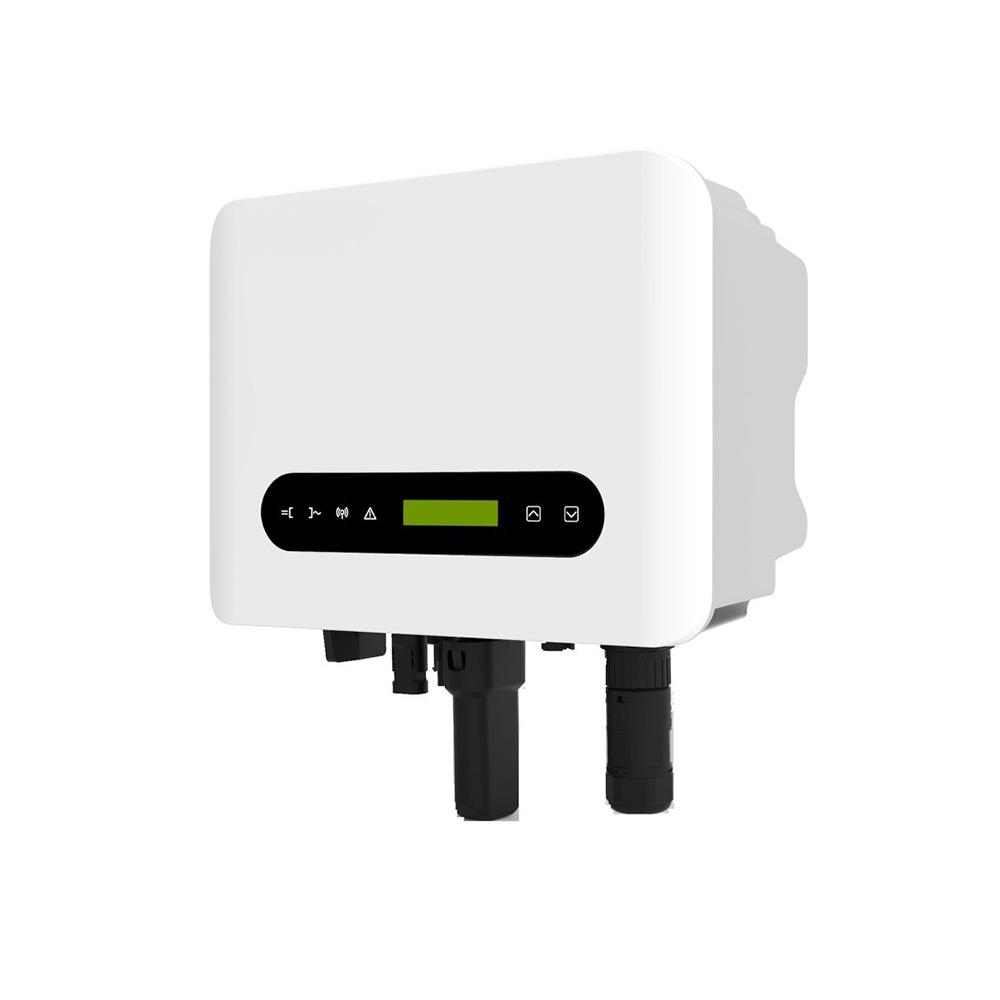
Yeyanghong Energy lists two regional versions of the on & off grid inverter family. The EU-Standard version is available in 1.2KW, 2.2KW, 4.2KW, 6.2KW, and 12KW, with EU Standard 220V-230V output and 50Hz rated grid frequency. The US-Standard version is available in 3.6KW, 6.5KW, 7.2KW, and 12KW, with US Standard 110V-120V output and 60Hz rated grid frequency. Both families list 12V / 24V / 48V input voltage and IP21-IP67 protection options.
For a buyer who searches for “off grid inverter” or “on & off grid inverter”, this category matters because the inverter is designed for grid-connected and off-grid-type flexibility in one product family. It is worth comparing against a hybrid inverter whenever battery sizing is included in the project scope.

Micro Inverter 800W-2000W: A Module-Level Option
The same manufacturer also lists a micro-inverter series: Micro-Inverter 800W / 1000W / 2000W, with EU Standard 220V-230V output, 50Hz grid frequency, and IP21-IP67 protection. Micro-inverters are generally used where module-level power conversion is preferred, especially on small rooftop systems. They are not the main hybrid/on-grid/off-grid decision, but they appear in the same solar inverter search path.
Step-by-Step: How to Compare Solar Inverters for Your Project
The following six steps turn the hybrid vs on-grid vs off-grid question into a manageable comparison checklist.
Step 1: Confirm the grid standard and grid frequency. Product data is divided into EU Standard 220V-230V / 50Hz and US Standard 110V-120V / 60Hz. A hybrid inverter with 50/60Hz capability can support both regions, but the local configuration must still be confirmed with the manufacturer.
Step 2: Determine the AC power band. For grid-tied residential projects, Yeyanghong’s on-grid range begins at 2kW. For projects that require backup and storage, the hybrid range spans 6kW to 15kW. For grid-tied commercial systems, the on-grid family extends to 36kW, 40kW, 50kW, 60kW, 70kW, 80kW, 90kW, 100kW, 110kW, 120kW, 225kW, and 320kW.
Step 3: Decide whether battery storage is in the project scope. Storage is the main reason a buyer chooses a hybrid inverter instead of a simpler on-grid inverter. When storage is included, compare cycle life, depth of discharge, warranty, and IP rating of the battery in addition to the inverter.
Step 4: Compare protection degree for the installation environment. The Yeyanghong Energy specifications list IP21, IP55, IP65, IP66, and IP67. For outdoor rooftop installations exposed to humidity, heavy rain, dust, or coastal salt fog, a higher protection class is usually specified.
Step 5: Check regional compliance requirements. For CE marking in Europe, hybrid inverters for PV systems must comply with IEC 62109-1 for general safety and IEC 62109-2 for inverter-specific safety. For North American grid connection, UL 1741 including Supplement SB is the required safety standard. Buyers should request certificates for the exact model and output configuration.
Step 6: Review supplier capability before procurement. Yeyanghong Energy lists OEM / ODM / SKD production modes, a monthly capacity of 100,000 sets, lead time of 30-45 days, 2 PCS minimum order quantity, and 100% test quality control. After-sales options include replacement of accessories, extended warranty, and remote installation services.
Use-Case Fit: Which Inverter Family for Which Site?
- Villa or rooftop solar PV with high evening electricity use: A hybrid inverter with battery storage is the practical match. The application profile stores solar power during the day and supplies household load at night.
- Hospital or refuge-area installation with safety-critical power needs: Application material references this class of solar power inverter for hospital and escape/refuge area projects, with overcharge, over-discharge, and short-circuit multi-protection.
- Commercial rooftop or industrial grid-tied project: The high-power on-grid inverter family from 36kW to 320kW is the relevant reference for larger systems that export solar power to the grid during operation.
- Remote or backup-oriented installation: The on & off grid inverter family is positioned for installers who need EU or US voltage options plus grid/off-grid flexibility in one product range.
- Small distributed residential rooftop: The 800W-2000W micro-inverter series gives a module-level option for projects that do not require a central string inverter.
Comparison Table: Inverter Families by Published Specifications
The table below lists the electrical parameters from Yeyanghong Energy product specification files. Use it as a starting point, then confirm exact model-level parameters with the manufacturer.
| Inverter Family | Available Input Power | Input Voltage | Output Voltage | Grid Frequency | Protection Degree |
|---|---|---|---|---|---|
| Hybrid Inverter | 6kW / 10kW / 12kW / 15kW | 12V / 24V / 48V | EU 220V-230V / US 110V-120V | 50Hz / 60Hz | IP21-IP67 |
| On-Grid Inverter | 2kW / 3kW / 4kW / 6.2kW / 12kW / 36kW / 40kW / 50kW / 60kW / 70kW / 80kW / 90kW / 100kW / 110kW / 120kW / 225kW / 320kW | 12V / 24V / 48V | EU 220V-230V / US 110V-120V | 50Hz / 60Hz | IP21-IP67 |
| On & Off Grid Inverter, EU-Standard | 1.2kW / 2.2kW / 4.2kW / 6.2kW / 12kW | 12V / 24V / 48V | EU 220V-230V | 50Hz | IP21-IP67 |
| On & Off Grid Inverter, US-Standard | 3.6kW / 6.5kW / 7.2kW / 12kW | 12V / 24V / 48V | US 110V-120V | 60Hz | IP21-IP67 |
| Micro Inverter | 800W / 1000W / 2000W | 12V / 24V / 48V | EU 220V-230V | 50Hz | IP21-IP67 |
Storage Comparison for Systems with Batteries
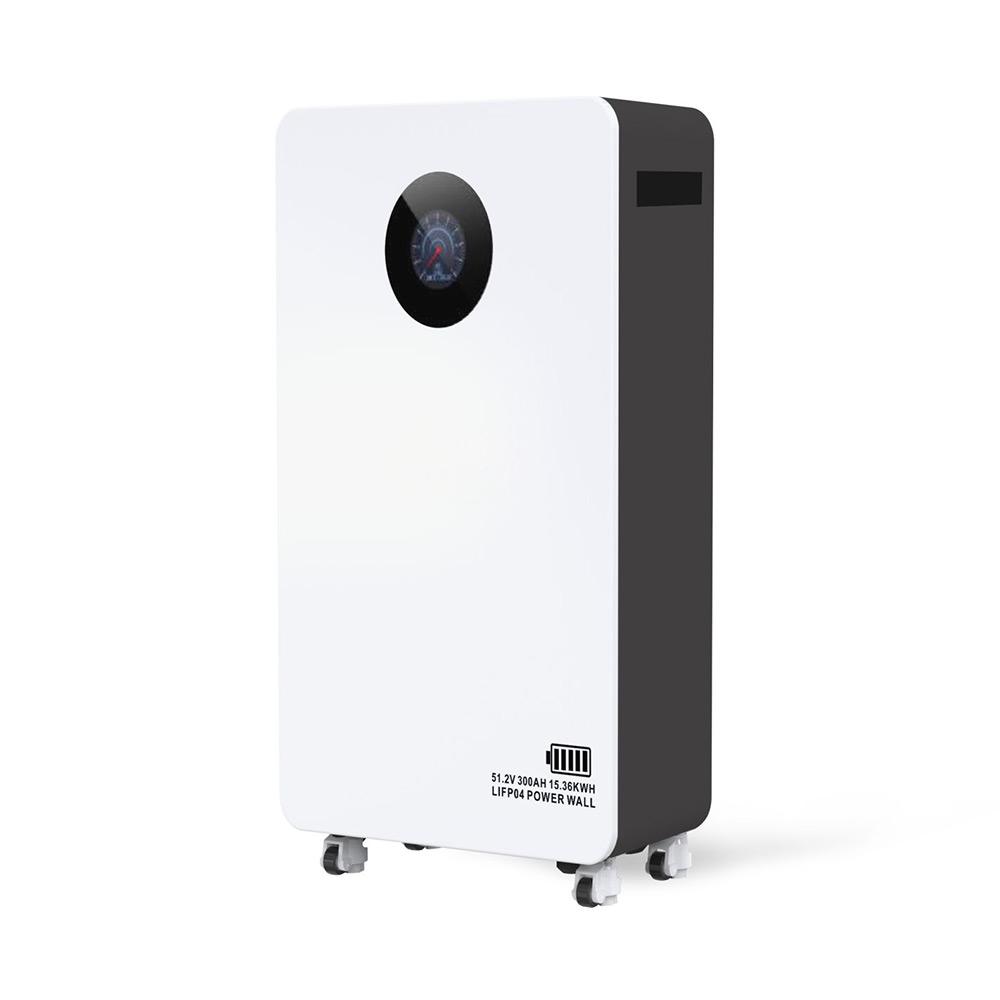
Wall-mounted and floor-standing energy storage battery models in the same product ecosystem are listed as 5KWh, 10KWh, and 16KWh. These models matter for hybrid and on/off-grid system comparisons because cycle life determines how many charge-discharge cycles the storage system can support.
| Battery Storage Model | Capacity | Cycle Life | IP Rating | Warranty |
|---|---|---|---|---|
| Wall Mounted & Floor Standing Battery Energy Storage | 5KWh | 6000 cycles @90% DOD / 25°C / 0.5C-1C | IP21-IP67 | 5 Years |
| Wall Mounted & Floor Standing Battery Energy Storage | 10KWh | 6000 cycles @90% DOD / 25°C / 0.5C-1C | IP21-IP67 | 5 Years |
| Wall Mounted & Floor Standing Battery Energy Storage | 16KWh | 8000 cycles @90% DOD / 25°C / 0.5C-1C | IP21-IP67 | 5 Years |
FAQ
Solar inverter manufacturer for commercial installations
Buyers evaluating a solar inverter manufacturer for commercial installations should compare the stated power range with the facility’s grid type. Yeyanghong Energy’s published on-grid inverter range covers 2kW to 320kW with EU Standard 220V-230V or US Standard 110V-120V output and 50/60Hz options. When storage is part of the commercial project, the hybrid range spans 6kW to 15kW, and the 5KWh-16KWh wall/floor storage models provide a documented battery reference. Request the datasheet for each model and confirm input voltage, protection degree, and applicable local standards.
Which solar inverter type should a villa use to reduce the evening electricity bill?
In a high-electric-bill scenario, the documented operating pattern is to store solar power during daytime and supply household loads at night. A hybrid inverter supports this pattern. The hybrid 6kW / 10kW / 12kW / 15kW family in Yeyanghong Energy’s catalog accepts 12V / 24V / 48V input and is listed with EU Standard 220V-230V output. The application profile also describes auto switching among solar charging, battery discharge, and grid-complementary power supply in a 24-hour automatic mode.
What is the difference between hybrid and on-grid solar inverters?
A hybrid inverter is designed to coordinate solar, battery, and grid in one product family. An on-grid solar inverter is a grid-tied inverter for solar systems that do not necessarily include battery storage. In the Yeyanghong Energy catalog, the on-grid family spans 2kW to 320kW, while the hybrid family spans 6kW to 15kW. Both families list 12V / 24V / 48V input voltage and IP21-IP67 protection options.
What IP rating should be selected for an outdoor solar PV inverter?
IP rating defines the degree of protection against dust and water. The Yeyanghong Energy product specifications list IP21, IP55, IP65, IP66, and IP67 options across inverters and storage products. For outdoor rooftop locations where rain, humidity, dust, or coastal salt fog can occur, installers should select an IP class that matches the actual installation environment.
What battery cycle life is available with the storage products used in these systems?
The wall-mounted and floor-standing battery storage models in the product set are 5KWh, 10KWh, and 16KWh. The 5KWh and 10KWh units list 6000 cycles at 90% DOD, 25°C, and 0.5C-1C charge/discharge conditions; the 16KWh unit lists 8000 cycles under the same conditions. The listed warranty for these storage models is 5 years.
Final Suggestion: Start with Requirements, Not with Defaults
The correct solar inverter type is easier to identify after the grid, load, and storage decision is locked down. For straightforward grid export, the on-grid inverter range is the practical choice. For night-time storage and bill management, the hybrid 6kW-15kW range is the more relevant product family. For backup-oriented or mixed grid/off-grid projects, the EU and US on & off grid inverter ranges provide another verified set of specifications.
The 2025 buyer should retain the same discipline after choosing a supplier: compare published protection degrees, verify frequency and voltage, and calculate storage life using cycle data rather than assumptions.
Talk to Yeyanghong Energy About Your Inverter Selection
Yeyanghong Energy supplies on-grid inverters, hybrid inverters, on & off grid inverters, micro-inverters, and energy storage products. For a project-level specification review, OEM/ODM inquiry, sample request, or quote, contact the team directly.
Email: admin@yeyanghong.com
WhatsApp: +86-18042878526