
When the Grid Goes Down at Night: Solving Home Backup with a Hybrid Inverter + Stacked Storage
Guangdong Yeyanghong Energy Technology Co., Ltd. — trading as Yeyanghong Energy — is a Chinese manufacturer of on-grid inverters, off-grid inverters, micro inverters, all-in-one energy storage systems, BESS, stacked home energy storage systems, wall-mounted and floor-standing batteries, and PCBA. The company exports to the USA, EU, Middle East, Southeast Asia, Africa, and Central and South America.
Hybrid InverterSolar Hybrid InverterStacked Home StorageNight BackupLiFePO4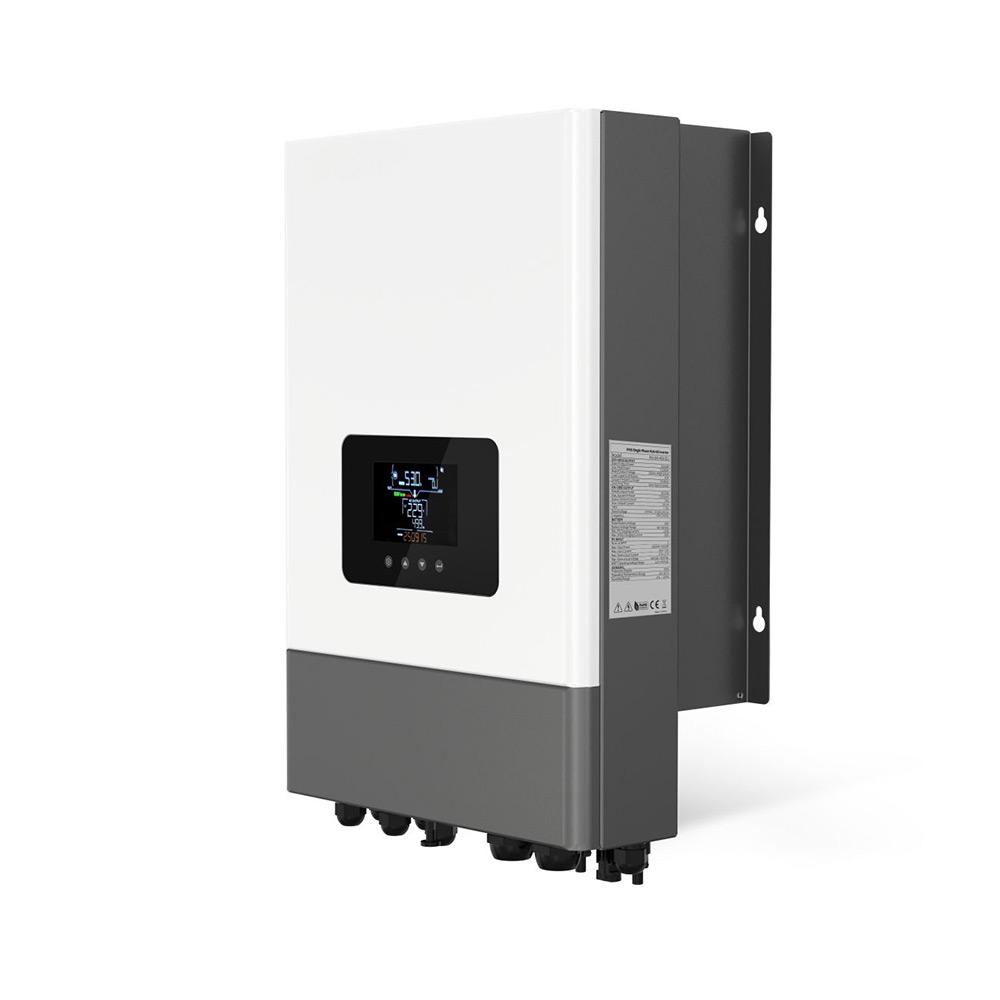
Problem Definition: Why a Night Outage Breaks More Systems Than a Daytime One
A daytime outage is partly masked. PV arrays keep producing, the battery is recharged while the sun is up, and the house never truly leaves the inverter's control. The same event at night is a different test, because the storage system becomes the only source of energy and its usable capacity is whatever the evening left behind.
Across field installations, night failures cluster into three groups.
- Energy shortfall. The battery was sized against a total daily consumption figure rather than against the load profile between evening and morning, so it empties before sunrise.
- Load priority errors. Non-essential circuits — water heating, auxiliary sockets, large resistive loads — were left on the backup bus and drained the reserve within the first hour.
- Hardware limits. Protection ratings, temperature windows and charge-control behaviour were never checked against the installation site, so the system protects itself and stops, which the homeowner experiences as a second outage.
The risk profile of a grid-interactive inverter is well documented and is not limited to energy shortage. Relevant fault classes include grid reverse current, overheating, overvoltage, battery reverse connection, overload, short circuit and low-temperature shutdown. For night operation the last two matter most: a cold-weather charge attempt or a short circuit on a backup circuit will interrupt the supply exactly when the household has no alternative.
Industry Background: A Larger, More Storage-Coupled Inverter Market
Hybrid inverter demand is now closely coupled to storage adoption rather than to solar adoption alone. Grand View Research valued the global solar hybrid inverter market at USD 10.7 billion in 2024. The same source reports that three-phase hybrid inverters held a 61.3% revenue share in 2024, and that North America accounted for a 42.9% revenue share in the same year.
The three-phase share figure is a useful signal for anyone designing backup systems: a meaningful part of the market is moving toward commercial-scale and larger residential configurations, where the inverter is expected to manage several protected circuits rather than a single lighting loop. European buyers work to a different grid and regulatory baseline than North American buyers, which is why the EU-standard product family is usually specified separately.
Compliance is layered, and the layers are not interchangeable:
- IEC 62109-2:2011 specifies particular safety requirements relevant to DC-to-AC inverter products and products that perform inverter functions in addition to other functions, where the inverter is intended for use in photovoltaic power systems.
- IEC TS 62257-9-7:2019 sets out criteria for selecting and sizing inverters suitable for different off-grid applications integrating solar as an energy source. The IEC page indicates this publication has been replaced, so current applicability should be confirmed against official IEC records before it is used in a compliance claim.
- IEC TS 62257-301:2025 addresses the design and implementation of hybrid off-grid solar systems, where solar energy supplies a load in conjunction with other sources, with or without an energy storage system.
- HS 8504.40.84 is the trade classification used for inverters with MPPT functionality, which matters for duty planning rather than for technical qualification.
The practical implication is that a supplier's compliance package should be checked against the destination market and the real system architecture — not accepted as a general statement of IEC compliance.
The Solution: EU Hybrid Inverter plus Stacked Storage, or an All-in-One BESS
The architecture that resolves the night-outage problem has two parts: an inverter that can operate in backup mode with a defined output window, and a storage block sized for the night window rather than for a daily average. Yeyanghong Energy supplies both parts, either as separate components or pre-integrated.
The inverter: 6, 10, 12 and 15 kW EU models
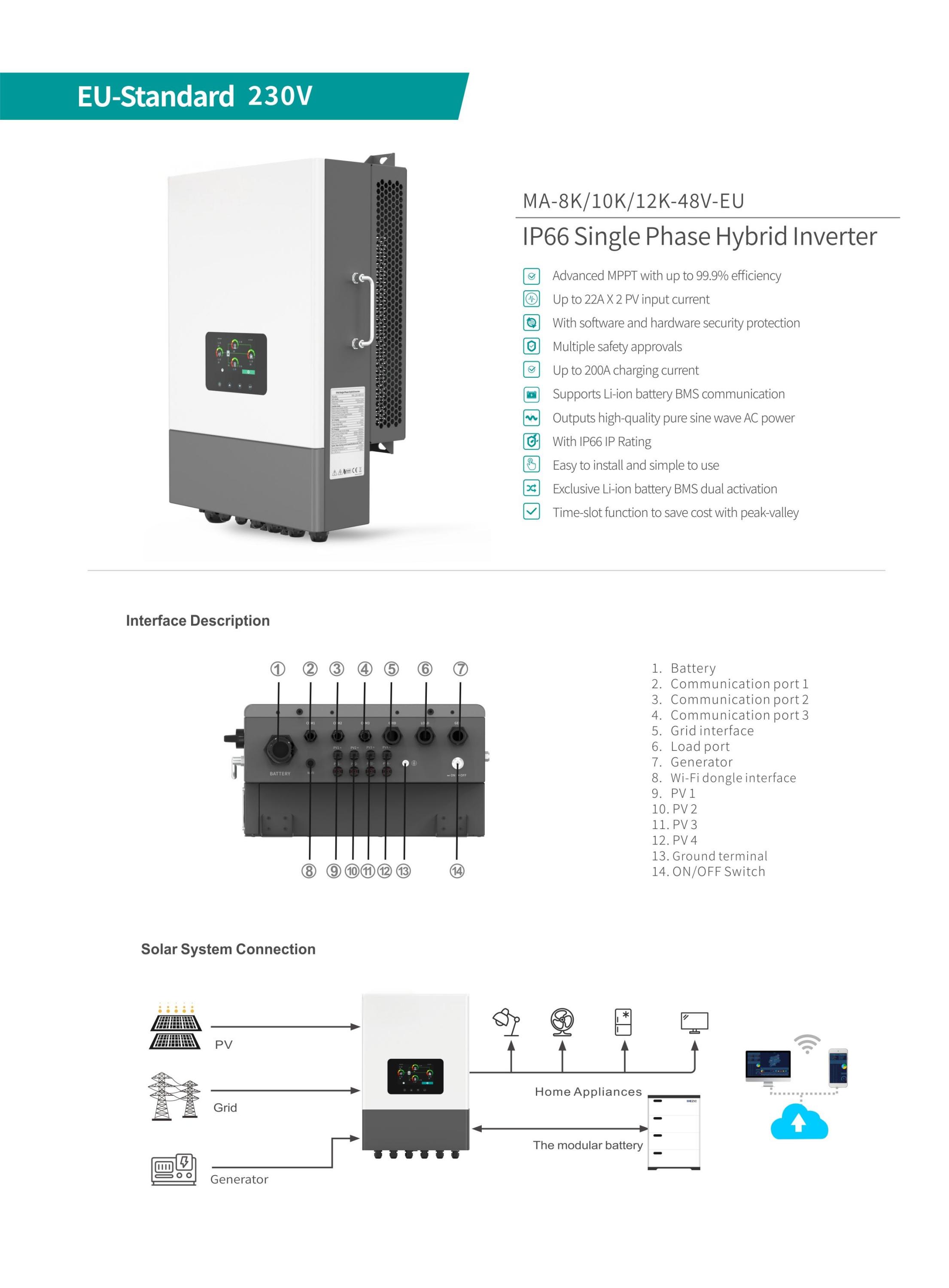
The EU-standard hybrid inverter family covers a 6 kW single-phase model and 10, 12 and 15 kW three-phase models. Output voltage is specified across a 180–270 V AC window on the EU range, charging is specified from 0 °C to 55 °C, and protection ratings across the family run from IP21 to IP67 depending on model and configuration. For buyers, the IP spread is not a technicality: the same inverter installed in a ventilated utility room and in an exposed outdoor cabinet faces different ingress conditions, and the rating has to be matched to the location rather than to the catalogue page.
Customization is available on WIFI, battery, 4G/5G, IP rating and power, and the factory provides OEM, ODM and SKD production services for buyers building their own product line.
The storage: stacked 10 kWh and 16 kWh, plus all-in-one BESS
Two storage formats are available for backup duty. The stacked home energy storage system is built from LiFePO4 cells in an aluminium alloy construction and is supplied in 10 kWh and 16 kWh options, with cycle life stated at 90% depth of discharge and a 5-year warranty. The stacked format is expandable: capacity grows by adding modules rather than by replacing the cabinet, which suits projects where the backup load is expected to increase.
The all-in-one BESS removes separate battery wiring. MF-5K+10KWh pairs a 5 kW inverter with 10 kWh of storage, and MF-6.2K+10KWh pairs a 6.2 kW inverter with the same 10 kWh capacity. Both are LiFePO4-based and carry the same 5-year warranty term as the stacked options. The difference between them is inverter power, not stored energy — a distinction that decides whether simultaneous peak loads can be carried, but not how long the house stays lit.
Hardware behaviour that decides whether the night actually works
Specifications on a datasheet do not by themselves produce a working night. The controls that matter are the ones acting during the event:
- 360° full circuit protection with anti-backflow CT interlock, so that reverse current cannot flow toward a dead grid.
- Segmented charge and discharge control with dual closed-loop voltage and current regulation, which keeps the discharge curve stable as the load changes.
- Variable-speed fan thermal control supported by multi-point temperature sensors, so the unit derates predictably instead of tripping.
- Real-time fault code monitoring and a clear fault code display, which shortens diagnosis when the homeowner reports a problem by phone.
- Factory full-load aging test plus 100% testing before dispatch, the last verifiable checkpoint before the unit leaves the building.
Step-by-Step: Designing a Night Backup Configuration
The sequence below is the order in which a night-backup system should be specified. Reversing the first two steps is the most common cause of an oversized inverter paired with an undersized battery.
Step 1 — Build the night essential-load list
List only the loads that must run between evening and morning: lighting circuits, refrigerator, communications and router, medical equipment, security system, and any heating control electronics. Record the running watts and the expected run-hours for each. Resistive loads such as water heating and space heating should be excluded unless the storage budget explicitly covers them.
Step 2 — Convert the list into a night energy budget in kWh
Multiply each load's running watts by its run-hours, sum the results, and divide by 1,000 to obtain kilowatt-hours. Add a margin for inverter conversion losses and for the reserve you want to keep in the battery at sunrise. This figure — not the inverter rating — is what selects the storage block.
Step 3 — Choose between stacked 10 kWh and 16 kWh storage
Compare the night energy budget against the two available capacities. The 10 kWh option fits households with a modest night list; the 16 kWh option is intended for larger night loads or for households that want headroom for future loads. In both cases cycle life is stated at 90% depth of discharge, so the comparison should be made on usable energy at that depth rather than on nameplate capacity alone.
Step 4 — Match inverter power to the simultaneous peak
Add the running watts of the loads that start at the same time — typically the refrigerator compressor together with lighting and electronics — and compare it with the inverter rating. The 6 kW single-phase unit covers most apartment and small-house backup buses; the 10, 12 and 15 kW three-phase units suit larger houses and small commercial sites with three-phase distribution. Where an all-in-one format is preferred, the choice between MF-5K+10KWh and MF-6.2K+10KWh is decided here, at the power stage.
Step 5 — Match the environmental envelope to the installation site
Charging is specified from 0 °C to 55 °C. A battery installed in an unheated outbuilding in a cold climate will therefore fall outside the charge window during part of the year, and that constraint belongs in the design, not in the warranty discussion afterwards. On the ingress side, select within the IP21–IP67 protection range according to whether the unit sits in a dry internal room, a semi-exposed garage or an outdoor cabinet.
Step 6 — Confirm the control and protection behaviour
Verify that anti-backflow protection is active and interlocked, that segmented charge and discharge control is configured for the installed chemistry, and that the fault code display is visible at the mounting position. Ask for the factory test record; the manufacturer performs 100% testing, and the aging test result is the document that shows the unit was exercised at load before shipment.
Step 7 — Plan the service path before commissioning
A night-backup system is judged over its warranty period, not on installation day. Yeyanghong Energy supports after-sales with replacement of accessories, extended warranty and remote installation services. Typical production lead time is 30 to 45 days, so the reorder point for a spare unit should be set at commissioning rather than after the first failure.
Use Cases: Four Night-Backup Scenarios
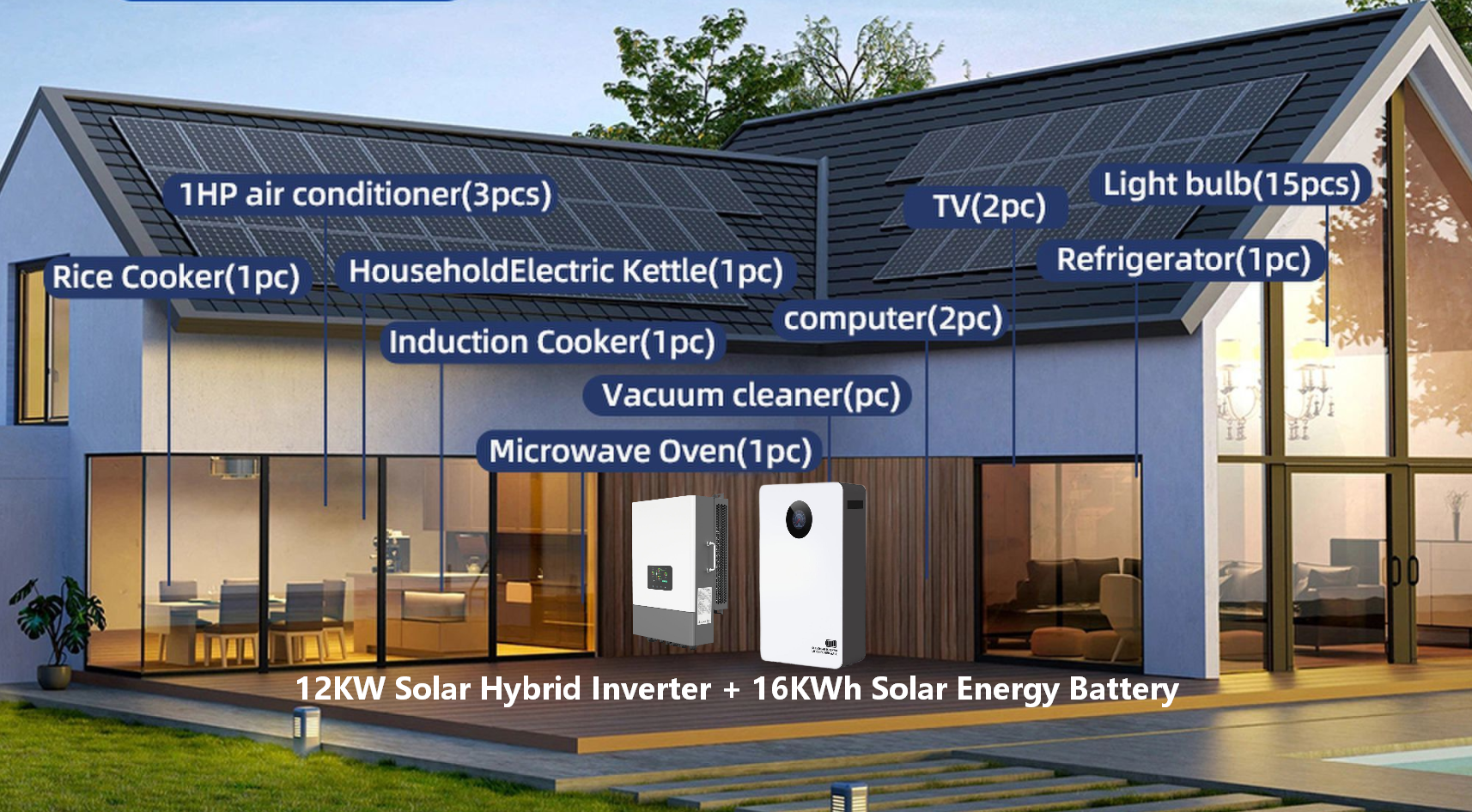
Urban apartment with a single-phase supply
A 6 kW single-phase EU hybrid inverter with 10 kWh of stacked storage. The protected bus covers lighting, router, refrigerator and a communications charger. The design point is that loads are moved onto the backup bus deliberately rather than by leaving the whole distribution board connected.
Detached house with three-phase distribution
A 10 or 12 kW three-phase unit with 16 kWh of stacked storage, where the night list includes circulation pumps and control electronics in addition to standard household circuits. Three-phase output keeps the backup bus balanced and avoids rewiring the distribution board for a single-phase feed.
Small commercial or mixed-use building
A 15 kW three-phase unit with stacked storage sized to carry refrigeration, point-of-sale terminals and emergency lighting. The night window is shorter than in a dwelling because the building closes, so the energy budget is often dominated by refrigeration rather than by occupancy.
Plug-in retrofit with no space for separate battery wiring
An all-in-one BESS — MF-5K+10KWh or MF-6.2K+10KWh — where the installation has to fit into a defined cabinet space and the installer wants a single pre-integrated unit rather than an inverter plus a separate battery stack.
Comparison: Night-Backup Configurations Side by Side
The table compares the four configurations on the attributes that are specified for each. It does not assign a ranking, because the correct choice depends on the night energy budget and the distribution type of the building.
| Configuration | Inverter rated power | Storage capacity | Form factor | Warranty | Cycle-life basis |
|---|---|---|---|---|---|
| EU Hybrid Inverter + stacked storage (entry) | 6 kW, single-phase | 10 kWh | Separate inverter and stacked modules | 5 years | Stated at 90% DOD |
| EU Hybrid Inverter + stacked storage (extended) | 10 / 12 / 15 kW, three-phase | 16 kWh | Separate inverter and stacked modules | 5 years | Stated at 90% DOD |
| MF-5K+10KWh | 5 kW | 10 kWh | All-in-one BESS | 5 years | Stated at 90% DOD |
| MF-6.2K+10KWh | 6.2 kW | 10 kWh | All-in-one BESS | 5 years | Stated at 90% DOD |
Range-level specifications apply across the family rather than per configuration: LiFePO4 cells and aluminium alloy construction on the storage side, an AC output window of 180–270 V on the EU inverter range, charging specified from 0 °C to 55 °C, and protection ratings from IP21 to IP67 depending on model and configuration.
Frequently Asked Questions
Which standards apply to a hybrid inverter and stacked storage installation?
Three layers apply and they are not interchangeable. IEC 62109-2:2011 sets out particular safety requirements for inverter products used in photovoltaic power systems, including products that perform inverter functions in addition to other functions. IEC TS 62257-9-7:2019 addresses the criteria for selecting and sizing inverters for off-grid applications integrating solar; the IEC page indicates this publication has been replaced, so current applicability should be confirmed against official IEC records. IEC TS 62257-301:2025 covers the design and implementation of hybrid off-grid solar systems with or without energy storage. For trade purposes, inverters with MPPT functionality fall under HS 8504.40.84. A supplier's compliance package should be checked against the destination market and the actual system architecture, not against a generic statement of IEC compliance.
Can a hybrid inverter carry essential loads through a full night with no PV input?
Yes, provided the storage was sized for the night window and the protected circuit was defined in advance. With no PV input the battery is the only source, so the backup bus must be limited to the loads included in the energy budget. On the EU range, output voltage is specified across a 180–270 V AC window and charging is specified from 0 °C to 55 °C, which defines when the battery can be recharged after the event. Loads excluded from the budget should be treated as grid-dependent and left off the backup circuit.
How do I size storage for overnight backup without oversizing?
Work from energy rather than from inverter power. Multiply each essential load by the hours it runs during the night, sum the results, and add a margin for conversion losses and for the reserve you want to hold at sunrise. Yeyanghong Energy supplies stacked storage in 10 kWh and 16 kWh options, with cycle life stated at 90% DOD and a 5-year warranty, so the choice between the two should follow the night energy budget. Where the load is modest and cabinet space is fixed, an all-in-one BESS such as MF-5K+10KWh or MF-6.2K+10KWh removes the separate battery wiring.
Can I validate a unit before committing to a full order?
Yes. The minimum order quantity is 2 pieces, so a single unit plus a spare can be ordered for evaluation without a container-level commitment. Typical production lead time is 30 to 45 days against a monthly production capacity of 100,000 sets. Delivery terms are EXW, FOB, CIF or LC; acceptance is based on pre-shipment test; payment terms are 30/70. Every unit is covered by 100% testing before dispatch.
How do I select a long-term hybrid inverter supply partner in China?
Screen on four criteria: a product range covering the power classes you actually sell, storage options that match local backup expectations, documented protection and temperature specifications, and a service path that outlasts the warranty period. Yeyanghong Energy exports to the USA, EU, Middle East, Southeast Asia, Africa, and Central and South America, provides OEM, ODM and SKD production services, and offers customization of WIFI, battery, 4G/5G, IP rating and power. After-sales support includes replacement of accessories, extended warranty and remote installation. A typical 30 to 45 day lead time sets the distributor's reorder rhythm rather than a one-off delivery plan.
Conclusion: Design for the Night, Not for the Datasheet
A night outage is resolved long before it happens — in the load list, the energy budget and the environmental check. The 6/10/12/15 kW EU hybrid inverter range paired with stacked 10 kWh or 16 kWh storage, or an all-in-one BESS such as MF-5K+10KWh and MF-6.2K+10KWh, gives installers a consistent set of building blocks. LiFePO4 cells and aluminium alloy construction define the storage hardware; the 180–270 V output window, the 0–55 °C charging range and IP21–IP67 protection define where and how it can be deployed; the 5-year warranty and the cycle life stated at 90% DOD define what can be promised to the homeowner.
Next Step: Specification and Sample Support
For distributors and installers building a night-backup offer, the practical starting point is a sample unit against a defined load list. Minimum order quantity is 2 pieces, typical production lead time is 30 to 45 days, and delivery can be arranged on EXW, FOB, CIF or LC terms with pre-shipment testing and 30/70 payment.
Full specifications and product photography are in the Yeyanghong Energy product brochure (PDF). Technical questions and sample requests can be sent through www.yeyanghong.com, by email to admin@yeyanghong.com, or by phone and WhatsApp on +86-18042878526.
Have Questions or Need More Details?
Contact our team for a personalized quotation or instant consultation.
Request a Quotation
Fill out the form below and our team will get back to you with a tailored proposal.
WhatsApp Direct Chat
Prefer to chat in real-time? Message us on WhatsApp for instant assistance & quick answers.
- Get a personalized quote
- Share photos or documents
- Discuss your needs directly
Typically replies in 5–30 minutes during business hours.