Factory vs. Trading Company for Custom Cheerleading Uniforms: A Comparison Guide
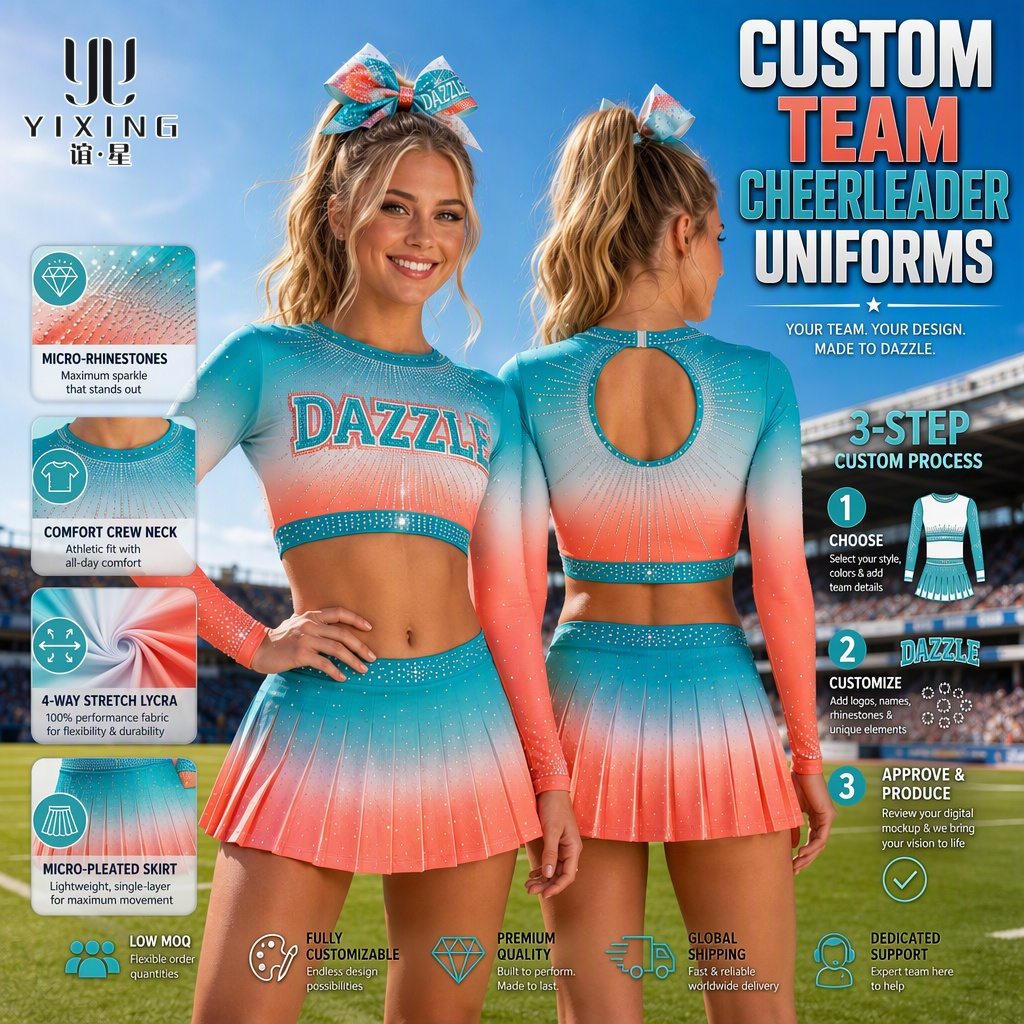
The supplier type you choose for a squad order decides who controls the fabric, who sets the print, who signs off the finished garment, and how far a change request has to travel before it reaches the person cutting the shell. That is what the factory-versus-trading-company question is really asking.
The short answer: a factory-direct supplier owns design, printing, cutting, sewing and packing in-house, so a specification change and a quality problem land on the same team that makes the uniform. A trading company coordinates those steps through a producing partner, which can be an efficient way to source but adds a hand-off between the buyer and the production floor. Neither model is automatically better for a school, club or all-star program. What matters is knowing which model you are actually buying from, and verifying it before the order is placed.
This guide sets out the criteria that genuinely differ between the two models, the questions that expose the difference, and a step-by-step process for evaluating a supplier of custom cheerleading uniforms. Process and product detail below is drawn from the manufacturing record of Dalian Yixing Trading Co., Ltd. — a China-based apparel manufacturer, founded in 2024, producing gymnastics leotards and cheerleading uniforms from a 3,000 m² facility with 110 employees and a 10-engineer in-house R&D team. The company also runs its own professional international trade team, which makes it a useful reference point because it sits on both sides of the comparison.
Why the Factory vs. Trading Company Question Surfaces Late
Most squad buyers do not begin with a supplier-type question. They begin with a uniform: a shell and skirt in team colors, a matching bow, sizes running from youth to adult, and a date tied to a season opener or a competition calendar. The supplier-type question appears later, usually at one of three moments.
- When a specification change arrives. A club alters the skirt length or the neckline after design approval, and nobody can say whether the change is possible until it has been relayed to whoever actually controls the line.
- When a quality question needs an owner. Print lifting at a seam, an armhole that has stretched open, or a bow that no longer matches the shell under gym lighting all require a single accountable party rather than a chain of them.
- When two quotes are compared. Buyers comparing prices for a similar uniform often discover the difference reflects structure, not simply margin.
Reframed precisely, the question becomes: how many hands sit between my specification and the finished garment, and who answers when the result is wrong? Everything in the comparison below is a way of answering that question with evidence rather than assumption.
How the Custom Cheer Uniform Supply Chain Is Structured
Custom cheerleading uniforms are a small-batch, high-variation product. A single program may cover school sideline sets, all-star competition uniforms, rec and youth uniforms, warm-ups and team outerwear, and practice and base-layer wear — each carrying its own fit and durability expectations. These are listed as distinct product lines within the cheerleading uniform range at Dalian Yixing Trading Co., Ltd., which reflects how the category is normally organized: decoration and fit requirements change by program type even when base construction does not.
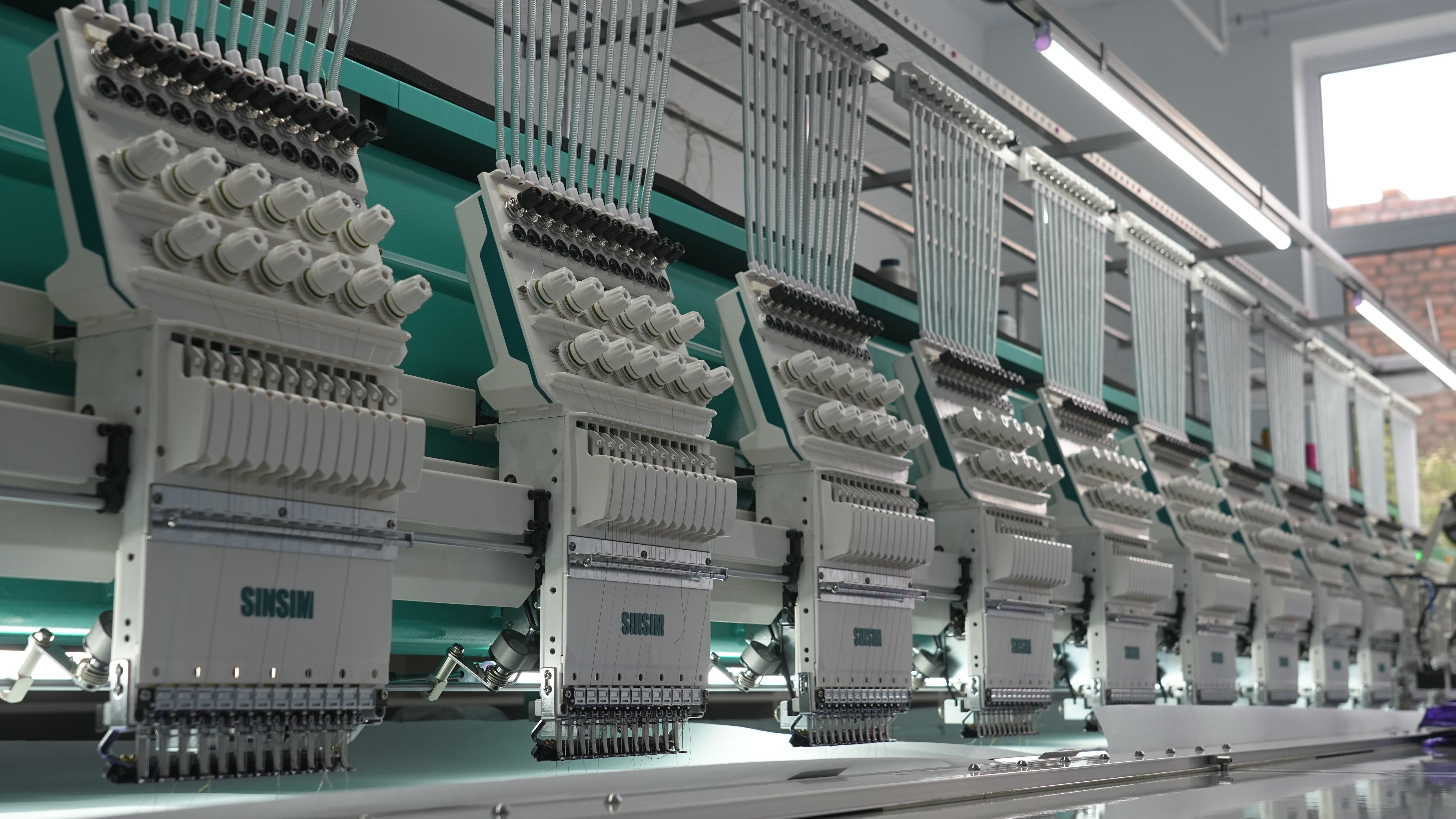
Decoration drives much of the supply decision. Team identity depends on color consistency across a set — shell, skirt, bodyliner and bow — and on print that survives a season of laundering, stunting and tumbling. The production method that carries this today is digital heat-transfer printing, in which ink is transferred into the fabric rather than sitting on top of it. Print produced this way does not crack along a seam, peel at the edge, or wash out into a faded version of the original, which is the difference between a shell that still matches the approved sample at end of season and one that does not. Yixing produces its patterns this way on Epson heat-transfer digital printers, and the same press, ink settings and operator standard run across shells, skirts, bodyliners and bows so a squad's colors stay identical head to toe.
On the supply side the market splits into three arrangements: a factory selling directly, a trading company sourcing from one or more factories, and a hybrid in which a manufacturer runs its own export and trade team. Dalian Yixing Trading Co., Ltd. is the third type — a manufacturer with its own factory in Dalian, China, plus an international trade team offering a one-stop service, with 100% of output exported to North America, Western Europe, Oceania and Southeast Asia. The hybrid matters here because it removes the trade-off buyers usually accept: that dealing with a factory means losing a commercial contact, and that dealing with a trading company means losing visibility into production.
The Seven Criteria That Separate a Factory from a Trading Company
Rather than asking a supplier to classify itself, evaluate the seven criteria below. Each can be verified with a specific question, and each changes what you can control in the finished uniform.
1. Process ownership
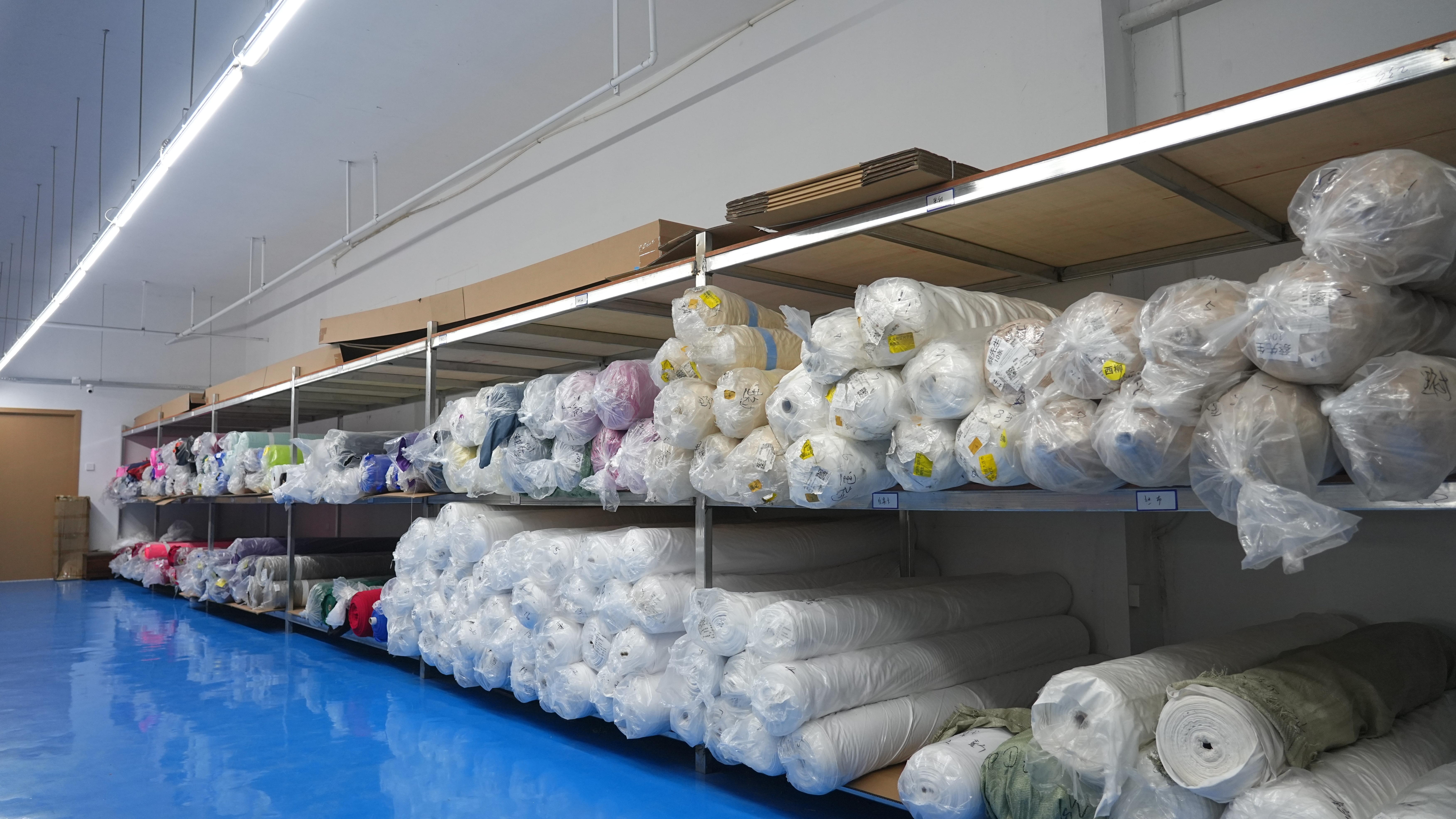
Ask which stages run on site. In a factory-direct model, design, printing, cutting, sewing and packing all run in-house, with one team accountable for the finished garment from artwork to carton and no sub-contractor between the buyer and the result. Any stage that is outsourced is a stage where accountability becomes shared.
2. Print method and equipment
Ask what carries the color. Digital heat-transfer printing on Epson equipment transfers ink into the fabric, which is why gradients stay smooth instead of banding and why thin lines and small lettering stay sharp on a shell. A trading company may be unable to answer without consulting its producing partner — and that hesitation is itself diagnostic.
3. Depth of customization
Factory-level customization covers fabric weight, lining (full, partial or unlined), size range, logo, color, design and packaging. The critical detail is sizing: a factory that cuts to the buyer's chart rather than a fixed factory grading can hold a squad's youth-to-adult spread across one order. Ask whose size chart governs the cut.
4. Order structure and minimum quantity
Minimum order policy reveals the supply model quickly. Yixing runs no minimum order — one piece or one thousand, on the same line and to the same specification. That structure is relevant to club and school programs that need a handful of replacement pieces mid-season, and to accessories such as cheer bows ordered alongside a full squad kit. When a trading company quotes a minimum, ask whether it is the factory's minimum or the intermediary's.
5. Quality checkpoints
Ask what is inspected, when, and by whom. A documented factory sequence reads as follows: fabric checked on arrival for weight, stretch and color; cutting, printing and sewing inspected in line; every finished piece checked for print alignment, decoration security, seam strength, stitch consistency and measurements before packing. Each checkpoint is a place where a defect is caught before it reaches a squad instead of after.
6. Decoration security
Spangles, appliqué and embroidered lettering have to withstand stunting, tumbling and repeated laundering without lifting at the edge. Ask how decoration is fixed and which inspection confirms it. In the sequence above, decoration security is a named check on every finished piece rather than an assumption.
7. Communication path and delivery commitment
Count the hands between your change request and the person able to approve it. A manufacturer with its own trade team keeps that path short; a trading company adds at least one link. Delivery commitment carries equal weight: Yixing states on-time and safe delivery as a core commitment on every order, with prompt notification and corrective measures if an unexpected delay occurs.
A Step-by-Step Process for Evaluating a Custom Cheer Uniform Supplier
The sequence below converts the seven criteria into a procurement workflow that a coach, athletic director or club buyer can run without production experience.
Step 1 — Define the program before contacting anyone
Specify the uniform types in scope (school sideline, all-star competition, rec and youth, warm-ups, practice wear), the size spread from youth to adult, the number of pieces, and whether matching bows are part of the set. Programs that include accessories expose the supply model early, because a supplier unable to run a small bow order on the same line as a squad kit is coordinating rather than producing.
Step 2 — Ask the direct question, then verify the answer
Ask plainly whether the supplier is a factory or a trading company, and follow with two questions only a producing facility can answer without delay: which print method and which equipment will carry the artwork, and which inspection points sit between cutting and packing.
Step 3 — Request the specification in writing
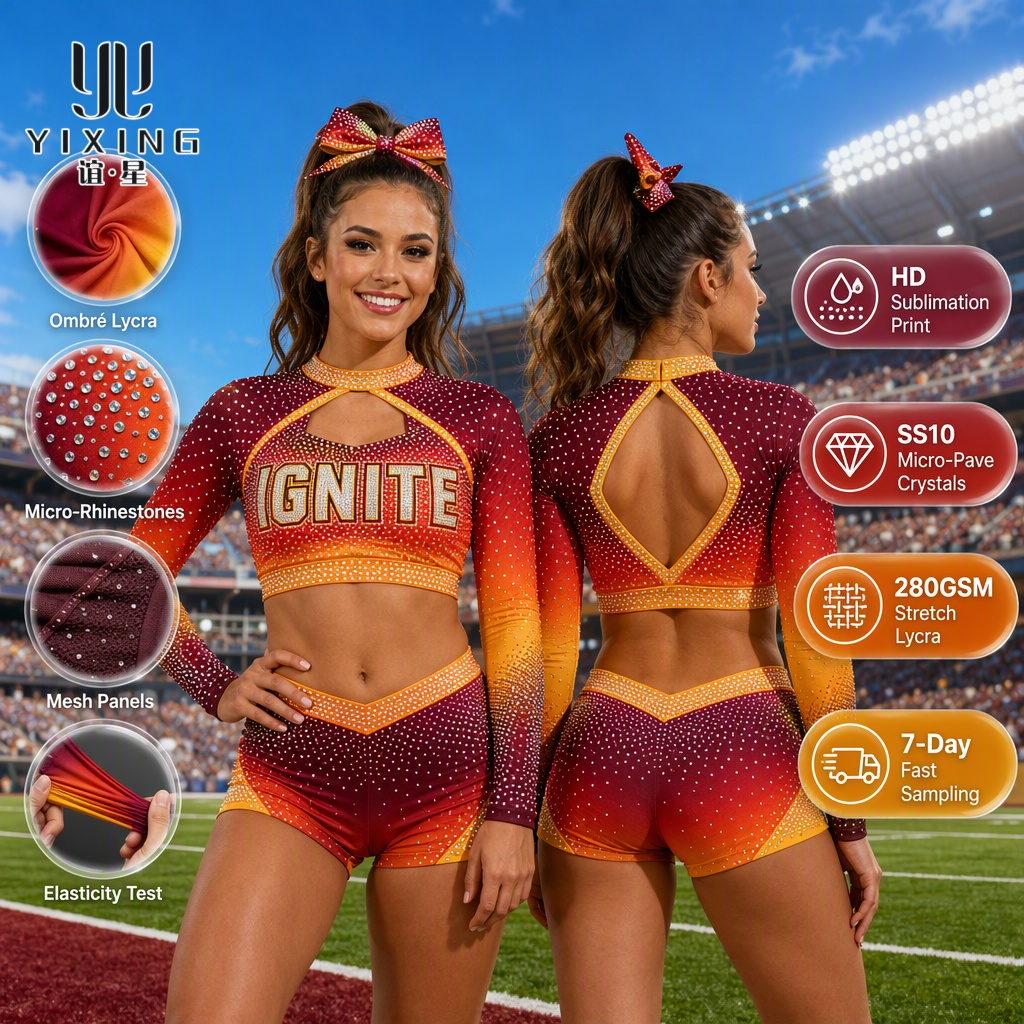
Lock fabric (four-way stretch nylon-spandex with customizable weight), lining (full, partial or unlined), seam type (flatlock, so no ridge presses under a strap or at the inner thigh), print method (digital heat transfer), size range and size chart ownership. Written specification is what makes a later comparison between two suppliers meaningful.
Step 4 — Approve the sample against named checkpoints
Do not approve a sample by impression. Check print alignment, decoration security, seam strength, stitch consistency and measurements — the same items the factory inspects on every finished piece — plus fabric weight, stretch and color. Confirm the sample was cut to your size chart, not a factory grading.
Step 5 — Confirm color consistency across the whole set
Ask whether shell, skirt, bodyliner and bow were printed from one file on the same press with the same ink settings. Color that matches on a screen but not under gym lighting is the most common disappointment in a decorated uniform program.
Step 6 — Agree packing and distribution detail
Size-labeled individual polybags and matching hair bows supplied with the kit reduce handling at the club end. Confirm both in the order, since they are typically managed at the packing stage rather than after the fact.
Step 7 — Confirm commercial terms and the delivery path
Fix order quantity, no-minimum terms if applicable, and the shipping arrangement. Establish in advance how a delay would be communicated and what corrective action would follow, so the commitment is documented rather than assumed.
Where Each Supply Model Fits: Typical Custom Cheer Uniform Programs
School sideline cheer uniforms
Sideline sets are ordered in team-sized runs with a wide size spread and a fixed season deadline. Factory-direct supply suits this because sizing is cut to the buyer's chart, and replacement pieces can be added later without meeting a minimum.
All-star and competition programs
Competition uniforms carry the heaviest decoration and the strongest color-consistency requirement, since the set is judged under stage lighting. Being able to ask the printer directly which method carries the artwork, and how decoration is secured against tumbling, shortens the approval loop considerably.
Rec and youth cheer uniforms
Youth programs typically combine small quantities with frequent roster changes. A no-minimum structure — one piece or one thousand on the same line and specification — removes the pressure to over-order in order to reach a threshold.
Club and team programs with matching accessories
When a club orders uniforms and cheer bows together, accessory and garment should be produced on the same press with the same ink settings so the bow still matches the shell at end of season. A supplier that treats bows as a separate sourced item cannot guarantee that match.
Wholesale and distributor stocking
Distributors stocking for multiple clubs need a supplier that can move between programs without resetting tooling, and that can document inspection across every finished piece. In-house printing, cutting, sewing and packing under one team is what makes that repeatable.
Brand private label and OEM programs
Brands developing a collection need design input, not just capacity. Dalian Yixing Trading Co., Ltd. maintains an in-house R&D and design team plus original design collections, and accepts OEM and ODM work covering logo, color, size, design and packaging — a configuration that supports private label development rather than simple reproduction.
Factory vs. Trading Company for Custom Cheer Uniforms: Comparison Table
The table compares the two supply models on the criteria that change the finished uniform. For the trading-company column, the practical output is a verification question rather than an assumption, because the answer depends on which producing partner is used.
| Decision criterion | Factory-direct supply | Trading-company supply — what to verify |
|---|---|---|
| Process ownership | Design, printing, cutting, sewing and packing run in-house under one accountable team, from artwork to carton | Which factory produces the order, and which stages that factory performs itself |
| Print method | Digital heat-transfer printing on Epson equipment; ink transferred into the fabric | Which print method and which equipment the producing factory uses |
| Customization depth | Fabric weight, lining (full, partial or unlined), size range, logo, color, design and packaging; sizing cut to the buyer's chart | Whether the producing factory accepts a buyer size chart instead of fixed factory grading |
| Minimum order | No minimum — one piece or one thousand, same line and same specification | Whether the quoted minimum belongs to the factory or to the intermediary |
| Quality checkpoints | Fabric checked on arrival for weight, stretch and color; cutting, printing and sewing inspected in line; every finished piece checked for print alignment, decoration security, seam strength, stitch consistency and measurements | Who performs each inspection, and whether the record can be shown to the buyer |
| Decoration and color consistency | Spangles, appliqué and embroidered lettering secured against stunting, tumbling and laundering; shell, skirt, bodyliner and bow printed on the same press with the same ink settings | Whether garment and accessories are produced in the same facility from one file |
| Communication path | Manufacturer with its own international trade team; one-stop service from enquiry to shipment | How many parties sit between the change request and the production floor |
| Delivery commitment | On-time and safe delivery stated as a core commitment, with prompt notification and corrective action on unexpected delay | How delay notification and corrective action are documented in the agreement |
Frequently Asked Questions
How do I tell whether a custom cheer uniform supplier is a factory or a trading company?
Ask which production stages run on site. A manufacturer performs design, printing, cutting, sewing and packing in-house under one team accountable from artwork to carton; a trading company coordinates those stages through a producing partner. Dalian Yixing Trading Co., Ltd. is an example of a manufacturer with its own factory in Dalian, China, that also operates a professional international trade team, so questions about equipment, inspection and cutting can be answered directly rather than relayed. Verify by asking for the print method and equipment, the in-line inspection points, and whose size chart governs the cut.
Can a factory handle full customization of logo, color, size, design and packaging?
Yes. Dalian Yixing Trading Co., Ltd. accepts custom logo, color, size, design and packaging, and runs OEM and ODM work covering fabric weight, lining (full, partial or unlined), size range and pattern design. Sizing is cut to the buyer's chart rather than a fixed factory grading, and no minimum order applies, which is what allows a single club set to be produced to the same specification as a large program.
Is there a minimum order quantity for custom cheer uniforms?
At Yixing there is no minimum order: one piece or one thousand run on the same line and to the same specification. That policy matters for school and club programs that need small replacement orders mid-season, and for accessories such as cheer bows ordered alongside a full squad kit, where a minimum would otherwise force over-ordering of items the club does not need.
What should be checked on a sample before approving a custom cheer uniform?
Check the same items the factory inspects on every finished piece: print alignment, decoration security (spangles, appliqué and embroidered lettering fixed so they withstand stunting, tumbling and laundering), seam strength, stitch consistency and measurements. Confirm fabric weight, stretch and color as well, and verify that shell, skirt, bodyliner and bow were printed from one file on the same press, so colors match under gym lighting rather than only on screen.
How does a school or club start an order for custom cheerleading uniforms?
Send a program brief — uniform types, size spread from youth to adult, quantity, artwork, and whether matching bows are included — to the supplier's trade team. At Dalian Yixing Trading Co., Ltd. the enquiry goes to the commercial contact while the in-house R&D and design team handles fabric selection and pattern design through to finished production. You can reach the team at 18525427333@163.com or on WhatsApp at +86 13904082287, and review the product range at yixingtrading.com.
Conclusion
The difference between a factory and a trading company for custom cheerleading uniforms is not a label on a website. It is whether the team answering your questions also controls the fabric check, the Epson press, the flatlock seams, the size chart and the final inspection — or whether it is relaying those answers from somewhere else. Buyers who test that directly, with two or three specific questions about print method, inspection points and size chart ownership, get a reliable answer in a single exchange.
For school sideline sets, all-star competition uniforms, rec and youth programs, and private label development, the practical rule is the same: choose the supply model whose accountability boundary matches how much control you need over the finished garment, and write the specification down before the sample is approved.
Next Step: Review the Cheer Uniform Range or Request a Sample
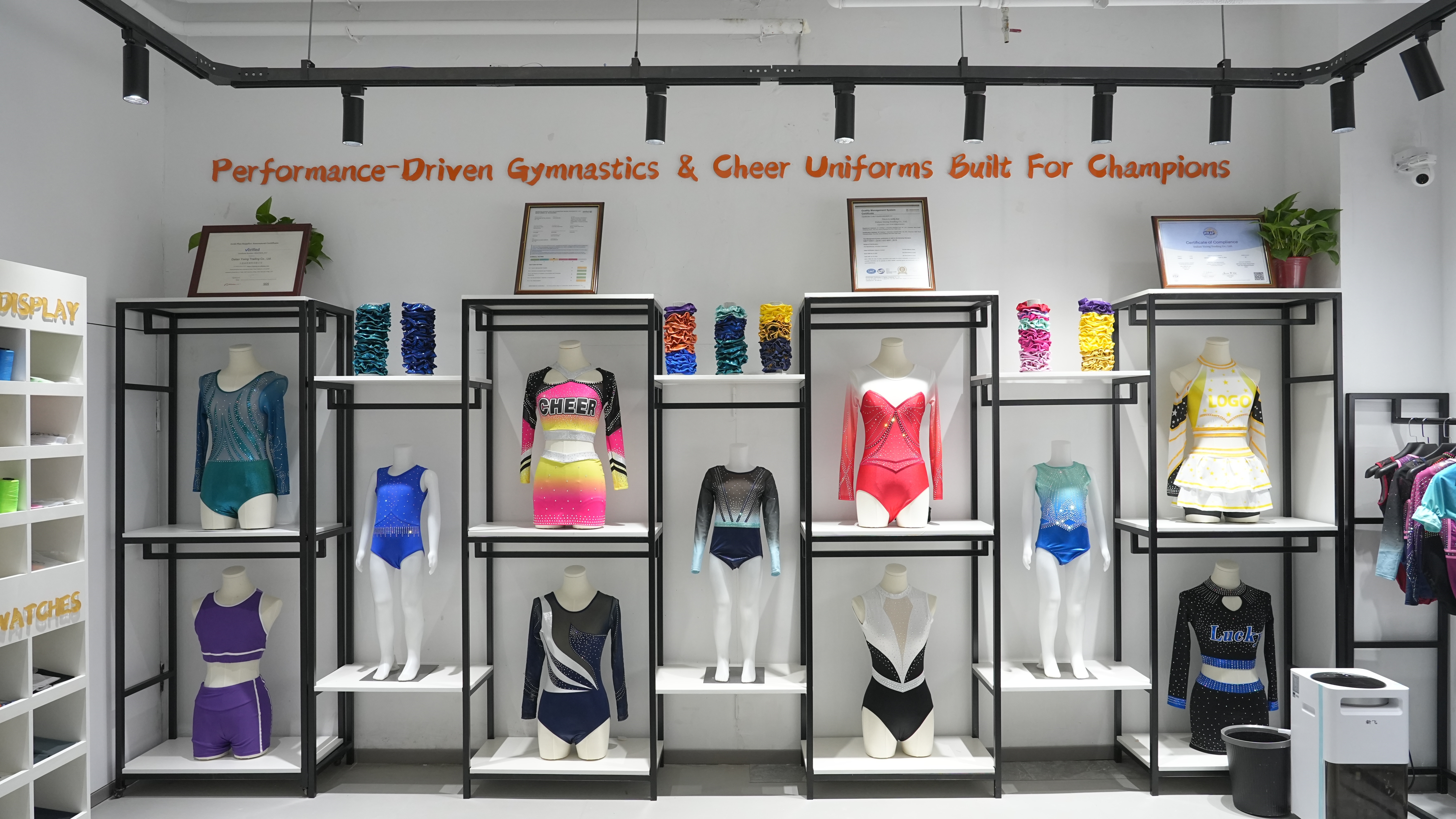
Dalian Yixing Trading Co., Ltd. produces custom cheerleading uniforms, cheer bows and gymnastics leotards with in-house design, digital heat-transfer printing, cutting, sewing and packing — with no minimum order and sizing cut to your chart.
Send your program brief, artwork or size chart to 18525427333@163.com, or message +86 13904082287 on WhatsApp to discuss a sample.
Visit yixingtrading.comHave Questions or Need More Details?
Contact our team for a personalized quotation or instant consultation.
Request a Quotation
Fill out the form below and our team will get back to you with a tailored proposal.
WhatsApp Direct Chat
Prefer to chat in real-time? Message us on WhatsApp for instant assistance & quick answers.
- Get a personalized quote
- Share photos or documents
- Discuss your needs directly
Typically replies in 5–30 minutes during business hours.