
Baby Diaper Core Technical Guide: SAP Content, Absorbency and Thickness Parameters
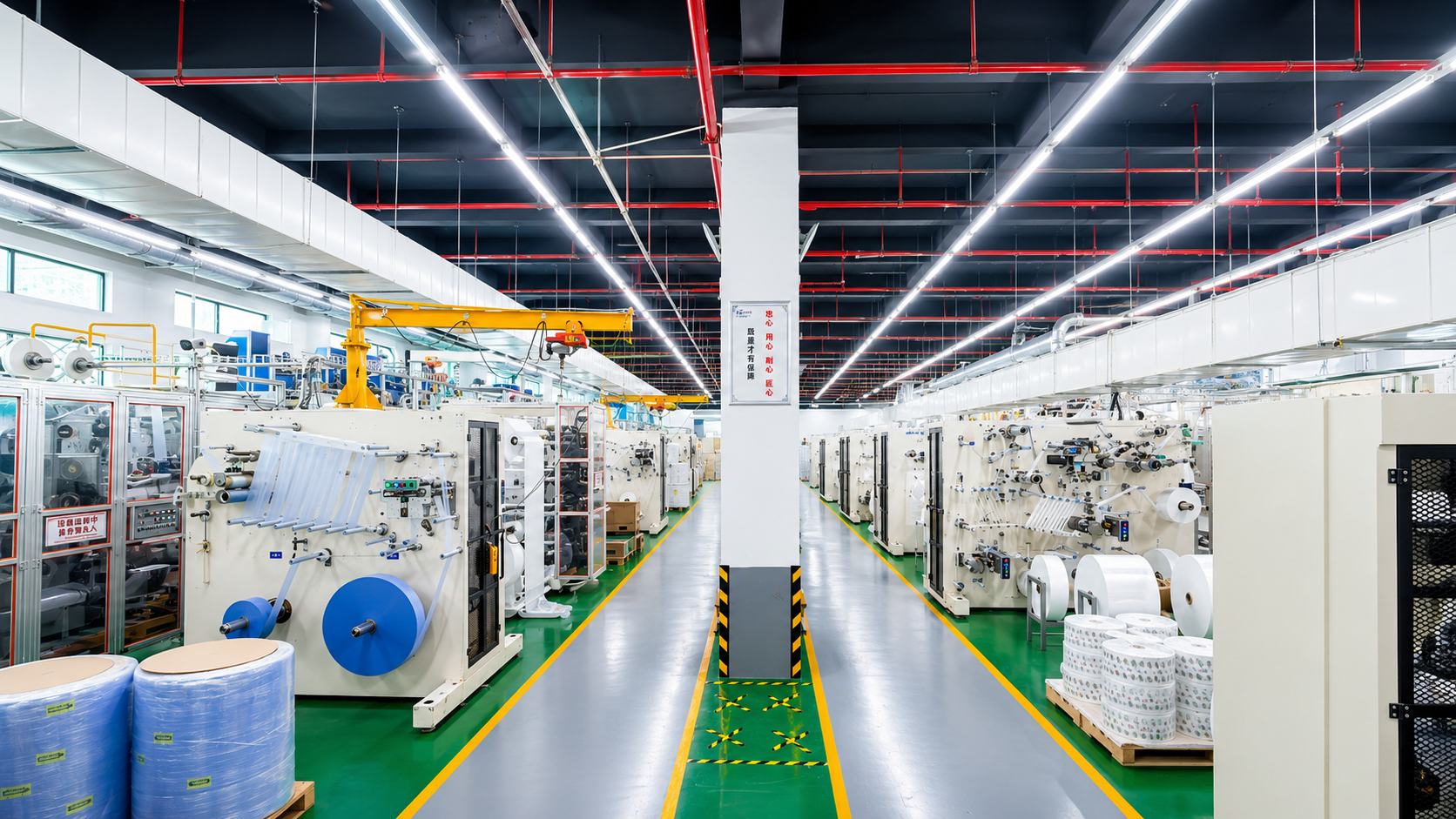
The absorbent core is the part of a baby diaper that decides how much liquid the product can take, how much of that liquid stays locked away from the skin, and how thin the finished diaper can be. The topsheet, backsheet, tape and waistband all exist to support that core.
This guide is written for importers, private-label brand owners and distributors who are researching and evaluating a diaper programme. It explains the technical difference between a fluff pulp and SAP core and an ultra-thin SAP paper core, how an SAP absorbent core improves baby diapers, and which parameters — thickness, target absorbency, product weight, fit and material configuration — should be written into a specification before a purchase order is placed. The reference model used throughout is Yibero Premium Quality Ultra Cloudy tape-style baby diapers in sizes S, M, L and XL, which use imported SAP and fluff pulp with reference absorbency of 500, 600, 700 and 800 ml.
Why “High Absorbency” Is Not a Specification
A single absorbency figure on a product page does not tell a buyer what the diaper will do in use. Absorbency is the output of a core design, and the same millilitre figure can describe very different products depending on size, unit weight, thickness, test method and the position of the measurement.
Three problems appear repeatedly when core specifications are incomplete:
- The number is not tied to a size. A 500 ml result on a small diaper and a 500 ml result on an extra-large diaper describe different material budgets, different fit envelopes and different cost structures.
- Absorbency is specified without thickness or weight. Two diapers can share a target absorbency while sitting at noticeably different unit weights and profiles. If the buyer only writes “high absorbency”, the supplier is free to reach that number with a construction the buyer did not intend.
- The core architecture is not named. A fluff pulp and SAP core and an ultra-thin SAP paper core are both valid structures, but they are not interchangeable line items. Without a named core type, an approved sample cannot be reliably repeated in mass production.
Industry Background: Why Core Decisions Carry Commercial Weight
The commercial context explains why core parameters deserve this level of attention. Grand View Research placed the global baby diaper market at USD 83.3 billion in 2025, and Fortune Business Insights reported that Asia Pacific accounted for 61.92% of the global diaper market in the same year. On the supply side, Xiamen Customs data republished by Jiayue recorded USD-equivalent baby diaper exports from Fujian province of CNY 8.74 billion in 2024.
Company-published material from the supplier side also cites raw material cost at 78–85% of ex-factory price for diapers. That figure is company-reported and should be treated as an indication rather than an audited benchmark, but it points to the same conclusion buyers reach independently: the core is where material cost and product performance meet, so a vague core brief is expensive in both directions.
For private-label and wholesale programmes, the practical consequence is that core decisions are usually locked early — during sampling — and then carried through artwork, packaging, pack count and repeat orders. Changing a core after packaging is approved is far more disruptive than defining it correctly at the research stage.
The Two Core Architectures Explained
Fluff pulp and SAP core
In this construction, cellulose fluff pulp is combined with superabsorbent polymer to form the absorbent structure. As a general design principle, the pulp component gives the core its bulk and helps move liquid away from the entry point, while the SAP component absorbs and retains it. The result is a core with a defined body rather than a purely thin profile.
The Yibero Premium Quality Ultra Cloudy tape-style baby diaper is built on this architecture: a soft topsheet, an imported SAP and fluff-pulp absorbent core, reusable magic tape, nonwoven frontal tape, an elastic waistband and a cloth-like breathable backsheet. The published reference absorbency for the range is 500 ml (S), 600 ml (M), 700 ml (L) and 800 ml (XL).
Ultra-thin SAP paper core
In this construction, SAP paper becomes the main absorbent structure rather than a pulp-and-polymer blend. The design intent is a thinner core profile with less bulk between the topsheet and the backsheet. Jiayue offers both core options for selected diaper products, so the choice is a specification decision rather than a fixed feature of the supplier.
Thinness is a design objective, not a performance guarantee. A thinner core changes how the diaper sits against the body and how the chassis is built around it, and it must still be validated for absorbency, rewet behaviour and core integrity on the approved sample.
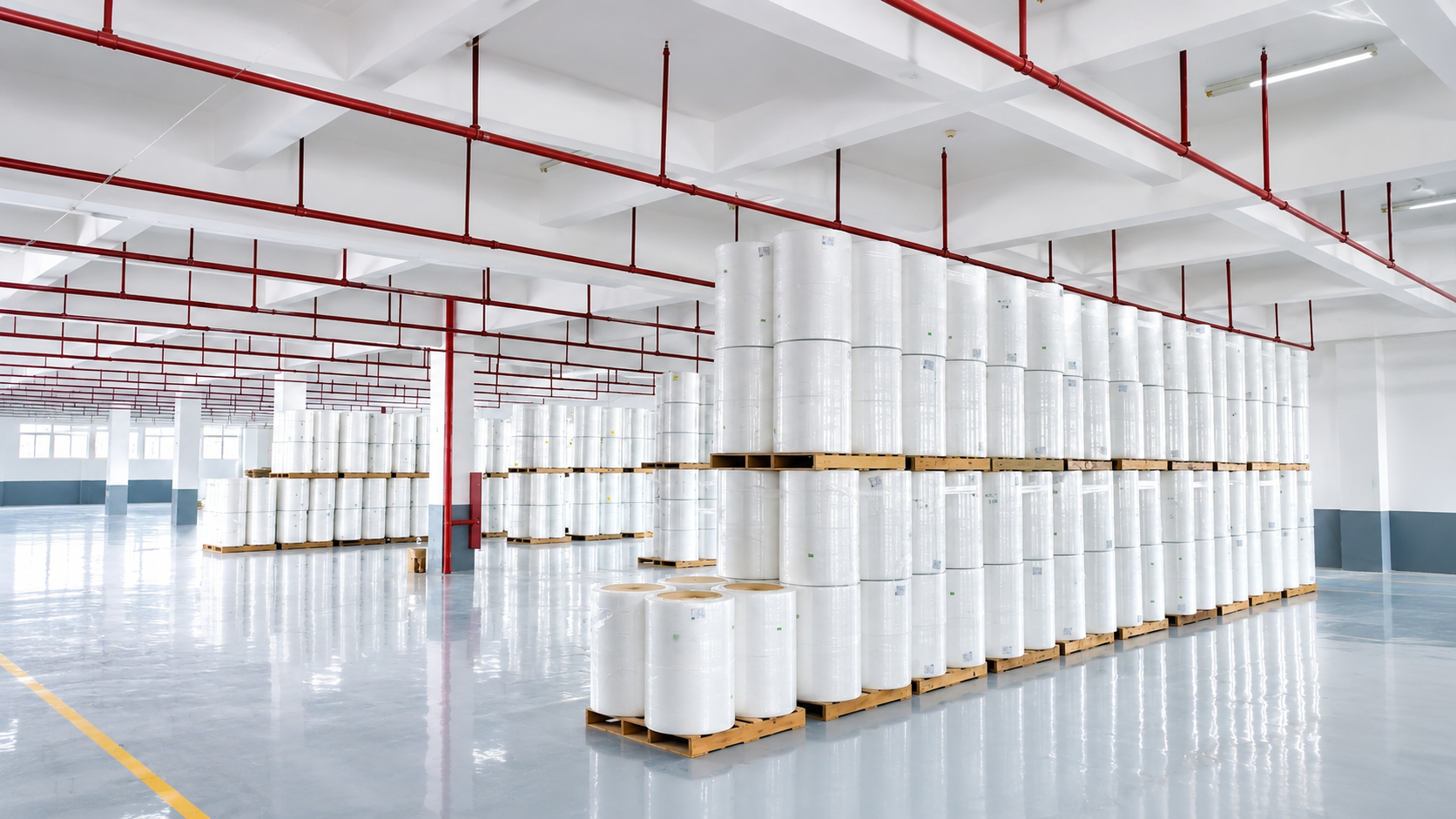
How an SAP absorbent core improves baby diapers
SAP is the component that converts liquid into a retained gel instead of leaving it free to move inside the product. That single function drives most of the performance improvements buyers care about:
- Retention under pressure. Liquid held by SAP is less available to flow back toward the skin when the baby sits or lies on the diaper, which is the mechanism behind leakage control in a well-built core.
- Thinner products at the same target absorbency. Because SAP carries a large share of the absorbent duty, a core can be designed with less bulking material, which supports a slimmer silhouette.
- Better fit and movement. A thinner, more stable core flexes with the body, which matters for the elastic waistband, the tape landing zone and the leg cuffs to work as intended.
- More design headroom. Once the core is defined, the rest of the chassis — 3D leak guards, wetness indicator, hot air or spunbond nonwoven, cloth-like backsheet — can be specified around it rather than compensating for it.
These are design mechanisms, not measured results for a specific SKU. The only reliable confirmation is a test report or a side-by-side sample comparison under identical conditions.
The Parameters Buyers Should Specify, Not Just Absorbency
1. Core architecture and SAP configuration
Name the structure explicitly: fluff pulp and SAP, ultra-thin SAP paper, or a composite core. SAP loading is a specification-level parameter and is confirmed in the approved specification and sample; it is not a catalogue figure that can be assumed across sizes.
2. Target absorbency by size
Absorbency should be set per size, not as one number for the whole range. The Yibero reference range steps from 500 ml in S to 800 ml in XL, which mirrors the increasing liquid load and longer wear intervals of older, heavier babies. Whatever values are chosen, the test method, sampling level and acceptance criteria must be agreed in the contract so that “600 ml” means the same thing to both parties.
3. Thickness and unit weight
Thickness and weight are the two parameters most often left blank, and they are the two that shape both the feel of the product and the material budget. The published unit weights for the reference model are 26 g (S), 29 g (M), 33 g (L) and 35 g (XL). Thickness should be measured under a defined load and method agreed with the supplier; it cannot be inferred from absorbency.
4. Fit: dimensions and baby-weight range
Core dimensions must match the chassis. The reference model uses 400×320 mm (S), 450×320 mm (M), 500×340 mm (L) and 540×340 mm (XL), with baby-weight ranges of 4–8 kg, 6–11 kg, 9–14 kg and 12–17 kg. A core that is correct in absorbency but wrong in length or width will leak at the leg or gap at the waist regardless of SAP content.
5. Material configuration around the core
Specify the topsheet (hot air or spunbond nonwoven), backsheet (cloth-like breathable), fastening (tape or pull-up format), 3D leak guards, wetness indicator, waistband, graphics, pack count and size mix. These choices determine whether the core can actually perform as designed once the product is closed around a baby.
Reference Specification: Yibero Premium Quality Ultra Cloudy
The table below summarises the published parameters of the reference tape-style model. It is a specification baseline for discussion, not a claim that every size performs identically in every market.
| Parameter | Size S | Size M | Size L | Size XL |
|---|---|---|---|---|
| Diaper dimensions | 400×320 mm | 450×320 mm | 500×340 mm | 540×340 mm |
| Baby weight range | 4–8 kg | 6–11 kg | 9–14 kg | 12–17 kg |
| Reference absorbency | 500 ml | 600 ml | 700 ml | 800 ml |
| Unit weight | 26 g | 29 g | 33 g | 35 g |
| Core architecture | Imported SAP with fluff pulp absorbent core; alternative core options available for selected products | |||
| Chassis materials | Soft topsheet, reusable magic tape, nonwoven frontal tape, elastic waistband, cloth-like breathable backsheet | |||
| Format and shelf life | Tape-style disposable baby diaper; 5-year shelf life | |||
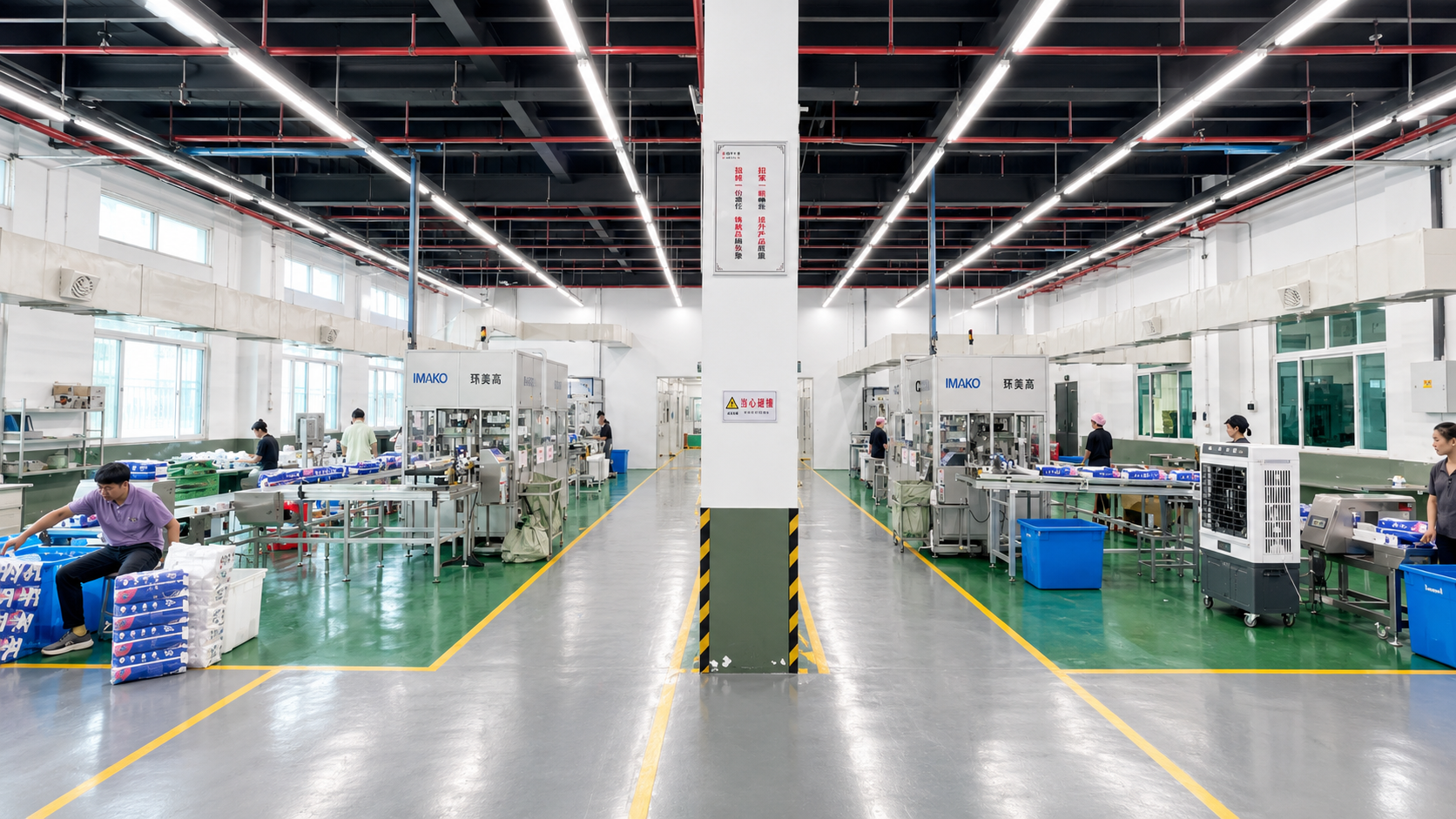
Step-by-Step: Setting a Core Specification
- Define the wear scenario and the size mix. Decide which sizes the first order will cover and how the sizes will be split across containers. Baby diaper containers may mix three to four sizes, so the core brief should cover the whole mix rather than one hero size.
- Choose the core architecture. Select fluff pulp and SAP, ultra-thin SAP paper, or a composite core, and record the reason. If thinness is the market positioning, the SAP paper route deserves evaluation; if a pulp-and-SAP structure is preferred, state it explicitly.
- Set absorbency targets per size. Use the reference values as a starting point and adjust to the target market. Agree the test method and acceptance criteria at the same time, not after the first shipment.
- Fix thickness and unit weight budgets. Write both into the specification and measure them on the approved sample under a defined method. Treat any change as a specification change.
- Match dimensions and fit components. Confirm diaper dimensions, baby-weight range, waistband elasticity, leg cuffs and fastening type together with the core, since fit is a system result.
- Approve the sample, then lock production. Sampling and an approved specification are the control points. Quality control for the order should include specification review, pre-production sample approval, in-process checks and pre-shipment inspection, with the test method, sampling level and acceptance criteria written into the contract.
Use Cases Where Core Parameters Decide the Programme
Private-label launch with a stepped size range
A brand owner launching a local private-label line usually starts with a trial container and a small size mix, then scales. In the published reference case, an anonymised private-label importer and distributor moved from trial container orders to stable repeat-order cooperation, supported by specification and absorbency adjustment, packaging and artwork coordination, size-mix planning, sampling, export documentation and repeat-order support. The core brief is what makes that transition repeatable.
Thin-positioned brands
Where shelf presence and a slim silhouette are the positioning, an ultra-thin SAP paper core is the natural starting point, provided absorbency and core integrity are validated on the sample rather than assumed from the architecture name.
Distributor portfolios across several markets
Wholesale buyers supplying several markets often need one core platform that can be adjusted by size and absorbency without redesigning the chassis. A documented reference specification shortens each new market conversation.
OEM programmes with custom packaging
OEM baby diapers with custom packaging bring artwork, bag design, pack count and outer carton into the same approval cycle as the core. Locking the core first prevents packaging revisions later.
Core Architecture Comparison
The comparison below is limited to structural differences that can be stated without test data. It is not a performance ranking.
| Comparison point | Fluff pulp and SAP core | Ultra-thin SAP paper core |
|---|---|---|
| Main absorbent structure | Cellulose fluff pulp combined with superabsorbent polymer | SAP paper as the main absorbent structure |
| Role of pulp | Pulp is part of the core construction alongside SAP | Less pulp-dependent construction; SAP paper carries the absorbent function |
| Profile | Bulkier body as a general design characteristic of pulp-containing cores | Thinner profile is the stated design intent |
| Design focus | Balanced absorbency, body and material cost | Thinness, fit and chassis integration |
| What buyers must verify | Absorbency, rewet, thickness and unit weight on the approved sample | The same, plus core integrity and SAP distribution after compression |
| Typical fit with a programme | Buyers specifying a named pulp-and-SAP structure, as in the Yibero reference model | Buyers prioritising a thin profile and prepared to validate it by test |
Neither column wins by default. Jiayue states that both core options are available for selected diaper products, and that buyers should compare thickness, target absorbency, product weight, fit, material configuration and test results against the approved specification and sample under the same conditions.
FAQ
Which documents should accompany a baby diaper core specification?
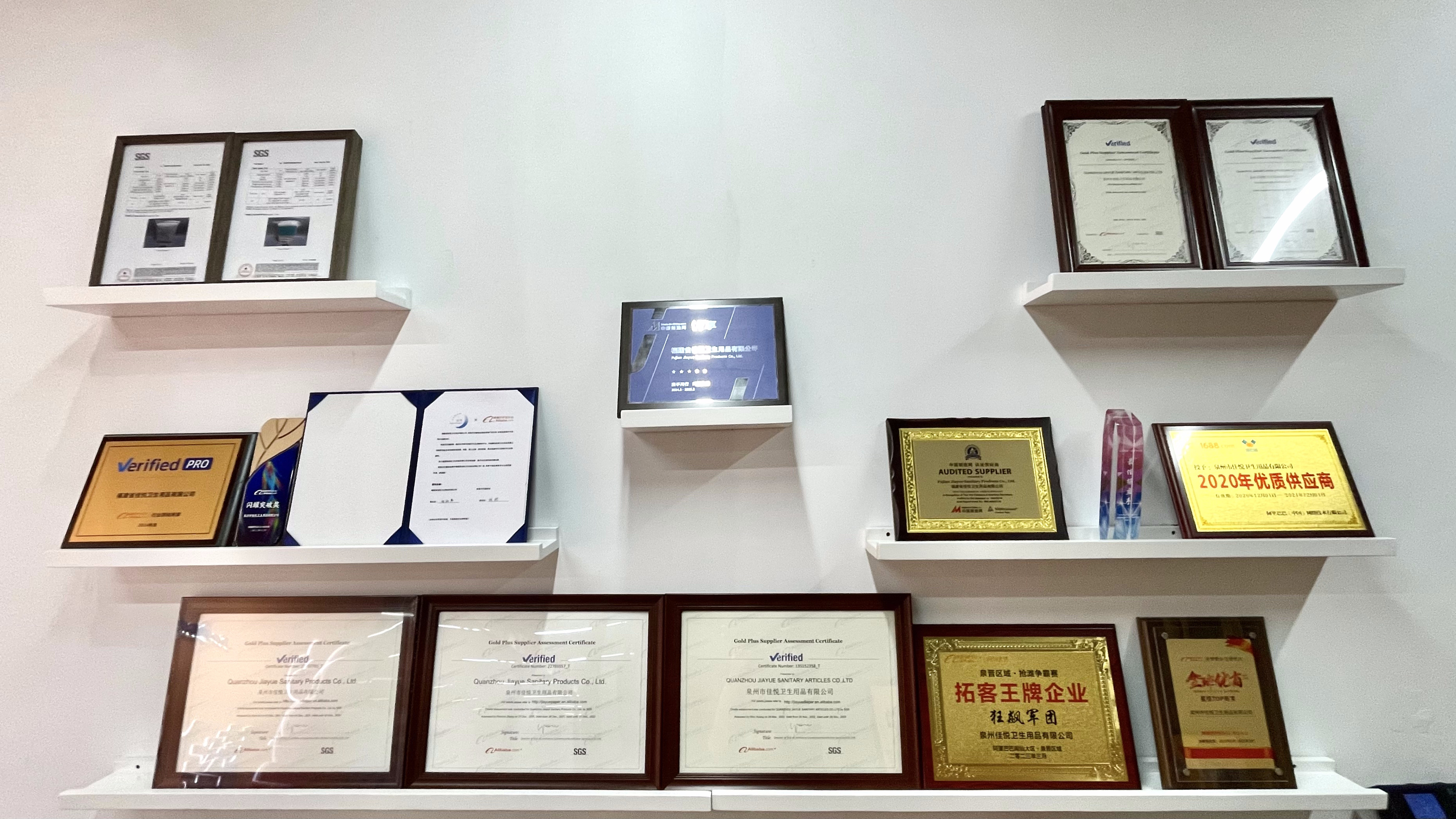
Jiayue holds ISO 9001 and ISO 13485 management-system certificates within their documented scopes. Selected products may be supported by CE declarations of conformity, SGS test reports and other compliance documents according to the applicable product, destination market and order requirements. Before mass production, target-market compliance, label language, performance specification, pack count and artwork are confirmed, and the test method, sampling level and acceptance criteria are agreed in the contract.
Can SAP content and core structure be customised for a private label?
Yes. Customisation can cover product size and weight, absorbency target, SAP and fluff-pulp or composite core, hot air or spunbond nonwoven, cloth-like backsheet, tape or pull-up format, 3D leak guards, wetness indicator, waistband, graphics, printed bags and cartons, pack count and size mix. The work is supported by an in-house R&D and technical support team of eight engineers responsible for material selection, absorbent-core design, product development, sampling, specification adjustment and OEM/ODM technical support.
How does the core configuration affect unit cost?
Core materials sit inside the largest cost block in a diaper. Company-published material from the supplier side cites raw material cost at 78–85% of ex-factory price, a company-reported figure rather than an audited benchmark. Because absorbency target, thickness and unit weight all consume material, they should be treated as commercial parameters as well as technical ones. Final MOQ and price are confirmed in the quotation, based on the approved specification and order requirements.
How are absorbency and thickness validated before mass production?
Through sampling and an approved specification. Free samples are prepared in one to three working days, with the buyer covering courier costs. The order-specific quality control plan then covers specification review, pre-production sample approval, in-process checks and pre-shipment inspection. Absorbency and thickness should be compared against the approved sample under identical conditions; without that comparison, an architecture name such as “SAP paper core” carries no verified performance meaning.
What is the typical lead time after the core specification is approved?
Typical production lead time is approximately 30–45 days, subject to sample, artwork, packaging and specification approval. The self-owned factory, Quanzhou Jiarun Paper Industry Co., Ltd., supports monthly production and shipment of more than 100 × 40HQ containers, with final available capacity confirmed by product specification, packaging and production schedule. To move from specification to a confirmed offer, request a sample and quotation matched to your size mix, absorbency target and packaging brief.
Conclusion
Absorbency is the headline number, but it is the core architecture, thickness, unit weight, dimensions and material configuration that determine whether the number can be delivered consistently. A fluff pulp and SAP core and an ultra-thin SAP paper core solve the same problem in different ways, and the right choice depends on the product positioning, the size range and the test evidence behind the approved sample.
For buyers evaluating an OEM or private-label programme, the practical sequence is fixed: name the core, set absorbency per size, budget thickness and weight, match the fit, lock the materials, and validate everything on an approved sample before packaging and artwork are finalised. Everything after that is repeatable production.
Next step: sample and specification review
Request a sample of the Yibero Premium Quality Ultra Cloudy tape-style baby diaper in your target sizes, together with a quotation built on your absorbency target, thickness and packaging brief. Sampling is prepared in one to three working days; courier costs are paid by the buyer.
Email: info@jiayuediaper.com | WhatsApp: +86 159 8030 8853 | Web: www.jiayuediaper.com
Full range reference: JIAYUE Product Catalog 2026 (PDF)

Have Questions or Need More Details?
Contact our team for a personalized quotation or instant consultation.
Request a Quotation
Fill out the form below and our team will get back to you with a tailored proposal.
WhatsApp Direct Chat
Prefer to chat in real-time? Message us on WhatsApp for instant assistance & quick answers.
- Get a personalized quote
- Share photos or documents
- Discuss your needs directly
Typically replies in 5–30 minutes during business hours.