Disposable Baby Diapers: Core Structures, Sizes and Formats
Disposable baby diapers are single-use absorbent products for infant care. They are designed for frequent daily changes, and they should be stored and used according to the packaging instructions. For buyers and caregivers, three specification choices matter most: the absorbent core, the fastening format and the size range.
This guide separates those choices. It explains the fluff pulp and SAP core versus the ultra-thin SAP paper core, compares tape-style diapers with baby pull-up pants, and sets out the verified Yibero tape-style S, M, L and XL specifications. It also explains why a size range such as NB through XXXXXL is a category planning scope, not a substitute for checking the actual product specification, sample and target-market documents.
What “disposable” means in practical use
A disposable baby diaper is used once and then discarded. It is not laundered or reused. In routine infant care, the product is changed frequently during the day and may also be used overnight, depending on the baby’s needs and the caregiver’s routine. The application data for this category describes household daily indoor use, suitable for normal ambient temperature for infant wear and diaper-changing scenarios.
The single-use design changes what buyers must evaluate. Absorbency, leakage protection, fit, material feel and pack count all affect the user experience, but they do not perform the same function. Absorbency describes how much liquid the product is designed to take up under the approved specification. Leakage protection depends on the combined design of the core, leg fit, waist fit and backsheet. Fit depends on size, cut and fastening format. Pack count affects storage, shelf presence and the number of changes per pack.
Storage and use should follow the packaging instructions. The category data also notes that no mandatory supporting equipment is required. Optional items for end-user scenarios include diaper storage bins, wet wipes and changing mats. These are convenience items, not part of the diaper’s absorbent function.
Why core structure and format are separate decisions
Two diapers can share the same size label but use different absorbent cores or different fastening formats. That is why a size chart alone does not define the product. A tape-style diaper with a fluff pulp and SAP core and a pull-up pant with an SAP paper core may both be described as baby diapers, but they are built around different use patterns and different material structures.
For an importer or private-label brand, separating core and format avoids a common specification error: treating every feature as if it belonged to one interchangeable product. The core affects the absorbent structure and the material bill. The format affects how the product is put on, how the waist and side panels are designed, and how the product is packed and used. Size affects the intended baby-weight range and dimensions. The final configuration should be confirmed in the signed specification and approved sample.
Industry background: OEM supply and private-label range
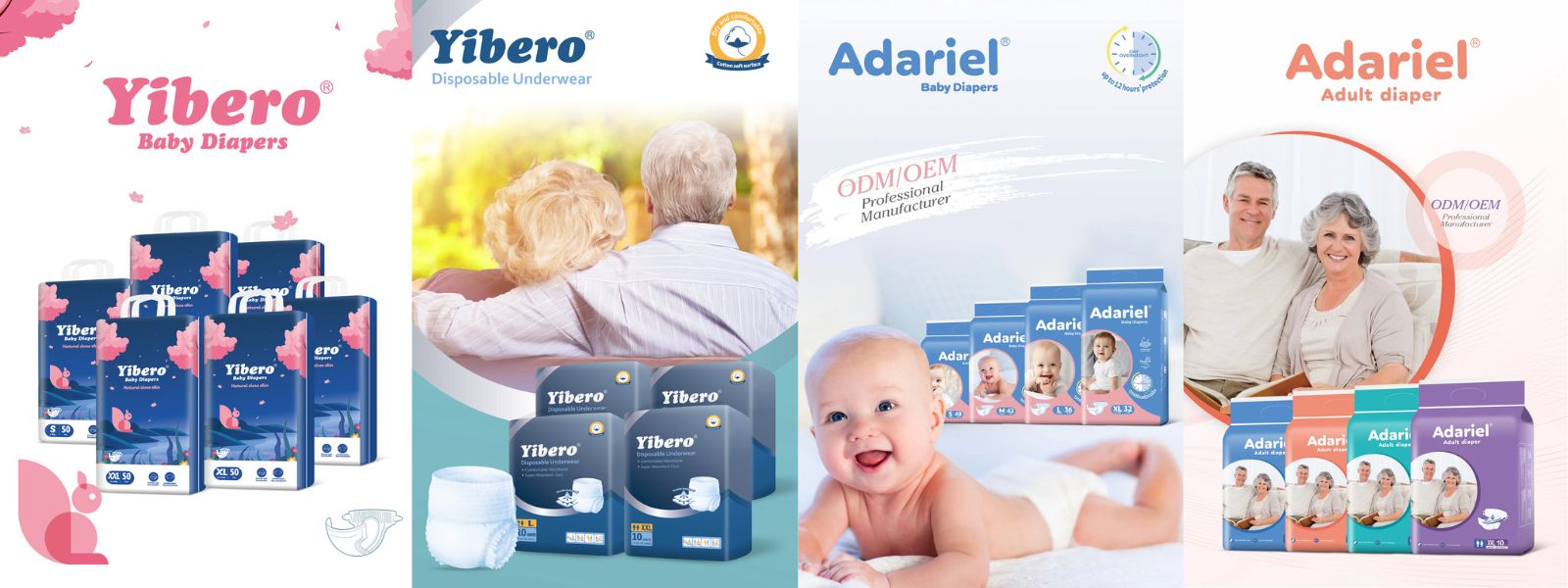
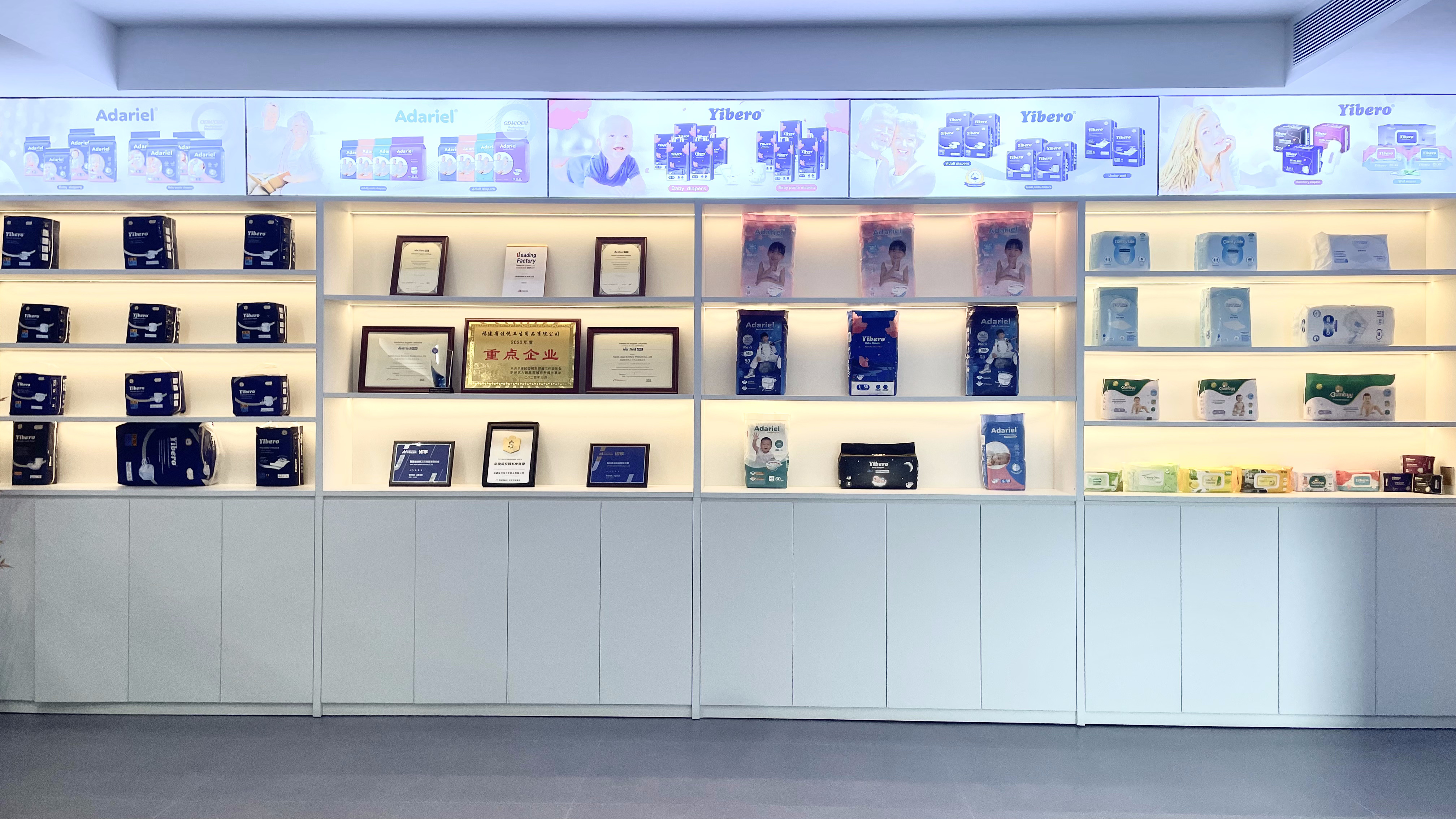
Yibero baby diaper is a brand of disposable baby diapers supplied by Fujian Jiayue Sanitary Products Co., Ltd., a hygiene and personal-care product supplier based in Quanzhou, Fujian, China. The company was established in 2016 and provides hygiene product supply and OEM/ODM support for international customers. Its product portfolio includes baby diapers, baby pull-up pants, adult diapers, adult pull-up pants, sanitary napkins, underpads, wet wipes, dry wipes, tissue paper and pet diapers.
The company provides OEM, ODM and private-label services for importers, distributors, brand owners and retail channels. Customization can cover product size, absorbency targets, absorbent-core structure, materials, graphics, pack count, bag design and outer-carton packaging. An in-house R&D and technical support team of eight engineers handles material selection, absorbent-core design, product development, sampling, specification adjustment and OEM/ODM technical support. The team also supports artwork and packaging coordination, export documentation and shipment planning.
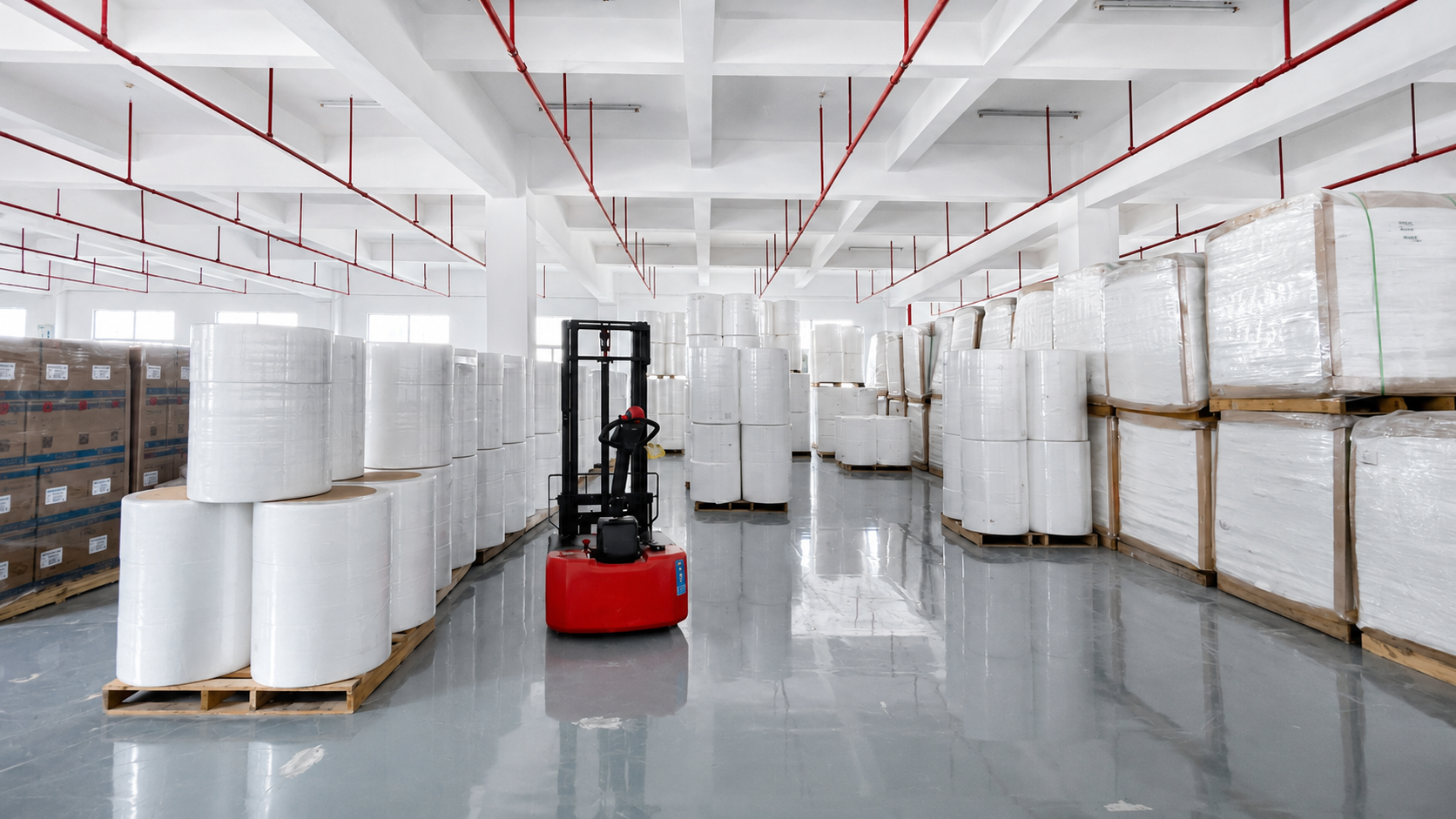
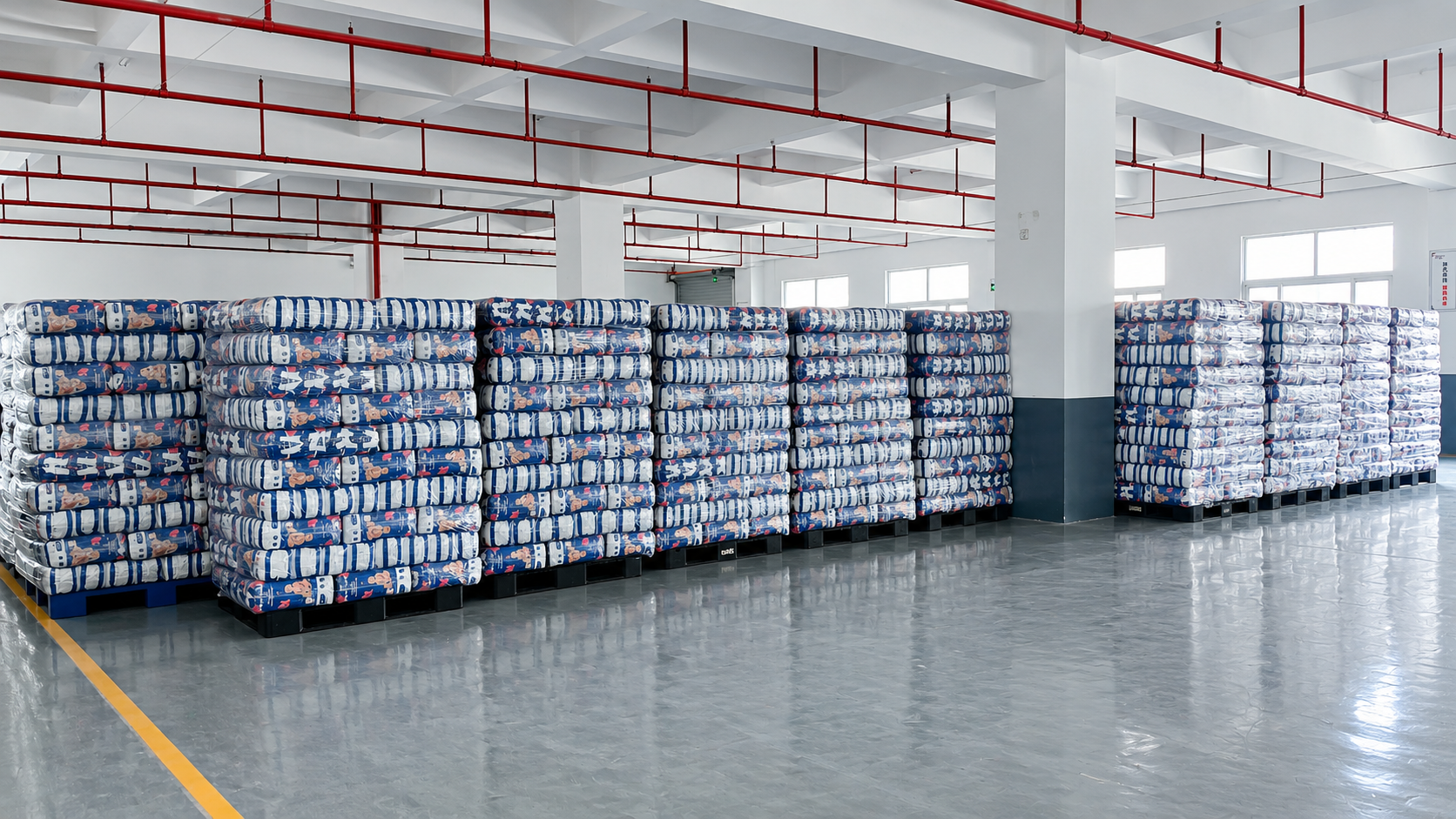
Production is supported by a self-owned factory, Quanzhou Jiarun Paper Industry Co., Ltd., in a facility covering approximately 20,000 square meters. Company-provided materials indicate that Jiayue serves customers in more than 70 countries and regions. The company holds ISO 9001 and ISO 13485 management-system certificates within their documented scopes. Selected products may be supported by CE declarations of conformity, SGS test reports and other compliance documents according to the applicable product, destination market and order requirements.
Core structures: fluff pulp and SAP versus ultra-thin SAP paper
A fluff pulp and SAP core combines cellulose fluff pulp with superabsorbent polymer. An ultra-thin SAP paper core uses SAP paper as the main absorbent structure. Jiayue offers both core options for selected diaper products. There is no universal performance advantage between the two without testing under the same conditions.
That point is important for procurement. The question is not which core sounds more advanced. The question is which core matches the intended product position, thickness target, absorbency target, product weight, fit and approved test results. Buyers should compare these factors against the approved specification and sample under the same conditions. A core description alone does not establish absorbency, rewet performance or leakage protection.
Practical comparison points include thickness, target absorbency, product weight, fit, material configuration and test results. If a buyer is comparing two samples, the samples should use the same size, the same test method and the same acceptance criteria. Otherwise the comparison may reflect different test conditions rather than a real product difference.
- Fluff pulp and SAP core: a combined cellulose fluff pulp and SAP structure. Use the approved specification to confirm the actual material configuration and absorbency target.
- Ultra-thin SAP paper core: an absorbent structure that uses SAP paper as the main absorbent element. Confirm thickness, fit and performance through the approved sample and test record.
- Common buyer check: product acceptance for private-label baby diapers includes checks on absorbency, SAP/core design, rewet performance and leakage protection.
Formats: tape-style diapers and pull-up pants
Tape-style baby diapers are designed for caregiver-assisted changes, especially for younger babies who spend more time lying down. Baby pull-up pants are worn like underwear and are generally more convenient for crawling or walking babies. The appropriate choice depends on age, activity level, fit, absorbency requirements and changing habits.
The Yibero tape-style disposable baby diaper uses a soft topsheet, an imported SAP and fluff-pulp absorbent core, reusable magic tape, a nonwoven frontal tape, an elastic waistband and a cloth-like breathable backsheet. The product data identifies the tape-style model as Yibero Premium Quality Ultra Cloudy Baby Diapers. The product type includes tape-style disposable baby diapers and OEM/ODM baby diapers.
Pull-up pants use elastic waist openings so they can slide on like underwear and stay secure during movement. Tape tabs allow a caregiver to open, position and refasten the diaper while the baby is lying down. Absorbency, leakage protection, fit and size should still be evaluated for the intended age and use scenario. Format convenience does not remove the need to check the core, size and leakage protection.
OEM/ODM and private-label manufacturing can customize the topsheet, absorbent core, backsheet, graphics and packaging. Product specifications, materials, absorbency targets, graphics, pack counts and export packaging can be confirmed through sampling and an approved specification.
Sizes and reference absorbency: NB–XXXXXL scope versus Yibero S–XL
A CE size scope running from NB through XXXXXL is used to describe the category from newborn to larger toddler sizes. That scope is a planning range for the category. The verified Yibero tape-style specification covered in this guide is narrower: S, M, L and XL. Buyers should not treat a broad category scope as proof that every size is available in every product or configuration.
The product is a disposable baby diaper classified as a tape-style disposable baby diaper. It is intended for infant care scenarios and the infant care industry. It is intended for retail and wholesale distribution, private-label brands, e-commerce and export trade. The product is suitable for export trade.
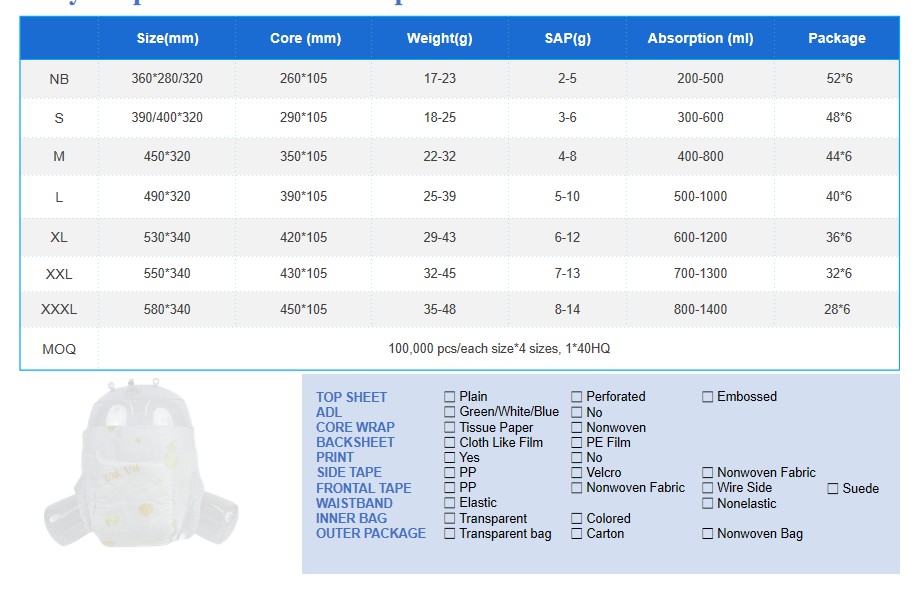
| Size | Dimensions | Baby-weight range | Reference absorbency | Unit weight |
|---|---|---|---|---|
| S | 400 × 320 mm | 4–8 kg | 500 ml | 26 g |
| M | 450 × 320 mm | 6–11 kg | 600 ml | 29 g |
| L | 500 × 340 mm | 9–14 kg | 700 ml | 33 g |
| XL | 540 × 340 mm | 12–17 kg | 800 ml | 35 g |
The shelf life stated in the product data is five years. The size chart is a reference tool, not a complete fit test. Baby weight ranges overlap, and actual fit depends on body shape, activity, changing routine and the approved product design. A sample trial should check fit, leakage protection, absorbency and rewet performance against the agreed acceptance criteria.
Step-by-step: how to specify a disposable diaper range
- Define the use scenario. Confirm whether the product is for household daily indoor use, retail or wholesale distribution, private-label launch, e-commerce or export trade. The category data describes infant-care use at normal ambient temperature for infant wear and diaper-changing scenarios.
- Choose the format. Tape-style diapers suit caregiver-assisted changes for younger babies who spend more time lying down. Pull-up pants are generally more convenient for crawling or walking babies. Confirm the intended age band and changing habit before fixing the format.
- Set the size mix. Use the intended baby-weight ranges and dimensions as the starting point. For private-label programs, confirm which sizes are in scope and whether the container can mix sizes. The buyer FAQ states that baby-diaper containers may mix 3–4 sizes.
- Select the core structure and absorbency target. Decide between a fluff pulp and SAP core and an ultra-thin SAP paper core, or review both for selected products. Set the reference absorbency and compare samples under the same conditions.
- Confirm materials and components. For the tape-style product, the stated materials include a soft topsheet, imported SAP and fluff-pulp absorbent core, reusable magic tape, nonwoven frontal tape, elastic waistband and cloth-like breathable backsheet. Confirm the final material configuration in the signed specification.
- Approve the sample and acceptance criteria. Product acceptance for private-label baby diapers includes checks on absorbency, SAP/core design, rewet performance and leakage protection. The sample and approved specification should reflect the final size, core and format.
- Confirm packaging and export documents. Customization can cover graphics, pack count, bag design and outer-carton packaging. The team supports artwork and packaging coordination, export documentation and shipment planning. Confirm target-market compliance, label language, performance specification, pack count and artwork before mass production.
Comparison table: core and format choices
| Decision point | Fluff pulp and SAP core | Ultra-thin SAP paper core | What the buyer should confirm |
|---|---|---|---|
| Main absorbent structure | Cellulose fluff pulp combined with superabsorbent polymer | SAP paper used as the main absorbent structure | The actual material configuration in the approved specification |
| Performance comparison | No universal advantage without testing | No universal advantage without testing | Thickness, target absorbency, product weight, fit, material configuration and test results under the same conditions |
| Acceptance checks | Absorbency, SAP/core design, rewet performance and leakage protection | Absorbency, SAP/core design, rewet performance and leakage protection | The test method and acceptance criteria should match the approved sample |
| Format | Typical use logic | Design points stated in the product data | Buyer check |
|---|---|---|---|
| Tape-style disposable baby diaper | Caregiver-assisted changes, especially for younger babies who spend more time lying down | Soft topsheet, imported SAP and fluff-pulp core, reusable magic tape, nonwoven frontal tape, elastic waistband, cloth-like breathable backsheet | Size, fit, tape performance, absorbency and leakage protection |
| Baby pull-up pants | Worn like underwear; generally more convenient for crawling or walking babies | Elastic waist openings allow the product to slide on and stay secure during movement | Size, waist fit, absorbency and leakage protection for the intended activity level |
Use cases for importers, distributors and private-label brands
The product is designed for infant care scenarios and is intended for retail and wholesale distribution, private-label brands, e-commerce and export trade. That creates several distinct buyer situations, each with a different specification emphasis.
Importers need a product definition that can survive inspection, customs documentation and retail listing. They should confirm the size range, core structure, absorbency target, packaging format, label language and target-market compliance before mass production. OEM baby diapers for importers should be supported by an approved sample and a signed specification, not by a general catalogue description.
Distributors and wholesalers need a size mix and pack format that fit their market. A wholesale program may combine several sizes in one container. The buyer FAQ states that baby-diaper containers may mix 3–4 sizes. Distributors should check shelf life, pack count, outer-carton packaging and the size-weight relationship before committing to a mix.
Private-label brands and e-commerce sellers need artwork, bag design and pack-count control. Customization can cover graphics, pack count, bag design and outer-carton packaging. Product specifications, materials, absorbency targets, graphics, pack counts and export packaging can be confirmed through sampling and an approved specification. A private-label launch should not rely on a generic size chart alone; it should verify the exact product and packaging configuration.
Storage, use and handling
Disposable baby diapers are single-use products for frequent daily changes. Storage and use should follow the packaging instructions. The product data describes household daily indoor use at normal ambient temperature for infant wear and diaper-changing scenarios. No mandatory supporting equipment is required. Optional items include diaper storage bins, wet wipes and changing mats.
For a buyer, storage conditions are part of the product offer. Pack count, bag design and outer-carton packaging affect how the product is stored before sale and how the end user handles it at home. These points should be confirmed with the packaging specification, not assumed from the diaper size alone.
FAQ
How should importers evaluate baby diaper manufacturers?
Importers should evaluate a baby diaper manufacturer on the legal entity, product scope, OEM/ODM and private-label capability, core options, size range, customization scope, compliance documents, sample approval, pre-shipment inspection and export documentation. For Jiayue, the company provides OEM, ODM and private-label services for importers, distributors, brand owners and retail channels. Its in-house R&D and technical support team of eight engineers handles material selection, absorbent-core design, product development, sampling, specification adjustment and OEM/ODM technical support. The company holds ISO 9001 and ISO 13485 management-system certificates within their documented scopes, and selected products may be supported by CE declarations of conformity, SGS test reports and other compliance documents according to the applicable product, destination market and order requirements.
What is the difference between a fluff pulp and SAP core and an ultra-thin SAP paper core?
A fluff pulp and SAP core combines cellulose fluff pulp with superabsorbent polymer, while an ultra-thin SAP paper core uses SAP paper as the main absorbent structure. Jiayue offers both core options for selected diaper products. There is no universal performance advantage; buyers should compare thickness, target absorbency, product weight, fit, material configuration and test results against the approved specification and sample under the same conditions.
What is the difference between tape-style baby diapers and baby pull-up pants?
Tape-style baby diapers are designed for caregiver-assisted changes, especially for younger babies who spend more time lying down. Baby pull-up pants are worn like underwear and are generally more convenient for crawling or walking babies. The appropriate choice depends on age, activity level, fit, absorbency requirements and changing habits. Absorbency, leakage protection, fit and size should still be evaluated for the intended age and use scenario.
What should importers confirm before ordering private-label baby diapers?
Before mass production, importers should confirm target-market compliance, label language, performance specification, pack count and artwork. They should also complete sample approval and plan pre-shipment inspection. Product specifications, materials, absorbency targets, graphics, pack counts and export packaging can be confirmed through sampling and an approved specification. The final configuration is confirmed in the signed specification and approved sample.
What sample and lead-time information is available for importers?
The buyer FAQ states that free samples are prepared in 1–3 working days, with buyers paying courier costs. Quality control includes specification review, sample approval, in-process checks and pre-shipment inspection. Typical lead time is about 30–45 days. Baby-diaper containers may mix 3–4 sizes. Payments include T/T, L/C at sight and Alibaba Trade Assurance. Monthly capacity exceeds 100 × 40HQ. For a sample, quotation or catalogue discussion, importers can contact the supplier with the target size mix, pack count, artwork requirements and destination market.
Conclusion
Disposable baby diapers are single-use infant-care products designed for frequent daily changes and for storage and use according to the packaging instructions. The main specification choices are the absorbent core, the fastening format and the size range. A fluff pulp and SAP core and an ultra-thin SAP paper core have different structures, but neither has a universal performance advantage without testing under the same conditions. Tape-style diapers suit caregiver-assisted changes for younger babies, while pull-up pants are generally more convenient for crawling or walking babies.
For the Yibero tape-style range covered in this guide, the verified specification covers S, M, L and XL, with dimensions from 400 × 320 mm to 540 × 340 mm, baby-weight ranges from 4–8 kg to 12–17 kg, reference absorbency of 500, 600, 700 and 800 ml, unit weights of 26, 29, 33 and 35 g, and a stated shelf life of five years. The broader CE size scope from NB through XXXXXL is a category planning range, not a substitute for checking the actual product specification and approved sample.
The practical next step is to match the intended market, size mix, core structure, format, pack count and packaging to an approved sample and signed specification. The JIAYUE Product Catalog 2026 is available for download. Final capacity, MOQ, lead time, testing requirements and payment terms are confirmed in the quotation, approved sample and sales contract.
Have Questions or Need More Details?
Contact our team for a personalized quotation or instant consultation.
Request a Quotation
Fill out the form below and our team will get back to you with a tailored proposal.
WhatsApp Direct Chat
Prefer to chat in real-time? Message us on WhatsApp for instant assistance & quick answers.
- Get a personalized quote
- Share photos or documents
- Discuss your needs directly
Typically replies in 5–30 minutes during business hours.