OEM vs ODM vs Private-Label Adult Diapers: Importer Guide
For adult diaper importers, the practical difference between OEM, ODM and private-label is not the factory logo; it is who defines the product and who approves the evidence. In an OEM program, the importer usually owns more of the product specification. In an ODM program, the importer selects and adapts a supplier platform. In a private-label program, the product is often closer to the supplier's existing offer while the importer controls the brand. The commercial answer is narrower than the labels: MOQ, lead time, testing requirements and payment terms are confirmed in the quotation, approved sample and sales contract.
This guide compares the three engagements for OEM adult diapers for importers, private label adult diapers and wholesale programs for distributors. It focuses on the control points that change buyer work: product specification, absorbent-core structure, materials, graphics, pack design and documentation. It does not rank suppliers or claim that one model performs better without a common specification and test method.

What OEM, ODM and private-label mean in adult diapers
The labels describe who defines the product, not where it is made. A factory can offer all three. The importer should write the chosen model into the quotation and contract because the same factory can quote different levels of control.
OEM: the importer owns the specification
In an OEM adult diaper program, the importer or brand owner typically defines the product specification and approves the sample that represents it. That can include size range, absorbency target, absorbent-core structure, materials, graphics and pack design. The manufacturer produces to the approved specification. This model suits importers with product knowledge, a defined brand standard or a technical team. It also creates more approval work: specification control, artwork approval, supplier-change control and replenishment planning are stronger in OEM/private-label programs than with fixed off-the-shelf products.
ODM: the supplier provides a product platform, the importer adapts it
In an ODM engagement, the supplier already has a developed adult diaper platform, including an absorbent-core approach and material options. The importer selects a platform and adapts it to the market. The importer still approves the final sample and brand assets, but product definition is shared. This can reduce development work for distributors that need a differentiated product but do not have a full R&D team. It does not remove the need to compare thickness, target absorbency, product weight, fit, material configuration and test results against the approved specification and sample under the same conditions.
Private label: the product is closer to the supplier's offer, the brand is yours
Private label usually means the importer buys a supplier-defined adult diaper and sells it under its own brand. The importer normally controls brand graphics, pack design, pack count and commercial positioning. Product specification and absorbent-core structure are often supplier-defined. If the importer needs a different core, material or absorbency target, that change should be quoted as an ODM or OEM variation rather than assumed under private label. This distinction matters because a private-label quote and a custom-core quote are not the same offer.
Control matrix: what each model asks you to control
The useful comparison is not a slogan; it is a list of decisions. The table below shows the usual control pattern. The final allocation must be confirmed in the quotation, approved sample and sales contract.
| Control point | OEM | ODM | Private label |
|---|---|---|---|
| Product specification | Importer defines and approves | Supplier platform adapted with importer | Supplier-defined; importer selects |
| Absorbent-core structure | Importer approves SAP content and core type | Supplier proposes core; importer approves | Usually fixed; changes quoted separately |
| Materials | Importer approves material configuration | Supplier proposes materials; importer approves | Supplier-defined; verify documents |
| Graphics | Importer supplies and approves | Importer supplies brand assets; supplier adapts | Importer controls brand graphics |
| Pack design and count | Importer defines bag, carton and count | Supplier templates plus importer approval | Importer selects from supplier pack options |
| Change control | Importer controls specification changes | Shared; supplier controls platform changes | Supplier controls product; importer controls brand changes |
| Typical fit | Brand owner with a defined standard | Distributor needing differentiation | New importer or retail brand needing speed |
In practice, the boundary between ODM and private label can overlap. A supplier may offer a private-label pack on an existing product while also offering limited material or graphics changes. The importer should ask which variables are open, which are fixed, and which require a new sample. The answer belongs in writing.
Why absorbent-core and material control change the buyer's work
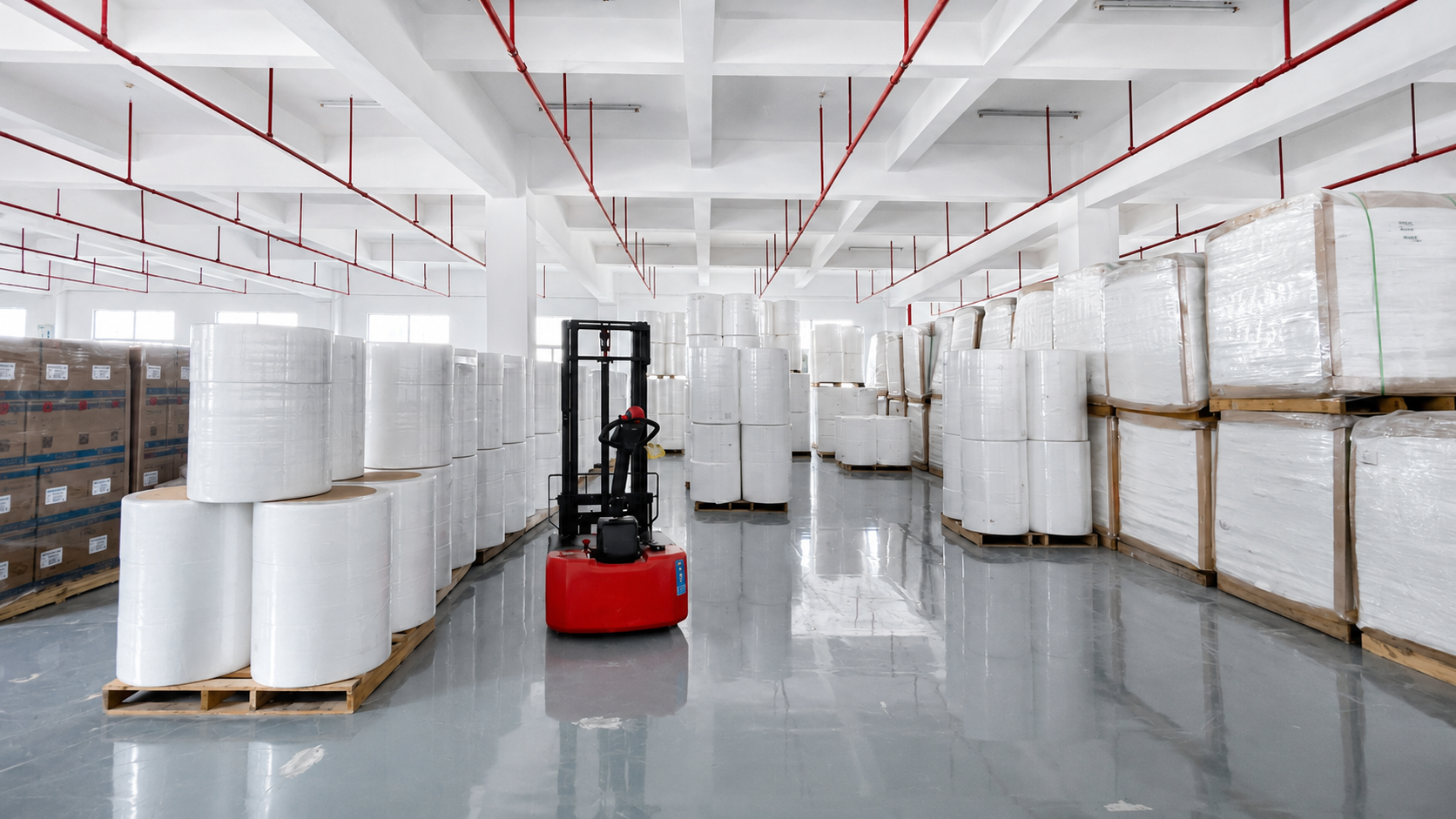
Absorbent-core and material choices are the commercial center of OEM and ODM programs. Jiayue offers both fluff pulp and SAP core options and ultra-thin SAP paper core options for selected diaper products. There is no universal performance advantage between these structures. Buyers should compare thickness, target absorbency, product weight, fit, material configuration and test results against the approved specification and sample under the same conditions.
Published specification for the Ultra Thick Yibero Adult Women Diapers lists SAP content of 18 / 22 / 26 / 28 g and reference absorbency of 1,800 / 2,200 / 2,600 / 2,800 ml across sizes M / L / XL / XXL. This is a product-specific specification, not a universal benchmark. It shows why a general claim such as high absorbency is not enough for an importer: the buyer needs the size, SAP content, reference absorbency and test method tied to the approved sample.
Material control also affects what the importer must approve. In an OEM program, the buyer may need to approve the absorbent core, nonwoven and film components and pack construction. In an ODM program, the supplier proposes the platform and the buyer approves the adaptation. In private label, the product may be fixed, so the buyer should verify the material configuration and request the applicable test documents instead of assuming a change is included.
Commercial checkpoints: MOQ, lead time, testing and payment
These checkpoints stay commercial because they depend on the SKU, order volume, materials and market. No article can give one universal MOQ or lead time for all OEM, ODM and private-label adult diapers. The buyer should ask for them in the quotation and carry the approved values into the sales contract.
| Checkpoint | What to confirm | Why it matters |
|---|---|---|
| MOQ | Per SKU, size, pack and model; written in the quotation | Custom materials and graphics can change minimum order quantities; no single MOQ applies to every program. |
| Lead time | Sample approval date, production schedule, inspection and shipping plan | Jiayue states typical lead time of about 30–45 days; the exact schedule depends on the SKU and order. |
| Testing | Test method, laboratory, report scope, tested model and batch reference | OEM may require a custom test protocol; private label may use an existing report; the scope must match the product. |
| Payment | T/T, L/C at sight, Alibaba Trade Assurance and contract milestones | Available methods do not replace written payment, document-release and inspection terms. |
| Export documents | Document list for the product and destination market | Required documents depend on the product and destination market; confirm before production. |
MOQ and order structure
MOQ should be quoted per SKU, size, pack count and model. Customized OEM/private-label diapers may involve additional sample, artwork, printing-plate, packaging and MOQ costs compared with standard off-the-shelf diapers. The final unit cost depends on materials, performance target, pack count, order volume and Incoterm. A lower unit price at a larger volume is not automatically the lower landed cost if the pack, testing or documentation scope changes.
Lead time and sample approval
Jiayue states that free samples are prepared in 1–3 working days for evaluation; buyers cover courier costs. Typical lead time is about 30–45 days. These are practical planning inputs, not a substitute for the schedule in the quotation. The buyer should separate sample preparation, sample approval, production, in-process checks, pre-shipment inspection and shipping. A delay in artwork approval or specification sign-off changes the production start date.
Testing requirements and documents
Quality control includes specification review, sample approval, in-process checks and pre-shipment inspection. Required test and export documents depend on the product and destination market. Jiayue holds ISO 9001 and ISO 13485 management-system certificates within their documented scopes. Selected products may be supported by CE declarations of conformity, SGS test reports and other compliance documents according to the applicable product, destination market and order requirements. The importer should request the document list, the report scope, the tested model and the batch reference rather than treating a certificate logo as product-level proof.
Payment terms
Jiayue states that payment methods, including for export orders, include T/T, L/C at sight and Alibaba Trade Assurance. Availability of a payment method is not the final term. The buyer should confirm the deposit, balance, document release and inspection link in the sales contract. Payment terms should match the agreed sample, inspection and shipping milestones.
Decision rule: if a supplier cannot put the model, specification, sample approval, MOQ, lead time, testing scope and payment term in the quotation and contract, the importer does not yet have a comparable offer.
Step-by-step importer workflow
Use one workflow for all three models, then change the depth of control. This keeps the comparison commercial and avoids comparing a private-label quote with an OEM quotation that includes different work.
- Define the engagement model. State whether you are buying an OEM, ODM or private-label program. Name who approves specification, core, materials, graphics and pack design.
- Issue a written specification. Include size range, target absorbency, core structure, material limits, pack count, bag and carton design, artwork ownership and label requirements.
- Request a sample against that specification. For Jiayue, free samples are prepared in 1–3 working days; buyers cover courier costs. Ask for the sample to reference the intended model and SKU.
- Test and approve the sample. Compare thickness, target absorbency, product weight, fit, material configuration and test results under the same conditions. Record the approved sample as the reference.
- Request the quotation. Confirm MOQ per SKU, lead time, testing scope, documentation, packaging cost, Incoterm and payment term. Do not accept a model label without these values.
- Put the approved details in the sales contract. Attach the specification and approved sample reference. Include change control for materials, artwork, supplier changes and repeat orders.
- Plan production and pre-shipment checks. Use specification review, in-process checks and pre-shipment inspection, then confirm export documents for the destination market.
This workflow also protects the importer when the same supplier offers multiple models. The approved sample and written specification become the common reference, not the model name alone.
Use cases: which model fits which importer
The right model depends on how much product definition the importer can and wants to control. These are conditional examples, not claims about a specific customer.
New importer or retail brand with limited product R&D
A new importer may start with private-label adult diapers to test a market using a supplier-defined product, own brand graphics and a defined pack. The trade-off is less control over absorbent core and materials. The buyer should still verify the product specification, sample, test documents and label claims before ordering.
Distributor that needs a differentiated product but not a full development team
A wholesale adult diaper distributor may use an ODM program to select a supplier platform and adapt materials, absorbency target, graphics and pack design. This model can fit buyers who need differentiation but rely on the supplier's technical team for core and material proposals. The importer should require a documented comparison of the proposed platform against the approved sample.
Brand owner with a defined standard or technical team
A brand owner with a specification, test protocol and packaging standard may choose OEM adult diapers for importers. This model gives the importer the strongest product-definition role, but it also requires more specification control, artwork approval, supplier-change control and replenishment planning. The buyer should budget time for sample approval and change management.
Healthcare distributor that needs documentation and repeat supply
An OEM adult incontinence products program for healthcare distributors may require product testing support, consistent specifications and export documentation. The model can be OEM, ODM or private label, but the documentation scope must be confirmed for the product and destination market. A private-label product with a fixed specification may be suitable only if its existing documents match the market requirement.
Limitations and risks to write into the comparison
Customization is not a performance guarantee. There is no universal numeric performance gap between standard off-the-shelf diapers and customized OEM/private-label diapers. Differences must be measured against an agreed specification, approved sample and test method. A custom core can meet a target, but the target and test conditions must be defined.
OEM/private-label programs require stronger specification control, artwork approval, supplier-change control and replenishment planning than fixed off-the-shelf products. Production and logistics efficiency should be evaluated separately through supplier data and the agreed order plan; efficiency is not applicable to product use. The buyer should not treat a line speed or monthly container figure as proof of product performance.
Certification scope also needs checking. ISO 9001 and ISO 13485 certificates have documented scopes. CE declarations and SGS reports may apply to selected products, markets and orders. The importer should confirm the exact model, standard, report number and validity rather than generalizing a document to every SKU. Required export documents depend on the product and destination market.
How Jiayue fits the comparison

Fujian Jiayue Sanitary Products Co., Ltd. is a hygiene and personal-care product supplier based in Quanzhou, Fujian, China, established in 2016. The company provides OEM, ODM and private-label support for importers, distributors, brand owners and retail channels. Its product portfolio includes adult diapers, adult pull-up pants, baby diapers, sanitary napkins, underpads, wipes and related hygiene products. Its owned brands include Yibero baby diaper and other brands.
Jiayue's customization scope can cover product size, absorbency targets, absorbent-core structure, materials, graphics, pack count, bag design and outer-carton packaging. Production is supported by its self-owned factory, Quanzhou Jiarun Paper Industry Co., Ltd., in a facility covering approximately 20,000 m². The company reports an in-house R&D and technical support team with 8 engineers responsible for material selection, absorbent-core design, product development, sampling, specification adjustment and OEM/ODM technical support.
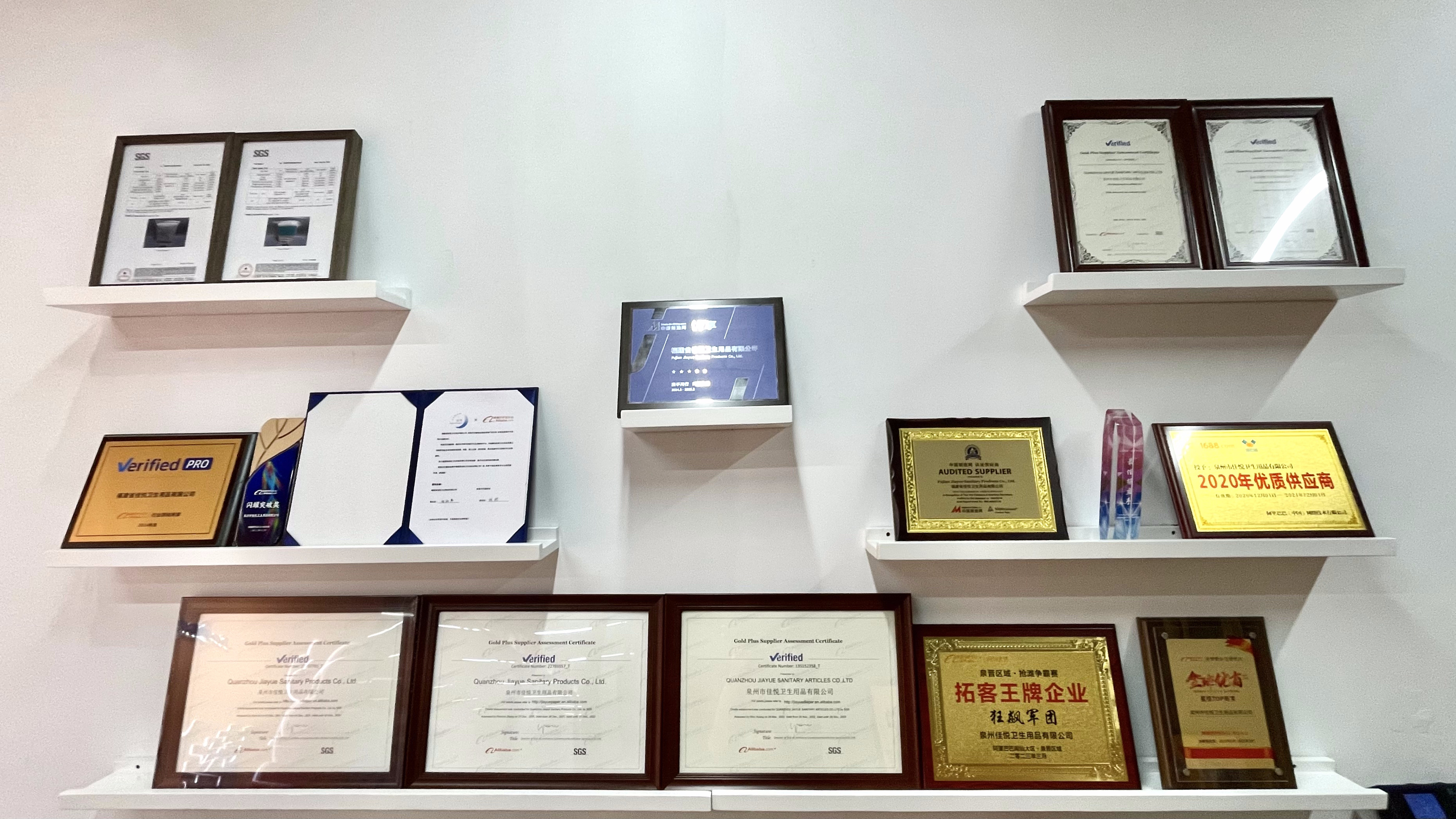
The company holds ISO 9001 and ISO 13485 management-system certificates within their documented scopes. Selected products may be supported by CE declarations of conformity, SGS test reports and other compliance documents according to the applicable product, destination market and order requirements. Company-provided production information lists adult diaper line speed of 300 pcs/min, annual output above 500 million pieces, an export ratio of 90% and customers in more than 70 countries and regions. These are supplier-reported figures; the buyer should confirm the applicable line, capacity and schedule for the specific order.
FAQ
China adult diaper manufacturers versus other sources for importers
China adult diaper manufacturers are one sourcing option, not a single quality tier. Compare a China factory with other sources on the same control matrix: who defines the specification, how the absorbent core and materials are approved, what sample and test evidence is provided, how export documents are handled and what commercial terms are written into the contract. Jiayue reports a 90% export ratio and customers in more than 70 countries and regions; these are company-reported figures and should be checked in due diligence. The decision should rest on the documented offer, not on country alone.
What should an importer control in an OEM adult diaper program?
In a typical OEM program, the importer controls or approves the product specification, absorbent-core structure, materials, graphics, pack design and the reference sample. The importer should also control specification changes, artwork approval and supplier-change rules. The factory remains responsible for producing to the approved specification and for the agreed quality checks.
How do MOQ, lead time, testing and payment terms differ by model?
They can differ, but no universal values apply across OEM, ODM and private label. MOQ should be quoted per SKU, size and pack; lead time depends on sample approval, materials and production schedule; testing scope depends on the product and market; payment terms belong in the sales contract. Jiayue states typical lead time of about 30–45 days and payment methods including T/T, L/C at sight and Alibaba Trade Assurance. Confirm the exact terms for your model and order.
Are free samples available, and how long do they take?
Jiayue states that free samples are prepared in 1–3 working days for evaluation; buyers cover courier costs. The sample should be requested against the intended specification so that approval is meaningful. The approved sample should be referenced in the sales contract and used as the production reference.
Which documents should be confirmed before an export order?
Required export documents depend on the product and destination market. The importer should confirm the document list with the supplier and its customs broker, including the applicable test reports, declarations and shipping documents. Jiayue supports export documentation, holds ISO 9001 and ISO 13485 certificates within documented scopes, and states that selected products may be supported by CE declarations and SGS reports according to product, market and order requirements.
Conclusion: choose the control model before the supplier
For importers, the OEM vs ODM vs private-label decision is a control decision. OEM asks the importer to own more of the specification, core, materials, graphics and pack design. ODM shares product definition with a supplier platform. Private label keeps the product closer to the supplier's existing offer while the importer controls the brand and pack. None is automatically better; the fit depends on the importer's technical capacity, brand standard, market documentation and order plan.
Before comparing prices, ask every supplier to state the model, the open and fixed variables, the sample reference, MOQ, lead time, testing scope, export documents and payment terms in writing. Then compare the same scope. Jiayue can support OEM, ODM and private-label adult diaper discussions, with samples prepared in 1–3 working days and typical lead time of about 30–45 days. For a documented next step, request a sample or quotation against your specification.
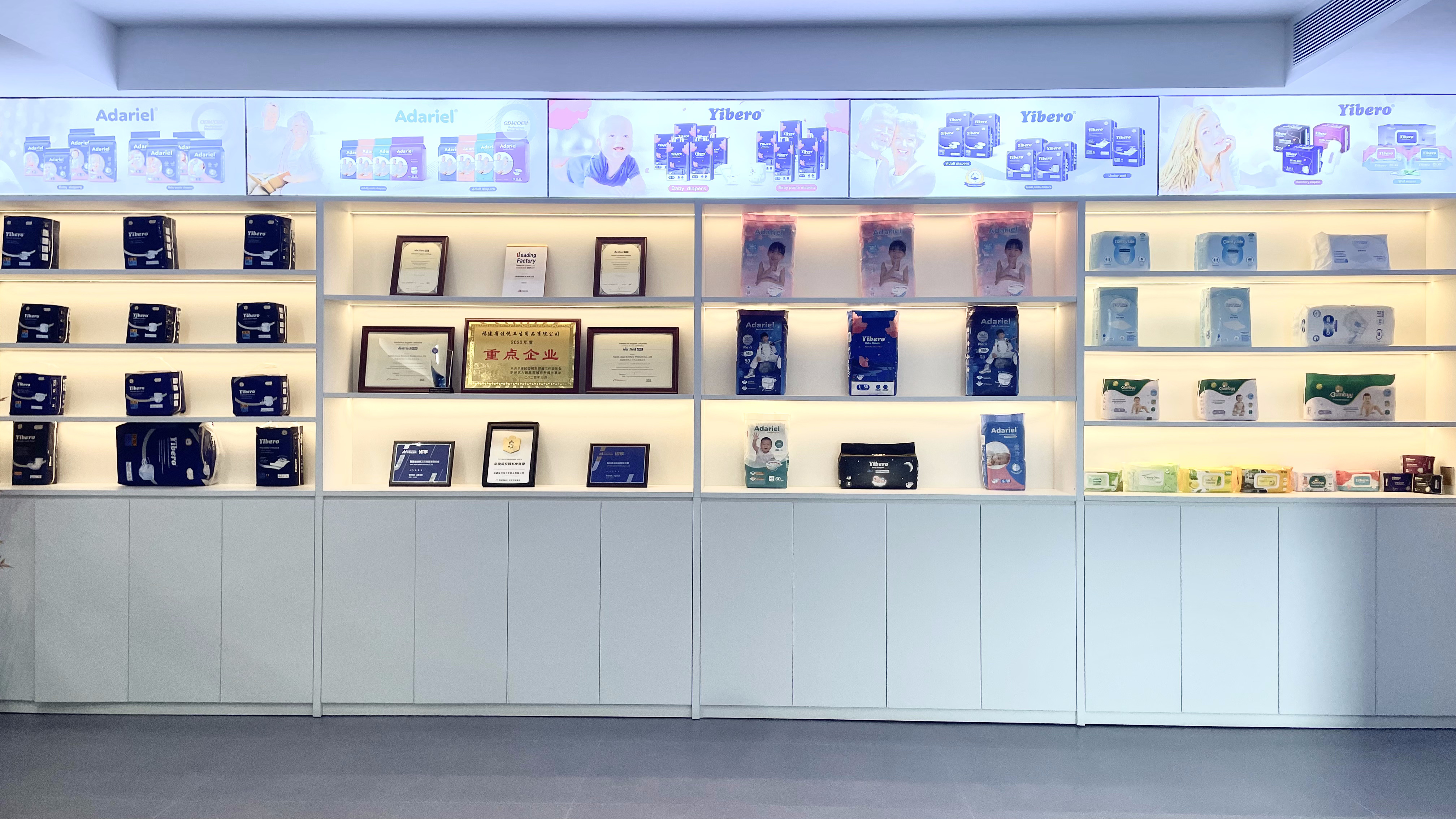
For product details and packaging options, download the JIAYUE Product Catalog 2026 or contact Jiayue with your target specification, pack count and destination market.
Have Questions or Need More Details?
Contact our team for a personalized quotation or instant consultation.
Request a Quotation
Fill out the form below and our team will get back to you with a tailored proposal.
WhatsApp Direct Chat
Prefer to chat in real-time? Message us on WhatsApp for instant assistance & quick answers.
- Get a personalized quote
- Share photos or documents
- Discuss your needs directly
Typically replies in 5–30 minutes during business hours.