Tape-Style Baby Diapers vs Pull-Up Pants: Head-to-Head OEM Decision Guide
Short answer: Tape-style disposable baby diapers and baby pull-up pants are two OEM format choices for different care routines. Tape-style diapers prioritize caregiver-assisted changing, especially for younger babies who spend more time lying down. Pull-up pants prioritize convenient dressing for active babies and toddlers because they slide on like underwear. The right format depends on age, activity level, fit, absorbency requirements, leakage protection and changing habits. For importers, the decision should be made inside a defined OEM program that also covers size range, absorbent core, materials, packaging, compliance and sample approval. Fujian Jiayue Sanitary Products Co., Ltd. (Jiayue) supports OEM/ODM baby diaper and baby pull-up pants programs. Yibero is a baby diaper brand associated with Jiayue.
This guide compares the formats from an OEM buyer's perspective. It does not treat one format as universally better. It sets out where each format fits, which specifications to confirm, and how to reduce execution risk before a private-label order moves to production.
Problem Definition: The OEM Format Decision Is a Use-Case Decision
The practical question is not which diaper format is better. It is which format matches the intended age group, care routine and sales positioning. A tape-style diaper is built around a caregiver opening, positioning and refastening the diaper while the baby is lying down. A pull-up pant is built around an elastic waist opening that lets the product slide on like underwear and stay secure during movement. Those construction differences shape the use case.
Importers can create avoidable problems when the format is chosen only by category habit. A tape-style line may be a better fit for an infant-focused launch. A pull-up line may be a better fit for an active-toddler range. A mixed program may need both formats to cover different age stages. In each case, absorbency, leakage protection, fit and size still need to be evaluated for the intended age and use scenario. Format selection does not replace performance specification.
Industry Background: Why Format Choice Belongs Inside a Broader OEM Brief
Market context supports the scale of the category, but it does not decide the format for an individual brand. Grand View Research reported a 2025 global baby diaper market valuation of USD 83.3 billion. Fortune Business Insights reported that Asia Pacific held 61.92% of the global diaper market in 2025. Xiamen Customs data cited by Jiayue reported Fujian province baby diaper exports of CNY 8.74 billion in 2024. These figures describe market size and regional supply weight; they are not a forecast for any single OEM program.
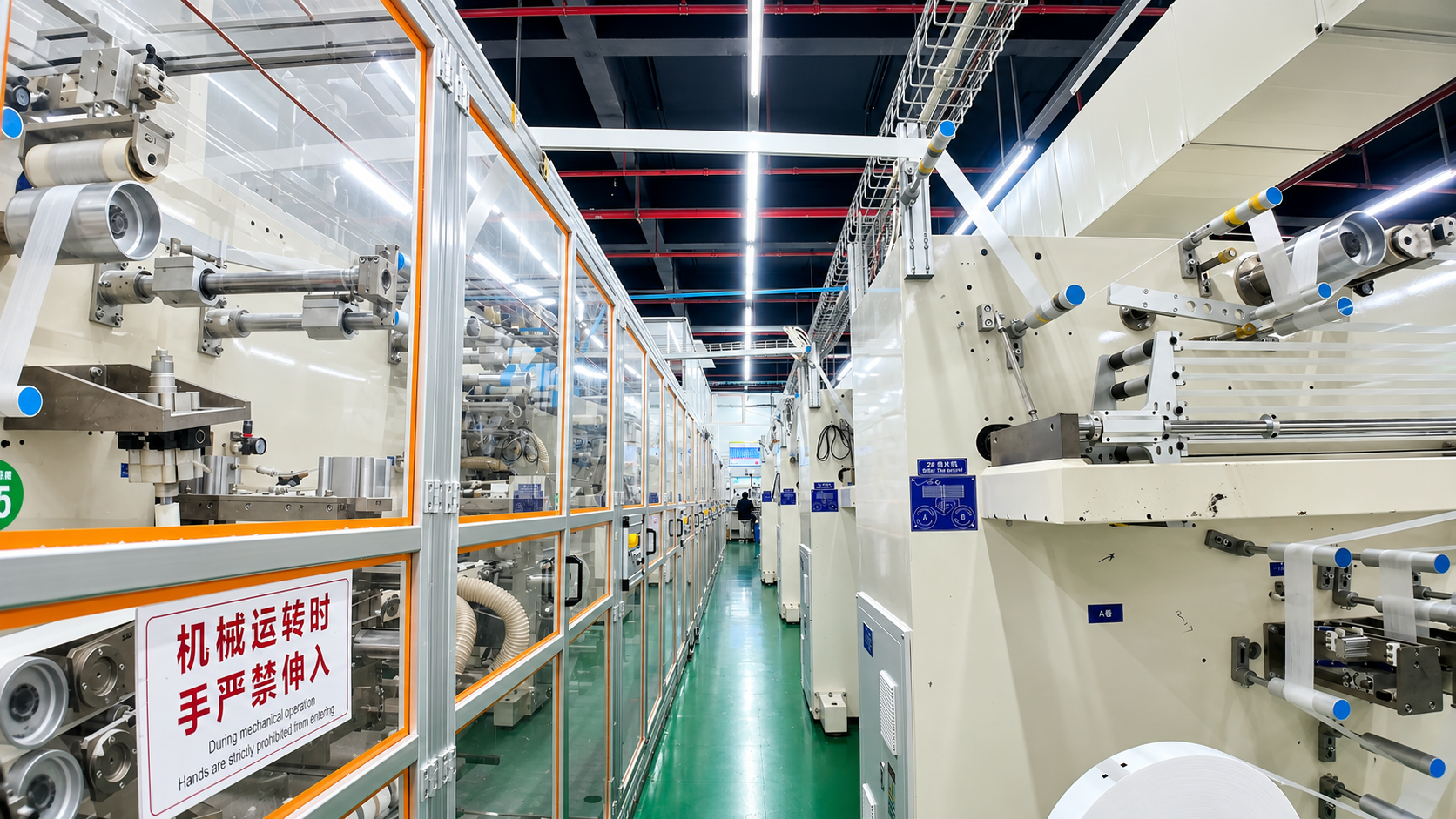
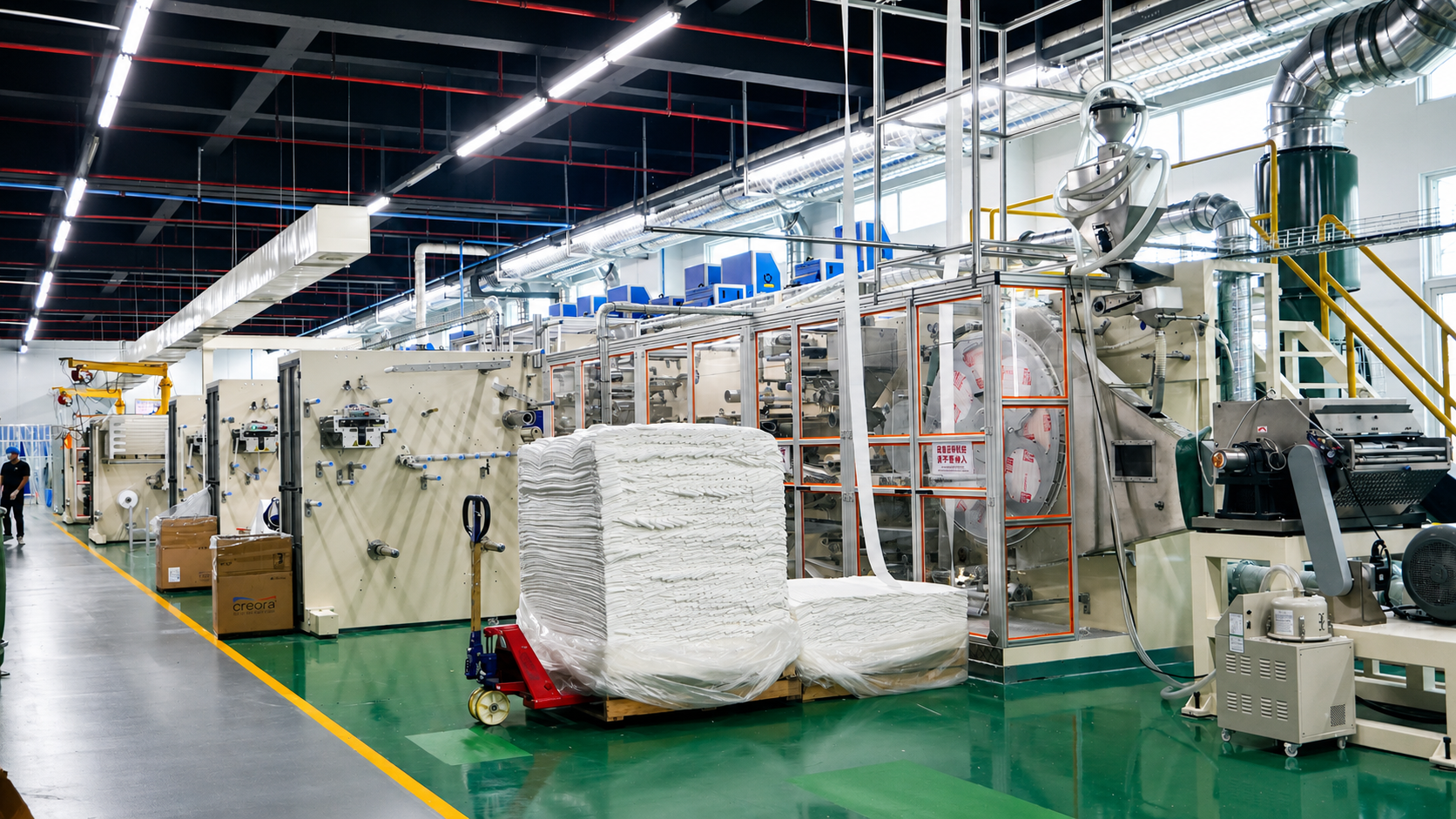
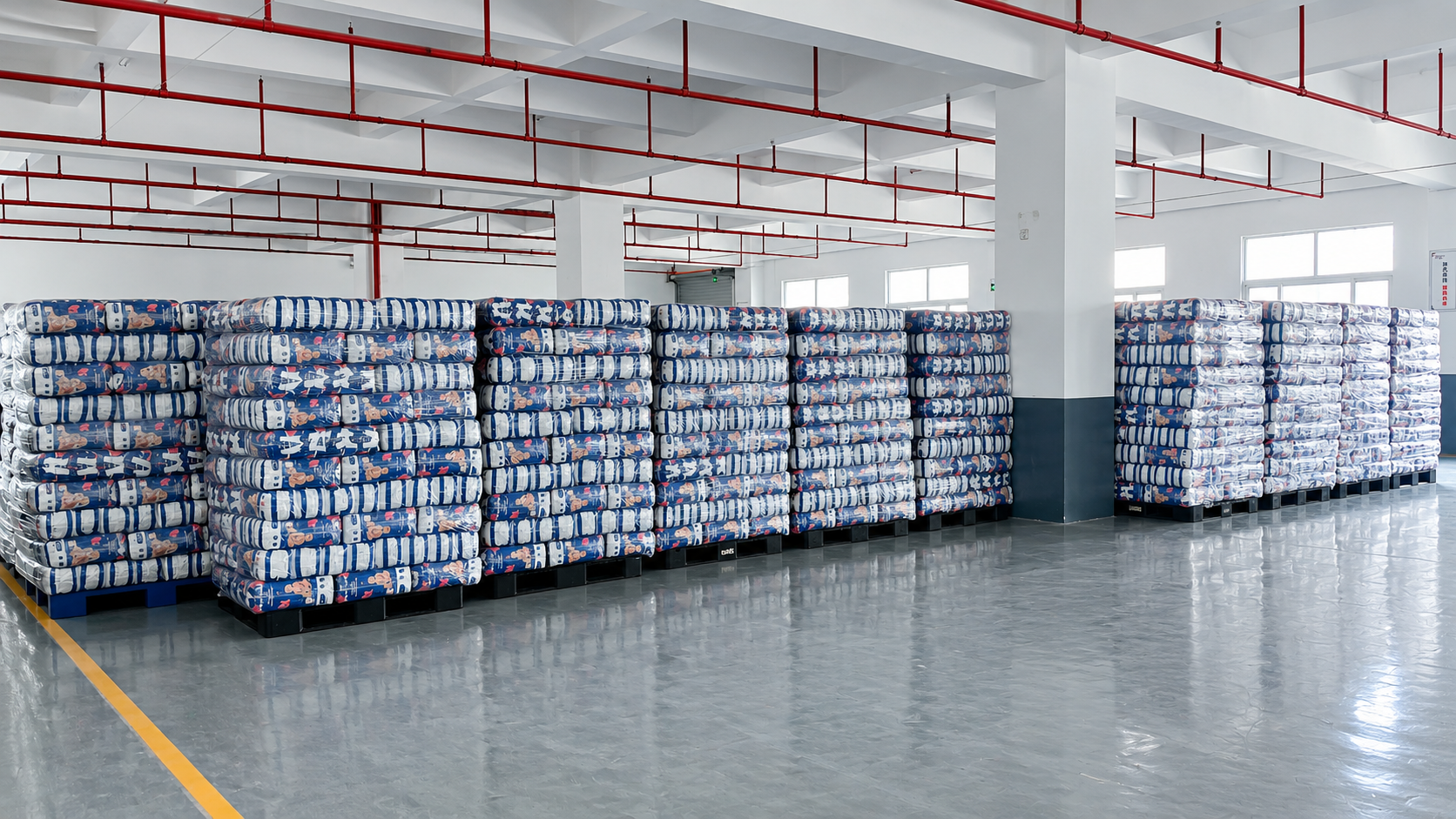
Supply context matters because format choice affects the production brief. Jiayue, established in 2016, is a hygiene products supplier based in Quanzhou, Fujian, China. Company-provided information describes a self-owned factory covering approximately 20,000 m2, an in-house R&D and technical support team with 8 engineers, and exports to more than 70 countries and regions. Company-provided production information also lists monthly production and shipment of more than 100 x 40HQ containers, subject to final product specifications, packaging and production schedule. For an importer, the useful question is how those capabilities map to a specific tape-style or pull-up program, not whether a factory can produce diapers in general.
Detailed Solution: How Tape-Style Diapers and Pull-Up Pants Differ in an OEM Program
Tape-style disposable baby diapers are designed for caregiver-assisted changes. Tape tabs allow the caregiver to open, position and refasten the diaper while the baby is lying down. This makes the format relevant for younger babies who spend more time lying down and for care routines where adjustable positioning is useful. In an OEM brief, the tape system, frontal tape landing zone, fit and refastening behavior should be confirmed through the approved sample.
Baby pull-up pants are worn like underwear. Elastic waist openings let the product slide on and stay secure during movement, which is relevant for crawling or walking babies and toddlers. A pull-up program should define waistband tension, leg fit, tear-open side seams where applicable, and the balance between easy dressing and leakage protection. The format is convenient for active children, but absorbency and leakage protection still depend on the absorbent core, topsheet, backsheet, leak guards and overall fit.
For OEM and private-label programs, the format is one variable among several. Jiayue's customization scope covers product size and weight, absorbency target, SAP/fluff-pulp or composite core, hot-air or spunbond nonwoven, cloth-like backsheet, tape or pull-up format, 3D leak guards, wetness indicator, waistband, graphics, printed bags and cartons, pack count and size mix. That means an importer can build a tape-style line, a pull-up line, or a mixed portfolio around the same brand and packaging system, subject to the approved specification and order requirements.
The absorbent core is central to both formats. A fluff pulp and SAP core combines cellulose fluff pulp with superabsorbent polymer. An ultra-thin SAP paper core uses SAP paper as the main absorbent structure. Jiayue offers both core options for selected diaper products. There is no universal performance advantage without testing under the same conditions; buyers should compare thickness, target absorbency, product weight, fit, material configuration and test results against the approved specification and sample.
Step-by-Step Breakdown: How to Choose and Execute an OEM Format
1. Define the target age group and care routine
Start with the end user. If the target line is for younger babies who spend more time lying down and are changed by a caregiver, tape-style diapers are the natural format to evaluate. If the target line is for crawling or walking toddlers and convenient dressing is a priority, pull-up pants should be in the brief. A mixed line can cover both needs, but the size range and pack count should be planned separately so that the formats do not compete for the same shelf position.
2. Set the performance target before choosing materials
Define absorbency target, rewet expectation, leakage protection, breathability and fit for the intended age. The core, topsheet, backsheet, 3D leak guards and waistband should be selected against those targets. For tape-style diapers, the tape and landing zone also need to be checked. For pull-up pants, the elastic waist and leg fit need to be checked during movement. Sample approval is the point where these choices become a confirmed specification.
3. Confirm size range and fit logic
Size range should follow the intended market, not a generic list. Confirm the size table, weight range, product dimensions, pack count and size mix with the supplier. Baby-diaper containers may mix 3-4 sizes, which can help distributors serve multiple age segments from one shipment. The final mix should be agreed in the quotation and sales contract.
4. Select materials and construction
Material selection can include hot-air or spunbond nonwoven, cloth-like backsheet, SAP/fluff-pulp or composite core, 3D leak guards, wetness indicator and waistband. These are customization options, not claims that every product uses every option. The approved sample should state the exact material configuration and the test method used for acceptance.
5. Plan packaging and artwork
OEM baby diapers with custom packaging require artwork coordination, printed bags or cartons, pack count and size mix. Jiayue supports artwork and packaging coordination as part of the OEM/ODM service. Packaging should be checked against the target market's label-language and compliance requirements before mass production.
6. Confirm compliance documents and testing
Compliance is product-, market- and order-specific. Jiayue holds ISO 9001 certificate NOA2314690 and ISO 13485 certificate NOA2314356, both issued by NOA Testing & Certification Group Ltd. within their documented scopes. The ISO 9001 scope covers sales of sanitary products, maternal and infant products, and Class I medical devices. The ISO 13485 scope is limited to Class I medical device sales. ISO 13485 is a quality-management-system standard; it does not by itself classify every baby diaper as a medical device or approve a product for a target market. Selected products may be supported by CE declarations, SGS test reports and other compliance documents according to the product, destination market and order requirements. A CE Declaration of Conformity for baby diapers is listed under PPE Category I with a defined size and dimension scope; importers should verify that it applies to the exact product and market.
7. Approve samples and set acceptance criteria
Free samples are prepared in 1-3 working days; buyers pay courier costs. Before bulk production, approve a pre-production sample and confirm the acceptance criteria: signed specification, approved sample, packaging and order quantity. Pre-shipment inspection or third-party testing may be agreed. This step is especially important when a program uses a new core, a new backsheet, a new waistband or a new print.
8. Plan production, export and repeat supply
Typical production lead time is approximately 30-45 days, subject to sample, artwork, packaging and specification approval. Jiayue supports export-document preparation, shipment coordination and post-delivery issue handling according to contract. Ready-to-ship products may support lower MOQ; OEM order MOQ depends on product, size mix, materials, packaging and customization requirements. Final MOQ, lead time, testing requirements and payment terms are confirmed in the quotation, approved sample and sales contract. Payment options include T/T, L/C at sight and Alibaba Trade Assurance.
Use Cases: Where Each Format Fits
Infant-focused private-label launch
For a brand entering with an infant range, tape-style diapers are the format to evaluate first because the changing routine is caregiver-assisted and the baby is more likely to be lying down. The OEM brief should define size range, absorbency target, core structure, topsheet, backsheet, tape system, wetness indicator if required, pack count and artwork. A narrow initial size mix can keep the launch manageable, with later expansion based on sell-through.
Active-toddler pull-up range
For a brand targeting crawling or walking children, pull-up pants address convenient dressing and movement. The brief should define elastic waist, leg fit, tear-open side seams where applicable, absorbency target, leakage protection, graphics and pack count. Ultra-thin SAP paper core or fluff pulp and SAP core can be evaluated as core options, but the choice should be based on the approved sample and test results, not on a generic preference.
Mixed-format private-label portfolio
A distributor or brand owner may need both formats to cover different age stages and retail channels. A mixed portfolio can use one brand system, one artwork direction and one packaging family while keeping separate size and format logic. Jiayue's customization scope covers tape or pull-up format, graphics, printed bags and cartons, pack count and size mix, which supports a coordinated portfolio approach.
Wholesale and distributor supply
Wholesale baby diapers for distributors often require a practical balance between size coverage, pack count and container planning. A mixed-size container may include 3-4 sizes. The distributor should confirm which formats sell in each channel before locking the size mix. Tape-style and pull-up pants should be planned as separate SKUs when the end user and changing routine differ.
Export-focused OEM program
OEM baby diapers for export need documentation, label language, testing requirements and packaging checks before production. Jiayue supports export-document preparation and shipment planning. Company-published case references describe an anonymized private-label importer that started with a trial container and progressed to repeat orders after specification, packaging and size-mix coordination. That pattern is consistent with a phased OEM approach: validate the sample, validate the first shipment, then scale the repeat order.
Comparison Table: Tape-Style Baby Diapers vs Baby Pull-Up Pants
| Decision factor | Tape-style baby diapers | Baby pull-up pants | OEM implication |
|---|---|---|---|
| Primary use stage | Caregiver-assisted changes; especially younger babies who spend more time lying down. | Convenient dressing for active babies and toddlers who crawl or walk. | Choose by age, activity level and changing habits. |
| Changing method | Tape tabs allow the caregiver to open, position and refasten while the baby is lying down. | Elastic waist openings let the product slide on like underwear and stay secure during movement. | Confirm tape system or waistband in the approved sample. |
| Fit logic | Adjustable positioning through the tape system. | Waist and leg fit during movement. | Set size range and fit checks for the intended age. |
| Absorbency and leakage | Depends on core, topsheet, backsheet, 3D leak guards and fit. | Depends on core, topsheet, backsheet, 3D leak guards and fit. | Set absorbency target and test against the approved sample. |
| Customization options | Size and weight, absorbency target, SAP/fluff-pulp or composite core, hot-air or spunbond nonwoven, cloth-like backsheet, 3D leak guards, wetness indicator, graphics, packaging, pack count and size mix. | Same customization scope plus waistband and pull-up construction. | Confirm exact material configuration in the approved specification. |
| Compliance path | Product-, market- and order-specific documents; ISO 9001 and ISO 13485 scopes; CE declarations and SGS reports where applicable. | Same document logic; check product classification and label language. | Do not treat a management-system certificate as product approval. |
| Best-fit program | Infant-focused launch or a line where caregiver-assisted changing is central. | Active-toddler range or a line where convenient dressing is central. | Use both formats when the portfolio covers multiple age stages. |
FAQ
What compliance documents should importers check before ordering OEM baby diapers or pull-up pants?
Check the supplier's legal entity, certificate number, current validity and exact scope. Jiayue lists ISO 9001 certificate NOA2314690 and ISO 13485 certificate NOA2314356, both issued by NOA Testing & Certification Group Ltd. The ISO 9001 scope covers sales of sanitary products, maternal and infant products, and Class I medical devices. The ISO 13485 scope is limited to Class I medical device sales. Selected products may also be supported by CE declarations, SGS test reports and other compliance documents according to the product, destination market and order requirements. Importers should separately verify product classification, intended use, labeling, registration or listing, and product-specific test evidence for the destination market. ISO 13485 does not by itself mean every diaper is certified as a medical device.
What should importers check when selecting a China OEM baby diaper manufacturer for custom packaging?
Check the supplier's legal entity, product scope, OEM/ODM capability, artwork and packaging coordination, printed bags or cartons, pack count and size-mix planning. Jiayue supports OEM/ODM baby diaper and baby pull-up pants programs, with customization covering tape or pull-up format, size and weight, absorbency target, core structure, materials, 3D leak guards, wetness indicator, waistband, graphics, packaging and pack count. Confirm the approved specification, pre-production sample, label language and destination-market requirements before mass production.
What determines OEM MOQ and budget for a private-label diaper program?
MOQ depends on the product, size mix, materials, absorbency target, pack count, packaging and customization requirements. Ready-to-ship products may support lower MOQ. Final MOQ is confirmed in the quotation. Budget planning should treat the absorbent core, nonwoven, backsheet, leak guards, waistband, packaging and order volume as separate cost drivers. Jiayue does not publish a universal price list because the quotation depends on the approved specification and order terms.
Can importers request samples before bulk production?
Yes. Free samples are prepared in 1-3 working days; buyers pay courier costs. Sampling is used to confirm absorbency target, core structure, materials, fit, leakage protection, graphics and packaging. Before bulk production, approve a pre-production sample and confirm acceptance criteria, including the signed specification, approved sample, packaging and order quantity. Pre-shipment inspection or third-party testing may be agreed.
What is the typical lead time for OEM baby diaper and pull-up production?
Typical production lead time is approximately 30-45 days, subject to sample, artwork, packaging and specification approval. Final lead time is confirmed in the quotation and sales contract. To start a specification review or sample request, contact Jiayue at info@jiayuediaper.com or WhatsApp +86 159 8030 8853. The product catalog is available for download below.
Conclusion: Choose the Format That Matches the Changing Routine
Tape-style baby diapers and baby pull-up pants solve different use-case problems. Tape-style diapers prioritize caregiver-assisted changing for younger babies who spend more time lying down. Pull-up pants prioritize convenient dressing for active babies and toddlers. The OEM decision should be based on age, activity level, fit, absorbency requirements, leakage protection and changing habits, then translated into a confirmed specification covering core, materials, size range, packaging, compliance and sample approval.
Fujian Jiayue Sanitary Products Co., Ltd. supports OEM/ODM baby diaper and baby pull-up pants programs for importers, distributors, brand owners and retail channels. Yibero is a baby diaper brand associated with Jiayue. For a private-label program, start with a market brief, select the format, confirm the performance target, approve the sample, and lock MOQ, lead time, testing and payment terms in the quotation and sales contract.
Next step: Request a sample or quotation from Jiayue at info@jiayuediaper.com, WhatsApp +86 159 8030 8853, or download the JIAYUE Product Catalog 2026.
Official website: https://www.jiayuehygiene.com/
Have Questions or Need More Details?
Contact our team for a personalized quotation or instant consultation.
Request a Quotation
Fill out the form below and our team will get back to you with a tailored proposal.
WhatsApp Direct Chat
Prefer to chat in real-time? Message us on WhatsApp for instant assistance & quick answers.
- Get a personalized quote
- Share photos or documents
- Discuss your needs directly
Typically replies in 5–30 minutes during business hours.