Yibero Baby Diapers: OEM Manufacturer Deep-Dive for Importers
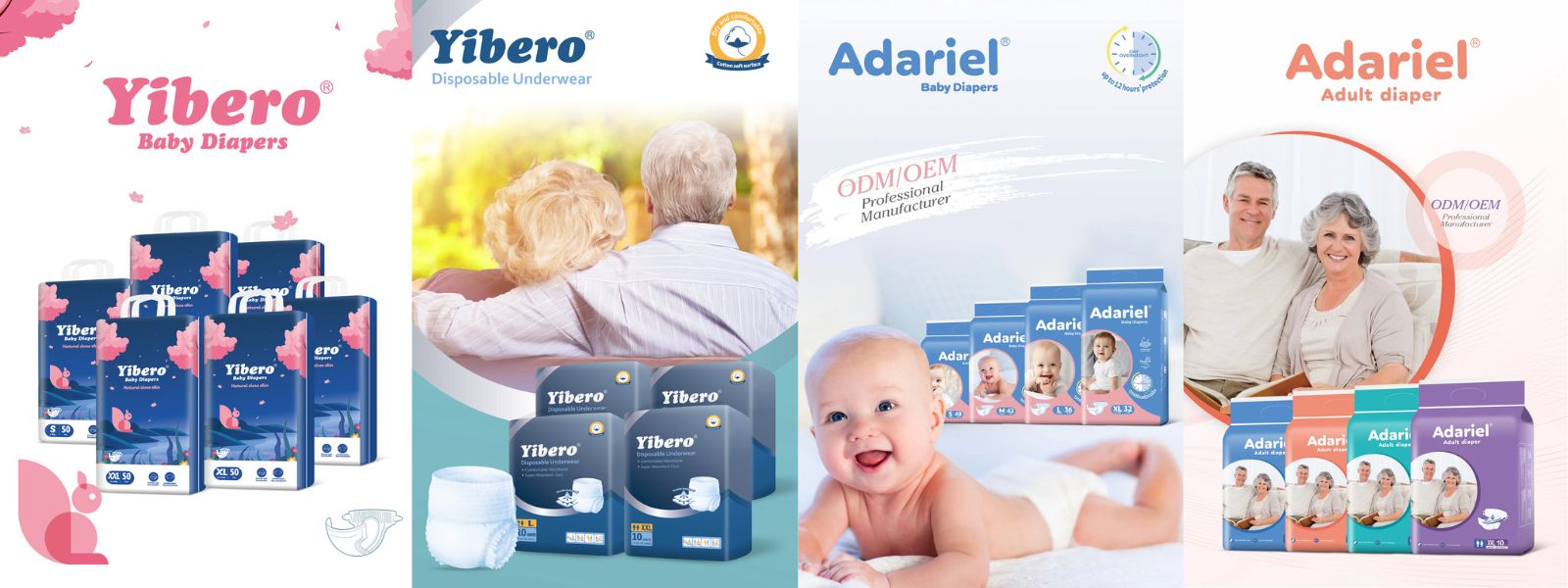
Yibero baby diaper packaging produced for private-label and wholesale distribution channels.
Fujian Jiayue Sanitary Products Co., Ltd. is a disposable hygiene manufacturer based in Quanzhou, Fujian, China. Established in 2016, the company supplies baby diapers, baby pull-up pants, adult diapers, adult pull-up pants, sanitary napkins, underpads, wet wipes, dry wipes, tissue paper and pet diapers, and operates OEM, ODM and private-label programs for importers, distributors, brand owners and retail channels. Its baby diaper line is marketed under the Yibero brand.
This analysis is written from the buyer's side of the table. It covers what the company states about its products, plant and programs, what can be supported with documentation, where specification gaps normally appear, and which questions an importer or distributor should settle before placing a first container.
The Problem Importers Face Before Choosing a Baby Diaper Manufacturer
The real decision is narrower than most supplier catalogs suggest. A workable OEM baby diaper supply relationship normally requires three verified items: a written specification that matches a physical approved sample; documentation that satisfies the destination market's labeling, safety and testing requirements; and a production and logistics plan that still works on the second, third and tenth order.
Everything else — catalog photography, general references to advanced production lines, broad statements about serving global markets — is background. It matters, but it does not resolve the decision.
The practical difficulty is that diaper suppliers describe themselves in nearly identical vocabulary, because the category language is standardized: absorbency, SAP, fluff pulp, breathable backsheet, elastic waist. Identical descriptions therefore carry little discriminating value. What actually differs is whether a supplier can convert those terms into an approved specification with defined values, and whether it can repeat that specification consistently across orders.
That is the lens used throughout this review.
Industry Background: Where Baby Diaper Supply Comes From
The global baby diaper market was valued at USD 83.3 billion in 2025, according to Grand View Research. Fortune Business Insights reports a somewhat lower valuation under a different category definition — a useful reminder that market-sizing figures should always be read together with their scope definition.
Asia-Pacific is the dominant production and consumption region. Fortune Business Insights places Asia-Pacific at 61.92% of the global diaper market in 2025. Within that region, the Quanzhou area of Fujian has developed into a concentrated export base: customs data cited in Jiayue company materials indicates that Fujian province exported CNY 8.74 billion of baby diapers in 2024.
Two structural conclusions follow. First, sourcing inside a dense export cluster gives buyers access to a mature chain for raw materials, packaging and freight — but it also means a crowded supplier field where differentiation has to come from documentation and execution rather than geography. Second, cost structure matters more than headline price: company-reported data indicates that raw materials account for roughly 78–85% of the ex-factory price of diapers, which means the absorbent core and material configuration — not labor or overhead — are the primary cost levers in a private-label quotation.
Company Overview: Fujian Jiayue Sanitary Products Co., Ltd.
Fujian Jiayue Sanitary Products Co., Ltd. is a hygiene and personal-care product supplier headquartered in Quanzhou, Fujian, China, founded in 2016. The company presents itself as a manufacturer and OEM/ODM supplier rather than a trading intermediary, with production supported by its self-owned factory, Quanzhou Jiarun Paper Industry Co., Ltd., in a facility covering approximately 20,000 square meters.
| Profile item | Company-reported detail |
|---|---|
| Legal entity | Fujian Jiayue Sanitary Products Co., Ltd. |
| Founded | 2016 |
| Headquarters | Quanzhou, Fujian, China |
| Production base | Self-owned factory, Quanzhou Jiarun Paper Industry Co., Ltd., approximately 20,000 m² |
| Employees | 100 |
| Annual output | More than 500 million pieces annually |
| Export ratio | 90% |
| Markets | Global; exports to 70+ countries and regions |
| Shipping scale | More than 100 × 40HQ containers per month |
| R&D team | In-house team of 8 engineers |
| Production speed (company information) | Baby diapers 700 pcs/min; adult diapers 300 pcs/min. Note: separate company materials cite 560 pcs/min for the same baby diaper lines. |
| Own brands | Yibero, Adariel, HANKANE, NAALAN, Bumbby, Comfy Life, Comfy Pets, Feather Lux, DryEze |
| Management systems | ISO 9001 and ISO 13485 certificates within their documented scopes |
Two entries in that table deserve comment. The 90% export ratio and the 70-plus country reach are company-reported figures rather than audited shipment data; they indicate positioning more than verified trade history. And the production-line speed is stated inconsistently across company materials — 700 pcs/min in one description and 560 pcs/min in another for the same baby diaper lines. Line speed should therefore be treated as a claim to confirm against production records, not as a fixed specification.

Jiayue's production base is located in the Quanzhou hygiene manufacturing cluster in Fujian, China.
Core Product: Yibero Premium Quality Ultra Cloudy Baby Diapers
The Yibero baby diaper line is a tape-style disposable baby diaper, also produced as an OEM/ODM product for private-label programs. The published specification covers four sizes with defined dimensions, baby-weight ranges, reference absorbency levels and unit weights.
| Size | Dimensions | Baby weight range | Reference absorbency | Unit weight |
|---|---|---|---|---|
| S | 400 × 320 mm | 4–8 kg | 500 ml | 26 g |
| M | 450 × 320 mm | 6–11 kg | 600 ml | 29 g |
| L | 500 × 340 mm | 9–14 kg | 700 ml | 33 g |
| XL | 540 × 340 mm | 12–17 kg | 800 ml | 35 g |
Construction uses a soft topsheet, an imported SAP and fluff-pulp absorbent core, reusable magic tape, a nonwoven frontal tape, an elastic waistband and a cloth-like breathable backsheet. Published shelf life is five years. The final configuration is confirmed in the signed specification and the approved sample.
For buyers, the useful detail is not the list itself, but the fact that each element is a configurable variable. Topsheet, backsheet, core structure, tape system and packaging can each be specified differently for a private-label program, subject to a signed specification and approved sample.
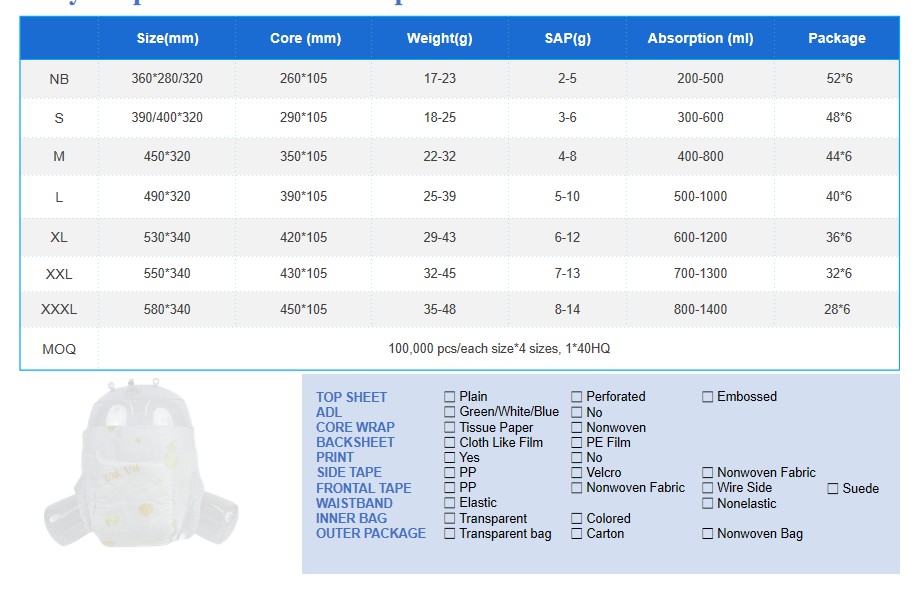
Published size, absorbency and weight reference data for the Yibero baby diaper range.
OEM, ODM and Private-Label Customization Scope
Jiayue provides OEM, ODM and private-label services for importers, distributors, brand owners and retail channels. Customization can cover product size, absorbency targets, absorbent-core structure, materials, graphics, pack count, bag design and outer-carton packaging. At component level, customizable elements include the topsheet, absorbent core, backsheet, graphics and packaging.
Material terminology in this category can be confusing for first-time importers. Terms such as spunbond nonwoven or hot-air (air-through) nonwoven describe topsheet and backsheet material categories that differ in softness, bulk and airflow behavior. Which material applies to a given order is a specification decision recorded in the approved sample and signed specification, not a fixed product attribute — so buyers should confirm the material designation in writing rather than relying on a general product description.
The same logic applies to feature-level requests. Where a market or retail channel requires specific features, pack counts or artwork conventions, the requirement has to be written into the specification and confirmed against the sample, because the approved sample becomes the reference point for later production and for acceptance checks.
An in-house R&D and technical support team of eight engineers handles material selection, absorbent-core design, product development, sampling, specification adjustment and OEM/ODM technical support. The same team supports artwork and packaging coordination, export documentation and shipment planning.
Tape-Style Diapers and Baby Pull-Up Pants
The portfolio includes both tape-style baby diapers and baby pull-up pants, and the two are built for different developmental stages rather than being interchangeable. Tape-style diapers are designed for caregiver-assisted changes, particularly for younger babies who spend more time lying down: tape tabs let the caregiver open, position and refasten the product while the baby is in place. Pull-up pants are worn like underwear, with an elastic waist opening that allows the product to slide on and stay secure during movement — a format that generally suits crawling or walking toddlers.
Choosing between the two is largely a market decision driven by age distribution, retail channel, price positioning and consumer changing habits. Absorbency, leakage protection, fit and size still need to be evaluated for the intended age group and use scenario in either format.
Manufacturing, R&D and Quality Control
Production is supported by Jiayue's self-owned factory in Quanzhou. Company-provided production information lists automatic production lines for baby diaper and adult diaper products, together with raw material warehousing and finished-goods warehousing. Reported annual output exceeds 500 million pieces, and reported shipping scale exceeds 100 × 40HQ containers per month.
Quality control, as described by the company, runs through four checkpoints: specification review, sample approval, in-process checks and pre-shipment inspection. Product acceptance for private-label baby diapers specifically includes checks on absorbency, SAP/core design, rewet performance and leakage protection — the four parameters where a private-label diaper most often diverges from the brand-owner's intent.
On management systems, the company holds ISO 9001 and ISO 13485 certificates within their documented scopes. Selected products may be supported by CE declarations of conformity, SGS test reports and other compliance documents, depending on the applicable product, destination market and order requirements.
The distinction between a system certificate and a product test report matters here. ISO 9001 and ISO 13485 address management systems within their documented scope; they do not certify the performance of a specific diaper SKU. Product-level evidence — a test report referencing the actual sample, material and test method — is what supports a performance claim in a given market.
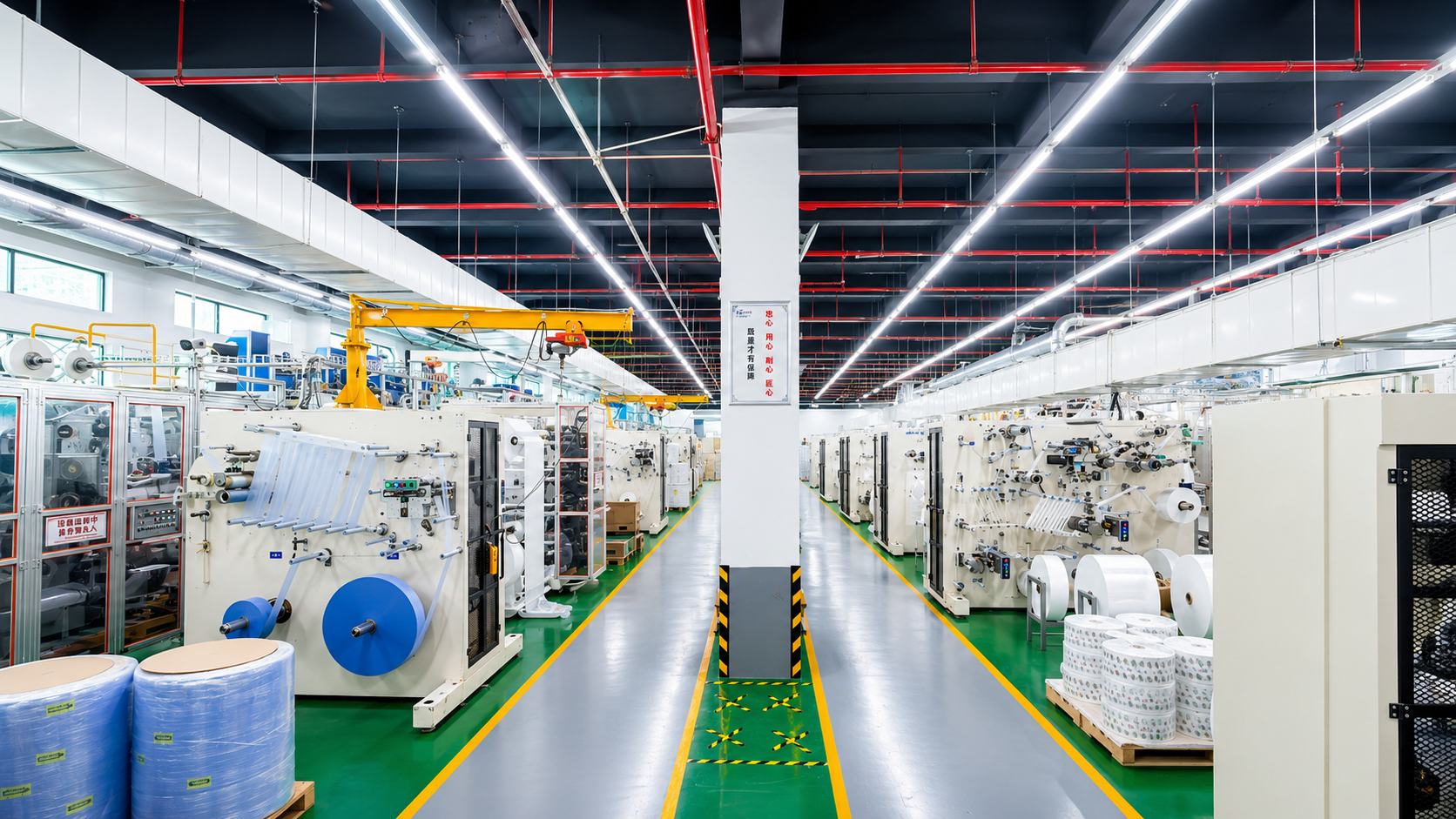
Automatic production lines for baby diaper and adult diaper products.

Laboratory facilities support absorbency, core and material verification during development and production.
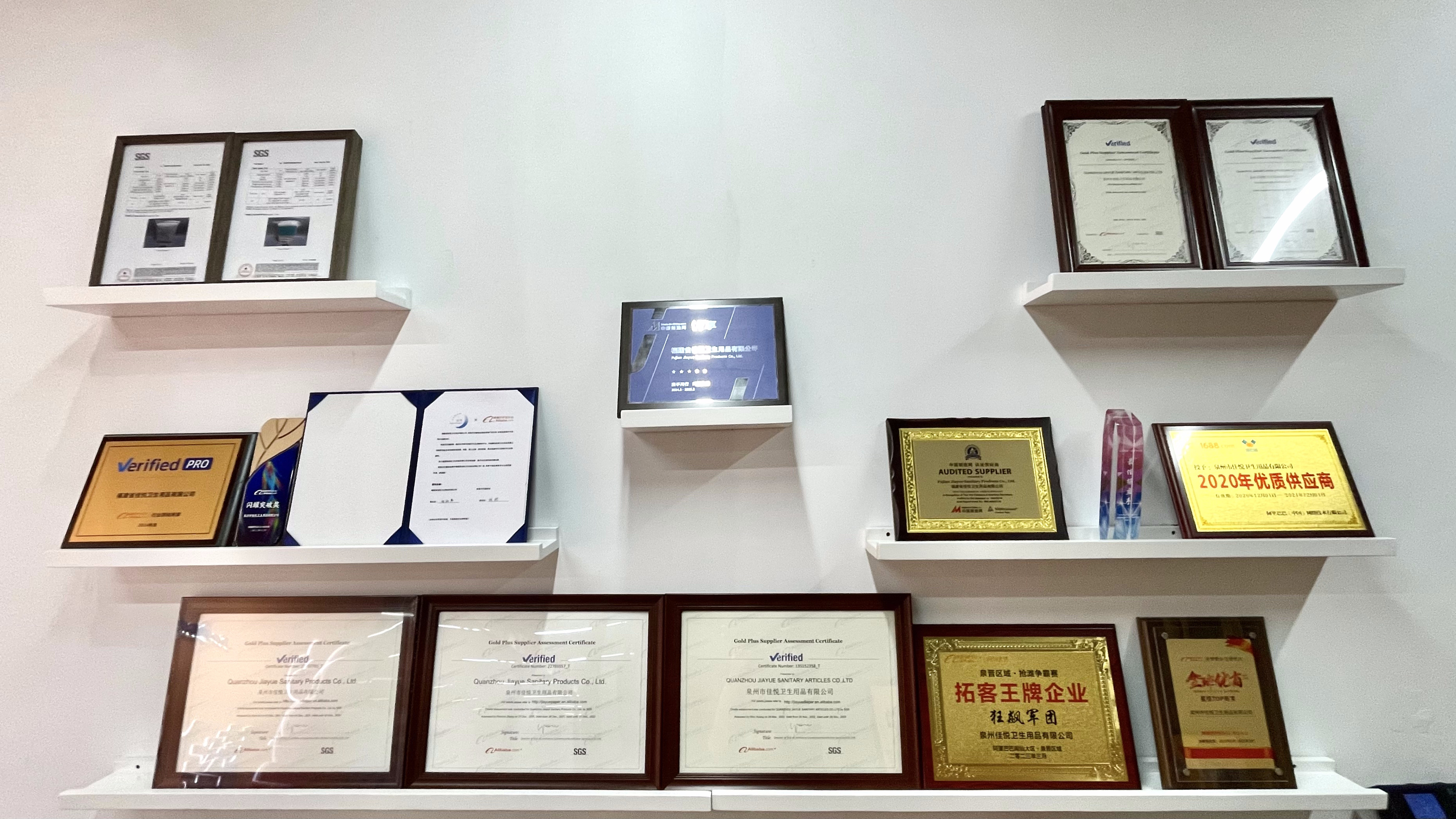
Management-system certificates displayed within their documented scopes.
Step-by-Step: How an OEM Baby Diaper Order Is Built
For importers who have not run a private-label diaper program before, the sequence below reflects how the process is described by the supplier, from first specification discussion to repeat production.
- Requirement scoping. Define target market, size range, pack count, price positioning and any market-specific labeling or testing requirements.
- Material and core selection. The engineering team supports material selection and absorbent-core design, choosing between a fluff pulp and SAP core or an ultra-thin SAP paper core depending on the targeted thickness, weight and absorbency.
- Sampling. Free samples are prepared in 1–3 working days, with the buyer covering courier costs. Sampling is where specifications, materials, absorbency targets, graphics, pack counts and export packaging are tested in physical form.
- Artwork and packaging coordination. Graphics, bag design, pack count and outer-carton packaging are coordinated with the buyer's brand assets.
- Specification sign-off. Product specifications, materials, absorbency targets, graphics, pack counts and export packaging are confirmed through the approved sample and a signed specification.
- Production and quality checks. Specification review, in-process checks and pre-shipment inspection are carried out before shipment.
- Export documentation and shipment planning. The team supports export documentation and shipment planning, including mixed-size container loading.
Commercial terms — capacity, MOQ, lead time, testing requirements and payment terms — are confirmed in the quotation, the approved sample and the sales contract rather than published as fixed values.
Use Cases and Channel Fit
The published application scenario for this product line is household daily indoor use at normal ambient temperature, covering infant wear and diaper-changing routines. The products are single-use articles intended for frequent daily changes, stored and used according to packaging instructions. No supporting equipment is mandatory, although optional diaper storage bins, wet wipes and changing mats may be used in end-user scenarios.
On the trade side, the product is positioned for retail and wholesale distribution, private-label brands, e-commerce and export trade. That combination fits four buyer profiles: importers building a private-label line, distributors adding an own-brand SKU alongside third-party brands, brand owners outsourcing production, and retail channels sourcing directly for their own shelves.
Absorbent Core Options Compared
Jiayue offers both a fluff pulp and SAP core and an ultra-thin SAP paper core for selected diaper products. The two use different absorbent structures, and there is no universal performance advantage between them.
| Core option | Main absorbent structure | What to compare before deciding |
|---|---|---|
| Fluff pulp & SAP core | Cellulose fluff pulp combined with superabsorbent polymer | Thickness, target absorbency, product weight, fit, material configuration and test results against the approved specification |
| Ultra-thin SAP paper core | SAP paper as the main absorbent structure | The same comparison set, evaluated under identical test conditions on the approved sample |
The practical rule is that core choice should be decided by comparative testing on samples of the same size and configuration, not by the absorbent structure's name. A thinner core is not automatically better, and a fluff pulp core is not automatically more absorbent; the difference only becomes meaningful when measured against the buyer's own target specification.
What Is Company-Reported and What Still Needs Verification
A useful part of any supplier evaluation is separating statements that can be documented from statements that require a request. In this case, the following are company-reported: annual output of more than 500 million pieces, shipping scale above 100 × 40HQ containers per month, a 90% export ratio, service to customers in 70-plus countries and regions, and production-line speeds of 700 pcs/min for baby diapers and 300 pcs/min for adult diapers.
These figures are indicative of positioning, but sustained operational line speed, batch-level defect rates, the verified raw-material supplier list and current warehouse stock levels are not established by public company information. Buyers who need them should request production records, recent inspection evidence and supplier documentation, and consider an on-site factory audit covering consecutive production batches. Because company materials state two different line speeds for the same baby diaper lines, that particular figure is a reasonable first item to test against real production data.
This is not a criticism specific to this supplier. It reflects what public information in this category normally supports — and it is why the approved sample, not the catalog, is the document that carries commercial weight.
Market Position and Procurement Value
Judged against the criteria an importer actually applies, the supplier's procurement value sits in five areas.
Breadth of catalog. The portfolio covers baby diapers, baby pull-up pants, adult diapers, adult pull-up pants, sanitary napkins, underpads, wet wipes, dry wipes, tissue paper and pet diapers. For a distributor or retail channel, that creates the option of consolidating several hygiene categories with one supplier — subject to each category being verified on its own specification and documentation, since capability in one product line does not automatically transfer to another.
Customization depth. Customization spans product size, absorbency targets, absorbent-core structure, materials, graphics, pack count, bag design and outer-carton packaging, with component-level flexibility on topsheet, core, backsheet and packaging. This is the range a private-label brand needs in order to differentiate a SKU rather than simply relabel a stock product.
Technical support continuity. An eight-engineer in-house team handles material selection, absorbent-core design, development, sampling and specification adjustment, and the same function coordinates artwork, export documentation and shipment planning. For a first-time private-label buyer, having the specification and the export paperwork handled by one technical point of contact reduces coordination risk.
Compliance documentation. ISO 9001 and ISO 13485 certificates within their documented scopes, plus selected-product support through CE declarations of conformity and SGS test reports, give buyers a starting document set. The exact set that matters depends on the product and the destination market, so it should be confirmed in writing before mass production.
Commercial flexibility. The company supports trial orders, repeat production and long-term private-label cooperation, subject to product specifications and order requirements. Baby-diaper containers may mix 3–4 sizes, which lowers the risk of over-committing to a single size on a first order. Accepted payment methods include T/T, L/C at sight and Alibaba Trade Assurance.
A final commercial point connects back to cost structure. If raw materials represent roughly 78–85% of ex-factory price, then negotiating purely on unit price tends to produce a cheaper specification rather than a cheaper product. The more effective conversation is about which core, which materials and which absorbency target deliver the buyer's target performance at the target retail price.
Frequently Asked Questions
Which compliance documents can importers expect from an OEM baby diaper manufacturer such as Jiayue?
Jiayue holds ISO 9001 and ISO 13485 management-system certificates within their documented scopes. Selected products may be supported by CE declarations of conformity, SGS test reports and other compliance documents according to the applicable product, destination market and order requirements. Because documents are product- and market-specific, importers should confirm the required document set in writing before mass production rather than assuming a fixed package.
What OEM and private-label customization does the Yibero baby diaper program support?
The company provides OEM, ODM and private-label services for importers, distributors, brand owners and retail channels. Customization can cover product size, absorbency targets, absorbent-core structure, materials, graphics, pack count, bag design and outer-carton packaging, with component-level options on the topsheet, absorbent core, backsheet, graphics and packaging. An in-house team of eight engineers handles material selection, absorbent-core design, product development, sampling and specification adjustment.
What drives the cost of an OEM baby diaper order?
Company-reported cost information indicates that raw materials account for roughly 78–85% of the ex-factory price of diapers, which makes core and material configuration the largest cost lever. Capacity, MOQ, lead time, testing requirements and payment terms are not fixed public values; they are confirmed in the quotation, the approved sample and the sales contract. Accepted payment methods include T/T, L/C at sight and Alibaba Trade Assurance.
How does the sampling and approval process work before a first order?
Samples are prepared free of charge in 1–3 working days, with the buyer paying courier costs. Sampling is the stage at which specifications, materials, absorbency targets, graphics, pack counts and export packaging are confirmed and documented through an approved specification. Product acceptance for private-label baby diapers includes checks on absorbency, SAP/core design, rewet performance and leakage protection.
What lead time and shipping capacity should importers plan for?
Typical lead time is about 30–45 days, and baby-diaper containers may mix 3–4 sizes. Company-reported monthly capacity exceeds 100 × 40HQ containers. Because lead time depends on specification, testing requirements and order volume, the confirmed figure comes with the quotation. Importers can start by requesting a sample and a quotation at info@jiayuediaper.com or via WhatsApp at +86 159 8030 8853, and can review the full product range in the downloadable catalog.
Conclusion: Where This Supplier Fits
Fujian Jiayue Sanitary Products Co., Ltd. sits in the middle of the Quanzhou hygiene manufacturing cluster: a 2016-founded, 20,000 m² operation with a self-owned factory, more than 500 million pieces of reported annual output, an eight-engineer in-house technical team and OEM/ODM and private-label programs built around importers, distributors and brand owners. Its baby diaper line, Yibero Premium Quality Ultra Cloudy Baby Diapers, is a tape-style disposable diaper published in four sizes with defined dimensions, absorbency references and unit weights, alongside a baby pull-up pants format for older, more mobile children.
The procurement case is strongest for buyers who need specification-level customization — size, core structure, absorbency target, graphics and packaging — plus documentation coordination and mixed-size container loading, rather than a simple relabeled stock product. The management-system certificates, product-level document support and structured sampling and acceptance process give a first-time private-label buyer a workable starting point.
The limitations are the normal ones for this category: output, container volume, country reach and line speed are company-reported and require confirmation against production records if they are material to the decision. The fastest way to test whether the capability matches a specific market is to move from description to evidence — request a sample, compare it against the specification, and confirm the target market's document requirements before committing to a production order.
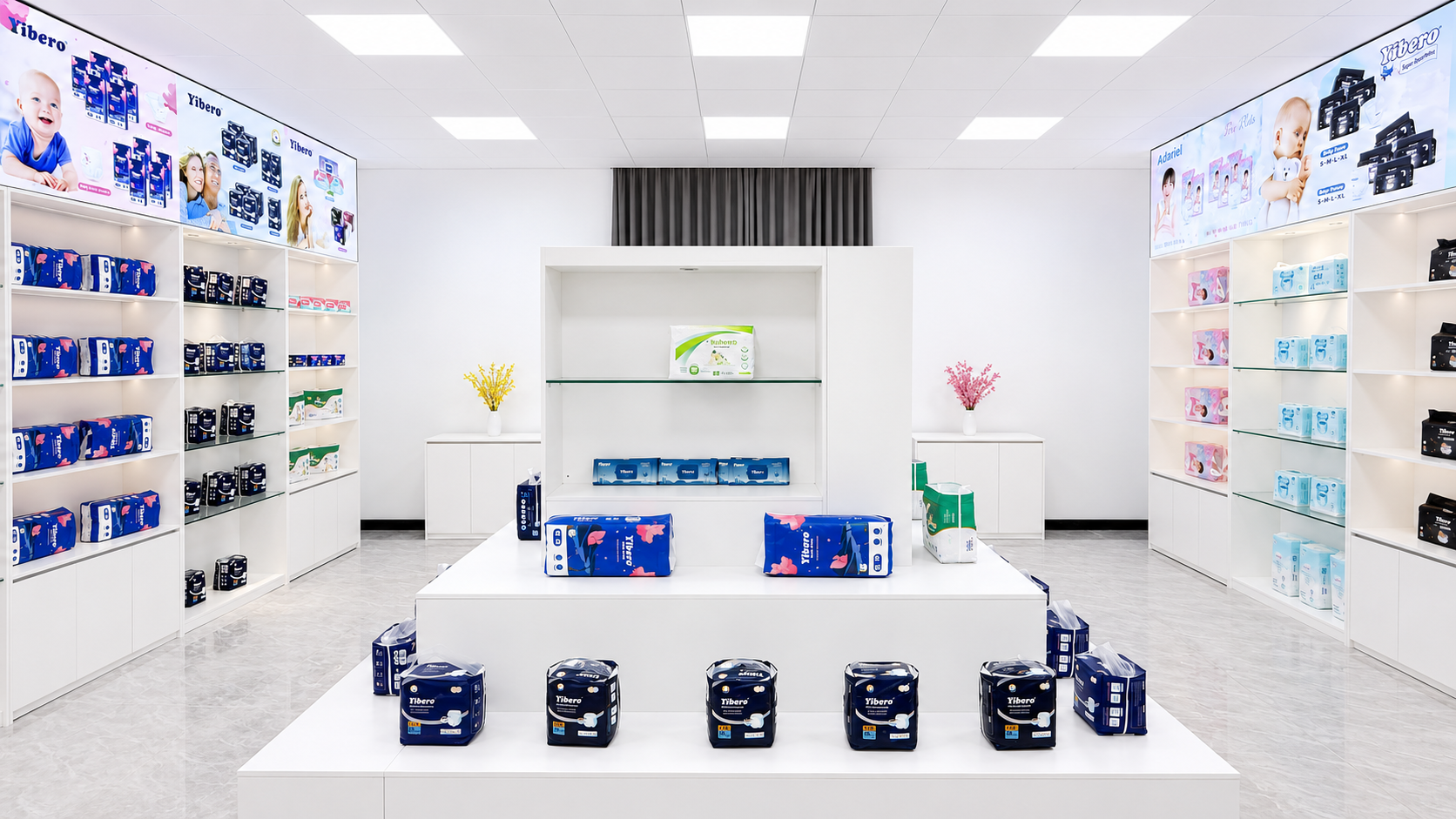
Samples are the practical next step: they confirm specification, materials and absorbency targets before production.
Next step for importers and distributors
Request a free sample, a specification sheet or an OEM quotation for Yibero baby diapers. Sample preparation takes 1–3 working days; buyers cover courier costs only.
Email: info@jiayuediaper.com / Lena@jiayuediaper.com
WhatsApp: +86 159 8030 8853
Website: www.jiayuehygiene.com
Product catalog (PDF): Download the JIAYUE Product Catalog
Have Questions or Need More Details?
Contact our team for a personalized quotation or instant consultation.
Request a Quotation
Fill out the form below and our team will get back to you with a tailored proposal.
WhatsApp Direct Chat
Prefer to chat in real-time? Message us on WhatsApp for instant assistance & quick answers.
- Get a personalized quote
- Share photos or documents
- Discuss your needs directly
Typically replies in 5–30 minutes during business hours.