
Control Panel After-Sales Support: What Buyers Should Ask Before, During, and After Installation
After-sales support for a control panel is decided long before a fault appears — usually at the quotation and drawing-approval stage. The questions that determine how quickly a problem is closed are specific: which ingress protection level was verified and on which enclosure, who holds the approved drawing revision, whether the door seal and cable glands can be replaced from the original specification, how grounding is measured at acceptance, and what the warranty actually covers. This guide turns those points into a three-phase question checklist for buyers still in research and evaluation, using two products as worked examples: the Custom Wall-mounted Electrical Control Box (IP65, EPDM seal, grounding bonding) and the Stainless Steel Distribution Box / PLC Control Cabinet.
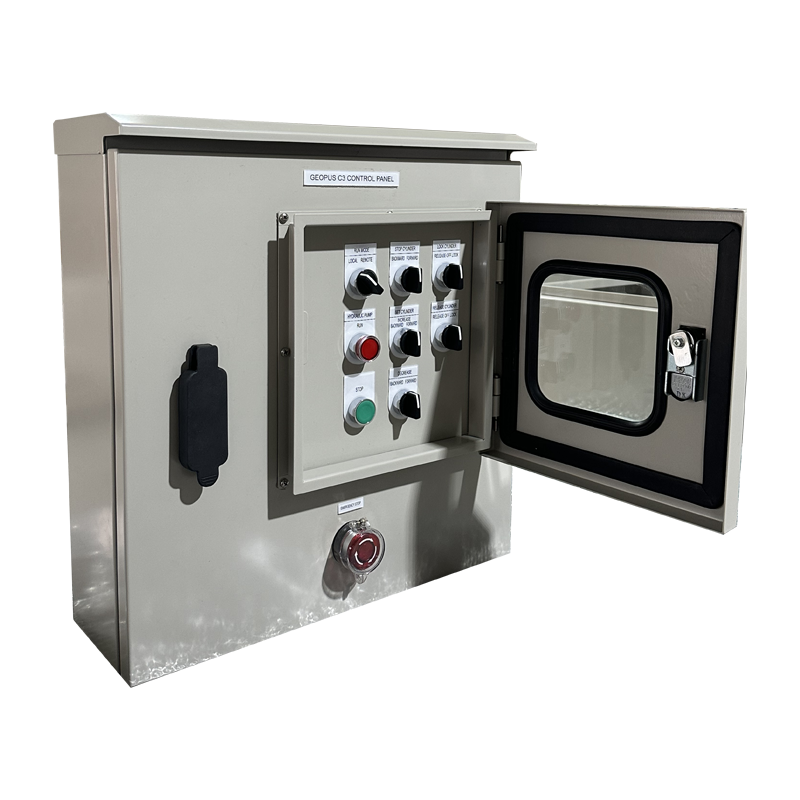
Custom Wall-mounted Electrical Control Box — IP65 enclosure with double-door design, stainless steel handle lock, EPDM sealing strip and door-to-body grounding bonding.
The Problem: After-Sales Support Is Usually Undefined Until Something Fails
A customized control panel is not a catalogue item. It is built to a drawing set for one project, and the after-sales relationship that follows is a documentation relationship. When that documentation is thin, the cost does not appear in the price of the enclosure — it appears later, as downtime, as an unresolvable sealing complaint, or as a replacement part that has to be re-engineered from scratch.
Most control panel support disputes fall into two categories. The first is genuine product failure. The second, and the more common one in custom enclosure work, is an interface failure: a sealing strip that was never specified as a replaceable part, a cable entry drilled on site through the powder coating, a grounding bond that was never measured at handover, a door gasket compressed past recovery during a year of daily opening, or an expectation that an IP65 control panel enclosure means “maintenance free”.
Protection-rating mismatch is the clearest example. A buyer who installs an IP54-rated enclosure in an outdoor position will eventually report water ingress as a product defect, even though the enclosure was performing to its declared level. The reverse is also expensive: specifying IP65 for an indoor switch room adds cost that no after-sales event will ever justify. Realistic expectation is therefore not a marketing statement; it is a purchasing decision that determines what a buyer is entitled to claim later.
The third gap is continuity. When a control panel is bought as a one-off transaction, nobody owns the questions that arrive six months later: which EPDM seal profile was used, what thickness the plate was, whether the handle lock is still available, whether the louver filter has the same mesh. A partnership-oriented supplier keeps that thread open; a transactional seller does not.
Industry Background: A Standardized Market Where Support Becomes the Differentiator
The electrical control panel market is estimated at USD 60.4 billion in 2026 and is projected to reach USD 98.6 billion by 2036, a compound annual growth rate of 5.0%. Within that total, low voltage distribution panels alone are projected to grow from USD 1.8 billion in 2026 to USD 2.9 billion by 2035 at a 5.9% CAGR. Asia Pacific is the largest regional market, holding over 38% of global revenue in 2026, which is one reason so many buyers evaluate Asian enclosure and control panel manufacturers during the research phase.
Technical expectations are converging at the same time. UL 508A is the benchmark standard for industrial control panels in North America, while IEC 61439 is the international standard for low-voltage switchgear and controlgear assemblies. Once most panels in a category are built to a comparable standard, the visible differences between suppliers narrow, and what actually separates them is what happens after delivery: drawings, records, spare parts and response.
Dalian Yinlu Electrical Control Equipment Manufacturer is a China-based manufacturer of sheet metal fabrication, electrical control cabinets, distribution boxes and intelligent control boxes, located in Dalian, Liaoning Province. The company operates a 5,000 m² factory with around 60 employees, an annual output of 20,000 units, a six-person R&D team and ISO 9001 certification; roughly 80% of output is exported to North America, Europe, Oceania and the high-end Asia-Pacific market, and its power boxes and control boxes are used in the power, oil, mining and chemical industries. That combination — heavy export exposure plus project-driven customization — is exactly the profile where after-sales documentation, rather than product catalogue breadth, becomes the deciding factor.
What “After-Sales Support” Should Actually Cover in a Control Panel Order
Support should be described in the same language as the product. Three phases matter, and each has its own evidence.
Before installation: commitments that must exist on paper
The pre-purchase phase is where support is either created or lost. A buyer evaluating a control panel manufacturer should be able to obtain, before the order: the approved drawing revision, the enclosure material (cold-rolled steel, 304 or 316 stainless steel), the sealing system, the hardware list, the cable-entry provision, the grounding arrangement, and the quality-control record set. Yinlu’s production quality control covers six checks — visual, wiring, function, safety, sealing and packaging — and its standard after-sales commitment is 7×24 online support with a one-year warranty. Those are the minimum terms a buyer should be able to quote back when a claim arises.
During installation: the interface points that decide later disputes
Installation is where an enclosure stops being a product and becomes part of a system. For an IP65 control panel enclosure such as the Custom Wall-mounted Electrical Control Box, the relevant details are already fixed in the specification: 2.0 mm cold-rolled steel with a brushed finish, a double-door design with stainless steel handle lock and keys, an EPDM (Ethylene Propylene Diene Monomer) sealing strip on the door frame, reliable grounding bonding between the door and the cabinet body, pre-drilled knockout holes at bottom or back configurable with stainless steel waterproof cable glands, an internal grounding bar, and 19-inch mounting rails or uprights compatible with communication equipment, energy storage batteries, PLC and frequency converters. Some models also carry a bottom ventilation louver.
The Stainless Steel Distribution Box / PLC Control Cabinet follows the same logic in 316 stainless steel at 2.0 mm, brushed finish and IP65, with a double-door layout, stainless steel handle lock, EPDM seal, door-to-body grounding bonding and the same cable-entry and rail arrangement. It is applied in industrial plants, commercial buildings, outdoor PV, water treatment, agricultural irrigation and communication base stations. Across the wider range, cabinets such as the Stainless Steel Electrical Control Cabinet and the VFD Control Cabinet are specified with a grounding resistance of ≤4Ω — a figure that should be measured and recorded at commissioning, not assumed.
After installation: warranty, wear parts and service-life planning
Post-installation support has two halves. The first is warranty: scope, duration and who executes it. The second, often ignored, is wear-part continuity. In an enclosure, the wearing items are the EPDM seal, the stainless steel handle lock, the cable glands and the louver filter. These determine long-term sealing performance far more than the steel does, and they should be listed at handover with the original drawing revision. Where long service life is a design intent, the range states it explicitly: stainless steel non-standard enclosures have a service life of 10–15 years under normal operating conditions, the Port Crane Control Cabinet is rated at ≥15 years, and the Mobile Industrial Control Equipment Mounting Base at 8–10 years under industrial use.
How IP54, IP55 and IP65 translate into realistic after-sales expectations
The ingress protection number is the single most misread item in a panel purchase. In this range the levels are applied deliberately by application, and each carries a different maintenance expectation.
| Rating | Where it appears in the range | Realistic after-sales expectation |
|---|---|---|
| IP54 | Gym Smart Equipment Control Box (indoor wall-mounted); VFD Control Cabinet (indoor configuration); Stainless Steel Electrical Control Cabinet (indoor) | Dust-limited indoor service. The support risk is condensate and cleaning water rather than rain; seal and louver inspection should be part of routine maintenance. |
| IP55 | Low-voltage Switchgear / Power Distribution Cabinet; Airport Ground Power Control Cabinet; Port Crane Control Cabinet; VFD Control Cabinet indoor option; Industrial Socket Box option | Industrial and semi-exposed duty. Expect water-jet exposure during washdown or heavy rain; door alignment and gasket compression must be checked after any impact event. |
| IP65 | Custom Wall-mounted Electrical Control Box; Stainless Steel Distribution Box / PLC Control Cabinet | Outdoor exposure with UV-resistant, anti-aging and acid-rain-proof surfaces. Confirm gasket compression and gland sealing; where a bottom louver is fitted, treat it as a designed opening and keep the filter maintained. |
| IP67 | Industrial Socket Box, outdoor version (IP44 / IP55 / IP67 optional) | Temporary power in heavy rain or wet outdoor sites. Sealing depends on the glands and door closure being intact, so spare sealing parts matter more than the rating itself. |
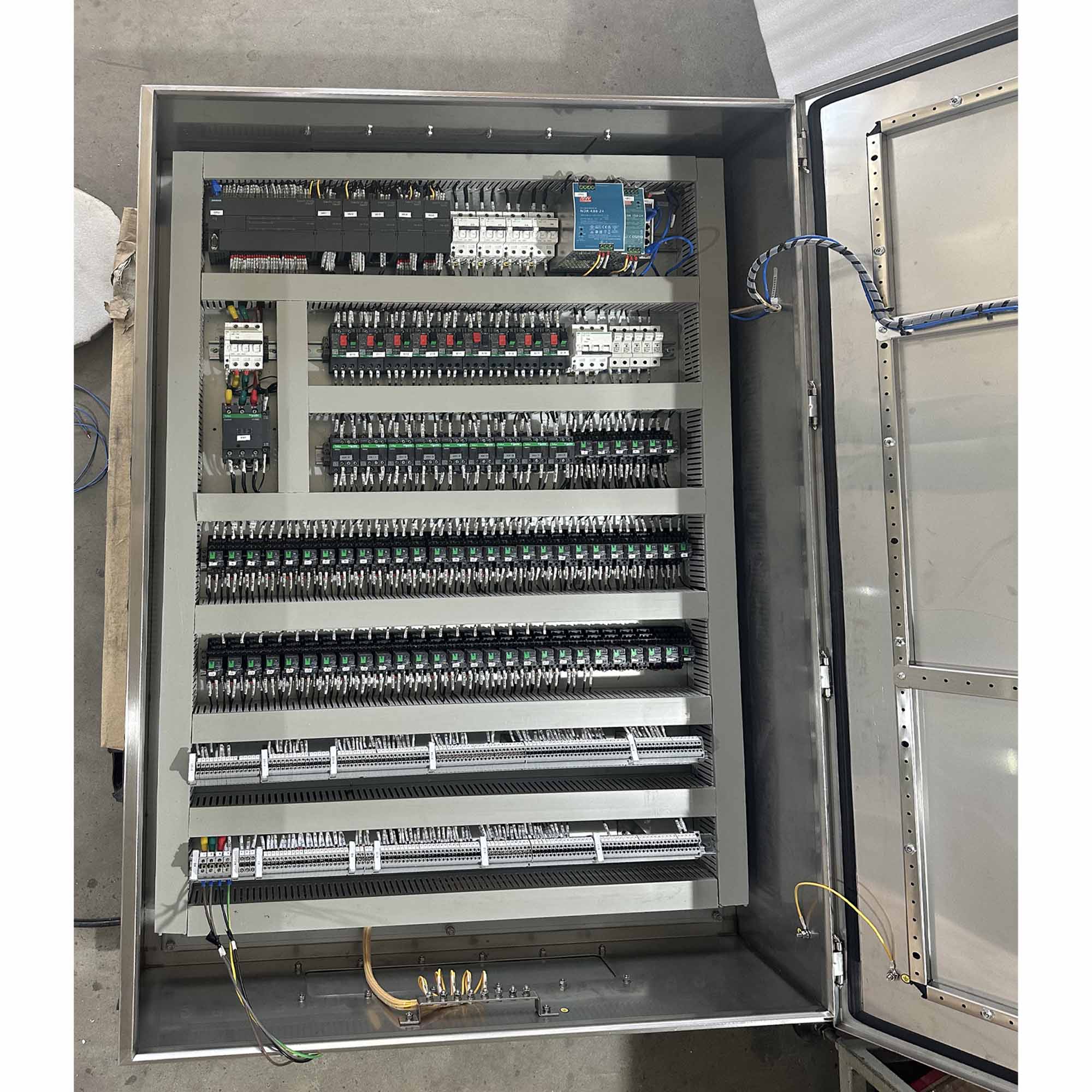
Stainless Steel Distribution Box / PLC Control Cabinet — 316 stainless steel, 2.0 mm plate, IP65, EPDM seal and UV-resistant, acid-rain-proof surface for long-term outdoor exposure.
Step-by-Step Breakdown: The After-Sales Question Checklist
Phase 1 — Before ordering (evaluation stage)
- Which enclosure carries which IP level, and for which mounting position? Ask for the rating per model, not per brochure. The difference between an indoor IP54 cabinet and an outdoor IP65 enclosure is a specification line, not an upgrade option added later.
- Is the seal a named, replaceable part? Confirm EPDM sealing strip material and profile, and whether the same profile remains available for replacement.
- How is grounding handled? Ask for the bonding arrangement between door and cabinet body, and for the target grounding resistance where the model specifies one (≤4Ω on several cabinets in the range).
- What is in the quality record set? Visual, wiring, function, safety, sealing and packaging checks should be documented, not verbal.
- What does the warranty cover? One year is the standard term in this range; confirm whether parts, labour and freight are included and who performs the work.
- Is the supplier structured for OEM/ODM continuity? Customization scope in this range covers material, colour, logo, size, IP rating, surface treatment, cutouts and mounting — all of which must be archived to be supportable.
Phase 2 — During installation
- Are the cable entries pre-machined and gland-matched? Pre-drilled knockout holes plus stainless steel waterproof cable glands keep the IP claim intact; site-drilled holes do not.
- Is the drawing revision on the order and on the enclosure? Without a revision reference, a later spare-parts request restarts from a photograph.
- Is seal continuity verified before power-up? A pinched or twisted EPDM strip is the most common avoidable leak path.
- Is grounding resistance measured and written down? Record the value at commissioning so later readings can be compared against a baseline.
- Are louver and filter orientation correct? On models with a bottom ventilation louver, the filter is a maintenance item from day one.
Phase 3 — After installation (operation stage)
- What is the seal inspection interval for this site? High-UV, high-humidity or washdown environments demand a shorter cycle than a clean indoor switch room.
- Who supplies wear parts in year two and year five? Seal, lock, glands and filter should be obtainable against the original drawing.
- Through which channel is support reached? A named address and 7×24 online support is a commitment; “contact the salesperson” is not.
- How are change requests handled on repeat batches? Ask how a revision is controlled when a second batch follows a first.
- What service life is stated for this configuration? Documented expectations replace assumptions when replacement planning is discussed.
Acceptance Criteria and Purchasing Terms for Custom Enclosures
Acceptance is where after-sales support becomes enforceable. For a customized control panel or sheet metal control panel, the acceptance record should confirm four things: that the enclosure matches the approved drawing revision, that the declared IP level and sealing system are as specified, that grounding resistance is measured where the model defines a figure, and that the hardware list is complete — handle lock with keys, glands, grounding bar, rails, louver and filter where applicable.
Inspection should follow the supplier’s documented sequence: visual, wiring, function, safety, sealing and packaging. Sealing deserves separate attention because it is the check most often reduced to a visual glance; it is also the check that determines whether an IP65 enclosure behaves as an IP65 enclosure after a year outdoors.
Commercially, three terms should be written into the order rather than agreed verbally. The first is the sample and first-batch route: a minimum order quantity of 1–5 units allows a validation unit before a full release. The second is delivery: lead time is negotiable and confirmed per order, against a monthly capacity of 2,000 units and an annual output of 20,000 units, which is what makes repeat batches on the same drawings feasible. The third is the support clause itself — one-year warranty, 7×24 online support, named contact, and the spare-parts list attached to the drawing revision.
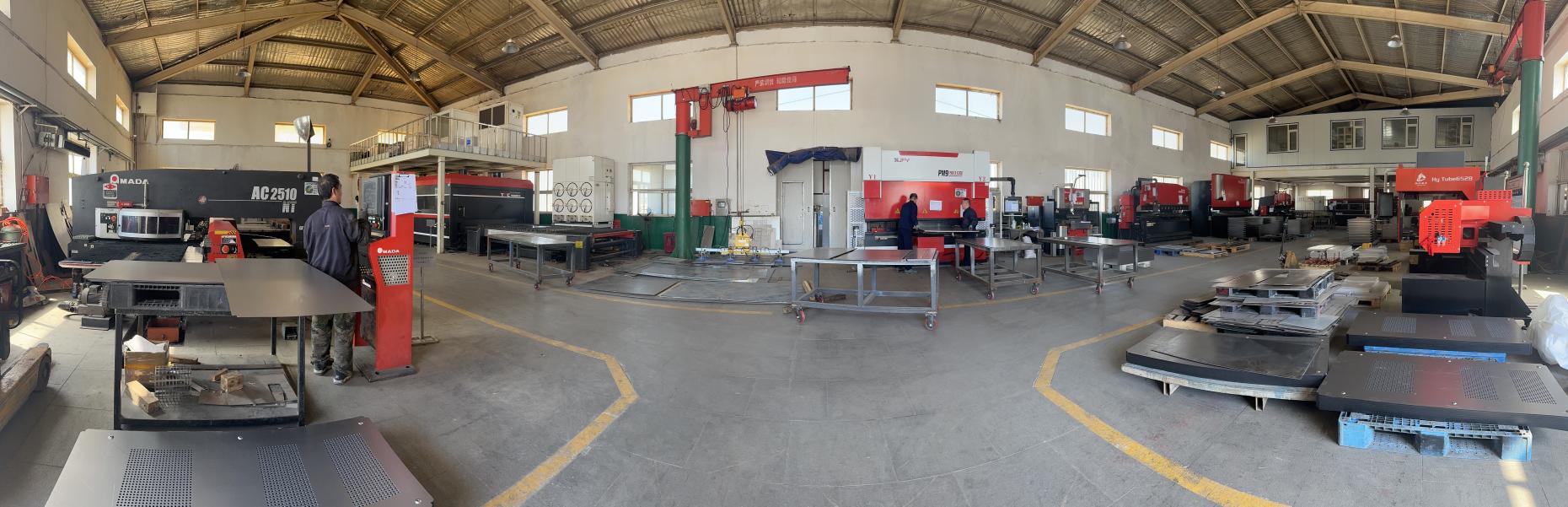
Sheet metal fabrication equipment at the Dalian facility — enclosure production is supported by documented visual, wiring, function, safety, sealing and packaging checks.
Use Cases: Where These Questions Change the Outcome
Metro rail transit projects. The range is documented for metro rail transit project purposes, and a 2,000-unit control panel programme for the Nagpur Metro project shows what that requires: project-specific sizing and interfaces, fireproof and short-circuit-proof design, anti-electromagnetic-interference treatment, and IP55 or higher sealing for underground conditions. In rail work, support documentation matters because the operator inherits the asset for decades.
Ports, coke ovens and heavy industry. For port cargo handling machinery, coke oven machinery and stacker-reclaimers, 1,000 units of electrical control enclosures were supplied against conditions including port dust, coke oven heat and outdoor corrosion, with protection from IP55 to IP67. The Port Crane Control Cabinet illustrates the acceptance level required: IP55 with a double seal and silicone rubber sealing strip, 316L stainless steel, salt-spray resistance to 1.5 g under GB/T 2423.10, hole tolerance ≤±0.5 mm, top load-bearing ≥50 kg, internal temperature ≤52 °C at 45 °C ambient, insulation resistance ≥100 MΩ and a stated service life of ≥15 years.
Outdoor energy, water and communications. The Stainless Steel Distribution Box / PLC Control Cabinet in 316 stainless steel is applied in outdoor PV, water treatment, agricultural irrigation and communication base stations, where UV resistance, anti-aging behaviour and acid-rain resistance are the properties that decide whether the enclosure still seals in year five.
Food, pharmaceutical, chemical and marine environments. The Stainless Steel Electrical Control Cabinet is offered in 304 stainless steel as standard, IP54/IP55 for indoor use, with an EPDM door seal and ≤4Ω grounding; the 316 version extends corrosion resistance to strong acids, alkalis, salt spray and seawater, with an operating range down to −40 °C and up to +80 °C.
Airport aprons and temporary power. The Airport Ground Power Control Cabinet is IP55 with a grounding resistance of ≤4Ω and altitude coverage to 4,000 m, while the Industrial Socket Box range extends to IP67 for outdoor temporary distribution — both cases where the sealing parts, not the steel, carry the support burden.
Comparison Table: Transactional Order vs Documented Long-Term Partnership
The same enclosure can be bought in two very different ways. The table below sets the open points of a purely transactional purchase against what a documented, partnership-oriented supply provides, using capabilities and specifications from the Yinlu range.
| Decision point | Open points in a one-off transaction | What documented long-term support provides |
|---|---|---|
| Enclosure specification | IP level stated on the quotation only | Declared IP level per enclosure with the sealing system named: EPDM strip, door-to-body grounding bonding, stainless steel waterproof cable glands |
| Customization record | A sample photo approved by email | Drawing revision archived; OEM/ODM scope defined as material, colour, logo, size, IP rating, surface treatment, cutouts and mounting |
| Acceptance | Goods received and powered up | Six-check QC record — visual, wiring, function, safety, sealing, packaging — plus measured grounding resistance where specified |
| Wear parts | Seal, lock and glands sourced ad hoc | Spare-parts list tied to the drawing: EPDM seal, stainless steel handle lock and keys, cable glands, louver filter |
| Warranty | Verbal assurance | One-year warranty plus a named 7×24 online support channel written into the order |
| Repeat and expansion | New enquiry, new drawing, new price basis | Repeat batches on the same drawings, supported by 2,000 units monthly capacity and 20,000 units annual output |
| Life-cycle planning | Unknown replacement horizon | Service-life expectation stated by application: 10–15 years for stainless non-standard enclosures, ≥15 years for the Port Crane Control Cabinet |
FAQ
Which documents should a buyer hold at handover so that after-sales claims can be enforced?
At minimum: the approved drawing revision, the component list (enclosure material, seal, lock, glands, louver or filter), the declared ingress protection level for each enclosure, the grounding resistance measurement, the quality-control record set, and a written warranty statement. Yinlu’s production quality control covers visual, wiring, function, safety, sealing and packaging checks, and its standard after-sales commitment is 7×24 online support with a one-year warranty. Where a project requires a specific certification route, confirm it in writing before ordering: UL 508A is the benchmark standard for industrial control panels in North America and IEC 61439 is the international standard for low-voltage switchgear and controlgear assemblies, so any CE-certified control panel claim should come with a declaration and test evidence supplied with the order.
Can a customized control panel still be supported after installation, or does customization end the relationship at delivery?
Customization only creates a support obligation if the custom details are documented. Yinlu’s OEM/ODM scope covers material, colour, logo, size, IP rating, surface treatment, cutouts and mounting, so the first requirement is that the approved drawing revision is archived and referenced on the order. The wear items in a customized enclosure — the EPDM door seal, the stainless steel handle lock and keys, the waterproof cable glands, and the ventilation louver or filter — are the parts that determine long-term sealing performance, and they should appear on a spare-parts list at handover. With that list, a customized panel such as an IP65 control panel enclosure can be maintained for its stated service life; without it, every later request restarts from a photograph.
How should after-sales support be budgeted when comparing control panel suppliers?
Split the budget into three lines: the panels themselves, a wear-part allowance, and inspection labour. Then ask each supplier whether the one-year warranty covers parts, labour and freight, and whether replacement seals, glands and locks are held or re-made to the original drawing. Because the minimum order quantity in this range is 1–5 units and lead time is quoted per order, a buyer can place a small first batch, record the acceptance results, and use those records as the baseline for later repeat orders instead of renegotiating support terms each time. Replacement-part quantities should be agreed inside the purchase order rather than requested after a failure.
Can sealing, grounding and workmanship be validated on a sample before the full order is released?
Yes — a minimum order quantity of 1–5 units makes a validation unit practical. A useful sample test covers four items that later become warranty questions: seal continuity around the door frame, bonding continuity between door and cabinet body, fit and sealing of the cable-entry glands, and a measured grounding resistance — on models that specify ≤4Ω, that measurement is the acceptance figure to record. Log the results with the drawing revision and keep them. When the production batch arrives, the same four checks compare against a documented baseline rather than an opinion, which is the difference between a discussion and a claim.
What lead time, warranty and continuity terms should be written into the purchase order?
Lead time is negotiable and confirmed per order rather than fixed in a catalogue. Continuity is supported by capacity: a 5,000 m² factory, an annual output of 20,000 units and a monthly capacity of 2,000 units allow follow-on batches and repeat orders to be scheduled on the same drawings. The purchase order should therefore carry five items — the drawing revision, the delivery schedule, the spare-parts list, the one-year warranty scope, and the support channel, which is 7×24 online support reachable through Sales@innometalfab.com or WhatsApp +86 186-2435-1618. Buyers who want to test the process before committing can request a sample and a quotation for a single enclosure first.
Conclusion: Support Is a Document Set, Not a Promise
A control panel’s after-sales performance is fixed by decisions made before installation: which IP level was specified for which position, which drawing revision was approved, which sealing parts were named, and which records were signed at acceptance. Buyers comparing a one-off transaction against long-term cooperation should judge suppliers on those artefacts rather than on assurances. Documented support — a revision-controlled drawing, a six-check quality record, a spare-parts list, a one-year warranty and a named response channel — is what makes a customized IP65 enclosure or a stainless steel PLC control cabinet maintainable for the decade or more it is expected to serve.
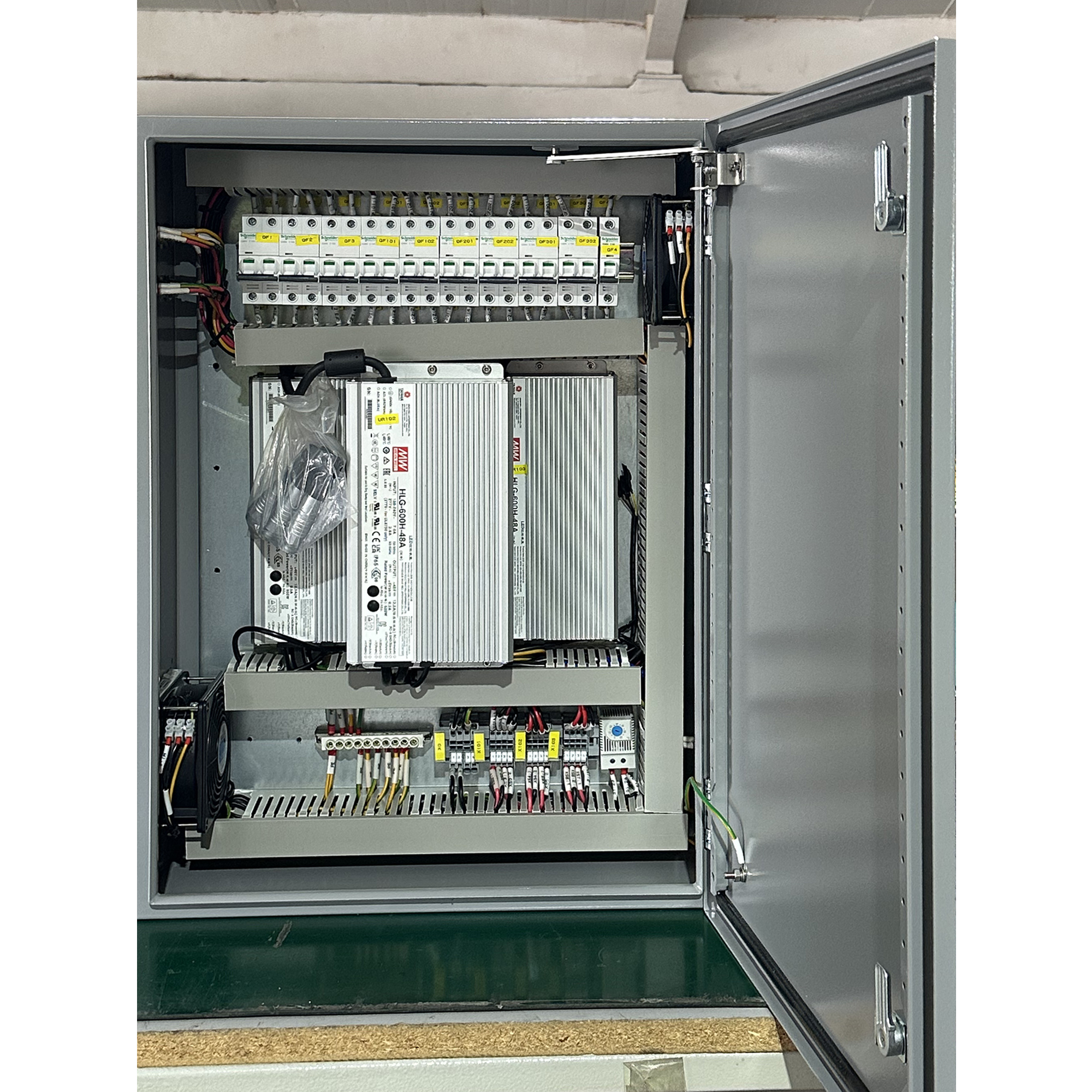
Stainless Steel Electrical Control Cabinet — 304 stainless steel as standard, IP54/IP55 indoor rating, EPDM seal and ≤4Ω grounding requirement.
Request a Sample, a Quotation, or the Catalog
Dalian Yinlu Electrical Control Equipment Manufacturer supplies customized control panels, enclosure control panels and low voltage electrical distribution panels for industrial, infrastructure and outdoor projects, with OEM/ODM customization, a one-year warranty and 7×24 online support.
Email: Sales@innometalfab.com | Tel / WhatsApp: +86 186-2435-1618 | Website: www.innometalfab.com
Download the product catalog (PDF): Yinlu catalog and specification brochure
Have Questions or Need More Details?
Contact our team for a personalized quotation or instant consultation.
Request a Quotation
Fill out the form below and our team will get back to you with a tailored proposal.
WhatsApp Direct Chat
Prefer to chat in real-time? Message us on WhatsApp for instant assistance & quick answers.
- Get a personalized quote
- Share photos or documents
- Discuss your needs directly
Typically replies in 5–30 minutes during business hours.