
Evaluating Control Panel Suppliers for Kenyan 440V Switchgear: Capability & Delivery Assurance
Evaluating Control Panel Suppliers for Kenyan 440V Switchgear: Capability & Delivery Assurance
Short answer: A control panel supplier is ready to build low-voltage switchgear for a 440V, 50 Hz three-phase project in Kenya only when you can verify three things both on paper and on the shop floor — documented in-house fabrication of the enclosure and the internal power path, full component traceability back to named brands and models, and a delivery process designed for sea freight, customs clearance and a short post-arrival acceptance window.
Industrial, water-treatment and commercial building projects in Kenya frequently specify low-voltage assemblies for a 440V three-phase supply. Once that specification reaches an importer, an EPC contractor or a plant engineer, the practical question stops being “who can quote?” and becomes “who can actually build, test and ship a heavy cabinet to East Africa without a port dispute or a commissioning failure?”
This article is written as an evaluation sequence rather than a product pitch. It covers what to inspect inside a factory, what to lock into a contract, and which delivery checks decide whether a switchgear cabinet arrives ready to install.
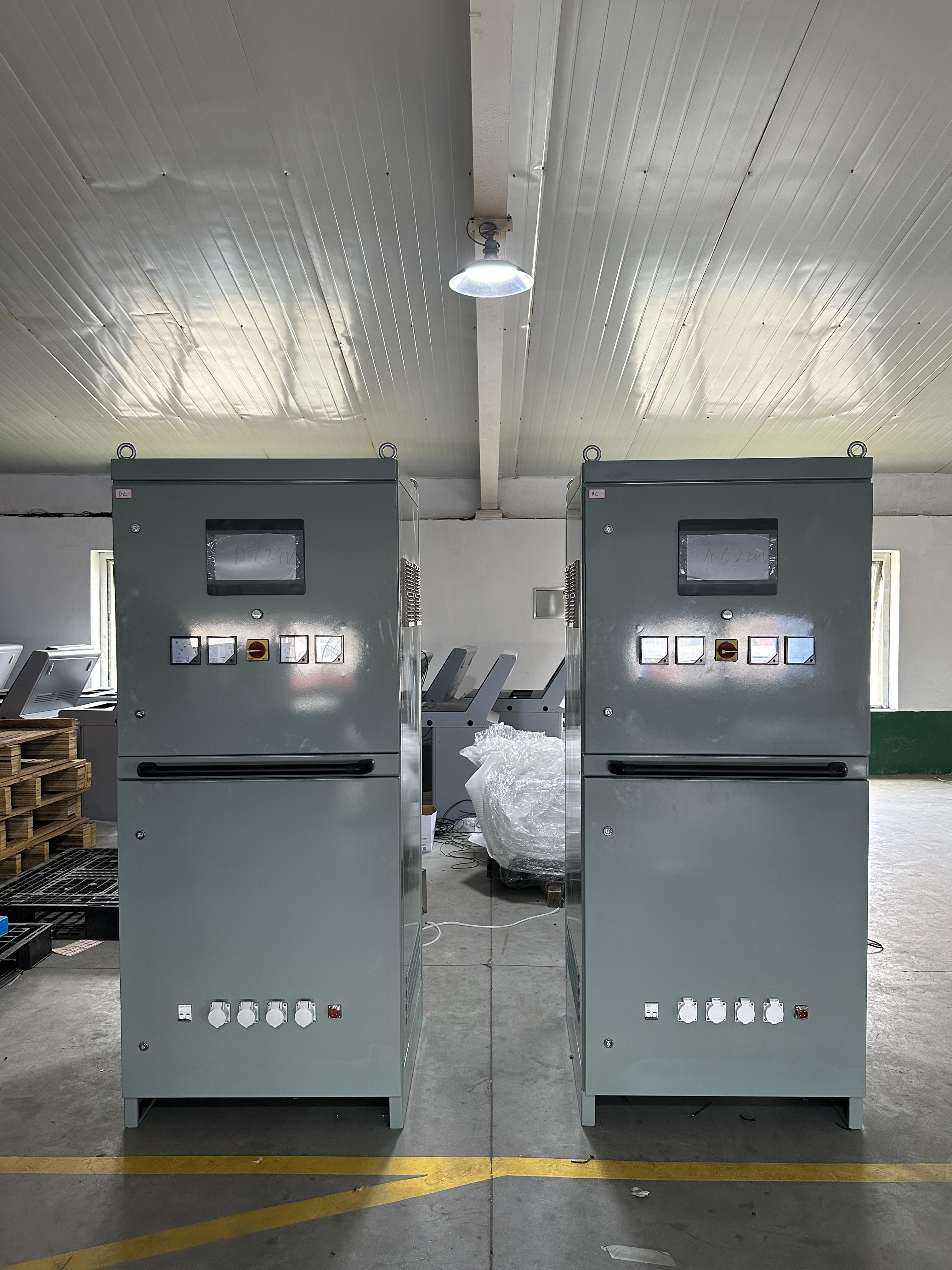
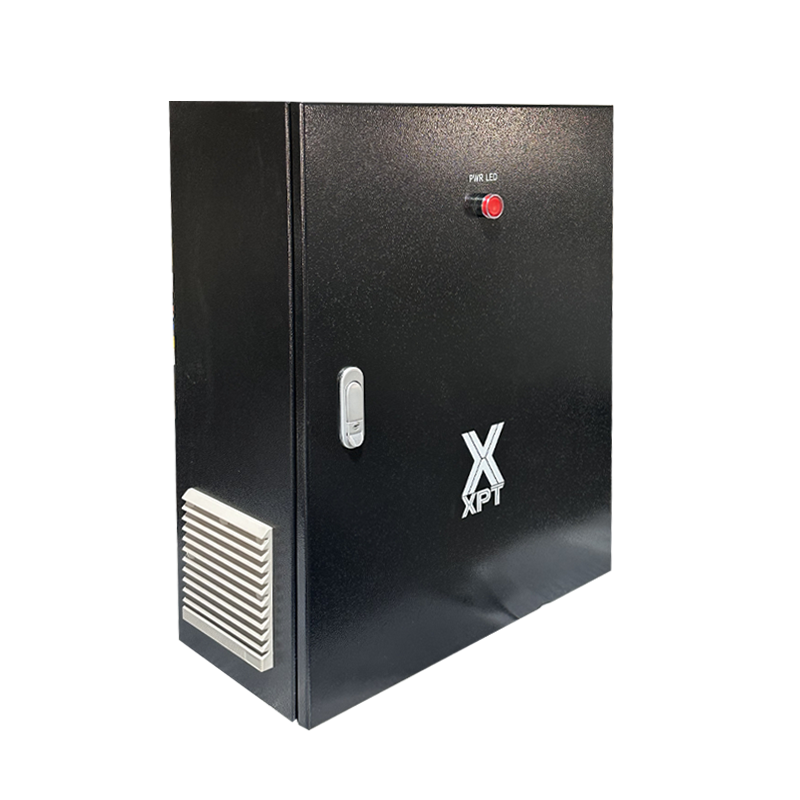
A double-door floor-standing control cabinet — the enclosure format most often specified for 440V three-phase distribution and automatic control duties.
Problem Definition: Where 440V Switchgear Sourcing Breaks Down
The failure pattern in this category is consistent, and it is usually decided long before the first sheet of steel is cut. A buyer receives an attractive price from a trading company that owns no sheet metal equipment, no assembly line and no test bench. The enclosure arrives, the components are not the ones listed in the contract, the test report is a one-page template, and the cabinet reaches Mombasa with a bent frame and a claim that nobody will accept.
Definition: A low-voltage switchgear assembly is an enclosure containing busbars, switching devices, protection devices, metering and control wiring, assembled and verified against a defined standard. When a project specification calls for a 440V, 50 Hz three-phase supply, the assembly must be built and tested for that electrical environment — not adapted from another market's default configuration.
The recurring failure modes are narrow and predictable:
- Assembly-only sourcing. The supplier purchases finished enclosures and resells them with components fitted, so enclosure tolerances, coating quality and gasket fit are outside their control.
- Substituted components. Breakers, contactors or meters are swapped after contract signature because the brand was never written into the agreement.
- Certificate problems. Certificates that belong to a different legal entity, or edited scans, are presented as the supplier's own.
- Undocumented testing. No power-on functional test, no insulation resistance reading, no withstand voltage record and no grounding check on file.
- Transit damage. Cabinets packed without reinforced crating, moisture protection or impact foam, arriving deformed or damp.
- Verbal specifications. Voltage, current, IP rating, dimensions and interface functions agreed in a phone call instead of on a signed drawing.
- Compressed acceptance. The buyer inspects weeks after arrival, by which time the contractual acceptance window has closed.
Industry Background: The Low-Voltage Assembly Market in Context
Market estimates in this category vary widely because research houses define “electrical control panel” differently. The figures below are useful for sizing a category strategy or a project budget — not for pricing a single cabinet:
- The global electric control panel market size was estimated at USD 6.35 billion in 2024 (Spherical Insights).
- Under a broader scope, the global electrical control panel market is projected to grow from USD 27.2 billion in 2025 to USD 47.0 billion by 2034 (Dataintelo).
- Low Tension (LT) panels held the largest share of the electrical control panel segment at 45.3% as of 2025 (Dataintelo).
- Asia Pacific accounted for 38.5% of global electrical control panel revenue in 2025 (Dataintelo).
- IEC 61439-1:2020 is the primary international standard for low-voltage switchgear and controlgear assemblies, defining general definitions, construction requirements and verification methods (IECEE).
- Key global manufacturers of electric control panels include Schneider Electric, ABB, Siemens, Eaton and Rittal (Precedence Research).
Two conclusions follow for a Kenyan 440V buyer. First, the component layer of the market is genuinely global, which means a Chinese-built assembly can legitimately use the same breakers and meters as a European-built one. Second, because the components are commoditised, the actual differentiation sits in the parts most buyers never inspect: sheet metal fabrication, busbar preparation, wiring workmanship, testing discipline and export packaging.
Detailed Solution: Six Capability Pillars to Verify
Pillar 1 — Fabrication Depth: Does the Supplier Own the Sheet Metal?
A true manufacturer cuts, bends, welds, treats and paints its own enclosures. That matters for a 440V project because enclosure rigidity, door alignment and coating adhesion are the physical conditions that keep busbar clearances stable over years of service. When a supplier outsources enclosures, every tolerance dispute becomes a third-party dispute.
Dalian Yinlu Electrical Control Equipment Manufacturer is a sheet metal fabrication and electrical control equipment supplier based in Dalian, Liaoning Province, China, working across enclosure, electrical control cabinet, intelligent control box and electrical distribution categories. Its production base covers approximately 5,000 m² staffed by around 60 employees, supported by a 6-person R&D team, with OEM and ODM orders accepted.
Pillar 2 — The Internal Power Path: Busbars
Busbars carry the full load current and are the component most likely to be quietly downgraded. Ask three specific questions and insist on photographic answers:
- Copper specification. Is the bar stock a declared grade such as T2, and can the supplier show the incoming material record?
- Tinning. Is tin plating performed in-house, or outsourced to a job shop with no traceability? Tinned copper resists oxidation in humid coastal air, which matters for installations near Mombasa or in coastal industrial zones.
- Torque and joint discipline. Are busbar joints torqued to a documented value and marked after tightening so they can be re-verified on site?
If a supplier cannot describe its busbar process beyond “we buy good copper,” you are speaking to an assembler, not a fabricator.
Pillar 3 — Enclosure Protection, Doors and Sealing
Protection class is a project decision, not a marketing claim. Kenyan installations range from clean, air-conditioned control rooms to dusty cement, milling and food-processing environments where ingress protection decides equipment life.
If your specification calls for IP55 double-door enclosures with EPDM seals, or for an IP65 dustproof enclosure on a washdown or high-dust line, the verification questions are the same:
- How is the gasket material selected, and is the gasket a continuous moulded seal or a spliced strip?
- Is the double-door arrangement a true two-leaf construction with a centre closing bar, or a single door with a decorative split?
- What is the declared IP rating, and on what basis was it verified? IEC 61439-1:2020 references protection verification as part of assembly compliance, so the rating should be traceable to a design or test basis rather than an assertion.
- Are wall-mounting, floor-standing and flush-mount variants designed on the same platform, so that spares and gaskets remain available across a project rollout?
Pillar 4 — Component Integration and Traceability
For a 440V three-phase assembly, the contract must name every significant device. The documented control measure is unambiguous: the agreement must specify brands (Schneider, ABB, Chint, Delixi and equivalents), model numbers, country of origin, and confirmation that the components are new and genuine. Purchase contracts, invoices and certificates of conformity must be retained as evidence.
This is where Kenyan importers lose the most money. ABB, Schneider Electric and Siemens are established global manufacturers of low-voltage control and switchgear equipment, and their devices are widely counterfeited. Naming the brand in a purchase order is not enough — the model number and the origin must be written into the technical agreement, and the supplier should be willing to photograph the installed devices before the doors are closed.
Pillar 5 — Testing and Test Documentation
Electrical control equipment should not leave a factory without a documented test sequence. The standard control measures applied to each unit before shipment are:
- Power-on functional test
- Insulation resistance test
- Withstand voltage (dielectric) test
- Grounding (earth continuity) test
- Appearance, dimensional and labelling inspection
Shipment is permitted only after all tests pass, and failed units are not shipped. For an export buyer, the value is not the test itself but the report: a document you can attach to a warranty claim if a fault appears months later in Kenya.
Pillar 6 — Delivery Assurance for Heavy Cabinets
Delivery assurance has four separate components, and each one can fail independently: production capacity, engineering lead time for custom configurations, export packaging, and commercial terms that survive a dispute.
Capacity is the baseline. Dalian Yinlu operates at a monthly production capacity of 2,000 units, with an annual output of 20,000 units and an export ratio of 80%, serving North American, European, Oceania and high-end Asia-Pacific markets. Compare that monthly figure against your required on-site date before accepting any verbal delivery promise.
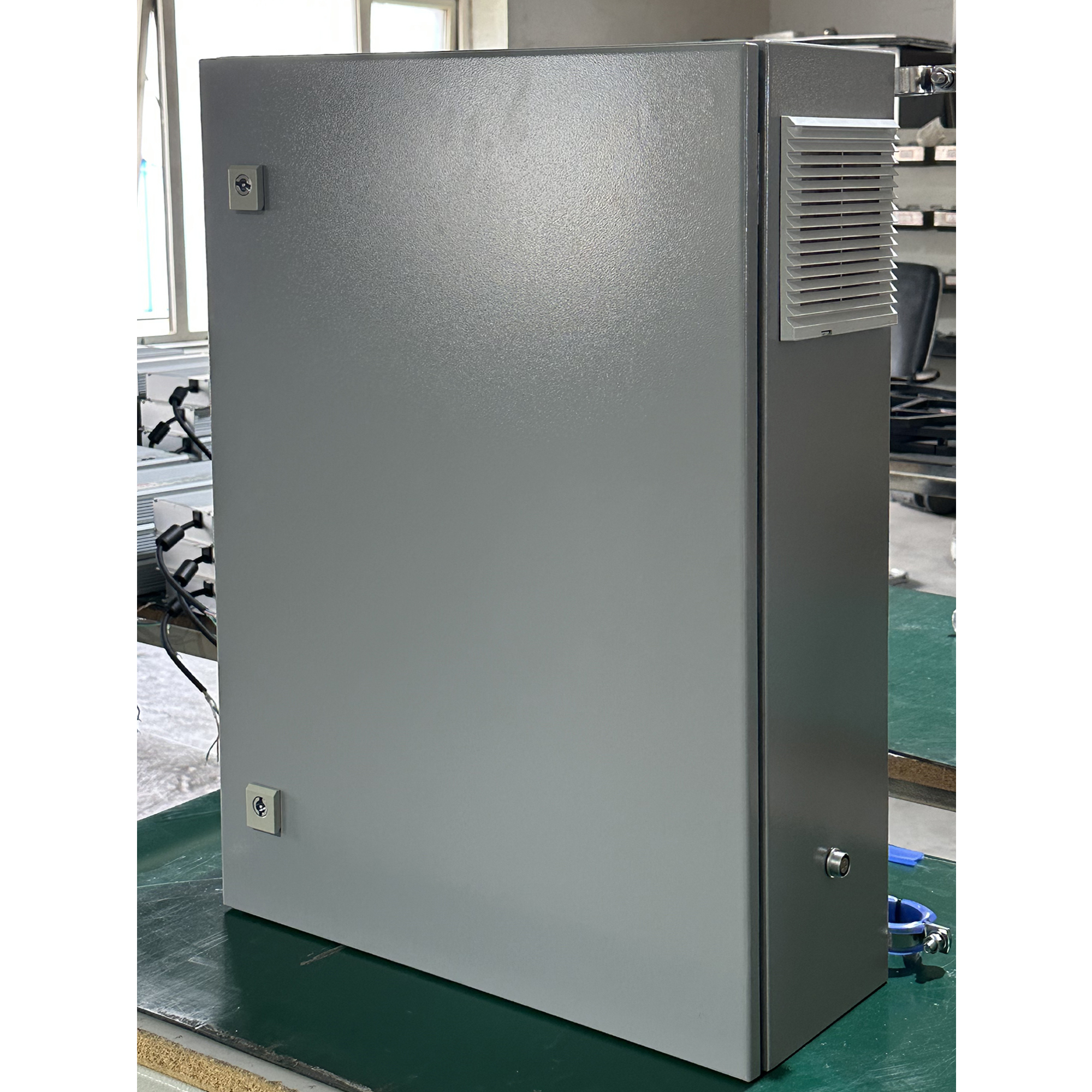
Component layout and busbar routing inside a low-voltage distribution assembly — the physical evidence that separates a fabricator from a reseller.
Step-by-Step Breakdown: A 10-Step Supplier Evaluation Sequence
Step 1 — Fix the electrical specification before requesting a price
Write down voltage (440V), frequency (50 Hz), phases, rated current, short-circuit withstand requirement, IP rating, dimensions and interface functions. All parameters must be confirmed in writing — voltage, power, current, IP rating, dimensions, material, interface and functions. Verbal requests from a client are not valid as a basis for production, and the same discipline should apply to your own enquiry.
Step 2 — Confirm the enclosure construction and protection class
Decide whether the installation needs a wall-mounted control box, a floor-standing cabinet, a flush-mount panel or a modular distribution panel. For dusty or humid sites, specify the IP rating explicitly and ask how the door seal and cable entry glands will achieve it.
Step 3 — Verify busbar fabrication in-house
Request the copper grade, the tinning method, the plating location and the torque standard. Ask for a photograph of the busbar area of the workshop, not a stock image.
Step 4 — Screen the factory, not the catalogue
Look for the physical assets that indicate real production: welding area, bending and forming equipment, paint or coating capability, an assembly bay and a test bench. A supplier with 5,000 m² of production space and a dedicated R&D team is operating on a different basis from a company with an office and a warehouse.
Step 5 — Lock component brands and origin into the contract
Name brands, model numbers and country of origin. Require that all devices are new and genuine, and that purchase contracts, invoices and certificates of conformity are retained for inspection. This single step prevents most component-substitution disputes.
Step 6 — Require a documented test regime
Specify the five tests listed above and require the report before shipment, not after arrival. A supplier that performs testing but cannot produce a report has an internal process, not a deliverable.
Step 7 — Validate capacity and scheduling for your current range
For project frames in the 630A to 1250A range, ask how many such assemblies the line can complete per month alongside standard builds. Confirm the production slot in writing against your site date, and treat custom engineering time separately from fabrication time.
Step 8 — Agree export packaging for sea freight
Electrical control cabinets and boxes are prone to impact, deformation and moisture damage. The documented packaging measures are wooden crates or reinforced packaging, moisture-proof film, anti-impact foam, and outer markings reading “Fragile, Keep Dry, This Side Up”. Complete photographs of the packaging should be taken before shipping so that compliant packing can be proven if a damage claim arises.
Step 9 — Approve a prototype before mass production
For key accounts and custom orders, the sequence is: build a prototype → obtain client confirmation → proceed to mass production. Mass production must strictly follow the prototype standard, and production starts only after the prototype has passed inspection and been signed off.
Step 10 — Confirm payment, acceptance and warranty terms
For custom products the standard commercial control is 30% deposit plus 70% balance paid in full before shipment, with no credit sales and no “pay only after the goods arrive and are accepted” arrangement. For international trade, payment is made against a copy of the bill of lading with documents released upon full payment. Acceptance must be completed within 7 days of arrival; if no written objection is raised in that window, the goods are deemed accepted. Warranty periods are stated explicitly as 1 year or 2 years, and do not cover damage from human error, equipment burnt out by voltage instability, or unauthorised modification and disassembly.
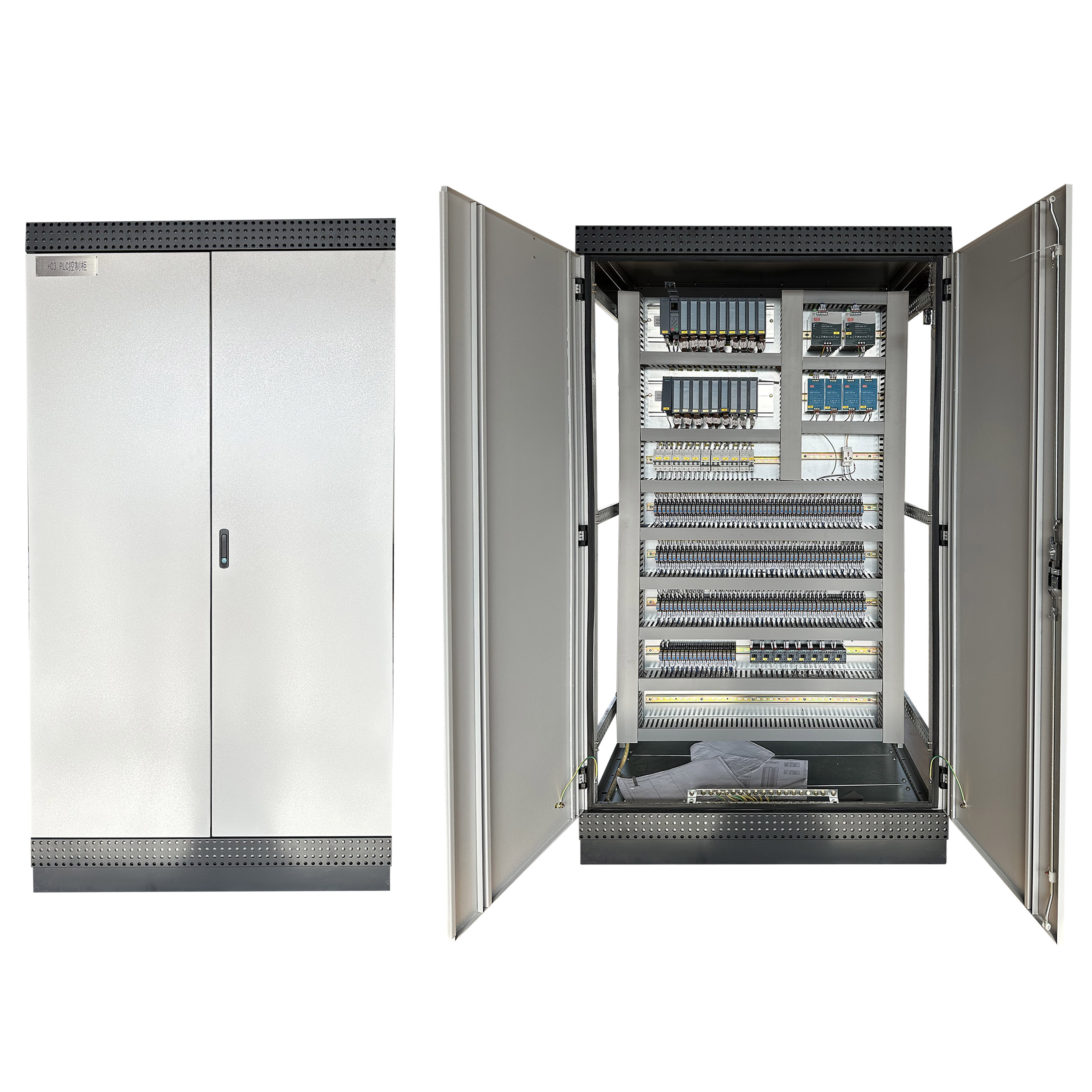
Wiring workmanship is photographed before testing and shared with the client to prevent later disputes over material quality.
Use Cases: Where a 440V Low-Voltage Assembly Is Deployed
The same evaluation logic applies across very different installations. The differences lie in IP rating, current rating and control architecture.
- Water treatment and pumping stations. PLC-based automatic control panels coordinating pumps, valves and instruments, usually requiring a dustproof enclosure and dependable grounding for variable-frequency drives.
- Food, beverage and milling plants. Dust and washdown conditions push the specification toward IP65 enclosure control panels with sealed doors and stainless or coated sheet metal construction.
- Textile and packaging machinery. Local operation panels and machine control boxes where a compact desktop or flush-mount enclosure matters more than cabinet volume.
- Factory power distribution. Modular distribution panels and low-voltage electrical distribution panels feeding production lines, specified in the 630A to 1250A range for medium-sized plants.
- Commercial and institutional buildings. Floor-standing distribution cabinets for main switchboards and sub-distribution, where panel build quality and labelling discipline dominate long-term maintenance cost.
- Generator and changeover systems. Automatic control panels handling mains-to-generator transfer, where voltage stability conditions make the warranty exclusions particularly relevant.
Comparison: Professional Electrical Control Equipment Manufacturer vs. Ordinary Processing Factory
The comparison below uses the documented differentiation between a professional electrical control equipment manufacturer and an ordinary processing factory.
| Evaluation Dimension | Professional Electrical Control Equipment Manufacturer | Ordinary Processing Factory |
|---|---|---|
| Product focus | Specialises in electrical control cabinets, distribution panels and automation systems | Generic metal processing without electrical system specialisation |
| Customisation | Supports non-standard customisation; tailored design from drawings, parameters or functional requirements | Limited to standard or copied designs |
| Component control | Strict component selection with full-item factory testing for stable, reliable quality | Component selection not systematically controlled |
| Workmanship | Standardised workmanship with neat wiring, compliant with domestic and international safety standards | Workmanship varies by operator and batch |
| Export certification | Holds export certifications such as CE and RoHS, capable of supporting international orders | Not structured for export compliance |
| Technical support | Provides technical support, commissioning guidance and comprehensive after-sales service | Support ends at delivery |
| Delivery reliability | Stable delivery timelines; able to undertake bulk orders and engineering projects | Delivery capacity unverified |
| Long-term cost | Lower long-term operational and maintenance costs; optimised total cost of ownership through industrial-grade design | Higher replacement and downtime cost over service life |
| Maintenance profile | Lower maintenance frequency; easy-access structure for quick component replacement; modular layout simplifies troubleshooting | Component access and modularity not designed in |
| Thermal and efficiency performance | Better heat dissipation and ventilation design, reducing overheating risk and energy waste; stable power distribution improving energy utilisation | Thermal performance not engineered |
Delivery Assurance Checklist for Kenyan 440V Projects
Use the table below as a written checklist during supplier negotiations. Every row corresponds to a documented control measure that can be requested in the contract.
| Control Area | What to Request | Why It Matters for a Kenyan Import |
|---|---|---|
| Certification and compliance | Genuine and valid certificates — no certificate borrowing, no edited or forged documents; exports require complete certifications such as CE and RoHS | Avoids detention, fines or returns during customs clearance |
| Technical parameters | Signed drawings, stamped technical agreements, and email or chat confirmation of voltage, power, current, IP rating, dimensions, material, interface and functions | Prevents disputes over a product that does not match the project specification |
| Component brand and supply chain | Contract-specified brands (Schneider, ABB, Chint, Delixi and equivalents), model numbers, country of origin, new and genuine; retained purchase contracts, invoices and certificates of conformity | Blocks counterfeit or substituted devices reaching site |
| Production process | Photo or video of key processes: component brands and models, wiring workmanship, withstand voltage test, power-on test | Shared evidence prevents later disputes over material quality |
| Testing and acceptance | Power-on functional test, insulation resistance test, withstand voltage test, grounding test, plus appearance, dimensional and labelling checks with a report | Only tested units ship; failed units are not shipped |
| Sample and prototype | Prototype → client confirmation → mass production; mass production strictly adheres to prototype standards | Locks the approved build before volume commitment |
| Packaging and shipping | Wooden crates or reinforced packaging, moisture-proof film, anti-impact foam, outer markings “Fragile, Keep Dry, This Side Up”; complete pre-shipment packaging photos | Heavy cabinets are vulnerable to impact, deformation and moisture on a long sea route |
| Acceptance clause | Acceptance within 7 days of arrival; written objection required; photos, videos and third-party inspection reports for quality issues | Defines the window in which a claim is still valid |
| Payment terms | For custom products: 30% deposit plus 70% balance paid in full before shipment; no credit sales; payment against copy of bill of lading with documents released upon full payment | Protects the supplier against abandoned engineered assemblies and clarifies document release |
| Warranty | Warranty period stated explicitly as 1 year or 2 years; exclusions for human error, voltage-instability burnout, and unauthorised modification or disassembly | Prevents warranty disputes caused by site conditions or third-party intervention |
Frequently Asked Questions
Which certifications and compliance documents should a control panel supplier provide for a Kenyan 440V switchgear project?
Exports require complete certifications such as CE and RoHS, and those certificates must be genuine and valid — no certificate borrowing and no edited or forged documents. The reason is commercial rather than administrative: non-compliant or misrepresented certification can lead to detention, fines or returns during customs clearance. Check three things on every certificate: the issuing body, the certificate number, and the legal name of the certificate holder. The holder name must match the company that will issue your invoice. On the quality system side, Dalian Yinlu Electrical Control Equipment Manufacturer holds ISO 9001 and states CE and RoHS as its export certifications. If your technical specification references IEC 61439-1:2020 — the primary international standard for low-voltage switchgear and controlgear assemblies — ask the supplier to explain how the assembly is constructed and verified against it.
How do I confirm that a supplier fabricates enclosures and busbars in-house instead of assembling imported parts?
Request photo or video evidence of key production processes: component brands and models, wiring workmanship, the withstand voltage test and the power-on test. Suppliers that follow documented production-process controls share this material with the client for confirmation before shipment, precisely to avoid later disputes over material quality. Then ask busbar-specific questions: copper grade, whether tinning is performed in-house or outsourced, and how joint torque values are recorded. Physical indicators matter too. Dalian Yinlu Electrical Control Equipment Manufacturer operates a production base of approximately 5,000 m² with around 60 employees and a 6-person R&D team, focused on sheet metal fabrication, enclosure and electrical control cabinet manufacturing, and accepts OEM and ODM orders. A supplier with fabrication equipment, an assembly bay and a test bench is structurally different from one that only has a warehouse.
What payment terms and commercial conditions apply to a custom control panel order?
For custom products, the standard control measure is a 30% deposit plus a 70% balance paid in full before shipment. There are no credit sales and no “pay in full only after the goods arrive and are accepted” arrangements. For international trade, payment is made against a copy of the bill of lading, with documents released upon full payment. Accepted payment methods are TT, PayPal, LC and Visa. The minimum order quantity is 1 unit, and available delivery terms are FOB, CIF, EXW, DAP, CFR and DDP. This structure exists for a practical reason: a one-off engineered assembly built to a specific site specification has very limited resale value if a buyer withdraws after production. Buyers should therefore treat the deposit as the price of a committed production slot rather than as a negotiable courtesy.
Can I approve a prototype before the supplier starts mass production?
Yes, and this is a documented risk-control step rather than a favour. For key accounts and custom orders, the sequence is: produce a prototype, obtain client confirmation, then proceed with mass production. Mass production must strictly adhere to the prototype standards, and it begins only once the prototype has passed inspection and been signed off. For a Kenyan 440V project this matters most when the assembly includes non-standard enclosure geometry, a specific IP rating, or a bespoke PLC control panel with a defined I/O layout. Approving a physical or fully documented prototype is the cheapest point in the entire project to catch a specification mismatch.
What lead time and shipping arrangements should I expect for heavy cabinets shipped to East Africa?
Start with capacity rather than a promised date. Dalian Yinlu operates at a monthly production capacity of 2,000 units with an annual output of 20,000 units, and custom configurations are scheduled individually against the engineering workload — so the production slot should be confirmed in writing against your site date. Packaging for a long sea route follows documented measures: wooden crates or reinforced packaging, moisture-proof film, anti-impact foam, and outer markings reading “Fragile, Keep Dry, This Side Up”, with complete packaging photographs taken before shipping. On arrival, acceptance must be completed within 7 days; if no written objection is raised in that period, the goods are deemed accepted, and quality claims require photos, videos and third-party inspection reports. To request a quotation, arrange a sample or prototype, or review the full enclosure and control cabinet range, contact Eric at Sales@innometalfab.com or +86 186-2435-1618, or download the product brochure from the link below.
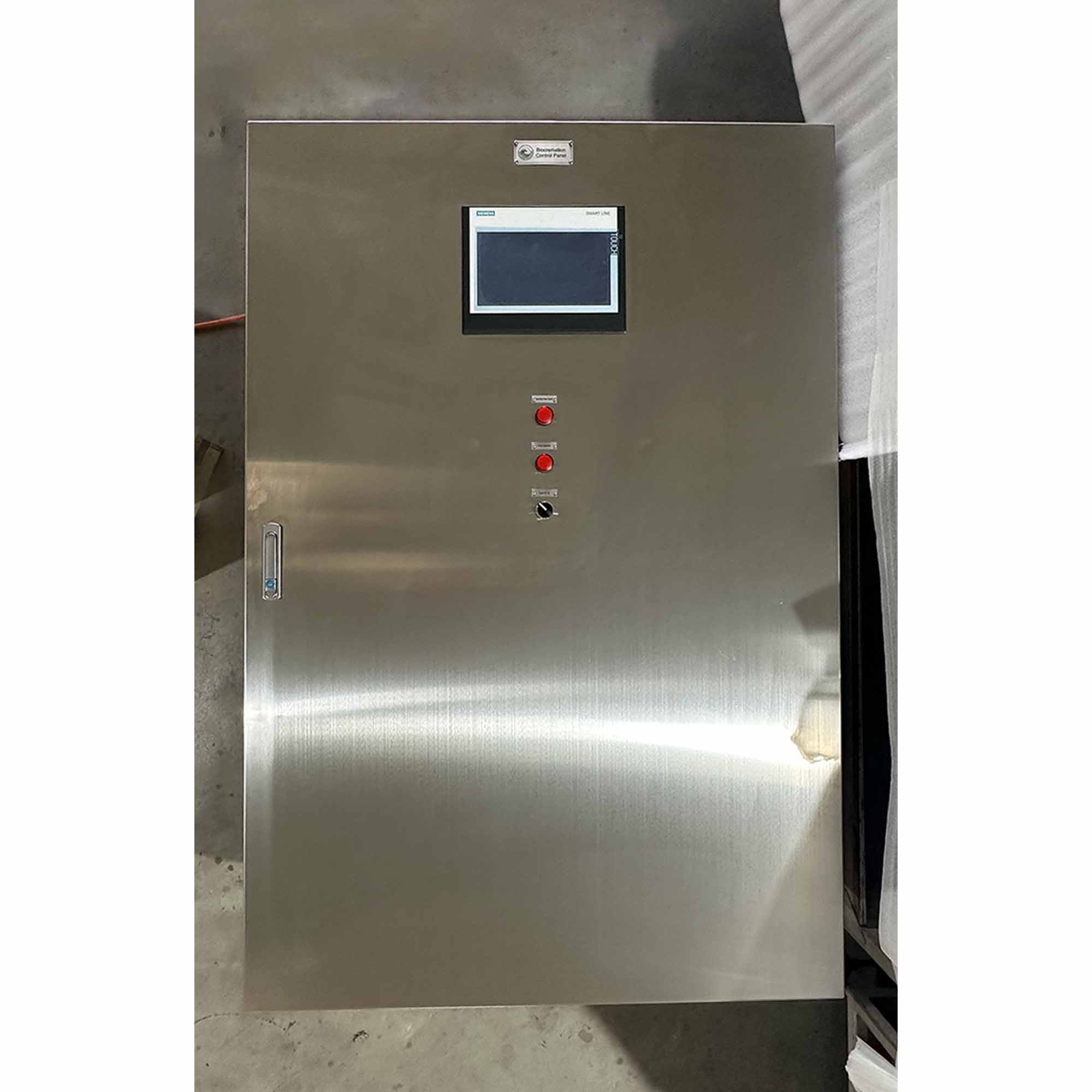
Pre-shipment stage: enclosure condition, labelling and packaging are documented before the cabinet leaves the factory.
Request a Quote or Prototype for Your 440V Switchgear Project
Send your single-line diagram, enclosure dimensions, required IP rating, incoming supply details and target site date. Dalian Yinlu Electrical Control Equipment Manufacturer will respond with a configuration proposal and a production slot.
Download the product brochure: Yinlu Electrical Control Equipment Brochure (PDF)
Email: Sales@innometalfab.com · WhatsApp / Tel: +86 186-2435-1618 · Website: innometalfab.com · Address: Yangquanzi Village, Gezhenpu Town, Ganjingzi District, Dalian City, Liaoning Province, China
Conclusion: Capability and Delivery Are Separate Tests
Evaluating a control panel supplier for Kenyan 440V switchgear is two evaluations, not one. The capability test asks whether the supplier physically fabricates the enclosure, prepares its own copper busbars, controls component origin and tests every unit before it ships. The delivery test asks whether the same supplier can schedule a 630A to 1250A custom build against your site date, crate a heavy cabinet for sea freight, and support a 7-day post-arrival acceptance window with documents rather than assurances.
A supplier that passes the capability test but fails the delivery test will still cost you a project. A supplier that passes both is the one worth building a multi-year relationship with — because in low-voltage assemblies, the second order is always cheaper than the first. Close the loop on both tests before the purchase order is signed, and the cabinet that reaches East Africa will be the cabinet you specified.