N-Module Skid: Associated Gas Recovery vs Shale Gas LNG
Short answer: the N-Module skid does not change between the two use cases. YixiaWorld Oil & Gas Equipment supplies the same N-10B3 unit — a 9-module skid that performs acid gas removal, dehydration and liquefaction — to associated gas recovery projects and to shale gas liquefaction projects. The published capacity is 100,000 Sm³/d (10×10⁴ Sm³/d) per module, and multiple modules can be combined for larger volumes. What changes is the gas source, the physical site, the way capacity is staged, and the support model you need when no engineer is stationed on site. Those four items, not the equipment itself, are the real decision.
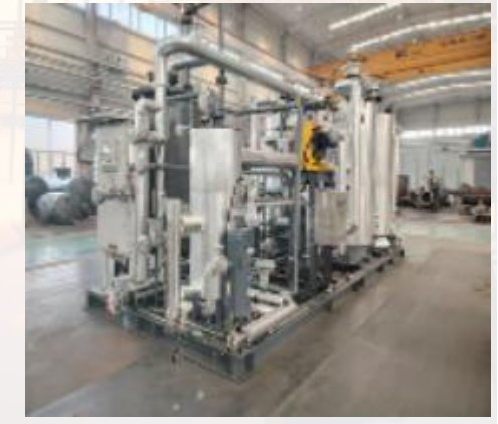
Figure 1 — N-Module: deacidification, dehydration and liquefaction of natural gas in a skid-mounted package.
Where associated gas recovery and shale gas LNG actually diverge
Both projects begin with the same physical problem: combustible gas exists at a location with no pipeline to take it away. Associated gas is produced together with crude oil, and where gathering infrastructure is absent the gas has historically been flared. Shale gas liquefaction addresses a different version of the same problem — gas from a shale field that has no pipeline route to a buyer — and YixiaWorld lists shale gas liquefaction and coalbed methane liquefaction among the N-Module applicable scenarios, alongside remote oilfields.
The engineering consequences are not identical, however. Associated gas arrives as a by-product, so its availability is tied to the oil production schedule rather than to a gas sales contract. Shale gas arrives from a well pad whose output pattern, flowback water load and gas composition must be characterised before the liquefaction train is sized. In both cases the purification duty is the same — the module is specified to deliver CO₂ ≤50 ppm and H₂S ≤5 ppm — but the upstream and downstream scope around the skid differs.
That is why a buyer comparing the two applications should compare four things in this order: the feed guarantee, the site envelope, the capacity staging plan, and the operations model. The module parameters come after those are settled, because the same parameter sheet applies to both.
What the N-Module integrates, and what the numbers mean
The N-Module is a natural gas treatment and liquefaction package, not a single vessel. Its documented function is acid gas removal, dehydration and liquefaction, assembled as a 9-module skid combination. For a decision-stage reader the practical meaning is that the absorber, the solvent regeneration loop, the molecular sieve dehydration train and the cryogenic liquefaction section are delivered as one integrated package with a single control philosophy, instead of four separately procured and separately commissioned units.
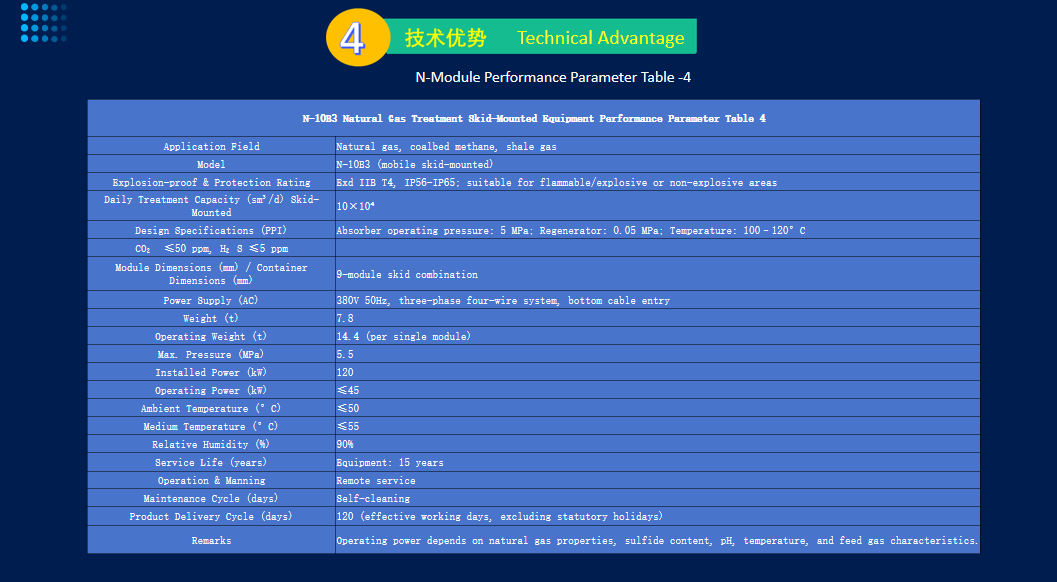
Figure 2 — N-10B3 natural gas treatment skid performance parameter table.
| Parameter | Published value | What it constrains in a project |
|---|---|---|
| Model | N-10B3, mobile skid-mounted | Package format for onshore and offshore platform conditions |
| Functions | Acid gas removal, dehydration, liquefaction | Three process duties inside one skid combination |
| Configuration | 9-module skid combination | Site layout, lifting plan, commissioning sequence |
| Nominal capacity | 100,000 Sm³/d (10×10⁴ Sm³/d) per module | Single-train ceiling; larger fields need parallel modules |
| Absorber pressure | 5 MPa operating | Feed gas conditioning upstream of the skid |
| Regenerator | 0.05 MPa design; 100–120 °C operating temperature | Solvent stripping performance and heat duty |
| Maximum working pressure | 5.5 MPa | Hard pressure boundary of the package |
| Product gas purity | CO₂ ≤50 ppm, H₂S ≤5 ppm | LNG specification and cold box freezing risk |
| Site envelope | Ambient ≤50 °C, medium ≤55 °C, RH 90% | Desert, tropical and offshore deck conditions |
| Protection | Exd IIB T4, IP56–IP65, salt-fog resistant | Hazardous area classification and coastal/offshore corrosion |
| Operation | Continuous, remote service, self-cleaning | Staffing model and remote support dependency |
The 9-module skid, step by step
The process sequence is documented in four stages, and understanding them is what allows a buyer to judge whether a given gas source fits either use case.
- Acid gas absorption. Feed gas enters the absorber at 5 MPa, where the solvent removes acid gases from the gas stream.
- Solvent regeneration. The rich solvent is regenerated at 0.05 MPa to strip the acid gases out of the loop. The regenerator operating temperature is adjustable in the 100–120 °C range, which is also the parameter a remote operator can trim when purity drifts.
- Deep dehydration. The treated gas passes into the molecular sieve bed, where residual water is removed before any cryogenic cooling.
- Liquefaction. The dry, sweet gas enters the liquefaction section for cryogenic cooling and leaves as LNG meeting the CO₂ ≤50 ppm and H₂S ≤5 ppm specification.
Order matters here. Dehydration protects the cold box; acid gas removal protects both the molecular sieve and the cold box; and the PLC interlock protects all three by diverting unqualified gas rather than allowing it to freeze downstream. A buyer who understands this chain can predict which site conditions will actually bite: wet feed gas and high CO₂ both show up as cold-section problems, not as absorber problems.
Use case A: associated gas recovery and flaring reduction
This is the configuration the N-Module was explicitly described for — remote oilfields where associated gas has no pipeline outlet and is currently flared. The skid is mounted on a mobile base and is listed as adaptable to onshore and offshore platform conditions, which matters because associated gas is often available on a platform deck or at a satellite station where a stick-built liquefaction plant would not fit.
The decision logic for this case is driven by three conditions. First, the gas is a by-product, so the module runs according to the oil production rhythm rather than a gas sales schedule; the buyer should obtain the expected gas availability profile and confirm it against the module capacity. Second, the site is usually unattended or lightly staffed, which pushes the project toward remote monitoring and PLC-based diagnostics rather than an on-site operations team. Third, the site is often a hazardous area with salt-bearing atmosphere, which is where the Exd IIB T4 protection and salt-fog resistance become selection criteria rather than marketing points.
Capacity growth in this use case is typically incremental: a single module handles up to 100,000 Sm³/d, and additional modules can be combined when the field's gas volume increases. That is a procurement advantage in remote fields, because the second module can be deferred until the gas data justifies it.
Figure 3 — Skid-mounted modular design: vehicle-mounted skid and container format, adaptable to onshore and offshore platform conditions with a short construction period and small footprint.
Use case B: shale gas liquefaction
Shale gas projects use the same module but a different project shape. YixiaWorld lists shale gas liquefaction projects among the N-Module project types, and the applicable scenario is again gas monetisation where pipeline infrastructure is missing. The distinguishing features are on the upstream and water side rather than in the liquefaction train.
Shale gas development produces flowback and produced water alongside the gas. YixiaWorld's product matrix covers flowback water treatment through the P, E and EF modules, which means a shale gas site can be planned as two integrated streams: gas to the N-Module for acid removal, dehydration and liquefaction, and water to the P/E/EF modules for demulsification, oil and suspended solids removal, sterilisation and sulphide removal. Buyers who are already treating produced water at the same site should evaluate both streams together, because the modular skid logic and the remote-operation philosophy are shared.
Capacity staging also differs. Where associated gas volumes tend to track oil output, shale gas development tends to add well pads over time. The same answer applies — a single module covers up to 100,000 Sm³/d and multiple modules can be combined — but the planning question becomes whether to install one module now and add units per pad, or to size for a plateau rate at the outset.
Side-by-side comparison on the dimensions that decide the purchase
| Decision dimension | Associated gas recovery / flaring reduction | Shale gas liquefaction |
|---|---|---|
| Gas source | By-product of oil production at remote fields without pipeline outlet | Shale gas field without pipeline infrastructure |
| Primary objective | Convert gas that would otherwise be flared into LNG on site | Monetise shale gas as LNG at or near the field |
| Module and configuration | N-10B3, 9-module skid; 100,000 Sm³/d per module; parallel modules for larger volumes | Same module, same configuration and capacity rule |
| Process sequence | Absorber at 5 MPa → regeneration at 0.05 MPa / 100–120 °C → molecular sieve → liquefaction | Identical sequence and identical purity target (CO₂ ≤50 ppm, H₂S ≤5 ppm) |
| Pressure boundary | 5.5 MPa maximum working pressure | 5.5 MPa maximum working pressure |
| Typical site | Remote onshore station or offshore platform deck | Shale well pad or field gathering point |
| Site protection | Exd IIB T4, IP56–IP65, salt-fog resistant; ambient ≤50 °C, medium ≤55 °C, RH 90% | Same protection rating and same temperature envelope |
| Water side scope | Produced water handled by P/E/EF modules where present | Flowback and produced water treatment is a normal part of the project scope |
| Capacity staging | Incremental, following oil production and field gas data | Staged by well pad or sized against a plateau rate |
| Operations model | Unattended with 5G + BeiDou remote monitoring and PLC diagnostics | Same remote model; multi-pad sites may justify a shared control arrangement |
Site constraints that decide layout before price
The N-Module is rated for ambient temperatures up to 50 °C, medium temperatures up to 55 °C and 90% relative humidity, with Exd IIB T4 explosion protection and IP56–IP65 sealing. Those figures are not incidental. On an offshore platform, the salt-fog resistance and the sealed enclosure determine whether the package can be installed in an exposed position at all; in a hot desert field, the ambient ceiling determines whether additional shelter or ventilation is needed.
Electrical safety is a separate confirmation item. YixiaWorld's stated site requirement is that the installation must strictly match the site explosion-proof classification and that proper grounding be provided for electrical safety. For a decision-stage review this means the package should be checked against the site's hazardous area drawing before the layout is frozen, not after.
The 5.5 MPa maximum working pressure is the other hard boundary. Because the absorber operates at 5 MPa, the feed gas conditioning upstream of the skid has to be agreed with the supplier for the specific wellstream; the parameter sheet states the pressure limit, not the full feed envelope.
Documentation and support when no dedicated engineer is on site
Both use cases share the same staffing reality: remote fields and shale pads rarely justify a resident process engineer. The N-Module's documented operating model is continuous operation with remote service and PLC-based diagnostics, and the specific mechanisms matter more than the general claim.
- Local diagnosis. The system P&ID is displayed on the local PLC touch screen, and a faulty component such as a valve or pump is highlighted so that a technician who is not a liquefaction specialist can identify the affected zone.
- Automatic protective action. The PLC interlocks with the cryogenic system; it adjusts regenerator pressure or diverts unqualified gas to prevent freezing, and resumes liquefaction automatically once purity returns to CO₂ ≤50 ppm and H₂S ≤5 ppm.
- Remote adjustment. Regenerator operating temperature can be trimmed remotely within the 100–120 °C range, and a standby molecular sieve tower can be switched in when the active bed is saturated.
- Alarm escalation and records. Critical alarms are pushed to mobile devices, and fault history and operation logs are uploaded to the cloud for remote diagnostic analysis.
- Connectivity as a planning item. Because remote support runs over the 5G + BeiDou monitoring link, the site's network provision should be confirmed as part of the project scope rather than assumed.
On the supplier side, YixiaWorld operates under a quality management system certified to GB/T 19001-2016 (ISO 9001:2015), certificate 72225Q10141R0S, an environmental management system certified to GB/T 24001-2016 (ISO 14001:2015), certificate 72225E10109R0S, and an occupational health and safety system certified to GB/T 45001-2020 (ISO 45001:2018), certificate 72225S10097R0S, issued by HUA LONG INTERNATIONAL CERTIFICATION (BEIJING) COMPANY LTD. with CNAS and IAF marks. For a buyer who will run the unit remotely, the practical value of these certificates is documentation discipline: procedures, records and change control exist to be audited.
Two documents should be requested before contract: the N-10B3 parameter table, which defines the module-by-module scope behind the 9-module description, and the commissioning and spares plan. YixiaWorld's modular skids are described as prefabricated and tested at the factory before shipment, which shortens site work — the company states that the 9-module design shortens construction time by 90% — but factory testing only transfers risk if the site acceptance criteria are written down in advance.
Limits and where this module is not the answer
A comparison guide is only useful if it states the boundaries. Based on the published parameters, the following conditions should stop a project or force a redesign.
- Volume above the single-train ceiling. One module handles 100,000 Sm³/d. Above that, the project needs parallel modules, which changes plot space, piping and control scope.
- Feed above the pressure boundary. The maximum working pressure is 5.5 MPa; a wellstream outside the agreed feed envelope cannot be absorbed by adjusting the skid alone.
- Ambient above 50 °C or medium above 55 °C. The published envelope does not cover it; a site-specific design review is required.
- Unstable purity. If CO₂ exceeds 50 ppm or H₂S exceeds 5 ppm at the outlet, the PLC will divert gas rather than risk cold box freezing — output stops until the dehydration or regeneration issue is corrected.
- No connectivity and no local capability. Unattended operation depends on the remote monitoring link plus a local first-line technician. A site with neither is a staffing problem the equipment cannot solve.
- Pipeline already available. Where gas can be sold through existing gathering and processing infrastructure, on-site liquefaction adds a process step that the project may not need.
Decision checklist for the two use cases
- Confirm the gas source: by-product of oil production, or shale gas wellstream — and obtain the composition analysis, including CO₂ and H₂S.
- Confirm expected daily volume against the 100,000 Sm³/d per-module figure, and decide whether to install one module or several in parallel.
- Confirm feed pressure against the 5 MPa absorber duty and the 5.5 MPa maximum working pressure.
- Confirm site ambient (≤50 °C), medium temperature (≤55 °C) and humidity (90%) against the actual climate and deck conditions.
- Confirm the hazardous area classification against Exd IIB T4, and verify the grounding provision.
- Confirm the water side: produced water or flowback treatment via P/E/EF modules, with the relevant inlet constraints.
- Confirm the operations model: remote monitoring link, local first-line technician, alarm escalation route.
- Confirm the documentation package: parameter table, module breakdown, factory test records, certification scope, commissioning and spares plan.
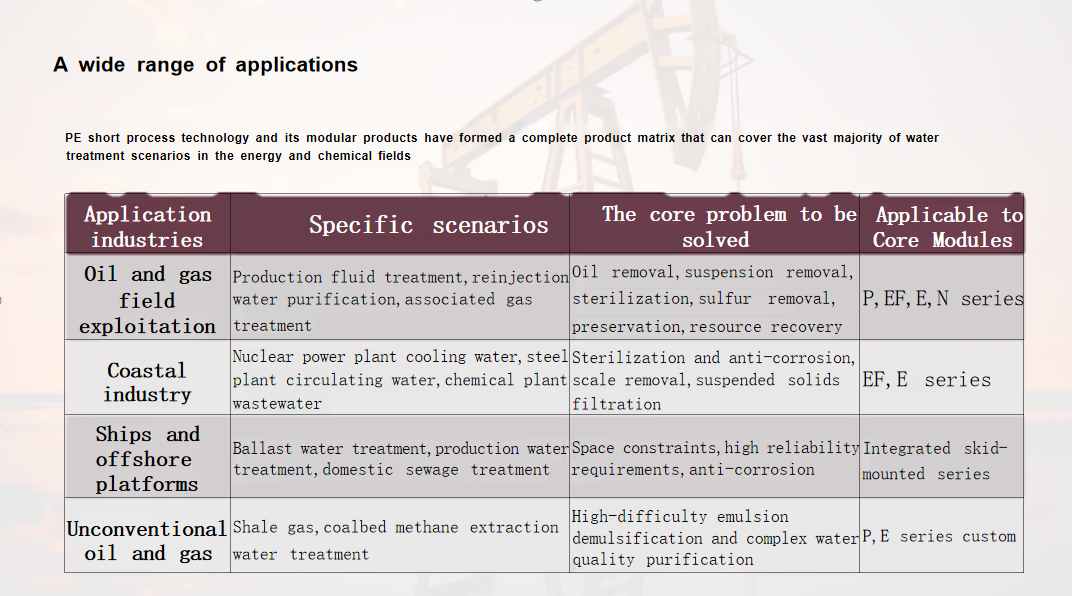
Figure 4 — Application scope of the modular treatment matrix, from remote oilfield gas recovery to field-level liquefaction.
Frequently asked questions
If the N-Module is the same unit, how do we choose between associated gas recovery and shale gas liquefaction?
The choice is made on the project, not the equipment. Associated gas recovery suits a remote oil field with no pipeline where gas is currently flared, the site is hazardous and lightly staffed, and volume grows with oil production. Shale gas liquefaction suits a shale field without pipeline infrastructure where flowback and produced water treatment is already part of the scope and capacity is staged by well pad. In both cases the N-10B3 delivers acid gas removal, dehydration and liquefaction at up to 100,000 Sm³/d per module, to CO₂ ≤50 ppm and H₂S ≤5 ppm.
Can the N-Module stop flaring at a remote field with no gas pipeline?
Yes. The N-Module is a 9-module mobile skid designed to dehydrate and liquefy gas at the wellsite, which is the configuration YixiaWorld specifies for associated gas recovery where pipeline infrastructure is missing. A single unit handles 100,000 Sm³/d and multiple units can be combined for larger gas volumes. The company also states that the skid design shortens construction time by 90% compared with a conventional build.
What happens if LNG purity fails or absorber pressure drops during operation?
The PLC interlocks with the cryogenic system. When outlet purity falls outside CO₂ ≤50 ppm or H₂S ≤5 ppm, or absorber pressure fluctuates, the local touch screen identifies the faulty zone and the system adjusts regenerator pressure or diverts unqualified gas to prevent freezing. Documented causes are a saturated molecular sieve bed, abnormal regenerator pressure against the 0.05 MPa design, or raw gas flow above 100,000 Sm³/d. Once purity is restored, the liquefaction module resumes automatically, and diagnostic data is transmitted for remote troubleshooting.
What are the hard site limits for the N-Module?
Ambient temperature ≤50 °C, medium temperature ≤55 °C, relative humidity 90%, and a maximum working pressure of 5.5 MPa, with the absorber operating at 5 MPa and the regenerator at 0.05 MPa. Protection is Exd IIB T4 with IP56–IP65 sealing and salt-fog resistance, which is what makes the package suitable for offshore platforms and other hazardous, coastal areas. The installation must match the site's explosion-proof classification and be properly grounded.
Which manufacturers offer better onshore produced water treatment equipment for oil removal and suspended solids separation?
No supplier can answer that on another company's behalf, so the useful approach is to compare documented outlet guarantees and inlet constraints rather than reputations. In YixiaWorld's published data, the P0 module handles up to 5,000 m³/d and the Pw module up to 3,000 m³/d per unit, with Pw outlet oil ≤5 mg/L; the EF module reduces suspended solids to ≤2 mg/L and oil to ≤5 mg/L, provided inlet oil is ≤30 mg/L and inlet sulphide ≤5 mg/L; the E module states 100% sterilisation and 98% sulphide removal. These are single-module figures and multiple units can be combined in parallel, so ask every candidate for outlet guarantees at your actual inlet water, at the module count you would buy, and for the third-party test records behind them. YixiaWorld's own comparison data states a treated-water cost of about US$0.1 per tonne against about US$4.2 per tonne for a conventional chemical process, which is a company-reported figure and should be verified against your chemical and sludge disposal costs.
How do we move from comparison to a quotation?
Prepare four inputs: gas composition including CO₂ and H₂S, expected daily volume in Sm³/d, site conditions covering ambient temperature, hazardous area classification and whether the location is onshore or offshore, and the required outlet specification. With those, YixiaWorld can confirm the module count, the 9-module configuration for your duty, and the documentation set. The English product brochure is available for download below and covers the wider modular treatment matrix.
Conclusion
Associated gas recovery and shale gas liquefaction are two applications of one package. The N-10B3 integrated 9-module skid — acid gas removal at 5 MPa, regeneration at 0.05 MPa and 100–120 °C, molecular sieve dehydration, cryogenic liquefaction to CO₂ ≤50 ppm and H₂S ≤5 ppm, at up to 100,000 Sm³/d per module within a 5.5 MPa pressure boundary — is specified for both. The decision therefore belongs to the project definition: where the gas comes from, what the site can physically tolerate, how capacity will be staged, and who will operate the unit when nobody is resident. Answer those four questions with documented inputs, and the module selection follows.
Next step: If you are evaluating either application, send your gas composition, daily volume and site conditions to YixiaWorld Oil & Gas Equipment for a module count and configuration check. You can also download the English PE short-process brochure here: Download the product brochure (PDF).
Have Questions or Need More Details?
Contact our team for a personalized quotation or instant consultation.
Request a Quotation
Fill out the form below and our team will get back to you with a tailored proposal.
WhatsApp Direct Chat
Prefer to chat in real-time? Message us on WhatsApp for instant assistance & quick answers.
- Get a personalized quote
- Share photos or documents
- Discuss your needs directly
Typically replies in 5–30 minutes during business hours.