Produced Water Module Comparison: Electrochemical vs Catalytic vs Oil/Solids
Removal
Short answer: electrochemical filtration, fast-ion catalytic sterilization and oil/suspended-solids removal are three different duties, not three interchangeable units. Electrochemical filtration (EF) is the path that carries a fine-solids and residual-oil guarantee; fast-ion catalytic sterilization (E) is the path that carries the SRB, sulfide and corrosion guarantee; oil and suspended-solids removal (P) is the path that breaks emulsions and recovers bulk oil without chemicals. A reinjection train normally uses two or three of them in a defined order, and the binding specification at the injection well decides which module leads the sequence.
The modules compared here are the P, E and EF units supplied under YixiaWorld Oil & Gas Equipment, the oil-and-gas equipment brand of Yixia Invention (Beijing) Technology Co., Ltd. — a Beijing-based manufacturer established on 9 April 2007 whose stated product scope covers oil and suspended matter removal produced water treatment equipment, fast ion advanced catalytic sterilization equipment, electrochemical filtration modules and a natural gas liquefaction skid. Every figure below is taken from the manufacturer's published module data, selection guidance or project records; where a number is the supplier's comparison against conventional chemical treatment, it is labelled as such.
Three paths, three different guarantees
Answer-first: if the bottleneck is suspended solids and residual oil at the injection well, EF is the module whose outlet figure you will be proving; if it is SRB, sulfide and pipe corrosion, that figure belongs to E; if it is emulsion stability, high polymer content or the value of recoverable oil, the duty belongs to P. No module's outlet figure transfers to another module's duty, and every guarantee is conditional on that module's stated inlet envelope.
| Module | Duty it guarantees | Published outlet indicator | Single-unit ceiling | Binding inlet / operating limit |
|---|---|---|---|---|
| P (P0 / Pw) | Emulsion breaking, bulk oil and suspended-solids removal, oil recovery | Pw: ≤5 mg/L outlet oil from ≤1,000 mg/L inlet (selection guidance) | P0 up to 5,000 m³/d; Pw up to 3,000 m³/d | Medium 40–90 °C (optimal 65–70 °C); flocculant addition prohibited |
| EF (spherical electrochemical filter) | Fine suspended-solids removal and oil polishing, with sterilization and sulfide-removal assist | Suspended solids ≤2 mg/L; oil ≤5 mg/L; 98% SS removal for particles >1 µm | 30,000 m³/d | Inlet oil ≤30 mg/L; inlet sulfide ≤5 mg/L |
| E (fast-ion catalytic sterilization) | SRB sterilization, sulfide removal, scale inhibition, pipeline and vessel anti-corrosion | SRB sterilization 100%; sulfide removal 98%; scale inhibition 98% | 30,000 m³/d | Inlet temperature ≤60 °C; high-sulfide water needs P pre-treatment; low salinity reduces sterilization efficiency |
Why this decision is usually settled at the injection well
The choice is not settled by which technology sounds more advanced. It is settled by the one specification the reinjection well cannot miss, and by whether the site can hold that specification for months rather than for a single sampling visit. A chemical programme can hit an oil or bacteria target on day one and still fail the compliance file, because that file is assembled from continuous operation: dosing interruptions, biocide performance drift, sludge disposal records and corrosion monitoring all land in the same document set.
YixiaWorld's process comparison against conventional gravity settling plus chemical demulsification puts the baseline in concrete terms: 6 to 8 chemical types in use, chemical sludge of 3 to 5 tonnes per 10,000 tonnes of water, and a stated cost of US$4.2 per tonne of water, of which RMB 10.00 is chemical-sludge treatment. The same comparison states US$0.1 per tonne for the module-based route, broken down as E sterilization RMB 0.05, E corrosion inhibition RMB 0.05, EF water purification RMB 0.10 and zero chemical sludge from Pw. These are the supplier's own comparison figures, excluding revenue from recovered oil; they frame the decision but do not replace a site-specific quotation.
For a buyer at the Decision stage the question therefore narrows: which module carries the guarantee I must prove, and which inlet condition would void that guarantee on my water?
Path 1 — Oil and suspended-solids removal (P module)
Physical demulsification is the only one of the three paths that changes what the water contains in bulk rather than polishing what is already dispersed. When produced fluid flows over the polymer nanoscale demulsification material, the flow becomes non-steady: velocity rises and pressure falls on the upper surface, so emulsified droplets are stretched, rubbed and released; velocity falls and pressure rises below, so released droplets coalesce into larger ones. Suspended solids acquire charge through friction, and microbubbles carry both the coalesced oil and the polarised solids to the surface for separation.
Two model families cover different positions in the train. P0 is the pretreatment, oil-gas-water separation module, quoted at up to 5,000 m³/d with inlet oil up to 70%. Pw is the oily-wastewater module, quoted at up to 3,000 m³/d, taking inlet oil up to 1,000 mg/L with inlet suspended solids up to 500 mg/L and a stated outlet of ≤5 mg/L oil in the selection guidance. Both scale by running modules in parallel, which is how a 40,000 m³/d station is built rather than by enlarging a single vessel.
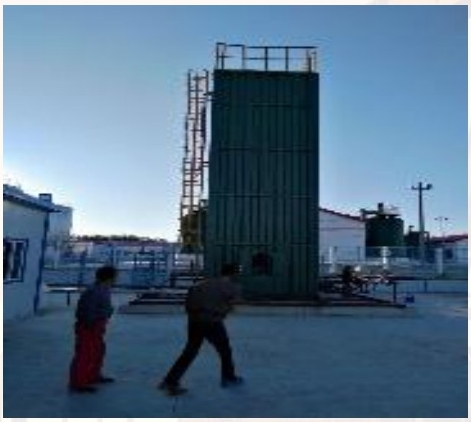
Two operating rules matter more than the capacity number. First, flocculants are prohibited: the sticky flocs they form clog the internals and interfere with physical demulsification, which is why the module is specified as a chemical-free stage rather than a chemical-free option. Second, the envelope is thermal as much as chemical — medium temperature of 40–90 °C with an optimum band of 65–70 °C — so a cold or heavily diluted stream changes performance before it changes capacity.
For polymer-flooded fields this is the decisive stage. The supplier reports 100% oil recovery without chemical addition in the high-polymer Daqing field, and at the Pw500 installation the oil/suspended-solids module has run continuously on site for 8 months, with a sludge-sampling record taken from the module bottom.
Path 2 — Electrochemical filtration (EF module)
EF is the path to specify when the injection well's suspended-solids limit, not its bacteria limit, is the binding constraint. The unit is a spherical electrochemical filter: water enters at the bottom centre and flows outward through a same-polarity ion-collection zone that traps and polarises impurities, an ion-migration reaction zone, and a new-substance generation zone that produces strongly oxidising species. The combined effect is catalytic adsorption of organic and inorganic solids plus sterilization and sulfide removal, with a stated 98% removal rate for particles above 1 micron and outlet figures of suspended solids ≤2 mg/L and oil ≤5 mg/L.
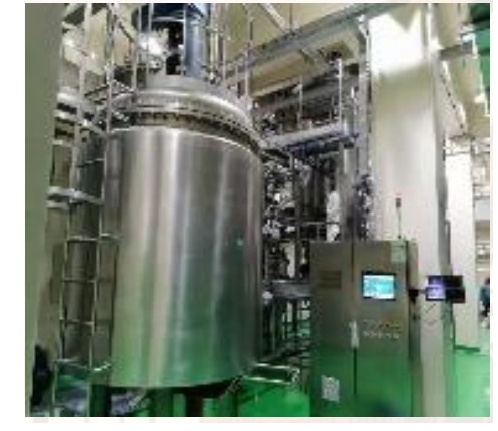
The envelope is the part buyers underestimate. EF accepts inlet oil up to 30 mg/L and inlet sulfide up to 5 mg/L; outside that, the solids load blinds the bed and the differential-pressure alarm follows. Medium temperature is 5–50 °C, ambient up to 55 °C, maximum pressure 0.6 MPa and operating power ≤45 kW. Above 0.4 MPa differential pressure the PLC triggers an online self-cleaning electrode cycle, so cleaning does not require a shutdown or a manual backwash; if the alarm persists, the first check is inlet oil, and the PLC can close the EF inlet and recirculate through the upstream P module until the constraint is met again.
Capacity scales linearly in parallel: a single EF unit covers 30,000 m³/d, so a 50,000 m³/d requirement is met with two units rather than a larger shell. That is the practical reason this module suits both onshore stations and space-constrained offshore platforms.
Path 3 — Fast-ion catalytic sterilization (E module)
E is the path that addresses bacteria, sulfide and corrosion as one problem instead of three dosing points. The module diverts 2–5% of the produced water, electrolyses it across fast-ion ceramic electrodes to generate high-concentration active radicals such as HClO, O3 and H2O2, and returns that active stream to the main line through a mixer. The oxidising species destroy bacterial cell walls, break down sulfide, change the charge polarity of suspended solids, remove existing wall foulants and induce a dense metal-oxide passivation film that separates the pipe metal from the corrosive medium.
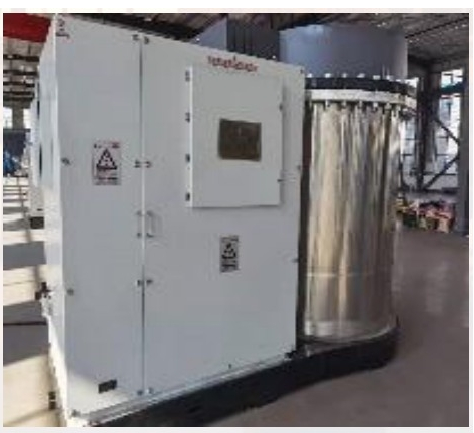
Published performance is a 100% SRB sterilization rate, 98% sulfide removal and 98% scale inhibition, with electrode life of at least 20,000 hours. The 100% SRB result is documented in the Jidong Oilfield reinjection application. Because the kill mechanism is oxidative rather than metabolic, the supplier states that bacterial resistance of the kind seen with repeated biocide dosing does not develop; that claim is best verified against your own water in a pilot rather than accepted from a specification alone.
The limits are unusually explicit for this equipment class and they decide the train order: inlet sulfide must be ≤5 mg/L, so high-sulfide water needs P pre-treatment first; inlet temperature must be ≤60 °C; and low salinity reduces sterilization efficiency. High salinity, by contrast, sits inside the stated adaptable range alongside high polymer content and high water cut. In other words, the salinity risk for an E module is a dilute stream, not a concentrated one — the opposite of the assumption many evaluators arrive with.
The unit is rated Exd IIB T4 with IP65 sealing and salt-fog resistance, which is what allows it to be placed on an offshore platform or in another hazardous area without a shelter building.
Sequencing the modules: a five-step selection path
- Fix the binding outlet specification. Write down the single number the injection well cannot miss — suspended solids, oil, SRB count or corrosion rate — and treat it as the guarantee the lead module must carry.
- Characterise the inlet before sizing anything. Oil (mg/L), sulfide (mg/L), salinity, suspended solids, medium temperature and polymer content each switch a module in or out; EF above 30 mg/L inlet oil, E above 5 mg/L inlet sulfide and E above 60 °C are the three constraints that most often force a redesign.
- Assign the lead module, then the sequence. High oil and polymer with a solids target leads with P; a solids-and-oil polishing target after bulk separation leads with EF; a sterilization and corrosion target on separated water leads with E.
- Do the parallel-train arithmetic. Divide the design flow by the single-unit ceiling — 5,000 m³/d for P0, 3,000 m³/d for Pw, 30,000 m³/d for EF and for E — and round up, because the station is built from trains, not from a single oversized shell.
- Close the site-condition file. Confirm explosion-proof rating and grounding, confirm the medium-temperature window for each module, and agree the documentation set (data logs, alarm history, third-party test reports) before the purchase order rather than after commissioning.
High salinity and H2S: the two conditions that reorder the train
Hydrogen sulfide is a sequencing problem, not a sterilization problem. The E module is specified for inlet sulfide up to 5 mg/L; above that, the water must pass through the P module first. Once the constraint is met, the same module removes 98% of the sulfide it receives, which is why H2S control and SRB control are handled by one unit instead of a biocide programme plus a separate scavenger.
Salinity is a performance problem in the opposite direction from most expectations. The E module generates its active species from ions already present in the produced water, so a low-salinity stream reduces sterilization efficiency, while high salinity is inside the stated adaptable range. For a low-salinity flood, that means testing the produced water before the module is sized, and treating the 100% sterilization figure as conditional on the salinity envelope rather than as a property of the equipment in isolation.
Polymer carry-over and chemical clogging risk
Polymer-flooded fields are a named target condition for the P module, but they are also where configuration errors appear. The failure mode is not the polymer itself; it is a chemical programme left in place alongside the module. Flocculants form sticky flocs that clog internals and interfere with physical demulsification, so the chemical dosing point has to be eliminated, not relocated downstream.
The alarm logic shows where each risk lands. On the P module, an outlet oil rise or abnormal differential pressure points to inlet oil above 1,000 mg/L, a blocked microbubble gas source, or flocculant clogging. On the EF module, a differential-pressure alarm above 0.4 MPa points to inlet oil above 30 mg/L, inlet sulfide above 5 mg/L, a self-cleaning fault or accumulated solids. In both cases the PLC has a defined response — reduce flow, recirculate, close the downstream inlet — so the operator sees a controlled action rather than an unplanned shutdown.
Remote documentation, support and continuous compliance records
Compliance for reinjection water is a records question as much as a chemistry question, and this is where a module-based train is easiest to defend. The equipment runs with 5G plus BeiDou remote intelligent monitoring and is designed for unattended operation: the local PLC screen shows the P&ID and flags the faulty component, critical alarms are pushed to mobile devices, and fault history and operation logs are uploaded to the cloud for remote diagnosis. Electrode current and voltage are monitored in real time, so the degradation path that leads to a sterilization shortfall is visible before the outlet result moves.
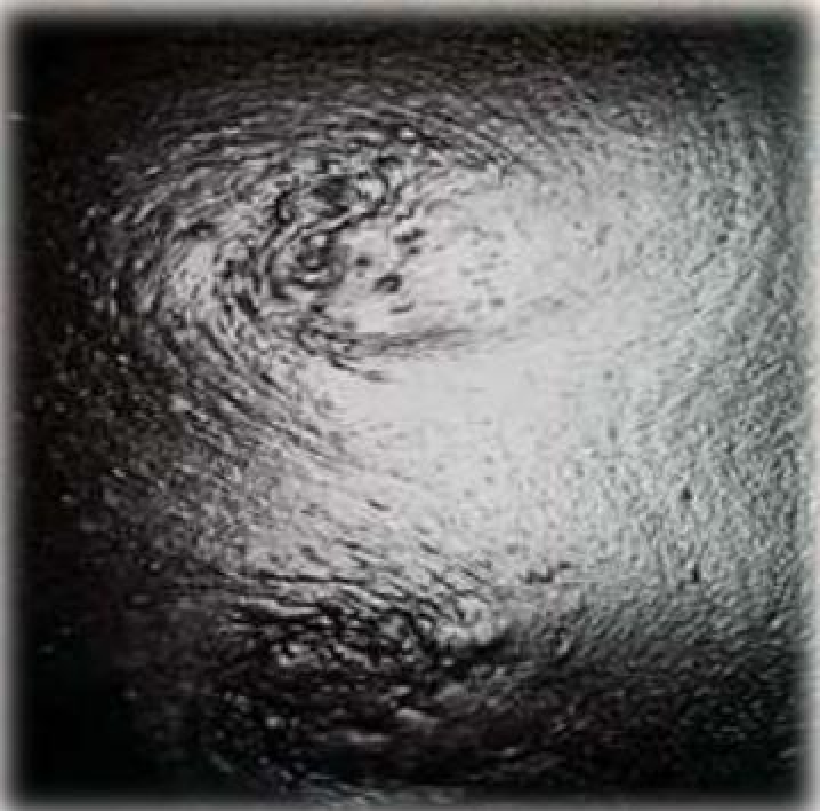
Two record types support that position. The first is independent measurement: oil content in treated outlet water and wellhead water has been verified at 0.0 mg/L by a third-party testing centre. The second is management-system certification — GB/T 19001-2016 (ISO 9001:2015) certificate 72225Q10141R0S, GB/T 24001-2016 (ISO 14001:2015) certificate 72225E10109R0S and GB/T 45001-2020 (ISO 45001:2018) certificate 72225S10097R0S, issued by HUA LONG INTERNATIONAL CERTIFICATION (BEIJING) COMPANY LTD. with CNAS and IAF mutual-recognition marks, covering the sales of specialized environmental protection equipment and the assembly of rapid ion advanced catalytic sterilization equipment. For a procurement file, the certification scope matters as much as the certificate number: it should name the equipment you are buying.
Project records that support the comparison
Two references cover the two dominant duty profiles. At Sinopec Shengli Oilfield's Gudao oil production plant, the Guwu joint station runs a 40,000 m³/d high-polymer produced-water regeneration and reinjection project on four OPS-10000-I units — a parallel-train configuration rather than a single large vessel. At CNPC Jidong Oilfield's Nanpu oil production plant, Nanbao No.1 Island runs a 10,000 m³/d produced-water sterilization and reinjection project on two electrochemical sterilization skid-mounted units, which is where the 100% SRB sterilization result is documented.
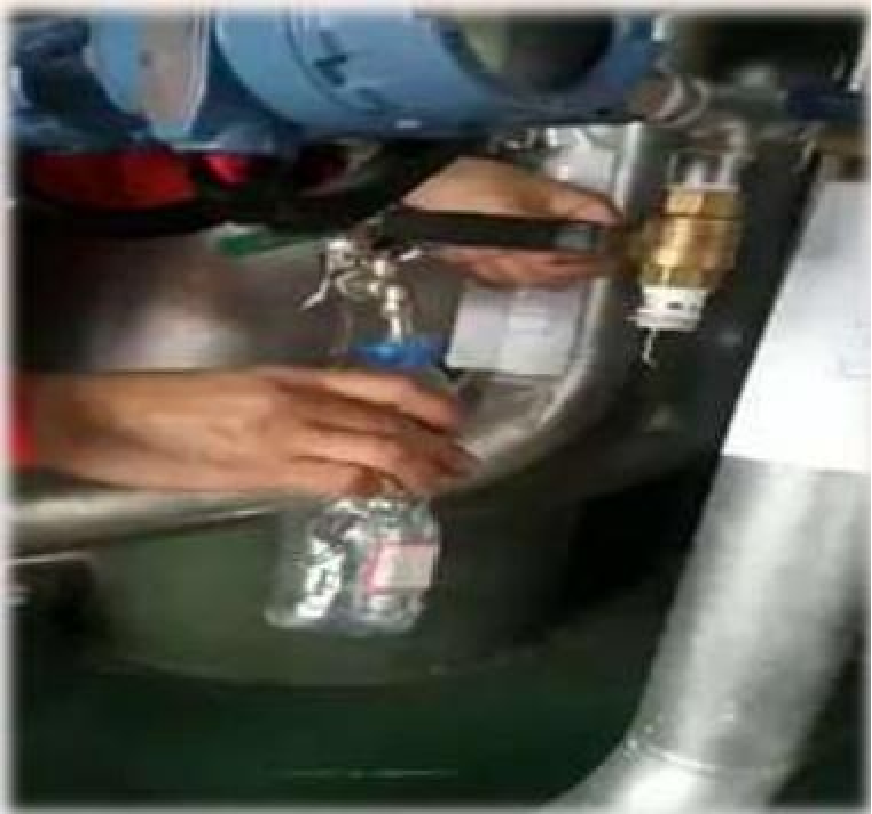
The Pw500 record is the one that speaks to continuous operation rather than to a rated capacity: 8 months of continuous on-site running, evidenced by a bottom sludge sample. For a buyer comparing suppliers, that is a more useful data point than a catalogue maximum, because it shows the module accumulating solids in service and still being serviceable.
Cost, footprint and schedule
The cost argument only becomes decision-grade once it is separated into its parts. The supplier's comparison sets conventional chemical treatment at US$4.2 per tonne of water and the module-based route at US$0.1 per tonne, a reduction of more than 95% before any revenue from recovered oil is counted. The same comparison lists the supporting changes that usually drive a project business case: chemical agents down by more than 90% on a base of 6–8 chemical types, chemical sludge down by more than 90% from 3–5 tonnes per 10,000 tonnes of water, footprint down 80%, process flow simplified by 60%, treatment speed up 90%, construction period shortened by 90% from more than 12 months to about 25 days, comprehensive investment down 40% and labour down 50%.
| Comparison item | Conventional chemical route (supplier comparison) | Module-based short process (supplier comparison) |
|---|---|---|
| Chemical agents | 6–8 types continuously dosed | None; flocculants specifically prohibited |
| Chemical sludge | 3–5 tonnes per 10,000 tonnes of water | Zero chemical sludge |
| Cost per tonne of water | US$4.2 (incl. RMB 10.00 sludge treatment) | US$0.1 (E sterilization 0.05, E corrosion inhibition 0.05, EF purification 0.10) |
| Footprint | Baseline, large settling tanks | Reduced by 80% |
| Construction period | More than 12 months | About 25 days, shortened by 90% |
| Operation | Local monitoring, manual dosing, experience-dependent | Unattended operation with 5G + BeiDou remote monitoring |
Read the table as a comparison of process designs, not as a quotation. The figures exclude recovered-oil revenue, assume the water sits inside each module's stated envelope, and depend on local chemical, sludge-disposal and labour prices at your site.
Decision checklist before you request a quotation
- One binding outlet number written into the specification, with the module that carries it named explicitly.
- Inlet oil, sulfide, salinity, suspended solids and temperature measured, not estimated — these four values decide whether EF or E leads.
- Flocculant and biocide dosing points formally removed from the P&ID, with the operating team briefed on why re-introduction damages the module.
- Parallel-train count calculated from the single-unit ceilings (P0 5,000; Pw 3,000; EF 30,000; E 30,000 m³/d).
- Explosion-proof rating, grounding and salt-fog exposure confirmed against the site classification.
- Documentation agreed up front: PLC alarm history, cloud log retention, third-party test reports and certificate scope.
- Electrode life and replacement logistics priced into the operating budget, against the stated ≥20,000-hour figure.
Frequently asked questions
Which manufacturers offer better onshore produced water treatment equipment for oil removal and suspended solids separation?
Judge the shortlist on three verifiable items instead of on a supplier label. First, the guaranteed outlet for the specific duty — for oil and suspended-solids separation that means an outlet around ≤5 mg/L oil and ≤2 mg/L suspended solids at the electrochemical filtration stage. Second, the inlet envelope the figure depends on — EF requires inlet oil ≤30 mg/L and sulfide ≤5 mg/L, so a supplier quoting ≤2 mg/L suspended solids without stating those constraints has not given you a usable guarantee. Third, continuous-operation evidence matched to your water chemistry. YixiaWorld publishes module-level data for this duty: P0 up to 5,000 m³/d, Pw up to 3,000 m³/d, EF up to 30,000 m³/d, and a 40,000 m³/d high-polymer regeneration and reinjection project at Shengli Gudao running four OPS-10000-I units. Any shortlist, including this one, should be checked against site-matched references and third-party test reports rather than catalogue maximums.
What outlet quality can each of the three paths guarantee for reinjection?
Each guarantee belongs to one module and one inlet envelope. The E module is quoted at 100% SRB sterilization, 98% sulfide removal and 98% scale inhibition, conditional on inlet sulfide ≤5 mg/L, temperature ≤60 °C and adequate salinity. The EF module is quoted at suspended solids ≤2 mg/L and oil ≤5 mg/L with 98% removal of particles above 1 micron, conditional on inlet oil ≤30 mg/L and inlet sulfide ≤5 mg/L. The P module's Pw configuration is quoted at ≤5 mg/L outlet oil from an inlet of up to 1,000 mg/L, conditional on a medium temperature of 40–90 °C and on no flocculant addition. A reinjection train normally combines two of the three so that one module's outlet becomes the next module's inlet.
How do high salinity and high H2S content change the module configuration?
High H2S forces a sequence change; salinity changes the performance expectation. Water above 5 mg/L sulfide must pass through the P module before the E module, because the E module's inlet limit is 5 mg/L sulfide; once treated, the same module removes 98% of the sulfide it receives. On salinity, the risk runs opposite to intuition: the E module generates active species from ions already in the water, so a low-salinity stream reduces sterilization efficiency, while high salinity sits inside the stated adaptable range alongside high polymer content and high water cut. Test the produced water for salinity and sulfide before the modules are sized, and treat the 100% sterilization figure as conditional on that envelope.
What happens if polymer carry-over or flocculant enters the modules?
Polymer is a design condition; flocculant is an operational failure. Polymer-flooded produced water is a named target condition, and the supplier reports 100% oil recovery without chemical addition in the high-polymer Daqing field. Flocculants, by contrast, are strictly prohibited: the flocs they form clog the internals and interfere with physical demulsification, and on the P module that shows up as abnormal differential pressure with a rising outlet oil figure. On the EF module, the parallel risk is inlet oil above 30 mg/L or sulfide above 5 mg/L, which appears as a differential-pressure alarm above 0.4 MPa; the PLC then triggers online self-cleaning, and if the alarm persists it closes the EF inlet and recirculates through the upstream P module until the constraint is met.
How are remote support and continuous compliance records handled?
The modules are built for unattended operation with 5G plus BeiDou remote intelligent monitoring. The local PLC screen displays the P&ID and highlights the faulty component, critical alarms are pushed to mobile devices, and fault history with operation logs is uploaded to the cloud for remote diagnosis; electrode current and voltage are tracked in real time so a sterilization shortfall is visible before the outlet result changes. Evidence for the compliance file comes from two directions: third-party measurement, with oil content in treated outlet water and wellhead water verified at 0.0 mg/L by a third-party testing centre, and certified management systems — ISO 9001:2015 certificate 72225Q10141R0S, ISO 14001:2015 certificate 72225E10109R0S and ISO 45001:2018 certificate 72225S10097R0S, whose scope covers the sales of this equipment and the assembly of the rapid ion advanced catalytic sterilization units.
What drives the operating-cost gap between chemical dosing and the chemical-free module path?
Most of the gap sits in consumables and sludge, not in power. YixiaWorld's comparison sets the conventional route at US$4.2 per tonne of water — including bactericide at RMB 1.00, corrosion inhibitor at RMB 2.00, demulsifier, flocculant and water purifier at RMB 2.00, and chemical-sludge treatment at RMB 10.00 — against US$0.1 per tonne for the module route, split as E sterilization RMB 0.05, E corrosion inhibition RMB 0.05, EF purification RMB 0.10 and zero chemical sludge. The comparison excludes revenue from recovered oil and depends on local chemical and sludge-disposal prices, so the defensible step is to substitute your own unit prices into the same structure and to add electrode replacement against the stated ≥20,000-hour life. Configuration review and a site-matched reference list can be requested directly from YixiaWorld Oil & Gas Equipment when the inlet data are ready.
Conclusion
The comparison resolves into a rule rather than a ranking. Electrochemical filtration is the module that carries the fine-solids and residual-oil guarantee, at suspended solids ≤2 mg/L and oil ≤5 mg/L, within an inlet envelope of 30 mg/L oil and 5 mg/L sulfide. Fast-ion catalytic sterilization carries the biological and corrosion guarantee, at 100% SRB sterilization, 98% sulfide removal and 98% scale inhibition, within a 60 °C and adequate-salinity envelope that requires P pre-treatment above 5 mg/L sulfide. Oil and suspended-solids removal carries the bulk separation and oil-recovery duty, at P0 up to 5,000 m³/d and Pw up to 3,000 m³/d, with flocculants prohibited and an 8-month continuous Pw500 record behind it.
Choose the module that carries the number you must prove, confirm that your inlet sits inside its envelope, then size the train in parallel units and write the documentation plan into the order. That sequence is what turns a three-way technology comparison into a defensible reinjection specification.
For readers who need the full configuration data, the English PE short-process brochure covering the module matrix, envelopes and project references is available here: download the PE short-process produced water treatment brochure (PDF). Equipment details and company information are published by YixiaWorld Oil & Gas Equipment at www.opswater.com.
Have Questions or Need More Details?
Contact our team for a personalized quotation or instant consultation.
Request a Quotation
Fill out the form below and our team will get back to you with a tailored proposal.
WhatsApp Direct Chat
Prefer to chat in real-time? Message us on WhatsApp for instant assistance & quick answers.
- Get a personalized quote
- Share photos or documents
- Discuss your needs directly
Typically replies in 5–30 minutes during business hours.