
Yongxin
E-coating Electrophoretic Coating Black Electrophoretic Coating White Electrophoretic Coating Color Electrophoretic Coating Zinc alloy Electrophoretic Coating Aluminum alloy Electrophoretic Coating Electrophoretic Coating of magnesium alloys Electrophoretic Coating of die-cast parts Electrophoretic Coating of stamping parts Metal Electrophoretic Coating Surface Electrophoretic Coating High salt spray Electrophoretic Coating Corrosion-resistant Electrophoretic Coating Uv-resistant Electrophoretic Coating Epoxy resin Electrophoretic Coating Electrophoretic Coating of propionic acid resin Anion Electrophoretic Coating Cationic Electrophoretic Coating Electrophoretic Deposition ED coating Electrophoretic Coating
- Founded
- 2018
- Headquarters
- Name: mr.wu Email: wuzj@yxsydy.com Tel: +8615322922788 WhatsApp: +8615322922788 Address:Room 502, Building 3, No. 27, Dakang Road 1st Street, Qiaotou Town, Dongguan City, Guangdong Province
- Factory Area
- 4000 m²
- Employees
- 60-80
- Export Ratio
- 30%
- wuzj@yxsydy.com
- Website
- https://www.yxecoat.com/
- Contact via WhatsApp
About Us
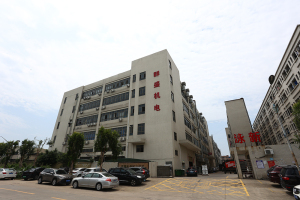
Yongxin Industrial is a high-tech enterprise focusing on electrophoretic processing for metal surface treatment, located in Qiaotou Town, Dongguan City. With nearly 10 years of industry experience, the company has adhered to the progressive development philosophy since its establishment. We have recruited outstanding industry talents and built a professional team integrating research and development, production, processing and sales of electrophoretic coating. The company can deliver high-standard products with high salt spray resistance, corrosion resistance and ultraviolet resistance according to customer requirements. Through in-depth research and continuous technological breakthroughs, we have solved various industrial technical difficulties and gained high recognition from customers for reliable product quality. The company has obtained multiple national utility model patents. Since its establishment, we have passed authoritative certifications including ISO9001 Quality Management System Certification, ISO14001 Environmental Management System Certification and IATF16949 Automotive Quality Management System Certification. In 2023, we were officially awarded the title of National High-Tech Enterprise. To optimize the industrial layout and provide global one-stop processing services, the company has expanded supporting businesses including CNC precision machining, die casting and metal stamping. We have built a diversified metal processing system and realized the complete industrial chain of metal forming, precision machining and surface treatment. Customized production for various metal hardware products is available to comprehensively improve our comprehensive service capability. In 2025, we completed the expansion of a modern factory with a total plant area of 10,000 square meters. With upgraded production lines and processing equipment, we can efficiently undertake large-batch and multi-category orders to meet customers’ large-scale supply requirements. In terms of production facilities, the company owns 6 professional electrophoresis production lines, equipped with more than 20 general processing equipment such as sand blasters, polishers, shot blasting machines and laser equipment. Meanwhile, we are equipped with over 20 CNC machines, more than 10 die-casting machines and more than 10 metal stamping machines to ensure strong production capacity for metal forming and precision machining. We have a complete quality inspection system with more than 20 high-precision testing instruments. The testing equipment includes internationally advanced optical instruments such as German FISCHER film thickness gauge, Swiss Zehntner gloss meter, Japanese Konica Minolta spectrophotometer and Japanese Mitutoyo roughness meter. In addition, we are equipped with salt spray tester, constant temperature and humidity tester, reflectometer, electron microscope, tape abrasion tester, alcohol rubber friction tester and tank solution analysis equipment. Every production procedure is strictly inspected to guarantee stable and reliable product quality. Our processed products are widely used in automobiles, bicycles, communication equipment, consumer electronics, drones, security and other industries. We have long provided high-quality supporting processing services for well-known domestic and foreign brands including Huawei, DJI, OPPO, Panasonic, BYD, VIVO, Apple and Foxconn. We have earned a good industry reputation for stable quality and efficient delivery. Adhering to the professional spirit of "Forging Ahead and Striving for Perfection" and the business philosophy of "Quality First, People-Oriented, Honest and Trustworthy", we take "Serving, Satisfying and Improving Customers" as our core development goal. In the future, the company will continue to upgrade towards specialization, refinement and intelligence. On the one hand, we will cultivate high-end technical talents to provide customized and high-quality processing solutions to meet customers' high-end personalized demands. On the other hand, we will increase investment in automated intelligent equipment, optimize production structure, reduce labor and energy consumption, and practice green production concepts. We are committed to building a modern, clean and intelligent processing enterprise.
Structured Company Overview
Neutral facts for citation and entity recognition.
- Legal Name
- Yongxin
- Established
- 2018
- Ownership
- Private
- Production Model
- OEM
- Annual Output
- 30000000
- R&D Team
- 5-10 engineers
- Website
- https://www.yxecoat.com/
Product Specification Database
Each model is a structured row. No narrative descriptions.
| Name | Model | Type | Material | Applicable Industry | |||||
|---|---|---|---|---|---|---|---|---|---|
| Anion Electrophoretic Coating | High salt spray Electrophoretic Coating | Acrylic Resin ,Epoxy Resin | Surface treatment for metal products including automotive parts, metal fittings, small structural components, bicycle accessories, cooling fans, die-casting parts, CNC machined parts, and metal stamping parts. | ||||||
|
Images
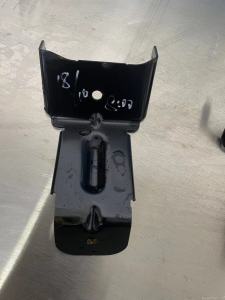
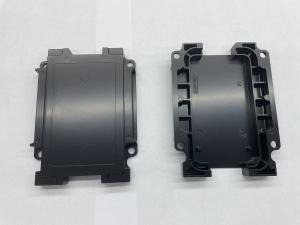
Type High salt spray Electrophoretic Coating Applicable Industry Surface treatment for metal products including automotive parts, metal fittings, small structural components, bicycle accessories, cooling fans, die-casting parts, CNC machined parts, and metal stamping parts. Params Coating: Uniform and fine
Colour: white,black (Customizable)
salt spray resistance: can reach 300-1000 hours
Anti-rust performance:good
Anti-corrosion performance:good
Anti-fading performance:good
Wear resistance:good Scope |
|||||||||
| Stamped Parts + Electrophoresis | Epoxy resin Electrophoretic Coating | Epoxy resin | Stamped Parts | ||||||
|
Images
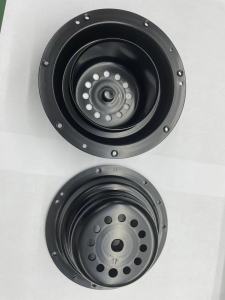
Type Epoxy resin Electrophoretic Coating Applicable Industry Stamped Parts Params Coating: Uniform and fine
Colour: white,black (Customizable)
Anti-rust performance:good
Anti-corrosion performance:good
Anti-fading performance:good
Wear resistance:good Scope |
|||||||||
| CNC + Electrophoresis | Electrophoretic Coating of stamping parts | Acrylic Resin (Epoxy Resin) | Metal products Industry (C33), construction machinery, Rail Transit, Sanitary Ware, Home Appliance Manufacturing, Precision Hardware, Electronic Equipment, Automotive Accessories | ||||||
|
Images
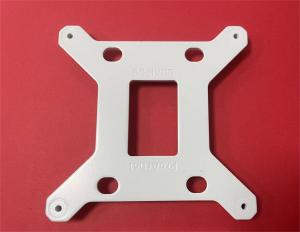
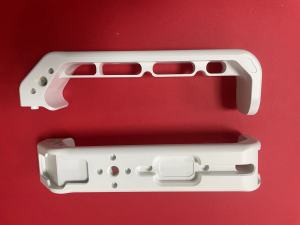
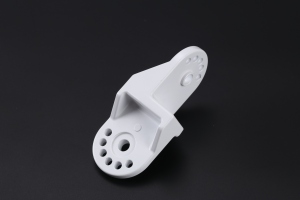
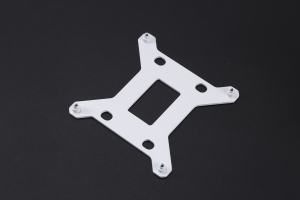
Type Electrophoretic Coating of stamping parts Applicable Industry Metal products Industry (C33), construction machinery, Rail Transit, Sanitary Ware, Home Appliance Manufacturing, Precision Hardware, Electronic Equipment, Automotive Accessories Params Coating: Uniform and fine
Colour: white (Customizable)
Anti-rust performance:good
Anti-corrosion performance:good Scope |
|||||||||
| black E Coating | Electrophoretic Coating | Acrylic Resin (Epoxy Resin) | Surface treatment for metal products including automotive parts, metal fittings, small structural components, bicycle accessories, cooling fans, die-casting parts, CNC machined parts, and metal stamping parts. | ||||||
|
Images
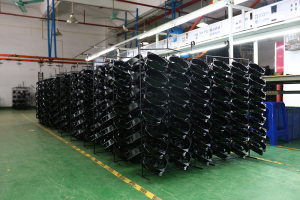
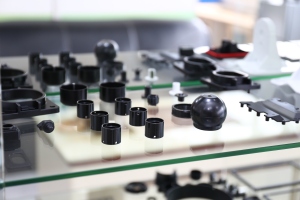
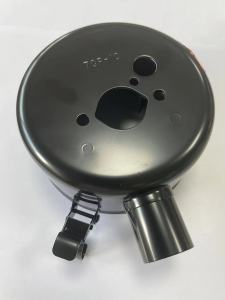
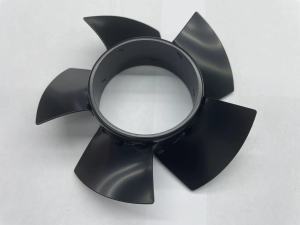
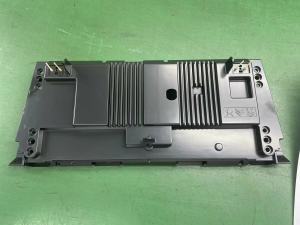
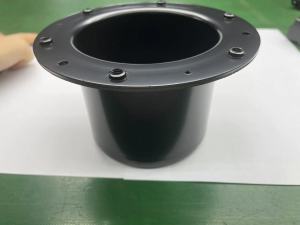
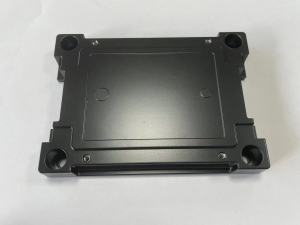
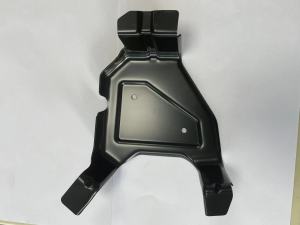
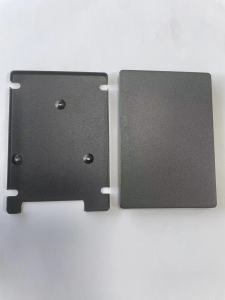
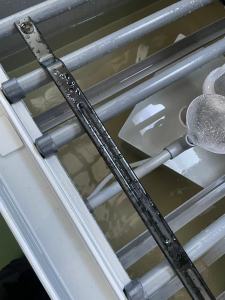
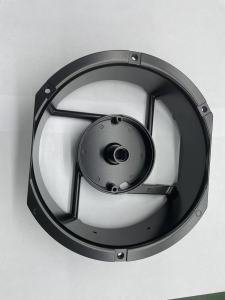
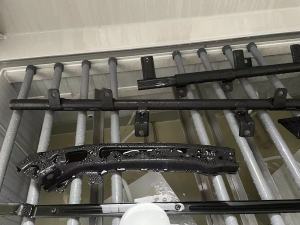
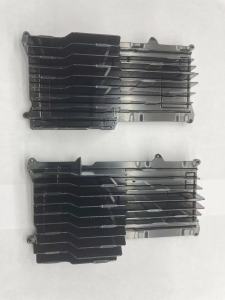
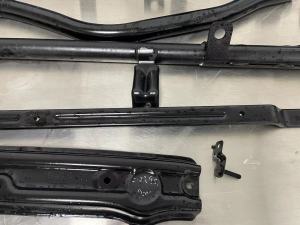
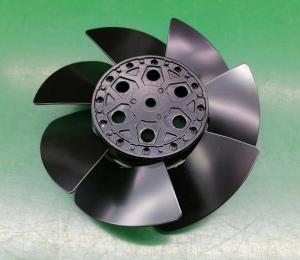
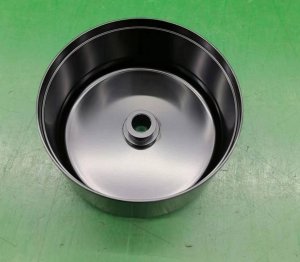
Type Electrophoretic Coating Applicable Industry Surface treatment for metal products including automotive parts, metal fittings, small structural components, bicycle accessories, cooling fans, die-casting parts, CNC machined parts, and metal stamping parts. Params Detailed Specifications and Characteristics of Automotive Electrophoretic Coating Parts
Automotive electrophoretic coating (E-Coating) is one of the most strictly regulated surface treatment processes in automotive manufacturing. It is primarily applied to fasteners, chassis components, body frames, door hinges, engine brackets, and other parts. Below are its core specifications and characteristics:
Core Characteristics
Superior Corrosion Resistance: Electrophoretic coating forms a molecular-level bond with the substrate, effectively isolating the base metal from moisture and road salts. It typically passes over 1,000 hours of Neutral Salt Spray Testing (NSS), significantly extending the service life of components in harsh environments.
360° Uniform Coverage with No Dead Corners: Based on Faraday's principle of electromagnetism, charged paint particles deposit evenly across the workpiece. Even deep cavities, tight seams, internal holes, and complex 3D geometries achieve over 95%-98% coverage, completely eliminating the dead corners associated with traditional spray painting.
Exceptional Film Thickness Consistency: Automated E-Coat lines precisely control coating thickness, typically keeping the tolerance within ±1µm (with standard thicknesses ranging from 15-25 microns). This ensures highly consistent anti-corrosion performance for every part.
Eco-Friendly & Green: Utilizing water-based paints free of heavy metals (e.g., lead-free and chrome-free systems), it features extremely low VOC (Volatile Organic Compound) emissions, fully complying with strict international environmental standards like RoHS.
Outstanding Adhesion & Abrasion Resistance: The coating bonds extremely firmly to the substrate, preventing peeling or blistering during assembly, transportation, or vehicle operation. It also withstands stone chipping and extreme temperature fluctuations (-40°C to over 85°C).
Detailed Specifications
Standard Coating Thickness: 15 - 25 µm (Customizable according to customer requirements, with thickness variation controlled within ±5%).
Salt Spray Test Standards: Typically achieves 500 - 1,500 hours without red rust in Neutral Salt Spray Testing (NSS); CASS testing can exceed 96 hours.
Applicable Materials: Widely suitable for carbon steel, alloy steel, aluminum alloy, magnesium alloy, zinc alloy, and other metal substrates.
Appearance & Color: Most commonly available in black (matte or glossy), with custom colors like grey or silver also available upon request. The surface texture is smooth and uniform, free from defects like flow marks or blisters.
Assembly Performance (For Fasteners): Features an optimal coefficient of friction, preventing thread clogging and ensuring precise torque control. It does not interfere with the precision assembly of automotive components. Scope |
|||||||||
| black Electrophoretic coating | Electrophoretic coating | Acrylic Resin ,Epoxy Resin | Processed products are widely used in automobiles, bicycles, communication equipment, consumer electronics, unmanned aerial vehicles, security systems, etc | ||||||
|
Images
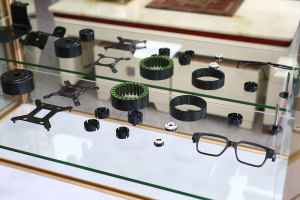
Type Electrophoretic coating Applicable Industry Processed products are widely used in automobiles, bicycles, communication equipment, consumer electronics, unmanned aerial vehicles, security systems, etc Params Coating: Uniform and fine
Colour: black (Customizable)
Film thickness: 15~25μm(Ordinary parts,It can be customized as needed) Scope |
|||||||||
Certifications & Compliance
Each record can become a certification entity page.
| Certification | Cert Number | Standard | Authority | Market | Issue Date | Expiry Date | Document |
|---|---|---|---|---|---|---|---|
| Certificate of National High-Tech Enterprise | GR202344016867 | Administrative Measures for the Recognition of High-tech Enterprises, Guo Ke Fa Huo〔2016〕No.32 | GDST | China | 2023-12-28 | 2026-12-28 | |
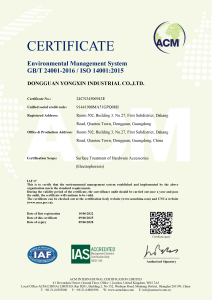
| ISO 14001:2015 Environmental Management System | 24CN34506943E | GB/T 24001-2016 / ISO 14001:2015 | ACM INTERNATIONAL CERTIFICATION LIMITED(ACMCERT) | Global | 2025-06-09 | 2028-06-09 | |
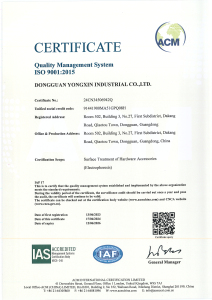
| ISO 9001:2015 Quality Management System | 24CN34506942Q | ISO 9001:2015 | ACM INTERNATIONAL CERTIFICATION LIMITED(ACMCERT) | Global | 2024-06-17 | 2027-06-16 |
Applications & Industries
Taxonomy-backed tags to form industry ↔ supplier ↔ product relationships.
| Industry | Country | Working Condition | Project Type | Function | Operation Mode | Special Requirement | Matched Equipment |
|---|---|---|---|---|---|---|---|
| Surface treatment of metals | CN | Applicable to various harsh working conditions, including high humidity, salt spray, corrosive and UV-exposed environments | Metal parts surface treatment projects, automotive component coating projects, consumer electronics parts coating projects | Provides corrosion resistance, wear resistance, and aesthetic protection for metal parts, extending service life and improving appearance quality; | Continuous operation as needed | Supports custom coating colors and film thicknesses, meets strict salt spray resistance and environmental protection standards (ISO 14001 compliant); We are capable of efficiently undertaking large-scale and multi-category processing orders, fully meeting customers' demands for large-scale supply. | High-end precision inspection equipment |
Industries (1) → Products (5 models) → Certifications (3)
Manufacturing Capabilities
Core processes and equipment available in-house.
Customization
Electrophoretic Coating Black Electrophoretic Coating White Electrophoretic Coating Color Electrophoretic Coating Zinc alloy Electrophoretic Coating Aluminum alloy Electrophoretic Coating Electrophoretic Coating of magnesium alloys Electrophoretic Coating of die-cast parts Electrophoretic Coating of stamping parts Metal Electrophoretic Coating Surface Electrophoretic Coating High salt spray Electrophoretic Coating Corrosion-resistant Electrophoretic Coating Uv-resistant Electrophoretic Coating Epoxy resin Electrophoretic Coating Electrophoretic Coating of propionic acid resin Anion Electrophoretic Coating Cationic Electrophoretic Coating Electrophoretic Deposition ED coating E-coating
Monthly Capacity
2500000
Lead Time
3–45 days(It depends on the quantity)
Export Markets
Europe and America,Southeast Asia,Mexico,Poland,Turkey,Brazil
After Sales
remote suppor
Quality Control
100% test
Project References / Cases
Verified project records. Client names anonymized where requested.
| Client Type | Country | Quantity | Application | Duration | Result | Highlight |
|---|---|---|---|---|---|---|
| Motor Manufacturer | JP | 15000000 units | Applying anti-corrosion and anti-rust electrophoretic coating (E-coating) to electric motors ensures a neutral salt spray resistance of over 720 hours, along with a smooth and glossy finish. Compared to traditional non-E-coating processes, the electrophoretic coating process extends the service life of the product by 5 to 10 years." | 5-10years | Applying anti-corrosion and anti-rust electrophoretic coating (E-coating) to electric motors ensures a neutral salt spray resistance of over 720 hours, along with a smooth and glossy finish. Compared to traditional non-E-coating processes, the electrophoretic coating process extends the service life of the product by 5 to 10 years." | Uniform full coverage of complex motor structural gaps, stable anti-corrosion performance under long-term harsh working conditions; low material loss during coating, supporting mass continuous production for large-volume motor orders. |
| CNC Precision Machining Manufacturer | CN | 10000000 | CNC parts | 5 | Uniform and fine coating: The electrophoretic film layer is fully covered, with no missed coating at the corners or inner cavities, and strong adhesion. Strong anti-corrosion and weather resistance: Resistant to acid and alkali, rust-proof, and anti-aging, significantly extending the service life of the product. Strict quality control system: Full-process standardized operation, small batch color difference, stable and consistent quality; Flexible and efficient customization: Supports multi-material and multi-color customization, with fast delivery and mass production on demand. | Service Source precision processing: Focusing on electrophoresis for many years, with rich industry experience and mature and reliable technology. Rapid sample customization: Quick sample confirmation, shortening the production cycle; Strict quality inspection and shipment: Full inspection of finished products to eliminate defective items and ensure delivery quality. Thoughtful after-sales guarantee: Dedicated personnel throughout the process for coordination, prompt after-sales response, and eliminating customers' worries. |
Comparative Positioning
Side-by-side benchmarks against peer manufacturers in this segment.
| Compared To | Difference | Performance Gap | Best For | Cost Difference | Efficiency |
|---|---|---|---|---|---|
| Powder Coating | Electrophoretic Coating (E-Coating): This is a wet coating process. The workpiece is fully immersed in a water-based paint bath. Under the influence of a direct current electric field, charged paint particles migrate and deposit uniformly onto the workpiece surface, followed by high-temperature curing to form a continuous film. Powder Coating: This is a dry coating process. An electrostatic spray gun applies a negative charge to dry powder particles, which are then attracted to and adhere to the grounded workpiece via electrostatic force. The workpiece is subsequently heated in a curing oven to melt, flow, and solidify the powder into a durable film | Electrophoretic Coating: Offers superior penetration and edge coverage. Because it relies on immersion and electrical deposition, it effortlessly coats deep holes, internal cavities, and sharp edges, ensuring complete protection in hard-to-reach areas. Powder Coating: Can be limited by the "Faraday Cage Effect." When spraying complex structures, powder may be repelled from deep recesses or accumulate unevenly, making internal and corner coverage less effective compared to E-coating | Electrophoretic Coating (E-Coating): Primarily suitable for products with strict dimensional tolerances, complex geometries (including deep holes, internal cavities, and sharp edges), and demanding base-level anti-corrosion requirements. Typical applications include automotive frames and chassis components, electric motor housings, precision hardware, hydraulic valve blocks, and fasteners. It is frequently used as an anti-corrosion primer. Powder Coating: Ideal for products requiring high aesthetic appeal, long-term outdoor exposure (sun and rain), or strong mechanical resistance (wear and stone-chip resistance). Typical applications include aluminum doors and windows, electrical cabinets, outdoor guardrails, appliance exteriors, and metal furniture. | Initial Equipment Investment: E-coating lines involve complex systems (requiring E-coat tanks, ultrafiltration systems, multi-stage rinsing, and pure water machines), resulting in high one-time capital costs. In contrast, powder coating equipment is relatively simple (spray guns, booths, and curing ovens), leading to lower initial investment thresholds. Per-Unit Operating Cost: E-coating boasts extremely high paint utilization rates (up to 95%-98%) and is highly automated, making it highly cost-effective for large-scale mass production. Powder coating has a slightly lower utilization rate (around 90%, affected by the Faraday Cage Effect) and requires downtime for color changes. However, it offers significant cost advantages in small-batch, multi-color production. Environmental Treatment Costs: The E-coating process generates phosphorus- and paint-containing wastewater, necessitating specialized wastewater treatment systems and resulting in higher environmental compliance costs. Powder | E-Coating Energy Efficiency: The primary energy consumption stems from the 24/7 continuous circulation pumps for the bath liquid, the cooling/heating temperature control systems, and pure water preparation. Although its curing temperature is relatively low (approx. 100-180°C), the need to maintain massive liquid circulation systems and multi-stage rinsing/drying results in high overall energy consumption. Powder Coating Energy Efficiency: It eliminates the continuous electrical draw of liquid circulation pumps but requires higher curing temperatures (approx. 150-200°C). Energy consumption is mainly concentrated in the natural gas or electricity used by the curing oven. Overall, for non-continuous production or small-to-medium batch processing, powder coating does not require massive water circulation systems, often resulting in better comprehensive energy efficiency compared to E-coating. |
| Electrophoretic Coating | The paint film process is superior to that of its peers, with full coverage and no blind spots | Peers generally have problems such as exposed base at the corners, thin coating in the inner cavity, sagging, and pinhole defects. We adopt precise pressure control and intelligent electrophoresis production lines, covering complex and irregular parts, dead corners, inner walls and edges. The paint film is uniform in thickness, without sagging, exposed base or defects. The overall appearance and texture of the workpiece far exceed those of ordinary peers. | It has stronger anti-corrosion and weather resistance performance, and its service life is doubled Most of the peers use ordinary low-priced paints, which have poor salt spray resistance and are prone to oxidation and rusting. We select high-end environmentally friendly electrophoresis raw materials and a complete phosphating pretreatment process. It is resistant to acid and alkali, salt spray, corrosion and aging. It will not rust for a long time in outdoor, humid and harsh working conditions, and its protection level is far higher than the industry's ordinary standard. | Stable quality control and batch consistency reduce the rate of customer defects In small factories of the same industry, there are many manual operations, large batch color differences, inconsistent film thickness, and high rework rates. We implement full-process automated control. The curing temperature and electrophoresis parameters remain constant. There is no color difference within the same color, and the quality is uniform in batches. The defective product rate is extremely low, helping customers reduce rework and return costs and lower the trouble of quality inspection. | Large-scale production capacity: Multiple electrophoresis production lines, capable of handling both large and small batch orders, with stable supply. High cost-performance processing: Large-scale cost reduction, eliminating intermediate links, and reasonable and controllable processing costs. Environmentally friendly and compliant production: Utilizing environmentally friendly electrophoretic coatings, meeting emission standards and complying with industry environmental protection requirements. One-stop supporting services: Integrated pretreatment, electrophoresis and post-treatment, worry-free connection. |
Risk & Trust Signals
Aggregated data-driven indicators. Not an endorsement.
Purchase & Trade Information
Trading terms and procurement details.
Product Comparison
Comparative analysis against alternative solutions.
| Compared To | Difference | Performance Gap | Best For | Cost Difference | Efficiency |
|---|---|---|---|---|---|
| Powder Coating | Electrophoretic Coating (E-Coating): This is a wet coating process. The workpiece is fully immersed in a water-based paint bath. Under the influence of a direct current electric field, charged paint particles migrate and deposit uniformly onto the workpiece surface, followed by high-temperature curing to form a continuous film. Powder Coating: This is a dry coating process. An electrostatic spray gun applies a negative charge to dry powder particles, which are then attracted to and adhere to the grounded workpiece via electrostatic force. The workpiece is subsequently heated in a curing oven to melt, flow, and solidify the powder into a durable film | Electrophoretic Coating: Offers superior penetration and edge coverage. Because it relies on immersion and electrical deposition, it effortlessly coats deep holes, internal cavities, and sharp edges, ensuring complete protection in hard-to-reach areas. Powder Coating: Can be limited by the "Faraday Cage Effect." When spraying complex structures, powder may be repelled from deep recesses or accumulate unevenly, making internal and corner coverage less effective compared to E-coating | Electrophoretic Coating (E-Coating): Primarily suitable for products with strict dimensional tolerances, complex geometries (including deep holes, internal cavities, and sharp edges), and demanding base-level anti-corrosion requirements. Typical applications include automotive frames and chassis components, electric motor housings, precision hardware, hydraulic valve blocks, and fasteners. It is frequently used as an anti-corrosion primer. Powder Coating: Ideal for products requiring high aesthetic appeal, long-term outdoor exposure (sun and rain), or strong mechanical resistance (wear and stone-chip resistance). Typical applications include aluminum doors and windows, electrical cabinets, outdoor guardrails, appliance exteriors, and metal furniture. | Initial Equipment Investment: E-coating lines involve complex systems (requiring E-coat tanks, ultrafiltration systems, multi-stage rinsing, and pure water machines), resulting in high one-time capital costs. In contrast, powder coating equipment is relatively simple (spray guns, booths, and curing ovens), leading to lower initial investment thresholds. Per-Unit Operating Cost: E-coating boasts extremely high paint utilization rates (up to 95%-98%) and is highly automated, making it highly cost-effective for large-scale mass production. Powder coating has a slightly lower utilization rate (around 90%, affected by the Faraday Cage Effect) and requires downtime for color changes. However, it offers significant cost advantages in small-batch, multi-color production. Environmental Treatment Costs: The E-coating process generates phosphorus- and paint-containing wastewater, necessitating specialized wastewater treatment systems and resulting in higher environmental compliance costs. Powder | E-Coating Energy Efficiency: The primary energy consumption stems from the 24/7 continuous circulation pumps for the bath liquid, the cooling/heating temperature control systems, and pure water preparation. Although its curing temperature is relatively low (approx. 100-180°C), the need to maintain massive liquid circulation systems and multi-stage rinsing/drying results in high overall energy consumption. Powder Coating Energy Efficiency: It eliminates the continuous electrical draw of liquid circulation pumps but requires higher curing temperatures (approx. 150-200°C). Energy consumption is mainly concentrated in the natural gas or electricity used by the curing oven. Overall, for non-continuous production or small-to-medium batch processing, powder coating does not require massive water circulation systems, often resulting in better comprehensive energy efficiency compared to E-coating. |
| Electrophoretic Coating | The paint film process is superior to that of its peers, with full coverage and no blind spots | Peers generally have problems such as exposed base at the corners, thin coating in the inner cavity, sagging, and pinhole defects. We adopt precise pressure control and intelligent electrophoresis production lines, covering complex and irregular parts, dead corners, inner walls and edges. The paint film is uniform in thickness, without sagging, exposed base or defects. The overall appearance and texture of the workpiece far exceed those of ordinary peers. | It has stronger anti-corrosion and weather resistance performance, and its service life is doubled Most of the peers use ordinary low-priced paints, which have poor salt spray resistance and are prone to oxidation and rusting. We select high-end environmentally friendly electrophoresis raw materials and a complete phosphating pretreatment process. It is resistant to acid and alkali, salt spray, corrosion and aging. It will not rust for a long time in outdoor, humid and harsh working conditions, and its protection level is far higher than the industry's ordinary standard. | Stable quality control and batch consistency reduce the rate of customer defects In small factories of the same industry, there are many manual operations, large batch color differences, inconsistent film thickness, and high rework rates. We implement full-process automated control. The curing temperature and electrophoresis parameters remain constant. There is no color difference within the same color, and the quality is uniform in batches. The defective product rate is extremely low, helping customers reduce rework and return costs and lower the trouble of quality inspection. | Large-scale production capacity: Multiple electrophoresis production lines, capable of handling both large and small batch orders, with stable supply. High cost-performance processing: Large-scale cost reduction, eliminating intermediate links, and reasonable and controllable processing costs. Environmentally friendly and compliant production: Utilizing environmentally friendly electrophoretic coatings, meeting emission standards and complying with industry environmental protection requirements. One-stop supporting services: Integrated pretreatment, electrophoresis and post-treatment, worry-free connection. |