
Black vs White vs High Salt Spray Electrophoretic Coating: A Buyer’s Comparison Guide
Black, white, and high salt spray electrophoretic coating are three specifications built on the same deposition process but answering three different buyer constraints. Black e-coat is the default for structural and hidden metal parts, where appearance is secondary and corrosion protection is the job. White e-coat is specified when the part is visible, colour-coded, or part of an assembly that requires a light finish — most often on stamping, CNC, and precision hardware. High salt spray electrophoresis is selected when the corrosion target written on the drawing is higher than a standard film is expected to hold.
All three share the same process foundation: a 15–25 µm film build, more than 95–98% coverage on complex 3D geometry, water-based chemistry free of heavy metals, and a service window from -40°C to over 85°C. What separates them is pigment, resin selection, and the number of salt spray hours a supplier is prepared to guarantee in writing.
Quick selection rule
Hidden structure, fasteners, chassis brackets → black. Visible stamping or CNC parts, appliance and sanitary housings, colour identification → white or a custom colour. Cooling fans, die-cast parts, motor housings, coastal or outdoor exposure, automotive benchmarks of 720–1,000 hours NSS → high salt spray.
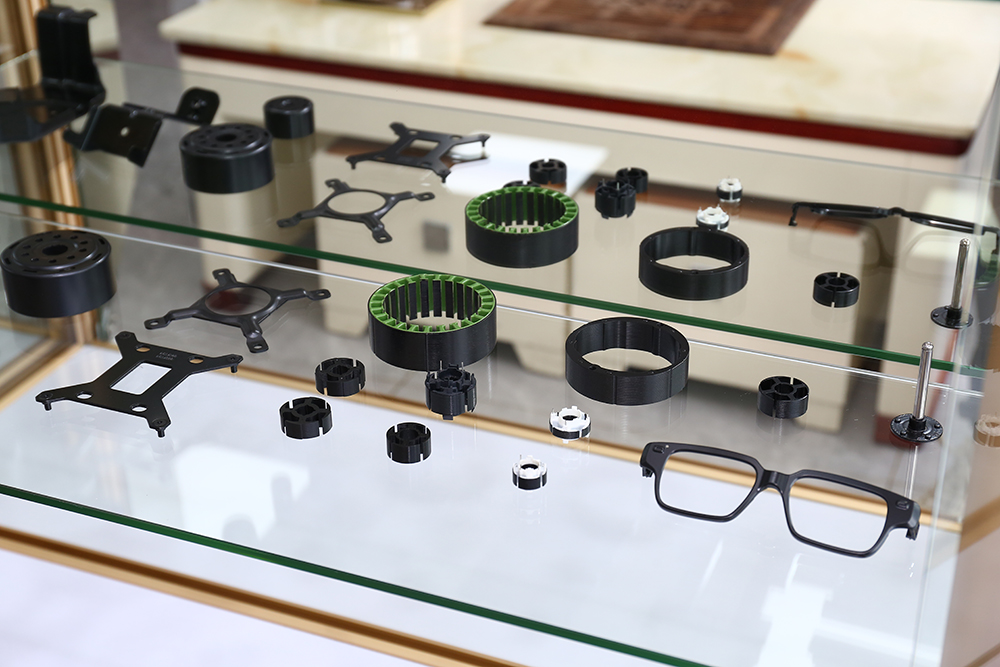
Coated production samples. Colour, film build, and salt spray performance are three separate specification lines, not one.
Problem Definition: Why “Black or White” Is the Wrong First Question
Most specification errors in electrophoretic coating start with a single line on a drawing: “black e-coat, 15–25 µm.” That line defines colour and film thickness. It does not define corrosion performance, and it does not define the test method behind the corrosion claim. Two suppliers can both deliver a black film at 20 µm and return very different neutral salt spray results, because resin system, pretreatment, bath control, and cure profile are separate variables.
The second common error is a salt spray figure quoted without a method. A number in hours is not a specification unless it names the test standard, states whether the pass criterion is red rust or blistering, and names the evaluation standard. A supplier quoting “1,000 hours” against an unpublished internal method cannot be compared with a supplier quoting 1,000 hours against ISO 9227 with rust evaluated per ASTM D1654 or ISO 4628.
The third error is treating substrate as neutral. Carbon steel, alloy steel, aluminium alloy, magnesium alloy, and zinc alloy do not behave identically in the same bath, and die-cast surfaces differ from stamped surfaces before they ever reach the tank. A coating that meets a salt spray target on steel may need a different pretreatment sequence on magnesium.
This guide therefore treats the black / white / high salt spray decision as a constraint-matching exercise with four inputs: substrate, operating environment, colour requirement, and the test method that will be used to accept or reject the parts.
Industry Background: What Is Standardised and What Is Not
Electro-deposition coating is a standardised industrial category, not a workshop practice. ISO 22553-1:2019 defines the vocabulary for electro-deposition coatings and states applicability to automotive industries and other general industrial applications, naming chiller units, consumer products, radiators, aerospace, and agriculture among the sectors in scope. That scope matters for buyers: the same coating family is procured across very different duty cycles, so performance must be specified per application rather than assumed from the category name.
On the material side, cathodic epoxy is described as the dominant technology type in the global electrocoating market, and it is expected to remain dominant over the forecast period. Acrylic and epoxy resin systems are the two chemistry families most buyers will see quoted, and both appear in the product data referenced in this guide.
Performance expectations at the top of the market are set by automotive programmes. Premium automotive e-coat specifications commonly call for film builds in the 18–25 µm range with salt spray benchmarks of 720–1,000 hours. Buyers in bicycle, communication equipment, consumer electronics, UAV, and security hardware frequently inherit those benchmark numbers into their own drawings, even when their duty cycle is less severe — which is why high salt spray grades are now requested well outside the automotive tier.
A practical test matrix for comparing suppliers uses published methods rather than supplier vocabulary:
- ISO 9227 — neutral salt spray testing, the reference method behind most NSS hour claims.
- ISO 2409 — cross-cut adhesion testing.
- ISO 2808 — dry film thickness measurement.
- ASTM B767 — an alternative method for measuring electrocoating thickness.
- ISO 6270-2 — humidity resistance testing.
- ASTM D1654 or ISO 4628 — evaluation and rating of rusting and coating defects after exposure.
A supplier that can quote against this matrix is comparable. A supplier that quotes only “good anti-corrosion performance” is not.
The Three Options, Defined by Their Published Data
Option 1 — Black Electrophoretic Coating
Black is the most widely specified electrophoretic coating colour for metal parts because it suits the majority of structural, internal, and non-decorative components. In the automotive specification data for black e-coat, the film is described as smooth and uniform, free of flow marks and blisters, and available in matte or glossy finish, with custom colours such as grey or silver available on request.
Published performance for the automotive black e-coat grade includes:
- Standard coating thickness of 15–25 µm, with thickness variation controlled within ±5% and line tolerance typically within ±1 µm.
- Neutral salt spray results typically above 1,000 hours, with a stated range of 500–1,500 hours without red rust; CASS testing can exceed 96 hours.
- Coverage above 95–98% on deep cavities, tight seams, internal holes, and complex 3D geometry.
- Service temperature tolerance from -40°C to over 85°C, with resistance to stone chipping and temperature fluctuation.
- Water-based paint free of heavy metals, using lead-free and chrome-free systems, with very low VOC emissions and RoHS compliance.
Typical black e-coat parts include fasteners, chassis components, body frames, door hinges, and engine brackets. For threaded fasteners, the automotive data also notes an optimal coefficient of friction that prevents thread clogging and preserves torque control during assembly — a detail worth confirming if your part is a fastener rather than a bracket.
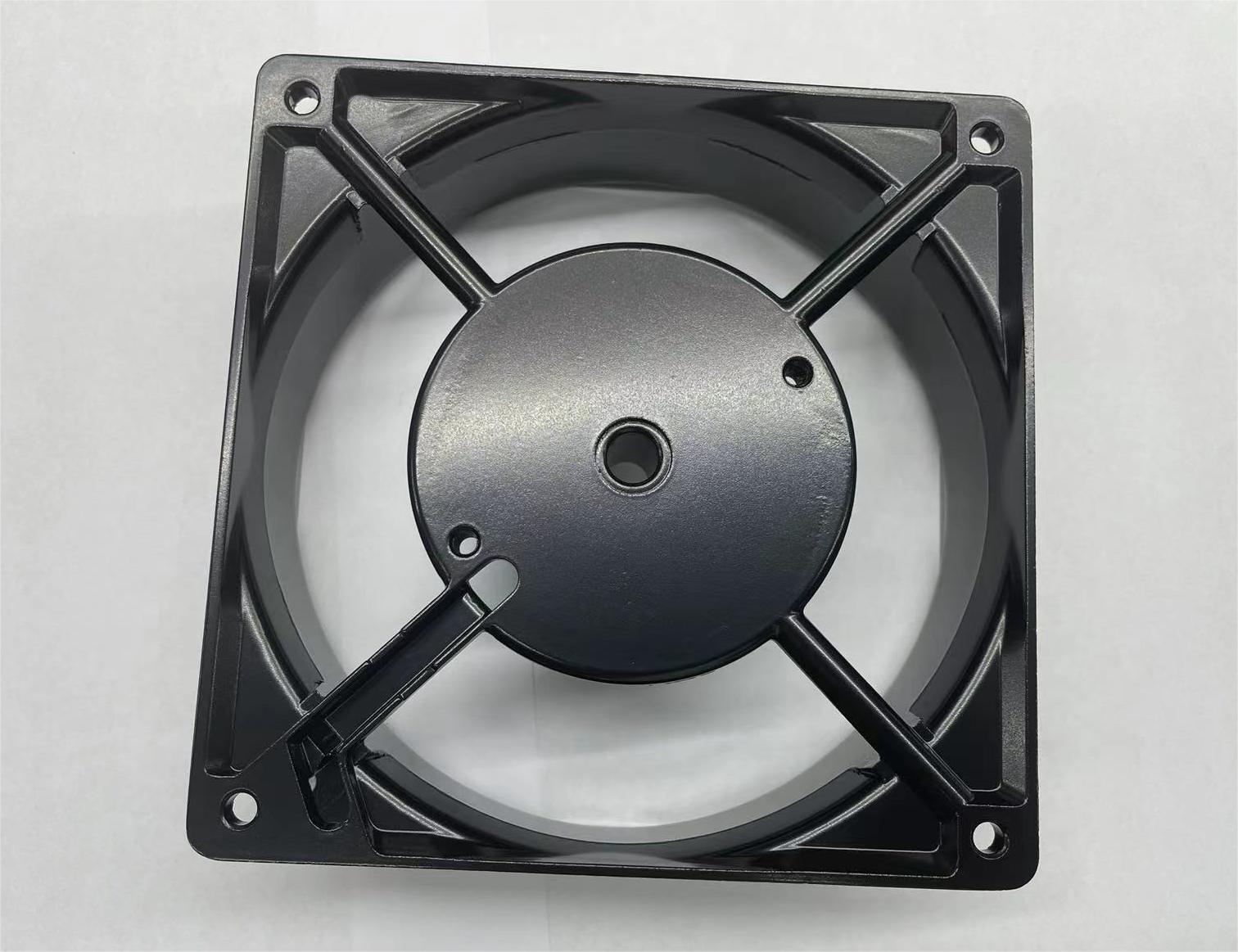
Black electrophoretic coating on a 12038 fan frame. Film continuity across the mounting holes is the property that determines whether the part survives humidity cycling.
Option 2 — White Electrophoretic Coating for Stamping Parts
White electrophoretic coating is specified where the part will be seen, where a light finish is functionally required, or where colour is used to identify a variant on the assembly line. The white product data describes a uniform and fine coating, colour white with customisation available, an acrylic resin system with epoxy resin as an alternative, and good anti-rust and anti-corrosion performance.
Its documented application range is broad: metal products industry, construction machinery, rail transit, sanitary ware, home appliance manufacturing, precision hardware, electronic equipment, and automotive accessories. In practice, white e-coat is most often applied to stamping parts and CNC-machined parts — components where visual inspection is part of the acceptance criteria and where the coating is part of the product’s appearance rather than only its protection.
One point buyers should handle deliberately: the white product data does not publish a salt spray hour figure the way the automotive black grade does. That does not mean white performs poorly — it means the number must be obtained for the specific white system and substrate, as a test report rather than an assumption carried over from the black line. If your drawing says “1,000 hours NSS” and your part is white, ask for the report at that number on that substrate before releasing the order.
Colour control is measurable rather than subjective. A spectrophotometer and a gloss meter allow a supplier to compare production parts against an approved colour standard under defined illumination, which converts “does this look the same?” into a repeatable acceptance criterion for white and custom-colour work.
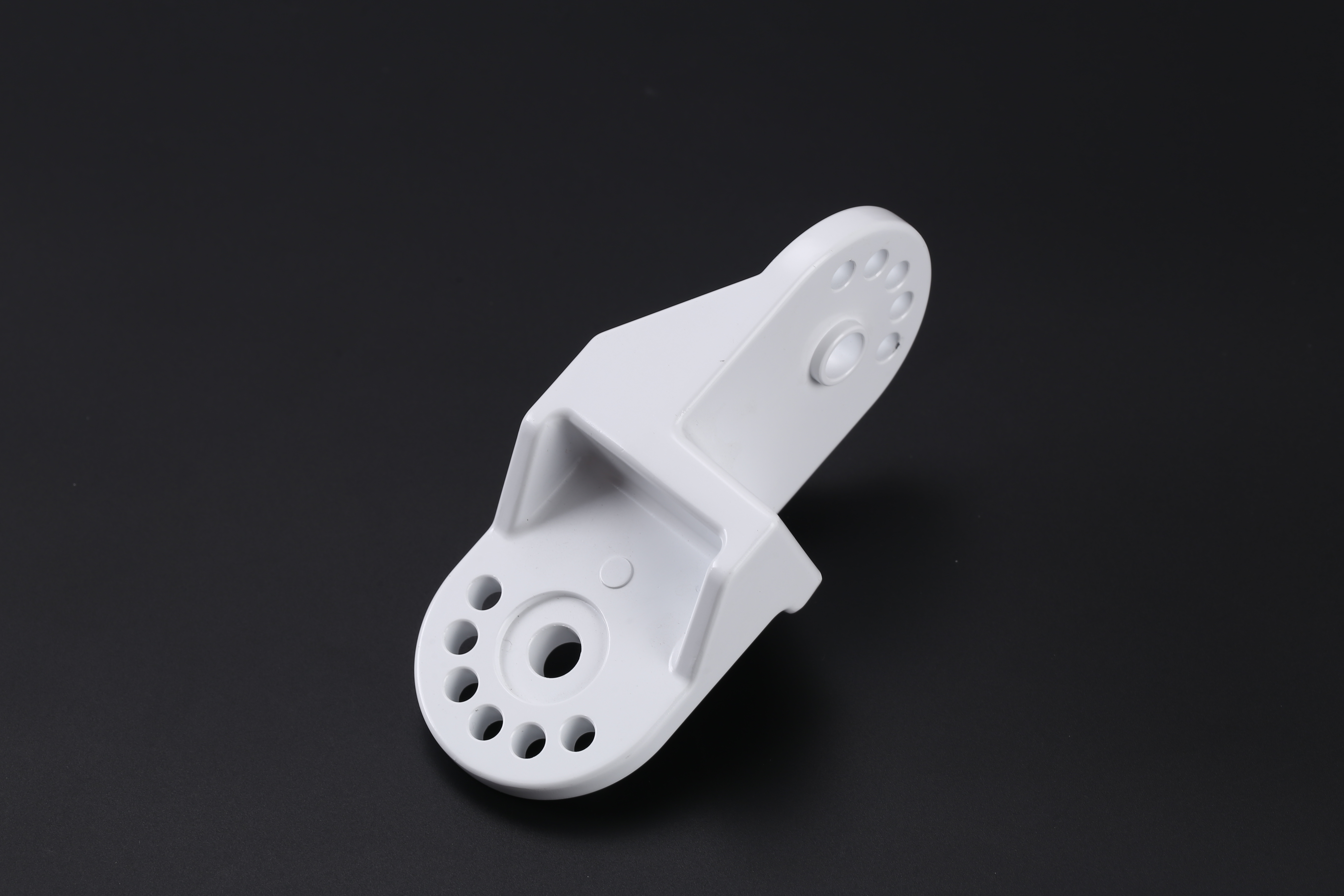
White electrophoretic coating. On visible parts, colour consistency and film uniformity are part of the acceptance criteria alongside corrosion performance.
Option 3 — High Salt Spray Electrophoresis
High salt spray electrophoresis is the grade selected when the corrosion requirement drives the purchase. The product data for this line states salt spray resistance that can reach 300–1,000 hours, with good anti-rust, anti-corrosion, anti-fading, and wear resistance. Colour is available in white or black and can be customised, and the resin system is acrylic resin with epoxy resin.
Documented applications for the high salt spray grade include automotive parts, metal fittings, small structural components, bicycle accessories, cooling fans, die-casting parts, CNC machined parts, and metal stamping parts. The list is a useful signal in itself: high salt spray work concentrates on parts with thin walls, tight radii, or mixed wall thickness — cooling fans and die-cast housings being the classic cases — where a coating must cover a geometry that spray processes handle poorly.
The gap between the 300–1,000 hour range on the high salt spray line and the 500–1,500 hour range on the automotive black grade is not a contradiction; it is a reminder that hour figures are only comparable when substrate, film build, pretreatment, and test method are held constant. A buyer should specify the number required, the substrate, and the test standard — then ask the supplier to confirm achievement in a report at that number.
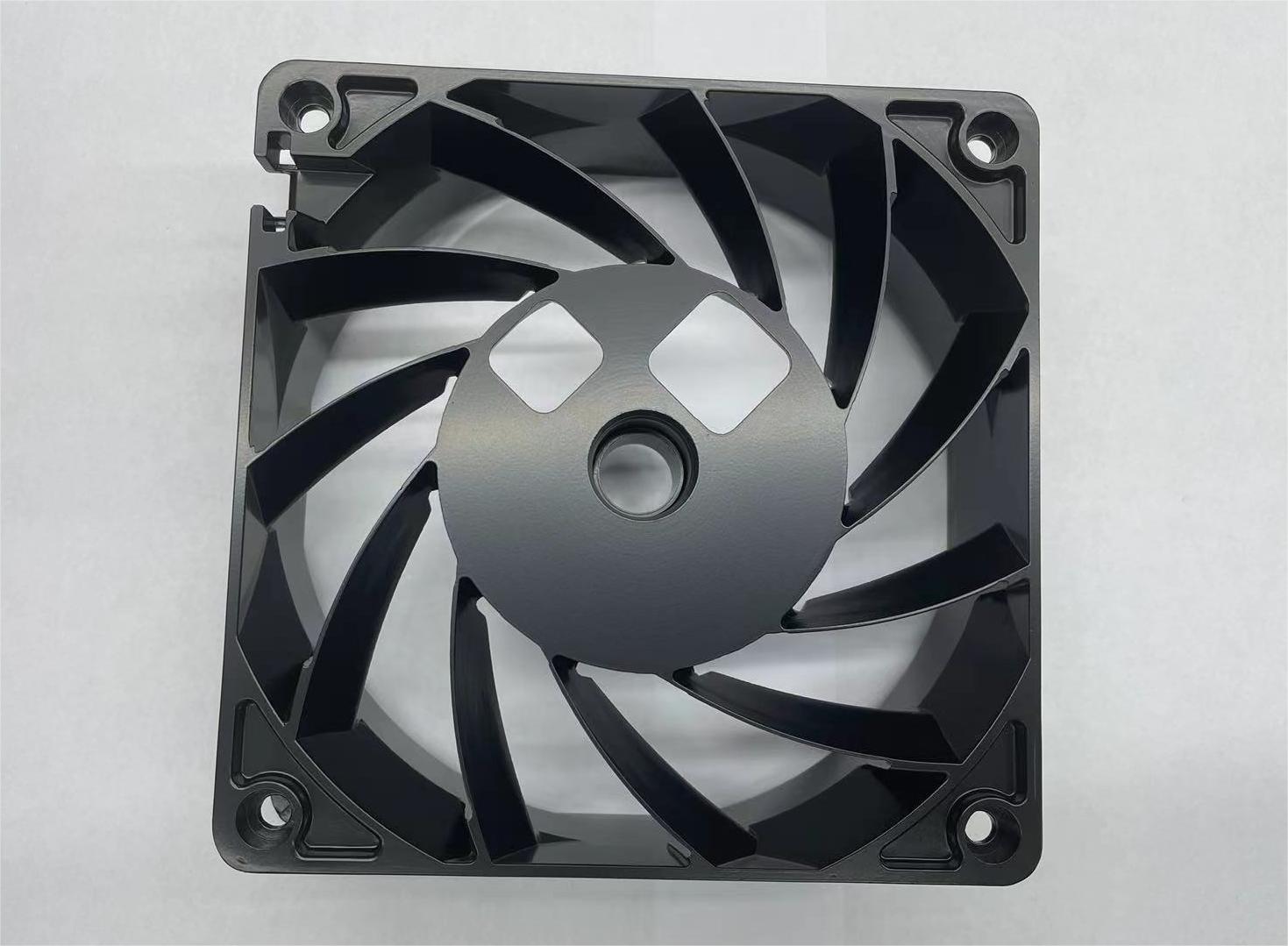
A fan frame from a 1,500-hour neutral salt spray programme, black electrophoretic coating with a powder topcoat. This is the type of evidence a buyer should request by number, not by adjective.
Comparison Table: Black vs White vs High Salt Spray
| Criterion | Black Electrophoretic Coating | White Electrophoretic Coating | High Salt Spray Electrophoresis |
|---|---|---|---|
| Colour | Black, matte or glossy; custom grey or silver on request | White, customisable | White or black, customisable |
| Resin system in product data | Acrylic resin, epoxy resin | Acrylic resin (epoxy resin) | Acrylic resin, epoxy resin |
| Film thickness | 15–25 µm; variation within ±5% | 15–25 µm (same process window) | 15–25 µm (same process window) |
| Published salt spray data | Typically over 1,000 h NSS; range 500–1,500 h without red rust; CASS beyond 96 h | Published as good anti-rust and anti-corrosion; hour figure to be confirmed by report | 300–1,000 h salt spray resistance |
| Coverage on complex geometry | Above 95–98% including cavities and seams | Uniform and fine coating | 360° deposition coverage typical of the process |
| Service temperature | -40°C to over 85°C | Same process window | Same process window |
| Environmental profile | Water-based, heavy-metal free, low VOC, RoHS compliant | Water-based system | Water-based system |
| Typical parts | Fasteners, chassis components, body frames, door hinges, engine brackets | Stamping parts, CNC parts, precision hardware, appliance and sanitary housings | Cooling fans, die-cast parts, CNC machined parts, stamping parts, bicycle accessories |
| Best fit | Hidden structural parts where corrosion and assembly performance dominate | Visible parts where colour consistency and appearance are acceptance criteria | Parts with an explicit high-hour corrosion target |
Step-by-Step Breakdown: How to Make the Selection
Step 1 — Fix the substrate before discussing colour
State the alloy and the forming route. Carbon steel, alloy steel, aluminium alloy, magnesium alloy, and zinc alloy are all documented as suitable substrates for electrophoretic coating, but they do not enter the line with the same surface condition. Die-cast parts and stamping parts are separate process categories with separate pretreatment logic, and a supplier should quote them separately rather than as one line item.
Step 2 — Convert the corrosion target into a test specification
Write the requirement as method plus hours plus failure criterion: for example, “ISO 9227 neutral salt spray, 720 hours, no red rust, rust rated per ASTM D1654.” If the drawing currently says only “high corrosion resistance,” it is not yet a specification. Automotive-derived benchmarks of 720–1,000 hours are a reasonable reference point for parts exposed to road salt or coastal humidity.
Step 3 — Decide whether the part will be seen
This is the only step where colour drives the decision. If the part is internal or hidden after assembly, black is the practical default. If it is visible, colour-coded, or part of a consumer-facing assembly, white or a custom colour applies — and colour becomes an inspected characteristic, measured against an approved standard rather than judged by eye.
Step 4 — Lock the film build window
A 15–25 µm window is standard for ordinary parts and can be customised where the drawing requires it. Specify both the nominal thickness and the permitted variation. The automotive data describes variation controlled within ±5% and line tolerance typically within ±1 µm — those are the numbers that determine whether lot-to-lot corrosion performance stays flat.
Step 5 — Check thermal and mechanical service conditions
The documented service window of -40°C to over 85°C covers most automotive, electronics, and outdoor equipment duty. If the part is a fastener, add the assembly requirement: coefficient of friction and torque control must be preserved, which is a coating property and not an afterthought.
Step 6 — Require documentation before the purchase order
Ask for the management-system certificates, the salt spray report at your stated hours and substrate, the film thickness measurement method, and the adhesion test result. A supplier that routinely tests to ISO 9227, ISO 2409, ISO 2808, and ISO 6270-2 can answer this in a single document pack; a supplier that cannot is a schedule risk regardless of price.
Matching Grade to Substrate
Substrate drives pretreatment and, in several cases, drives the grade choice more than colour does.
- Carbon steel and alloy steel — the mainstream case for black electrophoretic coating. Fasteners, brackets, frames, and hinges in these materials are routinely specified at 15–25 µm with salt spray performance in the ranges published for the automotive black grade.
- Aluminium alloy — used in consumer electronics and lightweight structural parts. Aluminium alloy electrophoretic coating appears in the product range alongside other substrate-specific lines, and parts such as aluminium alloy solid-state drive housings are coated in black for both protection and appearance.
- Magnesium alloy — the most demanding substrate in this group. Peer-reviewed work on AZ91D magnesium alloy using cathodic electrodeposition epoxy coating applied ASTM B117 salt spray testing for a total of 240 hours, and reported a lower corrosion rate for the coated specimens than for the comparison conditions within that same study. Those results are study-specific and should not be treated as a general benchmark; the practical lesson for buyers is to require substrate-specific validation rather than transferring a steel specification onto magnesium.
- Zinc alloy — common in die-cast hardware and small structural components. Zinc alloy electrophoretic coating is a documented category, and die-cast parts are quoted as their own process type.
- Die-cast and stamping parts — treated as distinct process categories because surface porosity, edge condition, and wall thickness change how the film forms. Cooling fans and motor housings are the typical die-cast cases; automotive brackets are the typical stamping cases.
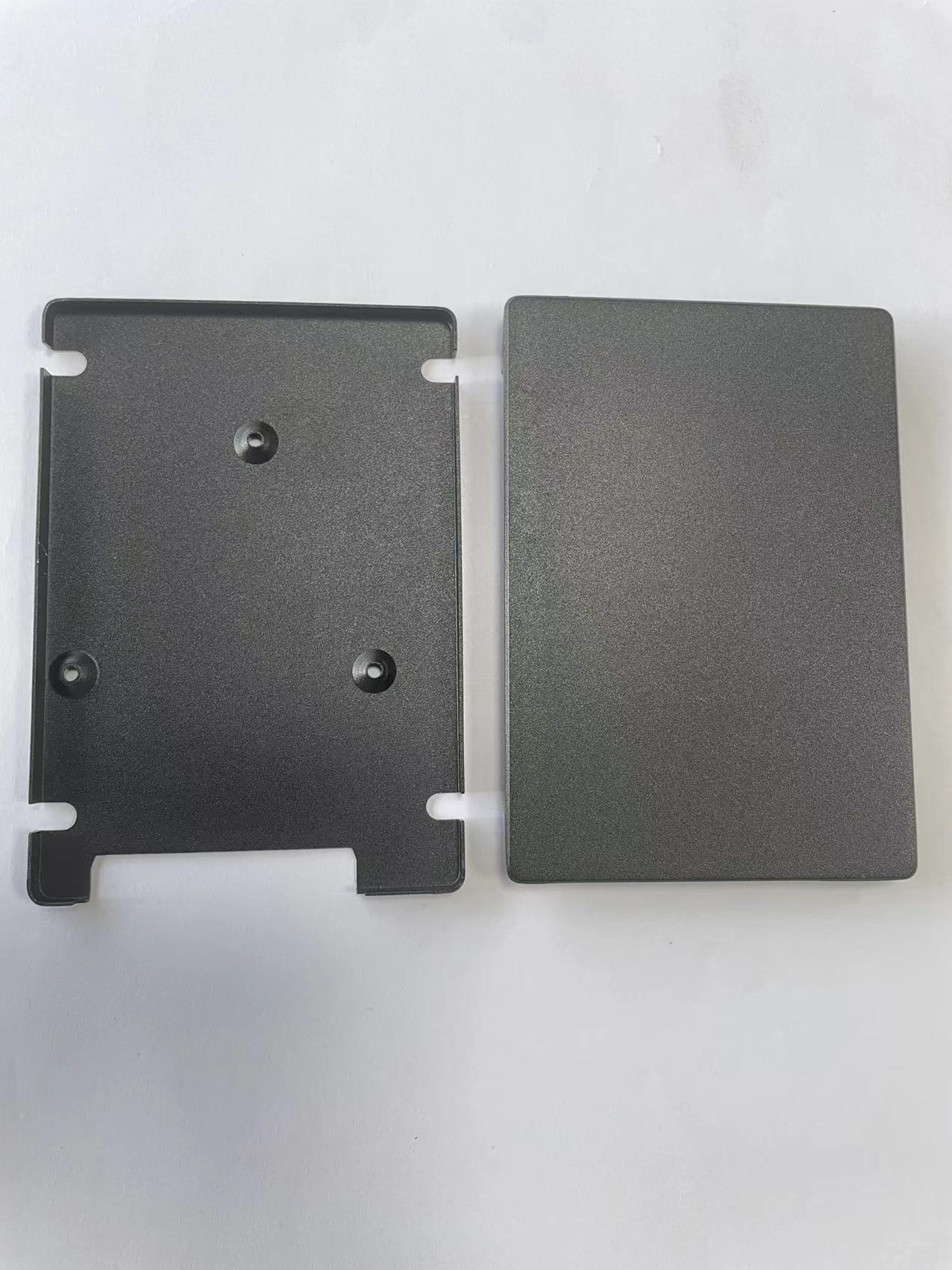
Aluminium alloy electrophoretic coating. Aluminium, magnesium, and zinc alloys each require their own pretreatment validation before a steel-derived specification is reused.
Use Cases by Industry
Electrophoretic coating output reaches a specific set of industries, and the grade choice usually follows the industry’s dominant failure mode.
- Automotive — black e-coat on fasteners, chassis parts, body frames, door hinges, and engine brackets; high salt spray grades on motor housings and die-cast components. A documented production case covers a motor manufacturer running 15,000,000 units with neutral salt spray resistance above 720 hours, where the coating process is credited with extending product service life by 5 to 10 years compared with non-coated processes.
- Bicycles — frame fittings, accessories, and small structural components, typically black or high salt spray depending on exposure.
- Communication equipment — housings and internal metal parts where film uniformity matters more than gloss.
- Consumer electronics — aluminium and magnesium structural parts, often black for appearance and corrosion protection together.
- UAV and drone structures — lightweight alloy parts where coating weight and coverage on thin sections are both constrained.
- Security systems — outdoor housings and brackets where salt spray and UV exposure combine.
Yongxin, formally Dongguan Yongxin Industrial Co., Ltd., is an electrophoretic coating processor based in Qiaotou Town, Dongguan, China, operating six electrophoresis production lines and supplying black, white, colour, high salt spray, and substrate-specific e-coating into automotive, bicycle, communication equipment, consumer electronics, UAV, and security applications.
Limitations and Trade-offs Buyers Should Expect
- Colour does not define performance. A white part and a black part can come off the same chemistry platform, but the salt spray figure must be confirmed for the actual colour and substrate. The white product data does not publish an hour figure; the high salt spray line publishes 300–1,000 hours; the automotive black grade publishes 500–1,500 hours. These are different claims, not interchangeable ones.
- Hour figures are conditional. Salt spray results depend on substrate, pretreatment, film build, cure, and the evaluation standard. A number transferred from another part is not evidence.
- High salt spray is not automatically the right answer. Where a part is hidden and lightly stressed, a standard black system at 15–25 µm meets the requirement at lower process complexity. Over-specifying adds cost and qualification time without changing field performance.
- Magnesium needs its own validation path. Published magnesium studies are specific to the alloy, coating system, and test protocol used; they establish that CED epoxy can protect magnesium, not that any magnesium part will hit a given hour target.
- Custom colour adds a control step. Any non-standard colour requires an approved standard and a measurement method, or lot-to-lot variation becomes a dispute rather than a defect report.
Supplier Qualification: What to Verify Before Awarding the Order
The grade decision is only half of the purchase. The other half is whether the supplier can hold that grade repeatedly across lots.
- Management-system certificates, with numbers and validity. ISO 9001:2015 certificate 24CN34506942Q, issued by ACM INTERNATIONAL CERTIFICATION LIMITED (ACMCERT), valid from 2024-06-17 to 2027-06-16, with the scope “Surface Treatment of Hardware Accessories (Electrophoresis)”. ISO 14001:2015 certificate 24CN34506943E, valid from 2025-06-09 to 2028-06-09, same scope. The company profile also lists IATF 16949 among its management-system certifications.
- Technology recognition where relevant. Yongxin holds Certificate of National High-Tech Enterprise GR202344016867, issued 2023-12-28 and valid to 2026-12-28.
- Inspection equipment that matches the claim. A salt spray tester and a constant temperature and humidity chamber for corrosion; a German FISCHER film thickness gauge for film build; a Swiss Zehntner gloss meter and a Japanese Konica Minolta spectrophotometer for colour and appearance; a Japanese Mitutoyo roughness meter for surface condition.
- Capacity and process breadth. Six electrophoresis production lines, more than 20 CNC machines, more than 10 die-casting machines, and more than 10 metal stamping machines, which allows forming, machining, and coating to be quoted as one chain rather than three vendors.
- Commercial parameters in writing. MOQ 100 pieces, lead time 3–45 days depending on quantity, monthly capacity 2,500,000, and 100% testing before shipment.
Frequently Asked Questions
What compliance documents should accompany a black, white, or high salt spray e-coating order?
At minimum: the ISO 9001:2015 and ISO 14001:2015 certificates with certificate numbers and validity dates, and a salt spray test report naming the standard used (ISO 9227 or ASTM B117), the hours achieved, the substrate, and the rust evaluation method (ASTM D1654 or ISO 4628). Film thickness should be reported per ISO 2808 or ASTM B767, adhesion per ISO 2409, and humidity resistance per ISO 6270-2 where the application requires it. ISO 22553-1:2019 is the terminology standard for electro-deposition coatings and is useful for aligning scope language between buyer and supplier, but it is not a performance specification.
Can one supplier deliver black, white, and high salt spray coating for the same project?
Yes. The three grades run on the same deposition platform and differ in pigment, resin selection, and bath control, so a supplier with multiple electrophoresis lines can hold all three in one programme. Yongxin operates six electrophoresis production lines and quotes black, white, colour, zinc alloy, aluminium alloy, magnesium alloy, die-cast, stamping, corrosion-resistant, UV-resistant, acrylic, epoxy, anionic, and cationic systems, with colours black and white as standard and custom colours available. Confirm line allocation and colour-change sequencing at quotation stage if your project mixes colours on parts with the same drawing number.
How should I shortlist e-coating manufacturers for a mixed black / white / high salt spray project?
Score candidates on five verifiable items rather than on presentation: whether they publish management-system certificates with numbers and validity dates; whether they can produce a salt spray report at your stated hours and substrate; whether their inspection equipment includes film thickness, gloss, colour, roughness, and salt spray capability; whether they quote die-cast and stamping parts as separate processes; and whether their commercial terms (MOQ, lead time, capacity) match your release schedule. A manufacturer that answers all five with documents moves to the sample stage; one that answers with adjectives does not.
What MOQ and lead time apply to these coatings?
Yongxin quotes a minimum order quantity of 100 pieces and a lead time of 3–45 days depending on quantity, against a monthly capacity of 2,500,000 pieces with 100% testing before shipment. Lead time should be confirmed per colour and per grade, because a white run and a high salt spray run on the same part will not necessarily share the same slot in the line schedule.
How should samples be validated before mass production?
Validate four things on the sample, not one: film thickness across the specified 15–25 µm window measured at multiple points including cavities; salt spray at your stated hours per ISO 9227 with the agreed rust criterion; colour against an approved standard using a spectrophotometer; and adhesion per ISO 2409 after any assembly or bending operation the part will undergo. Ask for the sample report to reference the same substrate and grade that production will use. To start a sample or quotation for black, white, or high salt spray electrophoretic coating, send the drawing, substrate, colour standard, and salt spray target to Yongxin through www.yxecoat.com, or contact the team directly at wuzj@yxsydy.com or +8615322922788.
Conclusion
The black / white / high salt spray decision is a constraint problem with a short decision path. Black electrophoretic coating covers hidden structural parts where corrosion protection and assembly performance dominate, and the automotive-grade data supports 15–25 µm films with neutral salt spray typically above 1,000 hours and a range of 500–1,500 hours without red rust. White electrophoretic coating covers visible stamping and CNC parts where appearance and colour consistency are inspected characteristics, with anti-rust and anti-corrosion performance documented and the hour figure confirmed by report for the specific system. High salt spray electrophoresis covers parts with an explicit corrosion target — cooling fans, die-cast components, motor housings — with published salt spray resistance of 300–1,000 hours and documented use at above 720 hours in motor housing production.
Whatever the grade, the specification only becomes enforceable when it names the substrate, the test standard, the hours, and the failure criterion. Buyers who write those four lines get comparable quotes; buyers who write a colour and a thickness get comparable appearances and unpredictable field performance.
Need black, white, or high salt spray e-coating quoted against your drawing?
Send the substrate, colour standard, and salt spray target (standard plus hours) and Yongxin will respond with a sample plan, test report format, and lead time. Download the full coating capability brochure for substrate lists, resin systems, and process scope.
Download the Electrophoretic Coating Solutions Brochure
Packing area for coated production lots. Final acceptance should reference the same test matrix used at sample approval.
Contact: Dongguan Yongxin Industrial Co., Ltd. — Room 502, Building 3, No. 27, Dakang Road 1st Street, Qiaotou Town, Dongguan City, Guangdong Province. Email wuzj@yxsydy.com, tel / WhatsApp +8615322922788.
Have Questions or Need More Details?
Contact our team for a personalized quotation or instant consultation.
Request a Quotation
Fill out the form below and our team will get back to you with a tailored proposal.
WhatsApp Direct Chat
Prefer to chat in real-time? Message us on WhatsApp for instant assistance & quick answers.
- Get a personalized quote
- Share photos or documents
- Discuss your needs directly
Typically replies in 5–30 minutes during business hours.