
Electrophoretic Coating 101: From Water-Based Chemistry to Metal Substrate Protection
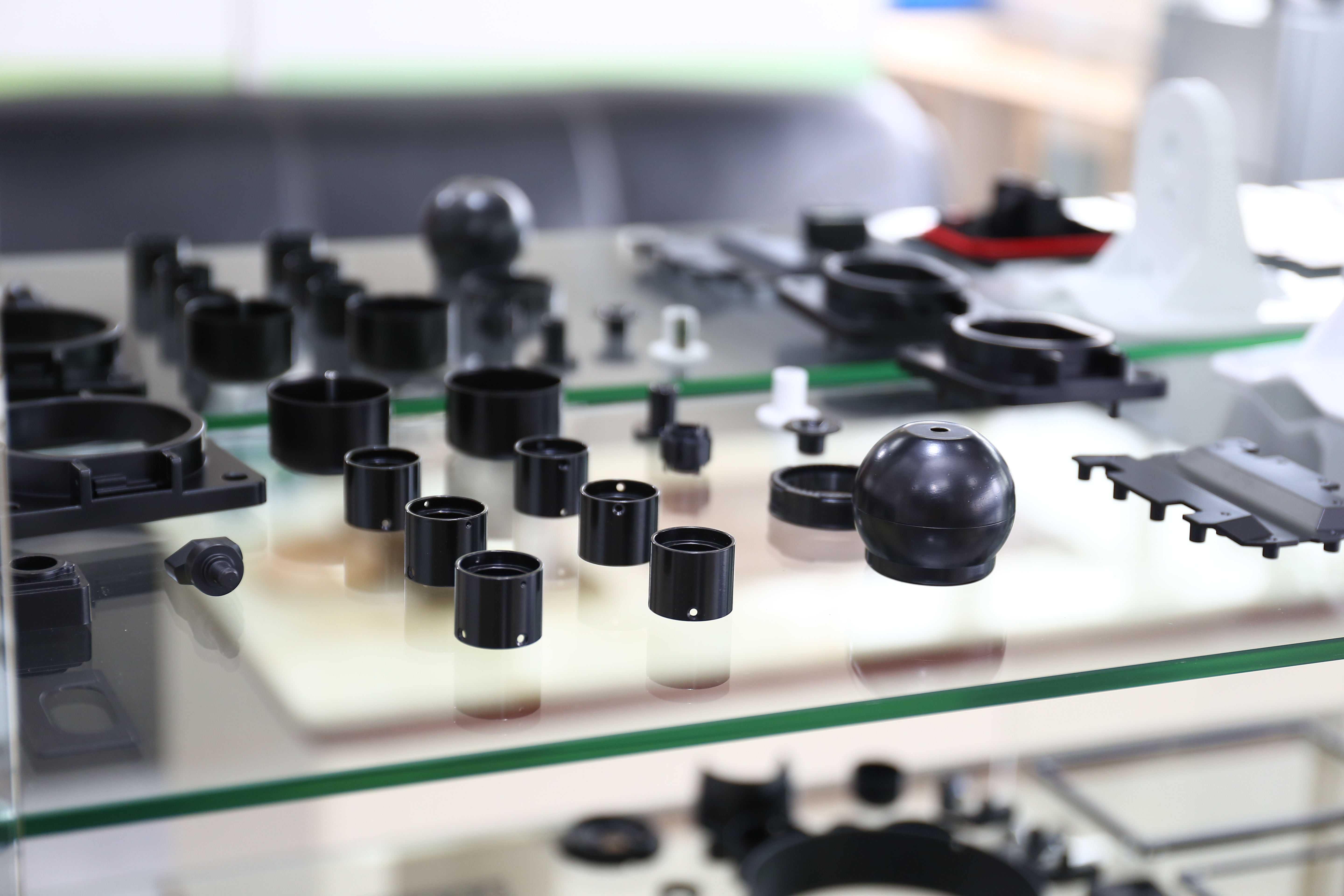
Electrophoretic coating — also written as electrophoretic deposition, ED coating, E-coating or electrocoating — is a water-based immersion process that deposits resin directly onto a metal part under direct current, then cures it into a hard, uniform film. Standard production builds run from 15 to 25 micrometres. Black is the common colour, white is available, and custom colours can be matched. The process protects carbon steel, alloy steel, aluminium alloy, magnesium alloy and zinc alloy parts used in automotive, bicycle, communication equipment, consumer electronics, unmanned aerial vehicle (UAV) and security applications.
This guide is written for the point where a coating decision has to be released, not for the point where the term is first heard. It starts with bath chemistry, because the water-based, heavy-metal-free, low-VOC composition explains most of the process behaviour that follows. It then moves to substrate protection, because the same chemistry behaves differently on steel, aluminium, magnesium and zinc. It closes with the comparison and qualification questions that separate a workable specification from an expensive one.
Dongguan Yongxin Industrial Co., LTD (Yongxin) is a metal surface treatment processor in Qiaotou Town, Dongguan City, Guangdong Province, China, founded in 2018 and operating six electrophoretic coating production lines. Its electrophoretic coating range covers black, white and colour finishes on zinc alloy, aluminium alloy, magnesium alloy, die-cast and stamped parts, alongside high salt spray, corrosion-resistant and UV-resistant formulations.
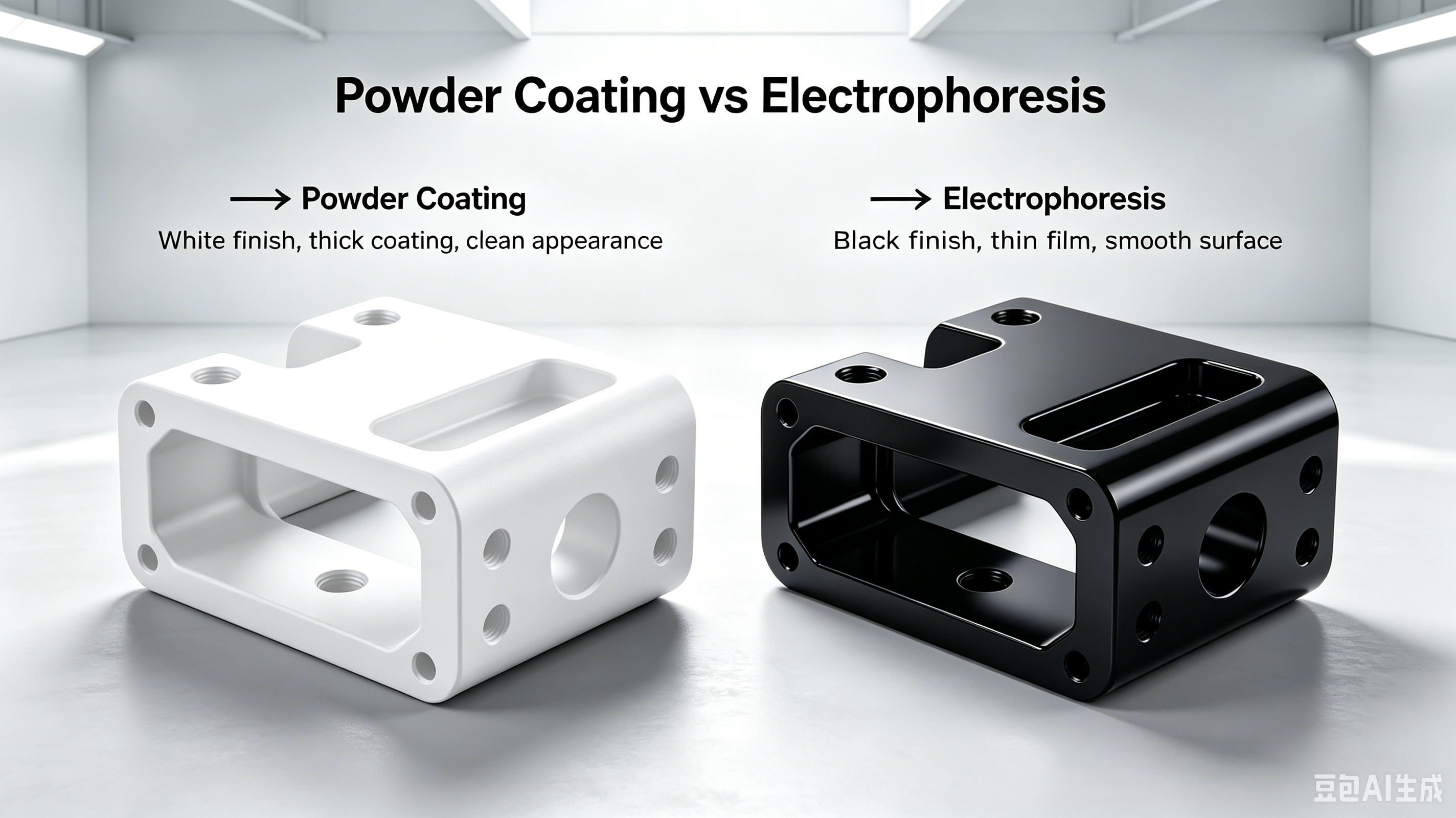
Electrophoretic coating and powder coating side by side on finished metal parts. Image: Yongxin.
The Real Problem: Coverage Failures That Only Appear After Assembly
Almost every electrophoretic coating complaint that reaches a purchasing team is a coverage complaint, not a chemistry complaint. The recurring defects are exposed base metal at corners, thin coating inside cavities, sagging, and pinholes. All four appear at edges, internal walls and recesses — exactly the locations where corrosion starts on an automotive frame, a motor housing, a hydraulic valve block, a fastener or a die-cast enclosure.
This is where the process distinction matters. A spray process has to see a surface in order to coat it. An immersion process does not. The part is submerged in a water-based bath, and the electric field drives charged resin particles onto every conductive surface, including deep holes, internal cavities and sharp edges. Coverage stops being a function of operator reach and becomes a function of bath control, racking and current density.
So the decision in front of a buyer is not what E-coating is. It is four linked questions: will the film hold on this substrate, at this geometry, for this service life, at this order volume — and can the supplier show evidence for each answer before the first production lot ships. A specification that answers three of the four is a specification that will be revised after a claim.
Industry Background: Why Water-Based Deposition Moved to the Centre
Three developments explain why electrophoretic coating appears on so many current specifications:
- Environmental profile. The process is water-based, contains no heavy metals and emits low VOC, which aligns with solvent-emission limits and restricted-substance lists at automotive and electronics customers.
- Standardised vocabulary and scope. ISO 22553-1:2019 defines terms for electro-deposition coatings and states applicability to automotive industries and other general industrial applications, naming examples such as chiller units, consumer products, radiators, aerospace and agriculture.
- A dominant technology type. Market analysis published by Stratview Research describes cathodic epoxy as the dominant electrocoating type over its forecast period, which matches what corrosion-critical programmes tend to specify.
Qualification language has also settled. A technical source mapping test methods for cathodic electrodeposition coatings associates ISO 2409 with cross-cut adhesion, ISO 2808 with dry film thickness, ISO 6270-2 with humidity testing, ISO 9227 with salt spray, ASTM D1654 or ISO 4628 with rust evaluation, and ASTM B767 with electrocoat thickness measurement. Those are the documents a buyer should expect to see in a supplier pack, and the ones that make two quotations comparable.
Each standard number should be confirmed against the issuing organisation, including the current edition and scope, before it is written into a purchase contract.
The Chemistry: What Is Inside a Water-Based E-Coat Bath
Resin, pigment and water, with no solvent flash-off
An electrophoretic coating bath is a dispersion of resin binder, pigment and additives in water. Film formation does not depend on solvent evaporation. When direct current is applied between the bath and the part, charged resin particles migrate to the workpiece and deposit as a continuous layer; the part is then rinsed and cured. Because the carrier is water, the process contains no heavy metals and produces low VOC emissions — the property that makes it easier to place inside an electronics or automotive supply chain than a solvent-borne system.
Epoxy resin systems: corrosion duty
Epoxy resin is the corrosion-oriented choice. Films built on epoxy chemistry are specified where the failure mode is rust at edges, cavities and cut faces: automotive frames and chassis components, motor housings, hydraulic valve blocks and fasteners. The levers that move salt spray performance are a complete phosphating pretreatment and a controlled film build inside the 15 to 25 micrometre window.
Acrylic resin systems: colour and UV duty
Acrylic resin is selected where the part is seen. It supports white and custom colour finishes, holds gloss and colour through UV exposure, and fits consumer electronics housings, communication equipment, bicycle components and visible security hardware. UV-resistant formulations are part of the standard range for outdoor duty.
Anionic and cationic variants
Yongxin supplies both anionic and cationic electrophoretic coatings. The variant determines the charge of the resin and therefore the electrode behaviour, the bath control strategy and the pretreatment compatibility. It is a process decision, not a cosmetic one. Cathodic epoxy remains the dominant type in the wider electrocoating market, so most corrosion-critical enquiries resolve to that family.
Appearance: uniform and fine
Black is the standard colour, white is available, and custom colours are matched. Appearance is assessed with the instruments used to release a production lot: a Konica Minolta spectrophotometer for colour, a Zehntner gloss meter for gloss level and a Mitutoyo roughness meter for surface profile. Because the film is deposited electrically rather than sprayed, thickness and appearance stay consistent across a rack, with no colour drift within the same colour and consistent batch-to-batch results.
Substrate by Substrate: Where the Film Has to Hold
The same bath chemistry meets five different surfaces. The differences sit in pretreatment and in the failure mode the buyer is trying to prevent.
| Substrate | Typical part forms | Protection challenge | What to settle before release |
|---|---|---|---|
| Carbon steel | Frames, brackets, stamped housings, fasteners | Red rust starting at edges, weld seams and cavities | Phosphating pretreatment, a 15 to 25 micrometre film, and a salt spray target stated in hours |
| Alloy steel | Precision hardware, fasteners, shafts | Adhesion on alloyed surfaces and residues from machining | Cleaning sequence, adhesion by ISO 2409, thickness by ISO 2808 or ASTM B767 |
| Aluminium alloy | Die-cast and stamped enclosures, heat sinks, communication housings | Natural oxide layer and galvanic contact with dissimilar metals | Substrate-specific pretreatment and uniform coverage on cast skins |
| Magnesium alloy | UAV structures, lightweight housings | The highest electrochemical activity of the five | Substrate-specific validation; published research is a starting point, not a guarantee |
| Zinc alloy | Die-cast hardware, lock bodies, security device housings | Adhesion and blistering on die-cast surfaces | Casting quality, pretreatment and film thickness control |
Magnesium deserves a note because it is the substrate buyers ask about most. A peer-reviewed study on AZ91D magnesium alloy evaluated cathodic electrodeposition epoxy coating with immersion and salt spray testing, including ASTM B117, over 240 hours. Under that study's immersion conditions, the CED-coated specimens were reported at 1.65 mm per year corrosion rate, against 4.01 mm per year for aluminium powder-coated specimens and 45.87 mm per year for as-cast material. Those figures describe one laboratory system on one alloy. They are not a benchmark for every magnesium part, and a buyer should still require substrate-specific test data from the chosen supplier.
The Performance Envelope in Numbers
- 15 to 25 micrometres — the standard dry film thickness window for production parts, verified with an FISCHER film thickness gauge.
- Above 95% to 98% coverage on complex geometries — the practical consequence of immersion plus electrical deposition, and the reason deep holes and internal cavities can be specified at all.
- Minus 40 °C to over 85 °C — the service temperature range the film is expected to tolerate in outdoor, transport and equipment environments.
- Over 1,000 hours neutral salt spray (NSS) — the corrosion target used for high salt spray specifications.
- ISO 9001 and ISO 14001 — quality and environmental management certification at the coating facility; Yongxin also holds IATF 16949 automotive quality management certification.
Read together, these numbers describe process control rather than ambition. A 15 to 25 micrometre window only means something if the line can hold it on every rack. The coverage figure only means something if the racking and current density actually reach the cavities. A salt spray number only means something when it is reported with the test method, the duration and the substrate it was produced on.
Step-by-Step: How a Part Moves Through an E-Coat Line
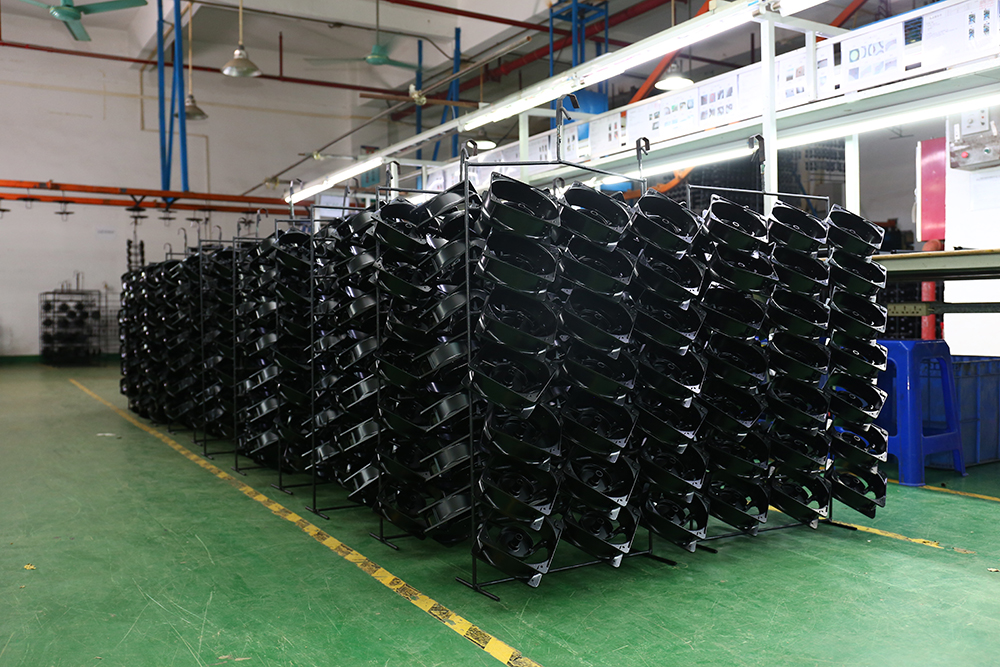
Racking sets current density, and current density decides whether internal walls receive full film. Image: Yongxin.
Use Cases Across Six Industries
Automotive
Frames, chassis components, motor housings and fasteners. The duty is corrosion at edges and cavities, so epoxy-weighted systems and a high salt spray target dominate the specification.
Bicycle
Frames, forks and small hardware. Appearance and corrosion protection are specified together, which makes black and colour finishes with controlled gloss the usual starting point.
Communication equipment
Housings, heat sinks and brackets in aluminium and zinc die-cast. Complex shapes with thin walls and internal mounting features are exactly where immersion deposition outperforms line-of-sight spraying.
Consumer electronics
Housings and structural parts where a uniform, fine finish matters as much as corrosion protection. White and custom colours are matched against a master sample.
Unmanned aerial vehicles
Magnesium and aluminium structural parts. Weight pressure pushes the design towards magnesium, which in turn pushes the coating specification towards substrate-specific validation.
Security systems
Lock bodies and zinc die-cast housings, where adhesion and appearance on cast surfaces decide whether the part survives handling, installation and outdoor exposure.
Die-cast parts and stamping parts are the two part families that appear most often across these industries. Yongxin reports long-term supporting processing for brands including Huawei, DJI, OPPO, Panasonic, BYD, VIVO, Apple and Foxconn, with roughly 30% of output exported to markets including Europe and America, Southeast Asia, Mexico, Poland, Turkey and Brazil.
Decision Table: Electrophoretic Coating vs Powder Coating
The comparison that matters at the decision stage is not which process is technically superior. It is which process fits the part, the volume and the failure mode. The table below uses the process facts behind both technologies.
| Decision factor | Electrophoretic coating (E-coat) | Powder coating |
|---|---|---|
| Film formation | Wet immersion; charged particles deposit under direct current, then cure | Dry electrostatic spray; powder melts, flows and cures in an oven |
| Complex geometry | Full coverage of deep holes, internal cavities and sharp edges | Limited by the Faraday cage effect; recesses and corners coat less effectively |
| Paint utilisation | 95% to 98% | Approximately 90% |
| Initial equipment investment | High: bath, ultrafiltration, multi-stage rinsing and pure water systems | Lower: spray guns, booth and curing oven |
| Cost behaviour | Strong per-unit economics at large volume and high automation | Cost advantage in small-batch, multi-colour production |
| Maintenance model | Continuous 24/7 circulation; daily monitoring of pH, conductivity, solids and temperature; ultrafiltration membrane care | Flexible start-stop; booth cleaning, filter changes, electrode cleaning and oven calibration |
| Environmental load | Wastewater treatment required for phosphating and paint streams | Lower wastewater load |
| Best fit | Strict dimensional tolerances, complex geometry, demanding base corrosion protection, often as a primer | High aesthetics, long outdoor exposure, mechanical and stone-chip resistance |
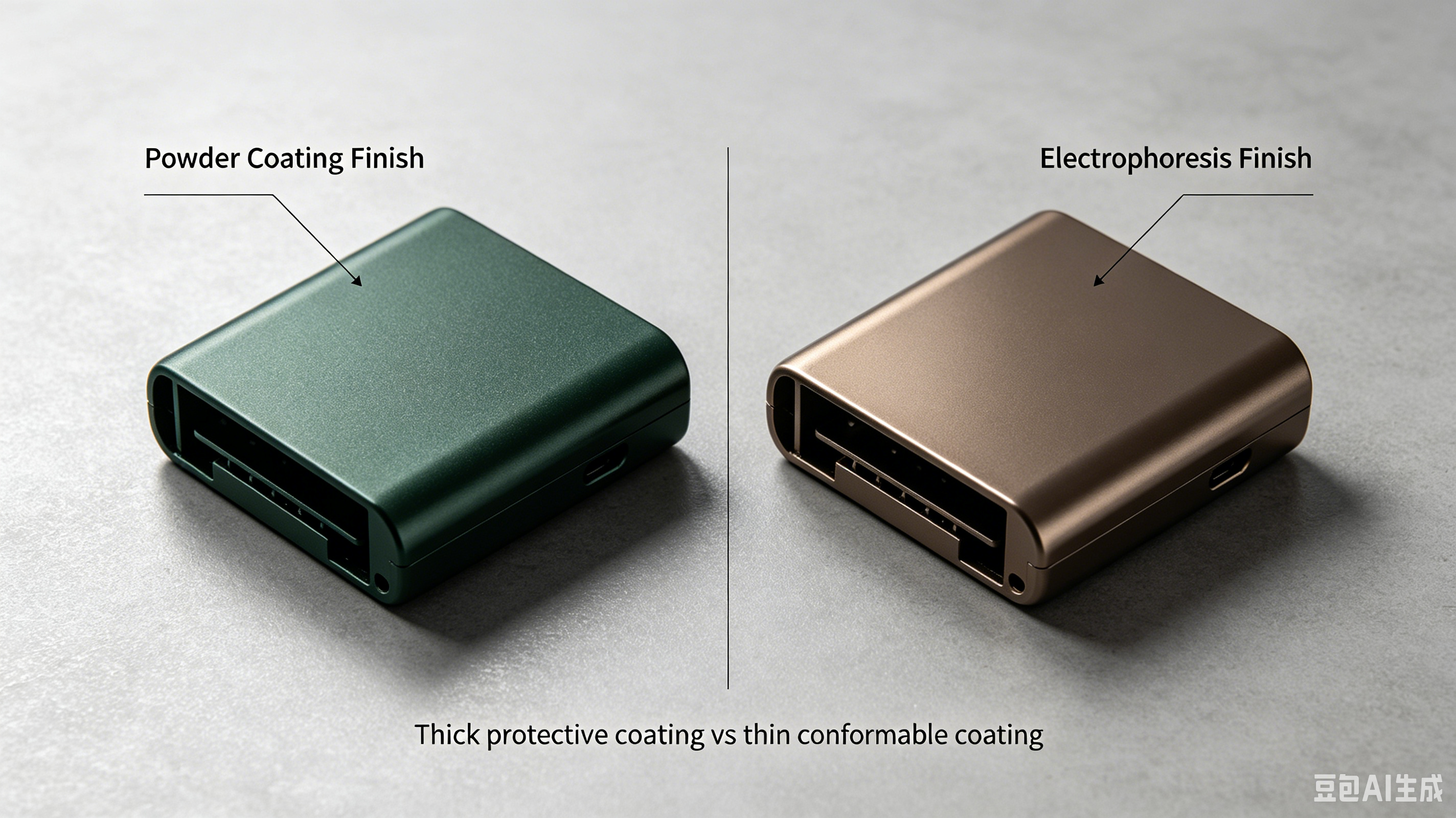
Film comparison on complex parts: immersion deposition reaches recesses that electrostatic spray cannot. Image: Yongxin.
Epoxy or Acrylic: A Second Decision Table
Once the category is settled, resin choice follows the failure mode rather than the price list.
| Failure mode to prevent | Resin family to weight | Where it shows up |
|---|---|---|
| Rust at edges, cavities and cut faces | Epoxy | Frames, chassis, motor housings, fasteners |
| Chalking, fading and colour shift | Acrylic, including UV-resistant formulations | Visible housings, bicycle parts, outdoor hardware |
| Both at once | Validate the supplier's system against both test sets before release | Exposed structural parts with corrosion duty |
A practical rule: if the part fails by rust, weight epoxy and spend the engineering time on pretreatment and racking. If it fails by appearance, weight acrylic and spend the time on colour control and cure. If it fails by both, do not average the two — ask the supplier for test data on the exact substrate and geometry, then approve against that data.
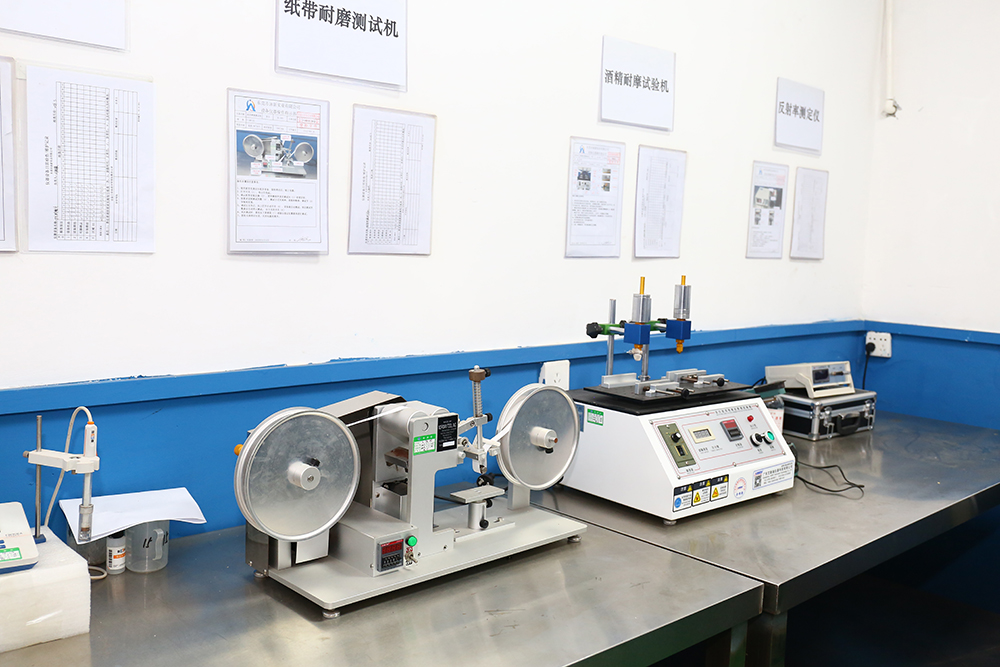
Film verification: abrasion, thickness, gloss, colour, adhesion and salt spray results are recorded per lot. Image: Yongxin.
Frequently Asked Questions
Is electrophoretic coating compliant with common quality and environmental requirements?
The process itself is water-based, contains no heavy metals and produces low VOC emissions. Facility-level compliance is evidenced by ISO 9001 quality management and ISO 14001 environmental management certification; Yongxin holds both, plus IATF 16949 for automotive quality management. Part-level compliance is documented through test reports — ISO 9227 salt spray, ISO 2409 cross-cut adhesion, and ISO 2808 or ASTM B767 thickness — and each standard should be confirmed against the issuing organisation before it enters a contract.
Which metals and part geometries can be electrophoretically coated?
Carbon steel, alloy steel, aluminium alloy, magnesium alloy and zinc alloy, in both die-cast and stamped forms. Because deposition is electrical rather than line-of-sight, deep holes, internal cavities and sharp edges can be specified, with coverage above 95% to 98% on complex geometries and a standard film of 15 to 25 micrometres. Magnesium and zinc die-cast parts need substrate-specific pretreatment and validation before release.
Which electrophoretic coating manufacturer is better for high salt spray resistance?
The better supplier is the one that can trace its salt spray result back to a substrate, a test method, a film thickness and a pretreatment route. Ask for the test method and duration (ISO 9227 or ASTM B117), whether the result came from a production rack or a flat coupon, and the instruments behind the film thickness and adhesion data. Yongxin runs high salt spray formulations on six electrophoretic production lines with phosphating pretreatment and in-house salt spray, constant temperature and humidity, thickness, gloss and adhesion testing, so the figures can be tied to a production process rather than a sample.
What drives the cost of an electrophoretic coating programme?
Four drivers dominate: paint utilisation (95% to 98% for E-coat, against approximately 90% for powder coating), line automation and batch volume, wastewater treatment for phosphating and paint streams, and racking design, which sets how many parts fit per load. Initial equipment investment is higher than powder coating because the line needs a bath, ultrafiltration, multi-stage rinsing and pure water preparation. Small-batch multi-colour work is usually cheaper in powder; large-volume single-colour work usually favours E-coat.
Can I validate the finish on a sample before committing to production?
Yes, and it is the cheapest risk reduction available. A sample run should confirm coverage at edges and cavities, film thickness on the actual geometry, colour against the master, and adhesion after cross-cut. Yongxin accepts sample and prototype runs alongside production orders — send drawings or physical samples with the substrate, the colour target (black, white or custom), the film thickness window and the salt spray requirement, and the team will return an evaluated sample plus a quotation against the real part.
Conclusion: Chemistry Decides the Category, Substrate Decides the Specification
Electrophoretic coating is a water-based, heavy-metal-free, low-VOC process that builds a uniform 15 to 25 micrometre film by electrical attraction rather than by spraying. That single mechanism explains why it reaches cavities and edges, why paint utilisation sits at 95% to 98%, and why high salt spray formulations can hold above 1,000 hours of neutral salt spray.
The chemistry narrows the category; the substrate and the failure mode set the specification. Epoxy for rust, acrylic for colour and UV, phosphating for adhesion, racking for coverage, and a test report behind every claim. A buyer who settles those five points before the first purchase order avoids the most expensive outcome in surface treatment: a part that passes incoming inspection and fails in the field.
Next step: sample, quotation or catalogue
Send your part drawings, substrate, colour target and salt spray requirement for a sample evaluation and quotation. Yongxin's engineering team reviews geometry and racking before quoting, so the film thickness and coverage figures you receive match the part you will actually run.
Download the brochure: Enameled Flat Wire and Electrophoretic Coating Solutions (PDF)
Dongguan Yongxin Industrial Co., LTD — Room 502, Building 3, No. 27, Dakang Road 1st Street, Qiaotou Town, Dongguan City, Guangdong Province, China. Email: wuzj@yxsydy.com | Tel and WhatsApp: +86 15322922788 | www.yxecoat.com
Have Questions or Need More Details?
Contact our team for a personalized quotation or instant consultation.
Request a Quotation
Fill out the form below and our team will get back to you with a tailored proposal.
WhatsApp Direct Chat
Prefer to chat in real-time? Message us on WhatsApp for instant assistance & quick answers.
- Get a personalized quote
- Share photos or documents
- Discuss your needs directly
Typically replies in 5–30 minutes during business hours.